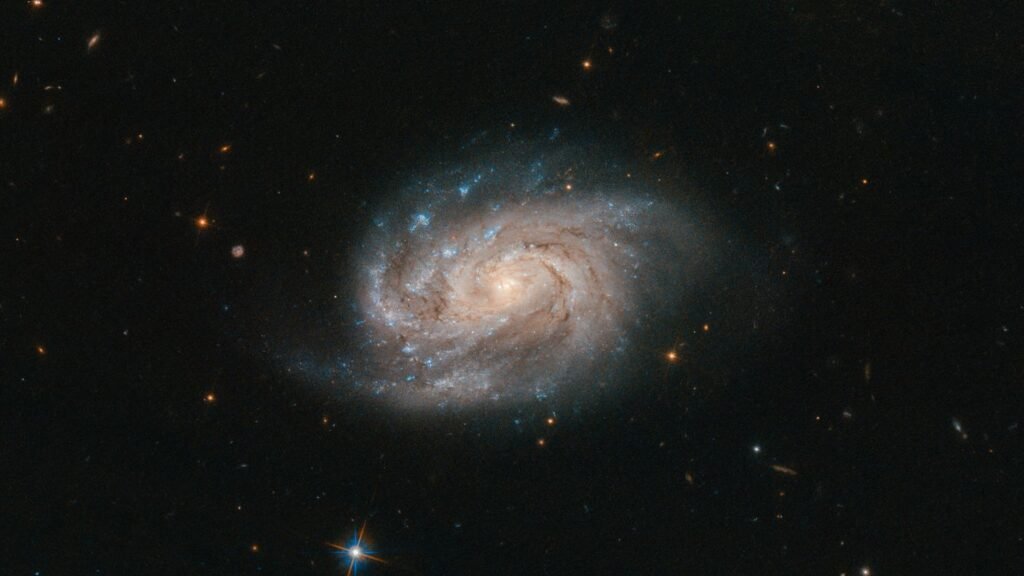
You live inside a universe that is not just expanding, but appears to be speeding up as it does so. That single idea quietly rewrites almost everything you were taught to imagine about space, time, and the distant future of reality itself. In school, you might have seen the universe described as a calm balloon gently inflating; modern cosmology suggests that balloon is being pulled harder and harder, in ways you still do not fully understand.
What makes this even more intriguing is that your best measurements of the cosmos are now in open tension with each other. Different ways of measuring the expansion give you different answers, and that mismatch is not going away. Instead of brushing it off as noise, many physicists are starting to whisper the same unsettling thought: maybe you are missing a key piece of the universe’s deepest machinery.
The moment you discovered the universe is speeding up
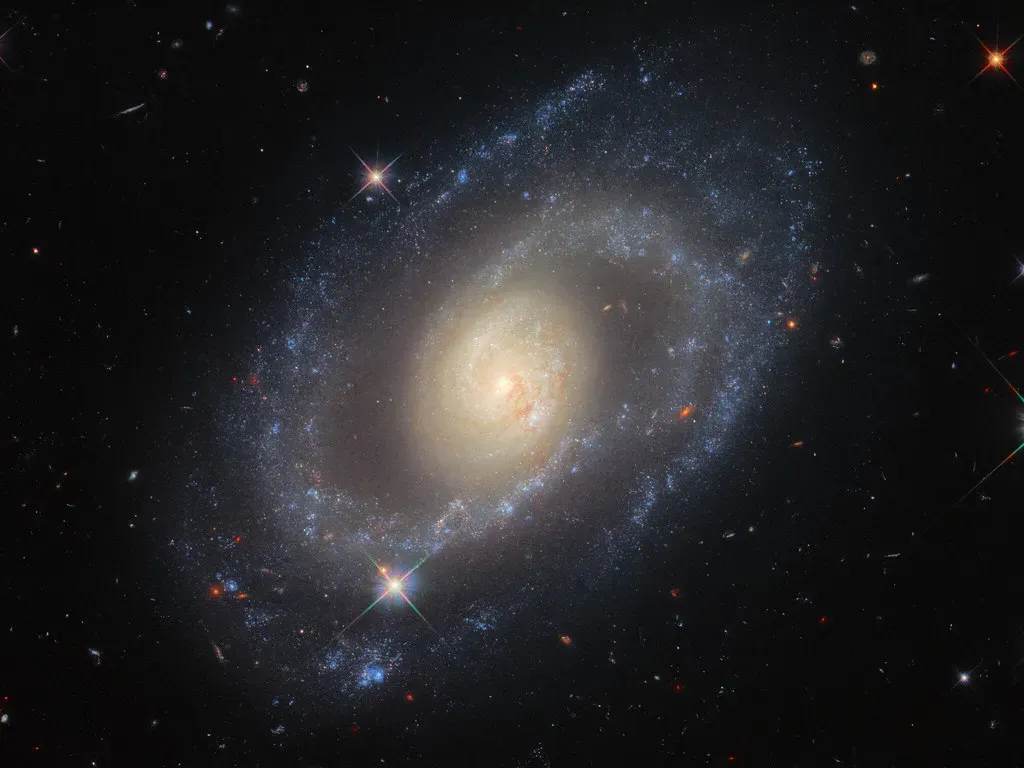
Imagine pointing a telescope at a faint, dying star that explodes in a distant galaxy. You measure how bright it looks to you and, from that, how far away it must be. Now you also measure how much the light has been stretched, or redshifted, by the expansion of the universe. When astronomers did this in the late twentieth century with special supernovae, they expected the expansion to be slowing down under gravity’s pull. Instead, you find those supernovae are dimmer than they should be, as if the galaxies are farther away than your old models allow.
That dimness tells you something shocking: over billions of years, the expansion has not been decelerating, it has been accelerating. In other words, if you look back in time, the universe used to expand more slowly than it does now. You are essentially reading the universe’s travel diary and realizing that at some point it hit the cosmic gas pedal. From your vantage point, you see galaxies not just moving away, but doing so as if some hidden agent is quietly pulling them apart faster and faster.
How the Hubble constant became a cosmic argument
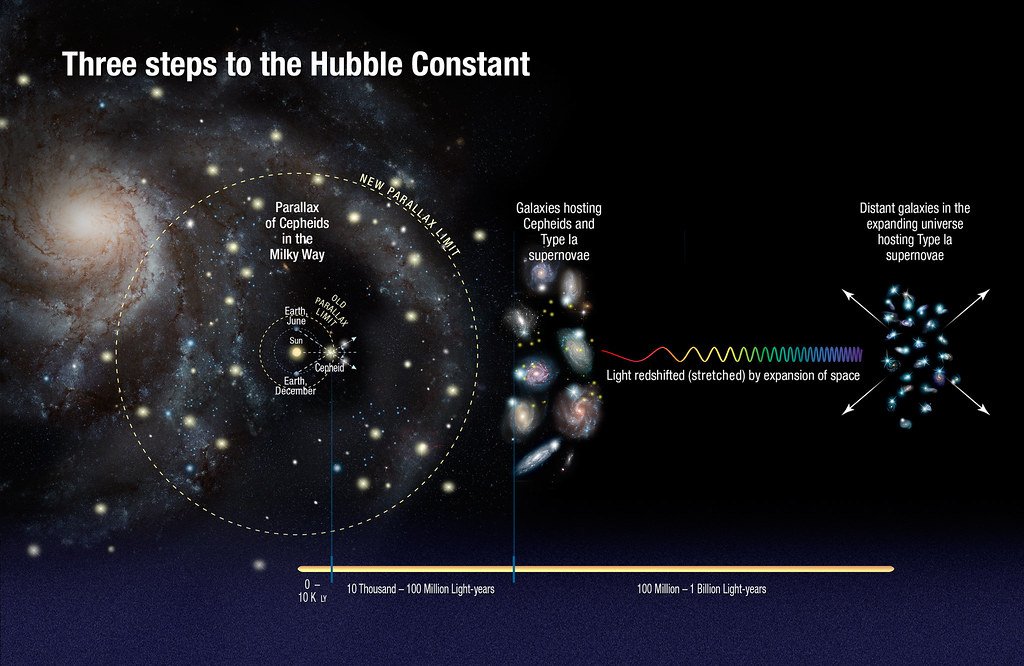
To talk about how fast the universe expands, you use a single number called the Hubble constant. It describes how quickly galaxies are receding from you for each unit of distance. You can measure this in two broad ways: by looking at the nearby universe using objects like supernovae and variable stars, or by looking at the early universe imprinted in the afterglow of the Big Bang, the cosmic microwave background. In an ideal, tidy universe, those methods should give you the same answer once you account for all the physics in between.
Instead, as you refine your instruments and shrink your error bars, you find that the local measurements point to a faster expansion rate than the early-universe measurements predict. This mismatch, often called the Hubble tension, has become one of the most serious puzzles in cosmology. You are not looking at a tiny rounding error anymore; you are looking at persistent disagreement between two gold-standard techniques. When the universe tells you two different stories at once, you are forced to ask whether your underlying picture of reality needs an upgrade.
Dark energy: the invisible engine behind the acceleration
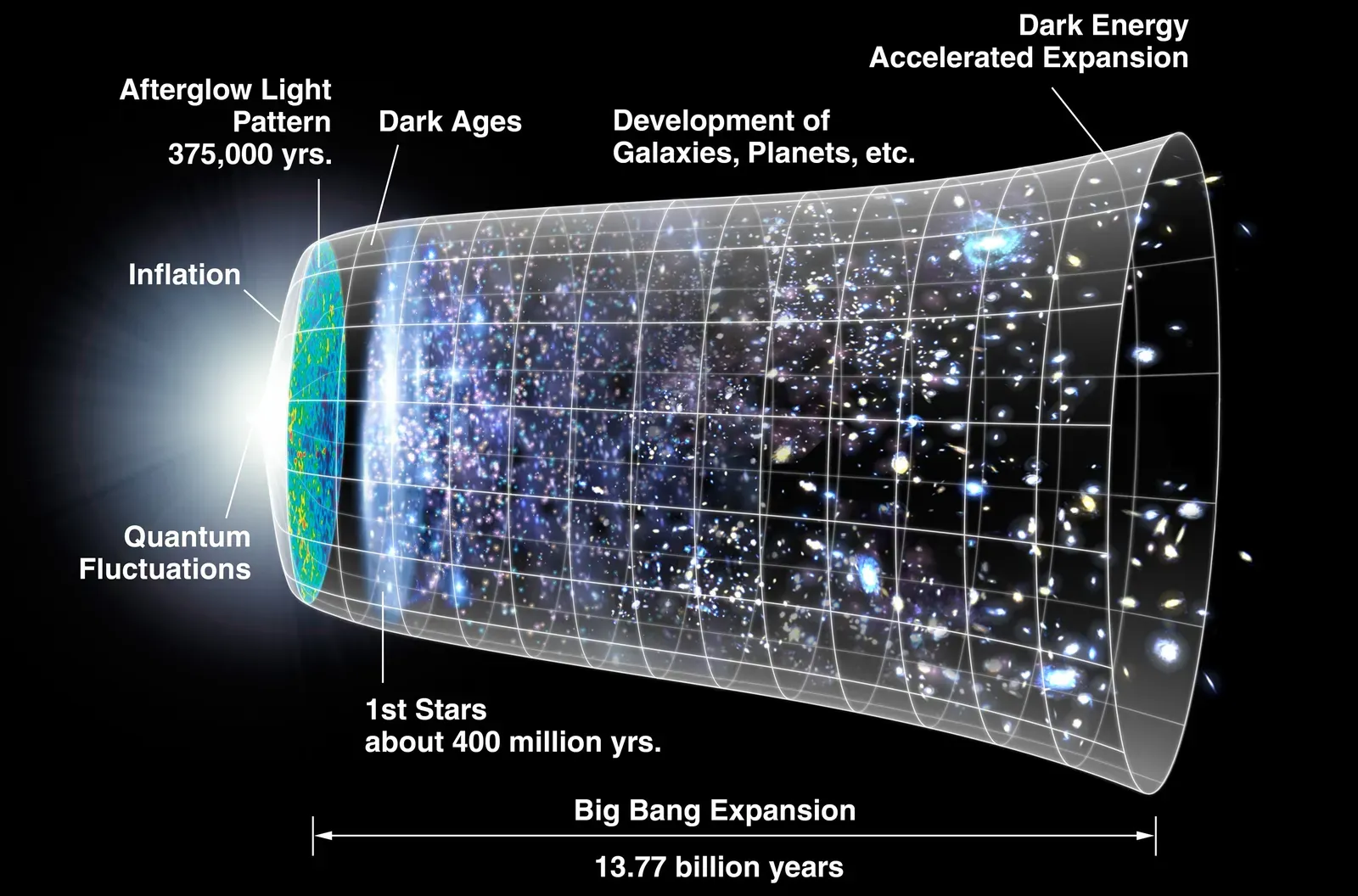
To explain why the expansion is speeding up, you introduce a strange ingredient you cannot see directly: dark energy. From your perspective, it behaves like a kind of energy built into space itself, pushing everything apart. When you tally up the contents of the cosmos, ordinary matter such as stars, planets, and gas accounts for only a tiny fraction; dark energy makes up the majority. You live in a universe where the most influential component is something you have never held, touched, or produced in any laboratory.
The simplest version of dark energy is essentially a constant property of space, often described mathematically as a cosmological constant. If that’s right, then as the universe expands and creates more space, you are effectively creating more of this repulsive energy, which keeps the acceleration going. But you cannot yet rule out that dark energy might change over time, strengthening or weakening as the universe ages. Right now, your data mostly tell you that some mysterious pressure is there, and that it seems to be driving the expansion faster than the gravity of matter can slow it down.
Why some scientists think the expansion might be evolving
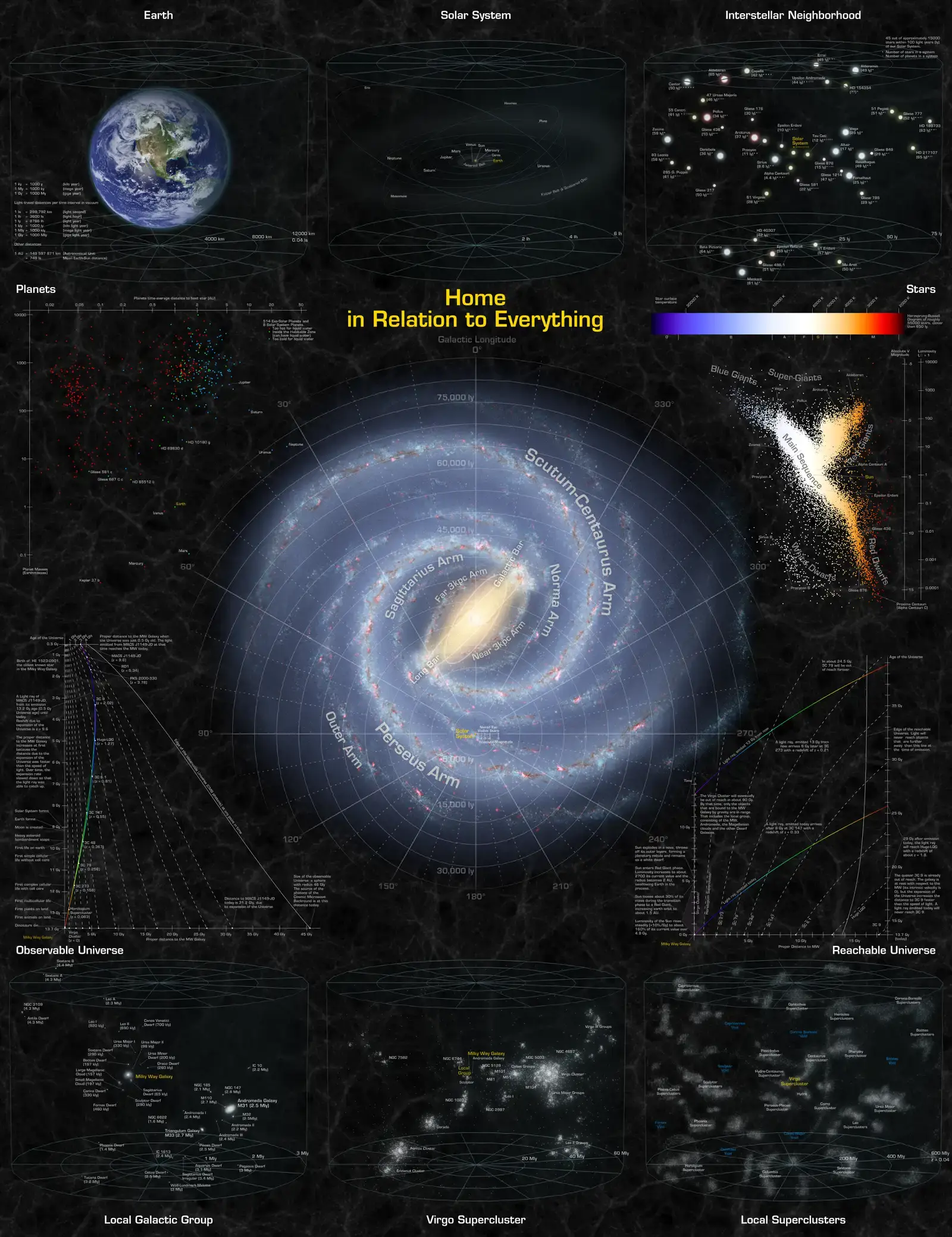
When you say the universe is expanding faster than ever, you are really comparing how the expansion rate changes over cosmic history. Early on, matter was densely packed and gravity tried to pull everything together, so expansion slowed. At some later epoch, dark energy began to dominate, and the tug-of-war flipped. Now, as you measure galaxies at different distances and therefore different times in the past, some analyses hint that dark energy’s influence might be shifting in subtle ways.
You see clues in large galaxy surveys, in gravitational lensing maps that trace how matter bends light, and in the patterns of cosmic microwave background ripples. Some reconstructions suggest that the acceleration may not be perfectly constant, but could be changing very slightly. If that holds up, then you are not just living in an accelerating universe; you are living in a universe whose own accelerator settings may be drifting. That possibility turns dark energy from a simple label into a living research question that touches every part of cosmology.
When your measurements disagree: error, or new physics?
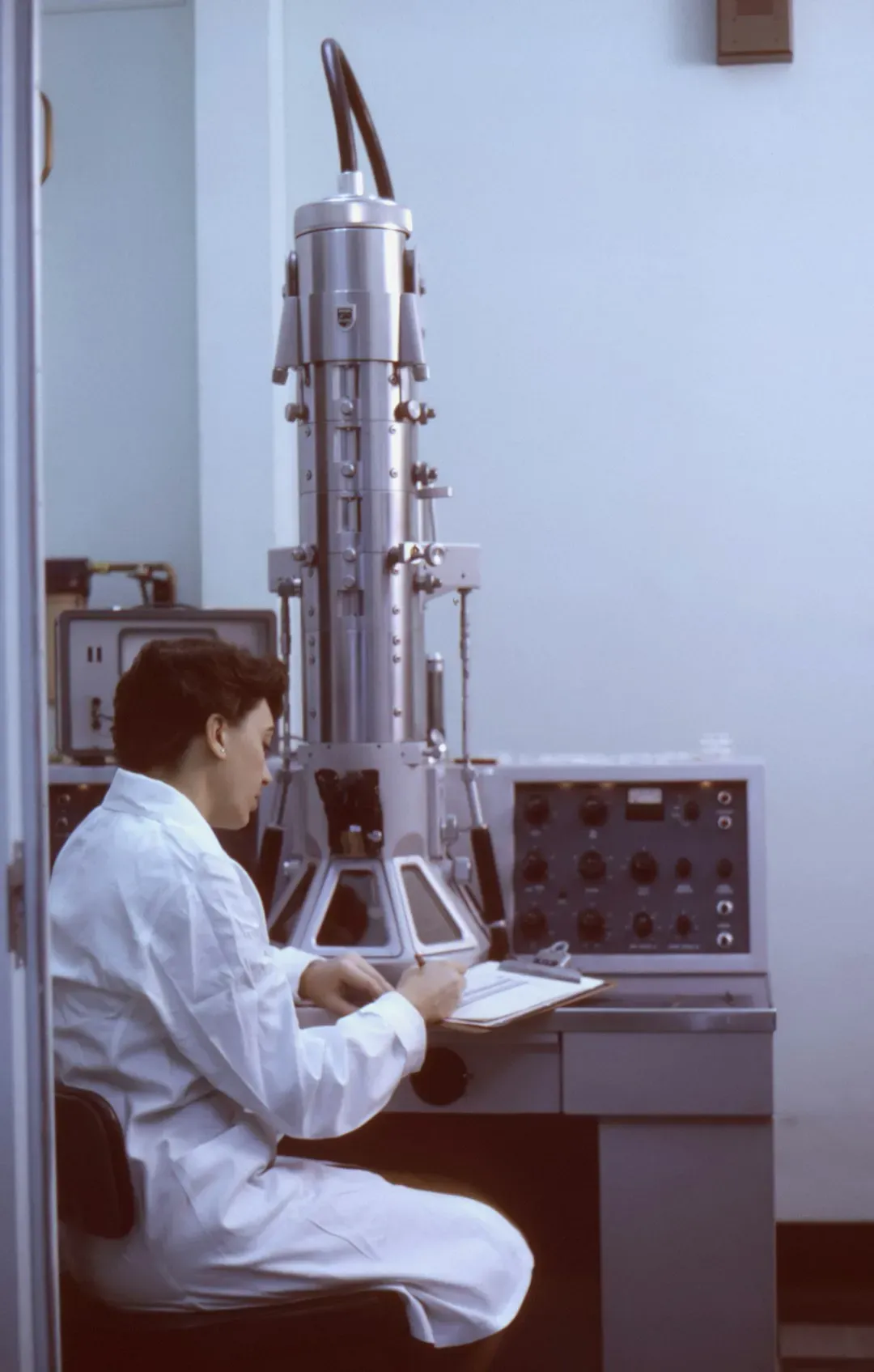
Whenever you see a tension between measurements, your first instinct is to suspect the tools. Maybe the supernova you used as a standard candle was dustier than you thought. Maybe your calibration of a distant galaxy’s distance is subtly off. On the early-universe side, maybe your assumptions about how matter clumped together are slightly wrong. You spend years checking, cross-checking, and inventing new techniques to poke holes in your own work.
But as your methods get sharper and independent teams keep finding similar discrepancies, it gets harder to blame mere error. At that point, you enter a more exciting and uncomfortable zone: maybe the universe itself is trying to tell you about new physics. Perhaps gravity behaves differently on the largest scales than your current theories predict. Or perhaps dark energy is not a simple constant, but a more complex field that evolves over time. You are essentially standing at a crossroads, unsure if you are chasing a hidden systematic mistake or glimpsing the outline of a deeper theory.
What telescopes and surveys are about to reveal to you
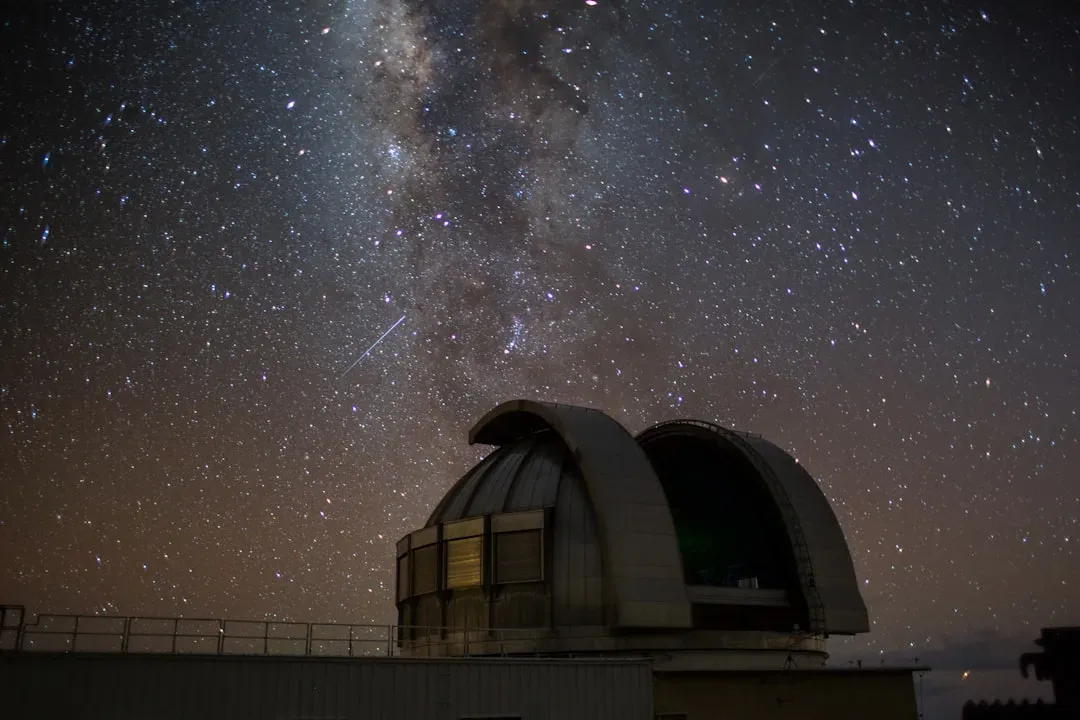
You are not just sitting around wondering; you are building machines to interrogate the cosmos more ruthlessly than ever. New space missions and giant ground-based telescopes are mapping billions of galaxies, tracking how structures grow and how light bends as it travels. These surveys let you see how fast cosmic expansion has changed at many points in time, like watching a slow-motion replay of the universe’s entire history. With that, you can test competing ideas about dark energy and modified gravity far more precisely.
At the same time, you are using other cosmic messengers, such as ripples in spacetime from merging neutron stars, as independent rulers to measure distances. These gravitational waves give you another way to pin down the expansion rate without relying on the same assumptions as traditional methods. The more ways you can cross-check the expansion, the better you can tell if the universe is genuinely misbehaving or if one of your measuring sticks is warped. In the next few years, you may either resolve the tension cleanly or confirm that something truly new is at work.
Why this accelerating universe changes your ultimate fate
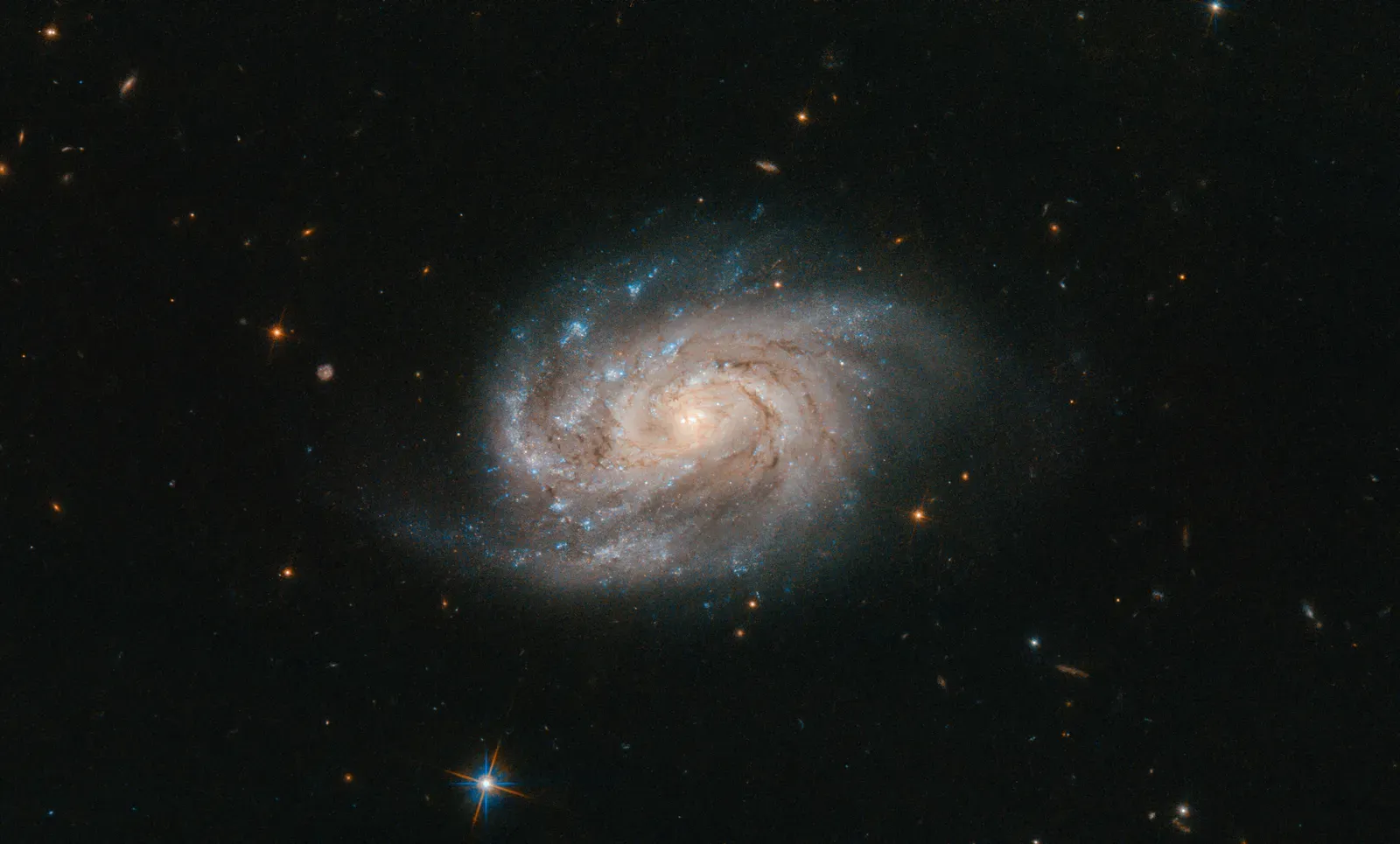
When you accept that the universe is accelerating, you are also accepting a particular kind of future. Over unimaginable stretches of time, distant galaxies will slip out of view as their light can no longer reach you. The night sky your distant descendants see would grow emptier, not because the stars go away, but because the expanding fabric of space hides them forever. Your cosmic neighborhood shrinks to a lonely island of merged galaxies in a vast, unreachable dark.
If dark energy stays roughly constant, this is the path you are on: a universe that continues to expand faster and faster, stretching matter thinner and pushing everything apart on the largest scales. More exotic ideas, where dark energy strengthens dramatically, paint even wilder fates in which even galaxies or atoms could be torn apart in a far future event. Either way, the fact that expansion is speeding up means you live at a strangely privileged time, when the broader cosmos is still visible to you. You are observing the universe just as it begins to vanish behind its own accelerating horizon.
How this cosmic mystery reshapes the way you see yourself
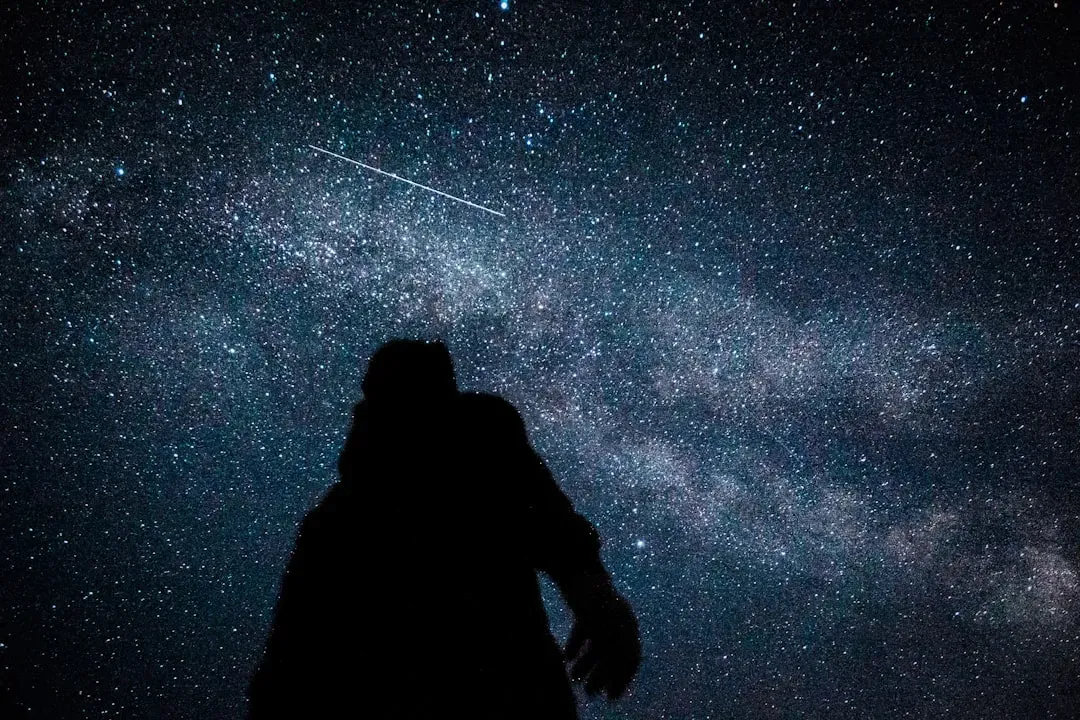
Once you realize you are riding inside an accelerating universe dominated by something you cannot directly detect, your place in the cosmos feels different. You are not just a small speck in a vast, stable backdrop; you are a brief moment in a story where the rules may still be changing. The fact that your best measurements now disagree nudges you to adopt a kind of humble curiosity. You thought you understood the broad strokes, and then the universe quietly reminded you that the plot is not finished.
In a way, this mystery is an invitation. You are being asked to refine your ideas about gravity, spacetime, and energy itself, using every clever technique you can devise. If the universe really is expanding faster than ever, the secret behind that acceleration might be one of the most important things you will ever uncover about reality. You may not solve it in your lifetime, but every careful observation you make brings the next generation one step closer. When you look up at the night sky now, you are not just seeing stars; you are staring into a puzzle that is still actively rewriting the laws you live by.
In the end, the universe’s biggest secret might not simply be that it is accelerating, but that it is pushing you to question everything you assumed was settled. You are living at a time when basic cosmic numbers are up for debate, when evidence hints at gaps in your deepest theories, and when new instruments are about to flood you with answers you might not be ready for. That is both unsettling and thrilling, because it means the story of the universe is still wide open. When you think about your own tiny life set against this vast, speeding cosmos, what kind of questions does it inspire you to ask next?