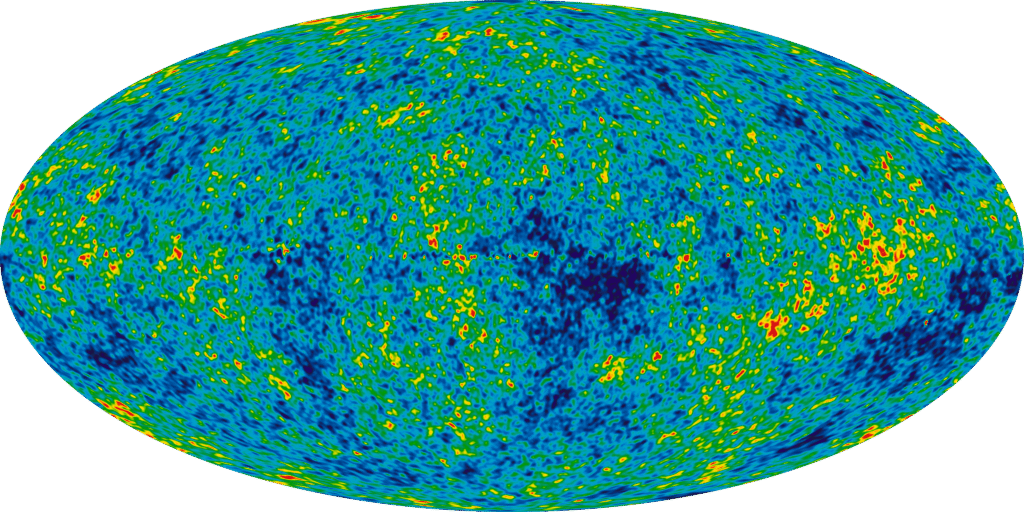
You live in a universe that is still quietly ringing from its own birth. Everywhere you look in the sky, no matter where you point a radio telescope, you run into a faint, ancient glow: the cosmic microwave background, often just called the CMB. You cannot see it with your eyes, but it washes through you and everything around you all the time, like a ghostly afterimage of the Big Bang itself.
Once you realize that this glow is an echo from when the universe was only a few hundred thousand years old, your sense of time and distance stretches in a way that can feel almost dizzying. You are used to echoes fading quickly in a canyon or a hallway; this one has been traveling for more than thirteen billion years. When you look at what this cosmic background radiation reveals, you are not just learning about remote space, you are looking directly into the universe’s childhood – and, indirectly, into your own cosmic origins.
The Faint Glow That Fills All of Space
If you could tune your senses like a radio, you would discover that the entire sky hums at microwave wavelengths, with almost the same intensity in every direction. This is the cosmic microwave background, a bath of radiation that fills the universe so uniformly that, at first glance, it looks nearly featureless. Its temperature today is just a few degrees above absolute zero, cold enough that you would never feel it directly, yet bright enough for sensitive instruments to detect with ease.
You might be surprised to learn that a small fraction of the static on old analog televisions actually came from this ancient radiation. That crackly snow you might remember from childhood carried a whisper of the Big Bang across your living room. Once you understand that nearly all of space – even the apparently empty regions between galaxies – is suffused with this glow, your picture of “nothingness” changes dramatically. Cosmic emptiness is not truly empty; it is filled with the cooled embers of the universe’s fiery beginning.
A Snapshot of the Universe as a Baby
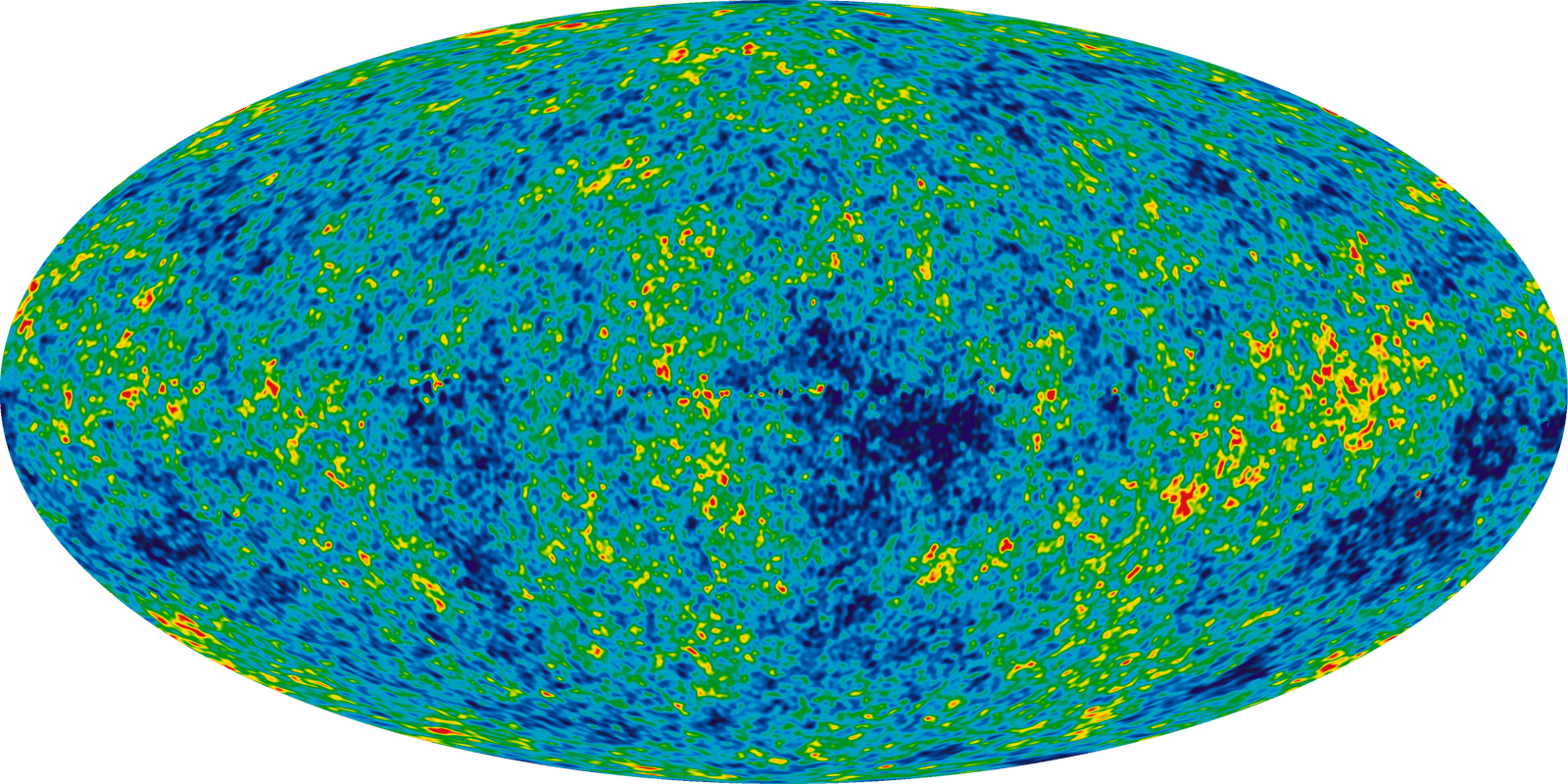
When you look at an image of the CMB, you are not seeing how the universe looks now; you are seeing how it looked when it was astonishingly young. The light that makes up the CMB was released when the universe was only a few hundred thousand years old, a tiny fraction of its current age. At that time, the cosmos was a hot, dense plasma of particles and light, more like the interior of a star than the transparent space you experience today.
As the universe expanded, it cooled to the point where electrons and protons could combine into neutral atoms, allowing light to travel freely for the first time. You are essentially staring at a cosmic “last scattering surface,” the moment when the fog lifted and photons could finally move in straight lines. Every time you see a CMB map, you are looking at a baby picture of the universe, frozen in time, taken long before any stars, galaxies, or planets formed. It is the oldest light you can ever hope to observe directly.
How Tiny Temperature Fluctuations Map Future Galaxies
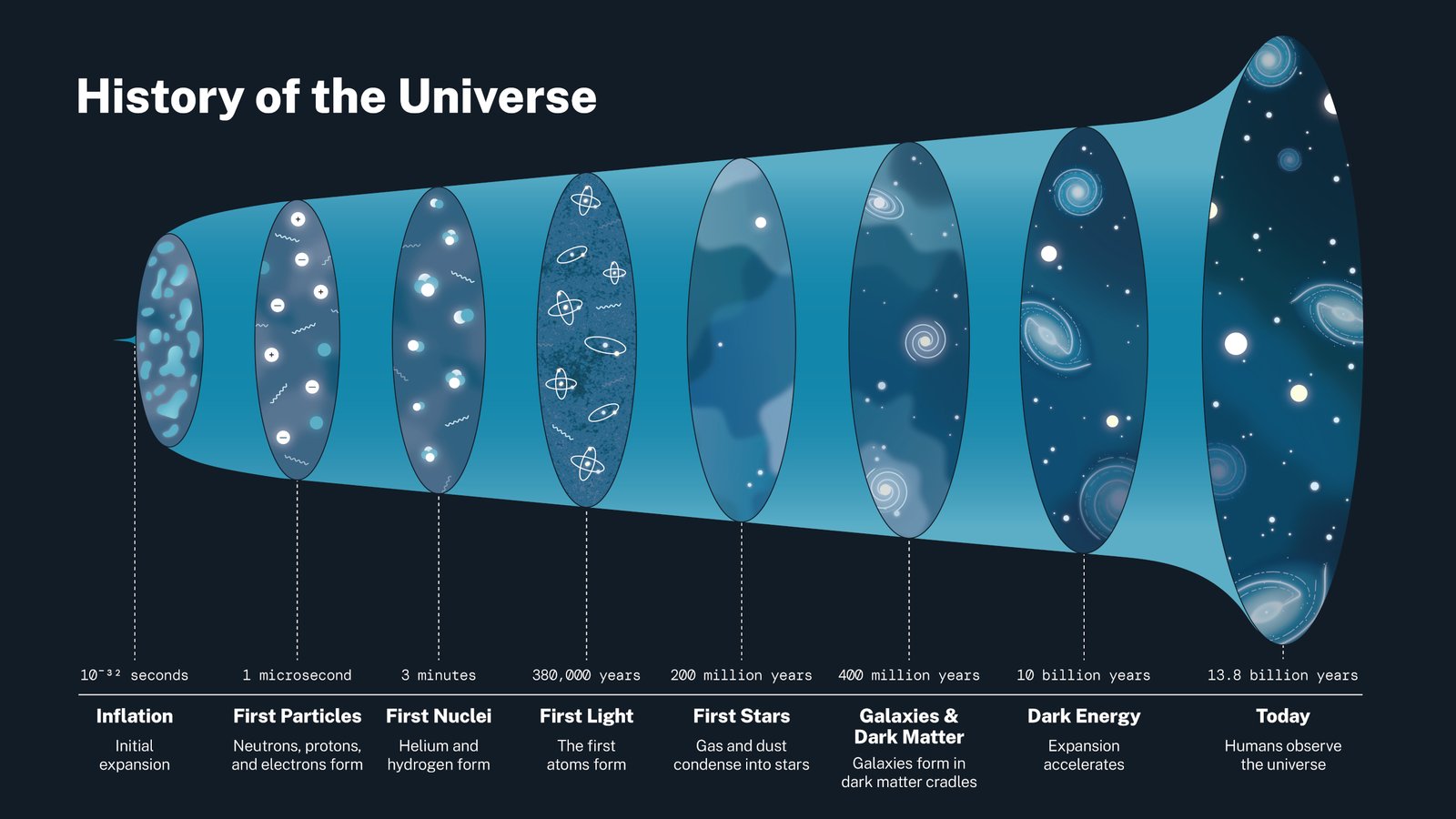
At first, the CMB looks almost perfectly uniform, but if you zoom in, you notice it is slightly mottled: some spots are just a little warmer, others a little cooler. These temperature differences are tiny, only a fraction of a degree, but they carry a huge amount of information. When you examine them carefully, you are seeing the seeds of all the structure in the universe – the subtle imbalances in density that would eventually grow into galaxies, clusters, and cosmic filaments.
You can think of these fluctuations as the faint ripples on a still pond that later become crashing waves. Gravity gently amplified these small differences over billions of years, pulling matter into denser regions and leaving emptier voids in between. When you trace this growth from the CMB to the distribution of galaxies you see today, you connect that ancient baby picture to the modern cosmic web. In a very real sense, the galaxies and stars you see at night were already encoded in those tiny temperature patterns.
Evidence That the Big Bang Really Happened
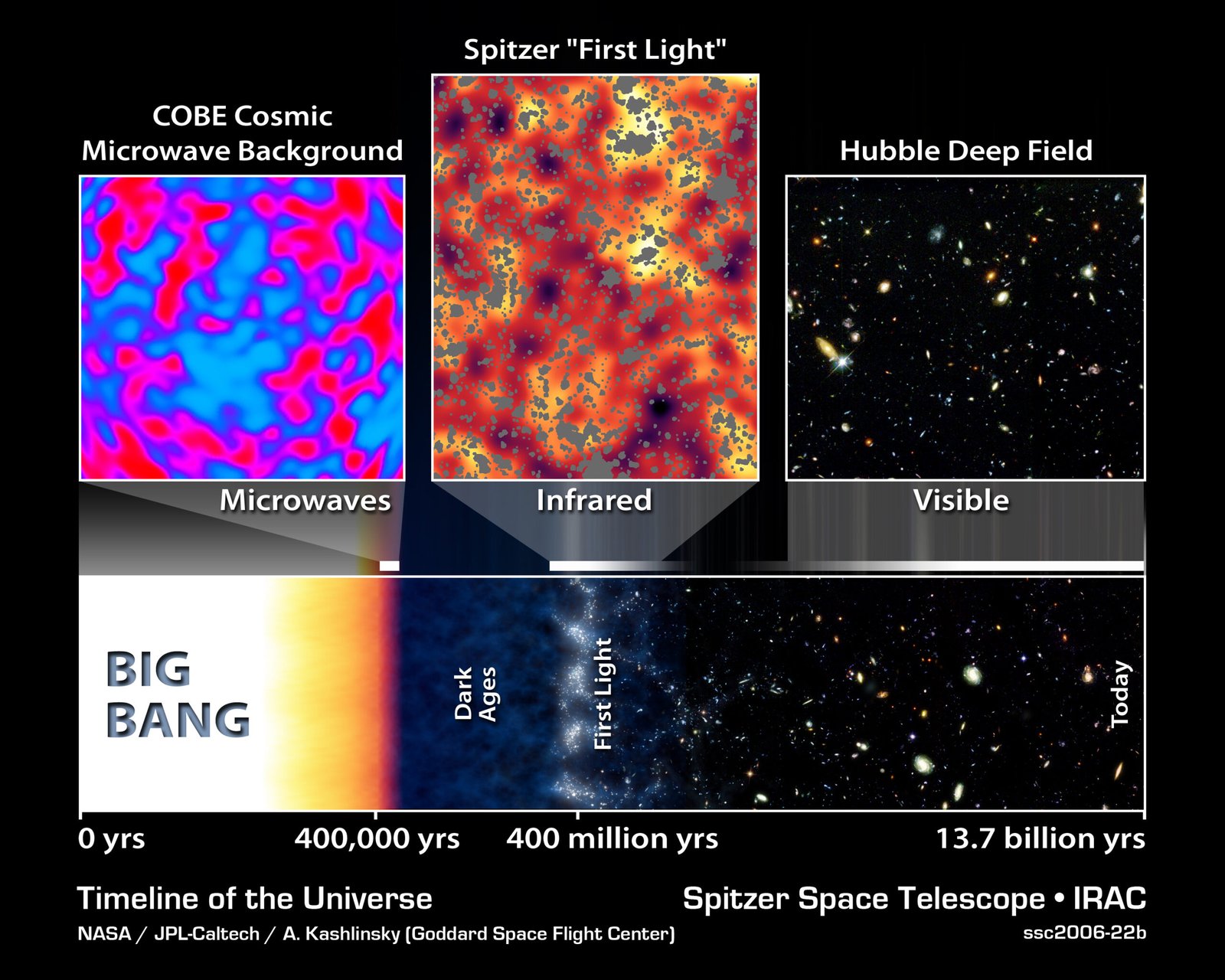
If you ever wondered how strongly the Big Bang idea is supported, the existence of the CMB gives you one of the clearest answers. Long before it was detected, physicists predicted that a hot, early universe would leave behind a cooled, uniform glow permeating all of space. When astronomers finally measured this radiation in the mid twentieth century, they found exactly what that picture required: a near-perfect blackbody spectrum at a very low temperature, coming from every direction in the sky.
When you compare the CMB to alternative ideas about the universe that were popular in the past, you see why it was such a decisive discovery. Models that tried to describe a universe without a hot beginning struggled to explain a uniform background with precisely this spectrum and intensity. By observing the CMB, you are not just collecting another astronomical curiosity; you are directly testing the story that the universe began hot, dense, and rapidly expanding. The match between theory and observation here is so strong that, once you appreciate it, it is hard not to feel impressed by how well your species has reconstructed its own cosmic origin story.
How You Measure an Echo from the Edge of Time
To detect the CMB, you need to measure incredibly faint microwaves coming from everywhere at once, which is much harder than it sounds. You have to remove the bright signals from your own galaxy, from other galaxies, and even from your own instruments, like peeling away layers of noise to reveal a whisper underneath. Space missions equipped with ultra-sensitive detectors, cooled to extremely low temperatures, have been launched specifically to create detailed maps of this background glow.
When you look at the results from these missions, you are seeing the payoff from painstaking engineering and analysis. Each pixel in a CMB map represents careful corrections for foreground emission, instrument quirks, and even the motion of Earth through space. You are not just looking at a colorful picture; you are seeing the end result of years of work to isolate that one ancient echo from every other signal in the sky. Once that echo is cleanly extracted, it becomes one of the most precise data sets you have for testing your understanding of the universe.
What the Echo Tells You About the Shape and Fate of the Universe
When you analyze the detailed pattern of temperature fluctuations in the CMB, you can infer surprisingly deep facts about the entire cosmos. By looking at how big the hot and cold patches appear on the sky, you can tell what overall geometry space has – whether it is flat, positively curved like a sphere, or negatively curved like a saddle. The measurements show that, on the largest scales, space is very close to flat, meaning that parallel lines would stay parallel over enormous distances.
The CMB also helps you figure out how much of the universe is made of normal matter, dark matter, and dark energy. Different combinations of these ingredients leave distinct signatures in the size and distribution of the fluctuations. When you match the data with your models, you learn that normal atoms make up only a small fraction of the cosmic energy budget, with dark matter and dark energy dominating the rest. By reading this pattern, you are not just mapping the past; you are also learning how fast the universe is expanding now and what its long-term future is likely to be.
Echoes of Inflation: Traces of an Even Earlier Moment
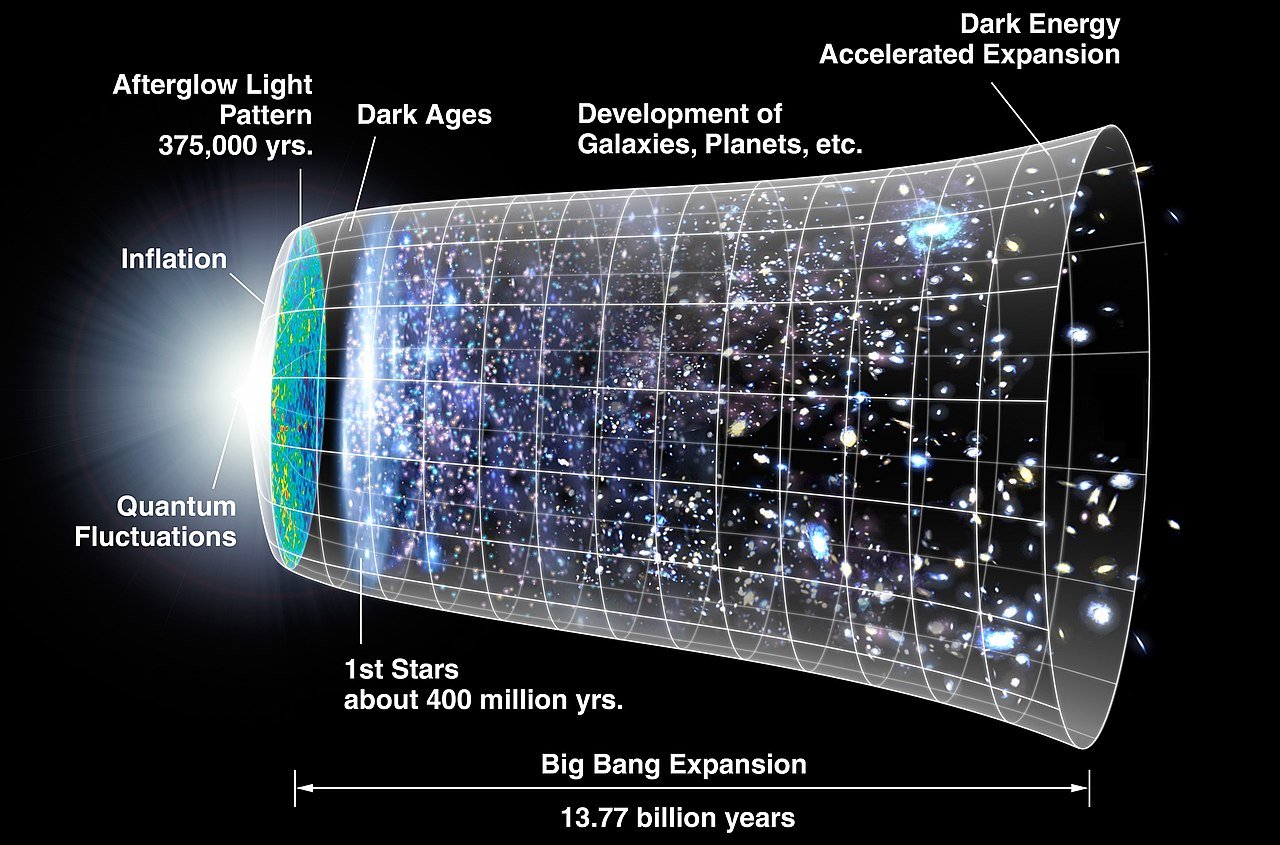
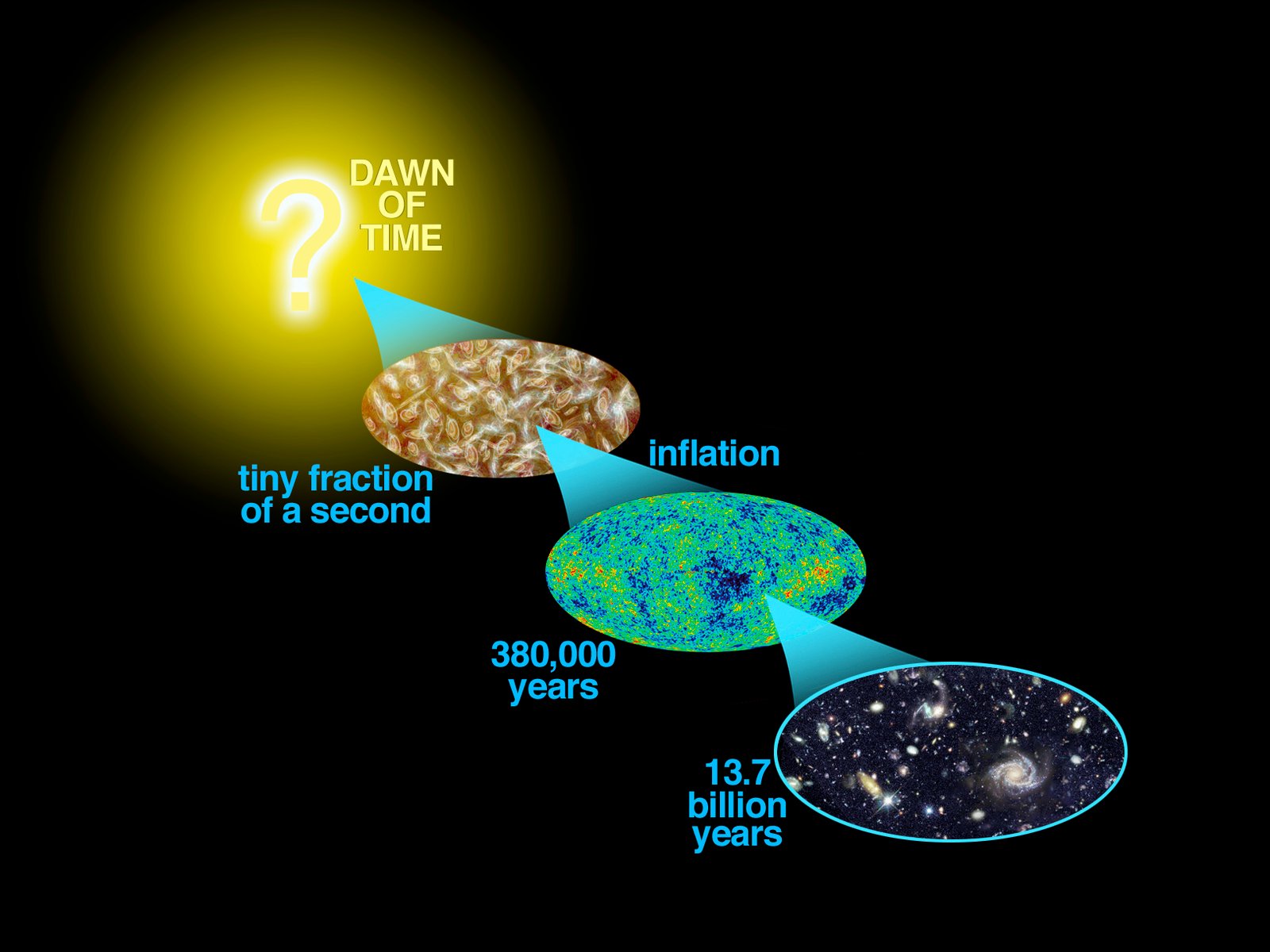
The CMB does not just talk about the young universe; it may also carry hints about an even earlier, more mysterious phase called inflation. In many models, the universe underwent a tiny fraction of a second of extremely rapid expansion right after the Big Bang. That dramatic growth would have stretched quantum fluctuations to cosmic scales, imprinting a specific pattern in the CMB that you can search for today.
When you examine the CMB carefully, you see that its fluctuations are nearly, but not perfectly, the same at all scales and in all directions, which fits the broad expectations from inflation. Researchers also hunt for a particular kind of swirling polarization pattern in the CMB that would be a more direct sign of gravitational waves from that era. The fact that this search is still ongoing shows you that, even with such a rich data set, there are deep questions still open. The CMB gives you tantalizing clues that inflation may have happened, but it also keeps you honest by forcing you to test those ideas against precise observations.
How the CMB Connects You to the Elements in Your Body
It might not be obvious at first, but the same physics that shapes the CMB also helps explain where the lightest elements in your body came from. Shortly after the Big Bang, when the universe was still extremely hot and dense, nuclear reactions forged hydrogen, helium, and small amounts of a few other light elements. The density and temperature history encoded in the CMB lines up with the amounts of these elements that you measure in the cosmos today.
When you compare the predictions of Big Bang nucleosynthesis with CMB data, you see a remarkable consistency. The proportion of normal matter implied by the CMB matches the amount needed to produce the observed helium and deuterium abundances. That means the same cosmic story that explains the background radiation also explains the primordial ingredients from which stars and, eventually, you are made. In this way, that faint microwave glow is indirectly telling you about the origins of the very atoms in your blood and bones.
Why These Echoes Change How You See Yourself
Once you grasp that the universe is full of these ancient echoes, your place in the story shifts in a subtle but powerful way. You realize that you are not just living in a random, isolated patch of space, but in a cosmos with a traceable history that you can read like a fossil record. The CMB shows you that the universe has a beginning you can meaningfully talk about, and that your existence is tied to events that unfolded in those first few hundred thousand years.
On a more personal level, you might feel a mix of smallness and connection. You are tiny compared to the scales involved, yet you are also part of the only known species capable of decoding this ancient message. When you look at a CMB map, you are seeing an echo that has been traveling since long before Earth formed, and yet it is only now, through human eyes and instruments, that the universe is learning to reflect on its own origin. That realization can be strangely comforting: you are, quite literally, made from the ashes of a cosmic fire whose fading glow you can still detect.
In the end, the cosmic background radiation is more than just a technical plot in a physics paper; it is a quiet, persistent reminder that the universe remembers its own beginning. When you listen closely to that memory, you uncover not only the story of space and time but also the deep roots of your own existence in a vast and ancient cosmos. Next time you look up at the night sky, will you picture it as dark and empty, or as a place still softly echoing with the afterglow of creation?