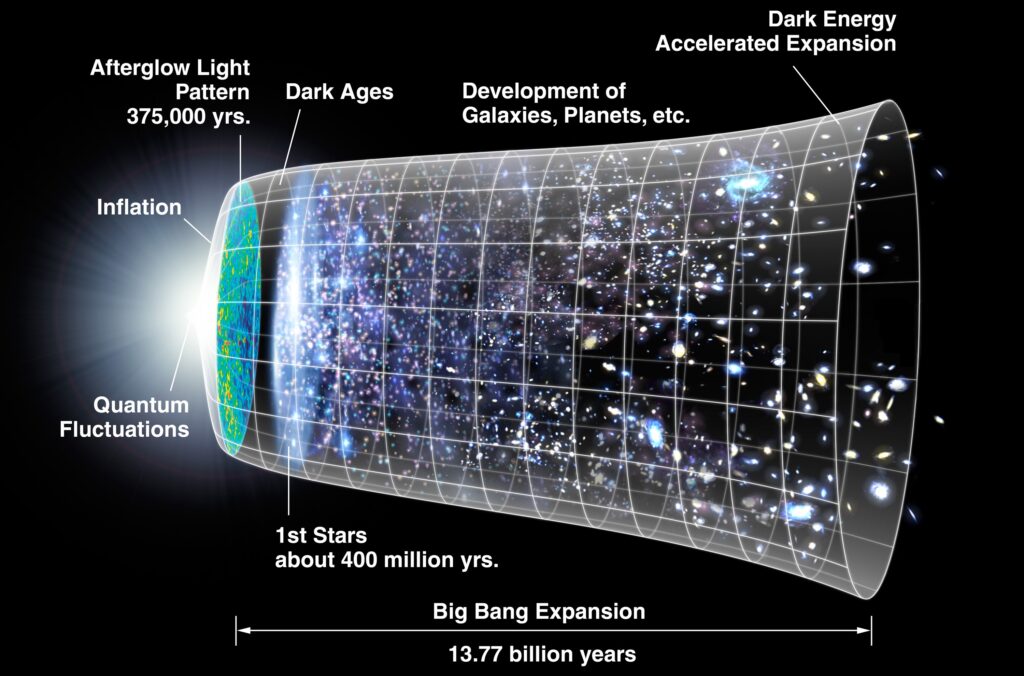

Imagine pressing play on the longest movie ever made, only to realize that for almost the entire runtime, nobody was in the theater. That, in a very rough way, is our best picture of the universe: about 13.8 billion years of cosmic evolution, and only in a tiny sliver of that time did anything like human consciousness show up to even ask what was going on. The obvious response is to shrug and say, of course the universe was there all along, with or without us. But the deeper you dig into physics and philosophy, the less obvious that shrug becomes.
What if the question of whether the universe really “existed” in a meaningful sense before observers appeared is not just stoner-thought-experiment material, but a serious puzzle that exposes how weird our most basic assumptions are? I’m not saying that nothing existed before brains evolved on some rocky planet; that would be overreaching. But when you look at how modern physics, neuroscience, and philosophy wrestle with time, reality, and observation, you start to see cracks in that simple story. Those cracks don’t prove that consciousness creates the universe, but they do make the whole situation stranger than it first appears.
The Standard Story: A Universe That Never Needed Us
The mainstream scientific picture is straightforward on the surface: the universe began about 13.8 billion years ago in a hot, dense state often called the Big Bang, then expanded and cooled, forming particles, atoms, stars, galaxies, planets, and eventually, much later, life. In this story, consciousness is a latecomer, a side effect of complex brains that evolved on Earth after an enormous amount of trial and error written in the language of chemistry and natural selection. The cosmos is the stage; we’re the brief, flickering actors who showed up almost at the end.
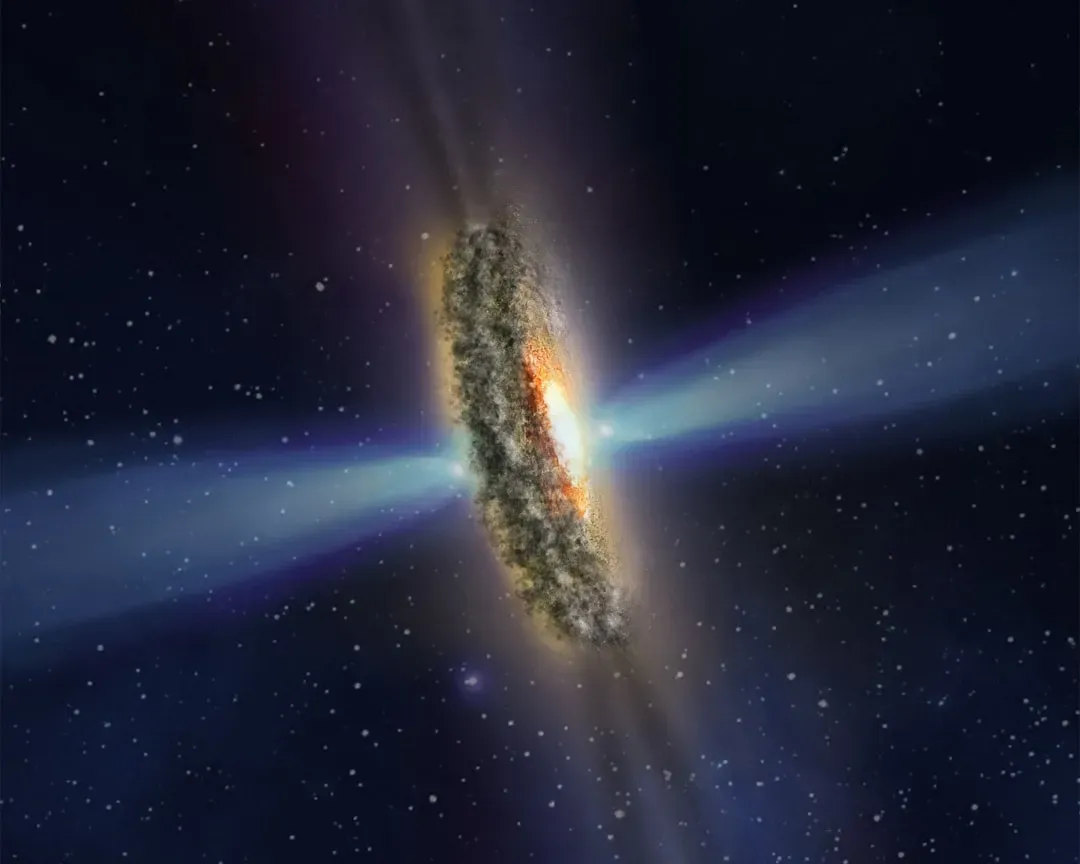
On this view, whether or not anyone is watching makes no difference. The Andromeda Galaxy does not care if we point a telescope at it, and distant quasars burned and faded long before there were any eyeballs around to see them. It’s an appealingly tough-minded picture: reality just is, and consciousness is something that rides on top of already-existing physics. But if you scratch beneath that confident surface, especially once you bring quantum mechanics and the philosophy of experience into the story, things get a lot more slippery.
Quantum Weirdness: Does Observation Really Change Reality?
The place where many people first feel the ground move under their feet is quantum mechanics. At the microscopic level, particles do not behave like little billiard balls. Instead, they are described by wavefunctions that encode probabilities, and these wavefunctions seem to “collapse” into definite outcomes when a measurement is made. In some interpretations, it’s as if the act of observation transforms a spread of possibilities into a single reality. That naturally tempts people to say: no observer, no reality.
Physicists argue fiercely about what exactly is doing the “observing” here. Many insist that you do not need a conscious mind; any interaction with the environment that records or entangles information is enough to pick out an outcome. Others lean into more radical views that place information, observation, or even mind-like features closer to the foundation of physics. No version of this debate provides a clean, simple license to claim “the universe did not exist before us,” but it does undercut the naive belief that reality is just a bunch of solid stuff bumping around completely independently of observation. At the very least, the quantum world forces us to think harder about what we mean by “exists” and “happens.”
Time Without Witnesses: Did 13.8 Billion Years Really “Pass”?
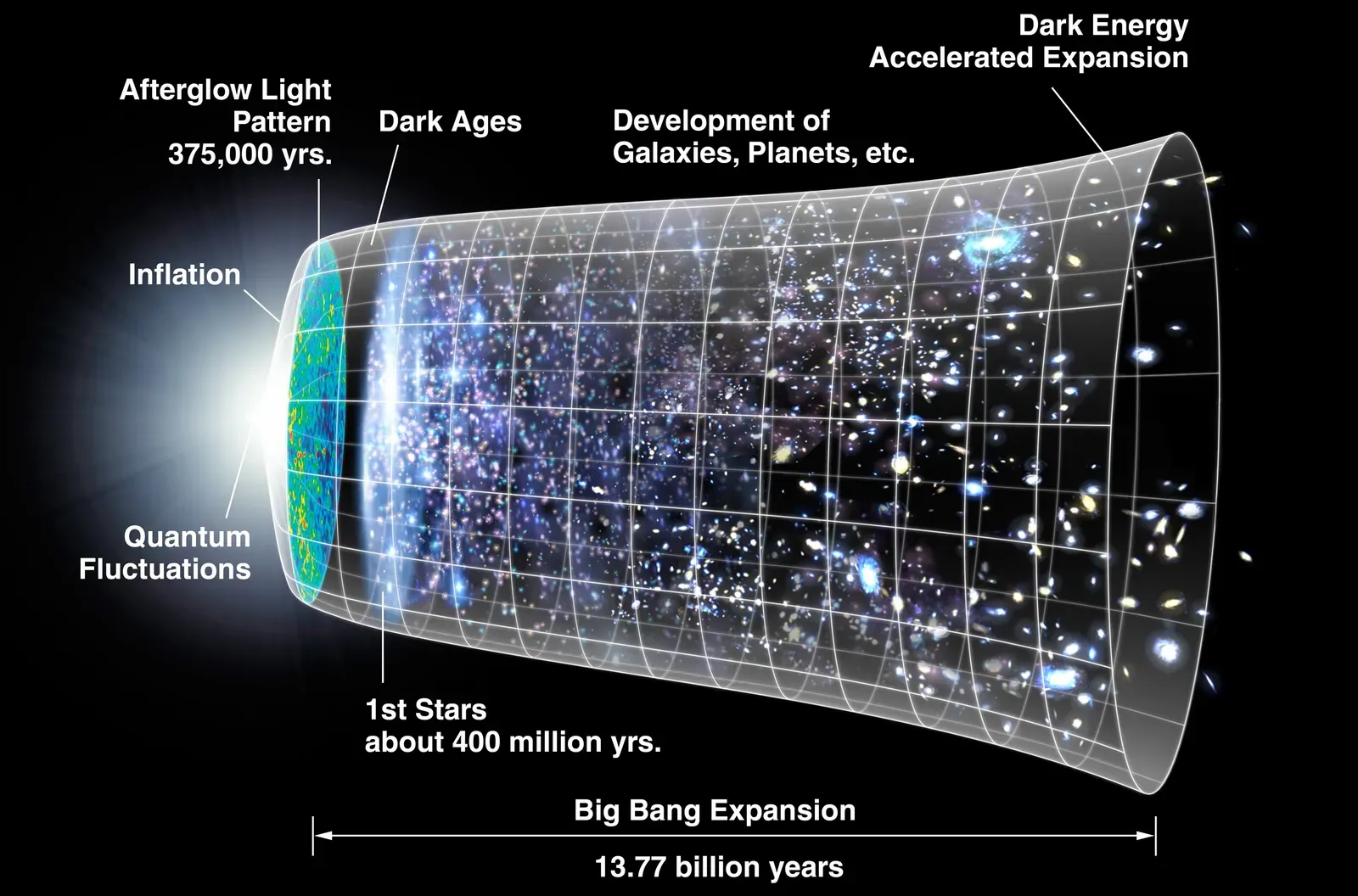
There’s another layer to this that sneaks up on you: what exactly does it mean to say that 13.8 billion years passed before any conscious beings showed up? Our sense of time is tightly bound to experience – to memories, expectations, and change we can track. Physics gives us equations that describe how systems evolve, but those equations don’t come with any built-in “now” or sense of flowing time. In many formulations, the universe is just a four-dimensional block of spacetime, with all events – past, present, and future – laid out like frames on a film strip.
From this so-called block universe perspective, talking about “before observers” and “after observers” is more about the structure of that strip than about time genuinely flowing until we arrive. Consciousness appears in certain regions of the spacetime tapestry, but the rest of the tapestry does not blink out of existence just because no one is physically present in those other regions. At the same time, our human idea of the universe “waiting” billions of years for us is a projection from inside our own experience; it’s how embodied, time-bound creatures tell the story, not necessarily how the universe is in itself.
Phenomenal Reality: If Nothing Can Experience It, Is It Really There?
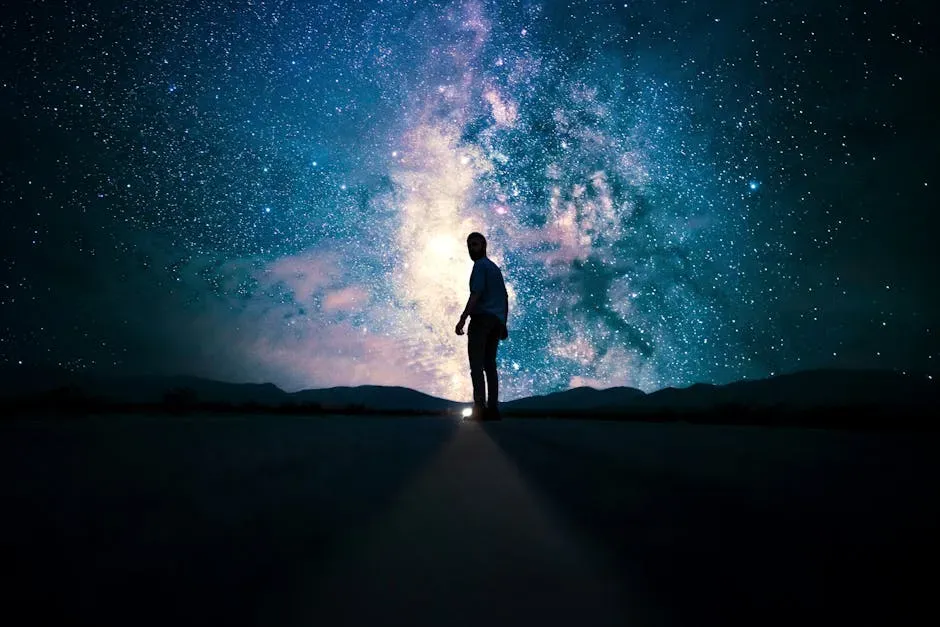
Here’s where the question stops being just physics and becomes genuinely existential: if there is a universe that cannot be experienced by anyone, in any way, does it make sense to say it exists in a meaningful sense? Some philosophers argue that the only reality we can ultimately talk about is experiential reality – the world as something that shows up to a subject. Under that lens, a “purely objective” reality completely divorced from any form of consciousness starts to look like an empty abstraction, a useful tool for science but not something you can ever get behind from the inside.
This doesn’t mean that tables vanish when you leave the room or that the early universe was literally nothingness. It just highlights a gap between what we say exists in theory and what can actually appear in any mind. If no conscious being could ever have any contact, direct or indirect, with some hypothetical region or phase of the universe, the claim that it “exists” starts to lose its grip. It’s like talking about the color of a sound: the words line up grammatically, but do they really point to anything coherent?
Consciousness as Latecomer, or Built-In Feature?
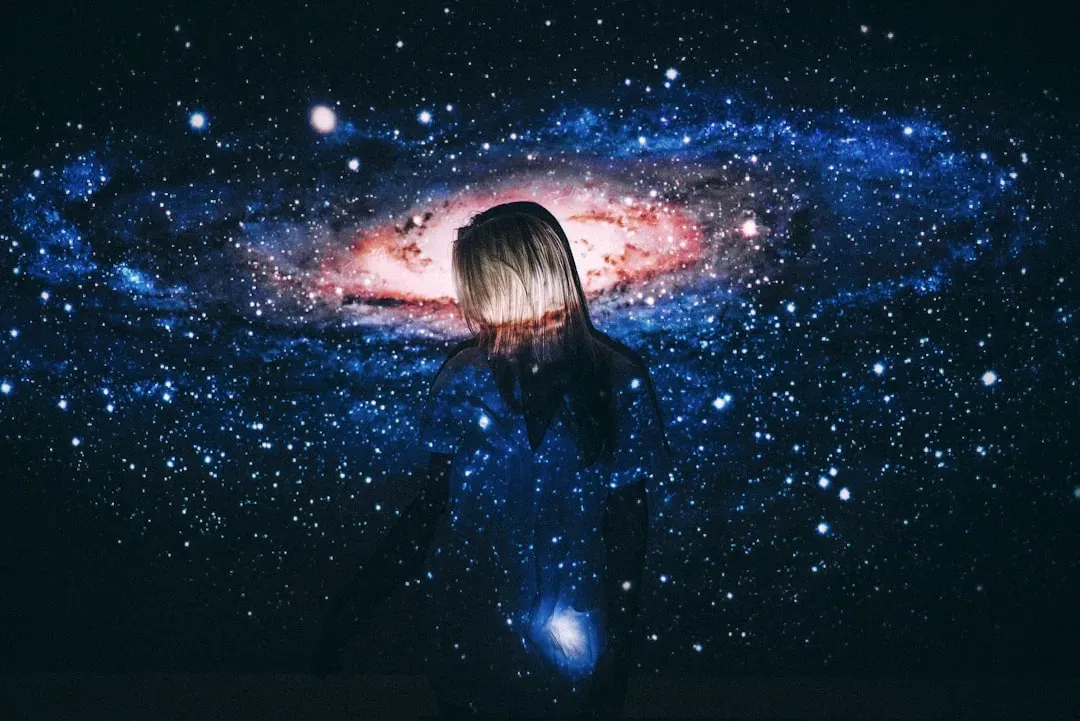
Most scientists treat consciousness as an emergent phenomenon, arising from complex arrangements of matter that were already governed by physical laws long before any mind appeared. On this view, the universe existed in a robust, fully meaningful way well before life; consciousness is what you get when conditions are right, like clouds forming from water vapor. But there are minority views in philosophy of mind and foundations of physics that treat consciousness or experience as more fundamental, not just as an afterthought of matter.
Some of these positions suggest that the basic ingredients of the universe include some kind of proto-experiential aspect, even if it’s unimaginably simple compared with human awareness. In that case, it might be wrong to imagine a long cosmic history that was completely devoid of all forms of subjectivity. Reality, on this picture, always had some “inside,” however faint, even in the earliest stages after the Big Bang. This does not prove that rocks are secretly thinking or that galaxies dream, but it does challenge the idea of a universe that was utterly empty of any perspective until brains evolved.
The Map and the Territory: Models Without Observers, Meaning From Observers
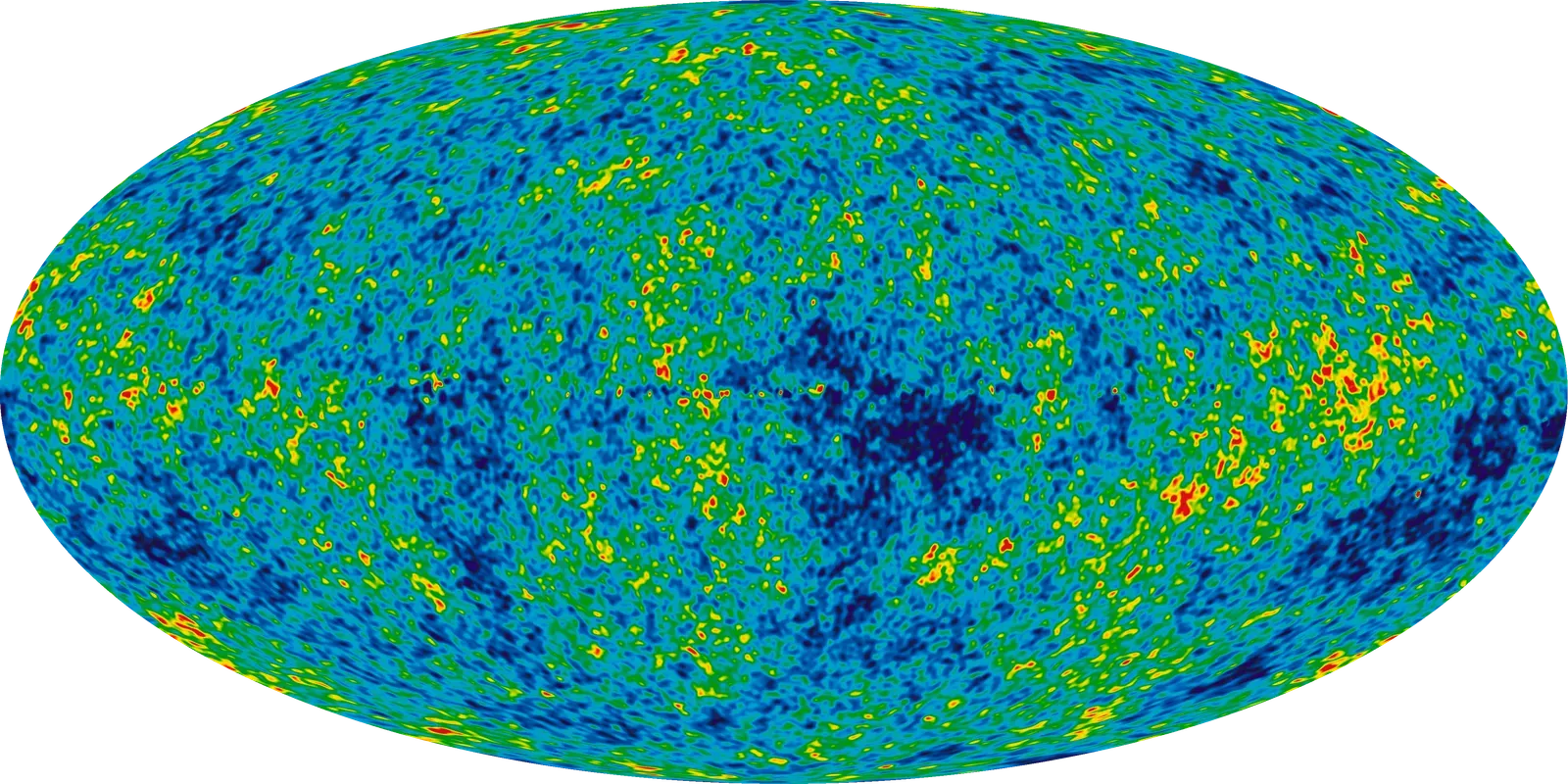
Physics has become astonishingly good at telling a coherent story about those 13.8 billion years, stitching together evidence from the cosmic microwave background, galaxy distributions, nuclear physics, and more. These models do not require humans to be around at the time; they let us infer what happened from the traces left behind. In that sense, the universe before observers is as real to science as the fossil record is to paleontology. You don’t need to have filmed the dinosaurs to know they stomped around.
At the same time, there’s a subtle but important distinction between what the models describe and how those descriptions acquire meaning. Equations, data, and theories only become “knowledge” when there is some mind to interpret them. The fact that we can reconstruct the early universe from faint radiation and particle physics is a triumph, but the act of reconstruction is still an act of conscious beings living now. So the content of the story is about a time with no observers, but the telling, understanding, and caring about that story are thoroughly observer-dependent.
The Illusion of a Neat Split Between “Out There” and “In Here”

One of the most deeply ingrained habits we have is separating the world into “out there” (objective reality) and “in here” (our subjective experience). It feels sane and mature to say the universe chugs along regardless of what we feel or think, and there is definitely some truth to that. Stars don’t seem to dim just because we’re having a bad day. But if you push hard on that divide, the picture blurs. Our entire access to “out there” is mediated by “in here”: senses, instruments, languages, concepts, and shared practices, all of which are grounded in conscious life.
When people scoff at the idea that the universe might depend in some way on consciousness, they often assume that acknowledging any role for observers is equivalent to saying we magically create galaxies with our thoughts. That’s a straw man. The subtler point is that whatever “exists” for us is always filtered through the lens of experience. The idea of a completely observer-free universe is not useless – it is central to physics – but it is also an idealization, like an infinitely rigid rod or a frictionless surface. Helpful, powerful, but not the whole story.
So Did the Universe “Exist” Before Consciousness? A Careful, Messy Answer
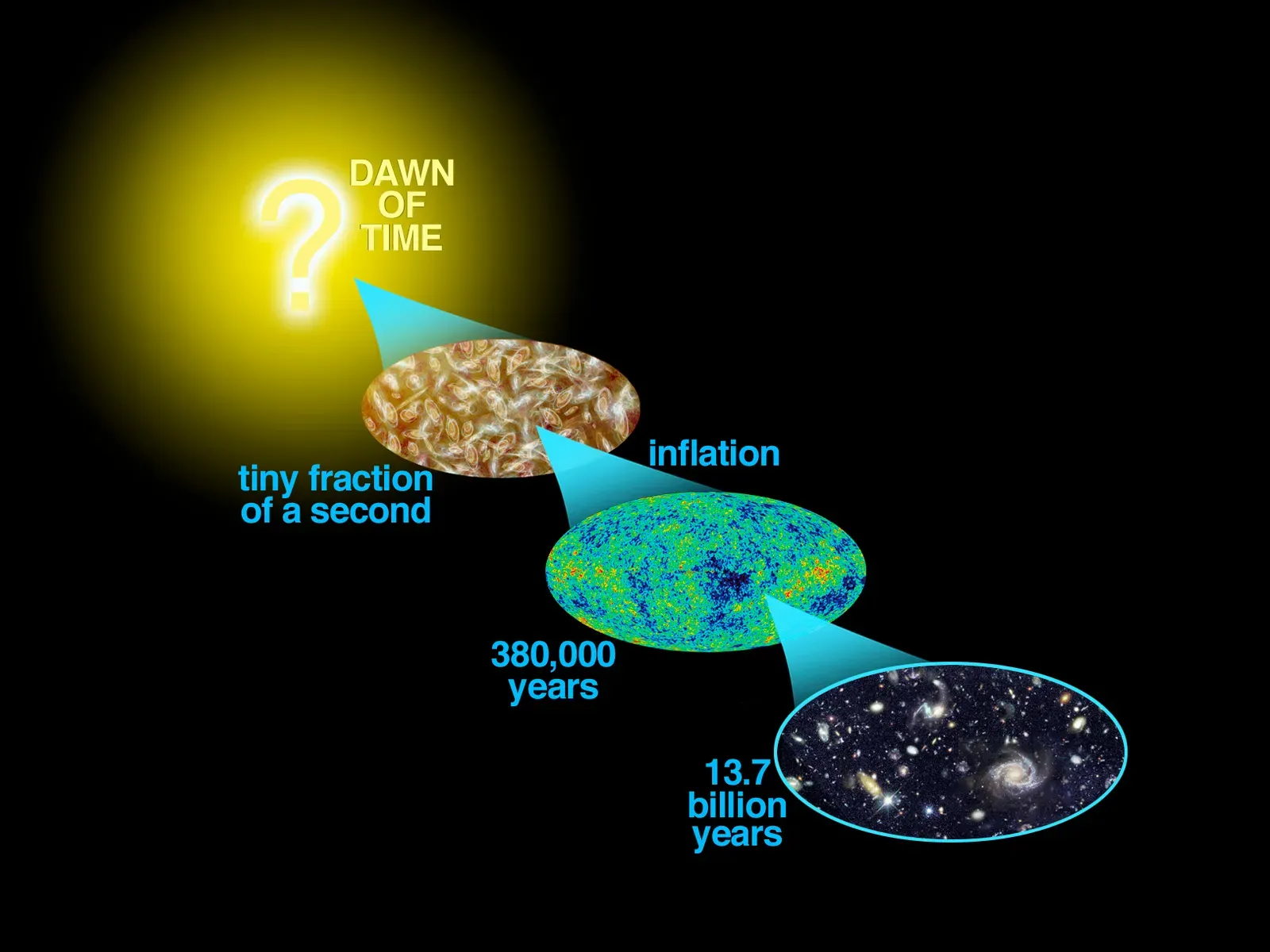
So where does all this leave us? If you lean purely physicalist and treat consciousness as a by-product of brain activity, the answer seems obvious: yes, the universe existed quite happily for billions of years before any minds arose. The cosmic microwave background, distant galaxies whose light has traveled for billions of years, and the success of cosmological models all point toward a robust, mind-independent reality that doesn’t need us for its basic structure. From this vantage point, asking whether the early universe “really” existed might sound like taking a perfectly good engine apart just to doubt the pistons.
But if you take seriously how slippery time is in modern physics, how entangled observation is with quantum events, and how central experience is to all claims about reality, then the simple answer starts to feel a bit overconfident. It is not absurd to wonder whether existence without any possible experience is more like a useful story than a fully meaningful state of affairs. The early universe almost certainly did not depend on human beings in particular, but the question of whether it “exists” in exactly the way we imagine, entirely independent of any form of consciousness, is still very much alive – and perhaps always will be.
Conclusion: A Lonely Universe, or a Story We Are Still Writing?
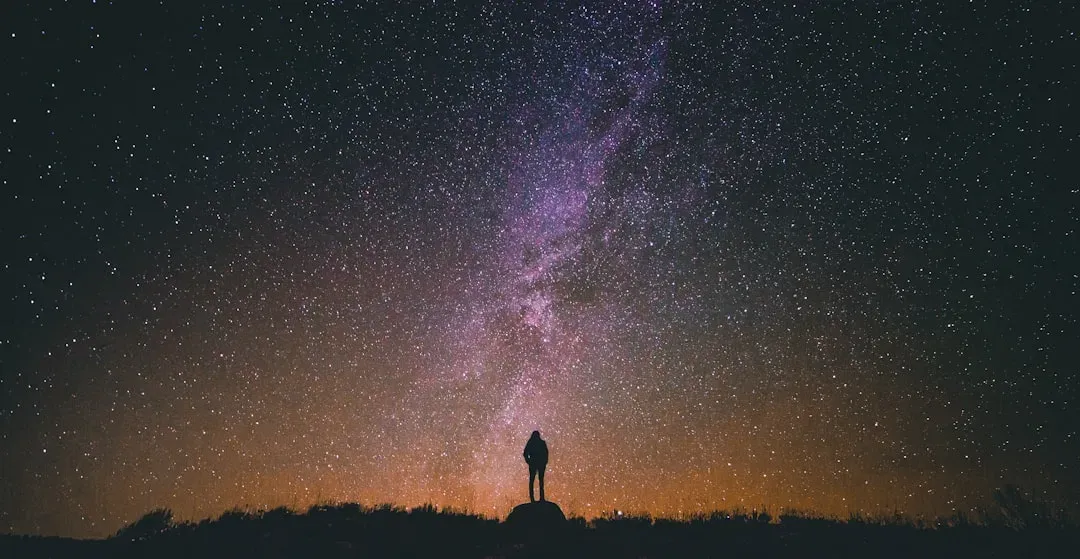
Here’s my own take, for what it’s worth: I think the universe really was there, in some form, long before any conscious creatures evolved, but I also think the way we talk about that “there” smuggles in more of our own perspective than we usually admit. The universe doesn’t need us to run its equations, but meaning, narrative, and even the sense of a vast, ancient cosmos do depend on beings like us showing up and asking questions. Without consciousness, reality might still have a structure, but it would be a structure with no one home to experience, interpret, or care about it.
So no, the idea that the universe’s existence is tangled up with consciousness is not as absurd as it first sounds; it’s a serious, unresolved edge where physics, philosophy, and our own lived experience collide. I suspect we will keep bouncing between two poles: a tough, mind-independent cosmos on one side, and an inescapably mind-centered notion of reality on the other. Maybe the most honest position for now is a kind of humble tension between them. After all, what could be more human than trying to understand a universe that was here long before us, using a mind that might be woven more deeply into that universe than we yet know?