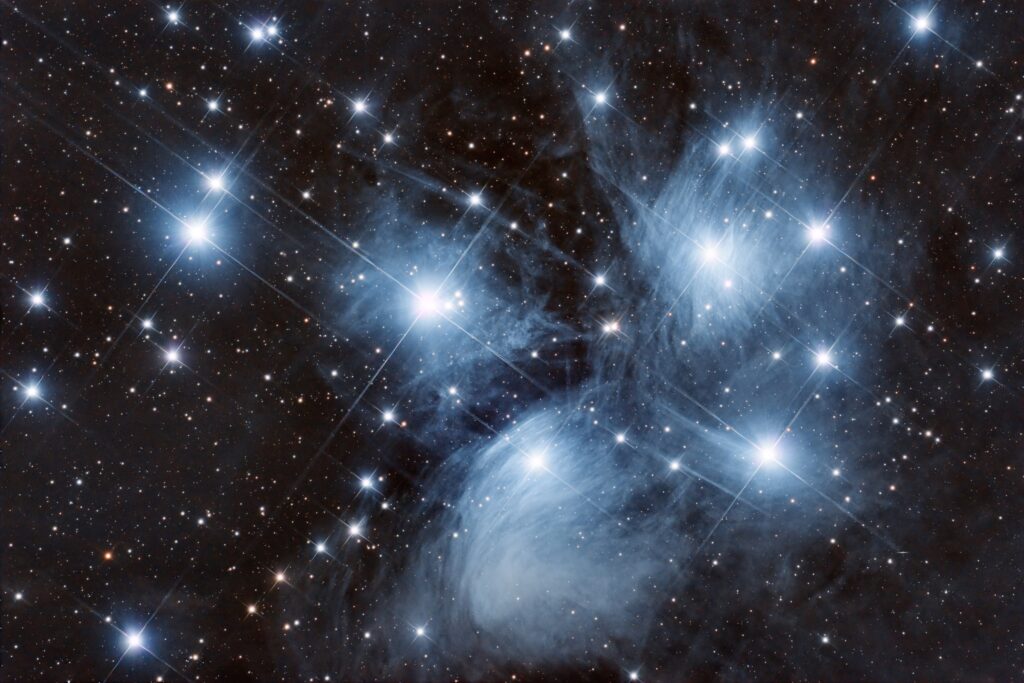

The night sky looks calm, but for the Cherokee it is full of memories that never stopped crying. The small, glittering cluster we call the Pleiades is not just a pretty pattern overhead; it is a wound that never fully healed, a reminder of children carried out of reach and a promise that the living will not forget the lost. When you realize that, those seven pale stars start to feel less like distant suns and more like a family portrait that someone hung in the dark. This is where the Cherokee story refuses to break. Even after forced removals, boarding schools, bans on Indigenous religions, and generations of silence, the old star myth still survives in different tellings, like an ember kept under ash. The details shift from region to region and from family to family, but at its heart the myth insists on one thing: separation hurts, memory matters, and the sky itself is involved in the work of mourning. Once you see the Pleiades through that lens, it is hard to look away.
The Children Who Rose Into the Sky
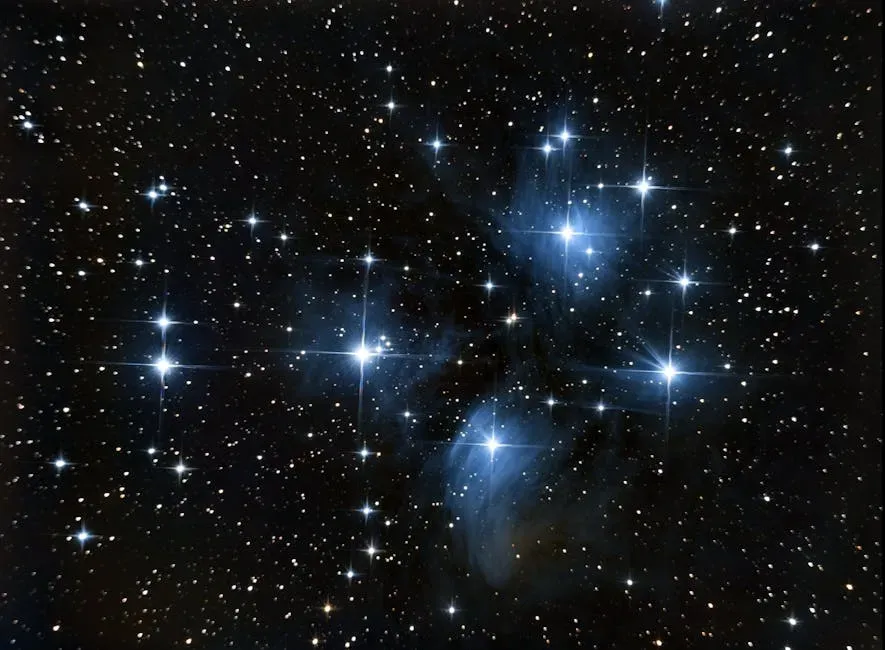
In one widely told Cherokee version, the Pleiades are not just stars; they are children who left the earth behind. The story usually begins with a group of young boys who feel unwanted or neglected in their village. They are mocked for being small, or for eating too much, or for not pulling their weight like grown hunters, and that constant sting builds up until they can no longer bear it. One day, they dance and sing in a circle, asking the higher powers to take them away from their pain. As the boys dance, the ground beneath their feet slowly loosens its grip. Their bodies grow light, and they begin to rise, first barely off the soil, then higher than the heads of the adults rushing toward them, until they pass beyond anyone’s reach. Not all of them make it – depending on the telling, one child stumbles and remains behind, or one mother manages to pull a son back at the last moment. The rest become a tight knot of stars: the Pleiades, always together, but forever parted from their people. That gap, between the ones who rose and the ones left behind, is where the weeping begins.
Why the Pleiades Are Small, Faint, and Always a Little Sad
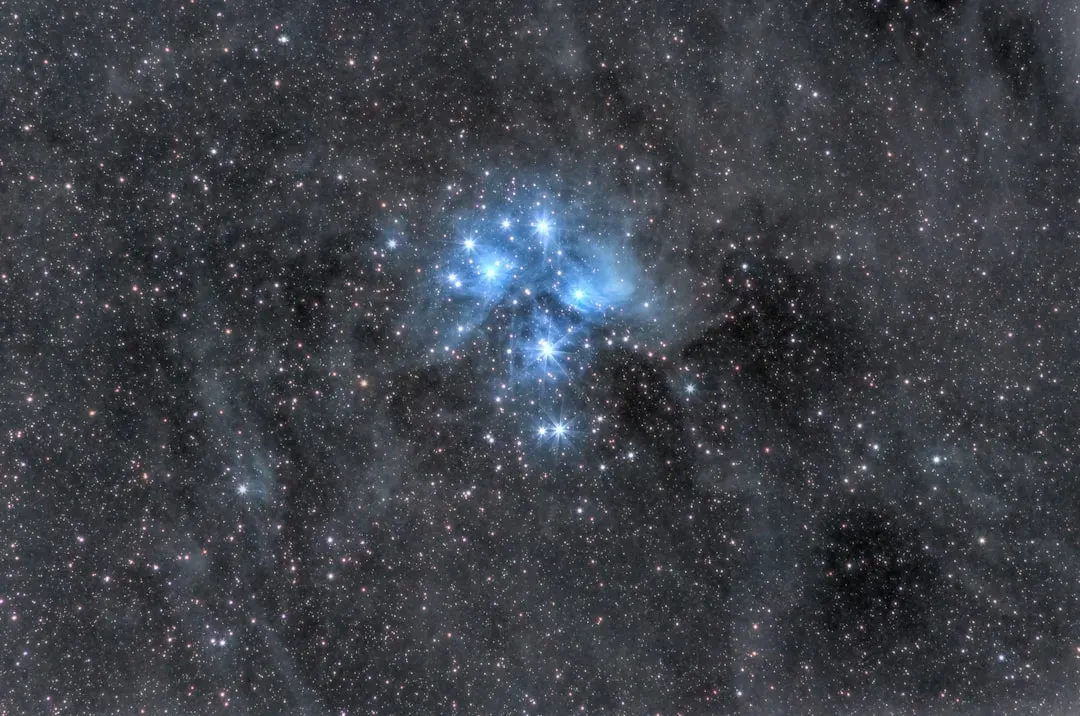
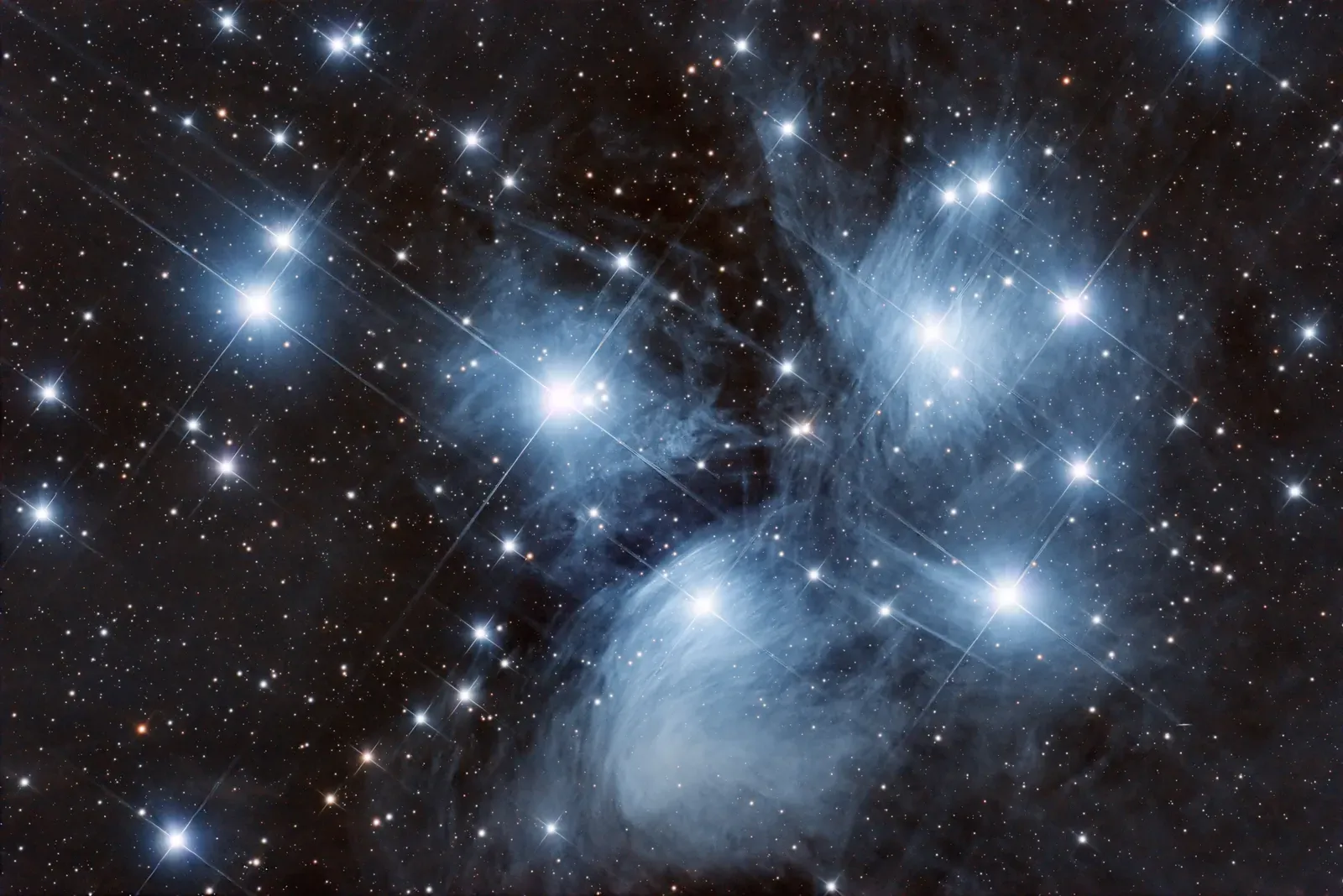
If you step outside on a clear autumn night and find the Pleiades, they are bright enough to see but still strangely fragile compared to bold stars like Sirius or Betelgeuse. For many Cherokee storytellers, that fragile look fits the emotional weight of the myth. These are not warrior stars announcing power; they are child stars, shy, clustered, and easy to overlook if you are not paying attention. Their faintness mirrors the way children’s grief and abandonment can be minimized by adults who are too busy or too wounded themselves to notice. There is also a practical, observational layer hidden in the poetry. The Pleiades are one of the closest open star clusters to Earth, which is why, even though each star is relatively young and hot, we see them as a small group rather than scattered solo lights. Their appearance changes slowly through the night and across the seasons, rising, climbing, and then slipping away. For the Cherokee, that slow disappearance can mirror the rhythm of grief: first vivid and near, then distant but never fully gone. Their “weeping” is not literal rain of course, but the way their story tugs at the heart when the cluster edges toward the horizon, like children walking out of view.
Ceremony, Seasons, and the Calendar Written in Stars
Myths like this are not just emotional tales; they are also practical tools. For agricultural and forest-based communities, the yearly path of constellations across the sky works like a slow-moving calendar, and the Pleiades are especially useful because they are easy to recognize once someone points them out. When they rise just before sunrise in late summer and early fall, they can signal the approach of colder months, the end of certain harvests, or the time to prepare for different ceremonial cycles. The myth of the lost children gives that seasonal shift a face and a feeling, turning an abstract calendar sign into a story you can care about. In some Cherokee communities, star stories would traditionally be woven into winter storytelling, when long nights and shared fires gave space for teaching deeper truths. The Pleiades could remind people, especially children, that actions have consequences: cruelty can push the vulnerable away, and community can be broken if care is neglected. At the same time, the stars also promise continuity. No matter how many winters pass, the Pleiades return, bringing their grief and their light back into the sky, like a yearly memorial service that nobody has to schedule.
Loss, Removal, and How the Myth Took on New Pain
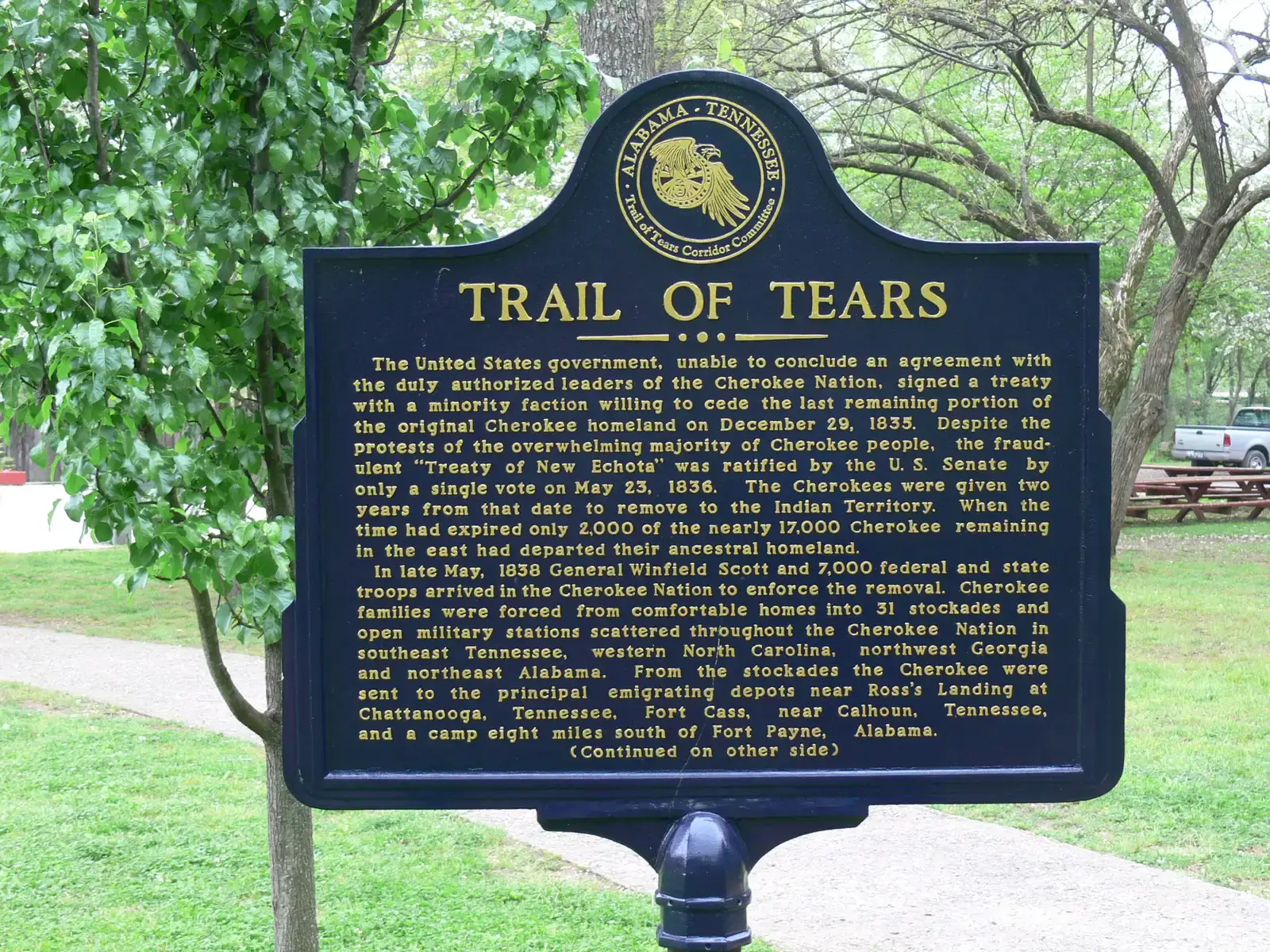
When the Cherokee were forced along the Trail of Tears in the nineteenth century, thousands died from disease, exposure, and hunger, and families were violently separated. Children vanished into mission schools, foster placements, or unmarked graves. For a people who already carried a story about beloved children disappearing into the sky, this historical trauma made the Pleiades myth feel tragically literal. The stars that symbolized separation suddenly matched the lived experience of grandparents, parents, and siblings who never saw one another again. Over time, that overlap between myth and history turned the Pleiades into a layered symbol. They still recalled the older story about boys who rose into the sky, but now they also whispered about wagon ruts, cold nights, and names that went unrecorded. Even when the myth was not explicitly retold, the sight of that star cluster above new reservations and scattered communities could act like a silent nod to the missing. In this way, the myth remained unbroken not only because it was memorized and repeated, but because history kept handing people reasons to see themselves in it.
The Science Behind the Star Cluster and Why It Does Not Kill the Magic

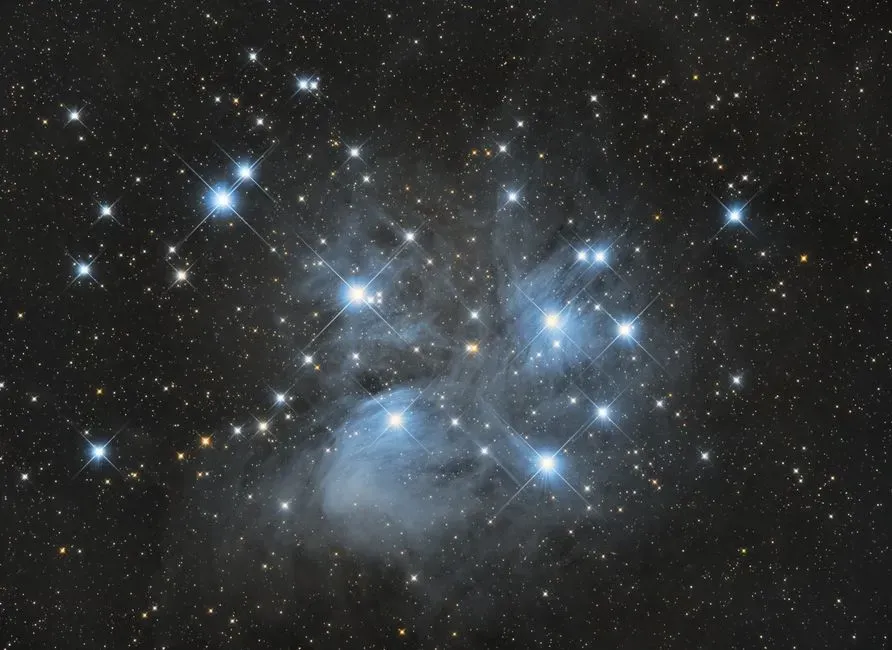
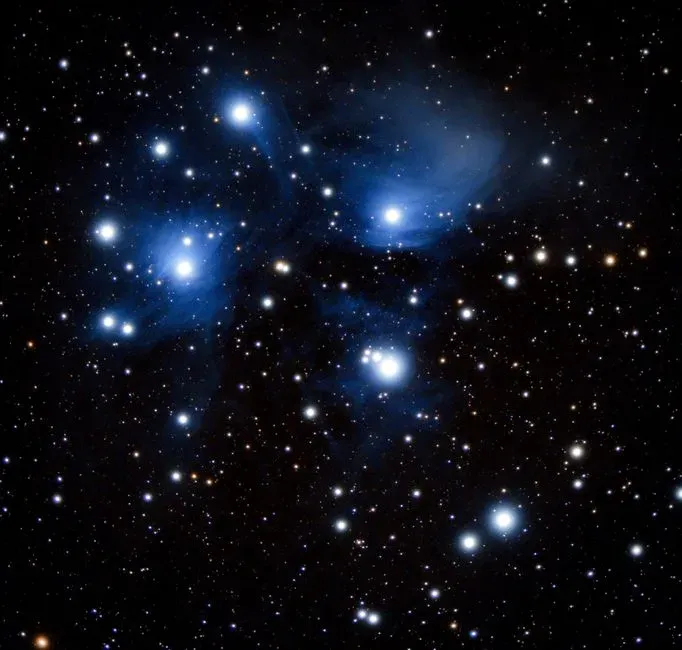
From an astronomical standpoint, the Pleiades are a relatively young open star cluster, roughly a hundred million years old, made of hot blue stars born from the same molecular cloud. They sit in the constellation Taurus, about several hundred light-years from Earth, and are wrapped in faint dust that sometimes shows up as a blue haze in long-exposure photographs. Astronomers can measure their distance and motion, trace their orbits in the galaxy, and model how the cluster will slowly drift apart over vast spans of time. All of that is impressive, but none of it answers the emotional questions humans ask when we look up at them. Science explains the how, while myth grapples with the why. Saying that the Pleiades are weeping is obviously symbolic – stars do not feel loss – but the human nervous system absolutely does. When a Cherokee child hears that those small, shimmering points are lost children who were not treated with kindness, that story tunes their awareness toward empathy and responsibility. The scientific description of scattered plasma and gravity does not cancel that effect; it simply fills in a different side of the picture. In a sense, the emotional meaning that Cherokee people attach to the Pleiades is as real as the photons themselves, because it shapes behavior and identity right here on Earth.
Why the Myth Still Matters in a Hyper-Digital World
It is easy to assume that in a world filled with streaming platforms, social media feeds, and glowing screens, old star myths would fade into the background. Yet for many Cherokee people and other Indigenous communities, stories like this are actually gaining renewed visibility. Language revitalization programs, cultural education in tribal schools, and community-led star knowledge workshops are bringing younger generations back into relationship with the night sky. When a teenager steps outside, phone in pocket, and can point at the Pleiades and name them in Cherokee, that is not nostalgia; it is living culture asserting itself. Personally, I think the stubborn survival of this myth is a quiet act of resistance. It pushes back against the idea that the universe is just empty space and random physics, insisting instead that the cosmos is a mirror for human relationships, responsibilities, and wounds. The image of the Pleiades weeping for the lost says something uncomfortable but necessary: when people are neglected or cast aside – especially children – the damage does not stay neatly on the ground. It echoes upward, it imprints itself in stories, and it demands to be remembered every time the stars return.
Conclusion: The Stars Will Not Let Us Forget
In the end, the unbroken Cherokee star myth about the Pleiades is not a gentle bedtime story; it is a challenge. It says that cruelty to the vulnerable can literally reshape the sky you live under, and that separation and loss, once unleashed, are almost impossible to pull back. The cluster of faint, crowded stars overhead becomes a permanent reminder that the line between belonging and abandonment is thin, and that once you cross it, you might not get a second chance to make things right. I think this is exactly the kind of story we need now. In an era obsessed with speed and distraction, the Pleiades ask us to slow down, look up, and admit that grief and memory are part of what makes us human. They refuse easy comfort; the children do not come back to earth, and the myth does not tidy itself into a happy ending. Instead, it hands us a responsibility: to keep our own communities from repeating the same harm, and to honor the lost by refusing to look away. The next time you catch that tiny cluster glittering above the horizon, will you see just distant suns – or will you remember who they are supposed to be weeping for?