If you’ve ever stared at a pine cone or a sunflower and felt like there was some kind of secret pattern hiding in plain sight, you’re not imagining it. Nature really does have a “code,” and trees are some of its most elegant scribbles. From spiraled branches to twisting trunks and swirled leaf clusters, a quiet mathematical rhythm runs through forests all over the world.
Once you start seeing these spirals, it’s honestly hard to stop. They show up in ancient pines, in the way new leaves arrange themselves around a stem, even in how a tree chooses where to grow its next bud. It feels almost unsettling at first, like realizing the world has been whispering a pattern to you for years and you just never noticed. But when you dig into what’s actually going on, the story turns out to be less mystical and more mind‑blowing: evolution, physics, and math teaming up to make something that looks a lot like design.
The Strange Spiral Language of Trees
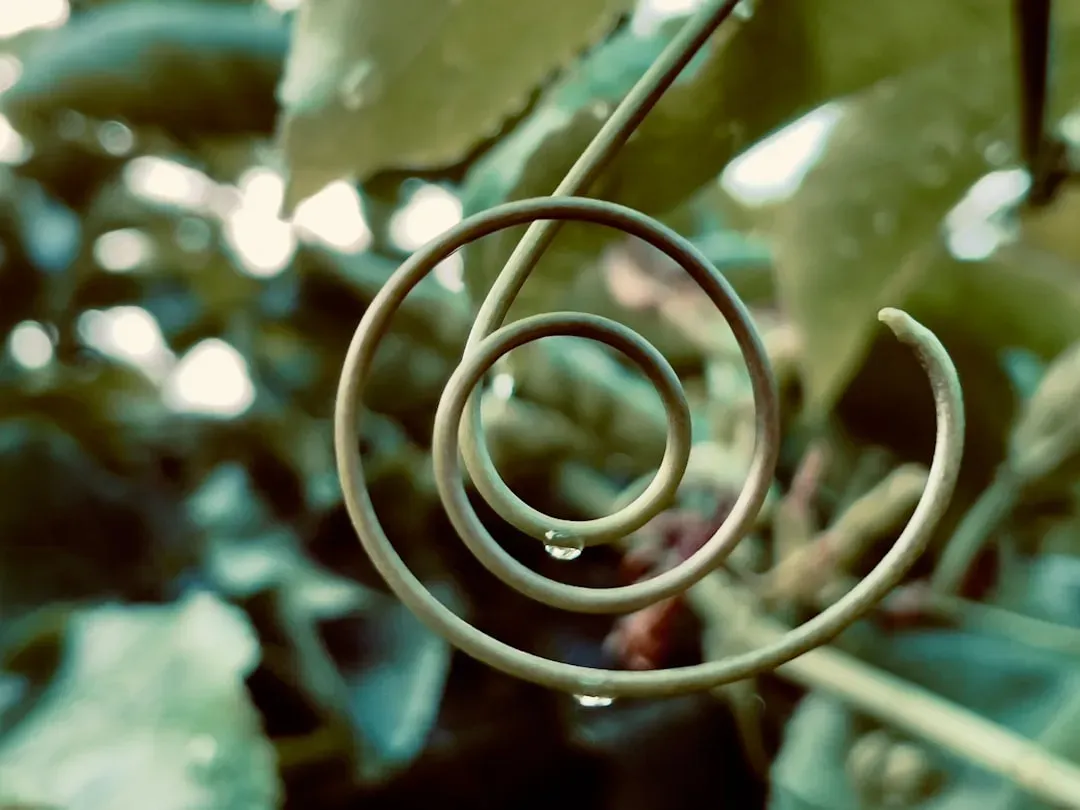
Here’s a weird thought: if you walk around a tree and count how many turns it takes before the leaf pattern lines up again, you’re basically decoding a fraction. Many trees arrange their leaves, buds, or branches in a spiral that can be described by ratios like two fifths, three eighths, or five thirteenths around the trunk. Those numbers sound random until you realize they link back to the famous Fibonacci sequence and the so‑called golden angle.
To the eye, it looks like a graceful spiral staircase of growth, but underneath it’s about packing things in as efficiently as possible. Spiraled leaves avoid shading each other, spiraled branches balance weight and wind stress, and spiraled cones pack seeds tightly. I remember the first time I traced the spiral of a pine cone with my finger and realized there were two sets of spirals going in opposite directions, both matching Fibonacci numbers; it felt less like a coincidence and more like I’d just found the user interface of the tree.
The Golden Angle: How Math Sneaks Into a Leaf
The key character in this story is something called the golden angle, roughly about two fifths of a full turn around a circle. Many trees place each new leaf or bud about this angle away from the previous one. Over time, this creates a spiral pattern that looks almost hypnotically even. The golden angle is special because it spreads points around a circle in a way that avoids neat, repeating lines, so nothing stacks directly on top of anything else.
From the tree’s point of view, this is genius. By avoiding vertical alignment, each leaf has a clearer shot at sunlight and rain, and branches get better access to space. It’s like trying to arrange people in a crowded stadium so nobody has their view blocked; if you rotate each new person by just the right angle, you get a spiral pattern that looks artistic but is really just brutally efficient. When you realize a quiet little bud is “choosing” this angle without thinking, it’s hard not to feel a bit humbled by what natural selection can do over deep time.
Phyllotaxis: The Science of Leaf Spirals

The study of how leaves, buds, and branches are arranged on stems actually has a name: phyllotaxis. For a long time it was treated as a curious pattern for botanists and mathematicians to geek out over, but in the last few decades it has become a serious research topic. Scientists have modeled how new buds emerge from the growing tip of a stem and “push” each other away, naturally settling into spiral arrangements that match what we see in real plants.
At the microscopic level, this comes down to growth zones and chemical signals that tell cells when and where to start a new leaf or bud. The remarkable part is that you don’t need the plant to “know” any math; simple local rules about repelling and spacing can generate global patterns that look strangely precise. That’s the part I personally find most beautiful: order emerging from tiny, mindless decisions, the way a crowd shapeshifts into a flow without anyone in charge.
Spiral Trunks and Twisting Wood
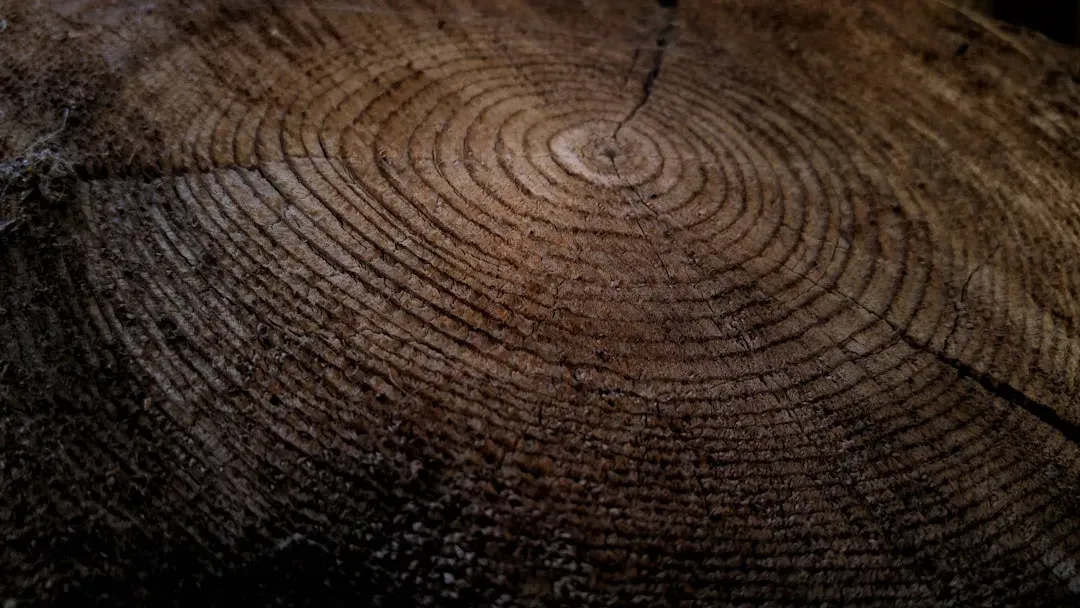
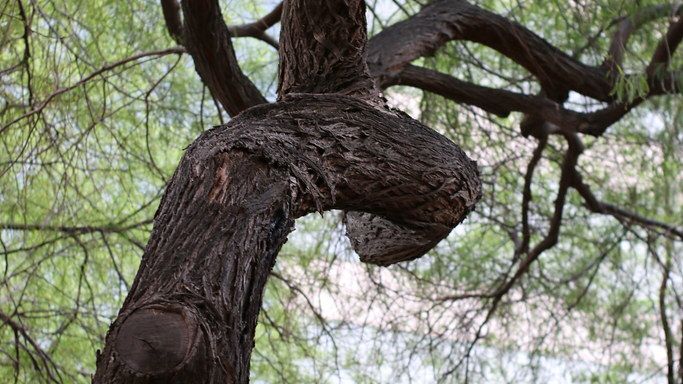
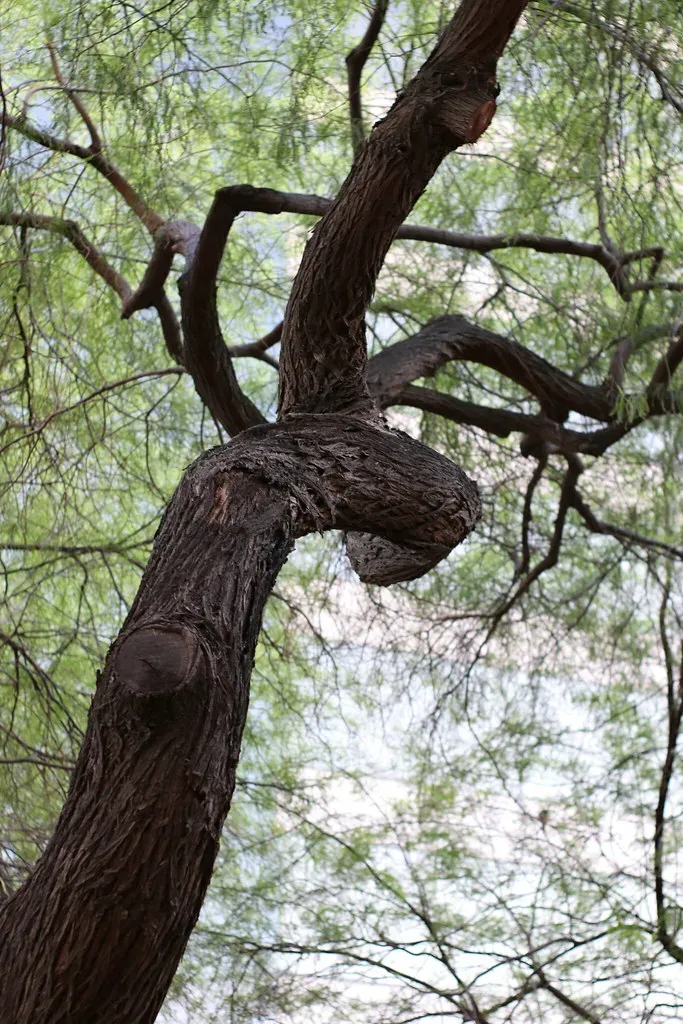
Leaves and cones get most of the attention, but some trees take spiraling to a more dramatic level: they twist their entire trunks. In certain species, you can see the grain of the wood running in a slow helix up the tree, like the threads of a screw. The twist might be subtle or so pronounced that the bark itself looks like a column carved by an artist.
There’s still debate around why some trees twist, but a few ideas keep coming up. A spiral grain can help distribute mechanical stress from wind, snow, and the tree’s own weight, making the trunk less likely to crack along a single straight line. It can also affect how water moves through the wood. In a sense, the tree is not just standing there; it’s bracing, leaning into the forces around it, and a spiral trunk can be its quiet, structural counter move.
Why Spirals Help Trees Survive

It’s easy to romanticize spirals as some cosmic code, but from the tree’s perspective, they’re tools for survival. A spiral leaf pattern maximizes light capture without wasting space, which means more energy for growth and reproduction. In dense forests where every bit of light matters, that advantage is massive. Over many generations, trees with more efficient arrangements simply left more descendants behind.
Spiraled branches can also help distribute weight evenly, reducing the risk of catastrophic breakage during storms. When cones and seed heads follow spiral rules, they can pack an impressive number of seeds into a given volume while still leaving enough room for each seed to develop and eventually disperse. The spiral is not just decoration; it’s a quiet optimization trick, the kind of thing evolution is very good at discovering and refining without any conscious awareness at all.
From Ancient Forests to Modern Algorithms

Humans have been noticing these natural spirals for a long time, even if we did not always understand them. Artists, architects, and designers have borrowed the same ratios seen in tree spirals for patterns in buildings, logos, and even user interfaces. The logic is simple: if this spacing feels balanced and efficient in nature, it might also feel pleasing and intuitive to our eyes and brains, which evolved in those same environments.
On the more technical side, engineers and computer scientists have used spiral phyllotaxis patterns as inspiration for arranging solar panels, antennas, and sensors to minimize interference and maximize coverage. When you see a spiraled layout of dots in a data visualization or a camera sensor, you’re sometimes looking at a deliberate echo of the way a tree stacks its leaves. I love that there’s this quiet feedback loop: we studied trees, decoded their patterns, and then fed those patterns back into our own tools and technologies.
Seeing the Hidden Code in Everyday Trees

Once you know what to look for, a casual walk outside turns into a kind of treasure hunt. You can spin a pine cone in your hand and trace overlapping spirals in two directions. You can look down at the top of a young plant and notice how no two leaves sit directly above each other. Even on a city street, where everything feels designed and artificial, the street trees are quietly running their own algorithm of angles and spacing.
There’s an emotional side to this that’s hard to ignore. Realizing that the same mathematical whisper runs through a sunflower head, a fir tree, and a carefully designed building changes how you see the world. It makes the divide between “natural” and “human‑made” feel a bit thinner. For me, the real magic is not that trees are following some mystical secret code, but that simple rules shaped by survival can produce patterns so elegant that we can’t resist calling them beautiful.
Conclusion: A Pattern That Questions Our Place

When people talk about nature’s hidden code, they often want it to mean that the universe is neatly engineered for us, like we’re the intended audience. Personally, I think the truth is more unsettling and more interesting: trees spiraled their way into these patterns long before we had the language to describe them, and they would keep doing it if we vanished tomorrow. The spirals are not for us, and maybe that’s exactly why they hit so hard when we finally notice them.
At the same time, the fact that our minds can recognize, model, and even reuse these patterns says something about our place in the system. We are not outside observers staring at a coded world; we are part of the same unfolding logic, made from the same atoms, shaped by the same physics and evolution. The trees are not spelling out a message with their spirals, but they are offering a reminder: complexity and beauty can grow out of simple rules, given enough time. The real question is, now that we can see this hidden code, what will we choose to spiral toward next?