
Some ideas sound so wild at first that you almost want to laugh them off. The suggestion that dark matter might be, in some sense, alive definitely feels like one of those. Yet the more physicists struggle to pin down what dark matter actually is, the more they’re forced to consider possibilities that, a decade ago, would’ve sounded like science fiction.
We know dark matter is real from its gravitational fingerprints, but we still don’t know what it’s made of, whether it interacts with itself, or whether it could form complex structures. Once you admit that, the door cracks open to a radical question: could some forms of dark matter behave like a new kind of life, following rules that echo biology on a cosmic, invisible stage?
The Strange Evidence That Dark Matter Is Really There
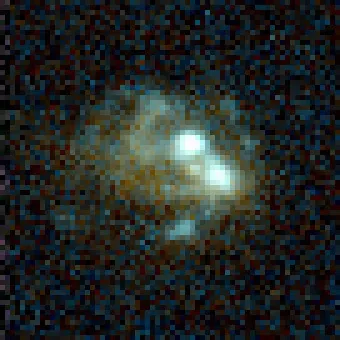
The first step toward even asking if dark matter could be alive is accepting that dark matter exists at all, and that part is actually on solid ground. Astronomers see galaxies rotating too fast to be held together by the stars and gas we can see, and the only way it all hangs together is if there is extra, unseen mass providing gravity. Roughly about five times more matter seems to be there than what we can detect with light or other electromagnetic waves, which is a pretty shocking mismatch.
It’s not just galaxy rotation that gives dark matter away. When galaxy clusters smash into each other, like in the famous “Bullet Cluster,” the normal matter gets slowed down and heated, but the main source of gravity appears to sail right through. That’s a huge clue that something invisible, collision‑shy, and massive is there, acting almost like a ghost skeleton for the visible universe. We do not yet know what dark matter is made of, but we can be very confident that something in that role is shaping the large‑scale structure of the cosmos.
From Simple Particles To Wild New Candidates
For years, the leading idea was that dark matter was made of simple, non‑interacting particles, often imagined as heavy cousins of known particles, sometimes called WIMPs. Experiments buried deep in mines and under mountains have spent years trying to catch one of these hypothetical particles bumping into a detector, like waiting for a single grain of invisible dust to tap a window. So far, those efforts have mostly come up empty, which has pushed theorists to widen the search and rethink assumptions.
Out of that frustration has grown a zoo of new possibilities: ultra‑light fields spread across galaxies, dark matter made of primordial black holes, or “dark sectors” with their own forces and particles that barely interact with ours. Once you start imagining an entire hidden sector with its own interactions, it becomes natural to wonder what kind of complexity could arise there. That’s where ideas that sound suspiciously like “dark life” start to creep into the conversation, even if most physicists would phrase it more carefully.
What Would It Even Mean For Dark Matter To Be “Alive”?
Before this goes off the rails, it helps to be clear about what “alive” could mean in this context. On Earth, life is usually defined by things like metabolism, reproduction, evolution, and the ability to maintain order in the face of chaos. Dark matter, as far as we know, does not form cells, eat, breathe, or leave fossils. If there is such a thing as dark life, it wouldn’t be little dark organisms flying around inside your room; it would be something far more alien and abstract.
Some theorists play with a looser idea: are there dark matter systems that could process information, self‑organize, and evolve over time, in ways that rhyme with what we call life? Think of “life” less as a specific chemistry and more as a pattern: complex structures that use energy to reduce their own internal disorder and adapt. Under that lens, the question shifts from “Are there dark aliens hiding around us?” to “Could the hidden matter of the universe host its own complex, evolving structures we’d barely recognize as life?” It’s a subtle but important difference, and it keeps the idea intriguing without floating off into fantasy.
Dark Sectors And Hidden Forces: A Universe Behind The Curtain
One of the most active areas in modern theory is the idea of a dark sector: a whole family of particles and forces that barely talk to our familiar matter. In this picture, dark matter isn’t just “stuff that gravitates,” but part of a richer hidden world with its own interactions, maybe even its own version of electromagnetism or nuclear forces. Our ordinary matter then becomes just one layer of reality, like the visible surface of an ocean concealing deeper currents below.
If a dark sector exists and its particles can attract, repel, or combine in complex ways, then dark matter might form intricate structures we’ve never imagined. Just as regular atoms combine into molecules, crystals, and biological systems, dark particles could in principle assemble into “dark atoms,” “dark molecules,” or even “dark chemistry.” That doesn’t mean there are dark forests and dark fish, but it does mean that, at least in theory, the ingredients for complexity could be there, operating in slow motion across cosmic timescales.
Speculative Ideas: Dark Life, Dark Civilizations, And Cosmic Computers
This is where things get truly mind‑bending and where we have to be very clear: these ideas are speculative, not established facts. A small handful of researchers have explored the notion that dark matter could form long‑lived, self‑interacting structures that might process information like an enormous, diffuse computer. In that metaphor, galaxies and dark matter haloes could be more than just cosmic scaffolding; they might also be platforms for subtle patterns, with information shuffling around at speeds and scales beyond our intuition.
When people talk about dark civilizations, they do not mean spaceships made of shadow zipping past the Moon. Instead, the idea is that if complex dark structures could form and evolve, the line between physics and something like “dark biology” becomes blurry. Imagine a universe where two overlapping stories are playing at once: one built from atoms and light, which we inhabit, and another written in a kind of invisible script, completely indifferent to our existence. Right now, that remains closer to a thought experiment than a concrete theory, but it pushes us to think harder about what counts as life and intelligence at all.
How Could We Ever Test Any Of This?
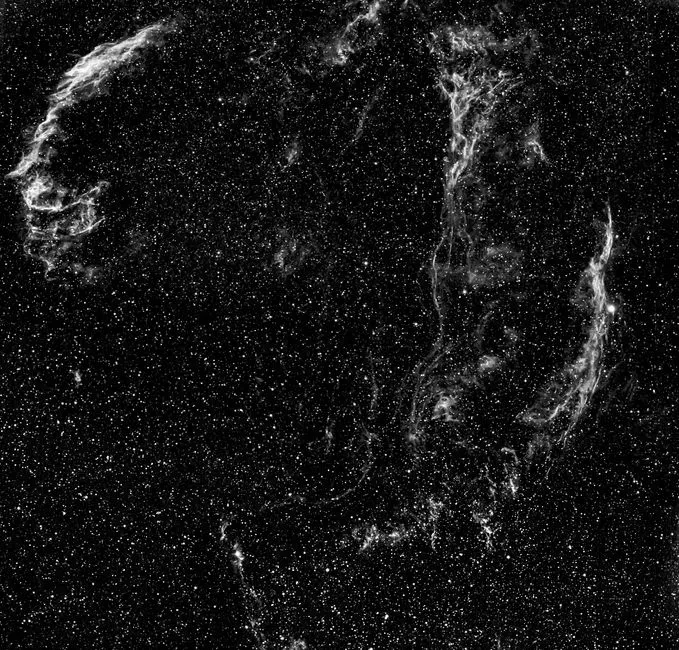
Wild ideas are cheap; the real test is whether they can be checked against reality. For dark matter, that means designing clever experiments and observations that can distinguish between simple, non‑interactive particles and more complex, self‑interacting dark sectors. Astronomers study how galaxies form and cluster, looking for subtle signs that dark matter is clumping, bouncing, or flowing in ways that plain, featureless matter would not. Tiny deviations in the shapes of galaxies or in the distribution of matter across the sky can hint at what dark matter is doing behind the scenes.
On Earth and in space, detectors keep searching for any whisper of interaction between dark matter and ordinary matter, from underground laboratories to particle colliders. If signs of a dark sector were ever confirmed – say, evidence of dark forces or dark radiation – that would radically strengthen the case that complexity in the dark is possible, even if “dark life” remains a distant, cautious idea. Until then, scientists are walking a tightrope: bold enough to dream up new scenarios, but disciplined enough to throw them out if the evidence refuses to cooperate.
Why This Question Matters Even If The Answer Is “Probably Not”
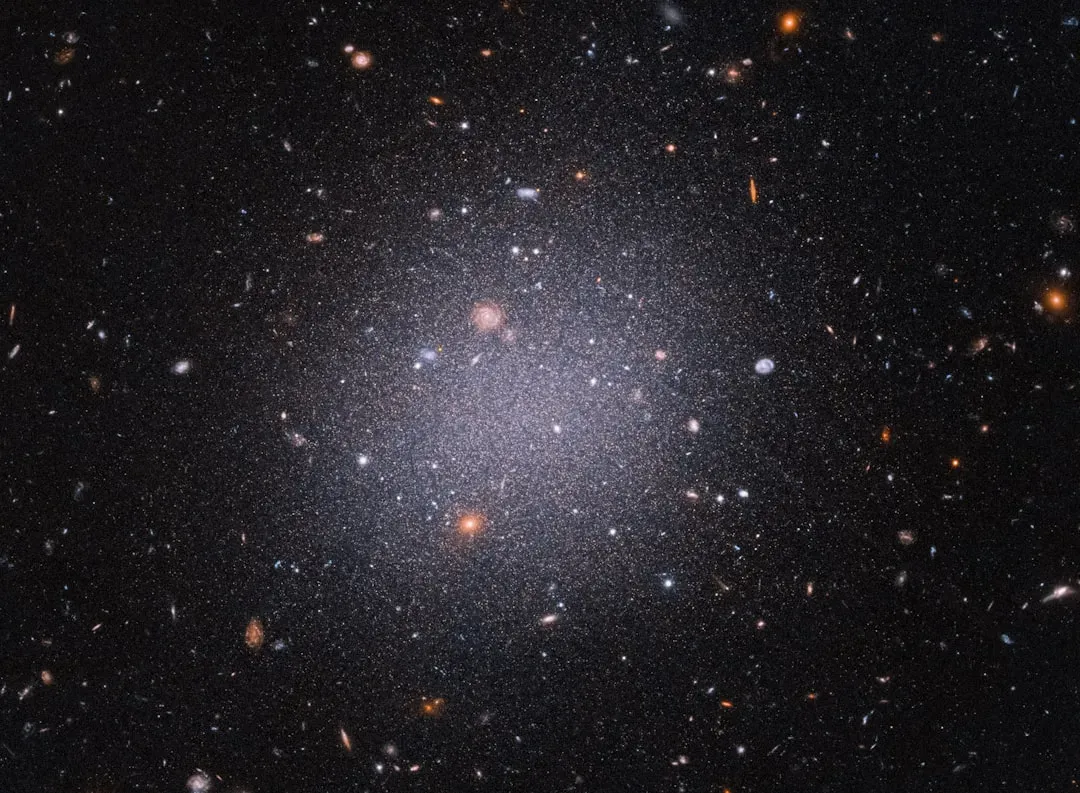
Honestly, if you pressed most working cosmologists today, many would probably say that true dark life is unlikely, at least based on what we currently know. Dark matter seems to interact very weakly and behaves quite smoothly on large scales, which is not a great recipe for the kind of local, intricate structures that life usually needs. But here’s the twist: even a negative answer can transform how we see the universe, because it forces us to sharpen our definitions of life, complexity, and information in a cosmic setting.
Thinking seriously about whether dark matter could be alive pushes science right up against philosophy in the best possible way. It makes us ask whether life is just a local chemical accident on a damp rock, or a general pattern that might arise wherever matter and energy can play together in certain ways. In my view, the value of the question is that it stops us from being arrogant about our little slice of reality; the universe might be stranger than we’re currently equipped to imagine, and confronting that possibility is part of doing honest science.
Conclusion: A Universe That Refuses To Be Boring
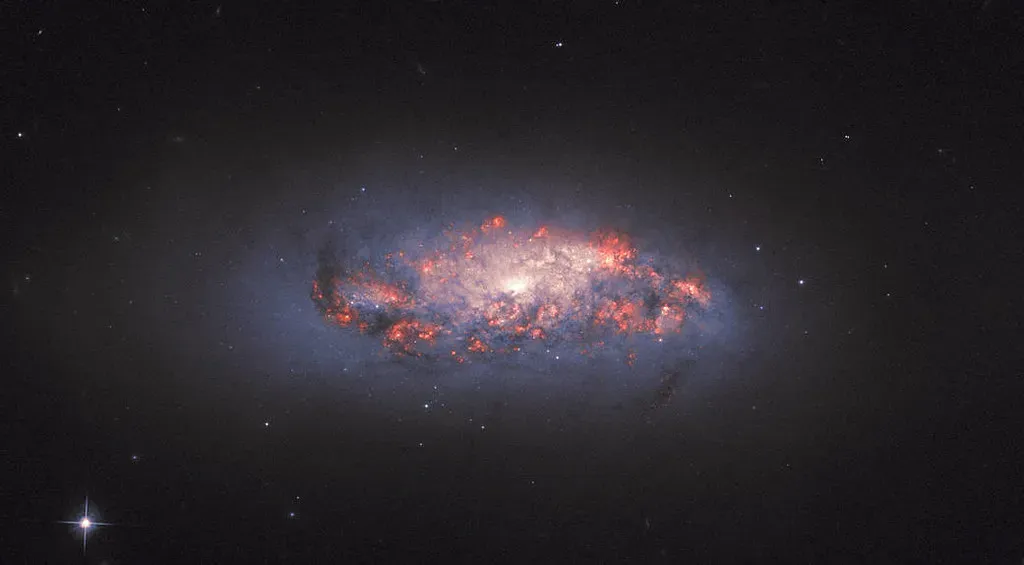
My own opinion is that dark matter probably isn’t “alive” in any sense that would satisfy a biologist, but I also think it’s a mistake to roll your eyes at the question. We are living in a time when our best theories say most of the universe is made of stuff we cannot see, touch, or produce in a lab, and that should inject a healthy dose of humility into every confident claim we make. As our models of dark sectors grow more sophisticated, the line between conventional physics and the study of complex, emergent behavior will keep getting fuzzier, whether or not it ever crosses into something we’d want to call life.
If anything, the possibility that there might be whole layers of structure and maybe even “activity” in the dark universe that we’ll never directly experience is exactly what makes cosmology so thrilling right now. The universe has already blindsided us with quantum mechanics, relativity, and the realization that visible matter is just a small minority component; it would be very on‑brand for reality to have one more surprise tucked away in the dark. Whether dark matter turns out to be dead simple or unimaginably rich, the real question is this: are we brave enough to keep asking the wild questions, even when the answers might change our place in the cosmos forever?