
You usually think of curiosity as something that proves how smart you are. You ask questions, you explore, you learn, and it all feels like a sign of intelligence. But what if you’ve had it backwards this whole time? What if your urge to poke, prod, wonder, and investigate was shaped first and foremost by the brutal demands of staying alive?
This idea sounds strange at first, but once you start looking at how curiosity shows up in animals, children, and even your own daily habits, it becomes hard to ignore. You begin to see curiosity less as a luxury of a big brain and more as a survival tool that your ancestors simply could not live without.
Why Your Curiosity Might Be More About Not Dying Than Being Smart

Think about the last time you felt a strong urge to know something: maybe a weird bump on your skin, a strange sound at night, or a sudden news alert that made your heart jump. In moments like that, your curiosity does not feel like some abstract, philosophical trait. It feels urgent, almost like an alarm going off in your mind.
From an evolutionary perspective, that urgency makes sense. If your ancestors were not intensely curious about odd tracks near the camp, unfamiliar berries, or changes in the weather, they did not survive long enough to pass on their genes. You inherit the minds of the ones who could not stop asking: What is that? Is it safe? Can I use it? That relentless questioning was less about being clever and more about avoiding danger and finding resources.
How Hunter‑Gatherer Life Hard‑Wired You To Be Interested In Everything
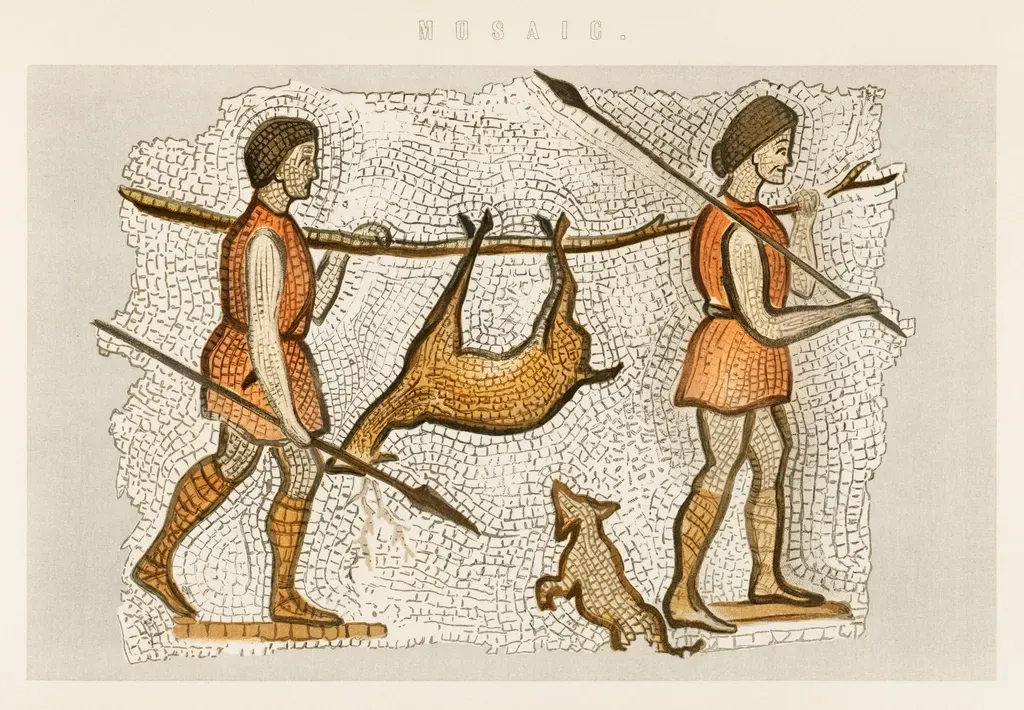
If you drop yourself mentally into a hunter‑gatherer world, you do not have the luxury of ignoring your surroundings. Every new plant, sound, animal, or person is a potential threat, a potential meal, or a potential opportunity. Curiosity, in that environment, is not a hobby. It is your operating system.
You needed to notice that one tree whose fruit kept animals coming back, the slightly different smell that meant water was nearby, or the shift in bird calls that hinted at a predator. When you look at it this way, curiosity stops being a cute personality trait and starts looking like a survival instinct that constantly pushed you to scan, test, and explore your world more deeply than any other species around you.
Why Young Children Act Like Tiny, Barefoot Scientists

When you watch a toddler, you see raw curiosity in action: touching everything, putting stuff in their mouth, asking endless questions, ignoring your careful explanations and testing things for themselves. To you, it can feel chaotic or annoying. To evolution, that chaos is a training program.
In a world filled with hidden dangers, a child who obsessively explores learns the rules of reality faster. You see this today in the way kids push boundaries, experiment with cause and effect, and repeat risky behaviors until they understand them. That drive to explore helps a young brain build a detailed map of what is safe, what hurts, what works, and what does not. Curiosity, in childhood, is like nature’s way of running crash‑course survival drills.
Animals Are Curious Too – But Only When It Pays Off

You are not the only creature that pokes its nose where it “shouldn’t” be. Many animals show forms of curiosity: ravens stashing shiny objects, rats exploring new tunnels, monkeys fiddling with unfamiliar tools. But if you watch closely, their curiosity is usually tied to food, safety, or social advantage, not some abstract love of knowledge.
When exploration becomes too risky or too costly, animals often back off. You do the same without even thinking about it. You are more likely to investigate a new shortcut home than to wander aimlessly into a dangerous neighborhood. That pattern suggests your curiosity is not a free‑floating sign of intelligence, but a behavior that switches on when the potential survival payoff seems worth the risk.
The Hidden Link Between Curiosity and Fear

If you pay attention, you might notice that your curiosity often sits right next to fear. You hear a noise downstairs at night and feel both anxiety and the urge to investigate. You notice a strange symptom in your body and you feel both dread and the need to look it up. Those two feelings are not opposites; they are teammates.
Fear tells you that something might be important for your survival, and curiosity tells you to get more information before you act. Together, they push you to gather enough knowledge to either escape, fight, or prepare. That emotional pairing makes a lot more sense if you see curiosity as a survival adaptation, not just an intellectual hobby you picked up once your brain got big enough.
How Curiosity Helps You Predict the Future (Just Enough to Survive)

Survival is really a game of prediction. You are constantly guessing what will happen next: Will this food make you sick? Will this person betray you? Will this path lead to shelter or danger? Curiosity is what drives you to gather the data that sharpens those guesses and makes your predictions more accurate.
When you feel drawn to understand how something works, you are building a mental model that lets you forecast outcomes a bit better each time. You experiment, observe what happens, adjust your expectations, and slowly get less surprised by the world. That edge, even if it is small, can be the difference between walking into a trap and seeing it coming just early enough to step aside.
Why You Stay Curious About Social Drama and Other People’s Secrets

Your curiosity is not just about physical survival; it is also deeply social. You are naturally drawn to gossip, status shifts, and other people’s intentions. On the surface, that might seem shallow. Underneath, it is pure survival math: in a social species, your biggest risks and rewards usually come from other humans.
Knowing who is trustworthy, who is powerful, who is lying, and who is on your side can determine whether you thrive or get pushed to the edge. When you feel compelled to “read between the lines” in conversations, scroll through comment threads, or study someone’s body language, you are using curiosity as a radar system for social threats and opportunities. Your brain treats other people like moving pieces on a survival chessboard, and curiosity is how you watch their every move.
How Modern Life Hijacks Your Ancient Curiosity Circuits

The strange part is that you still carry this survival‑tuned curiosity into a world where most of your daily threats are not tigers or famines, but notifications and headlines. Your brain has not caught up. It treats a dramatic news story or a vague text message the same way it once treated rustling in the bushes: as something potentially vital to your safety.
That is why you can feel almost physically pulled to check your phone, click the next article, or hunt for answers online late into the night. Your curiosity circuit is firing as if your life depends on figuring things out, even when the stakes are actually low. Understanding that can help you be kinder to yourself when you feel “distracted” or “nosy” and also more intentional about where you aim this powerful, ancient survival tool.
So Is Curiosity Really About Survival – Or Is That Just Part of the Story?
When you zoom out, it is likely that curiosity started as a survival adaptation and then got amplified and expanded by growing intelligence, culture, and technology. You do not have to choose between survival and intelligence; your mind probably weaves them together. Curiosity helped your ancestors live long enough to evolve bigger brains, and those bigger brains then turned curiosity toward art, science, philosophy, and all the strange things you now have the luxury to wonder about.
When you see curiosity this way, you stop treating it as a fancy decoration on top of intelligence and start seeing it as the engine that drove much of what you now call being human. The next time you feel that itch to know more about something, you can recognize it as both a survival reflex and a doorway into deeper understanding. You are not just being smart; you are carrying forward an ancient instinct that once helped your ancestors make it through the night.
Conclusion: Using Your Ancient Instinct On Purpose

If your curiosity grew out of survival, then it is not something you should feel guilty about or try to suppress. It is one of the oldest, most powerful tools you have. The real question is not whether you are curious, but what you feed that curiosity with: fear‑driven clickbait and shallow distractions, or genuinely useful, meaningful understanding that helps you navigate your life better.
When you choose your questions carefully, you are doing exactly what your ancestors did, just in a different landscape: scanning for what matters, learning fast, and adjusting course. You can treat your curiosity like a wild instinct that needs guidance rather than control. So the next time something grabs your attention, you might pause and ask yourself: Is this just poking my survival circuits, or is this a mystery I truly want to explore?