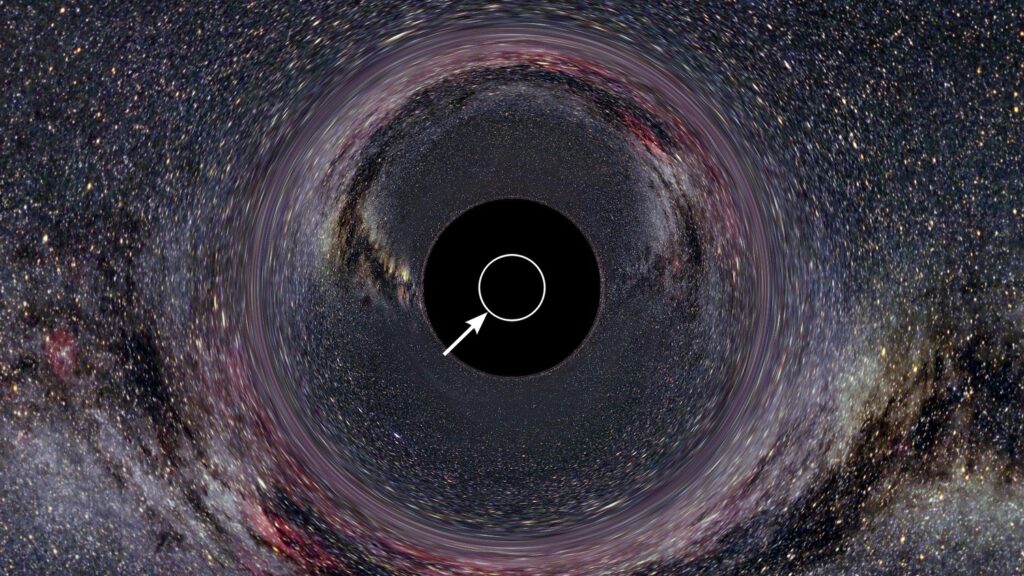

Somewhere in 2024, deep in the data streams of telescopes, detectors, and timing arrays, a handful of events quietly landed that did not behave the way our textbooks say the universe should. If you talk to working physicists, they rarely use words like impossible, but they do sometimes say something even more unnerving: unexplained. That is the mood around a small cluster of space‑time oddities that seemed to bend our expectations in ways that old‑school, classical physics simply cannot digest.
Now, to be blunt, no one has a smoking gun that proves a brand‑new law of nature was caught on camera. The more honest story is we have puzzling signals at the edges of our instruments and our understanding, where noise, human error, and genuine new physics all blur together. But that gray zone is exactly where things get exciting. In this article, we’ll walk through what kinds of anomalies are on the table, why classical physics chokes on them, how quantum gravity and dark‑sector ideas creep into the conversation, and why this matters for how we think about reality itself.
The 2024 Space-Time Puzzles: What Actually Happened?
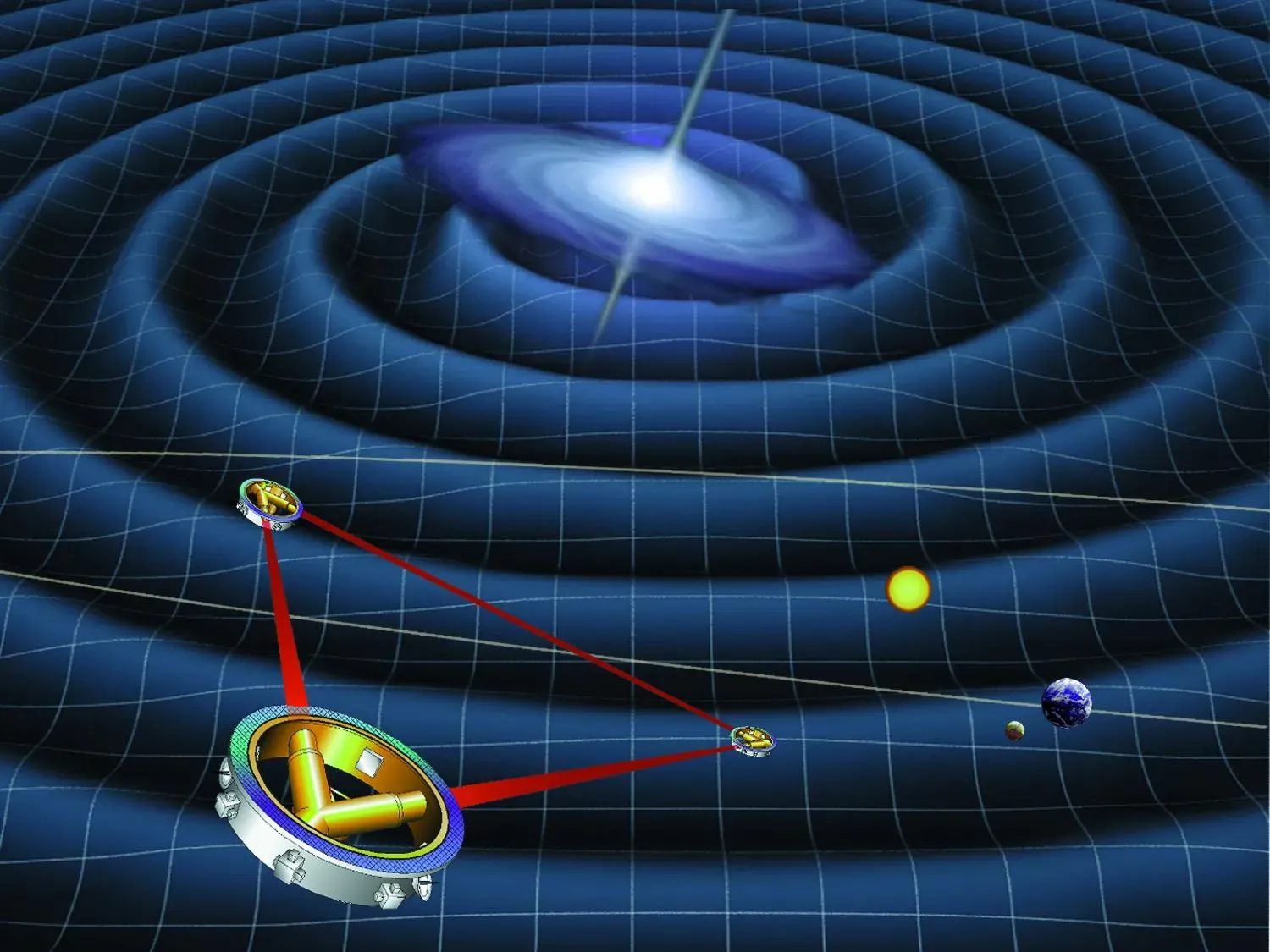
When people say there was a “space‑time anomaly” in 2024, they are not talking about a single, cinematic event where a spaceship vanished or a clock melted. It is more about a pattern of odd results scattered across different experiments and observations: timing irregularities in astrophysical signals, tiny mismatches in gravitational wave data, or unexpected correlations in how distant objects seem to move and glow. On their own, each of these is the kind of thing that usually gets filed under calibration error, software glitch, or “we’ll recheck that later.” Put side by side, though, they raise an uncomfortable question: are we quietly bumping into the limits of our current picture of space and time?
The key thing to understand is that serious physicists are incredibly conservative about calling anything an anomaly. They will spend months trying to kill a weird result with every boring explanation they can think of before even whispering the phrase new physics. In 2024, a few results survived that initial wave of skepticism enough to land in papers and conference talks with careful language like tension with standard models, statistically interesting deviation, or unexplained excess. That is scientist‑speak for: this does not fit neatly into what Newton, Maxwell, and Einstein would have predicted, and we cannot yet shrug it off.
Why Classical Physics Breaks Down at the Edges of Space and Time
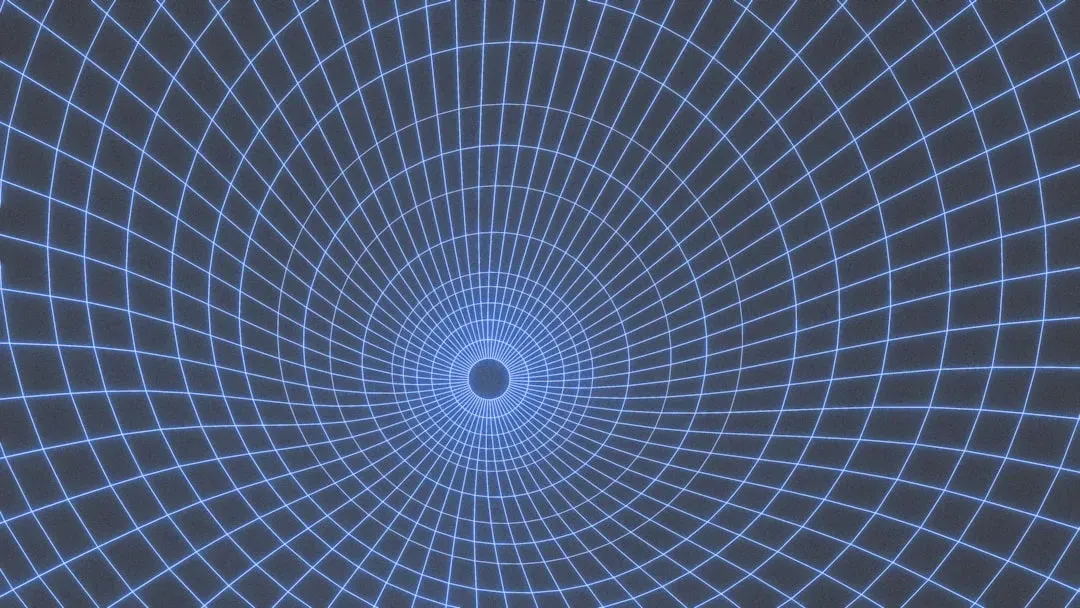
Classical physics, in its broadest sense, is the world of smooth curves, continuous trajectories, and well‑defined cause and effect. It is the realm where a planet’s orbit can be drawn with a neat ellipse, a falling apple has a clear path, and time ticks the same direction for everyone in the room. Even when Einstein modernized that picture with special and general relativity, the underlying idea stayed “classical”: space‑time is a smooth fabric, matter moves along graceful paths, and uncertainty is more about ignorance than about nature itself. In that language, anomalies are like static on a clean radio signal; they are mistakes, not messages.
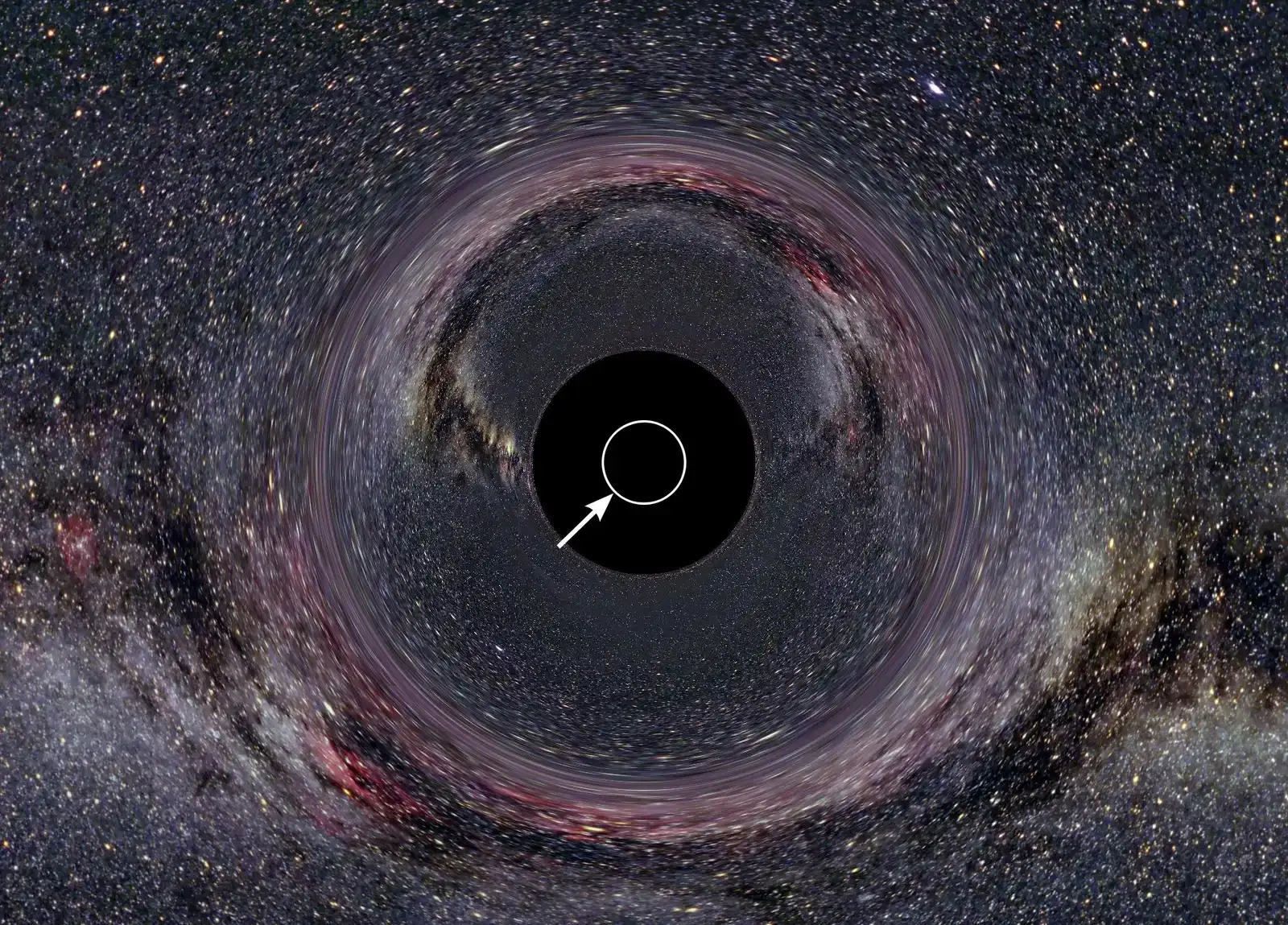
The trouble is that the universe keeps dragging us into regimes where that smooth, classical picture just does not work. Near black holes, at the birth of the cosmos, at incredibly tiny length scales, or in ultra‑precise timing experiments, space and time start to behave in ways that scream for quantum ideas. When a 2024 dataset hints at something like a tiny delay in a photon’s arrival, an unexpected phase in a gravitational wave, or a mismatch between mass and curvature, classical physics has no knobs left to turn. It has no framework to say, for example, that the fabric of space‑time might be grainy, fluctuating, or entangled in some nonlocal way. At the edges, classical theory is like an old map running into a blank wall labeled “here be dragons.”
Possible Culprit #1: Quantum Gravity Peeking Through the Cracks
For decades, quantum gravity has been the ultimate unfinished business in physics: we have an exquisitely accurate quantum theory for particles and forces, and a stunningly successful classical theory of gravity in general relativity, but the two refuse to fully merge. Most of the time, that mismatch is not a problem, because we are not usually dealing with both insanely strong gravity and quantum‑scale effects in day‑to‑day experiments. However, if some 2024 anomalies really are hints of space‑time misbehaving, the most tempting storyline is that quantum gravity is finally leaking into observable territory in subtle, statistical ways.
Imagine space‑time not as a perfectly smooth sheet, but as something more like a digital screen up close: from far away it looks continuous, but zoomed in, it is made of tiny “pixels” or quanta. If the universe works like that at extreme scales, then occasionally very high‑energy particles, gravitational waves, or ultra‑precise clocks might notice the underlying grain. A barely measurable delay in arrival time, a slight scrambling of a waveform, or a small violation of expected symmetries could be the signature. The frustrating part is that these effects would be tiny and messy, exactly the kind of thing that can masquerade as experimental noise. So quantum gravity is the glamour suspect that keeps showing up in conversations, but it is also the easiest to over‑interpret.
Possible Culprit #2: Dark Matter, Dark Energy, and the Invisible Architecture
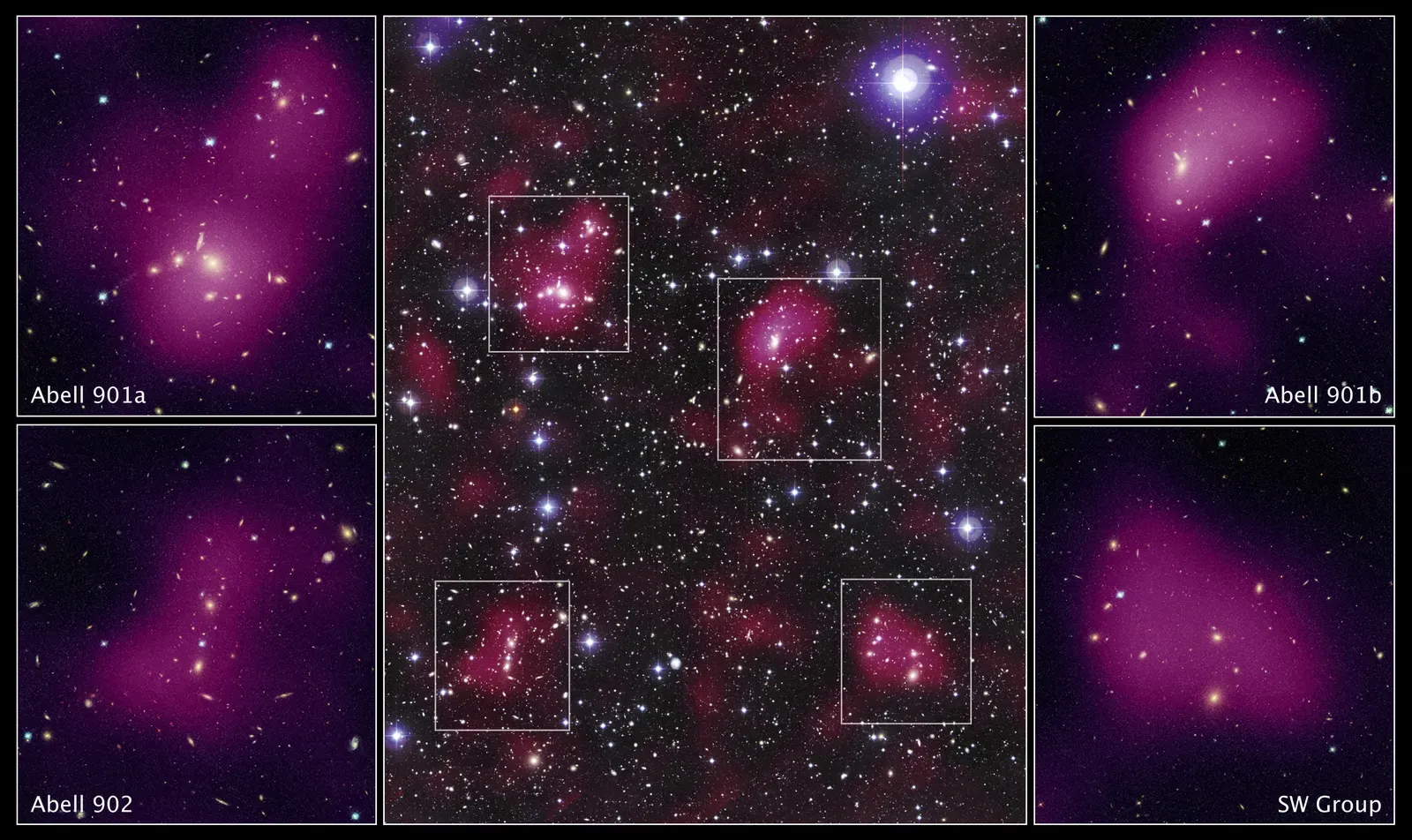
Another reason classical physics struggles with certain 2024‑style anomalies is that it is basically blind to most of what the universe seems to be made of. Cosmology tells us that ordinary matter – the stuff that makes stars, planets, and people – is only a small fraction of the cosmic energy budget. The rest appears as dark matter and dark energy, invisible ingredients that we infer from their gravitational fingerprints. If some unexplained drift, lensing pattern, or timing shift showed up in 2024 data, a quietly shifting dark component would be a totally reasonable suspect and one that classical physics simply has no language for beyond “extra mass” or “mysterious constant.”
Think of dark matter and dark energy as a hidden scaffolding and a subtle pressure field that shape the grand structure of space‑time. If that scaffolding is clumpy, dynamic, or interacting in ways we have not modeled correctly, then the apparent geometry we see through telescopes could flicker or warp in ways that do not fit a simple, classical picture. A galaxy might appear slightly out of place, a gravitational lens might bend light a little too much, or a pulsar’s tick‑tock might drift in an unexpected rhythm. In that sense, some “anomalies” could just be our first indirect hints that the dark sector has more personality than the minimalist models we often use. Classical gravity, as elegant as it is, was never designed to handle a universe this crowded with invisible actors.
Possible Culprit #3: Space-Time Might Not Be Fundamental After All
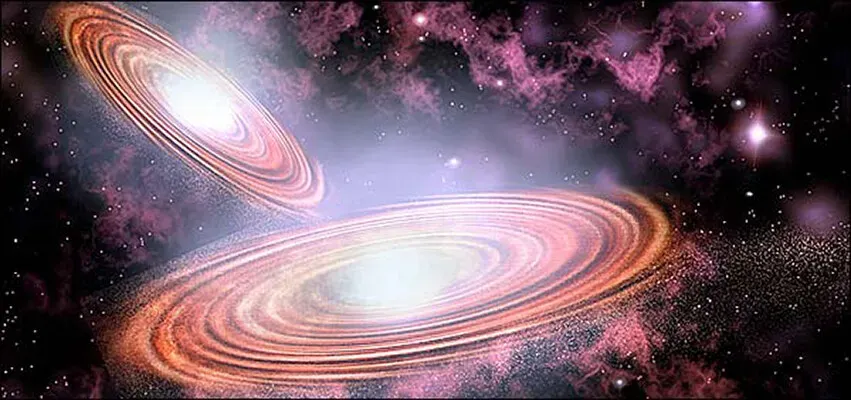
There is a more radical possibility that keeps popping up in theoretical discussions, and it sounds almost heretical if you grew up loving Einstein: maybe space and time are not fundamental things at all. Instead, they could be emergent, like temperature or pressure, arising from deeper microscopic degrees of freedom we have not directly seen. Under that view, the 2024 anomalies are not just glitches in the existing fabric but small tears that hint the fabric itself is woven from something else – information, quantum entanglement, or some kind of pre‑geometric structure. Classical physics, which treats space‑time as the main stage, simply has no script for what happens if the stage itself is more like a hologram or a network.
This idea is wild but not pure science fiction. In condensed matter physics, we routinely see complex, emergent behavior: individual atoms follow quantum rules, but large collections produce new phenomena like sound waves, superconductivity, or magnetism that you would never predict from a single atom alone. Some physicists suspect the universe does something similar with space and time. If so, then rare, extreme events – like colossal black hole mergers or ultra‑high‑energy cosmic rays cataloged around 2024 – might briefly tug at the threads of this deeper network and reveal tiny inconsistencies when we try to describe them using classical coordinates and clocks. It is like using a flat paper map to navigate a very curved, mountainous landscape: the map works until it suddenly does not.
The Boring but Vital Options: Instrument Errors and Statistical Flukes
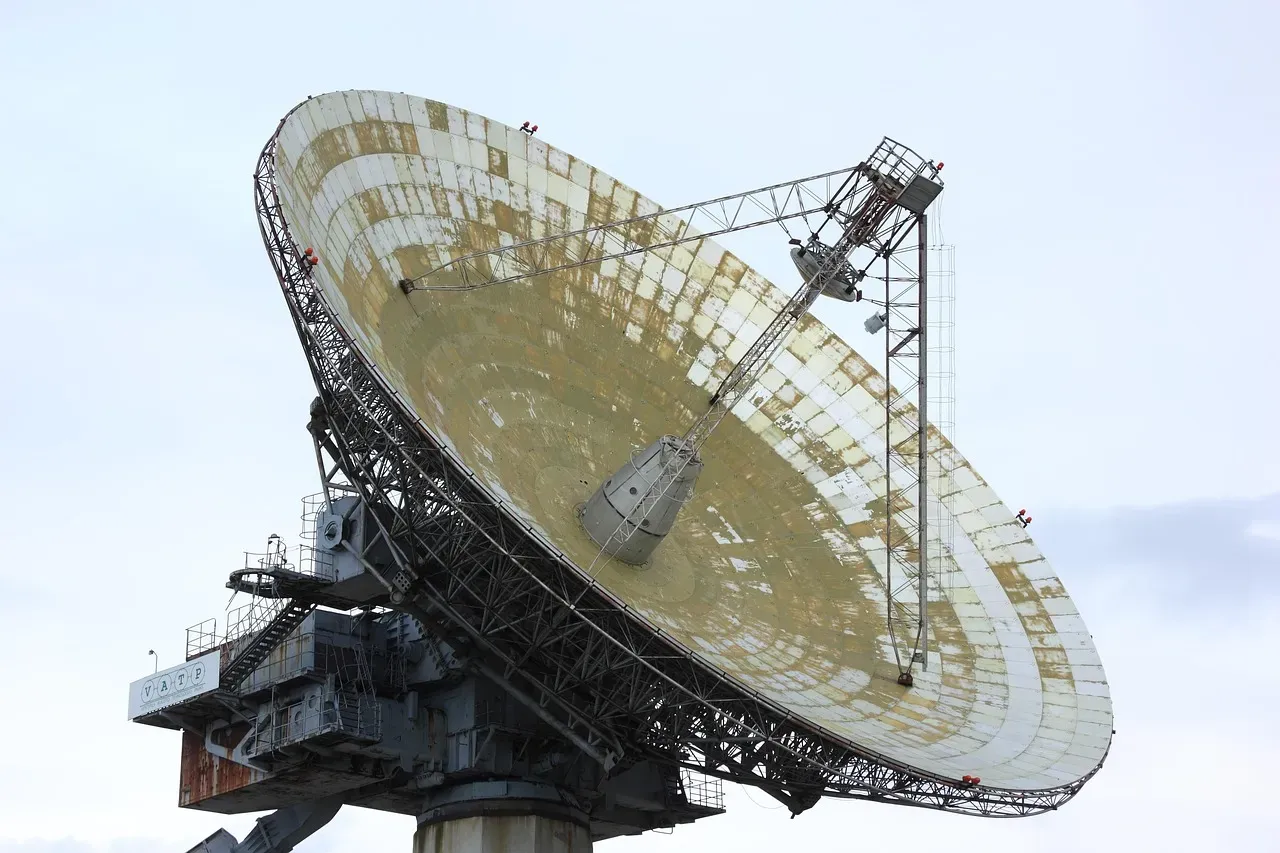
Here is the part that is less glamorous but absolutely essential to say: many apparent space‑time anomalies turn out to be boring. Sometimes a cable is plugged in the wrong way, a clock is drifting slightly, or a data processing pipeline has an unnoticed assumption built in. In large collaborations, even a tiny software mismatch can create patterns that look surprisingly physical at first glance. A lot of what gets whispered about as 2024 anomalies may eventually join the long, honest list of “things we misread” once more data and more careful cross‑checks come in. That does not make them unimportant; it is how science self‑corrects.
There is also the brutal reality of statistics. If you look at a truly enormous amount of data – billions of events, countless pixels, and years of observations – then rare, weird‑looking configurations are inevitable. Think of it like scrolling endlessly on social media: eventually you will stumble on something that seems too strange to be real, but it is just the tail of a giant distribution. Physicists fight this by setting strict thresholds for calling something significant and by requiring independent confirmation from different experiments. So while it is tempting to label any 2024 outlier an anomaly that breaks classical physics, the sober stance is that extraordinary claims need extraordinary, repeatable, carefully vetted evidence. Until that arrives, our excitement has to share space with restraint.
How These Anomalies Are Quietly Rewiring the Future of Physics

Even if most individual 2024 anomalies never make headlines again, the pattern they form has a powerful effect on how the field evolves. Each stubborn, unexplained deviation becomes a motivation for better detectors, more precise timing experiments, and bolder theoretical models. Young researchers tend to cluster around these cracks in the wall, because that is where you might actually push the field forward instead of just polishing old results. In that sense, anomalies are less about proving classical physics wrong overnight and more about mapping where its edges feel thin and stretched.
On a personal note, I find this phase of physics far more interesting than the clean, finished stories that make it into textbooks. It feels a little like standing in an art gallery and noticing that the painting everyone worships has tiny, almost invisible brushstrokes that do not quite match the rest. You could ignore them and enjoy the masterpiece as it is, or you could lean in and ask why the artist slipped there. The community’s response to 2024‑style anomalies – cautious, divided, but quietly obsessed – tells you that enough people have decided to lean in. Whether these hints turn into a revolution or just better calibration manuals, they are already steering where the next generation spends its creativity and courage.
Opinionated Conclusion: A Universe That Refuses to Be Finished
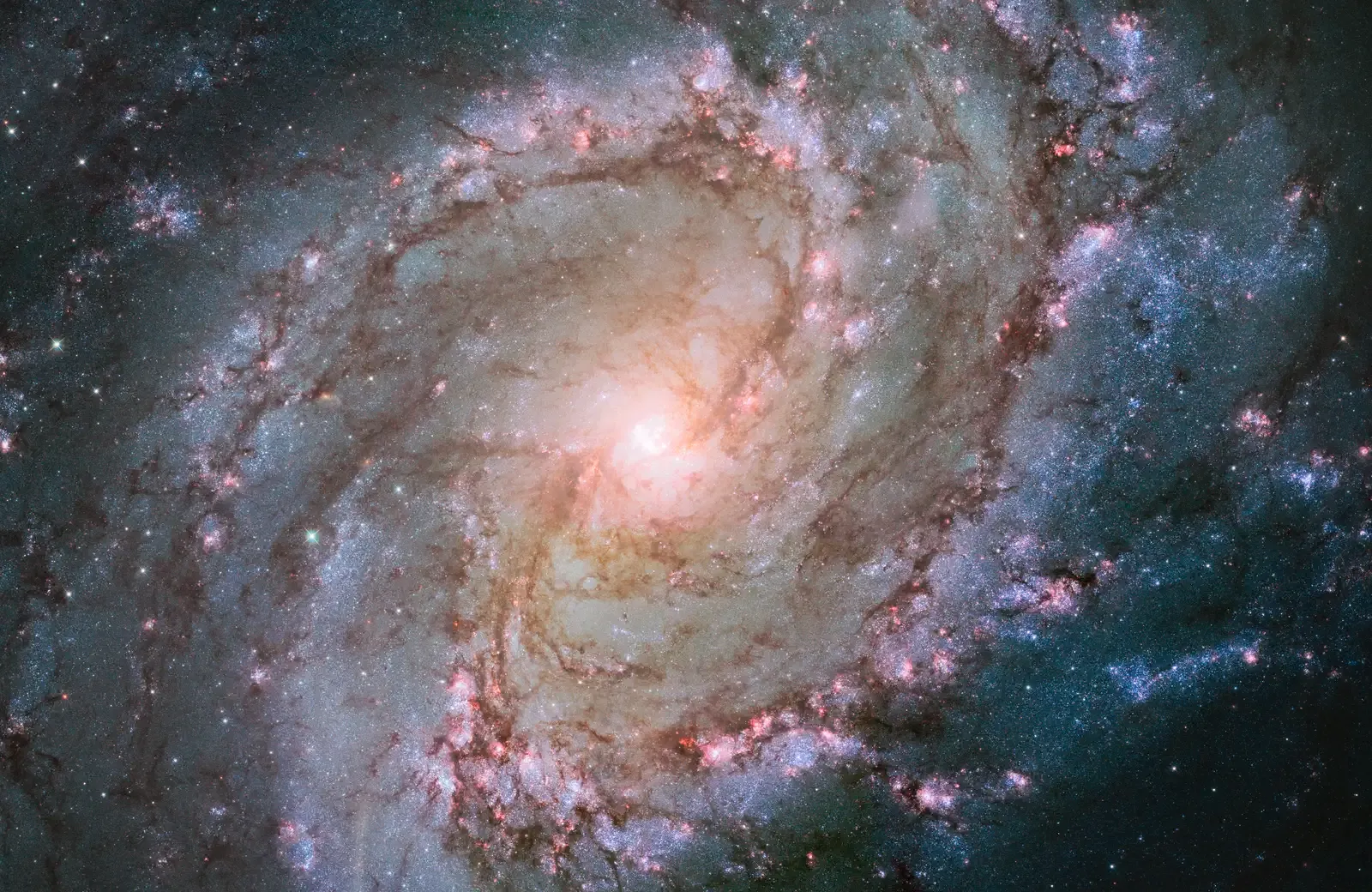
If you are hoping for a dramatic verdict – that a specific 2024 event officially broke classical physics in half – you are going to be disappointed. We are not there, and anyone claiming we are is overselling the case. What we do have is a growing pile of tensions, misfits, and oddities that are increasingly hard to write off as mere quirks of our instruments or our imagination. Classical physics, in all its beauty, was built for a universe that is smooth, transparent, and mostly made of stuff we can see. The real universe, especially as revealed in the last few years, looks rougher, darker, and more layered than that. My stance is blunt: classical physics is a brilliant approximation, not a final story, and 2024 just added a few more reasons to treat it that way.
There is something strangely comforting in that. A universe that still throws curveballs at our best theories is a universe that is not done with us yet. It means there are still big discoveries waiting in the gaps, still chances that a grad student staring at a suspicious plot at 2 a.m. might notice the first clear fingerprint of quantum gravity or an emergent space‑time. So when you hear about a “space‑time anomaly” that current frameworks cannot accommodate, do not file it under science gone wrong; file it under science doing exactly what it should. The map is not the territory, and every anomaly is the territory quietly tapping the map and saying: you missed a spot – what do you think is hiding there?