

If you feel like quantum physics sounds a bit like science fiction that somehow got tenure, you’re not alone. Even many of the scientists who helped build it openly admitted that its predictions often seemed absurd, at least on first encounter. Over the last century, a series of experiments has pushed that weirdness out of the blackboard and into the lab, forcing researchers to confront results that clashed so hard with common sense that journals and referees simply refused to trust them until other teams could reproduce them.
What follows is a tour through a dozen of those moments where reality pulled the rug out from under our everyday intuitions. These are not vague philosophical debates but concrete, table-top (and sometimes space-based) experiments that produced data so strange that replication became a prerequisite for belief. Think of it as a highlight reel of the times nature essentially said: “You sure you want to believe your gut over your measurements?” Let’s walk through them, one unsettling result at a time.
1. The Modern Double‑Slit Experiments: Single Particles Painting Interference
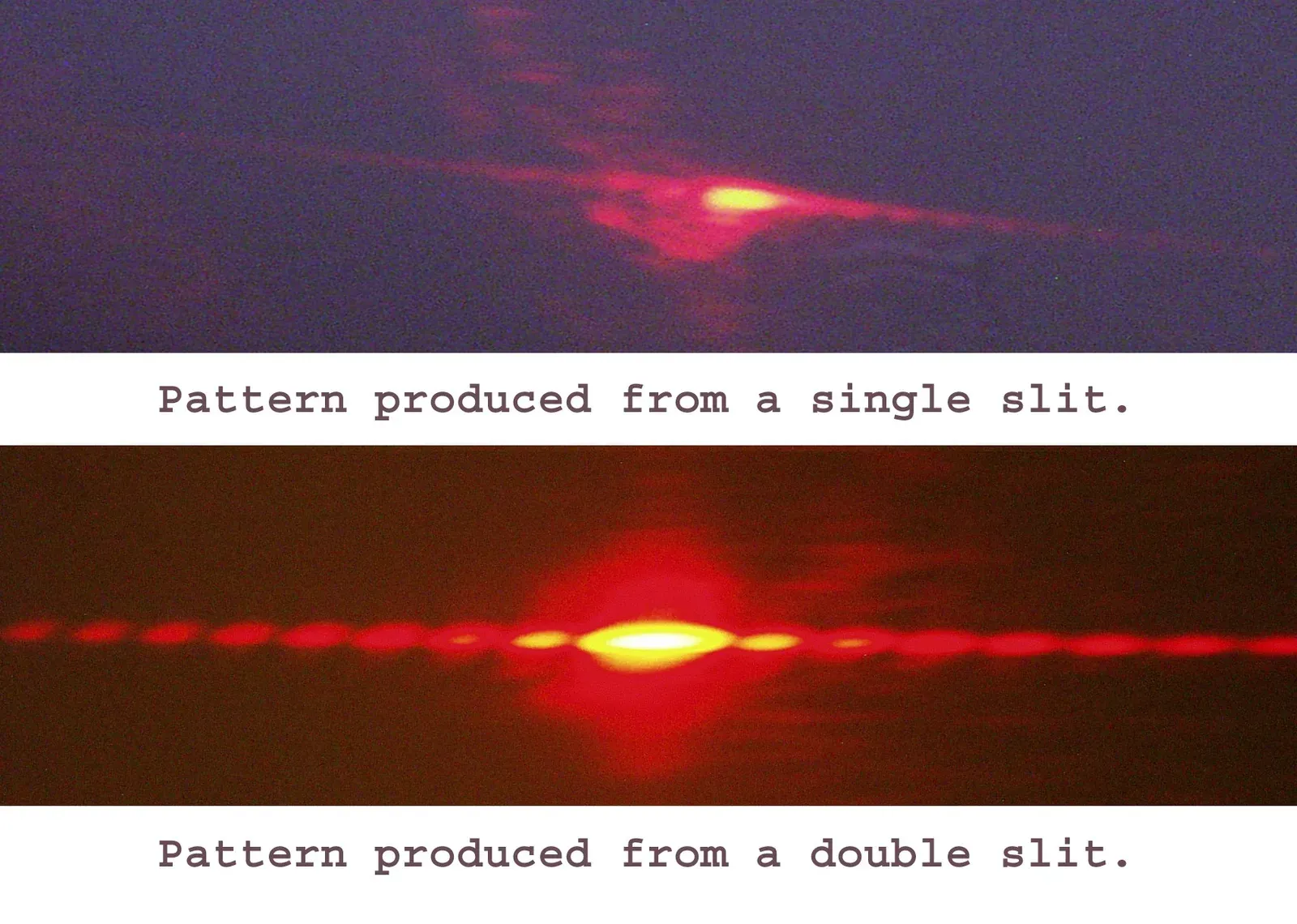
Here’s a question that still stings a bit: how can something behave like a spread‑out wave and a localized particle at the same time, without anyone cheating? The original double‑slit experiments with light waves were already surprising, but the later, more refined versions with single photons, electrons, atoms, and even large molecules made it almost intolerably weird. In these setups, experimenters send particles through a barrier with two slits, one at a time, and still watch an interference pattern gradually build up on a screen, the way ripples in water overlap to form bright and dark bands.
Intuitively, firing one particle at a time should give you two clumps behind the two slits, not a smooth interference pattern. The only way to explain this pattern within standard quantum theory is to say that each particle’s wavefunction explores both paths simultaneously, then interferes with itself before a single, definite impact is registered. Multiple labs repeated and refined these experiments with better detectors and more control over timing to convince themselves they weren’t being tricked by hidden beams or stray vibrations. The conclusion held: when we are not “looking” in a which‑path sense, nature allows a single quantum object to behave as if it has gone through both slits at once, and it takes careful replication to accept that this is not an experimental illusion.
2. Bell Test Experiments: Proving Nature Really Is Nonlocal

For decades, many physicists suspected that quantum mechanics was incomplete and that some hidden variables might restore a comforting, local realism under the hood. Bell’s theorem turned that hope into a crisp mathematical inequality that local hidden‑variable theories must satisfy. When early experiments in the 1970s and 1980s started to violate Bell inequalities, the results were so radical that skeptics immediately pointed to loopholes in detector efficiency, sample selection, or timing. It was simply too uncomfortable to accept that measurements on one particle could correlate with a distant partner in a way no local story could fully explain.
Over time, a whole research program grew out of trying to close those loopholes, from Alain Aspect’s pioneering work to modern “loophole‑free” Bell tests that use fast random setting choices and highly efficient detectors. Different groups, using different technologies and even different kinds of entangled particles, independently showed the same thing: quantum correlations violate Bell’s inequalities again and again. The insistence on replication here was almost defensive, as if the community collectively hoped someone, somewhere, would find a way for locality to sneak back in. Instead, experiment after experiment confirmed that any realistic theory of the world has to live with some kind of nonlocal structure that defies classical intuitions about separateness.
3. Quantum Teleportation: Moving States Without Moving Stuff
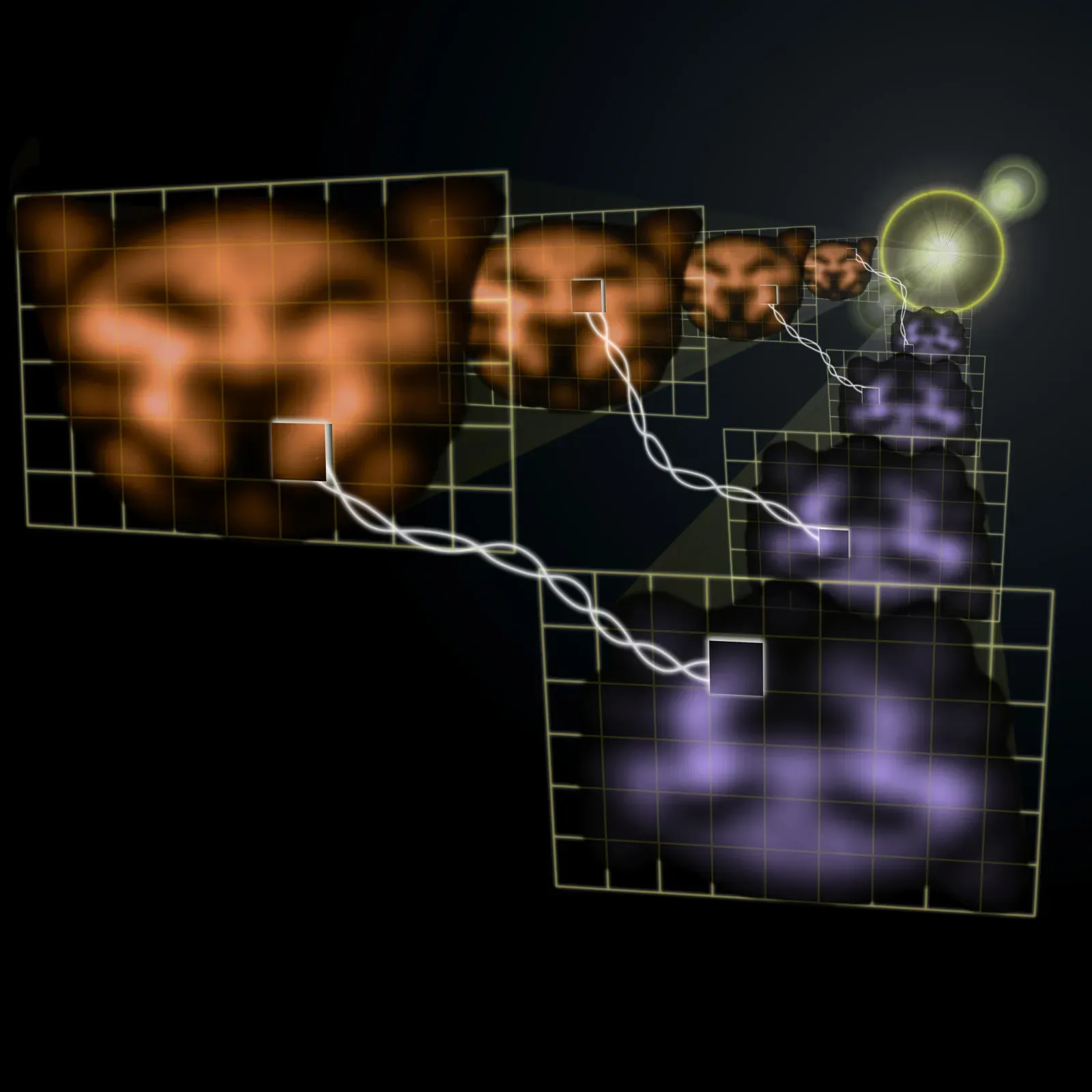
The very phrase “quantum teleportation” sounds like a marketing gimmick or a misread science fiction paperback. When the protocol was first proposed, it promised to transfer the exact quantum state of one system onto another distant system, without the physical particle itself traveling between them and without violating the no‑cloning theorem. That combination of claims almost begged to be misunderstood or oversold, so when the first groups reported experimental demonstrations, journals and referees rightly demanded strong verification and independent replication before accepting the results.
In practice, quantum teleportation uses pre‑shared entanglement plus classical communication to reconstruct the sender’s state on the receiver’s particle, while the original state is destroyed. Experiments have now teleported photon states across optical fibers, through free space between mountain tops, and even between ground stations and satellites in orbit. Each new distance record and each new platform involved a fresh round of skepticism, careful cross‑checks, and replication efforts, because the implications for secure communication and quantum networking are profound. The core counterintuitive fact that had to be digested is that information about a quantum state can be re‑instantiated elsewhere without a continuous trail of a physical object carrying it along the way.
4. Quantum Eraser and Delayed‑Choice: Changing the Past (Sort Of)
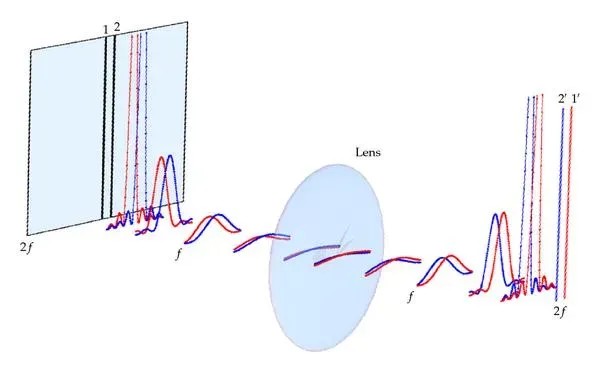
Delayed‑choice and quantum eraser experiments are the kind that make even hardened physicists rub their eyes. Inspired by thought experiments originally framed by John Wheeler, these setups let experimenters decide whether or not to keep or erase which‑path information about a particle after it has already passed a key point in the apparatus. Weirdly, when the data are sorted according to those late choices, the pattern can flip between looking like wave‑like interference and particle‑like, path‑specific detections, as if the particle retroactively decided how it had traveled.
Of course, nothing literally travels back in time, and no information is sent into the past, but our everyday sense of cause and effect takes a serious hit. Because these results are so ripe for misinterpretation and sensationalism, independent replication by different teams, using variant designs and more rigorous timing controls, became essential. Those replications confirmed that what really changes is how the correlations in the data become visible when we select subsets based on later choices. Still, the emotional impact remains: depending on how we set up our measurement choices, the same underlying events can present themselves as if the system had been a wave or a particle all along, undermining any simple, story‑like picture of what “really happened” in between.
5. Weak Measurements and Weak Value Anomalies
![5. Weak Measurements and Weak Value Anomalies (By Nemirov1 - arXiv:1812.11450 [gr-qc], CC BY-SA 4.0)](https://nvmwebsites-budwg5g9avh3epea.z03.azurefd.net/dws/437cfff19dcbe2bbc502db022765d561.webp)
Weak measurement techniques were developed to gently probe quantum systems without fully collapsing their states, averaging over many trials to extract subtle information. What stunned the community was the emergence of “weak values” that could fall far outside the usual range of possible measurement outcomes, like an effective spin value larger than what is normally allowed. To many, this initially sounded like an experimental artifact or some clever but meaningless mathematical trick, not a physical effect worth taking seriously.
Over the years, multiple experiments across different platforms showed that these anomalous weak values are robust features of how pre‑ and post‑selected quantum ensembles behave. Replication was crucial not just to rule out mundane errors but to convince people that this was more than a theoretical curiosity. These experiments also opened up practical uses, such as amplifying tiny optical effects that would otherwise be buried in noise. Yet the counterintuitive heart of the story remains: by conditioning on both an initial preparation and a final detection, quantum systems can exhibit effective intermediate properties that defy classical bounds, forcing us to rethink how we talk about measurement and reality between preparation and outcome.
6. Interference of Massive Molecules: How Big Can Quantum Weirdness Get?
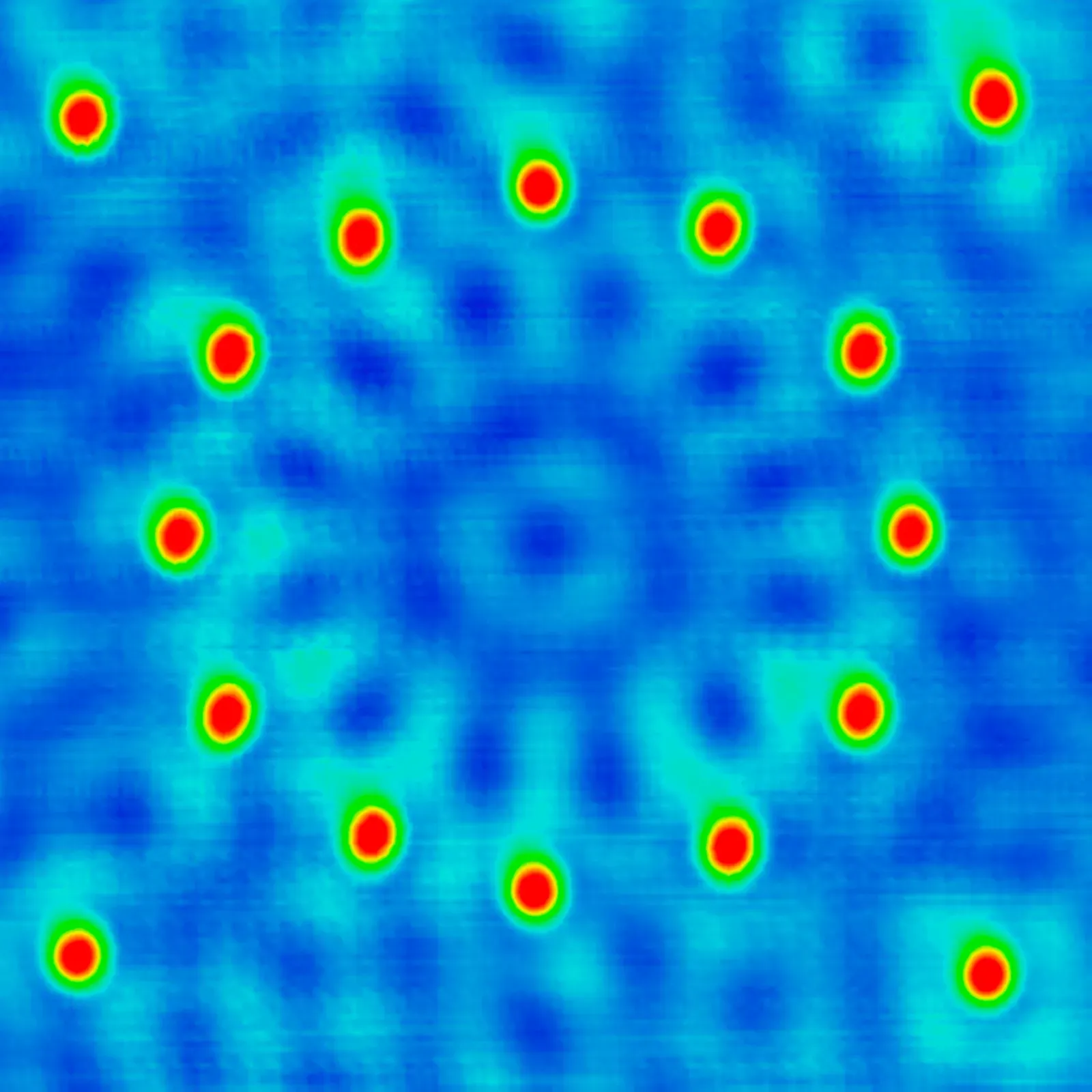
When people first learned that electrons could interfere with themselves like waves, it was baffling but still barely palatable, because electrons already felt almost ghostlike. The intuitive defense was that quantum behavior must fade away as objects get larger and more complex. That comforting thought eroded as experiments demonstrated interference with bigger and bigger particles: first atoms, then simple molecules, and later massive organic molecules with dozens or even hundreds of atoms. The fringes these giants produced in interferometers looked eerily similar to those from light waves.
Each step up in mass raised eyebrows and triggered demands for replication with stricter control over environmental noise, temperature, and vibration. Surely, critics argued, subtle classical effects or uncontrolled interactions must be mimicking quantum interference. Yet with each improved design and each independent group that reproduced the interference patterns, the message became harder to ignore: the boundary between quantum and classical is not defined by size alone. Decoherence from the environment matters far more than sheer mass, and as long as isolation is sufficient, even surprisingly hefty molecules will explore multiple paths at once in a mathematically precise sense.
7. Superconducting Qubits and Macroscopic Quantum Coherence
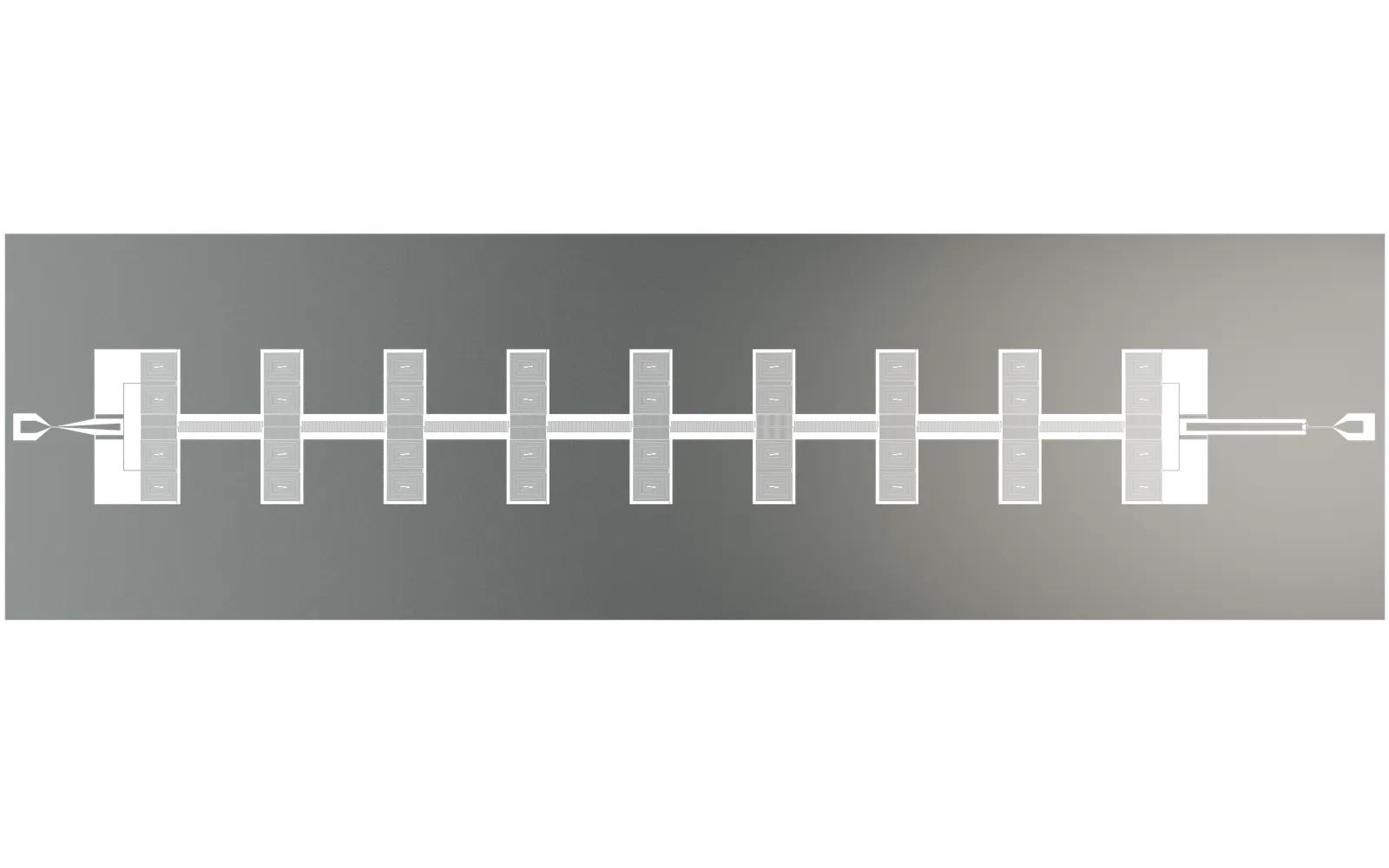
Superconductivity itself already bends intuition by letting currents flow without resistance at low temperatures, but the leap to using superconducting circuits as qubits was another story. These qubits are built from engineered loops, junctions, and resonators that, in everyday language, look huge compared to atoms. The claim that such circuits could be placed into coherent superpositions of different current or phase states sounded like a direct challenge to the classical view that macroscopic devices are always definite and well localized in their properties.
Early experiments reporting Rabi oscillations, superposition, and entanglement between superconducting qubits faced intense scrutiny, and replication became non‑negotiable before the results were broadly accepted. Different labs reproduced the key phenomena using slightly different designs, materials, and control electronics, gradually cementing the idea that these were genuine quantum systems, not just noisy classical oscillators. It is hard to overstate how radical that shift was: a chunk of metal patterned on a chip, visible under a standard microscope, behaves according to the same superposition and entanglement rules that govern photons and single atoms. That realization helped fuel the current race to scale up quantum processors, even as it continues to push on long‑held intuitions about what counts as “macroscopic” reality.
8. Quantum Zeno Effect: Freezing Evolution by Watching Too Closely
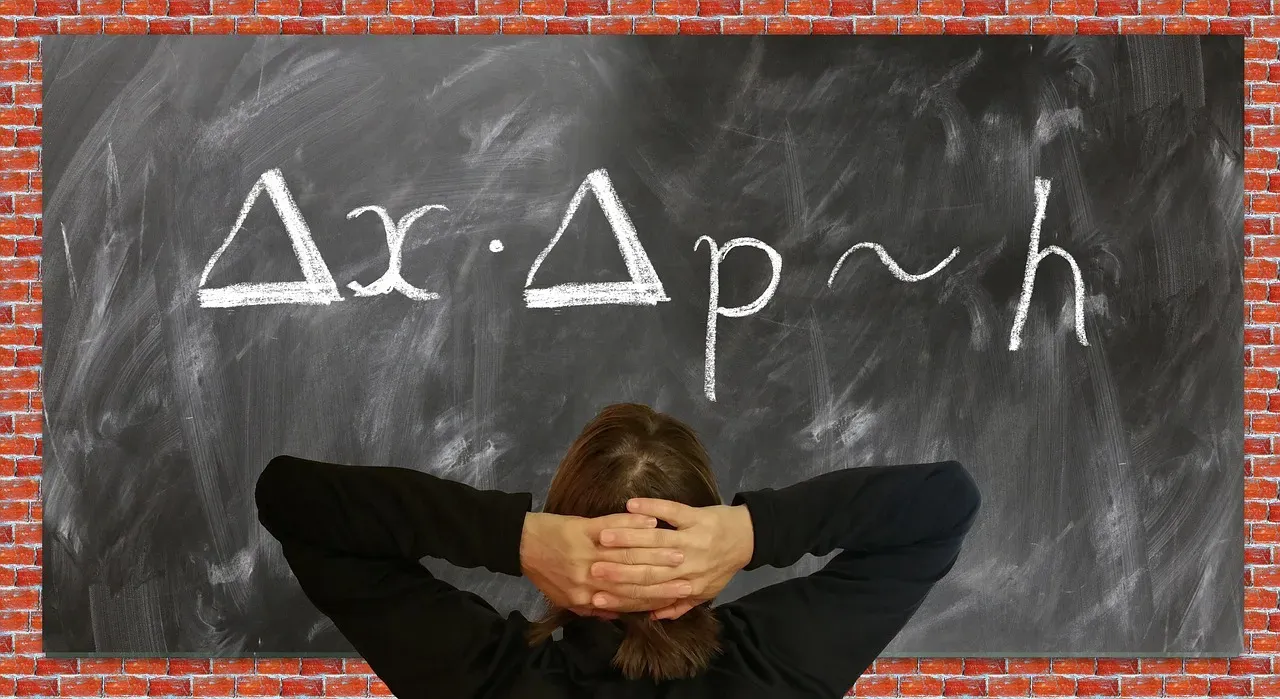
The quantum Zeno effect sounds almost like a philosophical joke: if you observe a system often enough, you can effectively freeze its evolution. The underlying math shows that frequent projective measurements can reset the state repeatedly, suppressing transitions that would otherwise occur. When early experiments claimed to have observed this effect in systems like trapped ions or decaying states, critics wondered if this was just a fancy way of describing experimental disturbances rather than something genuinely rooted in quantum theory.
Subsequent replications with better timing control and more transparent analysis showed that the phenomenon is real and reproducible: frequent, appropriately chosen measurements really do slow down or inhibit the transitions predicted to happen in the absence of observation. There is a subtle irony here, because we often think of measurement as something that simply reveals what is already there. In this regime, measurement plays the opposite role, actively reshaping what would have happened. The replicated experiments forced a more nuanced view: in quantum mechanics, asking a question too insistently can stop the system from giving you the answer it would have naturally produced.
9. Quantum Key Distribution: Security Guaranteed by Physics, Not Math
Quantum key distribution (QKD) made a bold promise when it was first put forward: create cryptographic keys whose security is guaranteed not just by computational difficulty, but by the fundamental laws of quantum mechanics. The core idea is that any eavesdropper trying to measure the quantum carriers of the key will inevitably disturb them in a detectable way. When the first experimental implementations claimed secure key exchange over real channels, many in the security and physics communities reacted with a mix of fascination and skepticism, especially given the high stakes.
Independent experiments by multiple groups, over different distances and using different hardware, were needed to build confidence that the security claims held up under realistic conditions. Replication also exposed that while the underlying quantum principles were sound, practical vulnerabilities in devices could be exploited, prompting more refined designs and tests. Through this back‑and‑forth, QKD shifted from a seemingly magic‑sounding idea to a carefully characterized technology whose strengths and limitations are now better understood. The counterintuitive twist that survived all this scrutiny is that in the quantum realm, simply trying to spy on a signal can leave a physical scar that the legitimate users can detect.
10. Loophole‑Free Bell Tests with Human or Cosmic Randomness

Even after detector and locality loopholes were largely closed, some critics clung to an almost metaphysical escape hatch: what if the apparent randomness in measurement settings was somehow subtly correlated with the hidden variables of the particles? To stress‑test that possibility, some teams designed Bell tests where the choice of measurement settings came from sources like distant starlight or the real‑time decisions of human participants. The idea was to push any hypothetical shared cause that could coordinate both particles and settings far back into cosmic history or deep into human free‑will debates.
These experiments reported violations of Bell inequalities consistent with earlier, more conventional tests, and replications with different astronomical sources and different human‑driven protocols followed. While no experiment can absolutely eliminate every philosophical loophole, the collective weight of these results made the remaining local‑hidden‑variable stories increasingly contrived. The counterintuitive core was hammered in once again: nature’s correlations at the quantum level really do defy any explanation that preserves both locality and a simple, pre‑existing realism, and no clever choice of random number source has been able to rescue that older worldview.
11. Macroscopic Entanglement in Mechanical Oscillators
Entanglement was long associated with microscopic systems like photons and ions, which already live in the quantum domain. The claim that mechanical objects, such as tiny vibrating beams or membranes you could almost see under a decent microscope, could be prepared in entangled states felt like a step too far for many. When the first reports appeared of entanglement between distinct mechanical modes, inferred from carefully measured correlations and noise properties, the initial reaction was to suspect experimental artifacts, calculation errors, or misunderstood classical couplings.
Multiple groups then set out to reproduce and extend these experiments, using different geometries, materials, and coupling schemes to electromagnetic fields. Replicated signatures of entanglement gradually emerged, showing that under conditions of extreme cooling and isolation, even relatively bulky mechanical devices can share quantum correlations that have no classical counterpart. This progression has been quietly revolutionary: it blurs the line between the quantum and classical in an arena that feels far more tangible than isolated atoms. It also offers a testing ground for theories that propose modifications to quantum mechanics at larger scales, which are now forced to reckon with experiments that stubbornly keep confirming the standard framework.
12. Satellite‑Based Quantum Links and Global‑Scale Entanglement
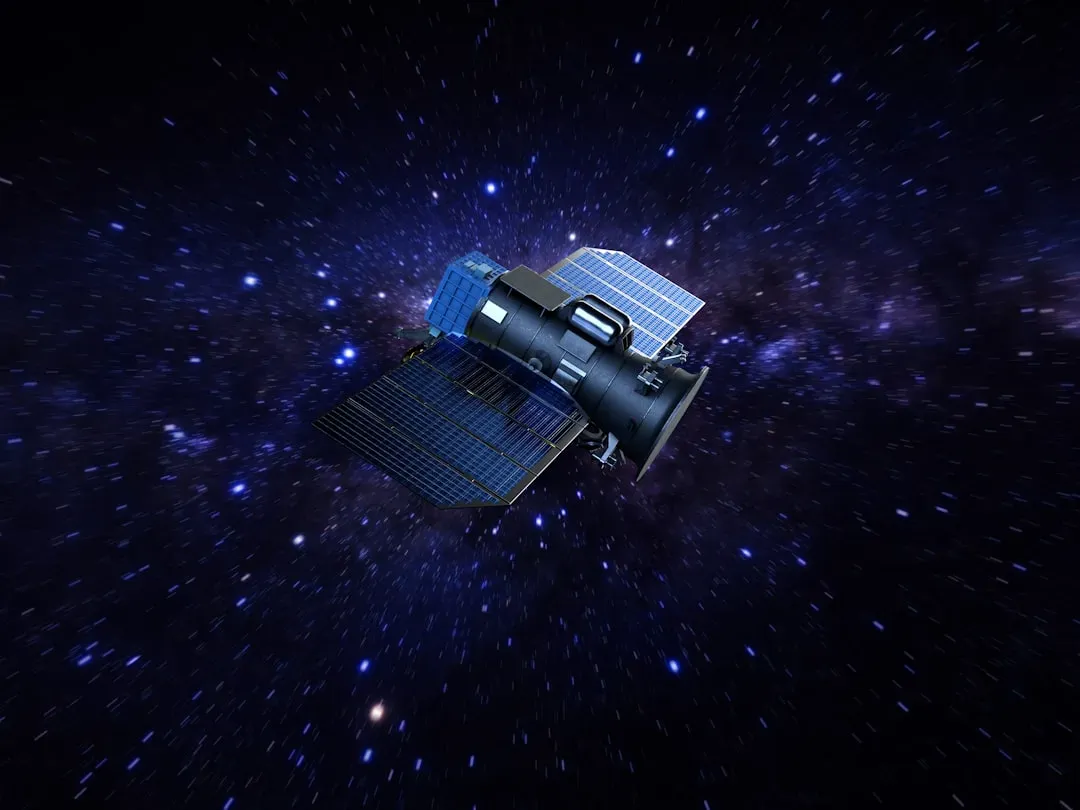
One of the boldest ideas in recent decades has been to take quantum experiments off the lab bench and into near‑Earth space. Satellite missions designed to distribute entangled photons between stations separated by hundreds or even thousands of kilometers sounded ambitious enough that many quietly expected them to fail or at least run into unexpected show‑stoppers. When early reports claimed successful entanglement distribution, quantum teleportation, and key distribution between ground and satellite, the global physics community understandably demanded rock‑solid evidence and replication over time.
As more runs were completed and similar experiments were repeated under different conditions, including day‑night cycles and varying weather, the data consistently supported the original claims. The results demonstrated that quantum correlations survive atmospheric turbulence, long optical paths, and orbital dynamics better than skeptics had anticipated. Seeing entanglement persist across such vast distances, mediated by hardware hurtling through space, has been one of the most viscerally counterintuitive developments in modern physics. It makes the old debates about whether quantum weirdness is just a fragile, lab‑only curiosity feel increasingly outdated.
Conclusion: When Reality Repeatedly Sides With the Weird
Looking across these twelve experiments, a pattern emerges that is hard to ignore: every time we’ve pushed quantum mechanics into a new, more extreme regime, our intuition has balked, and our only reliable guide has been painstaking replication. Personally, I find it both humbling and oddly comforting that nature seems completely indifferent to what we find reasonable. The universe keeps voting for superposition, nonlocal correlations, and measurement‑dependent realities, no matter how loudly our classical instincts protest. Replication has not tamed the weirdness; it has simply made it undeniable.
If anything, the history of these counterintuitive results argues against the hope that some simple, classical‑flavored explanation is just around the corner. Instead, it suggests that our everyday sense of objects, causes, and information is a local approximation that breaks down under scrutiny, the way flat‑Earth intuition fails once you start circumnavigating the globe. I think the honest stance is to stop trying to make quantum mechanics respectable by classical standards and embrace it as a deeper, if stranger, layer of description that has earned our trust the hard way: by surviving every attempt to falsify it. The real question now is not whether quantum reality is weird, but how far we are willing to follow that weirdness into new technologies and new ways of thinking about the world – how far would you go?