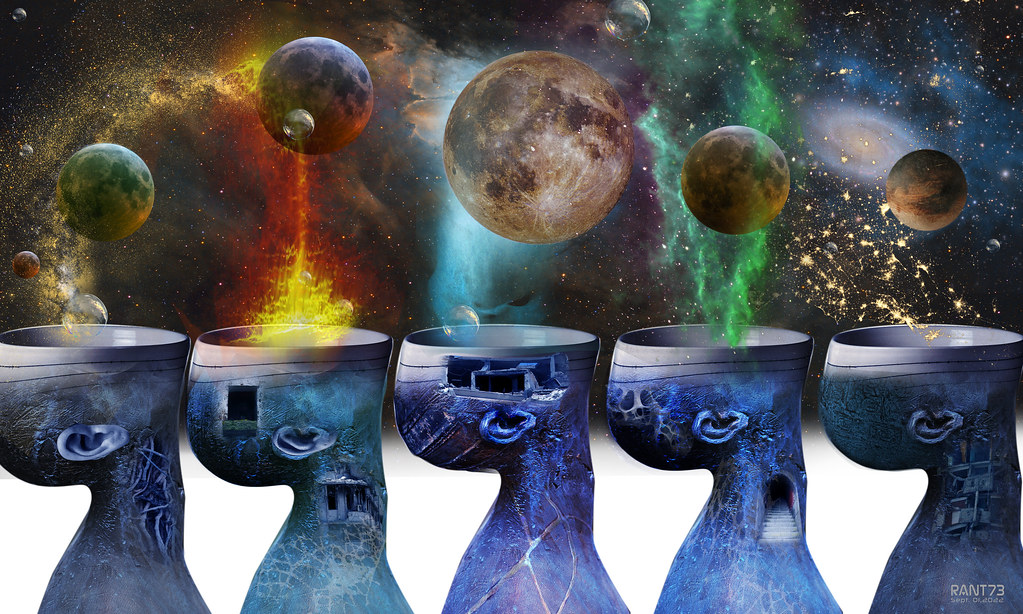

Try this for a second: close your eyes and imagine absolutely nothing. Not black, not empty space, not a quiet room, not darkness. Just… nothing. If your brain instantly filled that “nothing” with some kind of vague dark fog or a sense of floating, you’ve already bumped into the core problem. Our minds are builders, not erasers, and they stubbornly resist giving us a true sense of a reality where nothing at all exists.
That strange mental hiccup is not just a fun philosophical puzzle; it reveals something deep about how human cognition works. The struggle to picture nothingness cuts across psychology, neuroscience, philosophy, and even personal existential dread. Understanding why our brains fail at this simple-sounding task can change how we think about death, the universe, and even our own day-to-day worries. Let’s unpack what is really going on when we bump up against the edge of “nothing.”
The Brain Is Wired To Model “Something,” Not “Nothing”

Our brains evolved to deal with a world overflowing with stuff: predators, tools, faces, voices, weather, social rules, you name it. Cognitively, we are prediction machines constantly modeling what is there, what might be there, and what could happen next. In that kind of setup, representing pure absence is not just useless; it is almost impossible to define. When you try to imagine “nothing,” your brain immediately cheats by turning it into some kind of minimal “something,” like a blank screen, darkness, or a silent void.
This bias shows up in everyday language and thought. We say things like “there’s nothing in the fridge” even though we mean “nothing I want” or “nothing obvious,” not a literal vacuum. Children learn early that “nothing” usually points to a kind of low-value something: an empty box, a quiet room, an uneventful day. So by the time we are adults, the word “nothing” is already contaminated with content. The brain’s default move is not to erase reality but to thin it out and make it boring, which is still a far cry from true absence.
Why “Nothingness” Is Not Just Blackness Or Empty Space

A common mistake is to equate nothingness with darkness or outer space. But darkness is still a visual experience, and empty space is still a place that could contain things. When most people picture “nothing,” they report seeing an endless black or gray field, maybe with a sense of floating or stillness. That image already proves how stubbornly our minds cling to familiar structures like color, location, and perspective, even when we are trying to get rid of everything.
Scientifically and philosophically, nothingness would mean no space, no time, no matter, no energy, and no mind to observe it. The moment you imagine a viewpoint, a location, or a feeling, you have already smuggled “something” back in. It is like trying not to think about a pink elephant: the instruction itself calls the elephant into being. Similarly, the moment you try to hold “nothing” in your mind, you generate some mental placeholder for it, and that placeholder is exactly what ruins the purity of the idea.
Our Sense Of Self Makes Non-Existence Feel Inconceivable

Humans do not just experience the world; we experience ourselves in the world. We carry a persistent sense of “I” moving through time, remembering a past and anticipating a future. That ongoing stream of self-awareness makes true nothingness especially threatening and hard to grasp. Imagining a world without you is one thing; imagining not having any experience at all cuts directly against how your mind usually runs.
Psychologically, this is part of why thinking about death is so disturbing. The idea that there could be no more experiences, no more “you,” does not fit with the brain’s default continuity model. Many people, when they try to imagine their own non-existence, end up picturing themselves as a sort of ghostly observer after death, watching the world or lying in the coffin. That is the brain again refusing to let go of the witnessing self. Even when we try to visualize zero, we sneak a tiny, invisible “me” back into the picture.
How Language And Culture Distort Our Idea Of Nothing

Language is a powerful sculptor of thought, and most languages treat “nothing” as if it were a kind of object. We talk about “a nothing,” “the nothing,” or “there is nothing,” slotting it grammatically where we would normally put a thing. That subtle habit tricks us into thinking of nothingness as a weird, ghostly entity, instead of what it really is: the complete absence of anything at all. Culture then piles on layers of symbolism, turning nothingness into a dramatic idea rather than a straightforward lack.
Different religious and philosophical traditions have also colored how people interact with the idea of nothing. In some traditions, the void is seen as sacred or creative, in others as terrifying or evil. Even when thinkers talk about “emptiness” or “the void,” they often attach qualities to it, like peace, horror, potential, or divinity. All of that makes it even harder for an ordinary person to imagine a clean, content-free nothingness. Instead, we get highly decorated versions of absence that are psychologically easier to live with.
Personally, I notice that even when I tell myself I am thinking about plain, dry non-existence, some emotional tint sneaks in: a hint of calm, a flash of fear, or a weird sense of awe. That emotional color is a giveaway that my mind has already turned “nothing” into an experience.
The Visual System Refuses A Truly Blank Canvas

On a more practical level, our visual and sensory systems are not designed to represent a literal absence. When your eyes are closed or the room is pitch-black, your brain still generates a sort of default background: faint patterns, drifting lights, or a dull sense of darkness. This is internal noise, not true emptiness, but it is nearly impossible to suppress. So when we try to imagine nothingness, what we often end up doing is amplifying that default sensory baseline and calling it “the void.”
Even in controlled experiments, people rarely report absolute blankness. They describe colors, shapes, or a sense of depth, even with no external input. The brain is an overachiever; it would rather invent content than leave you with a pure zero. You can think of it like a phone screen that constantly wants to show you something, even if that something is just a dark lock screen. Turning the device fully off feels unnatural and even a little unsettling, and our inner world is much the same.
Time, Consciousness, And The Fear Behind The Void

Another reason nothingness is so hard to imagine is that our minds are soaked in time. We experience life as a steady flow of moments, each one replacing the last. Trying to imagine nothingness is basically trying to imagine the total collapse of that flow, where there are no moments, no before or after, no change at all. Our brains are so hooked on movement and progression that a timeless state is almost as hard to grasp as a spaceless one.
On top of that, there is an emotional layer that complicates everything. For many people, nothingness is tied to fears about death, meaninglessness, or cosmic insignificance. Those fears can trigger anxiety or avoidance, so the mind quickly shifts the topic, distracts itself, or translates “nothing” into softer images like a peaceful sleep or a quiet night. In my experience, most people are not just confused by nothingness; they are also quietly scared of what it might imply about their own temporary existence.
Why Meditation And Philosophy Help – But Do Not Fully Solve It
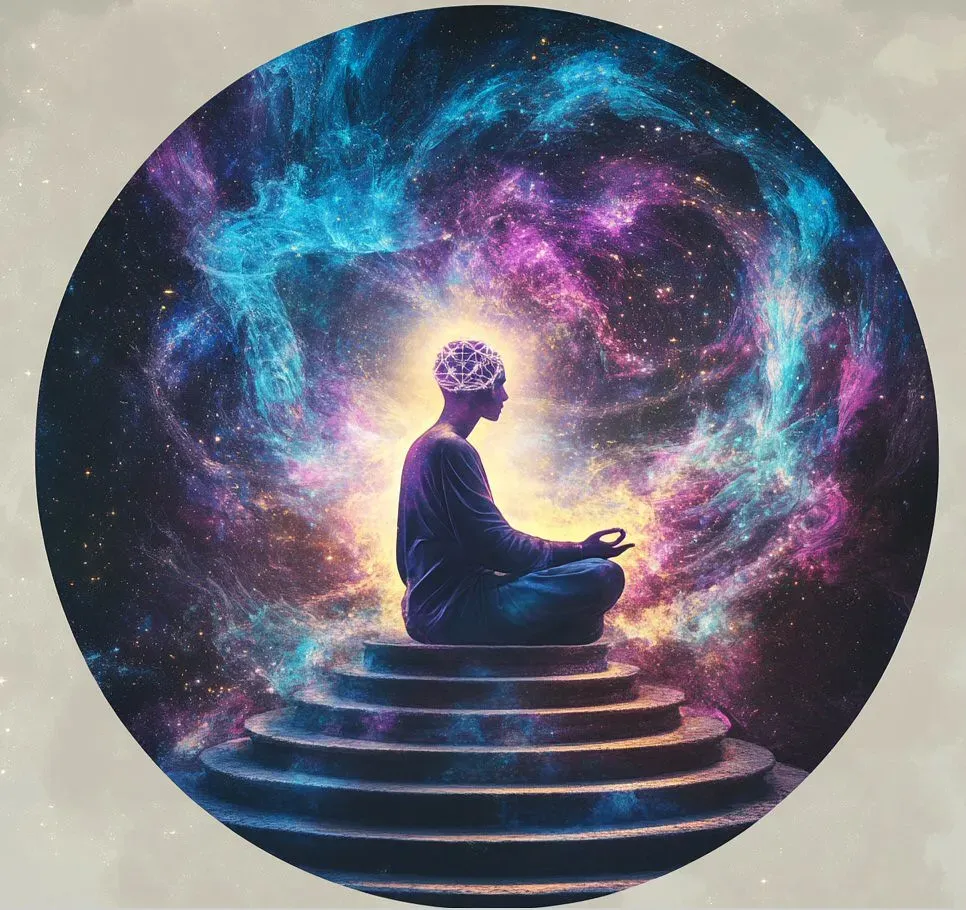
Meditation traditions and philosophical practices sometimes claim to get closer to “emptiness,” and there is some truth to that. Deep meditation can quiet the constant stream of thoughts and soften the sense of a solid self. Philosophical training can help people see how often they project things onto reality that are not really there. Both can make a person more comfortable sitting with uncertainty, ambiguity, and the limits of their own mind.
But even then, what people report is not actual nothingness. They describe spaciousness, clarity, silence, or a kind of open awareness. Those are experiences, not the total absence of experience. So meditation and philosophy are less about successfully picturing nothing and more about humbly recognizing that the human mind might never do that perfectly. In a way, the real insight is not the void itself, but the discovery that our mental tools have edges they cannot cross.
What Our Failure To Imagine Nothingness Really Tells Us

In my view, the most interesting part of this whole topic is what it reveals about us, not about the universe. The fact that we cannot picture nothingness is not a cosmic flaw; it is a side effect of having a brain that evolved to survive in a busy, dangerous world. We are specialists in “something”: objects, people, stories, feelings, plans. Expecting that same brain to naturally grasp perfect absence is a bit like expecting a search engine to enjoy silence. It is just not what it was built to do.
I actually think that is a comforting conclusion. Our imaginative limits do not mean nothingness is impossible or that death must secretly be some hidden kind of experience; they just mean the human perspective is partial and biased. We hit a wall, and instead of pretending we have walked through it, we can admit that the wall exists. That honesty can make conversations about death, meaning, and the universe more grounded and less dramatic. And maybe the real value is not in solving the riddle of nothingness, but in noticing how fiercely our minds try to turn even the emptiest idea into a story worth telling. When you tried to imagine nothing at the start, what did your brain sneak in without asking you first?