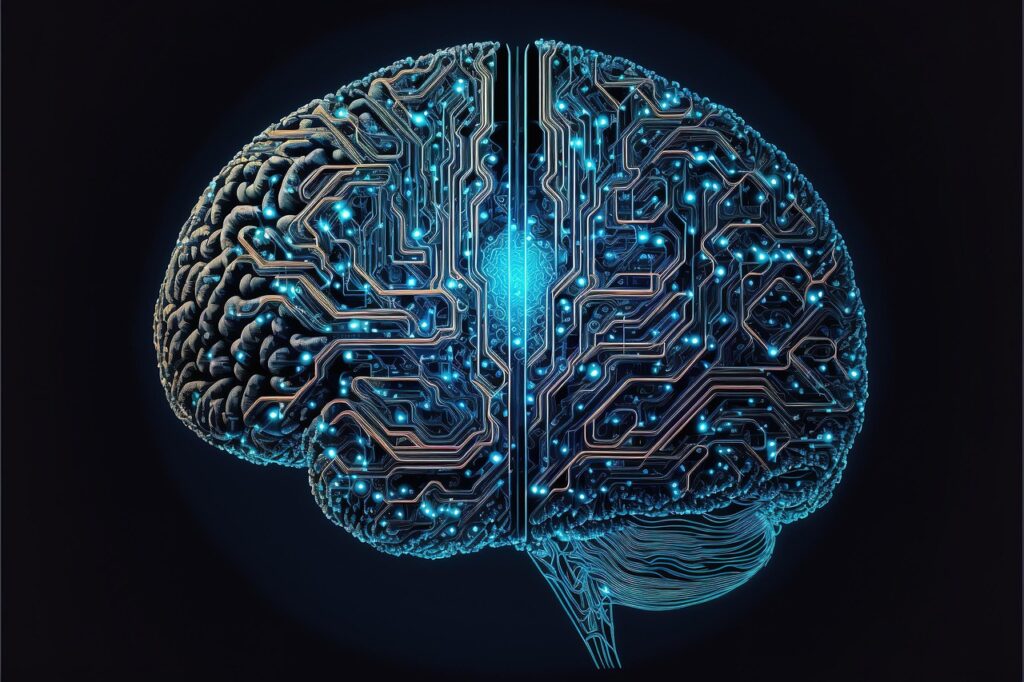

Every time you decide whether to hit snooze, send that risky text, or change careers, something mysterious happens inside your head. Most neuroscience textbooks will tell you this is all the work of neurons, chemicals, and classical physics. But a bold and controversial idea says there’s something much stranger going on: your conscious choices might be tied to the collapse of quantum waves deep inside your brain.
This idea is known as Orchestrated Objective Reduction, or Orch-OR for short, and it sits right at the edge of what many scientists are willing to take seriously. Yet the physics behind part of it helped win a Nobel Prize. That alone is enough to make you wonder: is consciousness really just brain chemistry, or are we missing a hidden layer of reality flickering beneath our thoughts?
A Wild Claim at the Intersection of Brains and Quantum Physics

At its heart, Orch-OR is a daring claim: consciousness arises when quantum states collapse in tiny structures inside your neurons. Instead of seeing the brain as just a complicated computer made of cells, this theory suggests your awareness might be fundamentally linked to the weird rules of quantum mechanics. It is not a gentle tweak to mainstream neuroscience; it is a full-on challenge to how we think reality itself shows up in your mind.
What makes this idea especially provocative is that it tries to answer two mysteries at once. First, the classic question of consciousness: how does subjective experience emerge from matter? Second, the quantum puzzle of when and how a fuzzy wave of possibilities snaps into one concrete outcome. Orch-OR says these two puzzles are secretly the same event happening in your head, over and over again.
Meet the Minds Behind Orch-OR: Penrose and Hameroff
Orch-OR is not the work of a lone eccentric scribbling in isolation. It was developed by Roger Penrose, a mathematical physicist famous for deep work on black holes and spacetime, and Stuart Hameroff, an anesthesiologist and consciousness researcher. Penrose brought the quantum gravity and mathematics; Hameroff brought the biology and a lifelong interest in how anesthesia can literally switch consciousness on and off.
Penrose had long argued that human understanding, especially in mathematics, could not be fully explained by standard algorithms running on a classical machine. Hameroff, meanwhile, had been fascinated by mysterious structures inside neurons called microtubules. When the two connected, they fused their ideas into the Orch-OR framework: the “objective reduction” part from Penrose’s physics and the “orchestrated” part from Hameroff’s microtubule biology.
The Nobel-Winning Physics That Gave Orch-OR Its Edge
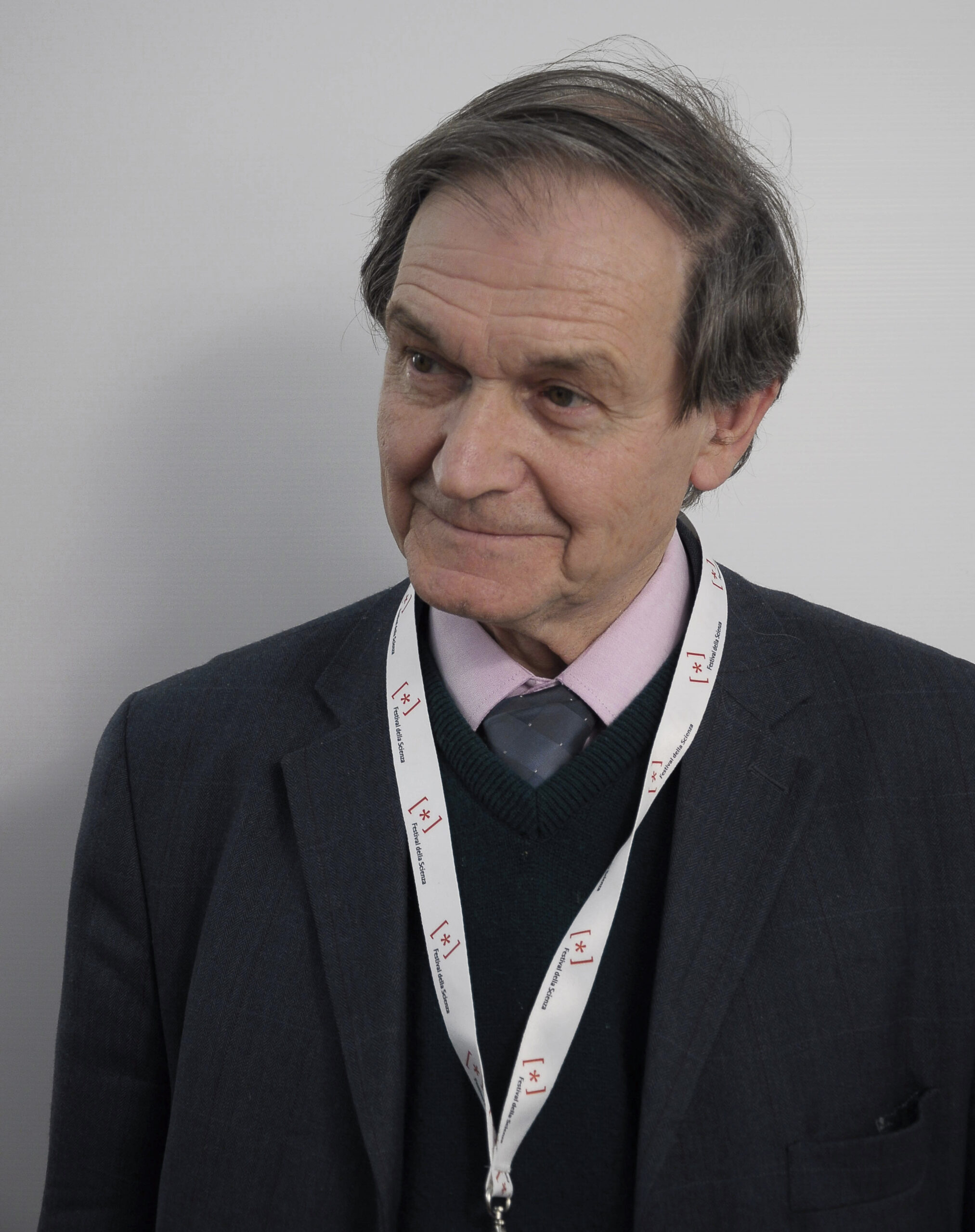
One reason Orch-OR refuses to disappear from the conversation is that Penrose is not just any theorist. His work on black hole singularities, the structure of spacetime, and the mathematics of general relativity has been enormously influential, and ideas closely tied to his circle of research contributed to a Nobel Prize in Physics. That pedigree gives added weight to any theory he is associated with, including his view that quantum gravity might trigger wavefunction collapse.
When people hear that the author of Orch-OR won a Nobel Prize (or contributed to Nobel-level physics), they often assume the theory itself must be widely accepted. That is not the case. The Nobel recognition is for rigorous, testable results in gravitational physics, not for Orch-OR directly. Still, it matters: it shows that the person proposing this wild bridge between mind and quantum reality is deeply rooted in serious, mainstream physics, not pseudoscience on the fringes.
Microtubules: The Unlikely Stars Inside Your Neurons
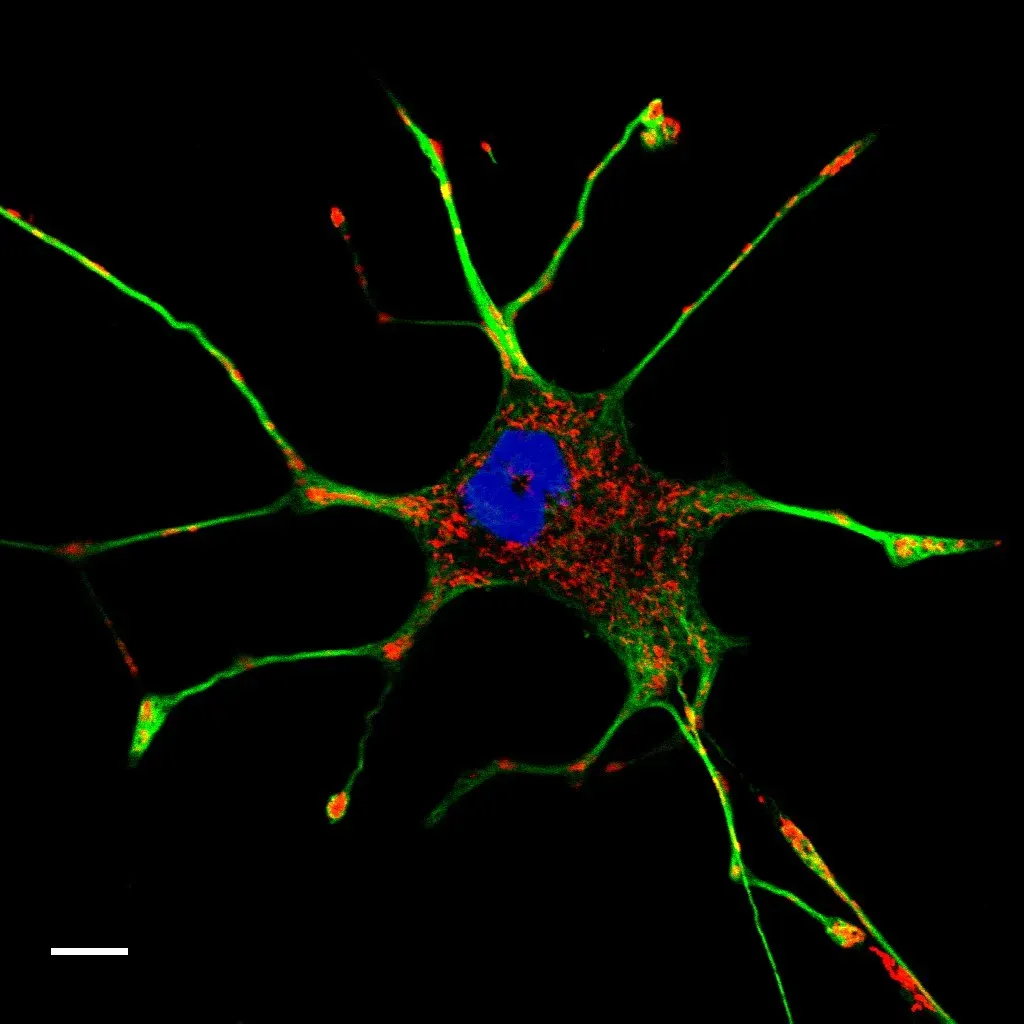
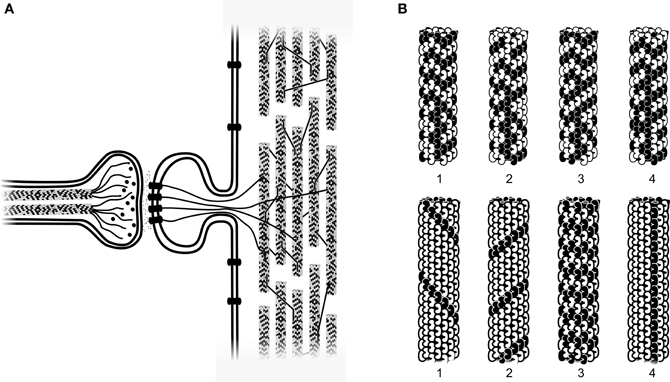
If Orch-OR has a main character, it is not the neuron as a whole but the microtubule: tiny, hollow protein cylinders forming scaffolding inside cells. In standard biology, microtubules help with shape, transport, and cell division. Hameroff’s twist is to treat them as potential information processors and quantum devices, like ultra-miniature, living versions of quantum computer components hidden inside your brain cells.
According to Orch-OR, microtubules in neurons support quantum states that can exist as superpositions, overlapping patterns of possible configurations. These states are thought to become “orchestrated” by the structure and dynamics of microtubule networks, effectively shaping which quantum possibilities are available. When those quantum states finally collapse, Orch-OR claims, a discrete moment of conscious experience occurs, woven into the ongoing flow of your thoughts.
From Fuzzy Quantum Superposition to a Sharp Moment of Awareness
Imagine your brain not as a continuous movie, but as a rapid series of tiny snapshots where reality “clicks into place.” In the Orch-OR picture, before each snapshot, microtubule quantum states exist in a fuzzy superposition – multiple potential configurations at once. Then, driven by a proposed objective process tied to gravity and spacetime, that superposition reduces to one definite state. That reduction event, Penrose argues, is not just a physical change, but a primitive act of experience.
In this view, consciousness is not something smeared out in time; it is built from sequences of these orchestrated reductions, giving rise to the continuity you feel as a stream of awareness. Your decision to move your hand, recall a memory, or feel a surge of emotion is linked to specific patterns of quantum collapse inside microtubules. Critics say this sounds more like science fiction than neuroscience, but supporters see it as a radical way to explain how the physical and the experiential are bound together.
The Biggest Objection: Can Quantum States Survive in a Warm, Wet Brain?
The loudest pushback against Orch-OR comes from a harsh, practical question: how could delicate quantum states survive long enough inside a warm, messy, noisy brain? Typical quantum systems used in labs need ultra-cold temperatures and carefully shielded environments to avoid decoherence, the process where contact with the surroundings destroys superpositions. The brain, by contrast, is more like a slightly sweaty biological engine constantly buzzing with activity.
Critics argue that any quantum effects inside neurons would vanish almost instantly, far too fast to play a meaningful role in thought and consciousness. In response, Orch-OR proponents have pointed to experimental and theoretical work suggesting that biological systems – from photosynthesis complexes in plants to birds’ navigation mechanisms – might leverage quantum coherence in surprising ways. Whether microtubules can pull off a similar trick remains an open and fiercely debated question.
The Experimental Trail: Hints, Hopes, and Hard Limits
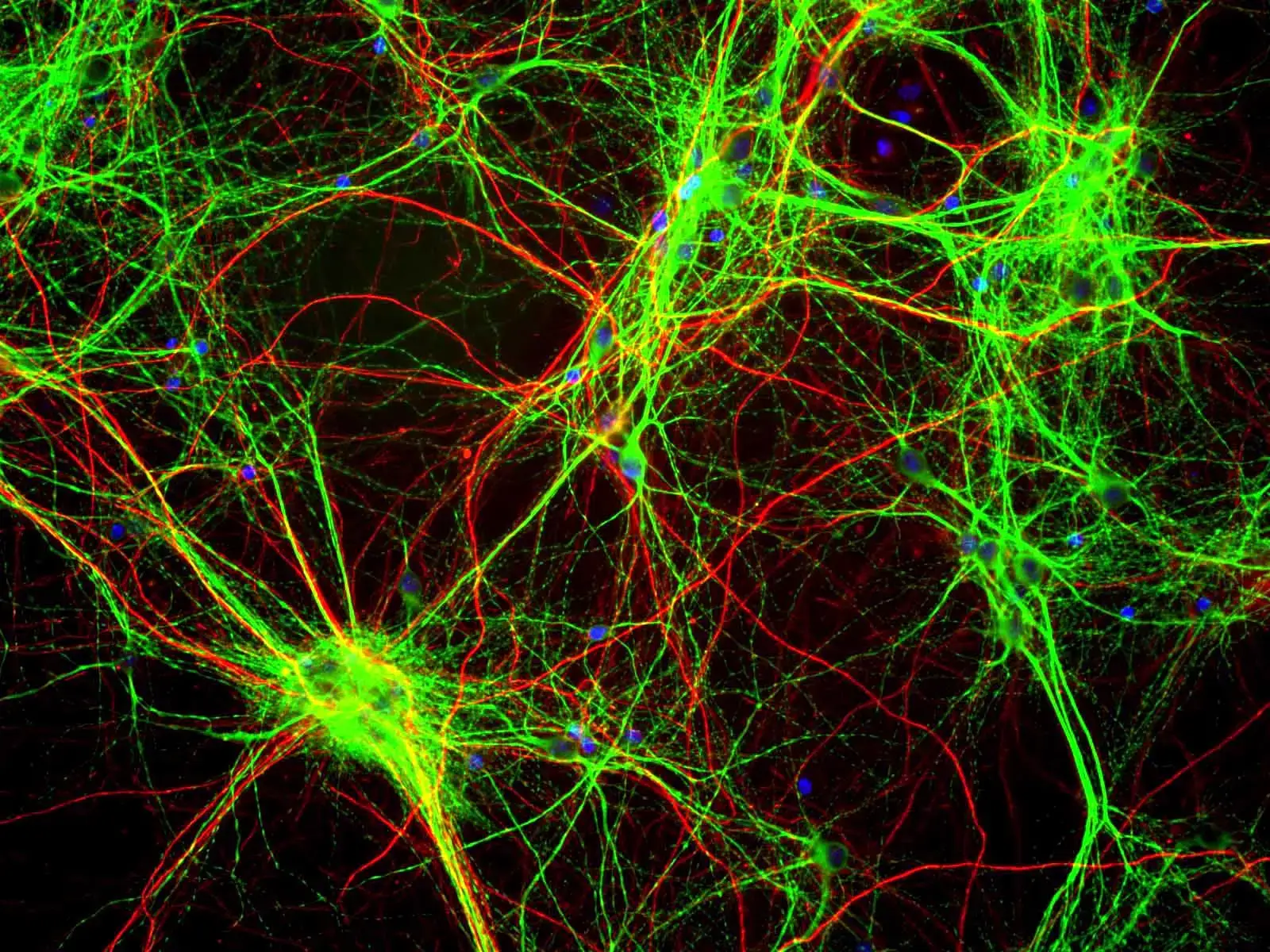
What keeps the Orch-OR debate alive is that it has not been completely ruled out, but it is far from proven. Some studies have claimed to see quantum-like behavior or oscillations associated with microtubules, while others have highlighted structures that might shield or stabilize quantum states. These results are intriguing, but they are not yet the smoking gun that would show your thoughts are genuinely riding on quantum waves.
On the other side, mainstream neuroscience has made incredible progress explaining perception, memory, and decision-making using classical networks of neurons and synapses, without appealing to quantum collapse. Brain imaging, electrophysiology, and computational models all work reasonably well without microtubule quantum computation. That leaves Orch-OR perched in a strange space: too structured and grounded to ignore entirely, but not nearly confirmed enough to dethrone conventional models.
Why People Love (and Hate) the Idea of a Quantum Mind
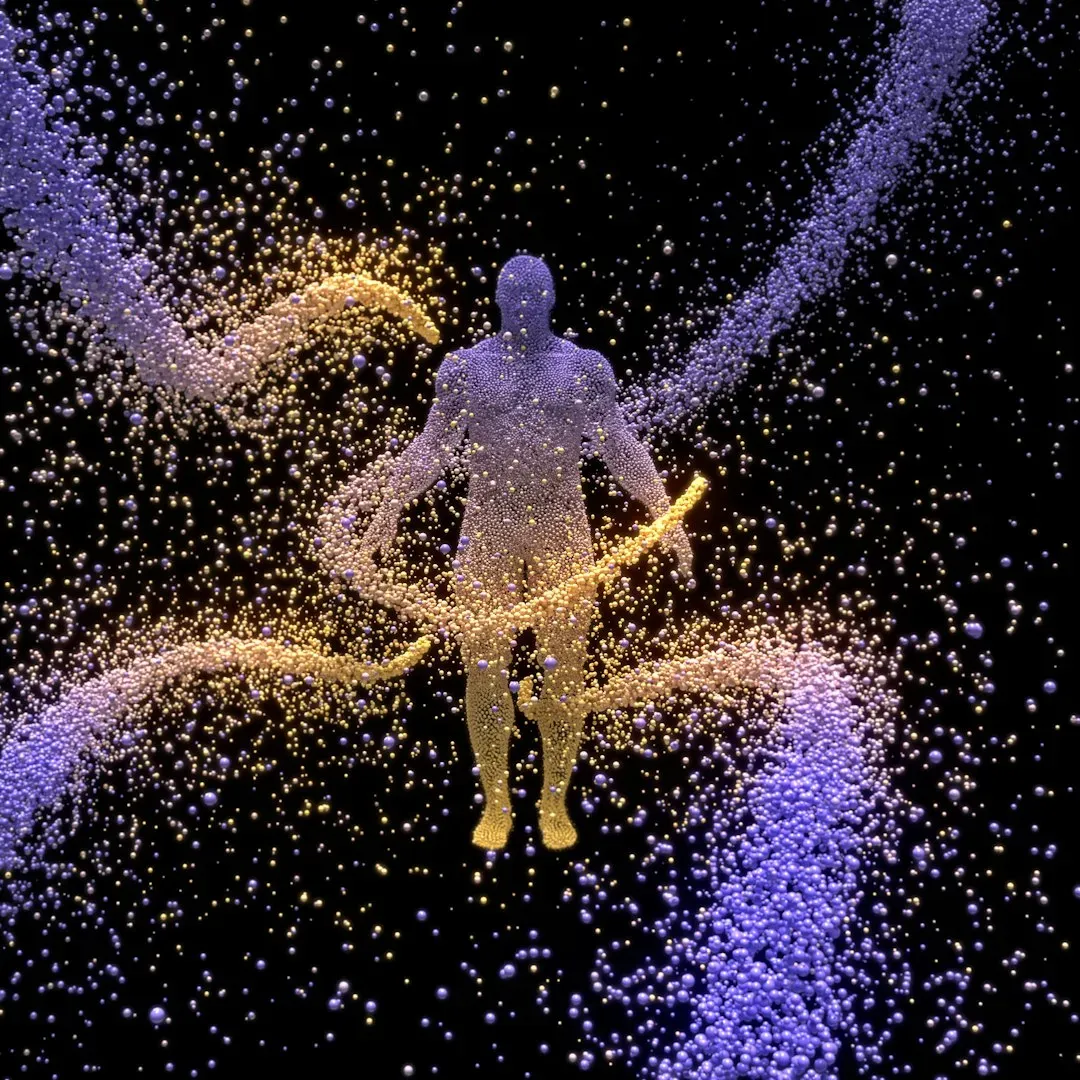
There is also a psychological and cultural layer to this whole story. The idea that consciousness might be connected to quantum physics feels intuitive to many people because both are mysterious and counterintuitive. It offers a narrative where our minds are not just meat machines, but doorways into a deeper level of reality. That is a seductive thought, especially for anyone who feels that purely material explanations leave something important out.
At the same time, a lot of physicists and neuroscientists are allergic to the way “quantum” gets used as a magic word in pop culture to justify anything from telepathy to manifesting your dreams. For them, Orch-OR sits too close to that territory, even though it is framed in precise mathematical and biological terms. This explains why the theory is polarizing: it speaks to a deep human hunger for meaning while poking at the hard, skeptical culture of modern science.
So What If Orch-OR Is Wrong? And What If It Isn’t?
Here is my own take: even if Orch-OR turns out to be wrong in its details, it has done something valuable by forcing the conversation. It pushes us to ask whether we have been too quick to assume that classical physics plus standard neuroscience can explain everything about subjective experience. Sometimes an ambitious, even flawed theory lights up blind spots and pushes better experiments into existence, much like a wild hypothesis in astronomy can inspire sharper observations.
If, however, some future set of experiments convincingly shows that microtubules do host robust, functionally important quantum states tied to consciousness, it would be revolutionary. It would mean our minds are not just emergent patterns in neural firing, but active participants in the deep structure of reality where quantum possibilities become actual events. That would rewrite not just neuroscience textbooks, but our philosophical understanding of what it means to be a conscious being.
Conclusion: A Brave, Messy Theory in a Field That Desperately Needs Bold Ideas

Orchestrated Objective Reduction lives in that uncomfortable zone between visionary and speculative. On one hand, it connects consciousness to rigorous physics and real cellular structures, not vague mystical energy. On the other hand, the experimental support is thin, the technical challenges are brutal, and mainstream science is nowhere close to accepting it as the right answer. In my view, that is exactly why it deserves cautious attention rather than blind praise or instant dismissal.
We badly need theories of consciousness that are not just rebranded neuroscience but genuine attempts to explain why there is something it feels like to exist. Orch-OR might not be the final word, and it may end up serving more as a stepping stone than a destination. But it has cracked open the door between mind and quantum physics in a way that will be hard to close again. The real question is not just whether Orch-OR is right, but whether we are willing to keep following the evidence – even when it leads someplace as strange as quantum waves collapsing inside our own brains.