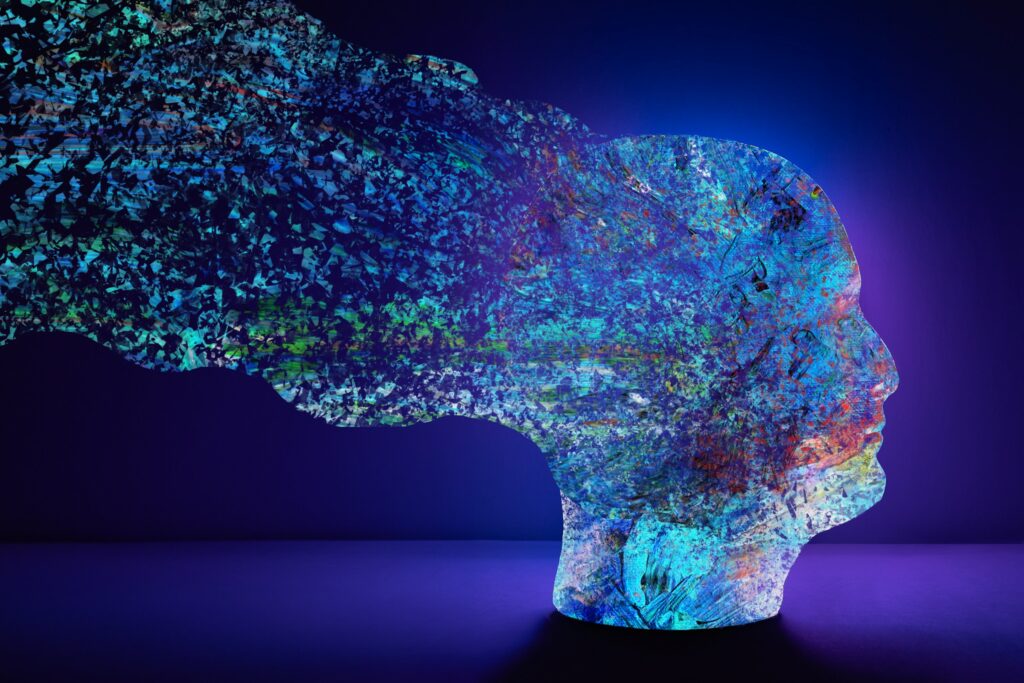

If you pause for a second and notice your own breathing, something strange happens: your experience flips from automatic to self-aware. It is almost as if your mind shines a spotlight on what was already happening in the dark. Higher-order theories of consciousness take that feeling seriously and push it to an extreme claim: you are only truly aware of something when your brain not only processes it, but also has a kind of thought about that processing itself.
This idea sounds wild at first, almost like an infinite mirror of thoughts reflecting thoughts. But it is one of the most influential scientific ways of explaining how raw brain activity turns into lived experience. In this view, consciousness is not at the ground floor of perception; it is built on top, as a higher level of representation. To understand why this matters, we need to dive into what higher-order theories actually say, how they compete with rival views, and why recursion might be the hidden engine of self-awareness.
What Higher-Order Theories Actually Claim
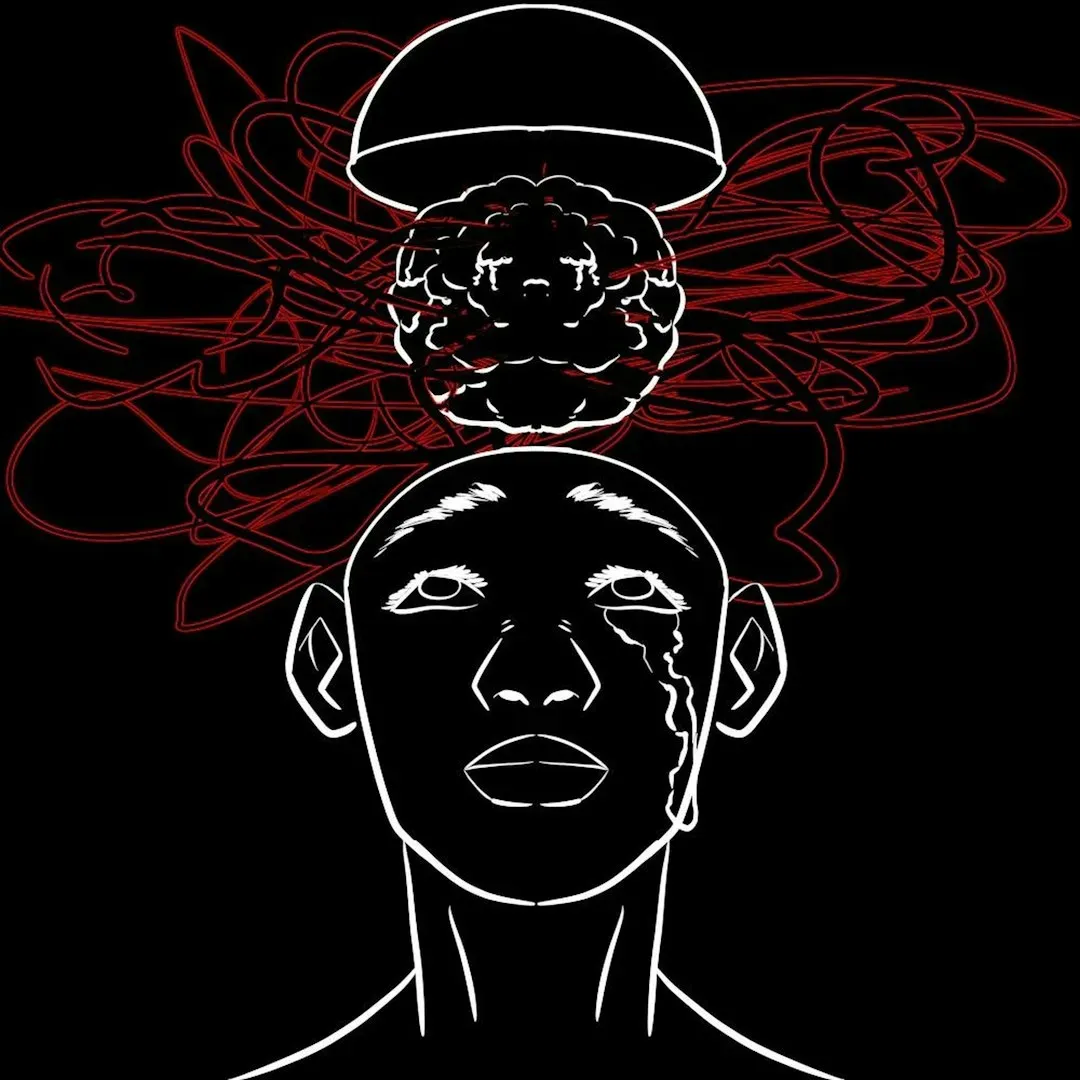
Higher-order theories start from a simple but radical move: they separate mental states that occur in the brain from mental states that you are consciously aware of having. Your brain can represent the world in many ways without “you” ever noticing, like low-level visual processing or automatic motor control. According to these theories, a mental state becomes conscious only when another mental state represents it, something like a thought that says, in effect, there is a perception of red here or there is a feeling of pain now.
In this picture, consciousness is not a basic property; it is a relational one. What matters is not just that a perception or sensation exists, but that it is targeted by a higher-order representation. That higher-order state does not have to be verbal or slow, and it does not have to feel like explicit inner speech. It can be fast, automatic, and highly structured. Still, the core claim stays bold: awareness is awareness-of, and crucially, it is awareness of a first-order state through a second-order, or “higher-order,” mental state.
First-Order vs Higher-Order: Two Layers of Mind
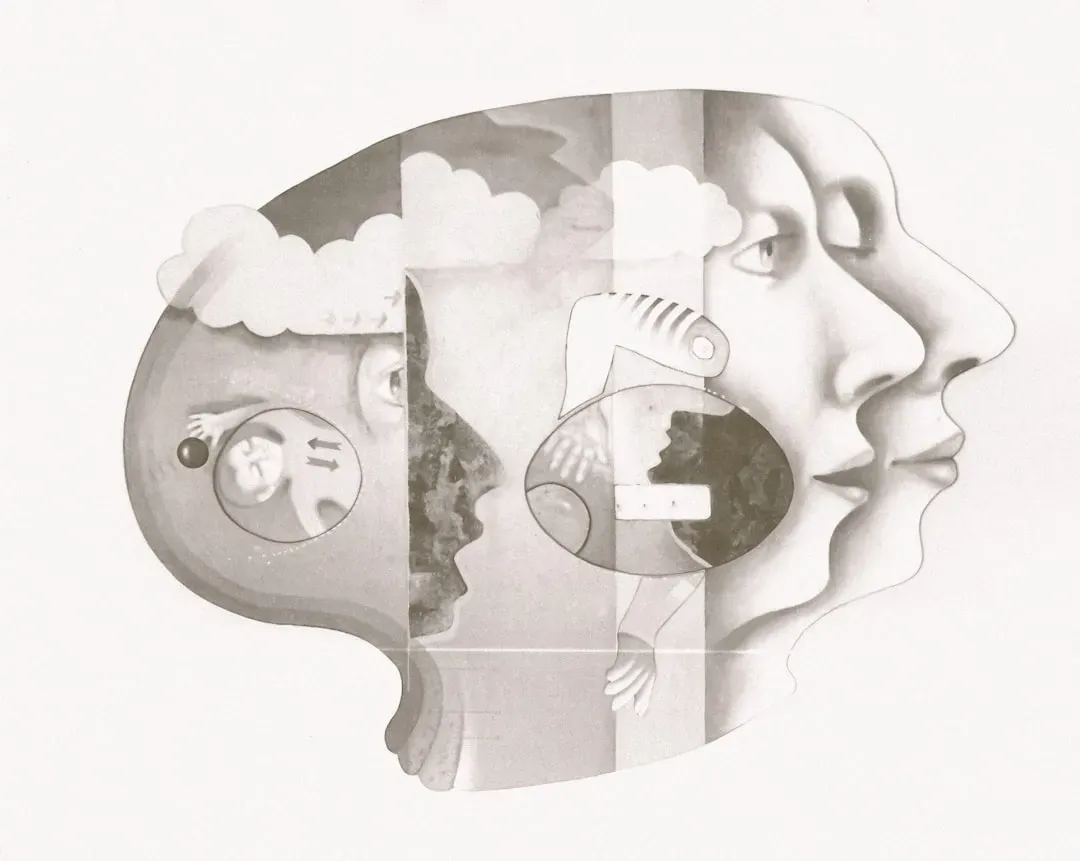
To get a grip on this, imagine your mind as a two-layer system. The first layer is made of first-order states: raw sensory maps, emotional responses, and motor plans that encode what is out there and what your body is about to do. These are like the backstage workers of the mind, running the show but normally remaining invisible to you. They can be incredibly detailed and intelligent without ever showing up in your conscious field.
The second layer is made of higher-order states: representations of those first-order states. Instead of representing trees, faces, or sounds directly, these states represent something like you are seeing a tree or you are hearing a sound. It is a bit like switching from watching the play to reading a review of the play. The review does not replace the performance, but it adds a new perspective. In higher-order theories, that layer of “reviewing” is exactly what turns hidden mental processing into felt, reportable, conscious experience.
Recursion: The Mind Noticing Itself

Here is where recursion comes in and things get really interesting. A higher-order representation is already one step up: a thought about a perception, a state about a state. But some versions of higher-order theory suggest we can stack these layers. You might not only see a tree (first-order) and be aware that you are seeing it (higher-order), but also reflect that you are the kind of person who likes this tree, or that you are now paying attention to your own seeing. This is a higher-order thought about a higher-order thought, and so on.
In everyday life, this recursive loop shows up as self-reflection, introspection, or the unsettling feeling of being “watched from the inside.” When you catch yourself worrying about the fact that you are worrying, or feeling embarrassed about how anxious you feel, you are living inside that stack of higher-order states. Some researchers argue that this recursive structure is not just a curiosity; it may be the backbone of what we call self-consciousness. Consciousness, on this view, is not a flat screen but a hall of mirrors where the system can represent its own representations.
How Higher-Order Theories Compete With Other Views
Higher-order theories do not live in a vacuum; they are part of a crowded landscape of scientific ideas about consciousness. First-order or “global workspace” style views say consciousness comes from certain information being broadcast widely across the brain, without requiring an explicit thought about that information. Other theories, like integrated information theory, claim consciousness depends on how much a system is integrated as a whole, not on whether it forms higher-order beliefs about its own states.
The higher-order camp pushes back by saying those stories miss the crucial “for-me-ness” of experience. A signal that is broadcast widely but never tagged as being my experience of red is, in their view, still just sophisticated data processing. Only when the system constructs a representation that says this is my current mental state does the light of awareness truly turn on. Critics respond that this may make consciousness sound too much like a narrative or belief about oneself, leaving out the raw feel. The debate is ongoing, but it has forced both sides to sharpen their models and look more closely at how the brain monitors its own activity.
Neural Correlates: Monitoring Circuits in the Brain
One of the strongest appeals of higher-order theories is that they fit naturally with something we already know the brain is good at: self-monitoring. Brain regions in frontal and parietal areas are heavily involved in tracking errors, evaluating confidence, and guiding flexible behavior. When you say you are sure about a decision, or admit that you might be wrong, those judgments are tied to neural circuits that estimate the reliability of underlying processes. That sounds very much like higher-order representations of first-order states.
Researchers have found that when people report being conscious of a stimulus, activity is not limited to early sensory regions; it often recruits networks involved in attention, evaluation, and decision-making. This does not prove higher-order theory is correct, but it lines up with its central idea that consciousness comes with a layer of meta-representation. Instead of treating these monitoring circuits as extras added on top of a conscious core, higher-order theories treat them as the very thing that makes an internal state conscious in the first place.
What This Means for Introspection, Illusions, and Mistakes
If conscious experience depends on higher-order representations, then introspection is not a direct window into the mind; it is more like a summarized report, and sometimes a biased one. You can have first-order states without the right higher-order tag, which would explain why you sometimes miss things that clearly affected your behavior, like subliminal cues or unnoticed distractions. There can also be the reverse: higher-order representations that misfire, tagging a state that is not actually there, possibly contributing to experiences like hallucinations or certain errors in self-judgment.
This view helps make sense of why we can be so confident yet so wrong about what is going on inside our own heads. When you insist you saw something that was never present, or believe you chose freely when the choice was nudged unconsciously, what is really happening may be a higher-order story layered onto first-order processes you never directly felt. In that light, the mind looks less like a transparent inner theater and more like a constantly updated, sometimes inaccurate, self-model built on top of complex unconscious machinery.
AI, Animals, and Who Gets to Be Conscious

Higher-order theories also have sharp implications for the big question everyone secretly cares about: what else, besides humans, might be conscious? If consciousness requires higher-order representations of mental states, then any system lacking that capacity is, by definition, not conscious, no matter how smart its behaviors look. Many animals clearly have rich perception and memory, but the key issue becomes whether they also have brain mechanisms that monitor those states in something like a higher-order way.
For artificial systems, the story is even trickier. A large model that processes language or images at scale might still not be conscious if it lacks a genuine internal layer that represents its own internal states as its states. It would need more than tracking statistics or logging its activations; it would require something like a self-targeted representational system that can say, at least implicitly, this is my current internal state. That bar is high, and right now, it is not clear that most engineered systems come close. Higher-order theories therefore make consciousness a demanding club to join, but they also provide a crisp, testable standard for what membership would require.
Why Recursion Might Be the Secret Ingredient of Selfhood
When you follow higher-order theories to their logical endpoint, you land on a bold suggestion: recursion might not just be a side effect of human cognition, but the core of what it feels like to be a self. A mind that can represent the world is impressive; a mind that can represent itself representing the world has crossed a qualitative line. That recursive loop creates a sense of presence, ownership, and continuity, because the system is always, in some thin sense, turned back on itself.
My own take is that this makes consciousness less mysterious, but also more fragile and strange. It suggests that what you call “me” is largely a dynamic pattern of higher-order tracking layered over a deep sea of unconscious processes. The self is not a glowing soul at the center; it is a recursive control system that never stops modeling its own models. That picture can be unsettling, but it is also oddly liberating. If awareness is built rather than given, then changing how we attend, reflect, and monitor ourselves might literally reshape the kind of consciousness we live inside. And that raises a quiet but powerful question: if recursion is everything, how far could we push it before the very texture of being human begins to shift?