
Open any popular science book on quantum mechanics and you’ll quickly hit the same mind‑bending puzzle: why do particles seem to “know” when we’re looking at them? In the classic double‑slit experiment, electrons act like smeared‑out waves when nobody checks which path they took, but snap into precise, particle‑like behavior the instant a measurement is made. For a century, physicists have argued over what this actually means. Is reality fuzzy until we peek? Does consciousness play a role? Or are there hidden gears turning behind the scenes?
In the last decade or so, a new generation of quantum models has started to give this mystery a sharper, and frankly weirder, shape. These approaches do not magically resolve every paradox, but they do offer a more concrete, testable way to talk about measurement without hand‑waving about observers or mystical collapses. They suggest that measurement is not a special act that flips reality from “maybe” to “yes,” but a physical process that leaves an unmistakable trail in the world. The truly strange part is how this trail is laid down and why it makes the universe look classical to us while staying deeply quantum underneath.
The Measurement Paradox: Why Quantum Experiments Look Almost Personal
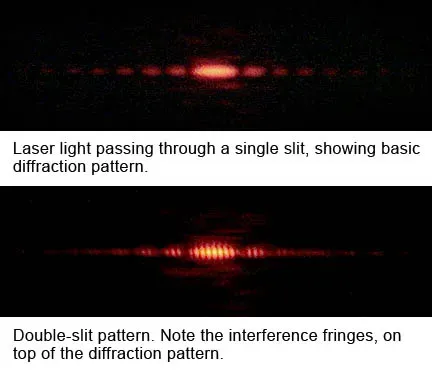
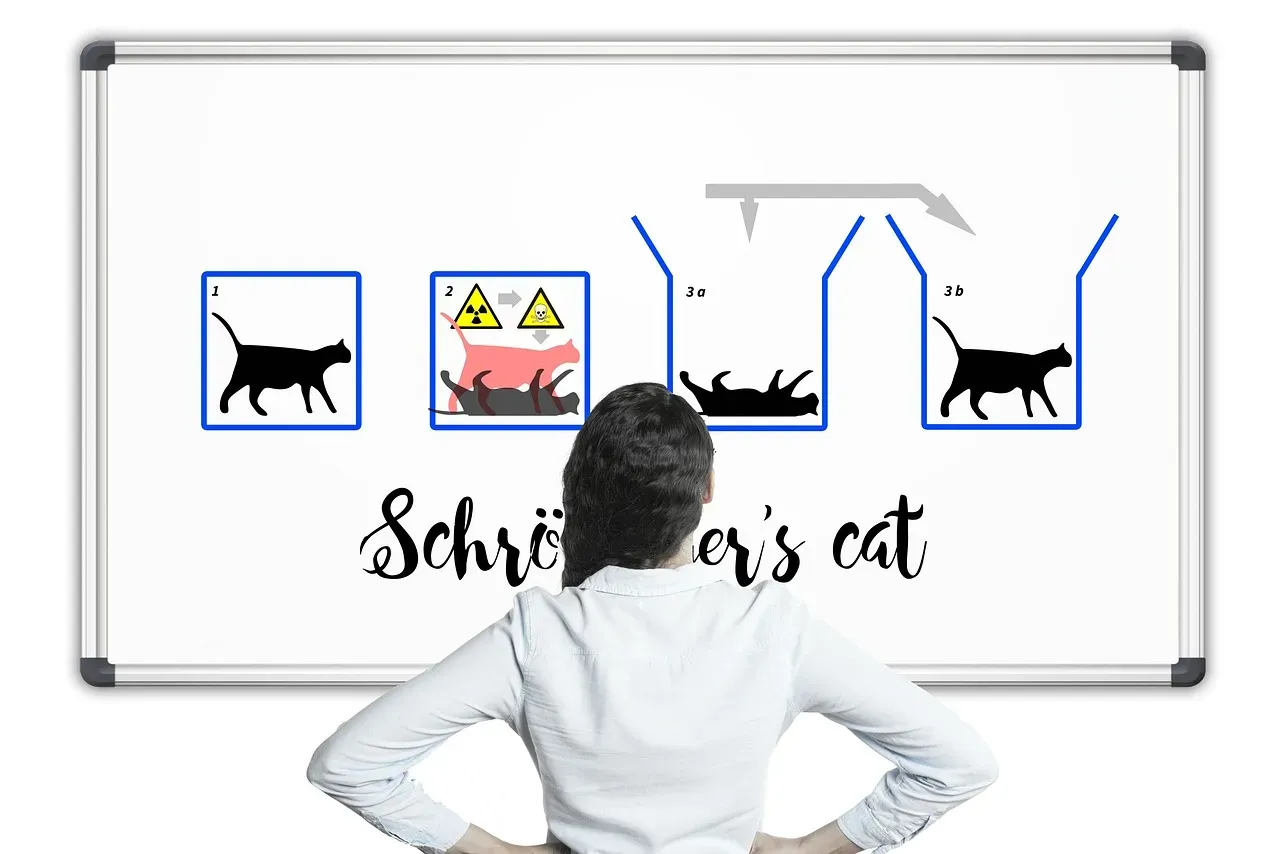
If you’ve ever felt like quantum mechanics is messing with you on purpose, you’re not alone. The measurement paradox makes it feel as if particles wait to “decide” what they are until the moment you measure them. Run the double‑slit experiment with no which‑path detector, and you get a delicate interference pattern, as if each particle were a wave exploring many paths at once. Switch on a detector to check which slit it went through, and suddenly that interference vanishes, replaced by a pattern that screams “little bullets” instead of waves.
From a mathematical point of view, nothing magical is happening. The wavefunction – that strange object encoding probabilities for every possible outcome – evolves according to a precise equation, and measurement just means updating our description once an outcome is registered. But that neat story hides a disturbing question: why is one particular outcome realized, when the theory only gives a spread of possibilities? For decades, this puzzle spawned interpretations that ranged from the modest to the wild, from hidden variables to entire branching universes. The new quantum models on the table right now are trying to keep the math but tame the mystery, and the way they do it changes how we think about what “really” happens when we look.
From Collapse to Continuous Change: Moving Beyond the Magic Switch
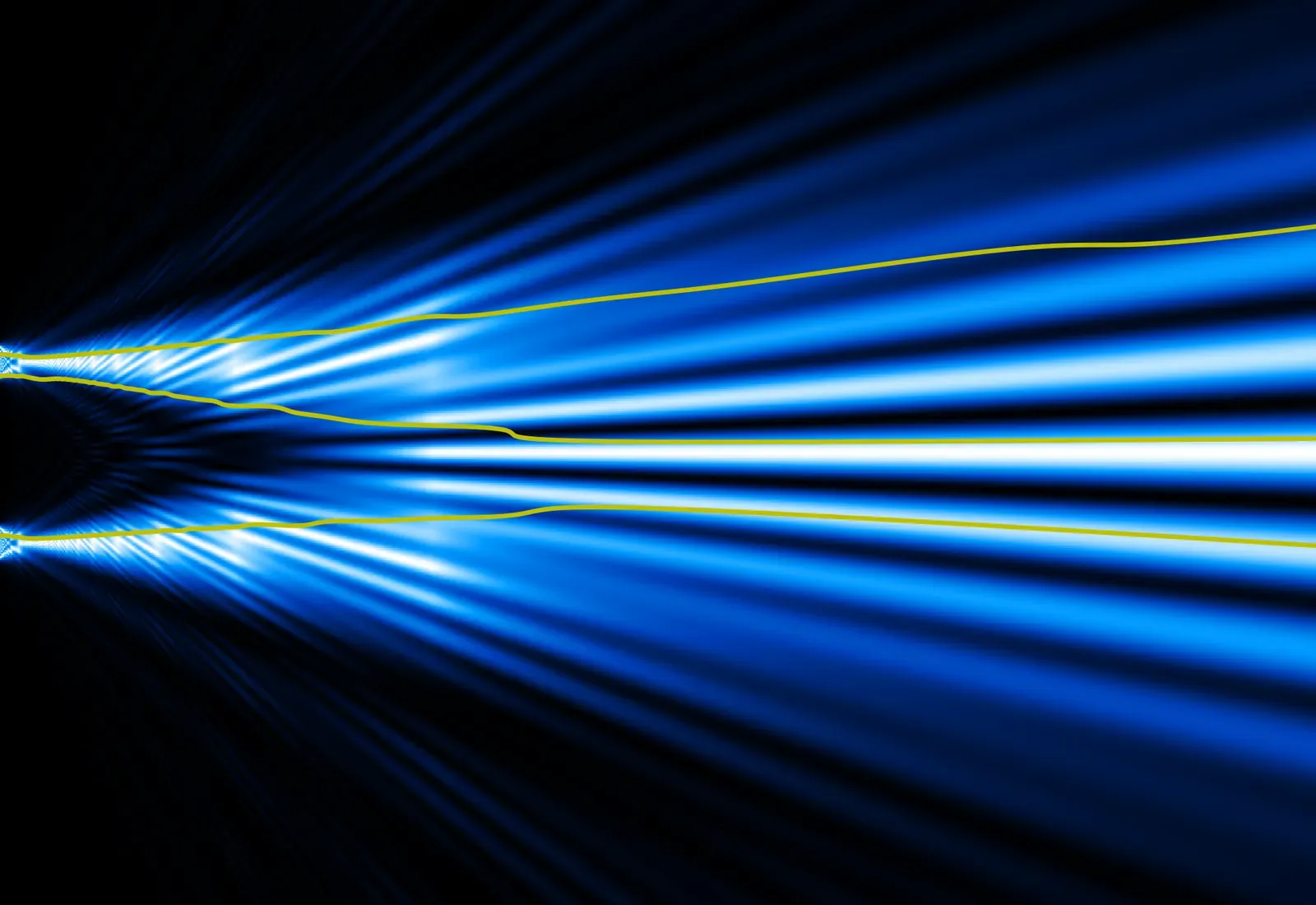
The traditional picture that many people learn first is the so‑called collapse postulate. The idea is simple to say and impossible to visualize cleanly: the wavefunction spreads out and evolves smoothly, until a measurement is made; at that instant, it “collapses” abruptly to a single outcome with a probability given by the famous Born rule. This collapse is not described by the same equation that governs normal evolution, so you end up with a two‑tiered story: one law for when nobody is measuring, and another for when someone checks.
Newer approaches try to get rid of that abrupt, magical switch. Instead of a sudden collapse, they describe measurement as a continuous interaction between system and environment. In these models, what looks like an instant jump is really the end point of a gradual process of entanglement, amplification, and information spreading. Rather than treating measurement as a special event that breaks the rules, they treat it as a particularly strong kind of ordinary quantum interaction. This might sound like a technical detail, but it completely changes how we picture the boundary between the quantum and classical worlds.
Decoherence: How the Environment Quietly Forces Particles to “Choose”
One of the most influential ideas in modern quantum theory is decoherence, and if you want to understand why particles behave differently when measured, this is where things get interesting. Decoherence says that whenever a quantum system interacts with its surroundings – even something as mundane as stray photons, air molecules, or a measuring device – the system becomes entangled with that environment. The delicate quantum superpositions that allow for interference then get rapidly “smeared out” into mixtures that behave, for all practical purposes, like classical alternatives.
Crucially, decoherence does not claim that the wavefunction literally vanishes into a single outcome. Instead, it shows that the superposed branches stop interfering with each other because the environment is constantly “monitoring” certain properties. This environmental monitoring picks out a preferred set of states, sometimes called pointer states, that remain stable under interaction. When we measure, we are essentially just reading off which pointer state the system has become locked into. To us, it feels as if the particle chose a definite value the moment we looked, but the new model says the environment did most of the heavy lifting long before our eyes or instruments got involved.
Quantum Darwinism: Why Only Certain Realities Survive to Be Seen
If decoherence explains how quantum weirdness gets suppressed, quantum Darwinism goes a step further and explains why we all agree on what we see. The core idea is boldly biological in flavor: information about certain properties of a system gets copied and spread into many fragments of the environment, while other information dies out. Just as in natural selection, where traits that replicate better dominate the population, quantum states that leave strong, redundant records in the environment become the “fittest” candidates for objective reality.
Under this view, when you look at a table and I look at the same table, we are not peeking directly at some private wavefunction. We are sampling overlapping bits of environmental information – photons scattered from the table’s surface, for instance – that already carry multiple copies of its position and shape. The reason we both agree on where the table is comes from this redundancy. A property is effectively classical if countless pieces of the environment independently encode it. That is a radically different way to think about measurement: the universe is constantly “broadcasting” only certain quantum facts widely enough that observers can latch onto them.
Contextuality and Reality: Why Outcomes Depend on the Whole Setup
Another strange twist in the new quantum picture is the recognition that measurement outcomes are deeply contextual. Put simply, the result you get for a particular property can depend on what other compatible measurements you choose to perform alongside it, even when they do not disturb each other directly. Theorems in quantum foundations have shown that any theory trying to assign fixed, pre‑existing values to quantum properties, independent of context, runs into contradictions with the predictions already confirmed in the lab.
This does not mean reality is an illusion, but it does mean that asking what value a particle “really had” before measurement, in isolation, can be a badly posed question. The new models treat measurement setups not as passive windows onto an underlying world, but as active parts of the physical situation that help define which properties can meaningfully have definite outcomes. In that sense, the behavior of a particle is not just about the particle itself; it is about the network of devices, fields, and environmental degrees of freedom around it. The outcome is a relational fact, not a private label stamped on a tiny billiard ball long in advance.
Objective Collapse and Hidden Mechanisms: When the Wavefunction Really Does Break
Not everyone is satisfied with explanations that lean heavily on environment and context while keeping the wavefunction perfectly smooth at the fundamental level. Some of the boldest new models, often called objective collapse theories, propose that the wavefunction truly does collapse – but as a genuine physical process governed by new laws, not as a vague, observer‑dependent postulate. In these models, quantum superpositions of large, massive objects become unstable and spontaneously localize, removing the need for any mysterious role of consciousness or special measuring devices.
What makes these proposals compelling is that they are testable. They predict slight deviations from standard quantum mechanics, such as tiny amounts of spontaneous heating or subtle changes in interference patterns for increasingly massive systems. Experimentalists are now pushing these boundaries by creating superpositions of bigger and bigger objects and watching how long the quantum behavior survives. If a deviation is detected, it would hint that there is indeed an underlying collapse mechanism at work – a hidden gear that finally explains why macroscopic measurements always seem to yield single, definite outcomes.
Information as the New Bedrock: Measurement as an Irreversible Record
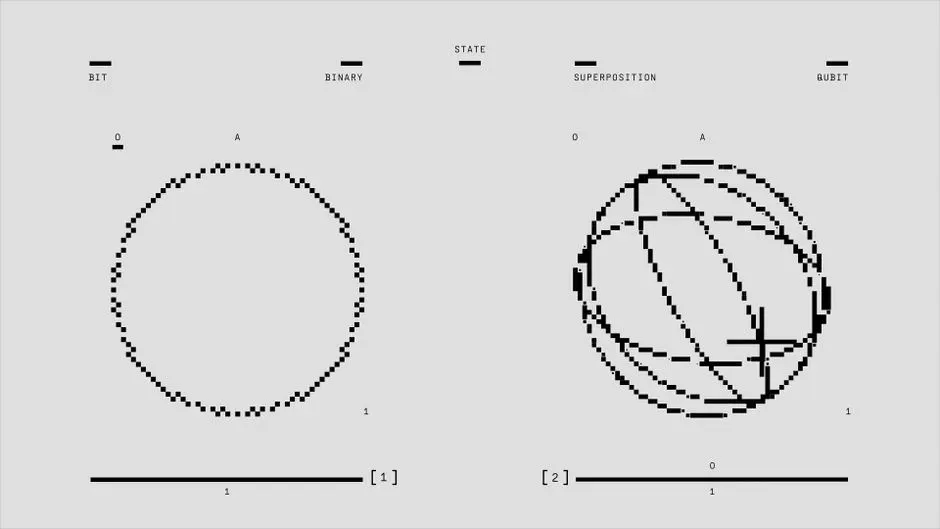
Across many of these modern models, one theme keeps bubbling to the surface: information is not just a bookkeeping tool, it is a central physical quantity. In this information‑centric picture, a measurement is not defined by the presence of a human experimenter, but by the creation of an irreversible record in the environment. Once information about a quantum system has been amplified and scattered into many degrees of freedom, there is no practical way to recover the original superposition. The arrow of time – and with it the feeling that a particular outcome has been genuinely realized – is tied to this irreversibility.
This shift in perspective is subtle but powerful. Instead of obsessing over the precise instant a wavefunction collapses, the new models ask when and how information becomes effectively permanent. A detector clicking, a grain of photographic film darkening, or even a single photon flying off into empty space can all mark the transition from fragile quantum possibility to robust classical fact. In that sense, measurement is less like a magical spell and more like a kind of cosmic bookkeeping: once the universe has written an event into its public ledger, it is part of the story forever, no matter who reads it later.
Why This New Picture Is Stranger – and More Satisfying – Than the Old Stories
On the surface, these models might sound like they are making quantum mechanics tamer, but in many ways they make it stranger. Instead of a simple tale where a particle is fuzzy until you look and then becomes sharp, you get a multilayered story of entanglement, environmental monitoring, information spread, and sometimes even objective collapse. Reality is not a neat sequence of events unfolding in isolation; it is more like a constantly updated web, where what counts as a definite outcome depends on how widely that outcome has been written into the world.
Personally, I find this picture far more satisfying than the older, almost mystical language about observers and instant collapses. It says that the weirdness is not a bug in our description but a feature of how nature really works, and that our classical world is a kind of emergent illusion created by relentless environmental scrutiny. At the same time, it is humbling: many of the quantities we casually talk about simply do not have meaning outside specific experimental contexts. If anything, this new quantum model of measurement undercuts the fantasy that the universe is easily visualized, while putting us on firmer scientific ground. It leaves us with a hard question: are we ready to accept a reality where what can be real at all depends on how the universe keeps score?