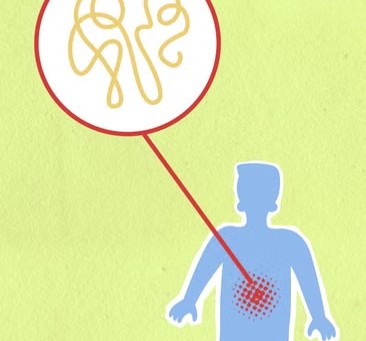
You know that strange moment when you just know something is off, even though you can’t explain why? Maybe you avoid a deal that looks perfect on paper, or you instantly trust someone you just met. You might call it a hunch, instinct, or your gut talking, and for a long time people treated it as mysterious or even mystical. But more and more, scientists are looking at these gut feelings as a kind of ultra-fast pattern recognition system, one that quietly crunches data in the background long before your conscious mind catches up.
In other words, your gut may be less like a magic voice in your head and more like a super-quick internal algorithm. It constantly scans your memories, your bodily signals, and your surroundings, then pushes up a simple message: yes, no, move, wait. When you understand that mechanism, you can learn when to trust it, when to question it, and how to sharpen it over time. Instead of fighting your gut or blindly obeying it, you can start treating it like a powerful tool that works alongside your rational thinking, not against it.
How Your Brain Makes Decisions Before You Realize It

When you make a decision, it feels like you think, compare options, and then choose. But under the surface, your brain has already started working long before you become aware of anything. Neural circuits in areas that handle emotion, threat detection, and reward begin firing within fractions of a second, tagging things as safe, risky, familiar, or strange. By the time you hear that quiet inner nudge, your brain has already sifted through a giant library of past experiences without asking for your permission.
Researchers have found that in many situations, brain activity that predicts a choice appears before you consciously decide. That does not mean you have no free will; it means a lot of the heavy lifting happens backstage, and what you call “thinking it through” is often you catching up to a decision that has already been biased one way or another. Your gut feeling is basically the headline version of a complex, pre-conscious process: a quick summary delivered fast enough to help you act in time.
Pattern Recognition: Your Built-In Ultra-Fast Algorithm
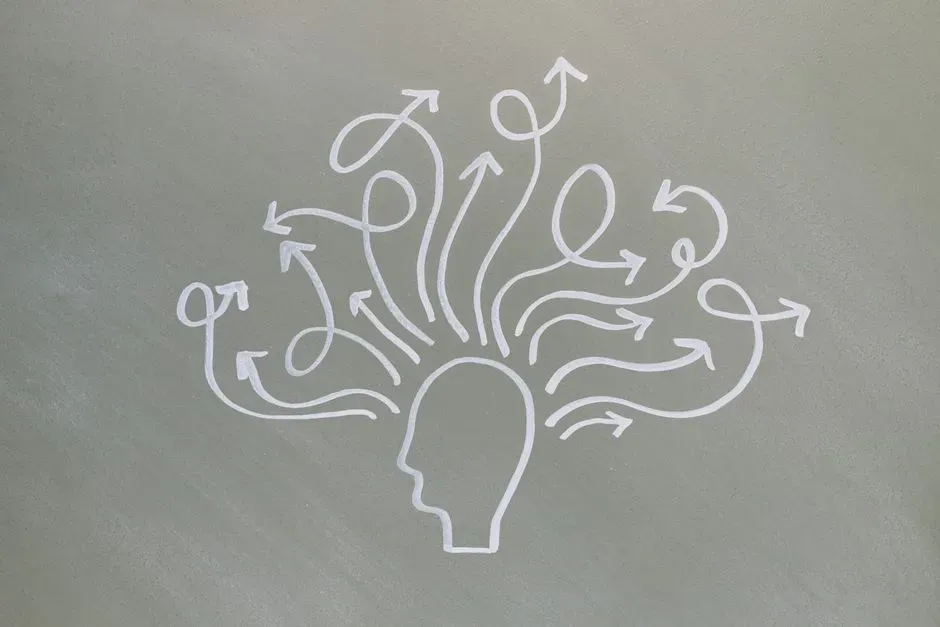
You are wired to spot patterns. From recognizing a friend’s face across a crowded room to sensing tension in a voice, your brain constantly compares what it sees and hears to what it has stored from the past. Over years, you collect enormous amounts of subtle information: micro-expressions, tones of voice, environmental cues, typical outcomes of similar situations. You rarely remember these pieces individually, but your nervous system keeps them on file, ready to use.
Gut feelings often show up when your pattern recognition system notices a mismatch or a familiar danger signal before you can put words to it. Think of it like your internal spam filter: you do not read every suspicious email closely, but your system quietly flags and diverts the ones that “feel wrong” based on countless tiny features. In daily life, that might look like sensing that a deal is too rushed, or that a situation feels strangely similar to a past mistake, even if you cannot logically explain the resemblance in that moment.
Your Body as an Early Warning System
Your gut feelings are not just “in your head” in the casual sense; they’re literally in your body. Your heart rate, breathing, gut activity, and muscle tension all respond quickly to potential threats or rewards, often before you consciously notice anything. The brain and the body constantly talk through nerves and chemical signals, creating loops where small changes in your body reinforce emotional impressions, and those emotional impressions tweak your body further.
You might feel a tightness in your chest around someone who reminds your nervous system of a past painful experience, even if you do not know why you’re uneasy. You might feel a calm, grounded sensation when a situation lines up with many successful patterns from your past. When you say you “feel it in your gut,” you’re often noticing these bodily shifts first. Learning to pay attention to those subtle physical cues gives you access to the earliest draft of your intuitive judgment, long before a full conscious narrative forms.
Why Intuition Is So Fast Compared to Conscious Thought

Conscious, logical reasoning is powerful, but it is relatively slow and effortful. You can only hold a few ideas in mind at once, and analyzing complex situations step by step takes time. In contrast, your intuitive processes operate more like a parallel system, scanning huge amounts of data at high speed. Instead of walking through every detail, they jump straight to a rough conclusion based on similarities to patterns you have already learned.
This speed matters in situations where you cannot possibly analyze everything before you must act. A driver slamming the brakes to avoid a crash does not calmly weigh pros and cons first. A skilled nurse may sense that a patient is about to crash before any numbers on the monitor look alarming, based on thousands of subtle cues they have seen before. In these moments, your gut is not guessing blindly; it is compressing an enormous amount of background knowledge into one rapid signal so you can respond in time.
When You Should Trust Your Gut (And When You Should Not)

Your gut feelings are most reliable in areas where you have real experience and where feedback has been clear over time. If you have spent years in a particular job, hobby, or environment, your brain has built up a rich library of patterns specific to that world. In those domains, your quick instincts can be surprisingly accurate because they’re grounded in reality, even if you can’t explain the logic right away. It is like having an internal shortcut that you earned through thousands of quiet repetitions.
On the other hand, your intuition can mislead you badly in unfamiliar situations or in areas where you’ve absorbed biased or incomplete information. If your past experiences have been narrow or skewed, the patterns your brain learned may reflect that. You might feel a strong reaction that is really driven by stereotypes, fear, or old emotional wounds rather than present facts. In high-stakes choices that involve new territory – like complex financial moves, medical decisions, or long-term commitments – you’re usually safer letting your gut raise questions, then checking those feelings against careful reasoning and outside advice.
How Bias and Emotion Sneak Into Gut Feelings

Your gut is not neutral. It is shaped by your upbringing, culture, past relationships, and even the stories you’ve absorbed from media. Over time, your brain learns emotional shortcuts: certain faces, voices, or situations may trigger discomfort simply because they loosely resemble something painful from your past. That does not always mean danger; sometimes it just means your nervous system is trying to protect you, even when the situation has changed.
Emotions are part of the pattern recognition system, not separate from it. Fear, anxiety, excitement, and desire can all amplify or distort your gut readings. If you are exhausted, stressed, or hungry, you might find your instincts swinging more toward pessimism or impulsiveness. Learning to recognize your own emotional weather helps you interpret gut signals more accurately. Instead of asking only “What do I feel?”, you also ask “What state am I in that might be coloring this feeling?”
Sharpening Your Intuition Without Letting It Rule You

You can train your gut, just like you train a muscle. The key is deliberate practice plus honest feedback. In any domain that matters to you – whether it is work, relationships, or creative projects – you strengthen your intuition by paying attention to your first impressions, making a decision, and then checking the outcome later. Over time, you start to see where your instincts were helpful and where they consistently led you astray, and your internal pattern library updates accordingly.
A practical way to do this is to pause before big choices and quietly note what your body and emotions are telling you, then write down your initial sense. After the result plays out, you look back and compare. When you do this regularly, you stop treating intuition as a mysterious gift and start treating it as a skill that can be refined. You are not trying to silence your rational mind either; you are teaching your gut and your conscious thinking to have a more balanced, honest conversation with each other.
Using Gut Feelings and Rational Thinking Together

You do not have to choose between being “intuitive” and being “logical.” In fact, you function best when you let these two systems work as partners. Your gut can act like an early warning radar or a quick filter, highlighting options that deserve closer attention or situations that feel off. Your slower, more deliberate thinking can then dig into details, test assumptions, and correct for biases your intuition might have picked up.
In practice, that might look like noticing a strong pull or resistance and then asking yourself specific questions: What pattern might my brain be reacting to? What past experiences could be shaping this? What objective facts support or challenge this feeling? When you approach your gut this way, you are not surrendering to it blindly, but you are also not ignoring a powerful source of information that arrives faster than words. You are allowing both speed and depth to have a say in what you do next.
Conclusion: Making Peace With Your Faster-Than-Thought Self
Your gut feelings are not magic, and they are not nonsense. They are the surface ripples of deep processes in your brain and body, built on years of patterns, memories, and emotional learnings that run faster than your conscious thoughts. When you see them as a pattern recognition system instead of a mysterious force, you can start using them more wisely: listening carefully, questioning gently, and checking them against reality instead of worshiping or dismissing them.
As you move through your life, you are constantly teaching this system what to notice and how to respond. Every experience, every reflection, every time you ask “Was my hunch actually right?” helps refine it. Over time, you can grow a gut that is both sharper and more humble – quick to alert you, but also open to being corrected. When your fast, intuitive self and your slower, reflective self learn to work together, you give yourself a quiet but powerful edge in nearly every decision you face. How differently might you move through the world if you treated your gut not as a mystery to fear, but as a skill you can train?