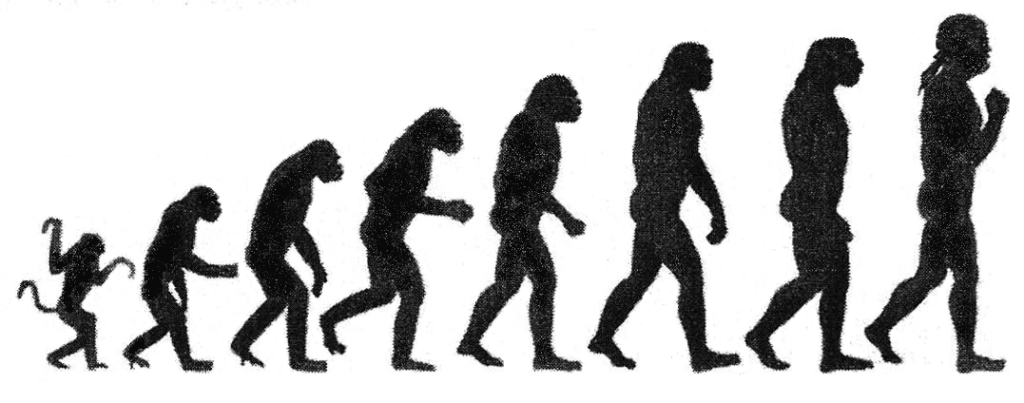

Most people think scientists have this whole thing figured out – a clean, confident line running from ape to caveman to modern human, the kind of chart that used to hang above the chalkboard. That confidence is mostly theater. Dig into the actual peer-reviewed research and you’ll find a graveyard of once-sacred “facts” that researchers have quietly buried in journals and museum footnotes, with no press conference and no retraction notice to warn you.
Nobody sent a memo. The textbooks just kept printing the old version while the real research moved on without them. Here’s what actually happened to ten of the biggest claims about where we came from – and why the true story turned out to be far stranger, and honestly more impressive, than the one most of us were taught.
Neanderthals Never Mixed With Us
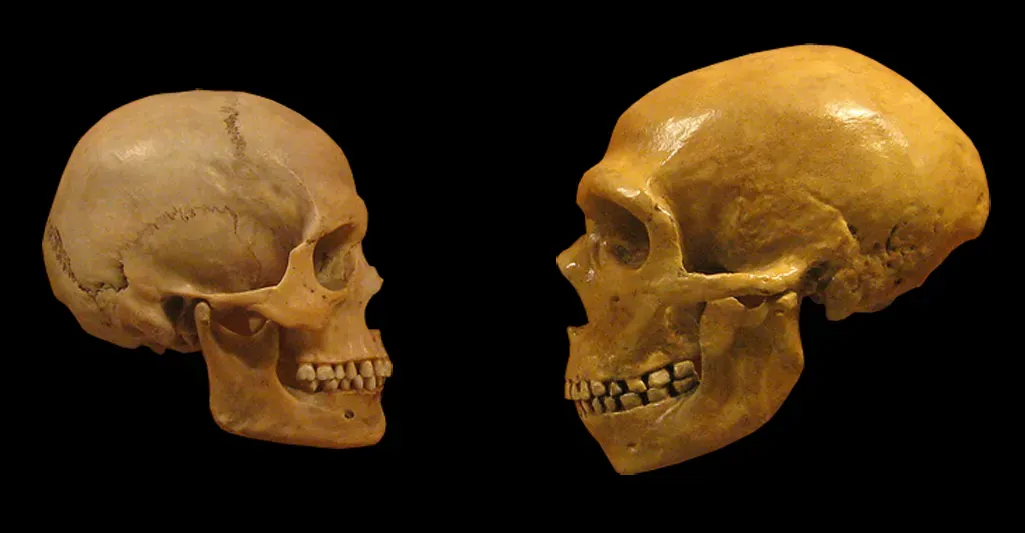
For most of the 20th century, textbooks taught that Neanderthals were an evolutionary dead end – a separate species that vanished without leaving a single genetic trace behind. That claim didn’t just weaken over time. It collapsed almost overnight.
In 2010, geneticists produced the first hard evidence that modern humans interbred with their Neanderthal neighbors, who mysteriously died out roughly 30,000 years ago. The fallout was staggering: most people alive today carry Neanderthal DNA, somewhere between 1 and 4 percent of their genome.
Later studies sharpened the timeline even further. Interbreeding likely began around 50,500 years ago and continued for roughly 7,000 years, lining up neatly with archaeological evidence that the two groups shared the same landscapes for six or seven millennia.
Fast Facts
- First confirmed in 2010 through Neanderthal genome sequencing
- Most living humans carry 1 to 4 percent Neanderthal DNA
- Interbreeding likely began around 50,500 years ago
- The two groups overlapped for roughly 7,000 years
- Neanderthal DNA has since turned up in African populations too
Then came the twist nobody expected: Neanderthal DNA has since turned up in African populations too, upending the old assumption that this genetic exchange stayed neatly confined to Europe and Asia. That discovery is nothing compared to what unraveled next – the story of the “one clean walk out of Africa.”
Humans Left Africa Just Once
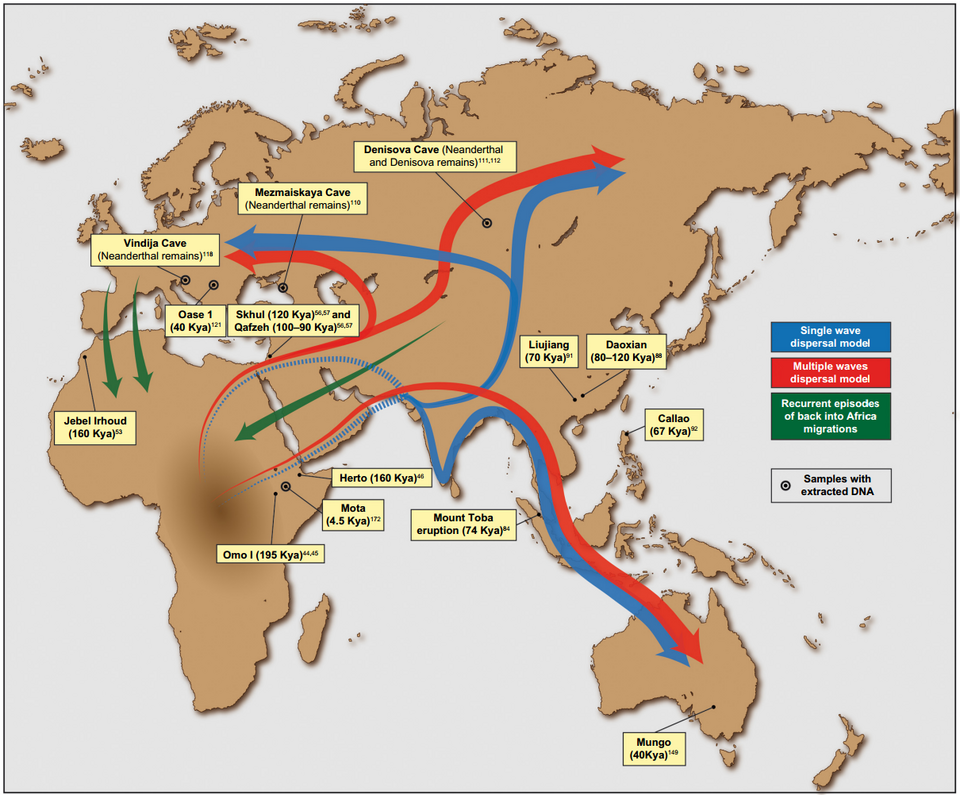
The old narrative was clean and satisfying: modern humans evolved in Africa, then walked out in a single triumphant wave roughly 60,000 years ago, replacing every other human population they encountered along the way. It made for a great chart. It just wasn’t true.
Genetic evidence now paints a far messier picture. Researchers studying Neanderthal genomes found that Homo sapiens didn’t leave Africa in one tidy dispersal – there was gene flow moving back and forth over time, carrying Neanderthal DNA into Africa rather than just out of it.
Separate genetic work has reinforced this finding, showing Neanderthal DNA was woven into the modern human genome on multiple separate occasions, as our ancestors crossed paths with Neanderthals again and again in different parts of the world.
The single-exodus story most of us learned in school has been quietly swapped out for a picture of repeated migrations, backtracking, and interbreeding stretched across tens of thousands of years. That back-and-forth chaos makes the next dropped claim – about our supposed “one mother” – even more revealing.
Mitochondrial Eve Was Not Our Only Ancestor
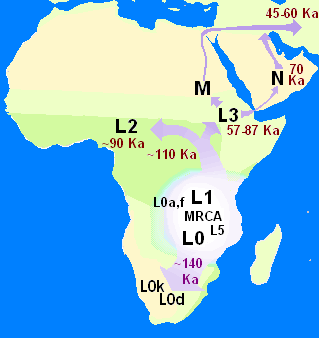
Few scientific soundbites have been more mangled by pop culture than “Mitochondrial Eve.” The phrase conjures an image of one ancient woman, alone in Africa, single-handedly becoming the mother of every human alive today. Scientists never actually claimed that – but the myth spread so widely that researchers now go out of their way to correct it.
Mitochondrial Eve is simply the most recent common ancestor of all mitochondrial DNA lineages alive today – a statistical coalescence point, not a lonely first mother. She lived alongside thousands of other women whose mitochondrial lines simply didn’t survive across every subsequent generation, often for reasons as random as having only sons.
The unsettling truth is that “Eve” wasn’t special while she was alive. She only became significant retroactively, through pure genetic luck, the same way a random surname survives in a family tree while a dozen others quietly die out.
That same idea – that our ancestry runs through chance and detours rather than a straight line – is exactly what gets crushed underfoot by the next myth on this list.
The “March of Progress” Ladder Is Officially Retired
![The "March of Progress" Ladder Is Officially Retired (A very similar image is used here [1] on page 8., Public domain)](https://nvmwebsites-budwg5g9avh3epea.z03.azurefd.net/dws/ef50614988d424e1fa5c9fc7dbd9facc.webp)
You know the image: a knuckle-walking ape on the left, gradually straightening up through a series of increasingly human-looking figures, until a proud Homo sapiens strides off the right edge of the page. It’s been reprinted in more classrooms and documentaries than almost any other scientific illustration in history. It’s also, according to the scientists who study this for a living, deeply misleading.
The image, created in 1965 and originally titled “The Road to Homo Sapiens,” depicted fifteen hominid figures marching in a straight line across 25 million years, each one striding forward as if evolution were aimed at a finish line. Paleontologist Stephen Jay Gould spent decades pushing back against it, arguing that evolutionary history is dominated by contingency and stasis, not steady, unidirectional improvement – just look at branches like Paranthropus, which went extinct without ever leading anywhere near modern humans.
At a Glance
- Created in 1965 under the title “The Road to Homo Sapiens”
- Depicts fifteen hominid figures marching in a straight line
- Spans a timeline of roughly 25 million years
- Challenged for decades by paleontologist Stephen Jay Gould
Even one of the writers behind the original book later admitted the picture ran away from its own text, overwhelming the more careful, cautious language it was supposed to illustrate.
Real human evolution looks less like a ladder and more like an overgrown, thorny bush full of dead-end branches. That branching mess is exactly what makes the next claim, about our diet, so contentious.
“Man the Hunter” Has Fallen Apart

For nearly 50 years, the reigning theory of human evolution assumed men hunted, women gathered, and hunting alone shaped everything unique about our species – tool use, cooperation, language, even brain growth. It’s one of the most heated reversals in anthropology today, and researchers are still arguing about the fallout in academic journals.
The theory dominated the field for decades and seeped straight into popular culture, showing up in museum dioramas, textbook illustrations, Saturday morning cartoons, and feature films. According to a growing body of researchers, though, it’s simply wrong: physiological and archaeological evidence now shows women are actually better suited than men for endurance efforts like long-distance running, and the fossil and ethnographic record shows women have a long, documented history of hunting game.
It’s wrong.
Researchers describing the “Man the Hunter” theory
The most controversial part isn’t that women hunted too – it’s the implication that the entire “hunting built humanity” narrative may have been built backward from cultural assumptions rather than actual evidence. That same scavenger-versus-hunter fight over what actually filled our ancestors’ stomachs bleeds directly into the next dropped claim.
Early Humans Were Scavengers, Not Hunters
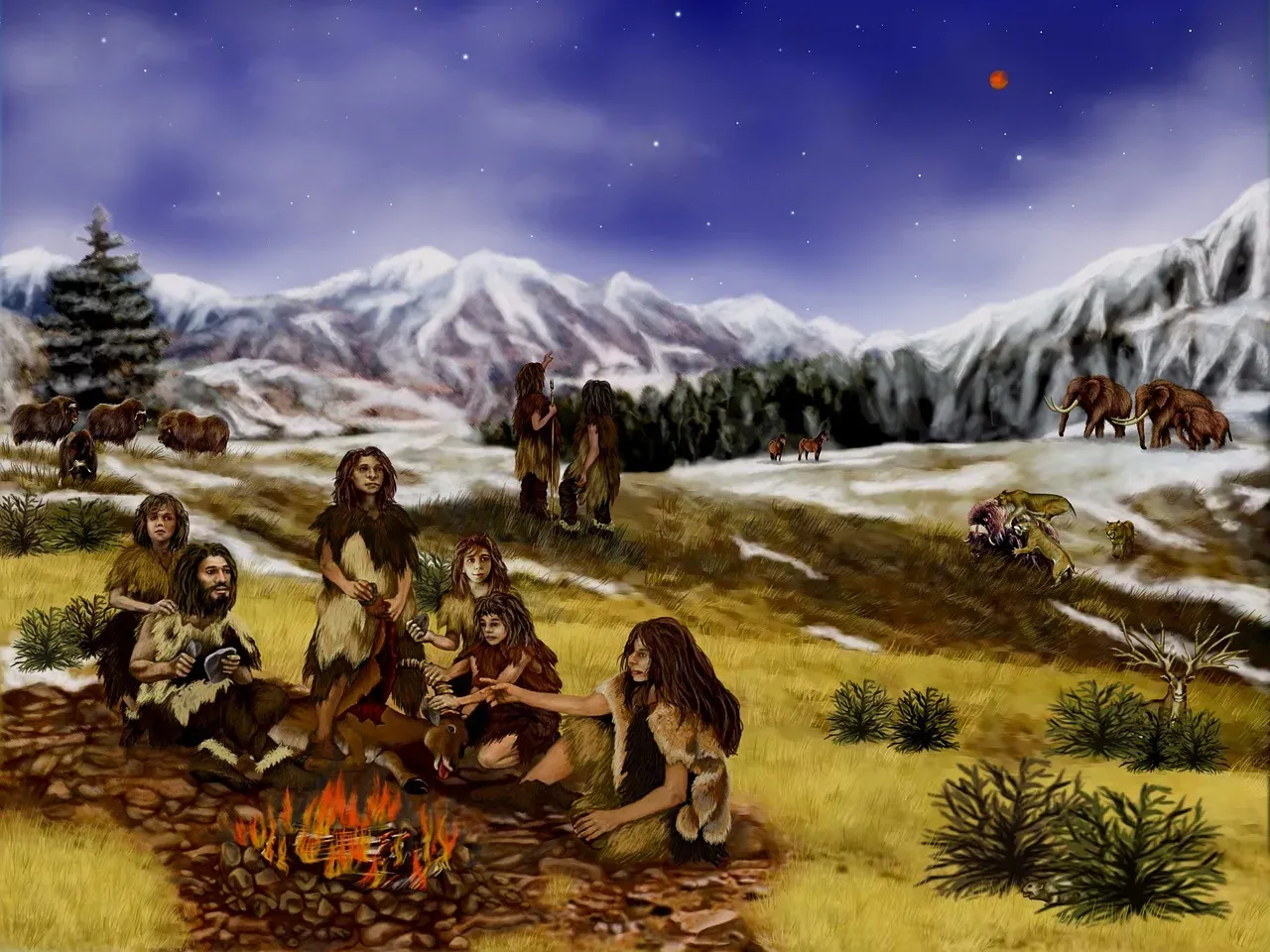
Closely tied to the collapse of “Man the Hunter” is a related claim that also quietly slipped out of favor: the idea that our early ancestors were skilled, dominant hunters who took down big game with spears and coordinated strategy from the very beginning. For decades, researchers actually leaned hard toward the opposite idea.
Over the last 25 years, the pendulum has swung toward the belief that early humans were scavengers rather than hunters, reconciling the evidence with a more gradual, opportunistic model of human evolution. Field studies of the Hadza, one of the last hunter-gatherer groups on Earth, found successful scavenging happening constantly – in one researcher’s initial sample, 85 percent of the scavenged meat had been taken directly off lion kills.
The idea of humans as fearless apex predators from day one has quietly given way to a scrappier, less flattering picture: opportunists who tracked circling vultures, stole meat off lions still guarding their kill, and only later evolved into true hunters.
That same theme of “we weren’t always in control” carries straight into the next abandoned claim, about where walking upright actually came from.
The Savanna Didn’t Make Us Walk Upright
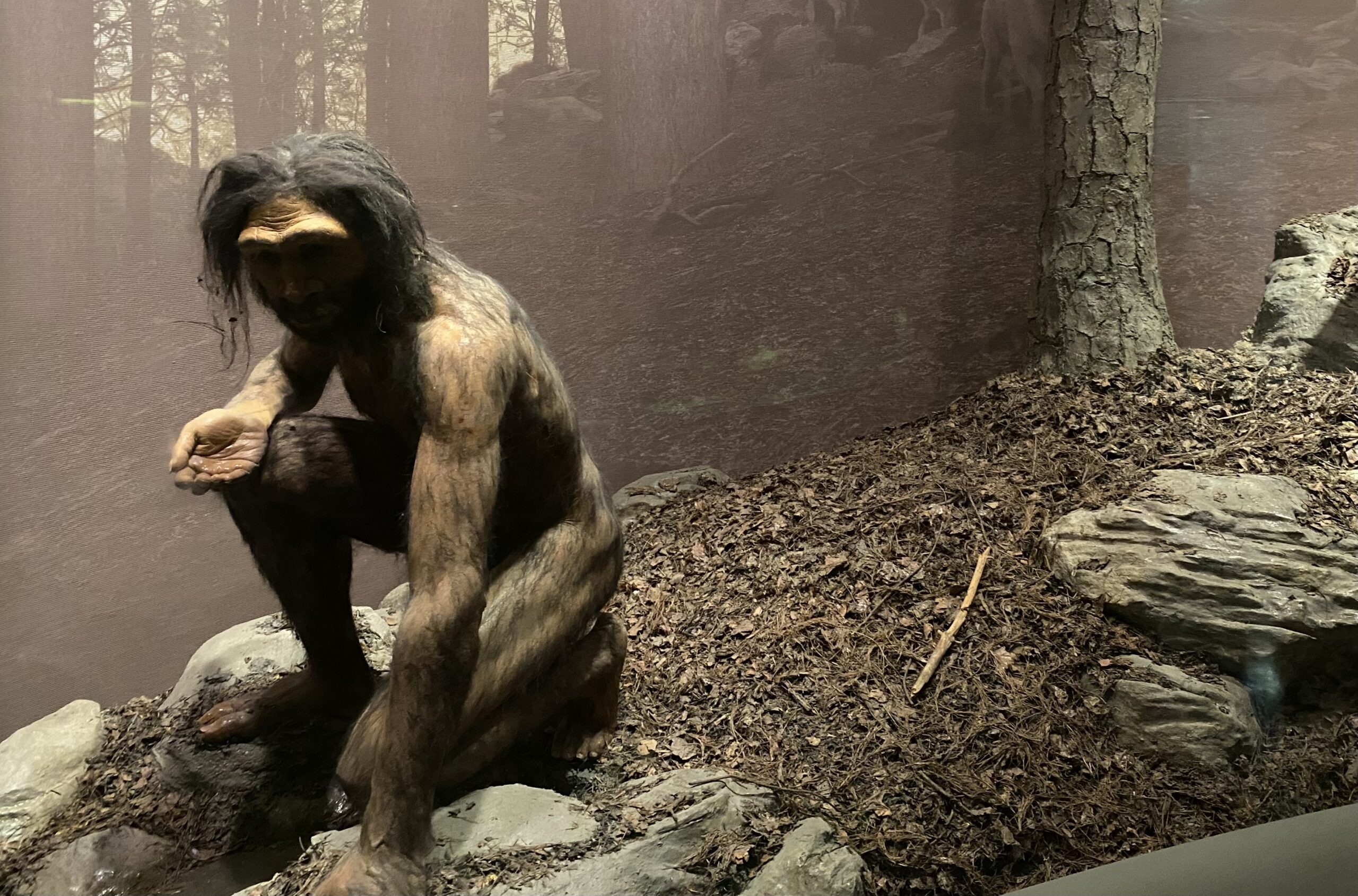
Ask almost anyone why humans walk on two legs, and they’ll say something about early ancestors leaving the forest for open grasslands, needing to see over tall grass, or freeing their hands to carry things. That’s the savanna hypothesis, and it dominated anthropology for decades. It’s also crumbling fast.
The hypothesis holds that bipedalism evolved directly from human ancestors trading tree life for the open savanna and adapting to their new terrain by standing upright. But newer fieldwork has undercut the theory at its foundation: researchers studying chimpanzees living in savanna-like habitats found that trees remained essential to the hominin niche, with bipedalism likely evolving in an arboreal context, driven by foraging strategy rather than open ground.
Quick Compare
- Old theory: Ancestors left the forest for open grassland and stood upright to cope with the terrain
- New evidence: Chimps in savanna-like habitats still relied heavily on trees
- Key finding: Ground time didn’t increase even with fewer trees around
- Current view: Bipedalism likely evolved in a wooded, foraging context
Even more tellingly, the chimpanzees in these wooded savanna habitats spent no more time on the ground than chimps living in dense forest, suggesting fewer trees doesn’t automatically mean more walking. The open-grassland version of the story is now mostly dismissed by specialists, even though it’s still the version printed in most classrooms.
If walking upright didn’t start on open ground, it’s worth asking what else about the “typical” human ancestor got exaggerated – starting with brain size.
Bigger Brains Don’t Mean Smarter Ancestors
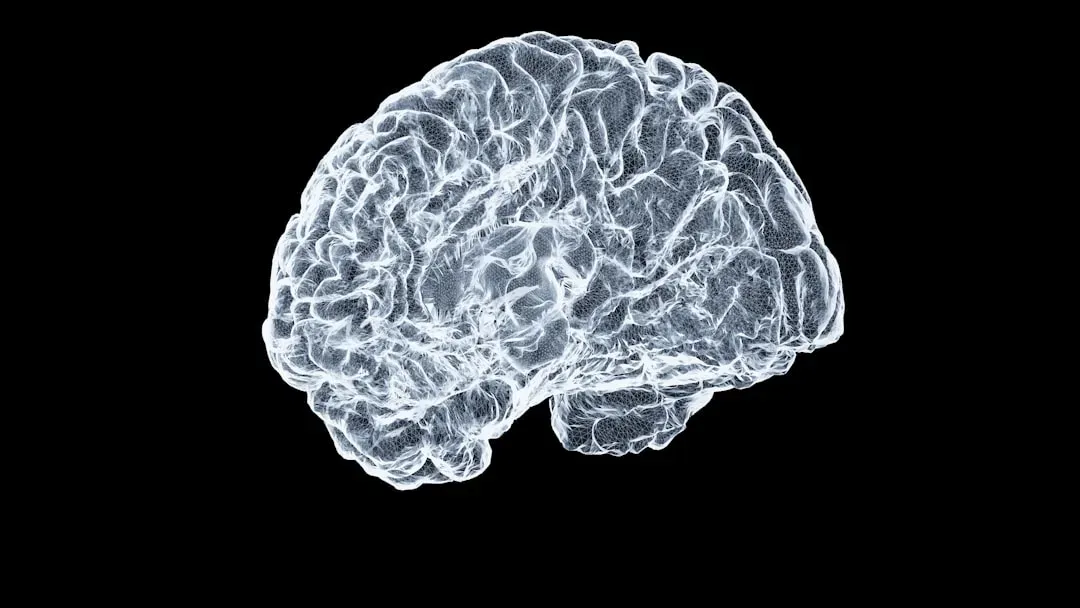
For decades, popular science treated brain size like a scoreboard – bigger skull, smarter species, simple as that. It’s an intuitive claim, and it fit neatly into the “march of progress” narrative. It’s also an oversimplification researchers have been quietly backing away from.
Brain size alone turns out to be a poor predictor of cognitive ability once you compare species properly. Neanderthals, for instance, are now understood to have had brains roughly comparable to, or even larger than, those of modern humans on average, despite once being caricatured as slow-witted brutes.
What actually seems to matter more is brain organization, neural connectivity, and the ratio of brain size to body size across development, not raw cranial volume. A bigger skull was never the flex it was made out to be.
The uncomfortable implication is that “bigger brain equals smarter species” was less a scientific conclusion and more a flattering story that conveniently ranked modern humans at the top. That same flattering bias shows up again in how scientists used to describe Neanderthal intelligence itself.
Neanderthals Were Not Dim-Witted Brutes
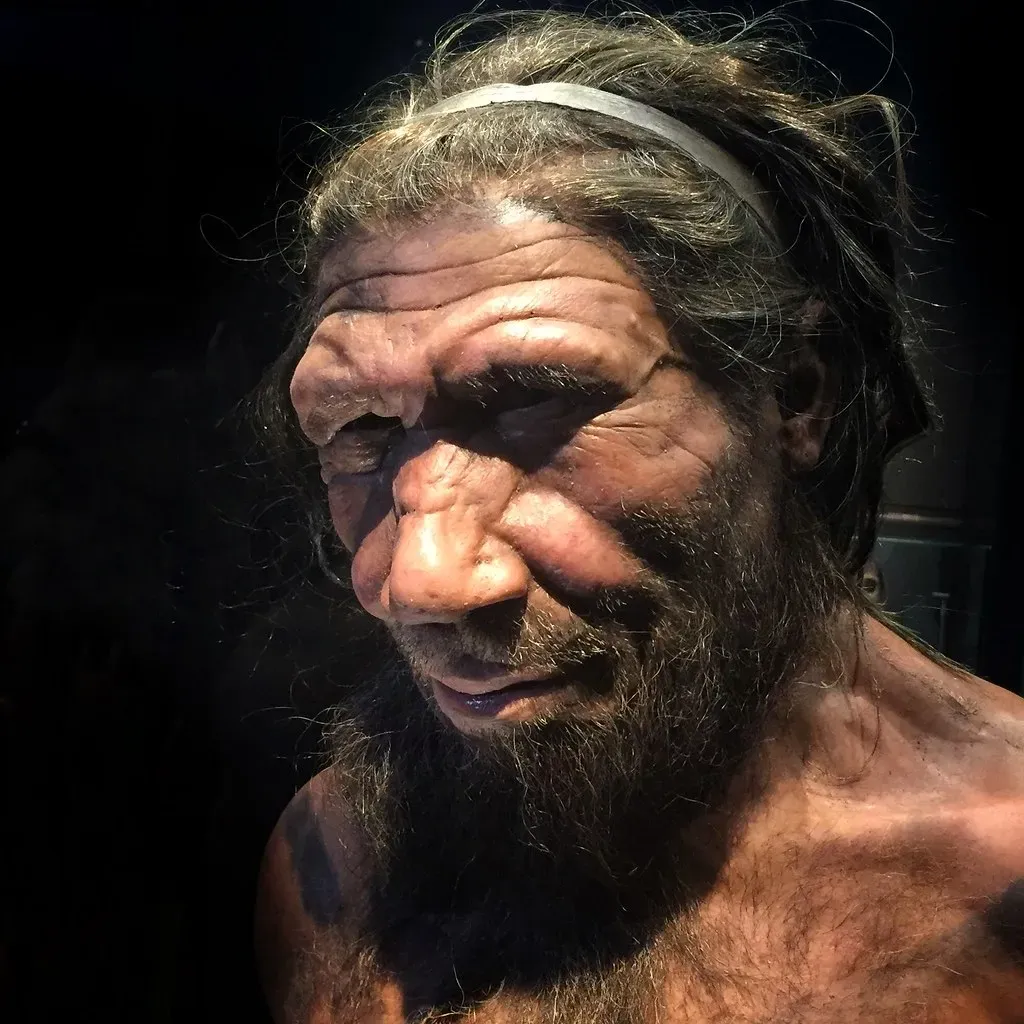
The word “Neanderthal” is still used as a schoolyard insult for someone unintelligent, and that reputation didn’t come from nowhere. Early 20th-century researchers built an entire caricature around a single, poorly reconstructed skeleton warped by arthritis, mistaking disease-bent bones for the species’ natural posture.
That image stuck for generations, shaping how an entire species got remembered. The scientific consensus has since moved dramatically: evidence of deliberate burial practices, symbolic ornamentation, and complex tool traditions has repeatedly forced researchers to rethink what Neanderthal cognition actually looked like.
The interbreeding evidence itself argues against a species too primitive to be worth mating with in the first place. Something about them clearly worked.
The species we once mocked as an evolutionary failure interbred with our ancestors so successfully that most non-African humans today are walking around carrying their DNA. If Neanderthals weren’t uniquely primitive, the next claim – that tool use is what makes humans special – gets even harder to defend.
Tool Use Doesn’t Make Humans Unique

For most of the 20th century, “man the toolmaker” was treated as the defining line separating humans from every other animal on Earth. Anthropologists built entire evolutionary narratives around the assumption that only our lineage was clever enough to shape objects into tools. That line in the sand has been erased.
All of it demonstrates that tool use is far more widespread across the animal kingdom than early anthropologists ever assumed.
Worth Knowing
- Chimpanzees fish termites out of mounds using sticks
- Crows bend wire into hooks to reach food
- Octopuses carry shells around as portable armor
- Dolphins and elephants have also been observed using tools in the wild
What actually seems to separate human tool use isn’t the basic behavior itself but the scale of cumulative culture – the way we build on each other’s innovations across generations instead of reinventing them from scratch every time.
The old “only humans use tools” claim has been so thoroughly abandoned that most textbooks now quietly avoid making it at all, swapping it out for more careful language about complexity and cultural transmission.
“Junk DNA” Was Never as Junky as Advertised
Perhaps no phrase misled the public more than “junk DNA” – the idea that the vast majority of the human genome does nothing at all, a kind of evolutionary leftover with no function whatsoever. That framing dominated science journalism for years, until researchers on a massive genome-mapping project pushed back hard.
The ENCODE project claimed that long stretches of DNA previously dismissed as “junk” are actually crucial to how our genome works, going so far as to argue that 80 percent of the human genome could be assigned some kind of biochemical function. That claim triggered its own backlash from geneticists who argued the project used the wrong concept of functionality, and used it both wrongly and inconsistently.
The real, still-debated truth sits somewhere in the messy middle. Nobody agrees yet on exactly how much of the genome actually matters.
What has quietly disappeared is the smug certainty that most of your DNA is meaningless garbage. That confidence didn’t survive contact with better data, and neither did most of the claims on this list.
The Bottom Line
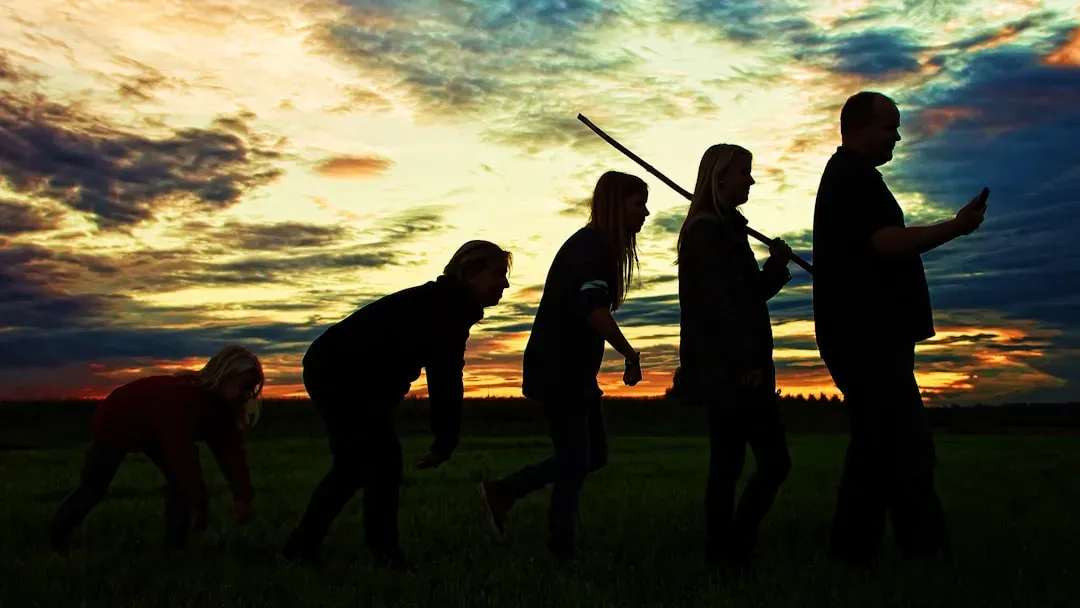
Here’s the pattern running through every one of these dropped claims: human evolution was never as tidy, linear, or flattering as the illustrations in old textbooks suggested. We didn’t march confidently upward from ape to icon.
We stumbled, scavenged, interbred, backtracked into Africa more than once, and dragged around DNA we spent decades calling “junk.” Frankly, that messier version is more impressive, not less – it means our species survived through adaptability and luck, not destiny.
The tidy story was always more comforting than the real one, and comfort was never the point of good science. Which of these dropped claims surprised you most – and which one do you think textbooks still haven’t caught up to? Drop your take in the comments.