Imagine if nothing and no one ever died. Forests would choke under their own trees, oceans would be crowded with ancient fish, and there would be almost no empty space for anything new to appear. It sounds like a strange sci‑fi scenario, but that thought experiment gets to the heart of a haunting question: why do living things age and die at all? If natural selection is supposed to favor survival, why didn’t evolution engineer bodies that stay young and functional forever?
This puzzle has obsessed biologists for decades, and the honest answer is that there isn’t one single tidy explanation. Instead, aging and death look like side effects of how evolution actually works in the real world: messy, local, short‑sighted, and always negotiating trade‑offs. In this article, we’ll walk through what scientists really know, where the evidence gets shaky, and why your eventual death is not a bug in the system, but something much closer to a feature.
Why Immortality Is Not the Evolutionary Default

It feels intuitive to assume evolution should push organisms toward immortality, but that assumes the main goal is to maximize how long an individual lives. From an evolutionary perspective, the real currency is not lifespan; it is the number of surviving offspring that carry your genes forward. If most organisms in the wild are killed by predators, disease, starvation, or accidents long before old age, then shaving off a bit of performance at age eighty in exchange for stronger reproduction at age twenty can be a winning strategy. In nature, the elderly rarely get to cash their longevity checks.
Think of a species of small rodent that, on average, gets eaten by something within a year. Any mutation that boosts early fertility, even at the cost of earlier physical decline, will tend to spread, because those animals reproduce more before predators get them. This kind of relentless pruning by external dangers means evolution “doesn’t bother” perfecting late‑life maintenance simply because so few individuals survive long enough to use it. Immortality is not blocked by some absolute physical law; it is undercut, quietly and efficiently, by the brutal math of who lives long enough to reproduce.
Mutation Accumulation: When Natural Selection Looks Away
One major theory for why we age is called mutation accumulation. It starts with a simple idea: selection is most powerful on traits that affect young individuals and weakest on traits that only show up late in life. Imagine harmful genetic changes that only cause trouble after an animal’s reproductive years are mostly done. Those late‑acting mutations barely affect how many offspring are produced, so natural selection has little leverage to remove them from the population. Over time, these late‑onset problems build up like unnoticed errors in a long‑ignored section of a codebase.
In humans, you can see hints of this in the way risk for many diseases climbs sharply at older ages: certain cancers, neurodegenerative diseases, and frailty syndromes tend to appear long after most reproduction is complete. Evolution never optimized our genomes to be clean and trouble‑free in our seventies or eighties, because for most of our evolutionary history, almost nobody lived that long. The result is that aging looks, in part, like the quiet accumulation of late‑acting genetic baggage that selection never really got around to cleaning up.
Antagonistic Pleiotropy: Traits That Help You Young, Hurt You Old
Another key theory, antagonistic pleiotropy, suggests that some genes have double lives: they are beneficial early on but harmful later. Natural selection tends to favor them anyway because early‑life benefits count far more than late‑life costs. For example, a variant that boosts growth, fertility, or competitive ability in youth might also increase the risk of inflammation, tissue damage, or cancer decades down the road. Evolution, which only “cares” about reproductive success, happily takes that deal.
There are many suspected examples of this kind of trade‑off. Hormones that promote rapid growth and early sexual maturity can stress metabolic systems and increase aging‑related damage. Strong immune responses that help fight infections in young adults can also drive chronic inflammation that erodes tissues in old age. You can think of antagonistic pleiotropy as burning the evolutionary candle brighter at the front end of life, even if it means there is less wax left for the back end.
Disposable Soma: Why Bodies Are Meant to Be Used Up

The disposable soma theory takes this logic one step further and frames the body as a resource‑allocation problem. Organisms have limited energy. They must decide, via evolutionary trial and error, how much to invest in reproduction versus maintenance and repair of the body (the “soma”). Investing heavily in perfect, indefinite repair would require diverting energy away from producing offspring. If the environment is harsh and external death risks are high, spending big on long‑term maintenance is a poor investment.
From this perspective, aging happens because bodies are, quite literally, disposable. Evolution “chooses” to build a body that is good enough to get through the most likely reproductive window, not engineered for perpetual perfection. This is why many species that face extreme predation or instability mature quickly, reproduce intensely, and then decline fast, while species with safer, more stable existences often have slower aging and longer lifespans. It is less about a mysterious clock and more about how the energy budget is penciled in across time.
Death as a Population‑Level Strategy: How Much Is Real, How Much Is Hype?
There is a seductive story that aging and death evolved because they are good for the group: old individuals die off, freeing resources for the young and increasing the adaptability of the population. While this sounds tidy and even poetic, the bulk of evolutionary theory is cautious about strong versions of “group selection.” Genes that directly help their carriers reproduce tend to spread much more reliably than genes that only help the group in the long run. In most classic models, a gene that makes you die earlier solely to help the population would be quickly outcompeted by a selfish, longer‑lived variant.
However, the full picture is not black and white. In some organisms with simple structure, strong local interactions, or unusual life cycles – like certain microbes, colonial animals, or social insects – traits that look like group‑level strategies can emerge. There are also intriguing cases of programmed cell death within multicellular bodies, where cells “sacrifice” themselves for the organism’s health. Still, for whole‑organism aging in most animals and plants, the mainstream view is that old age is best explained by individual‑level trade‑offs, not an elegant population‑wide death plan written by evolution.
Slow Agers, Fast Agers: What Other Species Reveal
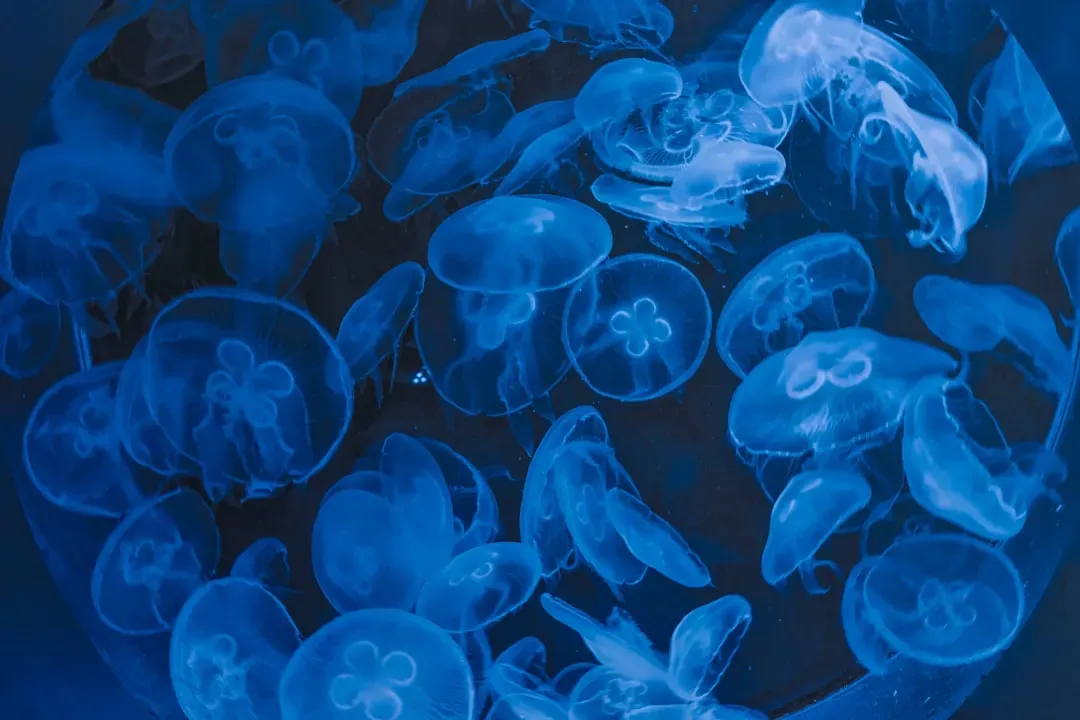
If aging and death are shaped by local trade‑offs, then we should expect enormous variation across species – and that is exactly what we see. Some tiny insects live for only days or weeks, while certain trees may survive thousands of years and some reptiles and fish show surprisingly weak signs of aging. A few species of jellyfish and hydra can even appear biologically “immortal,” capable of renewing their tissues indefinitely under the right conditions. Nature clearly has the tools to bend and stretch the aging process in dramatic ways.
Comparing these different lifecycles reveals patterns. Species that suffer high external mortality (being eaten, harsh climates, unstable food supplies) generally evolve short lifespans and intense early reproduction. Species that are relatively safe – like large mammals with few predators, long‑lived birds, or some deep‑sea creatures – often evolve slower metabolism, robust repair systems, and longer lives. These differences do not mean some creatures have escaped evolution; they show how flexible evolution can be when tuning the dial between maintenance and reproduction under different environments.
If you zoom in to the cellular and molecular level, aging starts to look like a cascade of tiny malfunctions piling up over time. Cells accumulate DNA damage and misfolded proteins, stem cells lose their regenerative power, mitochondria (the cell’s power plants) become less efficient, and communication between tissues starts to misfire. Many of these processes are not “designed” for decay; they are by‑products of systems that work well early in life but are not perfectly maintained indefinitely. Repair mechanisms exist, but they are limited and imperfect, shaped by the same trade‑offs that govern everything else.
Think of it like a busy city’s infrastructure. Roads, bridges, and power lines are built for a reasonable lifespan, not for eternity. You can patch and repair them, but if the budget is finite and emergencies keep happening, long‑term maintenance gets shortchanged. Aging is what happens when decades of small compromises and shortcuts catch up with an organism’s biology. From an evolutionary perspective, as long as those cracks only become critical after reproduction, there is little pressure to completely redesign the system.
Human Longevity, Culture, and the Stretching of an Old Design

Humans are an especially weird case. For most of our species’ history, average lifespans were short, mostly because of infections, injuries, and lack of reliable food. Yet humans today regularly live into their eighties and beyond, thanks largely to medicine, sanitation, and social systems that shield us from many traditional causes of early death. In a sense, we have dragged a body plan that evolved for a much harsher world into an era where it is protected enough to reach ages it was never fully optimized to handle.
Our extended lifespan, combined with cultural evolution, adds a twist to the usual evolutionary story. Older humans can contribute in non‑genetic ways: knowledge, skills, social support, and cultural memory may all improve the survival of grandchildren and communities. There are arguments that these benefits helped shape some aspects of human longevity, though the evidence is still mixed and controversial. What is clear is that we are now living long enough to fully experience the weak spots of our evolved machinery, from chronic diseases to cognitive decline, and we are trying – through science, technology, and lifestyle – to compensate for design decisions that were made by evolution under very different conditions.
Is Aging a Problem to Be Solved – or a Deal We Chose Without Choosing?
As anti‑aging research and longevity tech gain momentum, it is tempting to frame aging as a pure mistake that smart science will soon correct. But when you look at the evolutionary logic, aging is less a glitch and more like the price paid for being highly effective early in life. We are the descendants of lineages that accepted certain long‑term costs in exchange for short‑term reproductive success. That bargain happened over millions of years, without anyone consciously signing the contract, but we live inside its consequences every day.
My own view is that we should absolutely push back against the worst aspects of aging – suffering, disability, and disease – while still being honest about the trade‑offs. If we learn to dramatically slow or reshape aging, we will be rewriting a core part of how evolution has balanced maintenance and reproduction for our species. That is an extraordinary and serious step, with social, ecological, and ethical ripples far beyond getting more birthdays. Aging and death, uncomfortable as they are, helped make room for novelty, adaptation, and us. The real question now is: knowing that this was the evolutionary deal, how far do we want to renegotiate it?