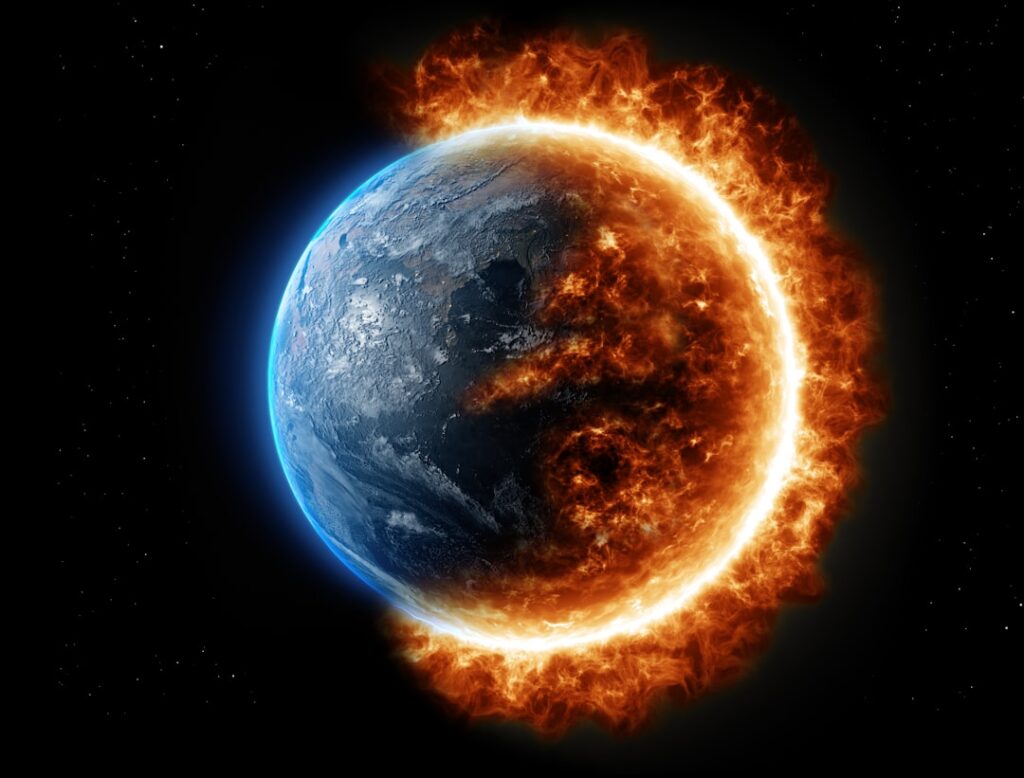
You live on a planet that has quietly tried to erase you several times. Long before the age of dinosaurs, long before trees like the ones you know today, Earth went through a nightmare so intense that life itself almost failed. At the heart of that nightmare was not an asteroid, but something far more unsettling because it came from inside the planet: a colossal, relentless series of volcanic eruptions.
When you hear about mass extinctions, you probably think of a single dramatic impact, a flash, a crater, and then darkness. The story you are about to walk through is different. It is slower, more suffocating, and in many ways more terrifying, because the killer was the planet’s own breath turning toxic. To understand how close life came to ending, you have to travel back about 252 million years to what scientists call the end-Permian extinction – and to a volcanic event so vast it almost remade the world from scratch.
The Day the Planet Turned Against You: The End-Permian Catastrophe
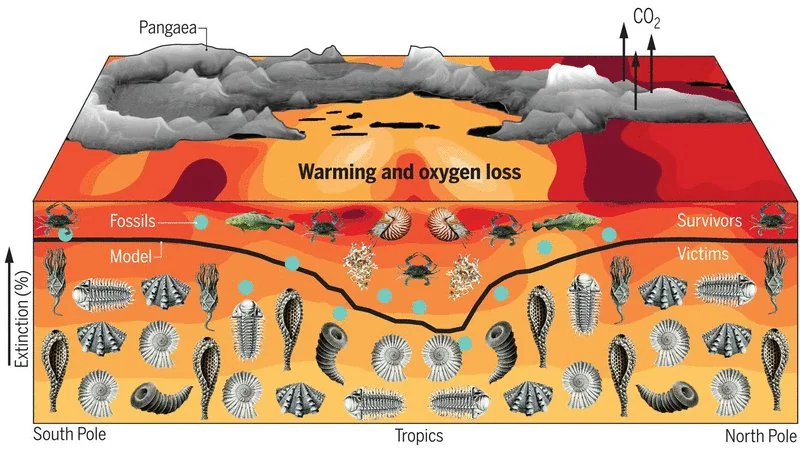
Imagine waking up in a world where nearly every familiar species is gone – ocean reefs collapsed, forests burned or rotted away, and most animals you know simply never existed again. That is roughly what the end-Permian extinction did to life on Earth. Scientists estimate that roughly about nine out of ten marine species vanished, along with a devastating share of life on land, making it the worst extinction event known in the geological record.
You are used to thinking of Earth as somewhat stable, but in this chapter of its history, the planet flipped that assumption on its head. Over a relatively short geological time, ecosystems you would recognize only from fossil photos were dismantled piece by piece. Food chains buckled, oxygen levels shifted, and habitats shrank or disappeared completely. If you could stand there and witness it, you would not be watching the quiet fading of species – you would be watching biosphere collapse.
The Siberian Traps: A Volcanic Region the Size of Continents
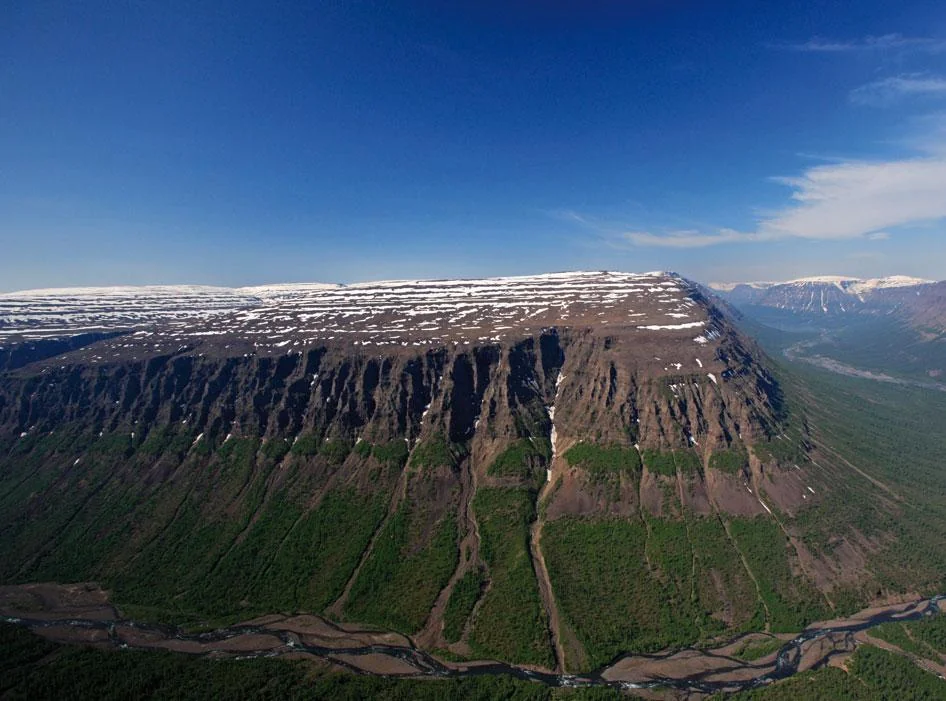
At the center of this catastrophe, you find an area in what is now northern Russia called the Siberian Traps. Today, if you look at photos, you just see strange step-like plateaus of dark basalt stretching across an immense region. Those rocks are the frozen remains of lava that once flooded the landscape again and again, building up layer upon layer until the pile reached thicknesses of several kilometers in some places. You are not talking about a single mountain here, but about a volcanic province that originally spanned an area comparable to a large continent.
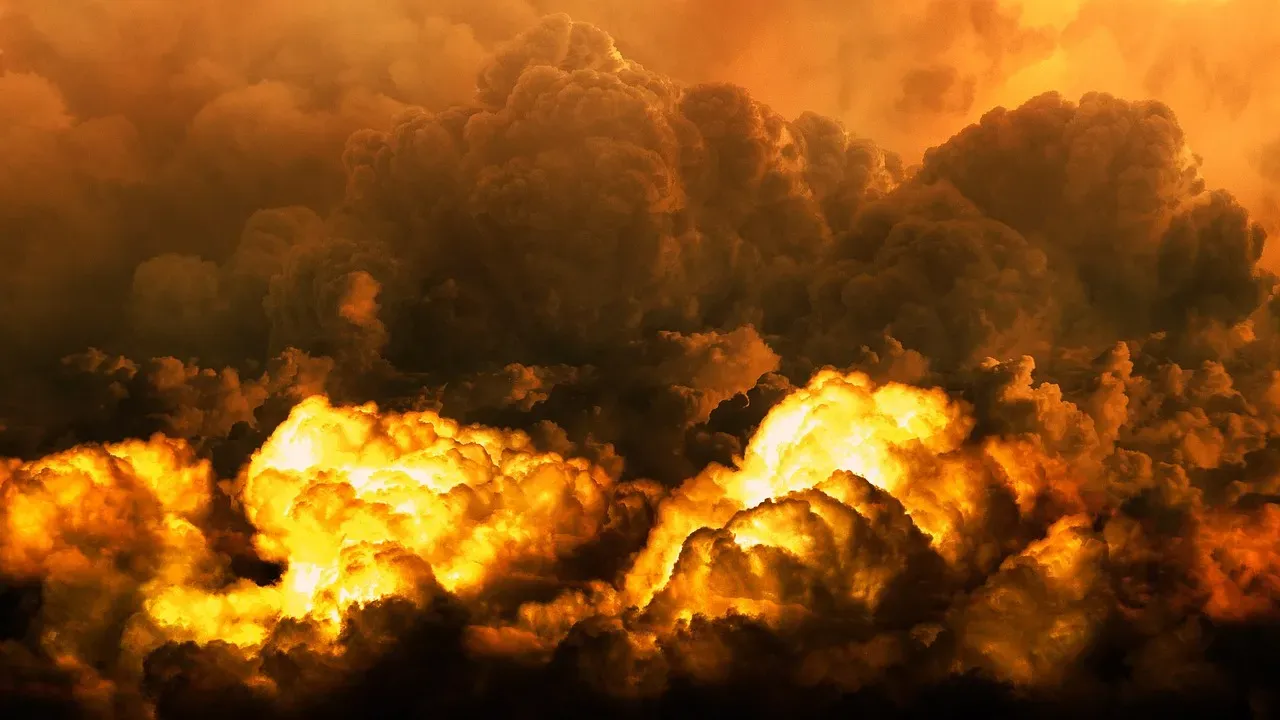
Instead of a classic volcano cone like the ones you picture with a crater at the top, you are dealing with giant fissures in the crust that bled lava for hundreds of thousands of years. Lava spread like a glowing ocean, solidifying into flat layers and then erupting again and again. If you stood there back then, the horizon would sometimes be rimmed with fire, and the sky would be thick with ash and gases. What you see today as stepped hills and plateaus are the geological scars of that unimaginably prolonged eruption sequence.
Slow-Motion Apocalypse: How Long the Eruptions Lasted
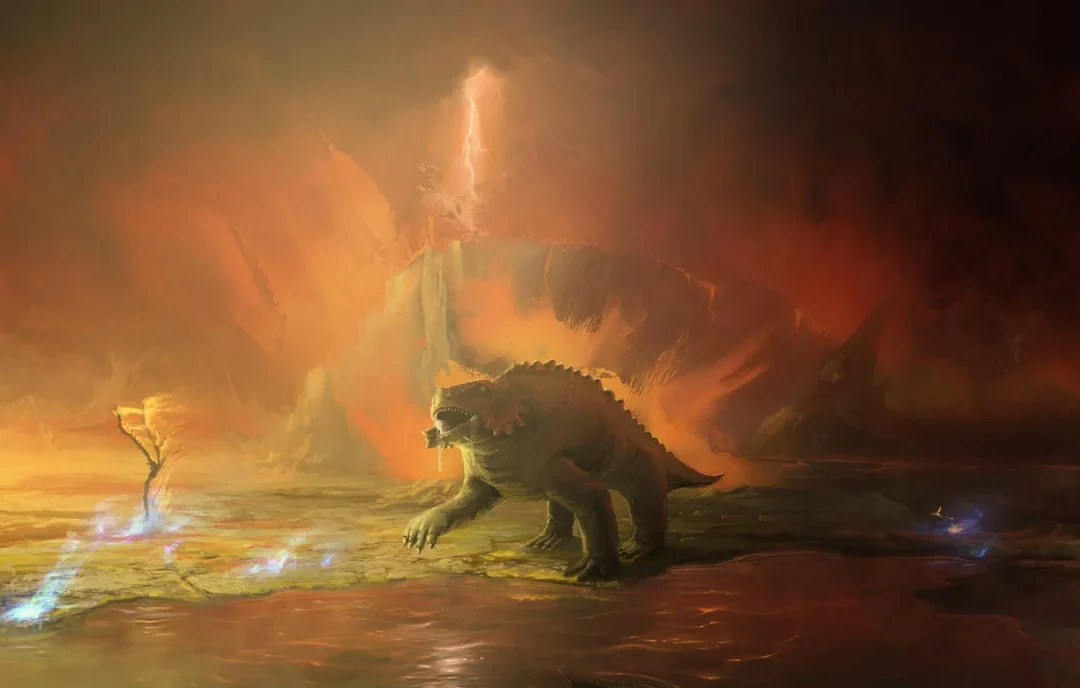
You might imagine this disaster as a single explosive week, but the reality is more unnerving because it took time. Geological studies suggest that the bulk of the Siberian Traps eruptions lasted on the order of several hundred thousand years, with the most intense bursts possibly condensed into tens of thousands of years. On your human timescale, that is impossibly long; on Earth’s clock, it is a violent blink. The problem is that this blink was long enough to keep the climate and oceans off balance for a very long stretch.
Think about what happens if someone slowly tightens a noose instead of jerking it all at once. Life had to endure wave after wave of volcanic activity, each burst adding more gases to the atmosphere and more stress to ecosystems. Species that might have survived a single climatic shock were forced to ride out repeated ones. By the time the worst phase ended, many lineages had run out of chances. The eruptions did not just trigger a catastrophe; their drawn-out nature locked the planet into a prolonged crisis.
When the Sky Became a Weapon: Greenhouse Gases and Climate Chaos
Every time those lava flows poured out of the Siberian crust, they released huge volumes of gases, especially carbon dioxide and sulfur compounds. You see smaller versions of this today when a volcano erupts and temporarily cools the atmosphere with ash and sulfur aerosols, while also adding greenhouse gases. Now multiply that pattern by an almost absurd number and stretch it over many tens of thousands of years. The atmosphere would have swung through episodes of cooling from particles in the sky and longer-term warming from greenhouse gases that stayed around much longer.
As greenhouse gases built up, you would have watched global temperatures rise by several degrees, maybe more, depending on the region. Warmer air holds more water vapor, another greenhouse gas, which would have further amplified warming. Rain patterns would have shifted; in some regions, you would get searing droughts, while in others there might be intense storms and downpours. The comfortable climate window that complex life relies on was shoved out of place, and many species simply could not track their preferred conditions fast enough.
Oceans That Turned Deadly: Acidification and Anoxia
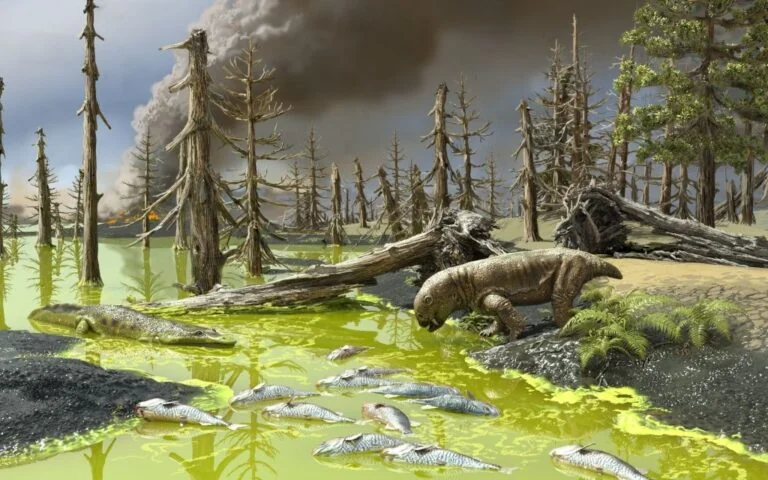
If you had been living in the oceans during this time, your world might have felt like it was filling with poison. As volcanic carbon dioxide levels in the atmosphere rose, more of that gas dissolved into the oceans. When carbon dioxide mixes with seawater, it forms carbonic acid, which lowers the pH and makes the water more acidic. You see a milder version of this process happening today with modern carbon emissions, and it is already harming corals and shell-forming organisms. Back then, the effect was likely much more severe.
Acidic waters interfere with your ability, if you were a marine organism, to build shells or skeletons of calcium carbonate. Reefs that once provided homes for a rich diversity of species began to crumble. On top of that, evidence suggests that the oceans lost a lot of their oxygen in many regions, turning into so-called dead zones where most complex marine life could not survive. Warmer water holds less oxygen, and changes in circulation may have reduced the natural mixing that keeps deep waters ventilated, creating entire swaths of suffocating seas.
Land on Fire: Collapsing Forests and Toxic Air
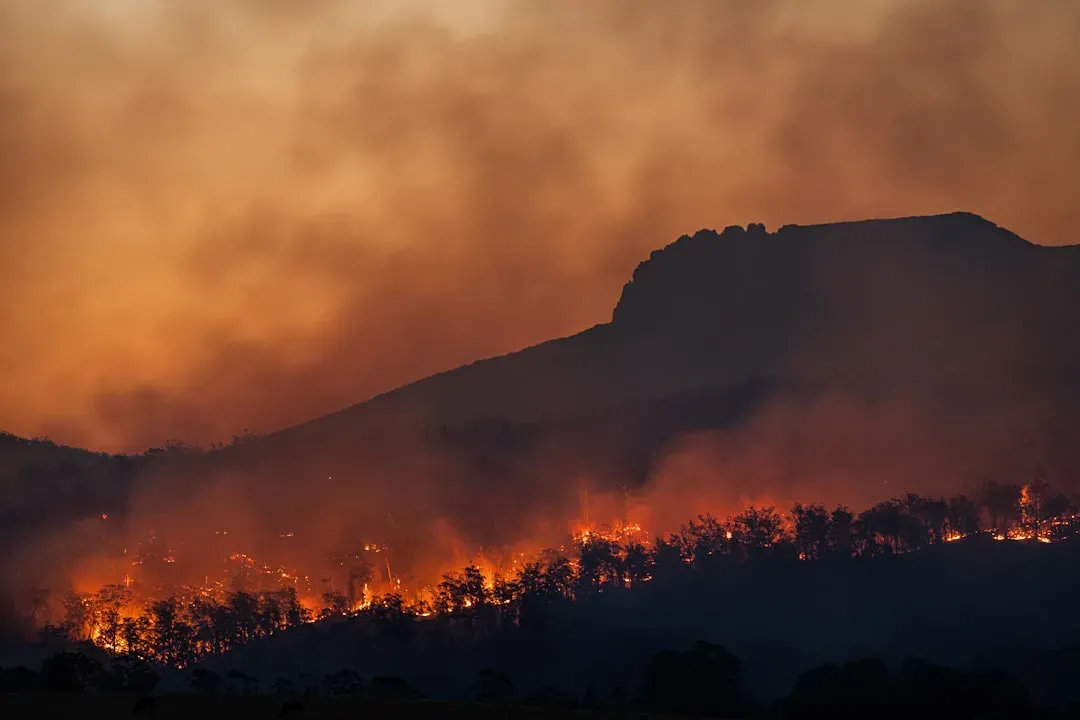
On land, the story was no kinder. As temperatures climbed and climate patterns shifted, the forests and plant communities that had anchored ecosystems began to fail. You can picture slopes once covered in lush vegetation turning patchy, then barren, as heat stress and drought took their toll. Wildfires likely became more frequent and intense, turning forests into temporary infernos and filling the air with choking smoke. When those burned landscapes were hit by heavy rains, soils washed away, stripping the land of nutrients and turning rivers into muddy torrents.
Volcanic gases added yet another layer of stress. Sulfur dioxide from eruptions forms corrosive aerosols and acid rain when it reacts with water in the atmosphere. If you were living under those skies, lakes and soils around you could slowly acidify, damaging plant roots and harming freshwater life. Over time, this combination of heat, drought, fires, and acid rain would have left many terrains looking more like devastated wastelands than stable habitats. Terrestrial animals and plants that depended on dense, stable vegetation had fewer and fewer places to go.
Why Life Did Not Completely Die: Survival in the Margins
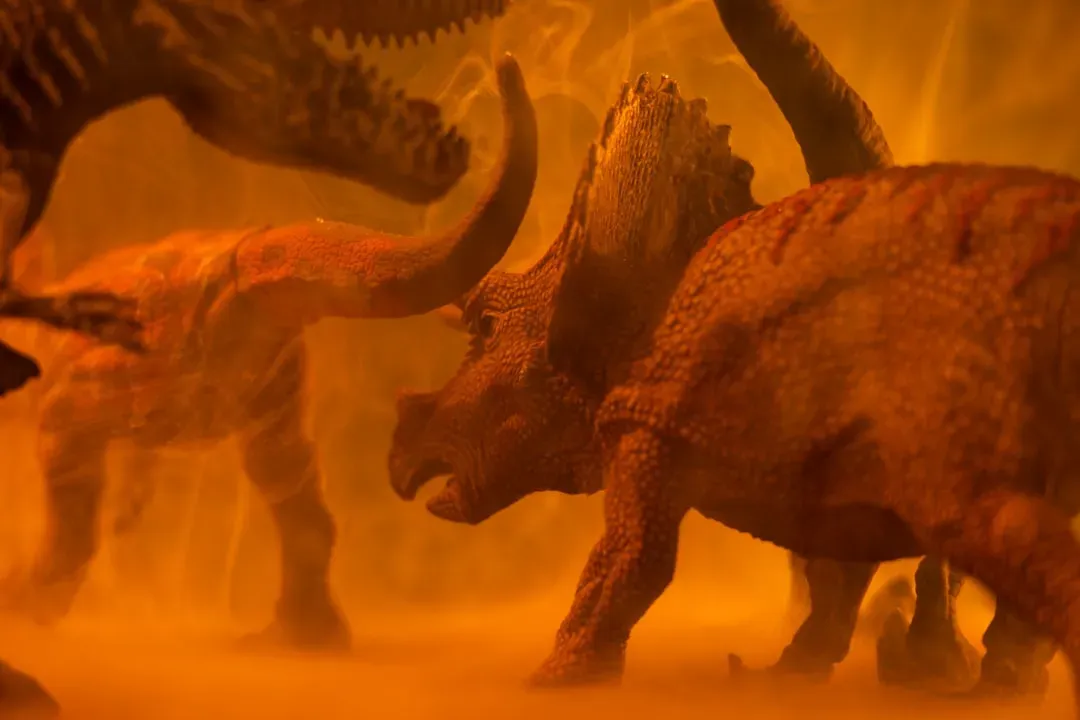
Given how brutal this period sounds, you might wonder why life did not vanish entirely. The truth is that life is stubbornly inventive. While many species disappeared, small, hardy survivors found ways to hang on in pockets where conditions were slightly less extreme. In the oceans, some simple, tolerant organisms thrived in murky, low-oxygen waters, even as more delicate creatures perished. On land, species that could cope with stress, reproduce quickly, or live in tough environments had an edge.
You can think of this as life retreating into its bunkers. Microbial mats, burrowing animals, and opportunistic plants took advantage of the new, harsher conditions. Ecosystems simplified; instead of the complex, layered food webs you are used to seeing in modern forests or coral reefs, many communities became dominated by a few tough winners. Those survivors would eventually seed the evolution of new ecosystems, but for a long time, the planet was a shadow of its former self, limping slowly toward recovery.
The Long Road Back: How Earth Recovered from the Brink
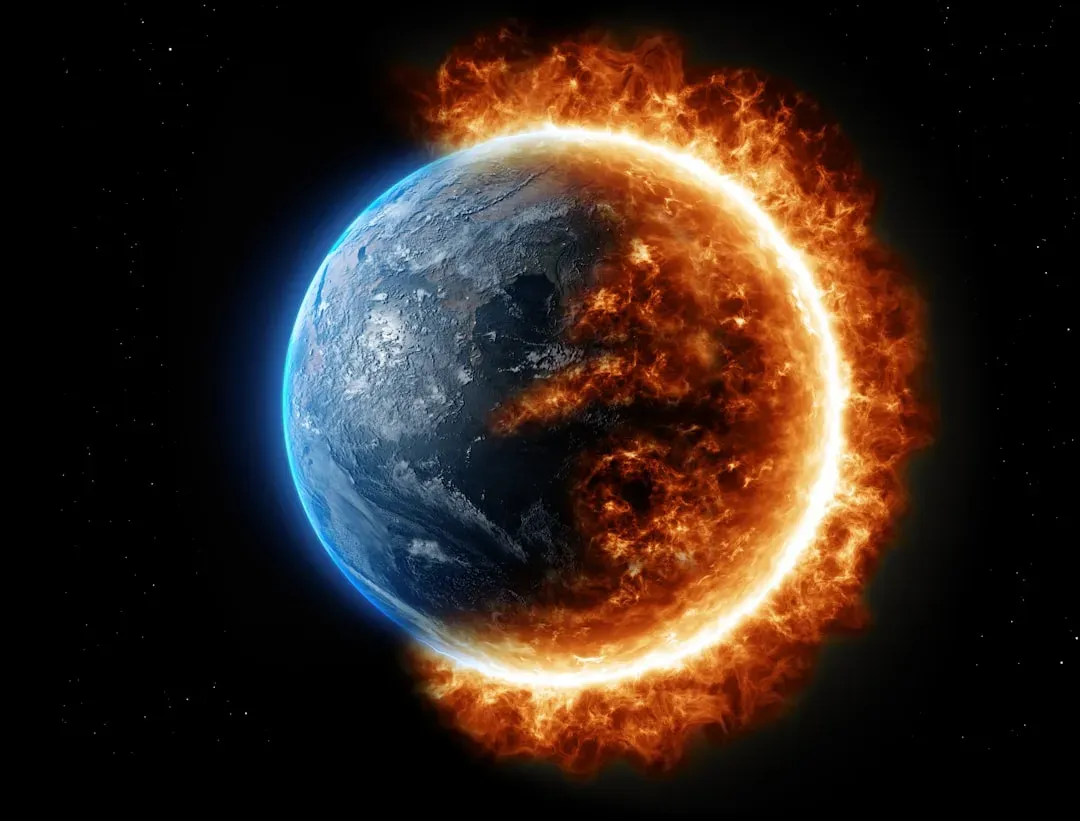
Once the worst of the eruptions wound down and the planet started to stabilize, recovery did not happen overnight. You are looking at millions of years before ecosystems regained anything close to their former richness. At first, landscapes were sparse and monotonous, with limited types of plants and animals repeating over wide areas. In the oceans, reefs took a very long time to return, and some pre-extinction groups never came back at all. Evolution had to rebuild entire communities from the scattered remnants that were lucky enough to survive.
Over time, though, diversity slowly increased as new species emerged to fill empty roles. It is in the wake of this catastrophe that many lineages that would later dominate the Mesozoic world began to expand. You can think of the end-Permian extinction as a brutal reset button: it nearly erased the biosphere, but also reshaped the evolutionary playing field. Without that reset, the later age of dinosaurs – and eventually your own distant origins – might have unfolded very differently, or perhaps not at all.
Why This Ancient Disaster Still Matters to You Today
It might feel like you are looking at a tragedy so distant it is almost like another planet, but this story is uncomfortably relevant to your own time. The end-Permian event shows you how sensitive Earth’s life-support systems can be to rapid injections of greenhouse gases and swift climate shifts. You are, right now, releasing carbon into the atmosphere at a rate that, in some estimates, is comparable to or even faster than some ancient volcanic episodes. While the scale and details differ, the basic physics and chemistry – warming, acidification, oxygen loss – follow the same rules.
By studying that ancient catastrophe, you gain a chilling but valuable mirror. You see that Earth can survive massive upheavals, but complex ecosystems and large animals can pay an enormous price. You also see that recovery, once things go too far, is measured not in centuries or millennia but in millions of years. When you think about your current choices – how you use energy, how societies treat the atmosphere and oceans – you are not just tweaking the weather; you are potentially nudging the same levers that nearly ended life’s story once before.
In the end, the ancient volcano eruption that almost erased life on Earth is less a distant legend and more a warning label printed in stone. You are lucky enough to live in a relatively calm chapter of your planet’s history, but the rocks beneath your feet remember something very different. The question is not just how the planet once survived itself, but how you will choose to live now that you know what it is capable of. If the Earth once came so close to silence, what do you want your role to be in the next chapter of its story?