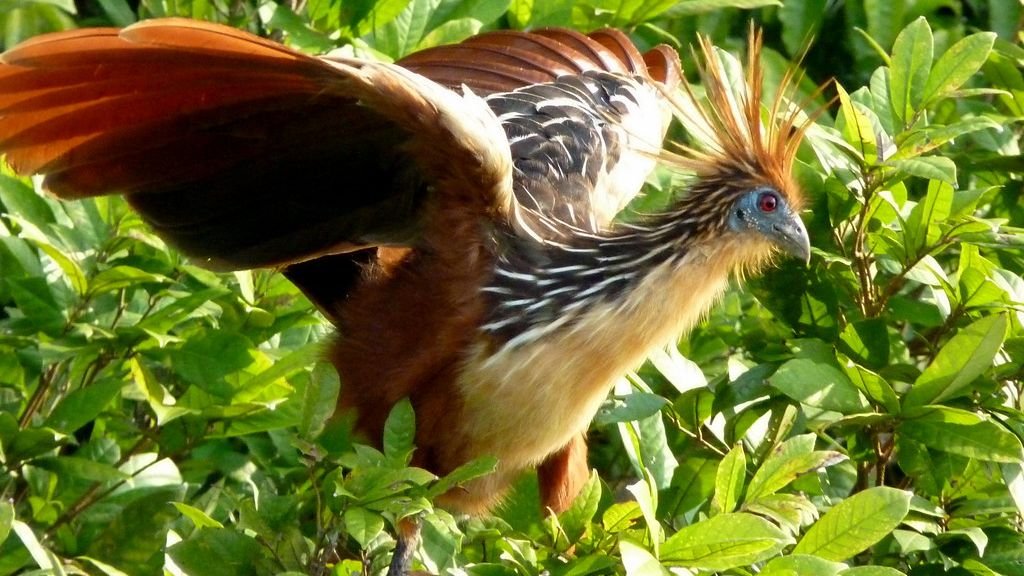
You probably expect weird things from the Amazon rainforest, but there’s one bird that still manages to surprise even seasoned biologists. You meet it before you see it: a heavy, grassy, barnyard kind of stench drifting over a flooded forest. Then you look up and spot a scruffy, prehistoric-looking bird staring back at you from the branches – that’s the hoatzin, the “stinkbird” that digests its food more like a cow than like any other bird you know.
Once you start digging into its life, the hoatzin feels less like a normal modern bird and more like some odd experiment in evolution that never got canceled. It eats almost only leaves, ferments them in an oversized crop, and pays for that trick with slow, clumsy flight and a smell that locals compare to fresh cow manure. Yet this strange setup lets it thrive in a tough niche along Amazonian rivers, quietly rewriting what you think birds are capable of.
Meet the Hoatzin: Your First Impression Is Usually Your Nose
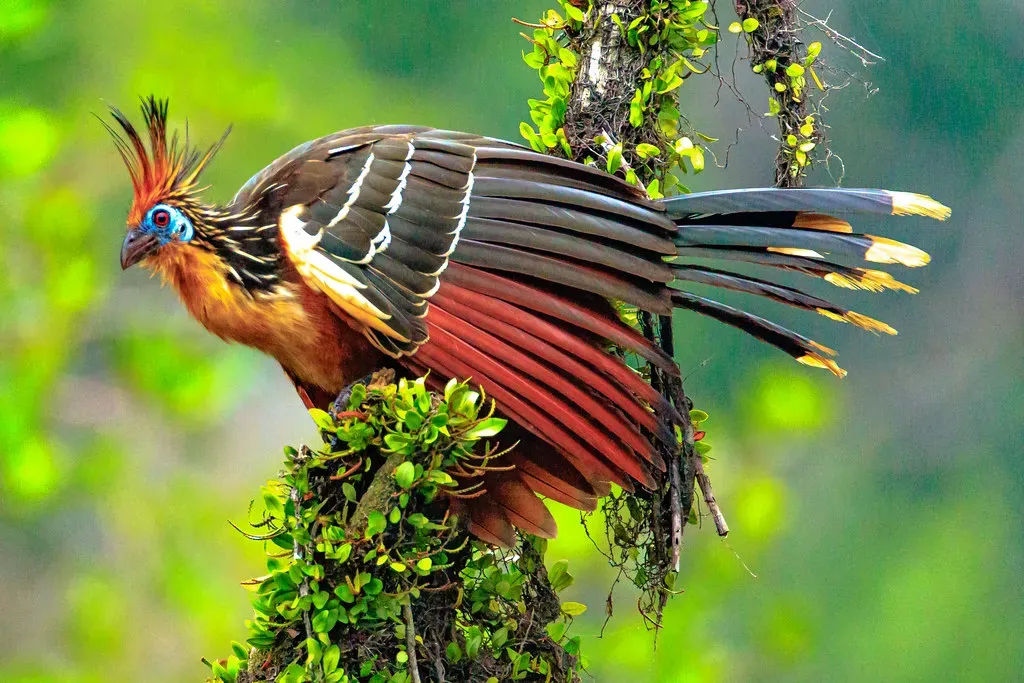
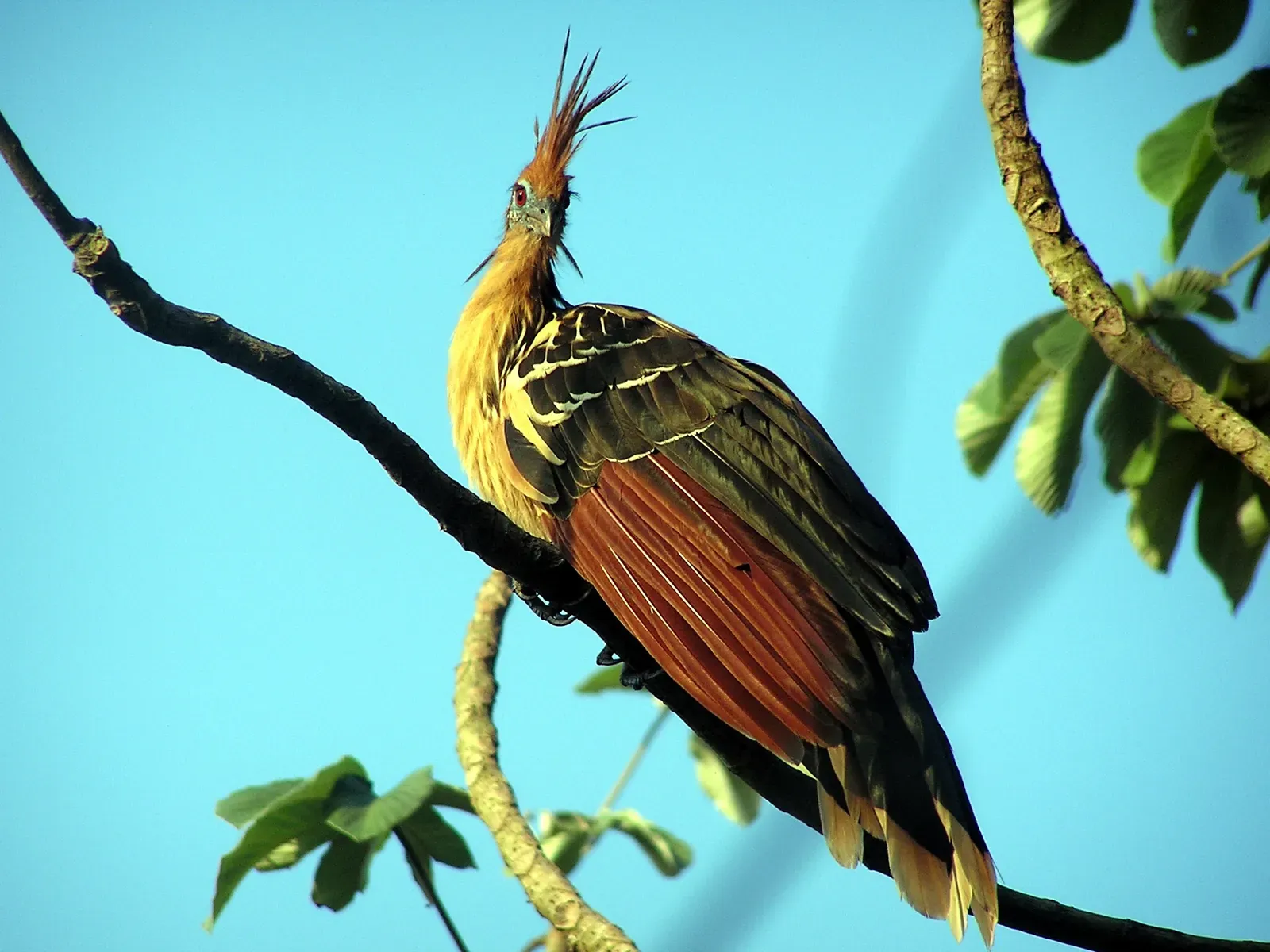
When you encounter a hoatzin for the first time, your nose notices it before your eyes ever do. You smell something that reminds you of a cow barn on a hot day: that sweet, heavy, manure-like odor that sticks in the back of your throat. Follow that scent and you see them huddled over the water in low branches, ragged crests lifted, chestnut bodies fluffed, looking half like a pheasant, half like a scruffy dinosaur perched over a swamp.
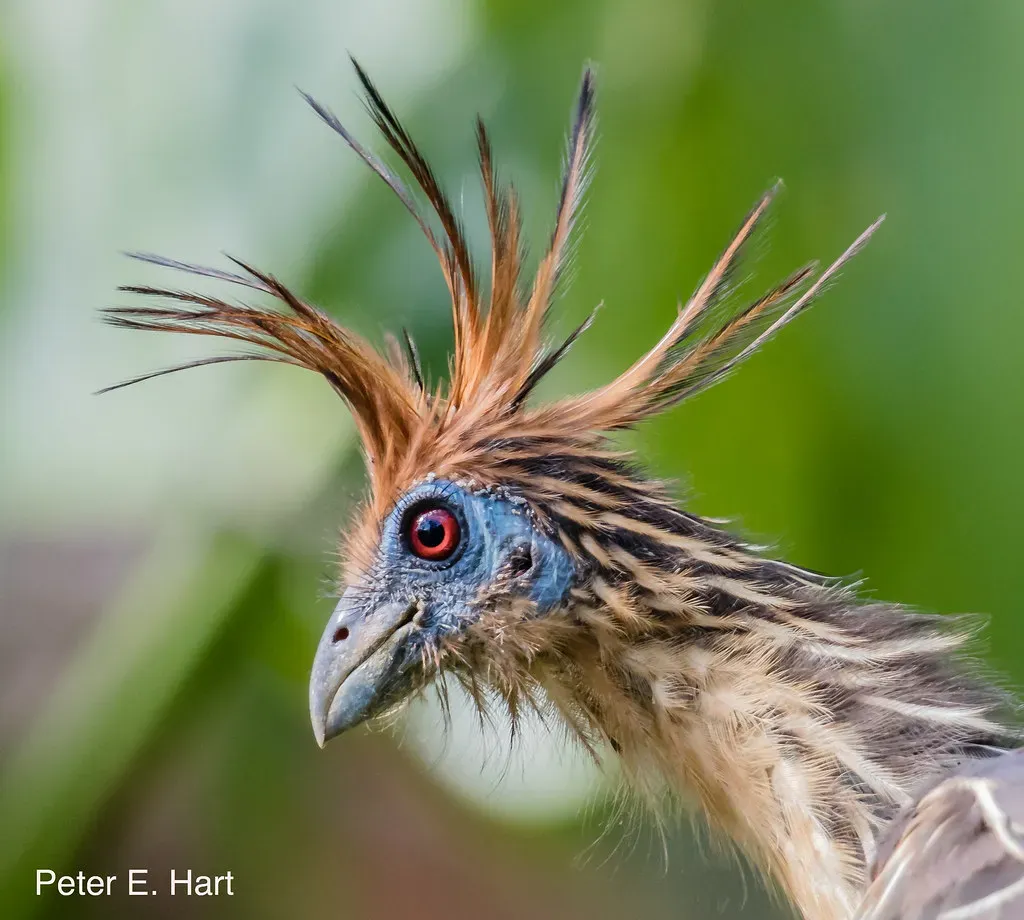
You do not mistake them for streamlined, elegant fliers. Hoatzins look slightly unbalanced, with a big, bulging chest that hides their giant crop, red eyes ringed in blue skin, and spiky, punk-style crests. When they do fly, they crash clumsily through the branches rather than slicing through the air. Instead of speed and grace, they feel more like swamp chickens that never quite finished evolving into something sleeker – and that oddness turns out to be the cost of their bizarre digestive system.
The Cow Inside the Bird: How You Digest Leaves Like a Ruminant
If you tried to live on leaves alone, your body would struggle. Tough plant fibers are basically locked boxes; you need armies of microbes to crack them open, the same way cows, goats, and other ruminants do. The hoatzin pulls off a similar trick inside its chest. Instead of relying mainly on the typical bird stomach and gizzard, it uses a greatly enlarged crop and lower esophagus as a fermentation tank, where bacteria break down leaves before they ever reach the stomach.
You can think of this crop like a front-loading compost barrel that rides on the front of the bird. Leaves go in, microbes get to work, and the hoatzin slowly absorbs energy from plant cell walls that most birds just waste. Studies comparing microbes in hoatzins and cows show that both host communities of bacteria tuned for foregut fermentation, even though one lives in a swampy tree and the other in a pasture. Evolution essentially handed the hoatzin a mini-rumen in its throat, letting it tap into a leafy buffet that almost no other bird can fully use.
Why This Bird Smells Like a Barnyard
Once you know the hoatzin relies on fermentation, its legendary stink suddenly makes sense to you. When microbes break down leaves in a warm, low-oxygen chamber, they release a mix of gases and odor compounds – the same kind you get from cow rumens and manure piles. Because all this happens right up front in the bird’s crop, not deeper in the gut, those smells leak out readily when the bird burps, breathes, or defecates.
Locals in parts of the Amazon even give the hoatzin nicknames that translate to “stinkbird,” and many avoid eating it except in desperate times because the meat is said to absorb some of that barnyard character. If you picture sitting above a methane-heavy compost bin all day, you can imagine the aura that would surround you. The hoatzin’s smell might be off-putting to you, but it probably offers the bird an accidental perk: a naturally unpleasant scent that may make some predators and humans think twice.
Life in the Flooded Forest: How You Make a Leaf-Only Diet Work
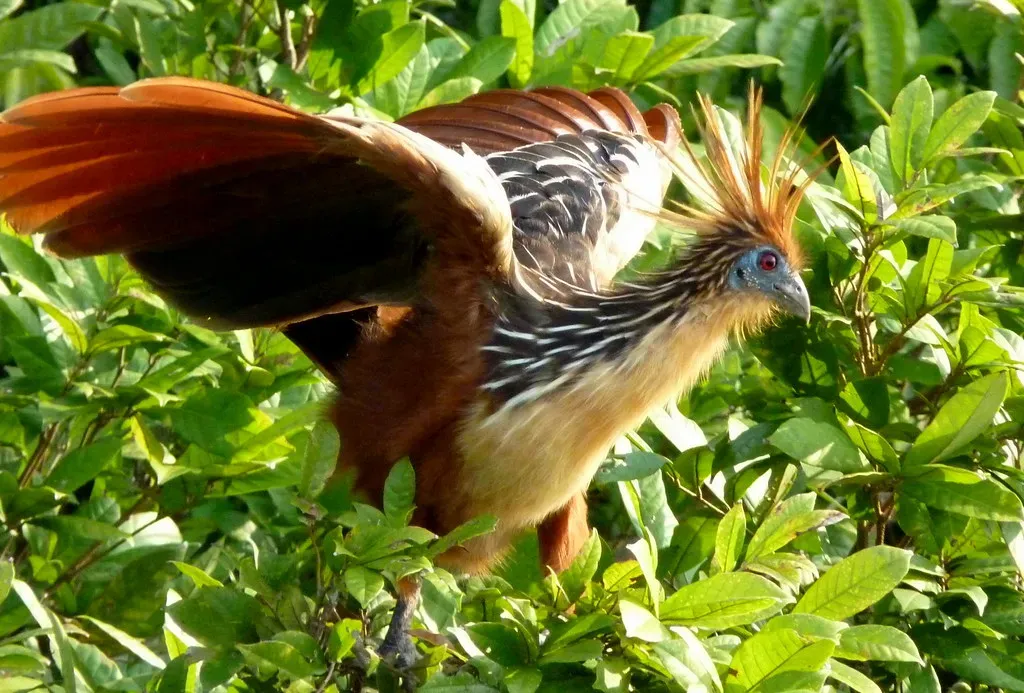
To understand why the hoatzin evolved this extreme system, you have to picture its home: tangled gallery forests and flooded river margins where leaves are everywhere but seeds and fruits can be surprisingly patchy. If you were a bird in that world, leaves would be the most abundant, predictable resource around you – but they would also be among the hardest foods to digest. Most birds that nibble on foliage treat it as a supplement, not the main course, because they simply cannot extract enough from all that fiber.
By turning itself into a feathered fermenter, the hoatzin moves into a niche where there is little competition. You spend your days slowly plucking young leaves and buds, letting microbes do the heavy lifting while you loaf in low branches above the water. The trade-off is cost: your digestive system is heavy, your flight is weaker, and your growth is slower than many other birds. But in return, you tap into a leafy buffet that others ignore, the way cows happily graze fields that would starve many carnivores or grain-eaters.
Built for Fermentation, Not for Speed
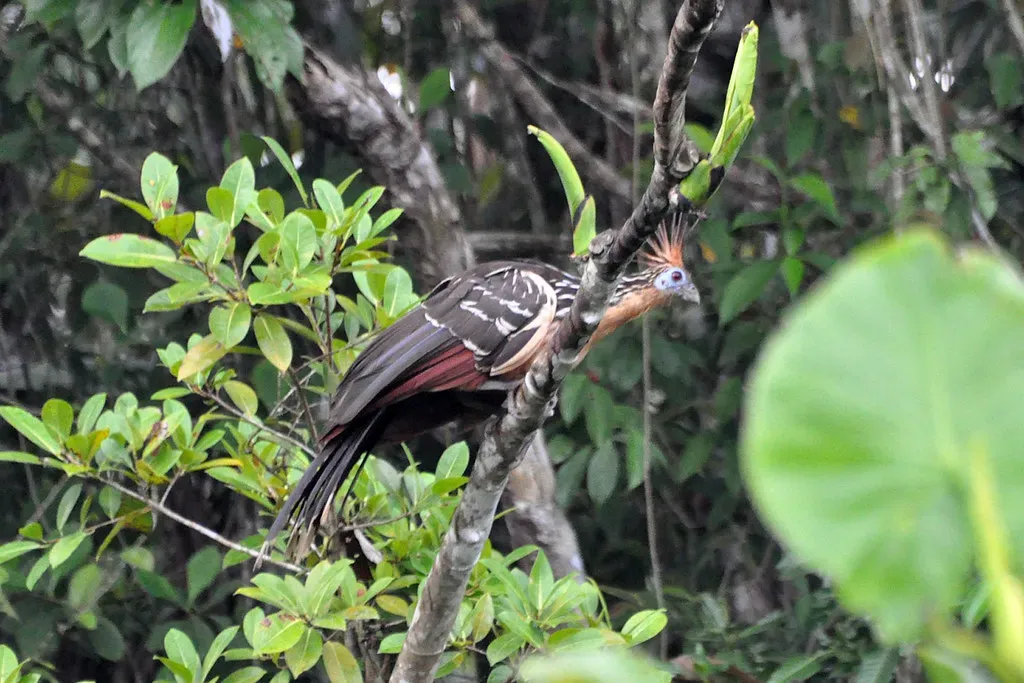
When you pack a fermentation tank into your chest, something has to give. In the hoatzin, the huge crop and muscular lower esophagus take up space that other birds reserve for strong flight muscles and rigid supporting bones. To make room, its keel bone and pectoral region are reshaped, and wing power is effectively downgraded. That is why, when you watch hoatzins take off, they seem more like reluctant fliers than masters of the sky, gliding short distances and crashing into cover rather than soaring.
This design also slows down everything about how food moves through the body. Instead of rushing plant matter through the gut the way many seed- and fruit-eating birds do, the hoatzin holds onto its leafy meal for a long time so microbes can work on it thoroughly. Retention times through its gut rank among the longest recorded for birds and look more like what you would expect in some larger mammalian foregut fermenters. You can think of the hoatzin as choosing efficiency over speed: it goes nowhere fast, but it squeezes surprising nutrition out of every mouthful of leaf.
Dinosaur Fingers and Family Life in the Trees
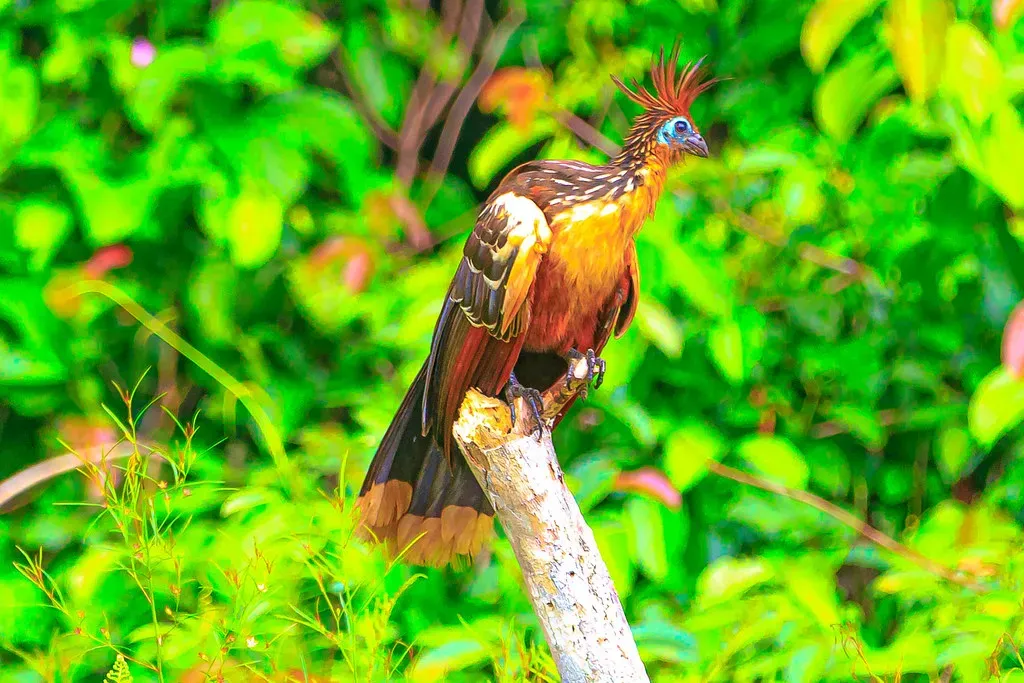
As if smelling like a cow and digesting like one were not strange enough, hoatzin chicks add another twist you do not usually see in modern birds. When the young hatch, they sport claws on their wings that actually function, letting them scramble through branches like tiny, feathered climbers. If a predator threatens the nest, chicks can drop into the water below, swim to safety, and then claw their way back up the vegetation to return, using those wing hooks like miniature grappling tools.
The adults live mostly in social groups along open waterways, nesting communally in low trees overhanging rivers and lakes. From your boat, you often see whole family clusters perched together, grunting softly, flicking their crests, and plucking at leaves. The wing claws disappear as the chicks grow and start flying, but they leave you with a vivid image: a bird that seems to carry echoes of ancient, clawed ancestors while simultaneously running a cow-like fermentation tank in its chest. It is hard not to feel like you are watching evolution’s rough draft scribbled in real time.
A Living Reminder That Evolution Plays by Its Own Rules
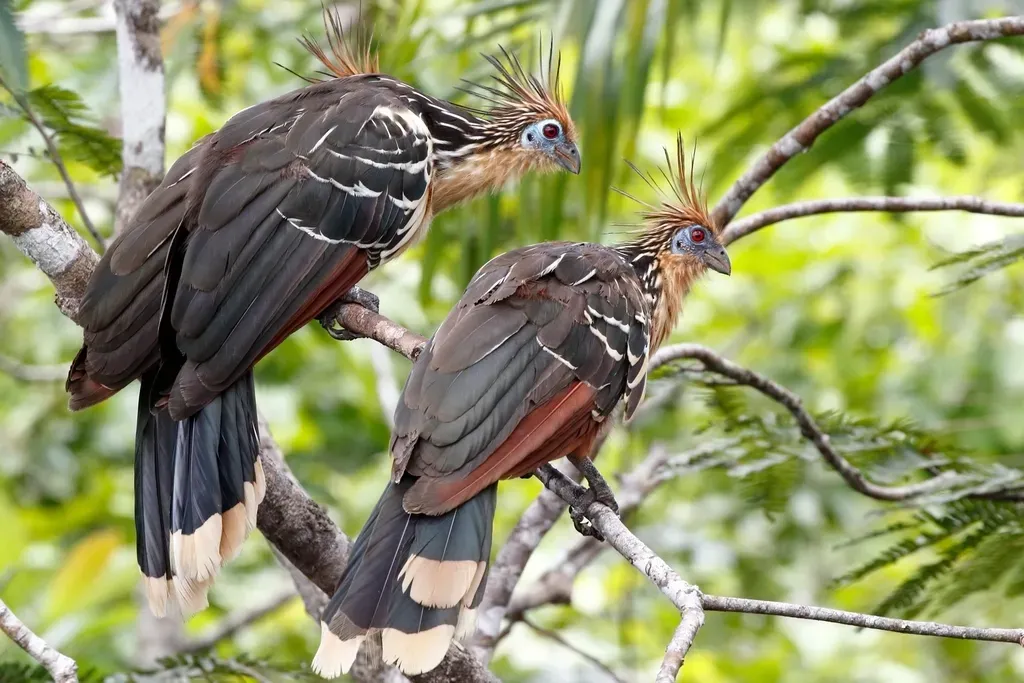
When you put all of this together – the smell, the fermentation, the flight trade-offs, the climbing chicks – you start to see the hoatzin as a living reminder that evolution does not care about elegance, only about what works. If you tried to design a bird from scratch, you probably would not give it a heavy, gas-producing crop that undermines its flight. Yet in the sticky, leaf-rich world of the Amazon’s flooded forests, this oddball approach has worked well enough for the hoatzin to persist while more conventional solutions never even appeared.
For you, the hoatzin is a kind of reality check. It shows you that animals do not have to fit neat categories – bird or cow, modern or primitive – to be successful. Instead, they just have to carve out a niche and make the best of it, even if that means smelling like a barnyard in the canopy or raising clawed, scrambling chicks over murky river water. The next time you imagine evolution as a straight, tidy line of progress, you might remember this stinky Amazon bird and ask yourself: would you ever have guessed that one of the rainforest’s strangest creatures would be a leaf-eating, cow-bellied bird hiding in plain sight above the water?