When you think about exploring Earth, you probably picture climbing mountains or flying into space. But some of the wildest adventures humans have ever attempted went in the opposite direction – straight down, into the planet itself. These journeys pushed tools, bodies, and nerves to their absolute limits, all to answer a simple question: what really waits in the deepest places on Earth?
As you walk through these five record-breaking natural holes, you’ll see how far people have been willing to go just to touch the unknown with their own hands. You will not meet monsters or ancient cities down there – but what scientists actually found is often stranger, more unsettling, and more awe-inspiring than any myth.
1. Krubera (Voronya) Cave, Georgia – The World’s Deepest Known Cave
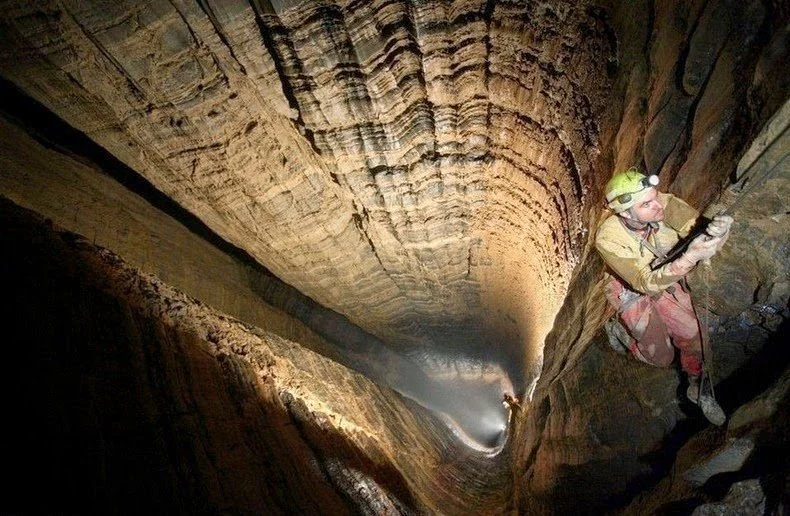
If you want to visit the deepest cave on Earth, you have to start with a brutal hike into a remote corner of the Caucasus Mountains in the country of Georgia. Hidden in the Arabika Massif, Krubera Cave drops more than two kilometers straight into the planet, making it the deepest known cave on Earth by explored depth. You are not strolling into a show cave with railings and lights; you’re entering a vertical maze that feels more like descending inside a living, breathing stone lung.
As cavers pushed deeper over multiple expeditions, they had to haul kilometers of rope, squeeze through flooded passages, and camp underground for days at a time. When they finally reached the deepest surveyed point, what they found at the “bottom” was not a neat stone floor, but a flooded siphon – an underwater tunnel that marked the limit of human penetration at the time. Instead of a grand chamber, you get a cold, black underground river that reminds you that the cave almost certainly continues, but only the water knows where.
2. Veryovkina Cave, Georgia – Where You Touch Nearly 2.5 Kilometers of Depth
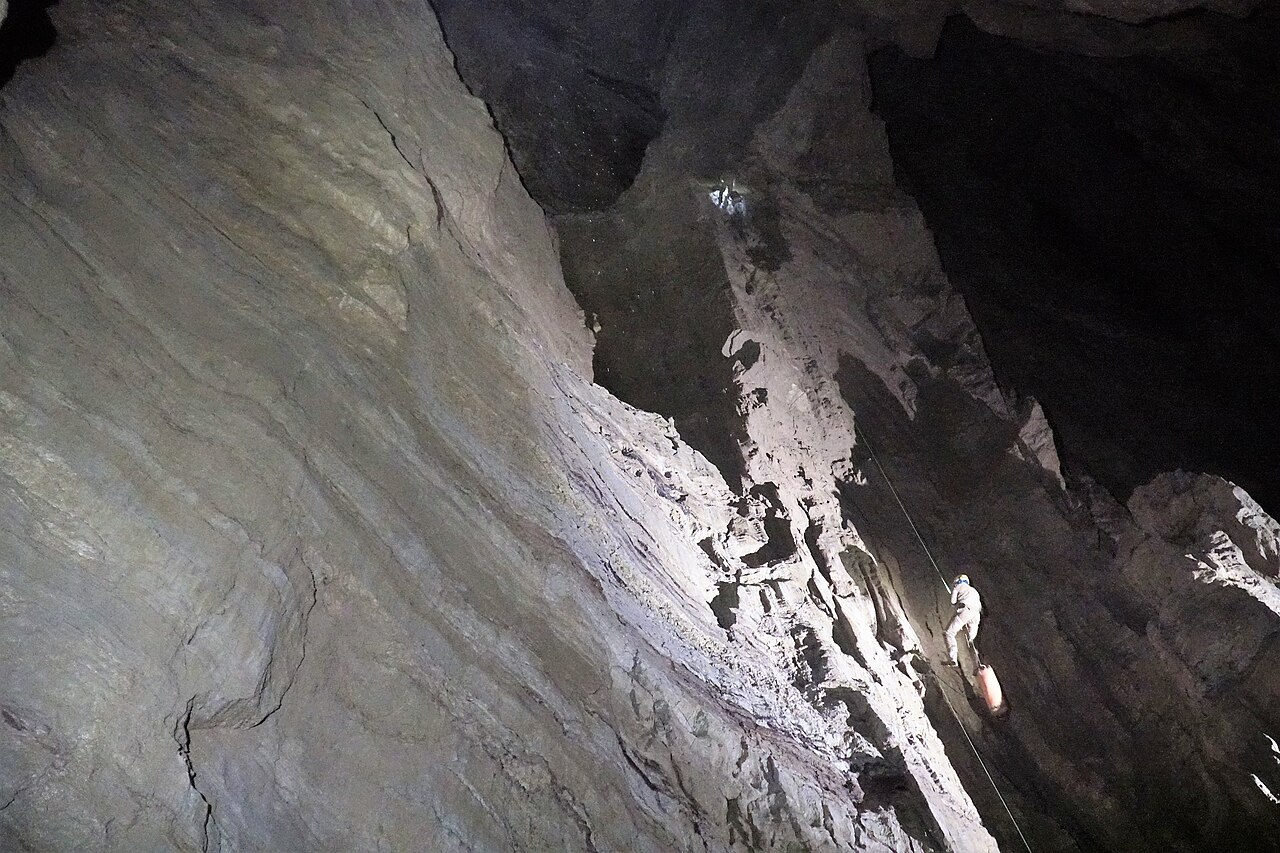
Just when you think you’ve already met the deepest cave, you learn that another one in the same mountain range stole the crown: Veryovkina Cave. This abyss in the Arabika Massif plunges to a depth of roughly two and a half kilometers, making it the deepest known cave system ever explored by humans. If you imagine the Eiffel Tower stacked on top of itself five or six times, you’re still not quite at the vertical distance you’d be climbing down – in the dark, in cold air, in tight stone shafts.
As explorers pushed to the bottom, you might expect them to find something dramatic: ancient fossils, glittering crystals, or a huge cavern glowing with minerals. Instead, what they encountered was a narrow terminal sump – again, a flooded passage, beyond which dry exploration became impossible with the equipment used. What surprises you down here isn’t some Hollywood-style discovery, but how profoundly alive the rock feels: trickling water, strange cave-adapted insects and crustaceans, and the constant reminder that gravity and geology do not care how small you feel at this depth.
3. Mariana Trench’s Challenger Deep – The Ocean’s Darkest Pit
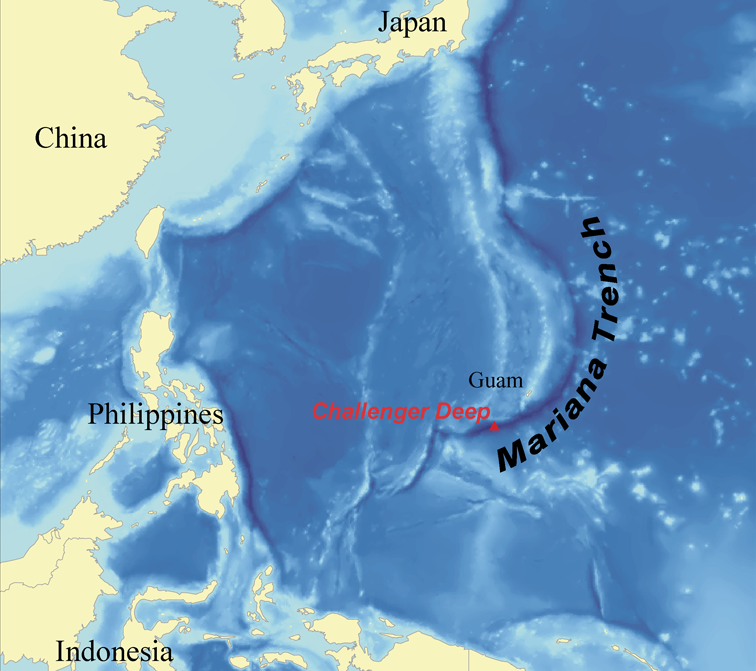
When you look at the surface of the Pacific Ocean, you’re seeing only a thin, glittering skin over one of the most extreme places on Earth. The Mariana Trench’s Challenger Deep, the deepest known point in any ocean, lies nearly eleven kilometers below that calm blue surface. If you stood at sea level and swapped Mount Everest for a hole in the ground the same size, Challenger Deep would still be deeper than Everest is tall, and you’d still have water over your head.
When a crewed submersible first reached the bottom in the early 1960s, scientists expected to find a lifeless, muddy plain crushed under unimaginable pressure and plunged in absolute darkness. Instead, they were stunned to see signs of life – tiny shrimp-like creatures and other simple organisms moving slowly across the sediment. Later dives have revealed more: snailfish, microbial mats, and even traces of human pollution, like microplastics, showing you that even the furthest, deepest corners of the planet are no longer untouched by your species.
4. Dean’s Blue Hole, Bahamas – A Near-Perfect Vertical Water Shaft
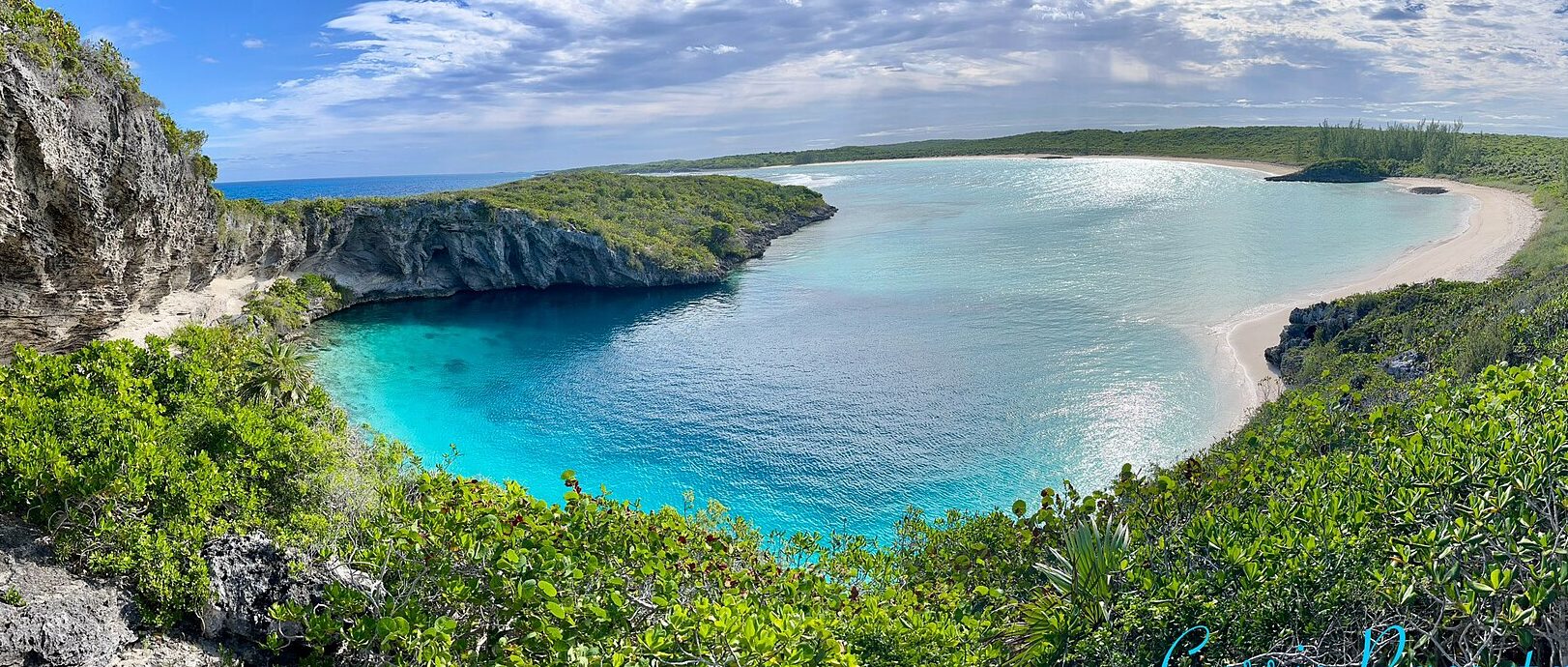
If you ever stand on the edge of Dean’s Blue Hole in the Bahamas, it feels almost unreal, as if someone punched a perfectly round hole straight into the ocean floor. From the shore, it looks like a deep sapphire disk dropped into turquoise water, but beneath the surface it plunges to more than 200 meters, making it one of the deepest known marine sinkholes in the world. To a freediver, it is both a dream and a dare: glassy calm at the top, and then a plunge into silent, blue-black nothing.
When divers and scientists first explored the bottom, they did not find a secret cave filled with treasure or strange ruins. Instead, they reached a basin of fine sediment where the walls widen and the water grows heavier and still. Down here, you encounter unusual layering: different temperatures, salinity levels, and low-oxygen pockets that create a kind of underwater atmosphere in slow-motion. It’s less about what object you find and more about realizing that within one vertical shaft of water, you are moving through multiple miniature worlds stacked on top of each other.
5. Dragon Hole (Sansha Yongle Blue Hole), South China Sea – The Deepest Known Blue Hole
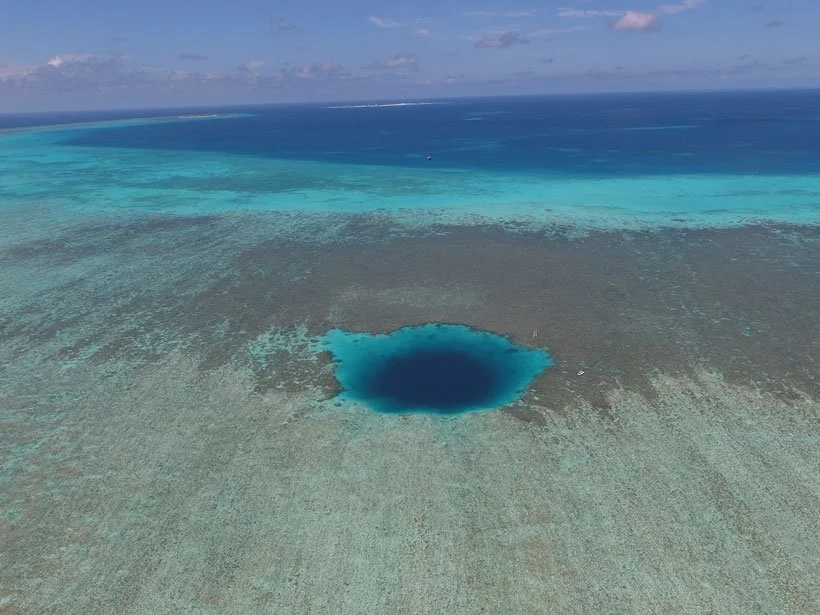
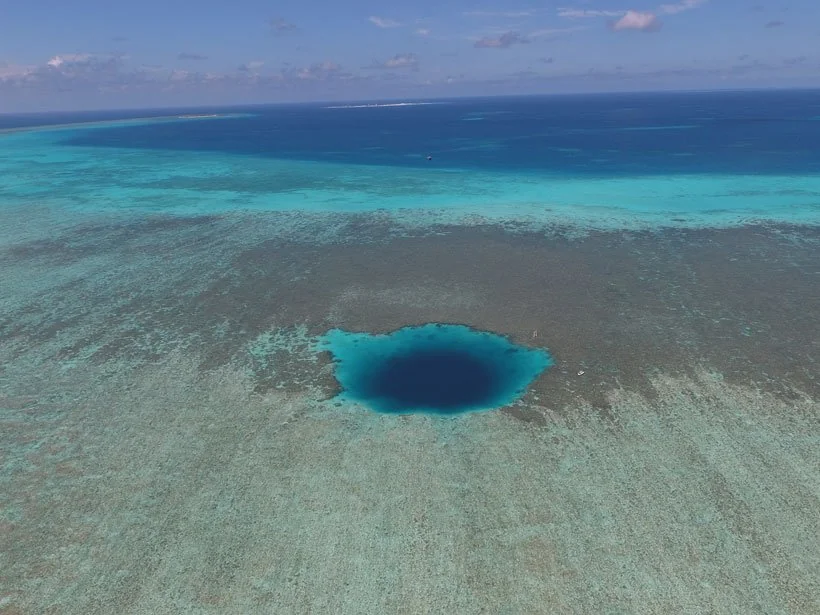
Far out in the South China Sea, Dragon Hole hides inside a ring of coral in the Paracel Islands like an enormous, flooded throat. This blue hole is deeper than Dean’s Blue Hole, with measurements showing it plunges past 300 meters, making it the deepest known oceanic sinkhole discovered so far. From above, you would only see a dark circle set in lighter water, almost like an eye staring straight up at the sky.
When researchers first mapped Dragon Hole from the surface and with underwater instruments, they found a sharp change in water conditions as they went down. Sunlit shallows with coral and reef fish give way to dim blue water, then to shadowy layers with low oxygen where larger animals vanish, leaving only stubborn microbes and drifting particles. The bottom itself is a sloping floor of sediment and collapse debris, not some dramatic cavern, and you come away realizing that the real story here is how sharply life thins out and transforms as you cross invisible chemical boundaries on your way down.
Conclusion: What You Really Find at the Bottom
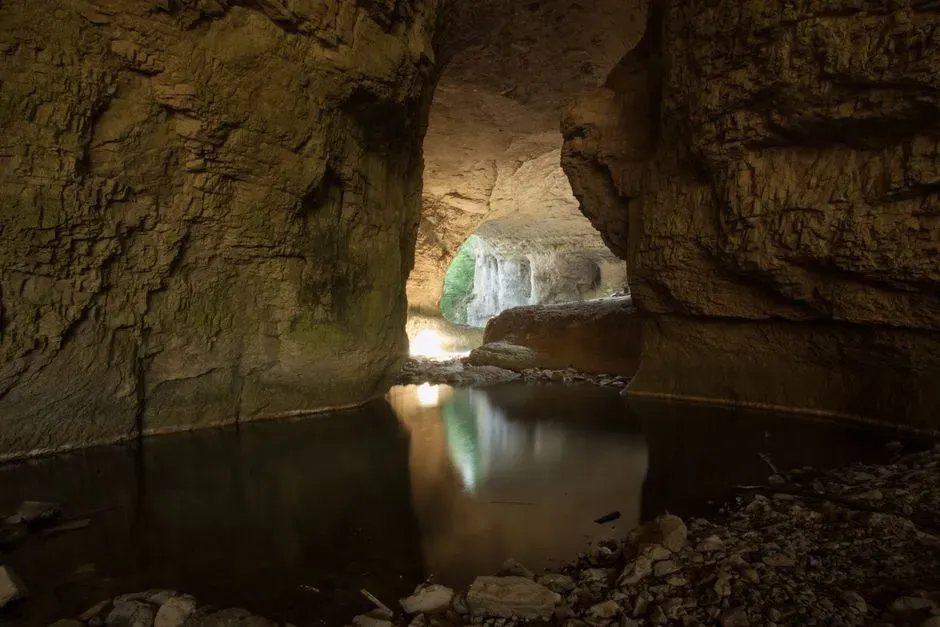
When you follow explorers into the deepest caves, trenches, and blue holes on Earth, you probably expect some kind of dramatic reveal – a hidden ecosystem, a lost artifact, or at least a jaw-dropping chamber that feels like a cathedral. What you actually find almost every time is something quieter and more unsettling: mud, rock, cold water, strange chemistry, and a few modest, stubborn forms of life clinging on in conditions that seem impossible. The big surprise is how often the bottom is not an ending at all, but simply the point where your current tools, lungs, and imagination can no longer go any further.
In a way, these deepest natural holes are like mirrors held up to your own species: they show you how curious, fragile, and restless you really are. You keep drilling, diving, and descending not because you expect to find a treasure chest, but because you can’t stand not knowing what is there. The planet rarely hands you a dramatic twist; instead, it quietly shows you that even empty mud at incredible depth can rewrite what you thought you knew about life, pressure, and time. When you picture the deepest place you might ever explore, what do you secretly hope is waiting at the bottom?