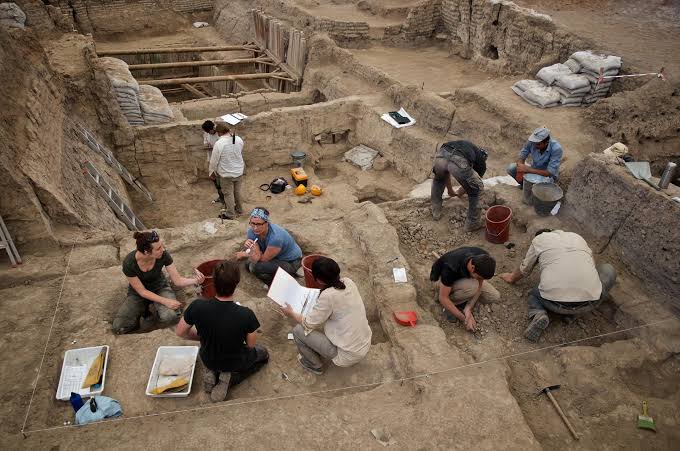
Archaeology sounds like a tidy subject: dig, date, label, move on. But some discoveries refused to behave. They got carbon-dated, re-dated, defended, debunked, and dragged back into the spotlight decades later, still refusing to settle down.
A few of these finds were branded hoaxes before turning out to be real. Others looked flat-out impossible until better tools proved otherwise. And some are still splitting rooms full of PhDs right now, mid-argument. Here’s what actually happened with all twenty – and why none of them have been allowed to rest.
#20 – The Antikythera Mechanism: The Ancient Greek “Computer” That Shouldn’t Exist
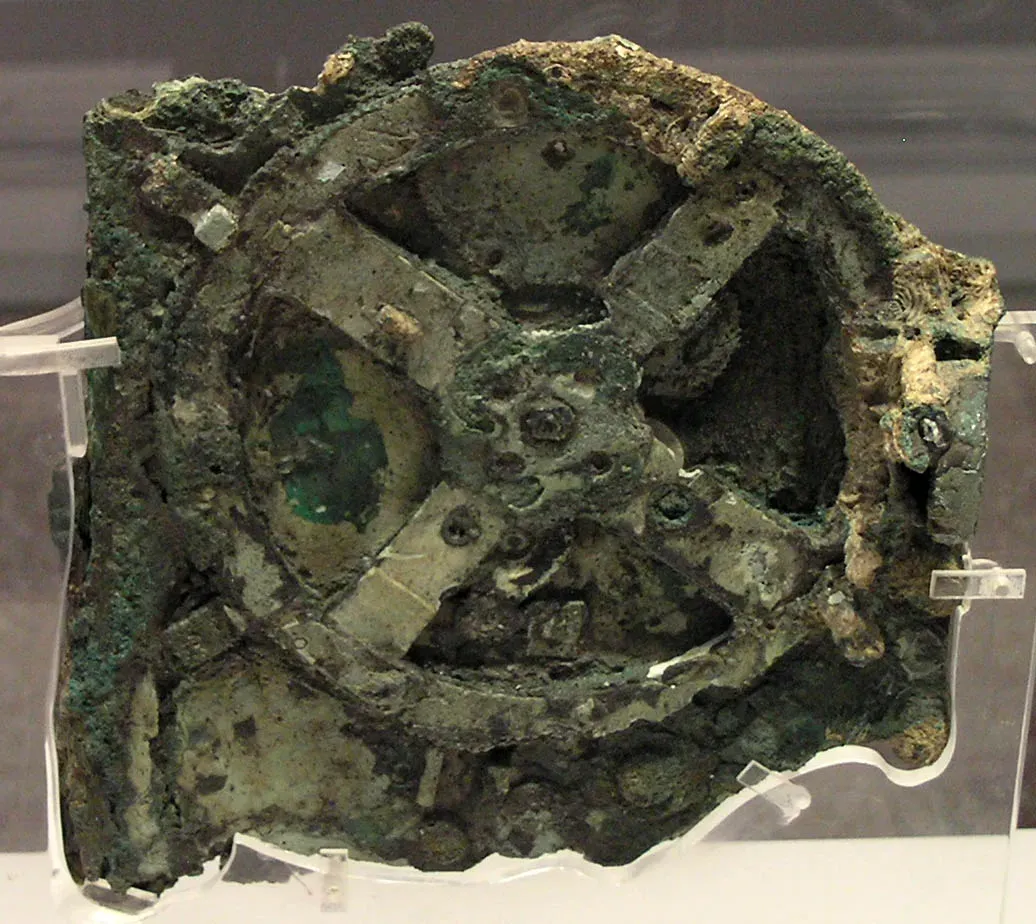
On paper, the ancient Greeks weren’t supposed to have precision gearwork like a 19th-century clock. Then sponge divers hauled a corroded bronze lump off the seabed near Antikythera in 1900, and decades later, X-rays revealed something nobody expected: a gear-driven machine built to predict eclipses and track planetary movements.
For years, scholars simply refused to believe it. Some called it misdated. Others insisted it had to be medieval contamination sitting inside an ancient wreck. Only when high-resolution scans mapped more than 30 interlocking bronze gears did consensus finally crack – this was genuinely Hellenistic, built around the 2nd century BCE, putting complex analog computing more than 1,400 years earlier than anything the textbooks admitted.
Fast Facts
- Recovered from a Roman-era shipwreck off Antikythera, Greece, first located in 1900
- Contains upwards of 30 surviving bronze gears, with some estimates topping 37 originally
- Dated to roughly 150-100 BCE, centuries before comparable gearwork resurfaced in Europe
- Could track lunar phases, eclipses, and the four-year Olympiad cycle
- Now housed in the National Archaeological Museum in Athens
Even now, the fight hasn’t stopped. Was this a one-off genius project, or proof of a mass-produced scientific tradition we’ve barely glimpsed? That unanswered “how common was this?” question is exactly what makes the next entry such a headache.
#19 – The Turin Shroud: Medieval Forgery or Genuine Burial Cloth?

Carbon dating in 1988 seemed to end the debate for good. Three separate labs announced the Shroud of Turin dated to 1260-1390 CE, lining up neatly with its first documented appearance in medieval Europe. For a lot of scientists, that was case closed: sophisticated religious art, not a miracle.
The controversy never actually died, though. Critics argue the tested sample came from a rewoven corner, contaminated by centuries of fire damage, patch repairs, and handling. Others point to pollen traces, faint writing, and disputed radiological anomalies that they claim don’t fit a medieval painting at all.
Most radiocarbon specialists still say the “bad sample” argument is overblown and the medieval date holds. But the image itself remains the sticking point – a superficial, negative-like imprint that no one has convincingly reproduced with medieval-era tools without leaving obvious brush or pigment marks. That tension between hard lab numbers and weird image physics is mild, though, next to the identity war around #18.
#18 – Kennewick Man: Who Gets to Own Ancient Bones?
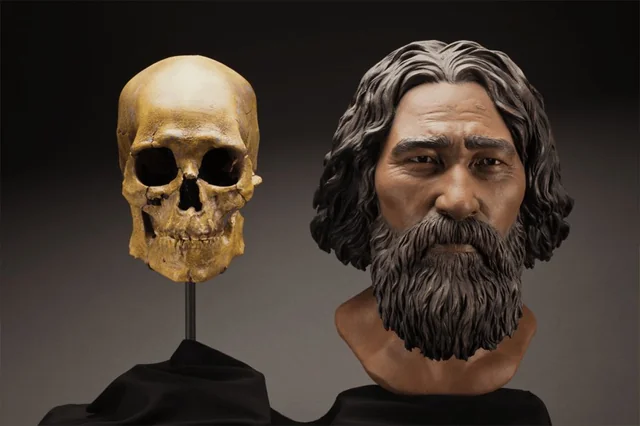
In 1996, two men in Kennewick, Washington, stumbled onto a nearly complete skeleton. Early measurements of the skull were read by some researchers as “Caucasoid,” and fringe voices ran with it instantly, claiming Europeans had reached North America thousands of years before Columbus. It was culture-war fuel almost overnight.
Local Native American tribes saw it completely differently. They recognized the remains as an ancestor and invoked NAGPRA, the Native American Graves Protection and Repatriation Act, to demand reburial. For two decades, lawsuits flew back and forth – scientists pushing for research access, tribes pushing for spiritual respect. The bones became a legal, political, and identity battlefield.
Genetic sequencing finally shifted things. DNA showed Kennewick Man was closely related to modern Native Americans of the region, not Europeans or some lost Old World group. Legally, that looked settled. But it left a bitter aftertaste: who gets to decide what counts as “evidence” when science, law, and living communities collide? That clash looks almost simple next to the language storm at #17.
#17 – The Phaistos Disc: Ancient Message or Elaborate Fake?
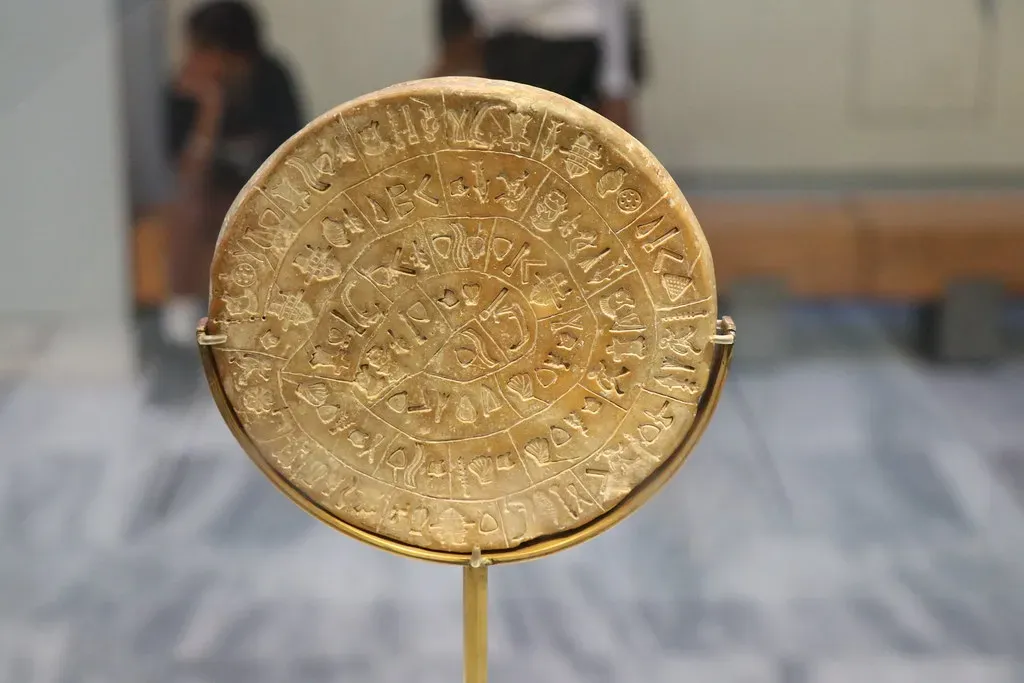
Discovered in 1908 inside a Minoan palace on Crete, the Phaistos Disc is a palm-sized clay disk stamped with spiraling symbols unlike anything else in the ancient world. That’s the first red flag: no second artifact written in the same signs has ever turned up, anywhere.
Some scholars treat it as a genuine but isolated writing system or ritual text. Others quietly suspect a 20th-century forgery, planted to spice up a dig. The lack of parallels, the near-perfect layout, and the timing – right in the era of famous forgery scandals – all keep that suspicion alive, even without a smoking gun.
Then there’s the decoding circus. Every few years someone announces they’ve cracked it: prayer, calendar, hymn, take your pick. None of it has convinced mainstream epigraphers. Without a Rosetta Stone or a second example to compare it against, the disc hovers in limbo – too weird to dismiss, too alone to decode. And “too weird to dismiss” is exactly the problem with #16.
#16 – Çatalhöyük: The First City, or an Overhyped Farming Village?
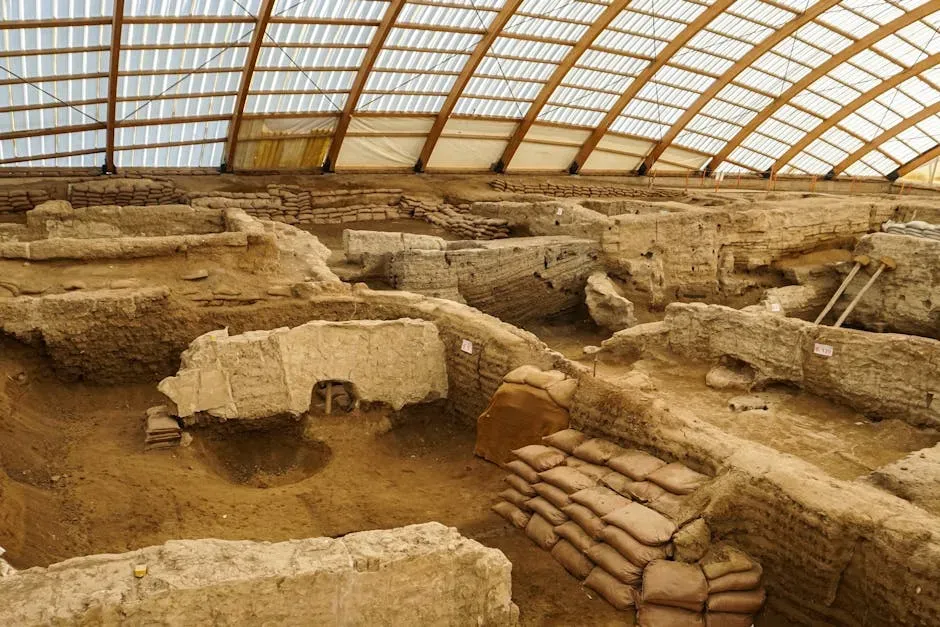
Textbooks used to present the first “real” cities as a Mesopotamian invention. Then Çatalhöyük in central Turkey turned up: a sprawling Neolithic site from roughly 7400-6000 BCE, packed with mudbrick houses, vivid wall paintings, and burials tucked under the floors. Popular media leapt on it as the world’s first city.
Archaeologists don’t actually agree with that label. There are no streets, no monumental temples, no clear public buildings, and no obvious social hierarchy. People climbed in through the roof. It looks more like an unusually dense cluster of households than an urbanized state – and some experts argue we’re just projecting later “city” ideas backward because we want a tidy origin story.
The deeper argument is about definitions. Is a city defined by size, by government, by class division, or by economy? Çatalhöyük hits some markers and misses others completely. That fuzziness is child’s play compared with the evolutionary minefield at #15.
#15 – Homo Floresiensis: Real “Hobbits” or Diseased Humans?
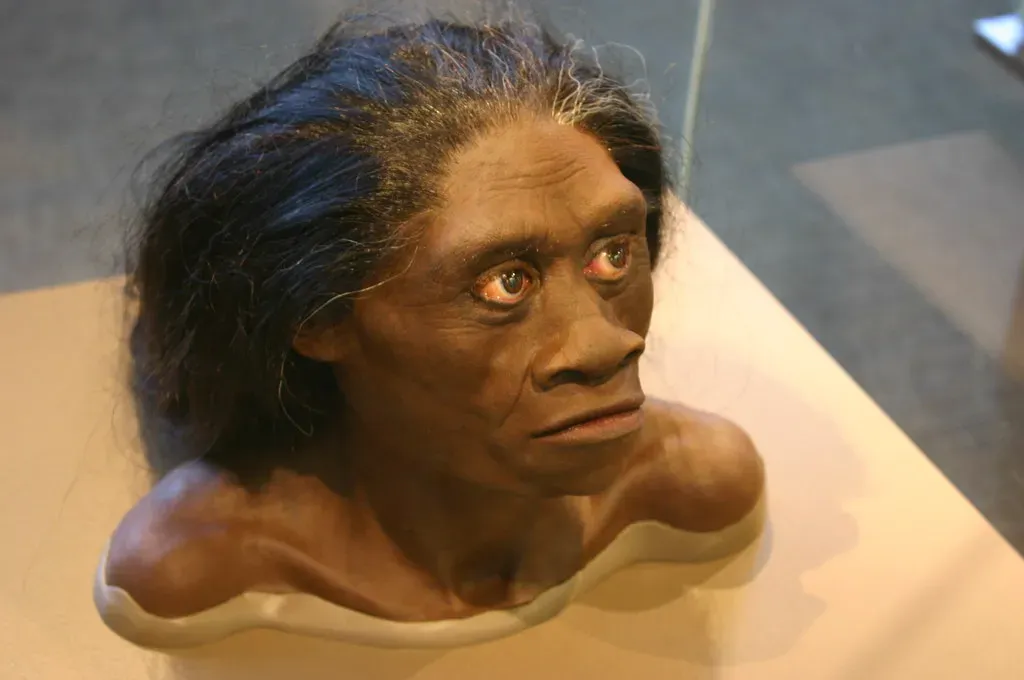
When tiny hominin bones turned up on Flores Island in Indonesia in 2003, the headlines wrote themselves: real-life hobbits discovered. These individuals stood about 3.5 feet tall, with small brains but surprisingly sophisticated stone tools and possible hunting behavior.
The field split instantly. One camp argued this was a genuinely distinct species, Homo floresiensis, a late-surviving offshoot that wrecked the simple “straight line from apes to us” story. The other camp insisted these were just modern humans with pathological conditions – microcephaly, dwarfism, some growth disorder science hadn’t fully named yet.
At a Glance
- Unearthed in 2003 in Liang Bua Cave on Flores Island, Indonesia
- Adults stood roughly 3.5 feet tall with brains close to chimpanzee size
- Associated stone tools hint at organized hunting and possible fire use
- Revised dating places the last individuals around 50,000 years ago
Detailed analysis of wrist bones, skull shape, and foot anatomy has pushed the consensus toward a genuinely distinct species, though some anatomists still flag overlaps and inconsistencies. The bigger issue lingers: if “hobbits” survived until roughly 50,000 years ago, modern humans shared the planet with far more cousins than any schoolbook admitted. And those schoolbooks were already nervous about #14.
#14 – The Piltdown Man Hoax: When Experts Wanted to Be Fooled

In 1912, skull and jaw fragments found in Piltdown, England, were hailed as the missing link – a human-like braincase paired with an ape-like jaw. Conveniently, it also fit British pride: human evolution, centered in England. For decades, it shaped entire theories about our origins.
Then, in the 1950s, chemical testing exposed the truth. The skull was medieval human. The jaw belonged to an orangutan, artificially stained and filed to look ancient. One of the most famous fossils in the world had been a deliberate hoax the whole time.
What still stings isn’t just the forgery – it’s the willing blindness around it. Genuine early human fossils from Africa that contradicted Piltdown were sidelined for years simply because they didn’t fit the preferred narrative. It forced a brutal question that never fully went away: how much of “consensus” is good data, and how much is ego and nationalism? That question resurfaces every time people argue over #13.
#13 – The Clovis-First Collapse: How Old Are “The First Americans” Really?
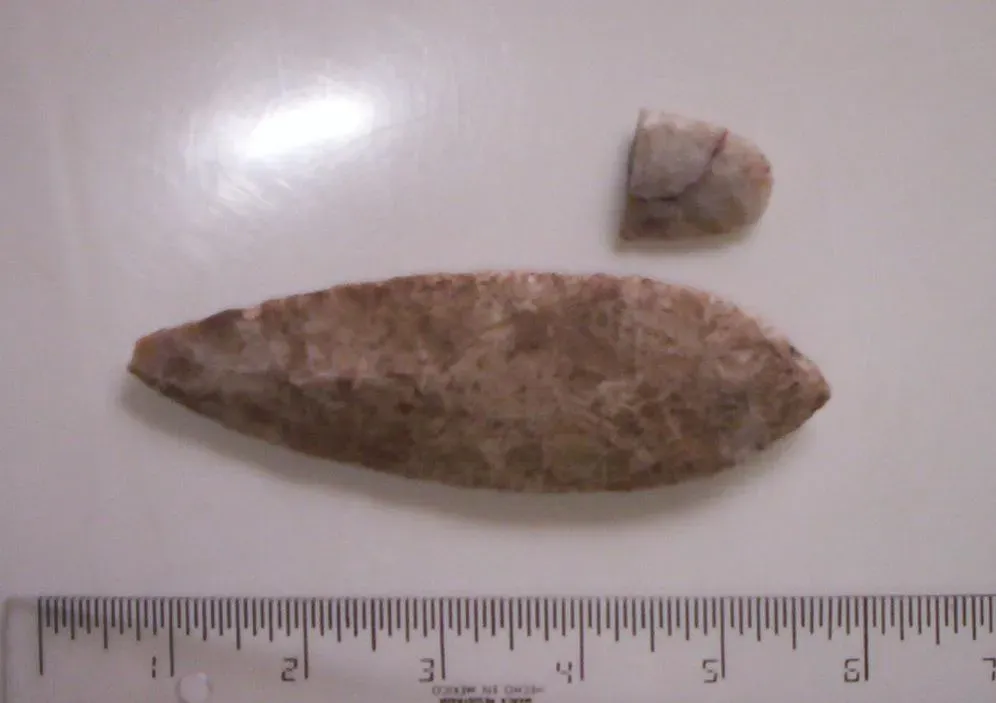
For most of the 20th century, North American prehistory was taught as “Clovis first”: big-game hunters with distinctive spear points arriving around 13,000 years ago, crossing the Bering land bridge, and rapidly populating the continent. It was neat, simple, and wrong.
Sites like Monte Verde in Chile and Page-Ladson in Florida began producing compelling evidence of human presence thousands of years before Clovis. At first, those sites were attacked mercilessly – dating methods questioned, artifacts reinterpreted as “natural,” whole teams accused, politely or not, of wishful thinking.
Quick Compare
- Old model: single wave, Bering land bridge, big-game hunters, arrival around 13,000 years ago
- New model: multiple waves and routes, including coastal migration, arrival possibly thousands of years earlier
- Old model: Clovis spear points mark the earliest toolkit in the Americas
- New model: diverse regional technologies predate Clovis at several sites
Now the majority of specialists accept pre-Clovis occupation, and the argument has shifted to how early, and by which routes – coastal migration, multiple waves, diverse technologies, all in play. But the resistance along the way was intense. Once you’ve watched one clean origin story disintegrate like that, you look very differently at mysteries like #12.
#12 – The Vinland Map: Pre-Columbian Proof or 20th-Century Ink Job?
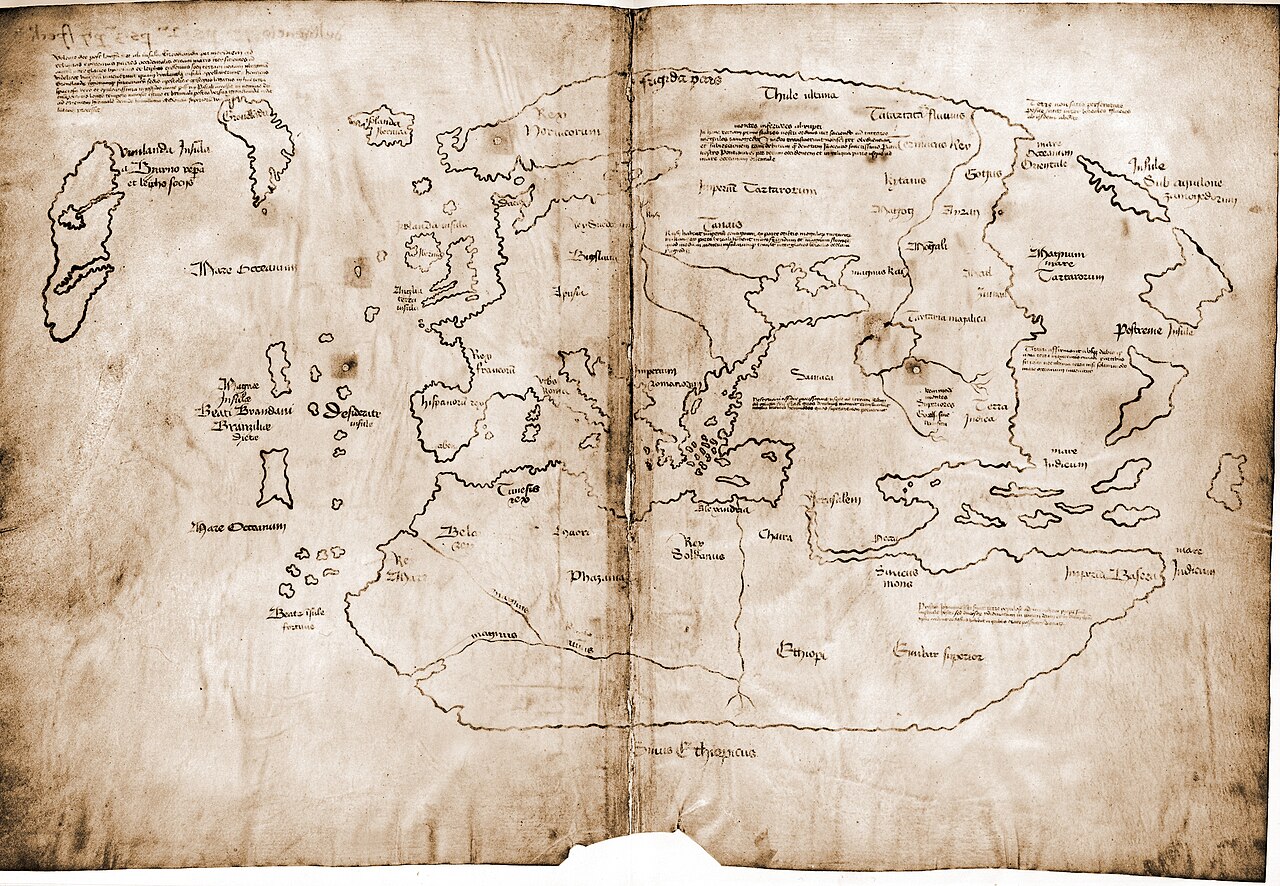
When Yale unveiled the Vinland Map in the 1960s, it seemed to confirm Europeans had mapped part of North America centuries before Columbus. The map showed a chunk of land labeled “Vinland” west of Greenland, allegedly drawn around the mid-15th century.
Skeptics zeroed in on the ink almost immediately. Chemical tests over the decades repeatedly found modern pigments, including forms of titanium dioxide common in the 20th century, not the 1400s. Each new test hardened the forgery case, while defenders nitpicked methodology and floated contamination theories to keep the map’s authenticity alive.
By the 2010s, more advanced analysis made the verdict brutally clear: the ink is modern, almost certainly forged. Yet the map stayed on display for years, and the story still circulates online as “proof” of earlier exploration. The irony stings – we already have solid sagas and real archaeological evidence for Norse presence in North America. The fake map never added anything except confusion. Muddy waters are exactly the environment of #11.
#11 – The Kensington Runestone: Viking Minnesota or Local Tall Tale?
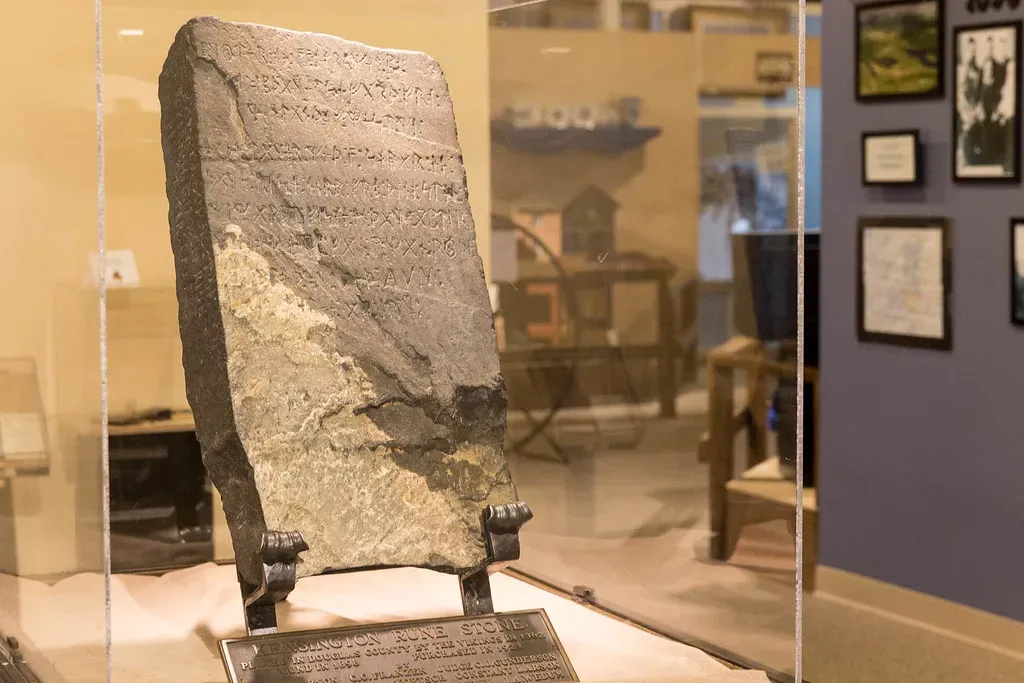
In 1898, a Swedish-American farmer in Minnesota claimed he’d unearthed a stone carved with runes describing a 14th-century Scandinavian expedition. The inscription told a dramatic story of explorers attacked by “skraelings,” a Norse term for Indigenous peoples. The implication: Vikings in inland North America centuries before Columbus.
Runologists and historians have mostly called foul. The language mixes rune forms and grammar that don’t fit the claimed date, and many see it as a 19th-century creation – maybe an elaborate joke or a local pride project that spiraled out of control. Museums in Scandinavia and most academic institutions treat it as inauthentic.
Still, it refuses to die. Some enthusiasts argue language variation plus carver “sloppiness” explains the anomalies; others just like the story too much to let it go. The pattern is familiar: when a find tells people exactly what they want to hear, skepticism tends to soften – until painstaking lab work, like in #10, ruins the mood.
#10 – The James Ossuary: Archaeology Meets Religious Headlines
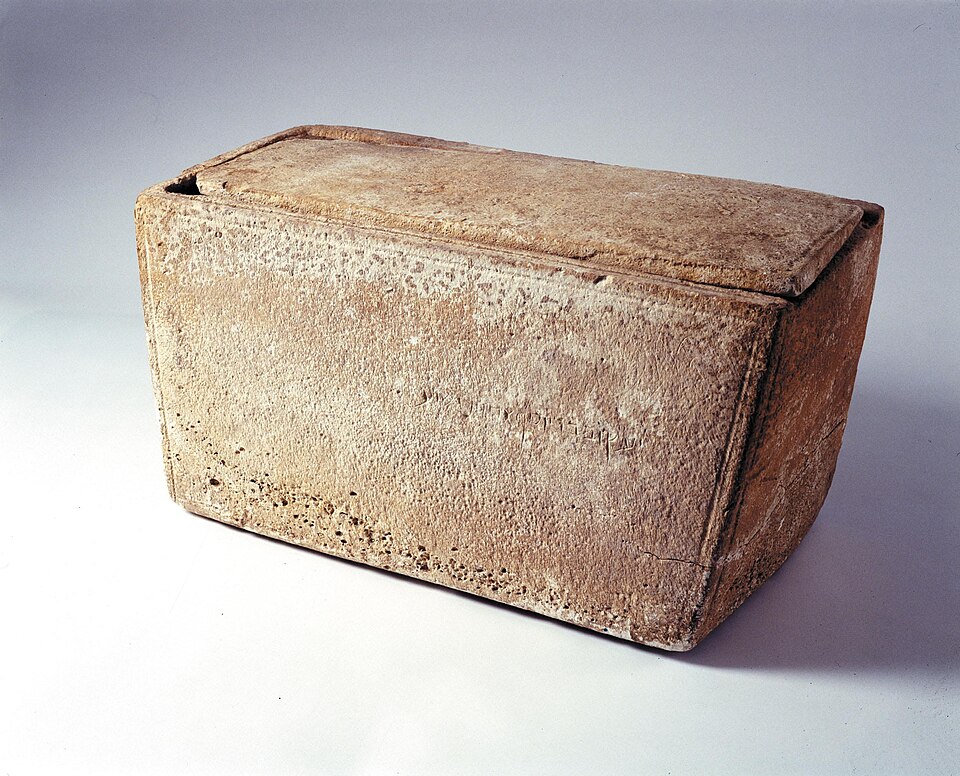
In 2002, an inscribed bone box hit the news with a blockbuster claim – the Aramaic text read “James, son of Joseph, brother of Jesus.” On its face, that would make it the first archaeological artifact explicitly linked to Jesus of Nazareth.
Problem: names like James, Joseph, and Jesus were extremely common in 1st-century Judea. Many epigraphers accept the box itself is genuinely ancient, but the fight centers on the last phrase – “brother of Jesus.” Multiple forensic studies suggest that segment was carved later, possibly with modern tools, raising the possibility of a relic that was quietly touched up for effect.
Legal cases, media battles, and scholarly conferences followed. Even today you’ll find experts who believe the whole inscription is ancient and authentic, and others who see a carefully calibrated fake built for a hungry antiquities market. It’s a textbook case of religion, money, and incomplete provenance turning one box into a decades-long storm. And if religion can polarize a debate, wait until you hit the politics baked into #9.
#9 – The “Japanese Atlantis” of Yonaguni: Natural Rock or Sunken Ruins?

Off the coast of Yonaguni Island in Japan lies a massive underwater structure with terraces, steps, and flat planes that look unnervingly like architecture. Divers’ photos went viral, and the nickname “Japanese Atlantis” stuck almost instantly.
Most geologists aren’t buying it. They argue the rock is sandstone, prone to fracturing naturally into right angles, ledges, and shelves – erosional geometry plus human imagination, essentially pareidolia with scuba gear. A few archaeologists and local researchers push back, pointing to apparent tool marks or deliberate alignments.
The archaeological problem is straightforward: there’s no associated cultural material, no clear artifacts, no foundations, no pottery scatter that screams “settlement.” But the images are so visually compelling that the argument keeps resurfacing online anyway. When your eyes insist “man-made” and the sediment cores say “no,” things get personal fast. And “personal” barely covers the fight around #8.
#8 – The Nazca Lines: Astronomical Calendars or Sacred Pathways?
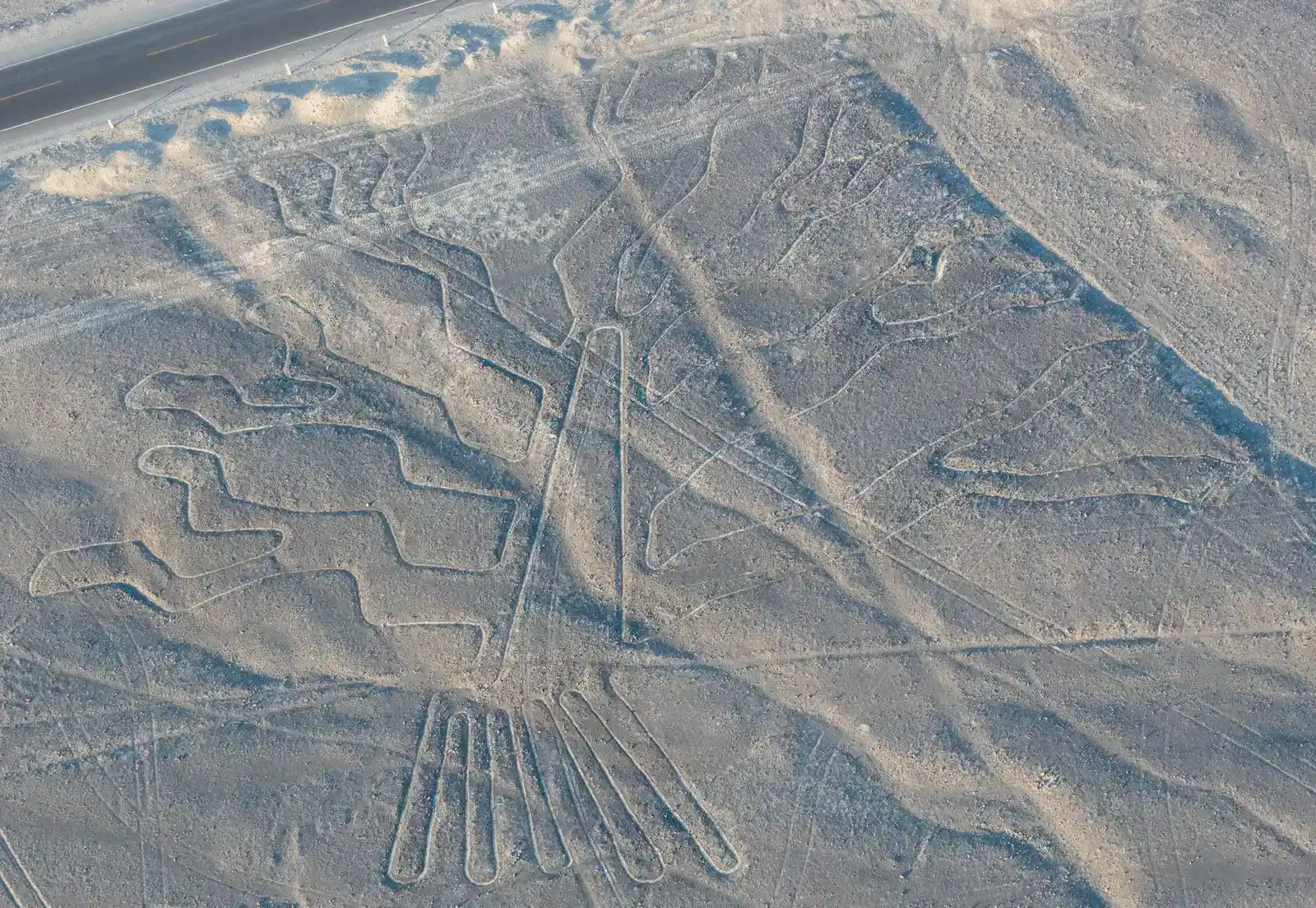
From the air, the Nazca Desert in Peru reveals massive geoglyphs – animals, plants, and geometric figures etched straight into the ground. The question that’s fueled decades of debate is simple: why did anyone make these?
Early researchers suggested giant astronomical calendars lining up with solstices and star risings. Later work complicated that story – some alignments genuinely exist, but many figures don’t match major celestial events at all. Other archaeologists argue the lines map ritual pathways connected to water sources and mountain worship, walked as part of ceremonies with offerings left at key points, a reading backed by ethnography and local Andean tradition.
Fringe theories – aliens, ancient airfields – still dominate pop culture discussion despite zero serious evidence behind them. Inside the field, the real disagreement is about emphasis: how much weight to give astronomy versus ritual landscape use. When one set of lines can sustain that many interpretations, you start to understand why the letters in #7 are such a nightmare.
#7 – The Dead Sea Scrolls: Whose Ideas, Whose Library?
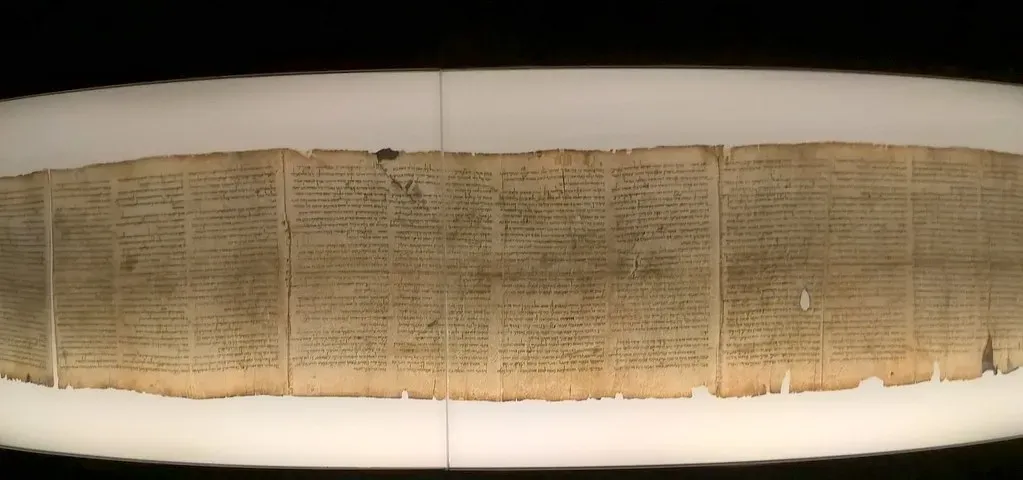
Discovered in caves near Qumran in the mid-20th century, the Dead Sea Scrolls gave us our earliest substantial manuscripts of the Hebrew Bible, plus a trove of Jewish sectarian texts. No one doubts their importance. What they actually reveal about Second Temple Judaism is a different story.
The dominant view long linked the scrolls to the Essenes, a Jewish sect described by ancient historians, with Qumran as their community center and the scrolls as their library and theological manifesto. That neat picture has been challenged since – some scholars argue the site functioned differently, as a fort, estate, or pottery production center, and that the scrolls represent a broader collection of texts rather than one group’s private writings.
Worth Knowing
- First scrolls found in 1947, with discoveries continuing across 11 caves near Qumran
- Collection totals roughly 900 manuscripts, mostly written in Hebrew, with some Aramaic and Greek
- Includes the oldest known copies of Hebrew Bible texts, some dating to the 3rd century BCE
- Debate over authorship still shapes how scholars read early Jewish and Christian history
The stakes here are genuinely high. How we interpret these documents shapes our understanding of early Judaism and the exact context Christianity emerged from. Are we reading the internal debates of a small fringe sect, or a cross-section of mainstream religious thought at the time? That “whose voice is this, really?” problem also haunts the stone at #6.
#6 – The Rosetta Stone’s Legacy: Translation Triumph or Colonial Trophy?
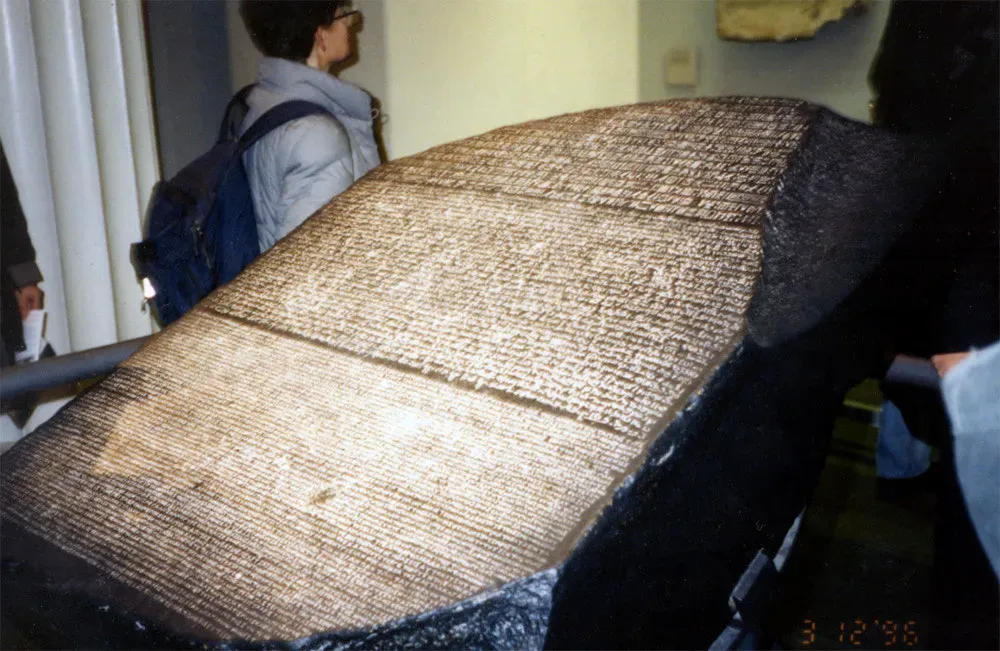
The Rosetta Stone itself isn’t controversial anymore – a decree written in three scripts that finally let scholars crack ancient Egyptian hieroglyphs. The debate now is about what the stone represents, not what it says.
For 19th-century Europe, it symbolized intellectual conquest, Europeans “giving voice” to a lost civilization. Modern critics point out that Egyptian scribal traditions never entirely died, and that the stone’s role has been heavily mythologized. They also highlight the colonial context – the artifact was seized by the British from the French, who had taken it from Egypt in the first place.
Today the question isn’t “did it help us read hieroglyphs?” – it obviously did, massively – but “who owns the key to a culture’s own past?” Egypt has repeatedly requested its return; museums counter with conservation, access, and “universal museum” arguments. The science is settled. The politics aren’t even close. It’s a quieter, but very real, kind of controversy – unlike the straight-up scientific brawl that #5 provoked in human origins.
#5 – Lucy and the Bushy Family Tree of Humanity
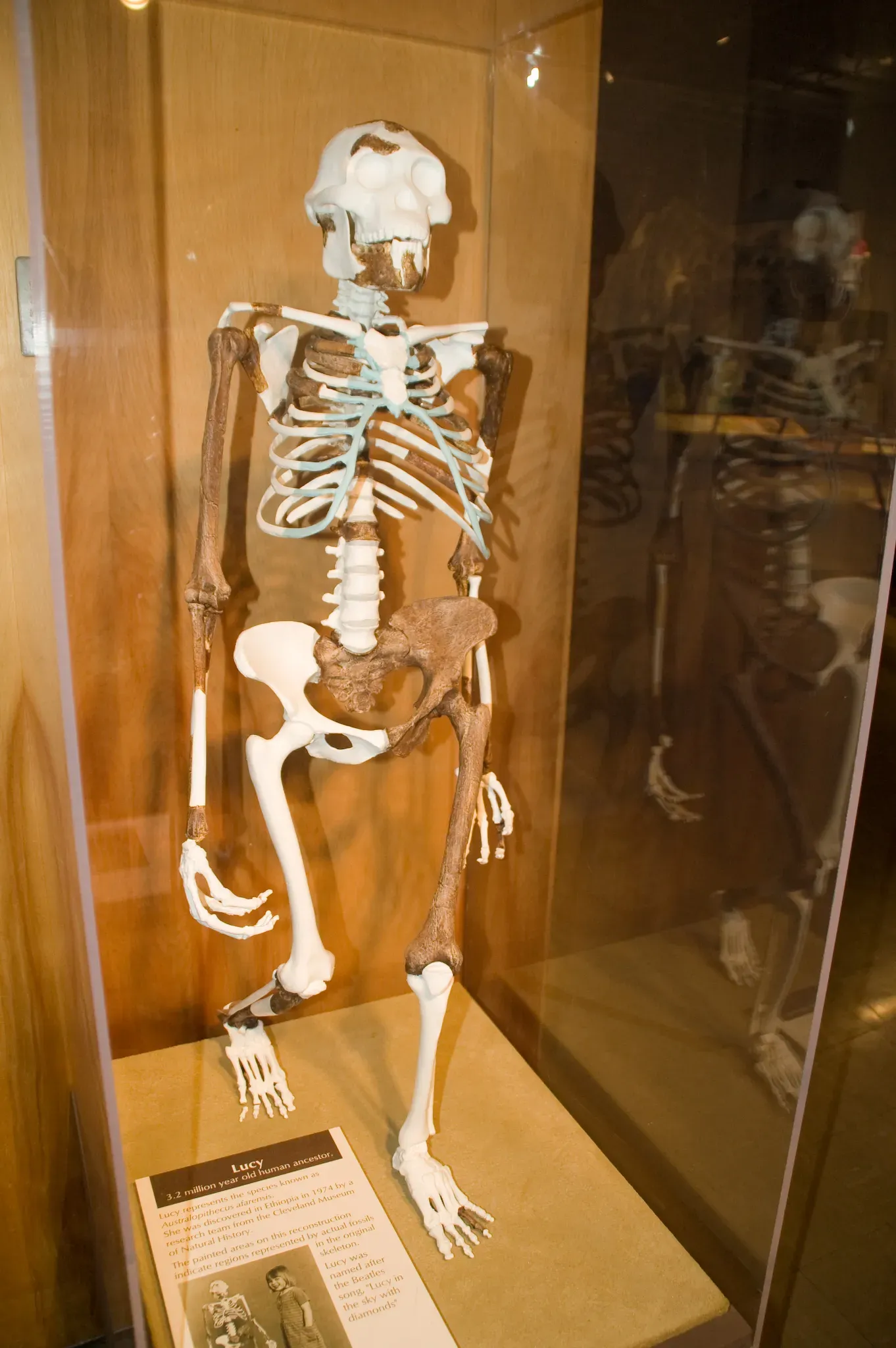
When the 3.2-million-year-old Australopithecus afarensis skeleton nicknamed Lucy was found in Ethiopia in 1974, she became a celebrity fossil almost overnight. For a while, textbooks presented her species as the direct ancestor of modern humans – the clean branch from which we all descended.
As more fossils emerged, that tidy image collapsed. Other hominins like Kenyanthropus, multiple Australopithecus species, and early Homo forms showed that the “tree” of human evolution looks more like a bushy thicket than a single trunk. Some researchers still argue A. afarensis sits close to the main lineage; others see Lucy as one of several side branches, not the trunk itself.
The debates get technical fast – pelvis angles, dental morphology, limb proportions – but the emotional charge is obvious. People like a single origin hero. Scientists like complex, branching models. Lucy went from “our grandmother” to “a fascinating, maybe cousin-level relative,” and that demotion has never fully settled. Complexity is precisely what keeps #4 on the arguing block.
#4 – Göbekli Tepe: Who Built Monumental Temples Before Farming Existed?
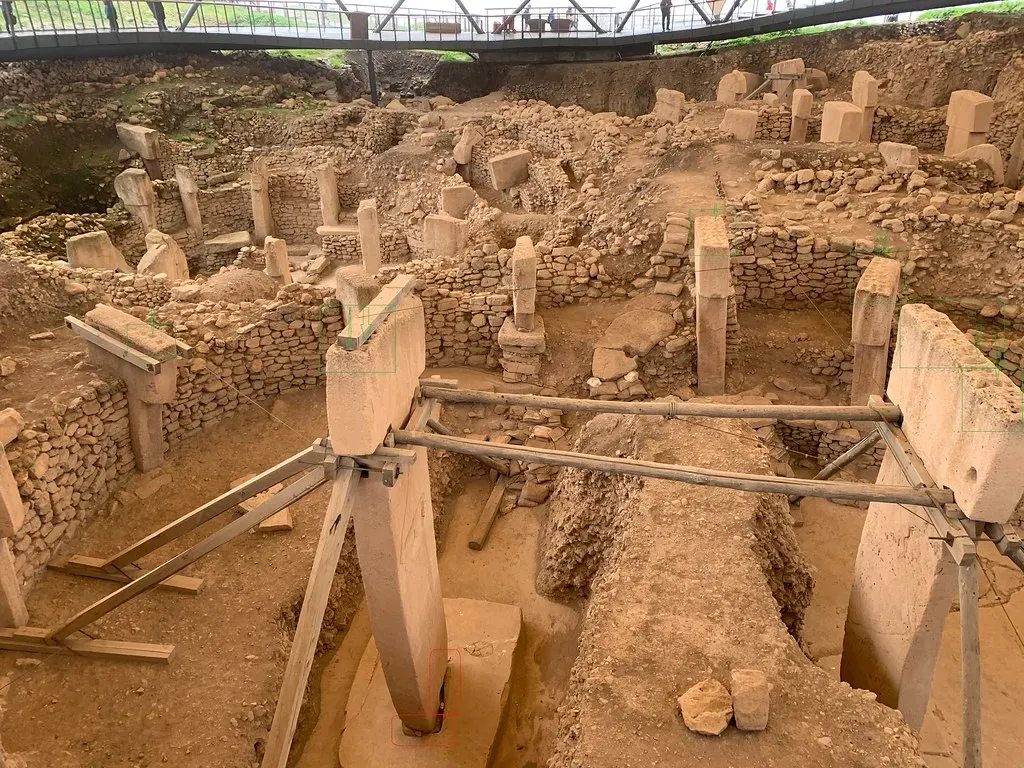
Göbekli Tepe in southeastern Turkey exploded onto the scene in the 1990s – a hill hiding buried stone circles with massive T-shaped pillars carved with animals. Radiocarbon dates pushed construction back to around 9600-8000 BCE, thousands of years before Stonehenge or the Egyptian pyramids.
That timing breaks a cherished sequence. The old model said farming leads to villages, which lead to surplus, which leads to temples and monumental architecture. At Göbekli Tepe, we seem to have monumental ritual spaces built by hunter-gatherers or very early experimenters in cultivation – implying religion and large-scale coordination may have helped drive agriculture, not just followed from it.
Why It Stands Out
- Radiocarbon-dated to roughly 9600-8000 BCE, predating Stonehenge by thousands of years
- Built before pottery, metal tools, or widespread farming existed in the region
- Some T-shaped limestone pillars stand over 5.5 meters tall and weigh several tons
- Located near modern Şanlıurfa, southeastern Turkey
Debates rage over the details: were the builders seasonal foragers, proto-farmers, something in between? Some scholars even argue the site’s importance has been overstated by media hype. But the core shock stands – people with no cities, no pottery, and no metal still raised giant symbolic structures. Once you accept that, the story at #3 feels a lot less like science fiction.
#3 – The Denisovans: An Entire Human Group Discovered From a Pinky Bone
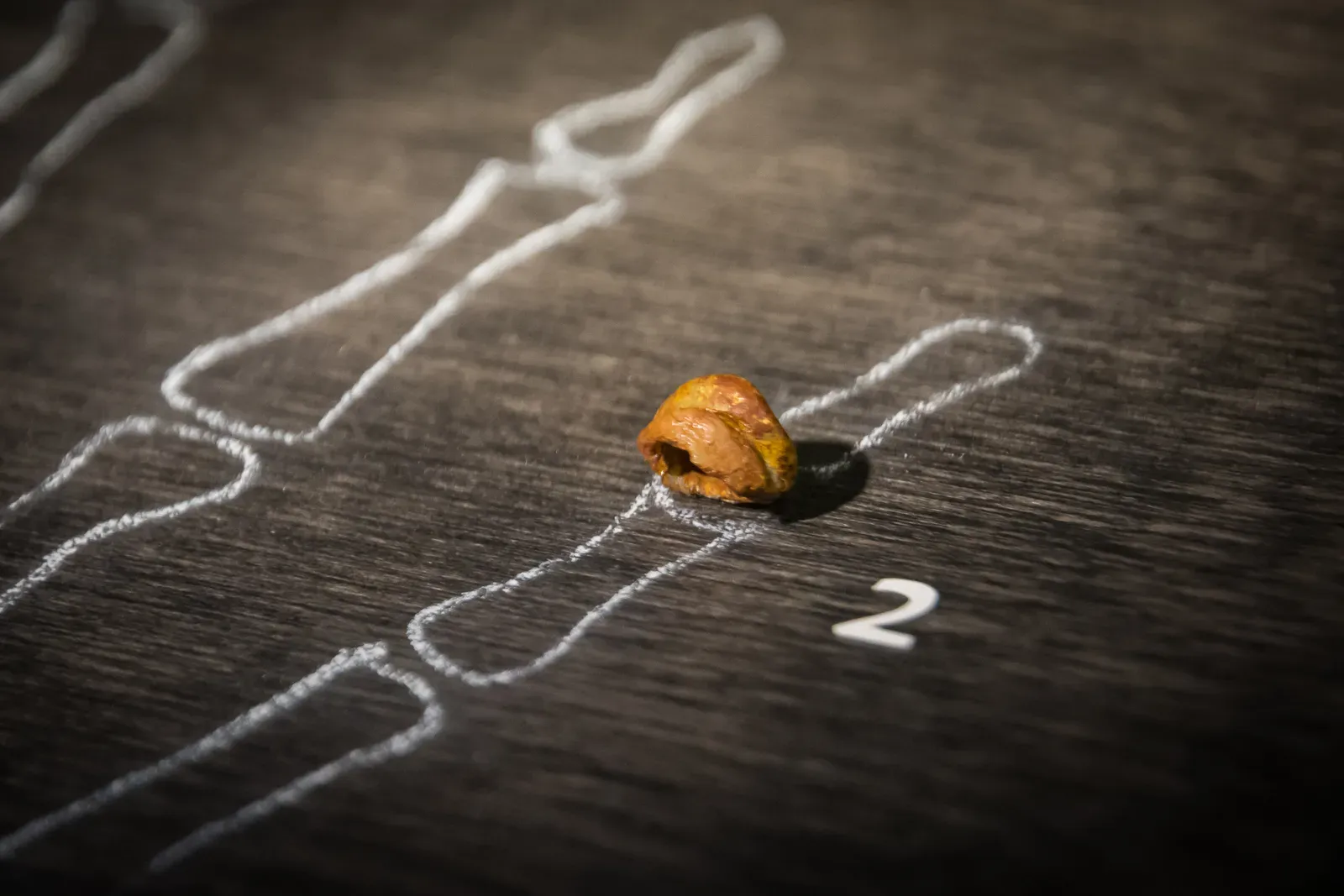
In a Siberian cave, a tiny finger bone and a few teeth changed everything. DNA extracted from these remains revealed a previously unknown hominin group entirely: the Denisovans. Morphology told us almost nothing; genetics did all the talking.
Suddenly our species tree had another branch we’d never identified from classic fossils. The kicker: modern genetic studies show that people in parts of Asia and Oceania carry significant Denisovan DNA, meaning Homo sapiens interbred with them directly. Some of those inherited genes are linked to high-altitude adaptation in Tibet and immune responses – evidence that this “ghost” population still shapes human biology today.
The controversies stack up in layers. How widespread were Denisovans really? How many distinct lineages existed within what we’re lumping together as “Denisovan”? Are we oversimplifying diverse populations under one label just because their DNA clusters together? With so few bones and so much genetic data, arguments over classification and naming get heated fast. And if defining a whole human group is this hard, try defining the “real” purpose of #2.
#2 – Stonehenge: Calendar, Cemetery, or Soundscape?
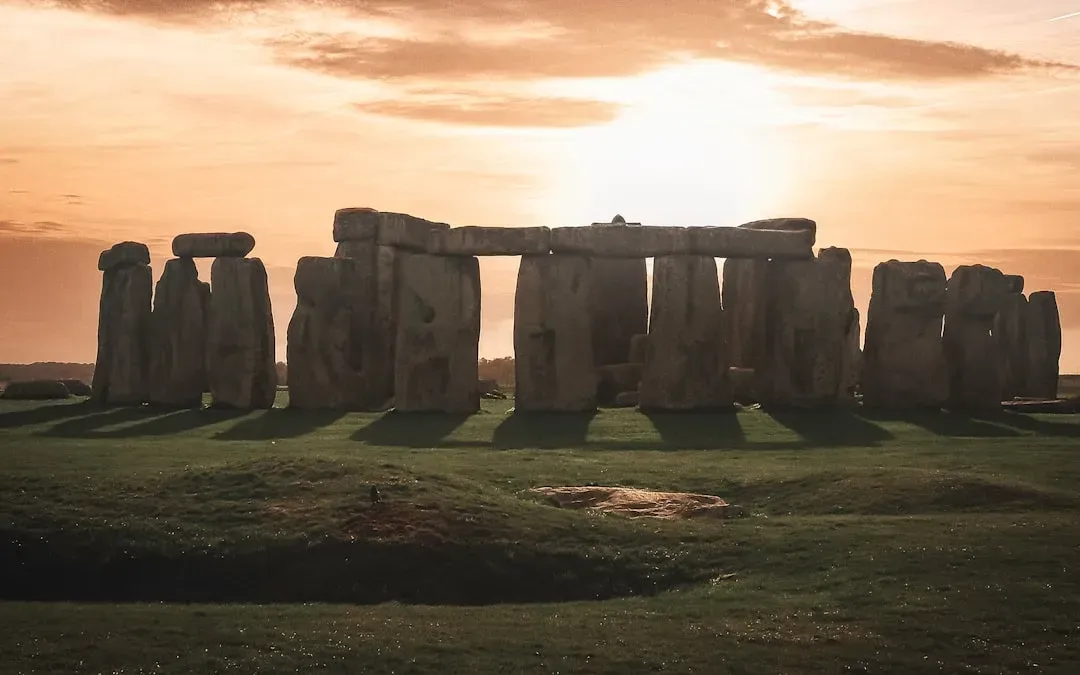
Few monuments have attracted more competing theories than Stonehenge. For decades, the default story was a prehistoric observatory – alignments with solstices suggesting a massive stone calendar built for tracking the sun. That interpretation still holds real weight, especially given the midsummer sunrise and midwinter sunset alignments.
But newer work emphasizes its role as a cemetery and ancestral monument, with cremated remains and complex burial patterns spanning centuries. Others propose it functioned as a healing center that drew people from across Britain, supported by strontium isotope analysis showing long-distance visitors. Acoustics researchers have even explored how the stones shape sound, hinting at a deliberate ritual soundscape.
Most archaeologists now see Stonehenge as many things across many phases, not one fixed project with a single purpose. That nuance rarely survives TV specials or memes, so the public argument keeps swinging between single-function explanations. The urge to pin a grand mystery down to one tidy answer is exactly why #1 still sparks the loudest fights of all.
#1 – The Great Pyramids of Giza: Engineering Genius vs. Conspiracy Theories
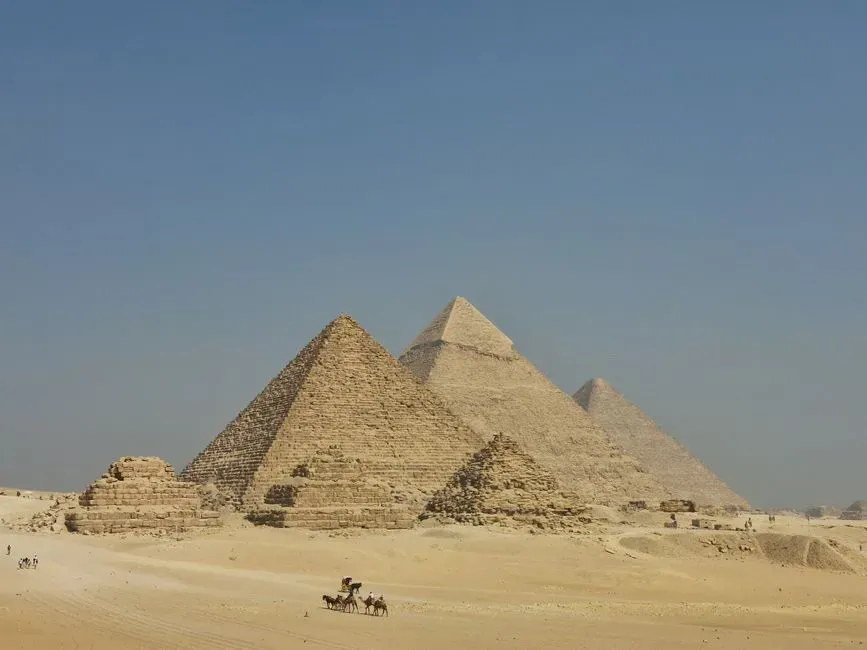
No archaeological site sits under more competing narratives than the Great Pyramids. On one side, you have mountains of hard data: quarry marks, worker villages, tools, and logistics models. Together, they show tens of thousands of skilled laborers, not slaves in chains, built the pyramids using ramps, levers, and brutal human organization during the Old Kingdom.
On the other side, you have the internet. Aliens, lost super-civilizations, sound levitation, secret global alignments – name a theory, someone’s pushed it. Many of these ideas survive precisely because they ignore the boring but hard-won details: incomplete ramps, worker graffiti naming actual crews, mis-cut blocks, and evidence of construction errors and repairs that no “perfect” hyper-advanced culture would ever leave behind.
Within serious Egyptology, the real debates are over engineering specifics – straight ramp versus spiral systems, internal ramps, lifting sequences – and symbolic meanings tied to solar theology. But the public fight is more emotional than technical: people don’t want to believe ordinary humans with simple tools could pull this off. The hard truth is more impressive and less magical than the myth, and that contrast keeps fueling argument threads to this day.
The Bottom Line
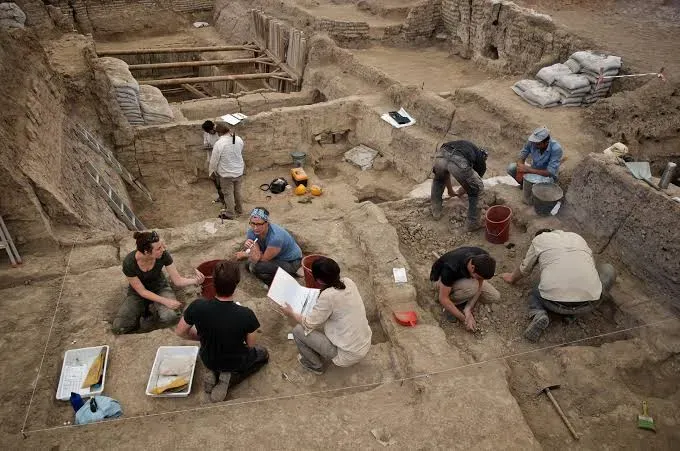
Across all twenty of these finds, one pattern repeats: the most explosive discoveries don’t just add new facts, they threaten someone’s favorite story. Whether it’s national pride at stake, as with Piltdown or Kennewick, religious hope, as with the Shroud or the James Ossuary, or our craving for mystery, as with Nazca and Yonaguni, the data rarely speak in one clean voice. Instead they whisper possibilities, and experts spend decades arguing over the volume knob.
What actually survives those fights, every single time, is method. Better dating, better imaging, better genetics. The Antikythera Mechanism, the Denisovans, and Göbekli Tepe all show how fast “impossible” turns into “obvious” the moment the tools catch up.
Personally, I side with the evidence that’s testable and repeatable – even when it ruins a great story. Hoaxes get exposed, tidy timelines get bulldozed, and hero fossils get demoted to interesting cousins. That’s not a loss. It’s the whole point. But I’ll leave you with this: which of these twenty do you think we’re still reading completely wrong?