Picture the ocean floor as a graveyard where nothing stays buried for long. Treasure hunters, souvenir divers, and salvage crews chasing an insurance payout have picked apart wreck after wreck for more than a century. So how did some of history’s most famous ships – carrying gold, silver, secrets, and hundreds of lives – manage to dodge that fate entirely?
The answer isn’t heroism, and it isn’t good planning. It’s the opposite. These 13 wrecks survived because something bigger than human ambition got in the way first – crushing depth, ancient legal disputes, Antarctic ice, or currents violent enough to kill trained technical divers. This isn’t a list of preservation success stories. It’s a rundown of ships that history simply couldn’t reach – until, in a few unnerving cases, it finally did.
#1 – The Silver Ship That Sat Untouched for 70 Years
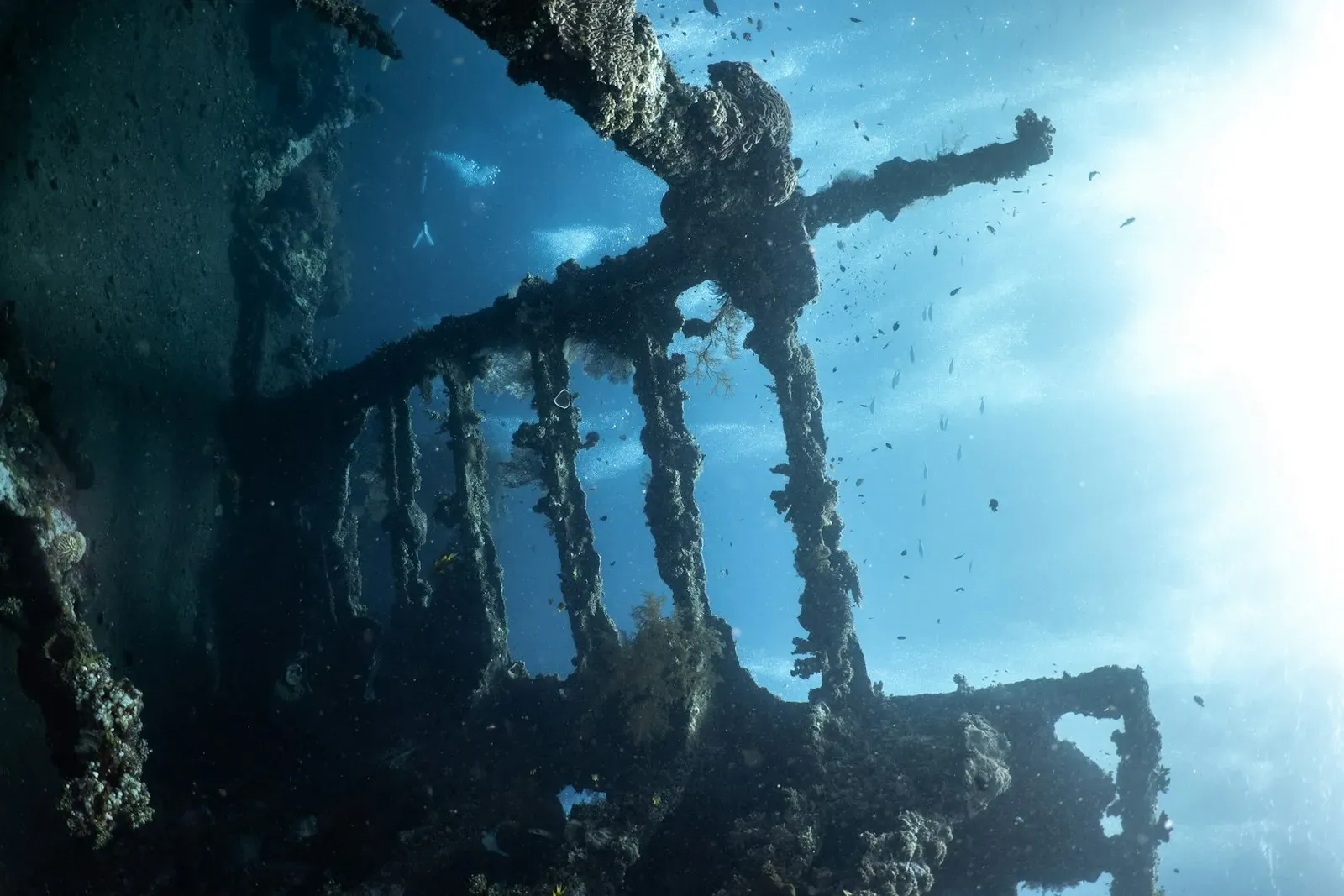
The SS Gairsoppa was a British cargo steamer torpedoed by a German U-boat in February 1941 while hauling a fortune in silver bullion across the North Atlantic. For seven decades, the ship and its cargo simply vanished into the cold and dark, sitting roughly three miles down – far beyond anything but the most specialized deep-sea recovery technology ever built.
What actually kept the Gairsoppa safe wasn’t secrecy. It was depth. Ordinary salvage divers max out at a few hundred feet; the Gairsoppa sat at nearly 4,700 meters, a depth that demanded robotic submersibles and precision sonar mapping that simply didn’t exist for most of the 20th century. When Odyssey Marine Exploration finally recovered silver from the wreck in the early 2010s, it stood as one of the deepest shipwreck salvage operations ever attempted – proof that depth alone can outlast decades of treasure-hunter ambition. And depth was almost gentle compared to what protected the next ship on this list.
Fast Facts
- Sunk by a German U-boat torpedo on February 17, 1941, fired from the submarine U-101, one of the more deadly German submarines prowling the area
- Went down carrying an estimated 7 million ounces of silver bullion
- The wreck of the Gairsoppa was discovered at a depth of 15,400 feet – 3,000 feet deeper than the wreckage of the Titanic
- Over 110 tons or 2,792 silver ingots (more than 99% of the insured silver documented to be on board) has been recovered
#2 – The Deadliest Shipwreck in History, Hidden by Politics
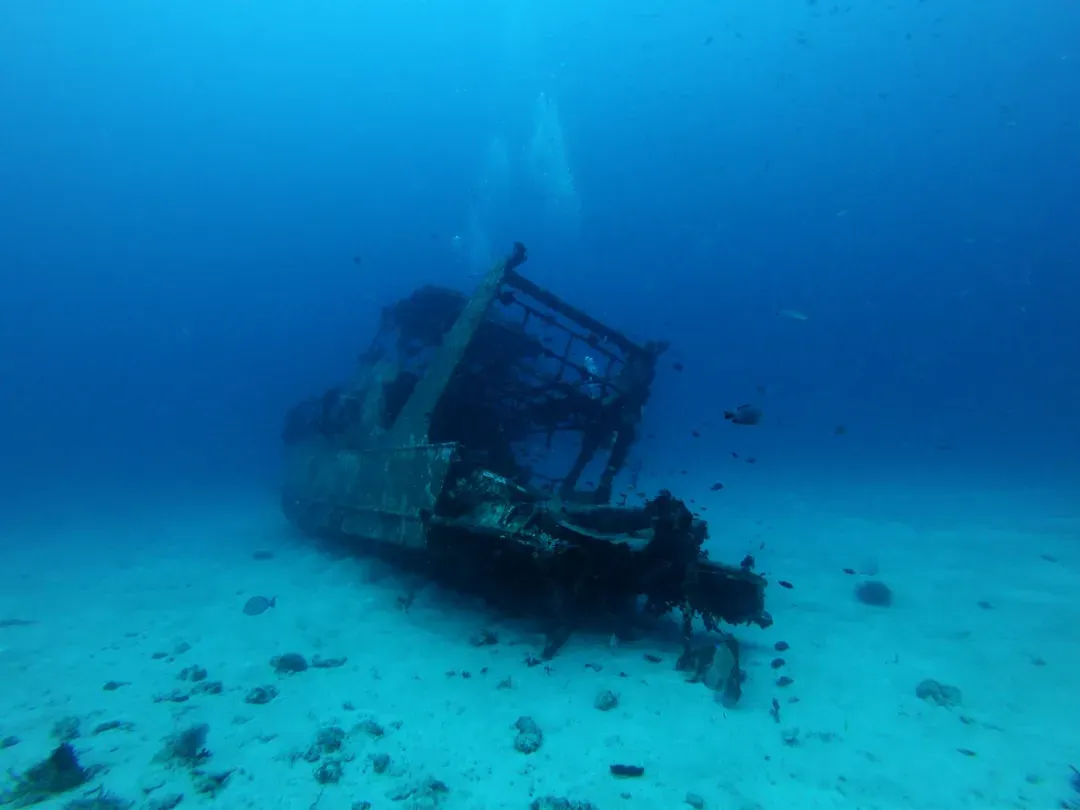
The Wilhelm Gustloff sank in the Baltic Sea in January 1945 after being torpedoed by a Soviet submarine while evacuating German refugees, resulting in the single deadliest maritime disaster ever recorded – far deadlier than the Titanic. Yet most people have never heard of it, and even fewer have ever seen footage of the wreck.
That’s not an accident. The wreck sits in what became Polish territorial waters after the war, and Poland has treated the site as a war grave, restricting unauthorized diving for decades. Thousands of bodies were never recovered, which means the ship itself has functioned as an underwater cemetery rather than a dive destination. Cold Baltic water, low salinity, and minimal shipworm activity have also helped preserve the hull far better than a similarly aged wreck would survive in tropical seas. Politics, grief, and geography combined to freeze this ship in time – and the next wreck was protected by something even more deliberate.
#3 – The Ferry Disaster Protected by International Law
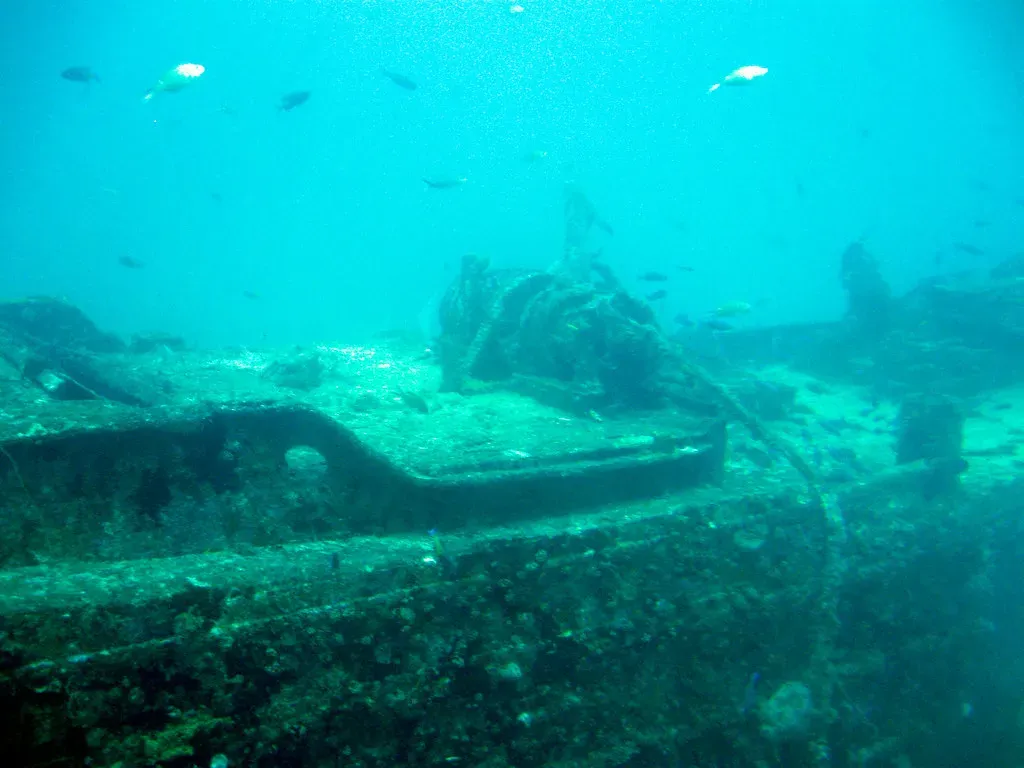
The MS Estonia sank in the Baltic Sea in 1994, killing more than 850 people in one of Europe’s worst peacetime maritime disasters. Unlike most wrecks that eventually attract dive tourism, the Estonia has remained almost completely off-limits – not because divers can’t reach it, but because they’re legally forbidden to try.
Estonia, Finland, and Sweden signed an agreement in 1995 that makes it a criminal offense to dive on or disturb the wreck, treating the site as a protected grave rather than a tourist attraction. This is a rare case where a wreck “survived” not through inaccessibility of depth or ice, but through deliberate legal inaccessibility – a decision made in the immediate aftermath of tragedy that has held firm for three decades. Occasional authorized survey dives have occurred, but recreational access remains banned. It’s one of the clearest examples of a government choosing to let a wreck rest rather than let it become a spectacle – and closer to home, another country made the exact same call.
#4 – The Great Lakes Wreck Nobody Is Allowed to Touch
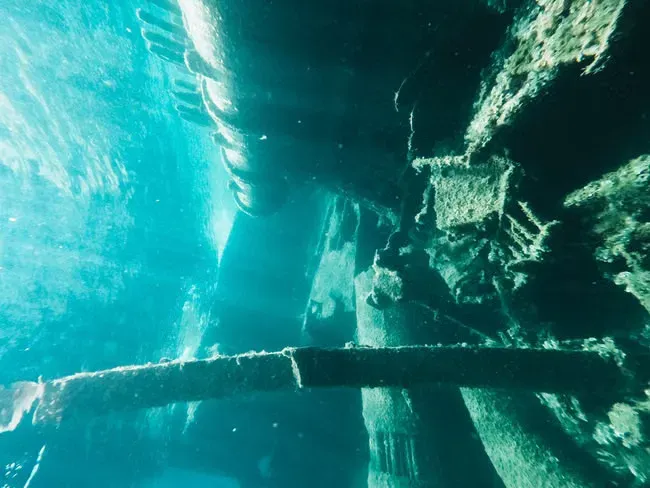
The Edmund Fitzgerald went down in a violent November storm on Lake Superior in 1975, taking all 29 crew members with it and never releasing a single body to the surface. For years afterward, the wreck sat roughly 530 feet down in frigid fresh water – deep enough to discourage casual exploration, but not so deep that dedicated divers couldn’t eventually try.
That’s exactly why officials stepped in. In 2006, the Ontario government passed legislation specifically protecting the Fitzgerald from diving and disturbance out of respect for the families of the crew. Lake Superior’s near-freezing, low-oxygen water has preserved the hull remarkably well, meaning the ship that legal protection now shields is essentially the same ship that sank decades ago. Combine legal restriction with a lake famous for swallowing wrecks whole – locals have long said Superior “never gives up her dead” – and you get a wreck preserved by both law and geography working in tandem. Money changes everything, though, and the next wreck proves it.
#5 – The $20 Billion Galleon Nobody Can Legally Touch
The San José galleon sank off the coast of Colombia in 1708 after a British naval ambush during the War of Spanish Succession, taking an estimated 11 million gold and silver coins to the bottom of the Caribbean. It has since become known as the “holy grail of shipwrecks” – and it remains almost entirely untouched.
The reason isn’t depth; it’s a legal minefield involving Colombia, Spain, a private American salvage company, and Indigenous groups from Peru and Bolivia, all fighting over ownership in international arbitration. The Colombian government has declared the sinking area a Protected Archaeological Area and has not shared its exact location. Colombia only recently brought up its first artifacts – a cannon, three ancient coins, pottery, and porcelain items – after centuries of the wreck sitting undisturbed. A treasure worth billions has survived not because it’s hard to find, but because everyone who could claim it is too busy suing each other to recover it. Depth, though, is still the most brutal gatekeeper of all – as the next wreck proves.
#6 – The Battleship That Took 48 Years to Locate
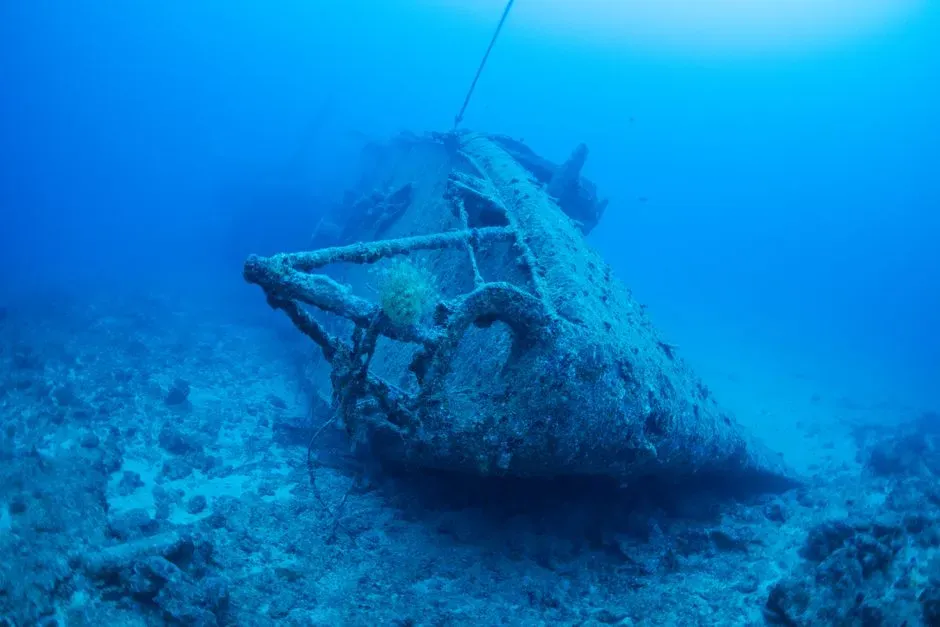
The Bismarck, Nazi Germany’s most feared battleship, sank in the North Atlantic in May 1941 after a furious pursuit by the Royal Navy. It then disappeared for nearly half a century, resting almost 4,800 meters down – far beyond the reach of any diver and beyond most exploration technology of the mid-20th century.
When oceanographer Robert Ballard finally located the wreck in 1989, using the same deep-sea techniques that found the Titanic, he discovered a hull that had slid down an underwater volcanic slope after sinking, coming to rest largely intact. The extreme pressure and total darkness at that depth meant no diver – professional or amateur – could ever have disturbed it, even if they’d known exactly where to look. The Bismarck’s survival is a straightforward story of depth doing what armor plating couldn’t: keeping the ship permanently out of human hands. Its wartime rival’s fate was even stranger.
#7 – The Cruiser That Vanished for 72 Years
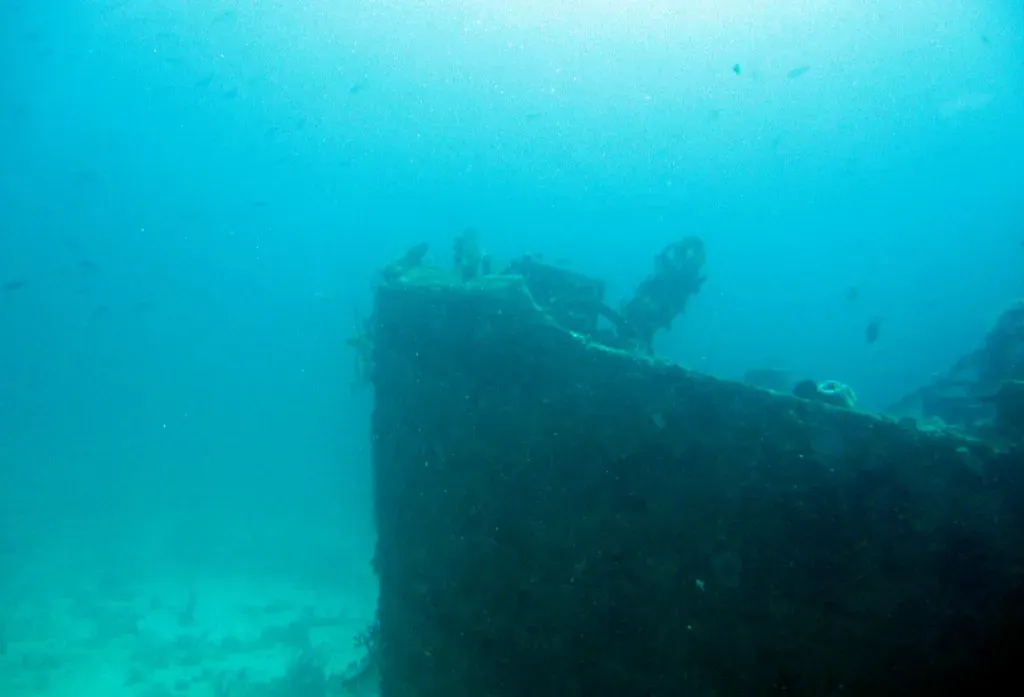
The USS Indianapolis sank in the Philippine Sea in July 1945 after being torpedoed by a Japanese submarine, followed by one of the most horrifying survival stories in naval history as hundreds of sailors faced days of exposure and shark attacks before rescue. The wreck itself remained lost for over seven decades.
It wasn’t found until 2017, when a privately funded expedition backed by Microsoft co-founder Paul Allen located the wreck roughly 5,500 meters down. That depth – nearly 3.5 miles – placed it well beyond the range of even advanced military submarines of the era, let alone civilian search efforts. The ship’s exact resting place was essentially guesswork for generations, based only on last known coordinates from a sinking that happened in the chaos of nighttime warfare. Modern autonomous underwater vehicles, not persistence alone, are what finally cracked the mystery.
Quick Compare: How Deep Is Too Deep?
| Wreck | Approx. Depth |
|---|---|
| SS Gairsoppa | ~4,700 m |
| Bismarck | ~4,800 m |
| USS Indianapolis | ~5,500 m |
| USS Johnston | 6,456 m |
Line these four up and a pattern jumps out fast: every jump of a few hundred meters pushes a wreck further out of human reach, until only purpose-built submersibles stand a chance. The next wreck on this list wasn’t hidden by distance – it was hidden by its own destruction.
#8 – The Battleship Too Fragile to Fully Explore
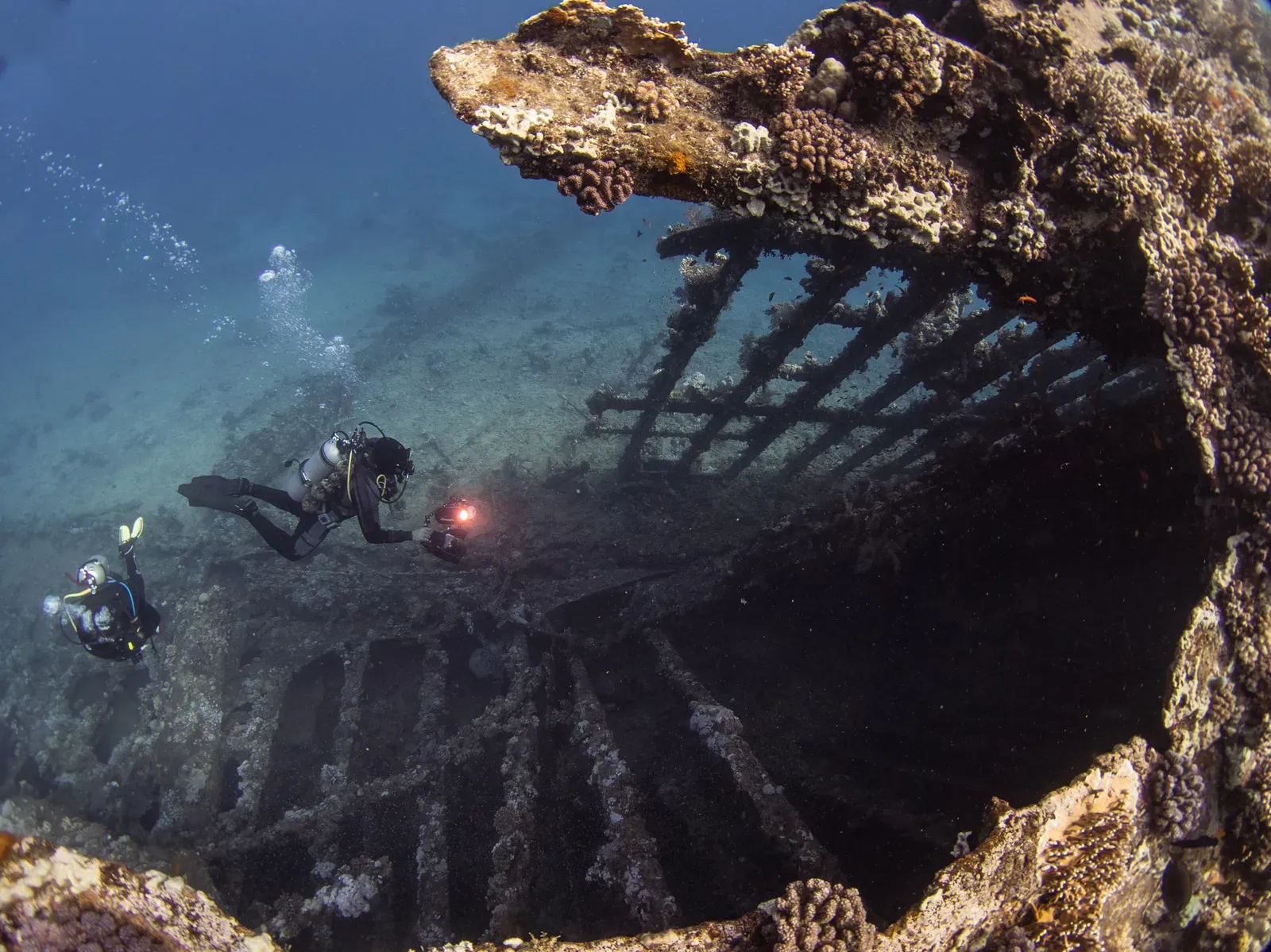
The Yamato was the largest battleship ever built, and its sinking in April 1945 during a desperate one-way mission to Okinawa remains one of the most dramatic episodes of the Pacific War. Found in 1985 resting in the East China Sea at a few hundred meters depth, the wreck presents a different kind of inaccessibility than most: structural collapse.
The ship broke into two major pieces after a catastrophic magazine explosion during its sinking, and decades underwater have left the remaining structure so fragile that extensive exploration risks causing further collapse. Divers and remote vehicles that have visited the site describe a wreck that is less a ship and more a debris field of twisted steel, some sections unrecognizable. The Yamato wasn’t protected by depth so much as by the reality that getting too close now means destroying what little remains. Its sister ship suffered an even stranger fate.
#9 – The Sister Ship Lost in a Thousand Pieces
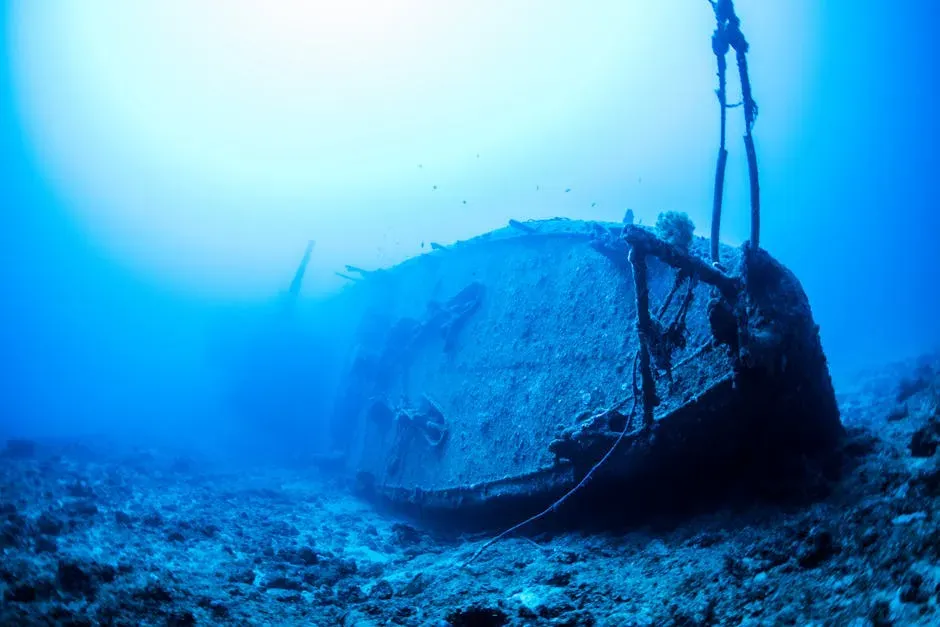
The Musashi, sister ship to the Yamato, sank in October 1944 in the Sibuyan Sea after relentless American air attacks during the Battle of Leyte Gulf. It wasn’t located until 2015, when an expedition backed by Paul Allen’s exploration team finally found the wreck scattered across the seafloor at depths exceeding a kilometer.
What makes the Musashi’s survival story unusual is how thoroughly it was destroyed before it even finished sinking. The ship absorbed such catastrophic damage that it broke into numerous separate sections, some of which tumbled independently down a steep underwater slope before settling. No single “wreck site” exists – instead, a scattered debris field spans a wide stretch of ocean floor, making comprehensive exploration a multi-year undertaking even with modern robotic submersibles. The depth kept it hidden for seven decades; the scattering keeps it from ever being fully mapped. Ice did the same job for two ships halfway around the world.
#10 – The Arctic Ships Frozen Out of Reach for 170 Years
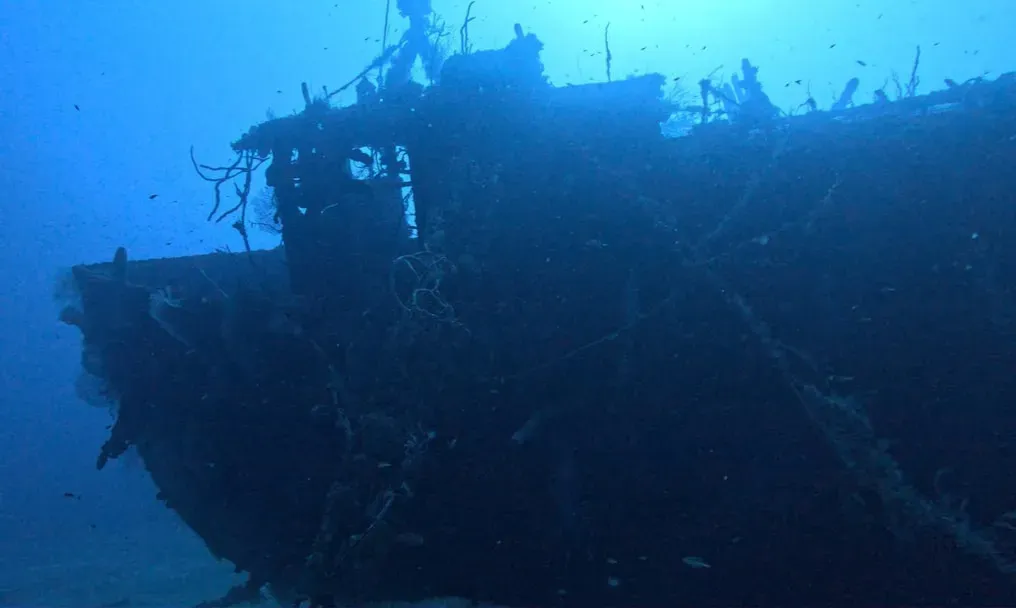
HMS Erebus and HMS Terror vanished in the Canadian Arctic in 1845 during Sir John Franklin’s doomed expedition to find the Northwest Passage, and their disappearance became one of history’s most enduring maritime mysteries. Search expeditions failed for over 160 years, defeated again and again by pack ice, brutal cold, and some of the most remote waters on the planet.
The Terror was finally located in 2016, the Erebus in 2014, both found only after Inuit oral histories – long dismissed by earlier searchers – pointed investigators toward the correct locations. The Arctic’s shifting ice made large stretches of the search area unreachable for months at a time each year, and satellite and sonar technology capable of scanning under ice didn’t exist for most of the search’s history. Cold, remoteness, and a century and a half of failed assumptions kept both ships hidden until modern tools and Indigenous knowledge finally converged.
Worth Knowing
- Both ships vanished in 1845 while searching for the Northwest Passage
- Organized search efforts failed for more than 160 years straight
- Erebus surfaced first, in 2014; Terror followed two years later, in 2016
- Inuit oral histories, dismissed for generations, ultimately led searchers to both sites
The next wreck didn’t need ice or distance – it just needed to be deadly.
#11 – The Liner Nicknamed the “Everest of Diving”
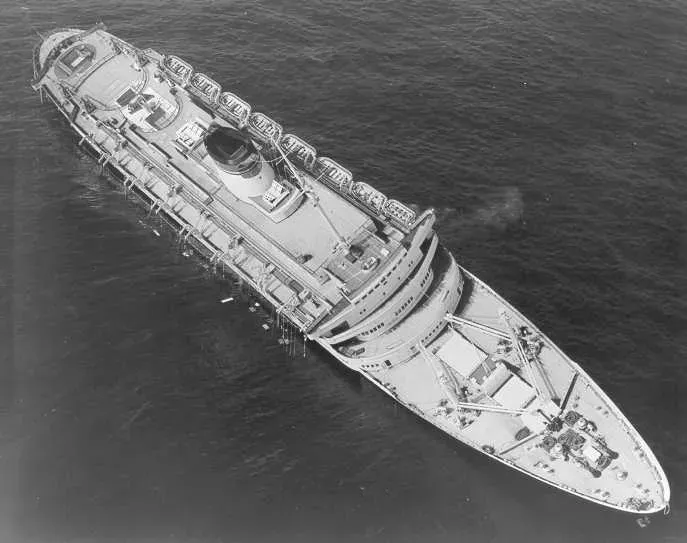
The Andrea Doria sank off Nantucket in July 1956 after colliding with the Stockholm, and while its resting depth of roughly 240 feet sounds almost casual compared to other wrecks on this list, it has proven just as deadly to reach. It’s been nicknamed the “Mount Everest of Wreck Diving” because of the technical skill required, and by the early 21st century, more than 15 divers had been killed exploring it.
The danger isn’t depth alone – it’s everything surrounding it. The water on the bottom stays a bone-chilling 4-7 degrees Celsius year-round, visibility is unpredictable, and the wreck lies near the Nantucket Shoals, an area notorious for cross-currents moving in different directions at different depths. Sitting roughly 50 miles offshore near the edge of the continental shelf only compounds the danger, since help is far away and currents run stronger there. This is the rare wreck that isn’t hard to locate – it’s hard to survive visiting, which is exactly why so much of it remains undisturbed compared to shallower, calmer wrecks.
At a Glance
- Lies 240 feet deep in the Atlantic Ocean off Nantucket
- Nicknamed the “Mount Everest of Wreck Diving” because of the technical skills required
- The 1956 collision and sinking resulted in the deaths of 51 people
- Has claimed the lives of at least 18 scuba divers since then
The next entry was protected by an entire ocean that seemed to hate the idea of being explored.
#12 – Shackleton’s Ship, Preserved by “the Worst Sea in the World”
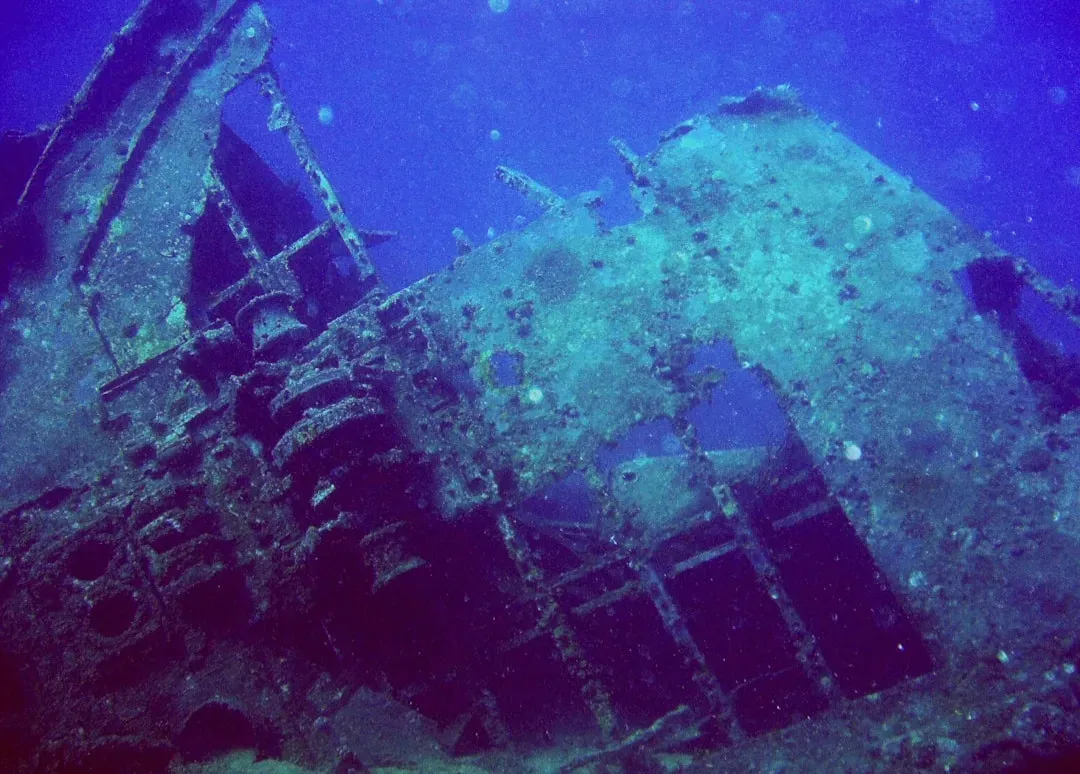
The Endurance sank in Antarctica’s Weddell Sea in November 1915 after being slowly crushed by pack ice, stranding Ernest Shackleton’s crew on the ice for months in one of history’s great survival stories. The ship itself then disappeared for 106 years, defeating every search attempt in one of the most hostile stretches of ocean on Earth.
This is the worst portion of the worst sea in the world.
Ernest Shackleton
The explorers who eventually found it described a swirling current that sustains a mass of thick sea ice capable of challenging even modern icebreakers. When the Endurance22 expedition finally succeeded in 2022, they found the wreck at roughly 3,000 meters depth in rare favorable ice conditions – locating it had been considered nearly impossible. Its remarkable preservation is largely thanks to the absence of wood-eating parasites in the frigid Weddell Sea. A century of failed expeditions wasn’t bad luck – it was the sea itself refusing to cooperate. But nothing on this list is harder to reach than what comes next.
#13 – The Deepest Shipwreck Ever Found on Earth
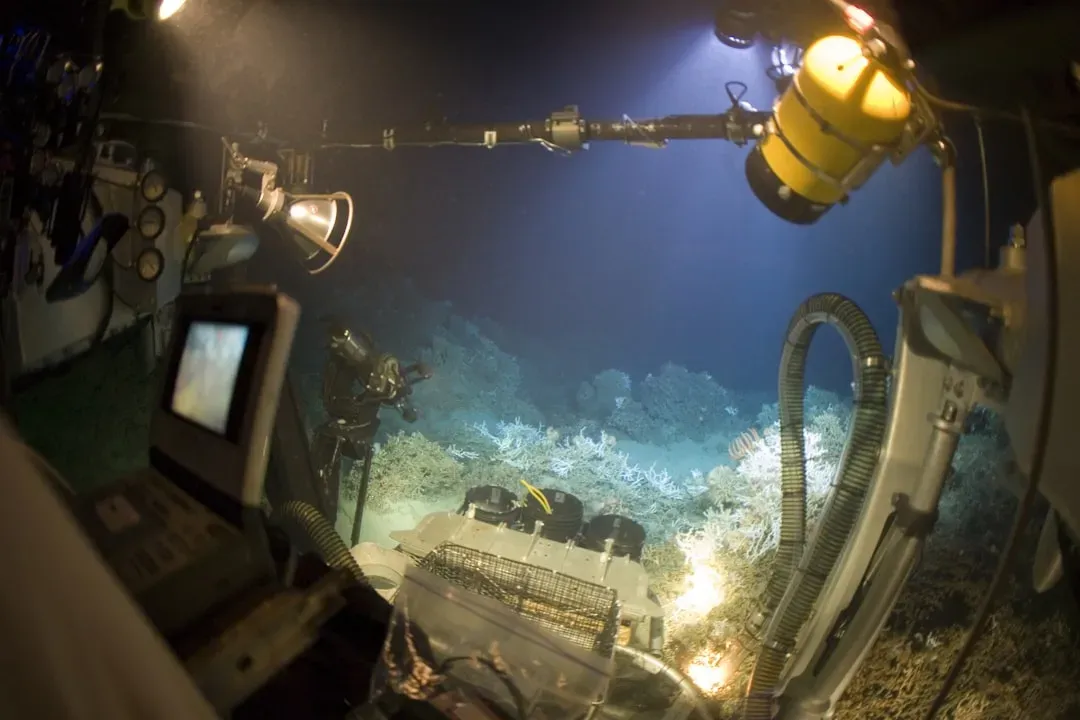
The USS Johnston sank on October 25, 1944, during the Battle off Samar, after a Fletcher-class destroyer crew made one of the most audacious last stands in naval history against an overwhelming Japanese fleet. For 77 years, nobody knew exactly where the wreck rested – and when they finally found out, the answer explained everything.
In late March 2021, explorer Victor Vescovo confirmed the location of – and dived on – the world’s deepest shipwreck, discovered at a depth of 6,456 meters. With its gun turrets and torpedo racks still intact, the destroyer was found in the Philippine Trench near Samar Island, over four miles down in a trench that plunges beyond 10 kilometers at its deepest point. No diver, no ordinary submarine, and no salvage crew could ever have reached this wreck – only a specialized crewed submersible engineered specifically to survive crushing deep-trench pressure finally made it possible.
The Bottom Line
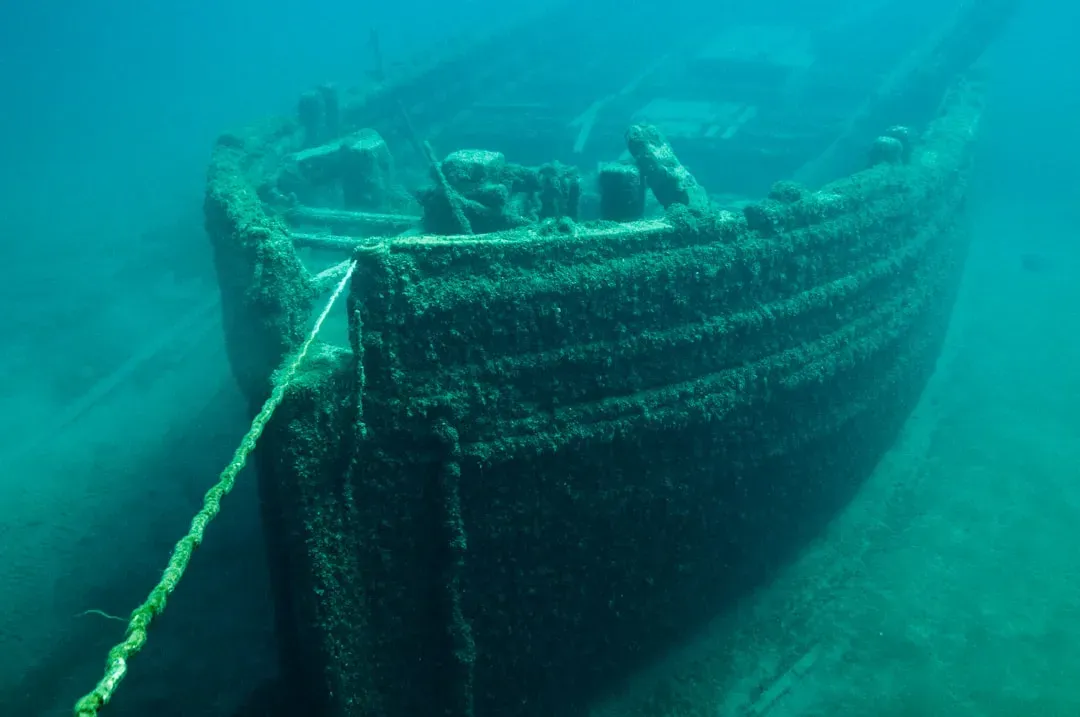
Here’s the uncomfortable truth: almost none of these ships survived because anyone chose to protect them. They survived by accident – swallowed by trenches deeper than mountains are tall, locked behind Antarctic ice that broke expeditions for a century, or shielded by international law only after mass tragedy forced governments to act.
The wrecks we call “well-preserved” are really just the ones ocean technology hadn’t caught up to yet. Depth, ice, legal gridlock, and lethal currents did more to protect maritime history than any museum or preservation society ever could.
As deep-sea submersibles get better every single year, that accidental protection is running out fast. Which of these wrecks do you think should stay untouched forever – and which one do you think we should be racing to explore before it’s gone? Drop your take in the comments.