Articles for tag: Astronomy, Cosmic Expansion, cosmology, Expanding Universe, Space Science

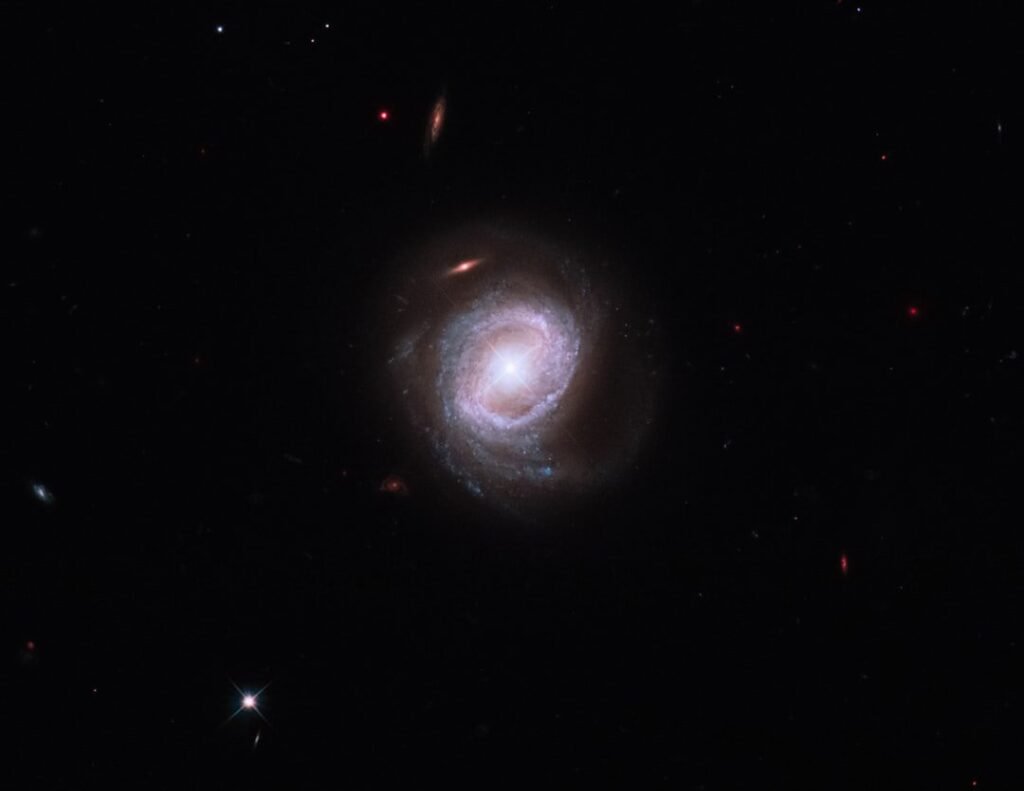
a very large spiral shaped object in the sky

15 Incredible Facts About the Expanding Universe That Will Leave You Awestruck

Suhail Ahmed

Every night sky looks calm, but it’s anything but. The universe is stretching, gently and relentlessly, turning yesterday’s constellations into a wider, thinner tapestry. Scientists have chased this mystery across a century, building clever tools to measure a cosmos that refuses to sit still. The surprise isn’t just that space expands; it’s that the more ...

A close up of a planet with stars in the background

Could Rogue Planets Be More Common Than Stars?

Suhail Ahmed

They slip through the dark like unregistered ships, drifting far from the glow of any sun. Astronomers call them rogue planets – worlds without a home star – and a provocative question has burst back into the spotlight: could there be more of these wanderers than stars in our galaxy. The mystery is sharpened by ...

moon

The Gravity of the Situation: Why You Weigh Less on the Moon

Suhail Ahmed

Step onto the Moon and the scale plays a delightful trick: your weight plummets, your steps feel springy, and suddenly the body you know behaves like it’s learning a new dance. Behind that thrill is a story of mass, distance, and the quiet pull of worlds – nothing mystical, just the universe’s rules applied in ...

Why the James Webb Telescope Sees the Past

Suhail Ahmed

Light takes time to travel, and that simple truth turns the James Webb Space Telescope into a time machine. When Webb opens its golden eye, it doesn’t just catch distant starlight – it intercepts messages that left their sources when Earth was still cosmic dust. In newsroom terms, every image is a breaking story filed ...

591 Binary Stars Could Reveal Dozens of New Exoplanets, Scientists Say

Suhail Ahmed

Binary stars can be chaotic places for planets, and for years that chaos pushed many searches toward calmer, single suns. Now a team has flipped the script. By singling out 591 “edge-on” twin-star systems identified with Gaia data, researchers argue that these complicated neighborhoods may actually be the easiest places to find new worlds. Their ...

Close-up of a gloved hand holding a bacteria culture in a petri dish for laboratory analysis.

What If Life Had Evolved to Breathe Something Other Than Oxygen?

Suhail Ahmed

We treat oxygen like the star of biology, but for most of Earth’s history it was barely a cameo. Long before forests greened the continents, microbes thrived by shuttling electrons into minerals, acids, and salts that would sound more at home in a chemistry set than a lung. Today, as we scan other worlds, a ...

A close up of a planet with stars in the background

Could Humans Live on Another Planet? What the Science Says

Suhail Ahmed

It’s one of the most audacious questions of our time: not just whether we can go, but whether we can stay. The difference between a flag-planting visit and a permanent foothold is the difference between a camping trip and building a town. Scientists are now testing hardware, biology, and human limits in a coordinated push ...

Detailed image of the sun showcasing its fiery surface and glowing edges.

How Far Are We from the Sun? A Look at 149,597,870.7 km

Suhail Ahmed

It sounds simple: measure the gap between our blue world and the star that keeps it alive. Yet the answer hides inside moving targets, rippling heat, and a clock that never ticks at a constant pace. Scientists pin the average distance near one astronomical unit, a tidy figure that anchors spaceflight, climate science, and our ...