Articles for tag: astrophysics, Consciousness, cosmic intelligence, cosmology, panpsychism, Quantum Physics, scientific philosophy, Space Science, theoretical physics, universe theory

Could the Universe Be Conscious? Scientists Are Starting to Ask

Could the Universe Be Conscious? Scientists Are Starting to Ask

Gargi Chakravorty

When you look up at the stars tonight, you might be gazing into the cosmos with more than just your eyes. You could be one tiny piece of a vast, thinking universe staring back at itself through you. This isn’t some new-age fantasy or science fiction plot. It’s a hypothesis that serious scientists and philosophers ...

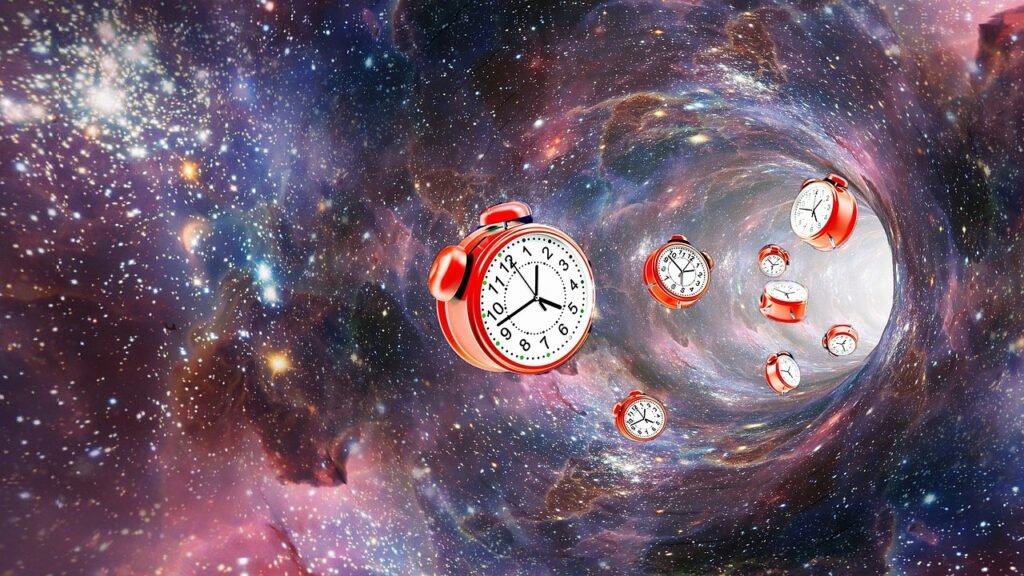
Why Time Might Not Exist the Way We Think It Does

Why Time Might Not Exist the Way We Think It Does

Jan Otte

Picture yourself sitting in a coffee shop, watching the steam rise from your cup, hearing conversations blend into the rhythmic tick of a wall clock. Everything feels so solid, so connected by time’s steady flow. Yet, what if I told you that this entire experience might be built on an elaborate illusion? What if time ...

Scientists Think the Universe Has a Mirror Twin

Scientists Think the Universe Has a Mirror Twin

Jan Otte

Ever looked into a mirror and wondered about the world on the other side? What if that world wasn’t just a reflection but an entire universe running backwards through time? This strange idea isn’t from science fiction anymore. It’s becoming one of the most fascinating theories in modern cosmology, challenging everything we thought we knew ...

The Cold Spot Mystery Deepens

Oldest Light in the Universe Is Changing

Gargi Chakravorty

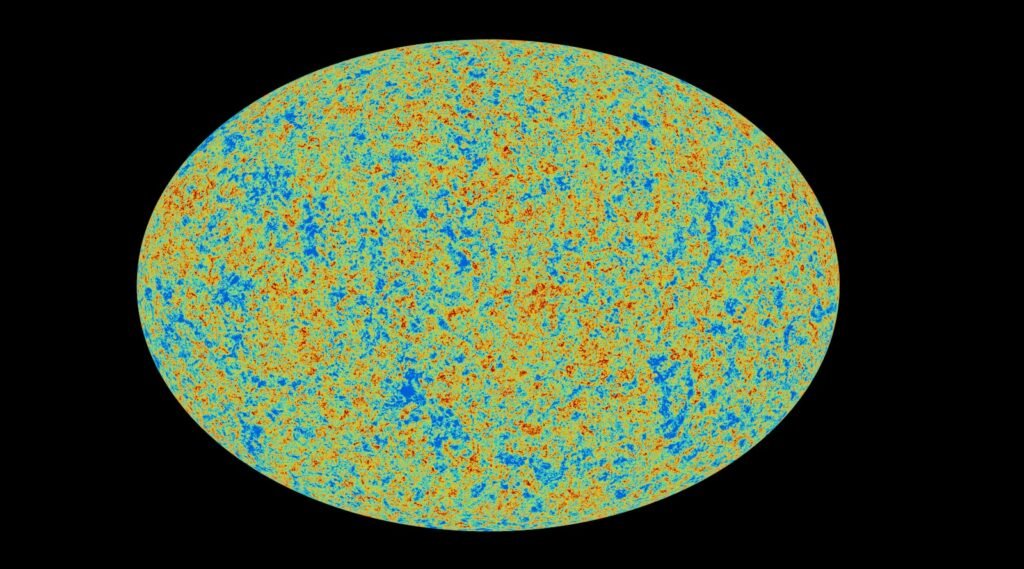
The cosmic microwave background represents the earliest visible light in our universe, a fading echo from when the cosmos was just a child. For decades, scientists viewed this ancient radiation as a stable cosmic record. Yet recent observations are revealing something startling: this primordial light in ways we never expected. Picture the universe as it ...

Implications for Cosmic Evolution and Life

The First Stars in the Universe May Have Been Colder Than We Thought

Jan Otte

The universe’s most ancient stars have held their secrets for over 13 billion years, but recent research is forcing astronomers to completely rethink what those earliest celestial beacons were actually like. For decades, scientists believed these primordial giants were uniformly massive monsters that burned bright and died young. Now, cutting-edge computer simulations and unexpected molecular ...

The Next Decade: When We Might Finally Solve the Mystery

The Dark Energy Puzzle That Defies Physics

Gargi Chakravorty

Imagine a mysterious force making up approximately 68% of everything that exists, yet remaining completely invisible and impossible to directly detect. This isn’t science fiction – it’s one of the greatest puzzles in modern physics, a cosmic enigma that’s keeping scientists awake at night and challenging everything we thought we knew about the universe. Dark ...

a very large spiral shaped object in the sky

15 Incredible Facts About the Expanding Universe That Will Leave You Awestruck

Suhail Ahmed

Every night sky looks calm, but it’s anything but. The universe is stretching, gently and relentlessly, turning yesterday’s constellations into a wider, thinner tapestry. Scientists have chased this mystery across a century, building clever tools to measure a cosmos that refuses to sit still. The surprise isn’t just that space expands; it’s that the more ...

timelapse photography of fire

Why Black Holes Might Be the Key to New Universes

Suhail Ahmed

They start as quiet monsters, swallowing light and time, and end as the most honest questions in physics. For decades, black holes were places where our equations went to hide; now they’re where we go looking for answers. New observations of early, oversized black holes and crisp gravitational-wave signals have forced scientists to rethink what ...

The ominous Chamaeleon I dark cloud, the nearest star-forming region to Earth, is captured in this image taken with the 570-megapixel Department of Energy-fabricated Dark Energy Camera mounted on the U.S. National Science Foundation Víctor M. Blanco 4-meter Telescope at Cerro Tololo Inter-American Observatory, a Program of NSF NOIRLab. Chamaeleon I is one portion of the larger Chamaeleon Complex and is home to three reflection nebulae that are brightly illuminated by nearby newly formed stars.

Chamaeleon I: Where New Stars Light Up Cosmic Darkness

Jan Otte

Behind clouds of interstellar dust, a cosmic drama is playing out deep in the southern constellation of Chamaeleon. The Chamaeleon I dark cloud is one of the closest places to Earth where stars are born. It is only 550 light-years away. In this “stellar nursery,” newborn stars break through the darkness and light up huge ...