Articles for tag: ArtificialIntelligence, FutureOfAI, MachineLearning, MathAndAI, ScienceNews

a robot holding a gun next to a pile of rolls of toilet paper

AI Outsmarts World’s Top Mathematicians at Secret California Summit

Suhail Ahmed

Whispers of a closed-door demo in coastal California set the mood: a handful of elite mathematicians, a whiteboard full of Olympiad-grade problems, and an AI that refused to blink. Whether or not cameras were rolling, the verified signal came from elsewhere: artificial intelligence appears poised to cross a line many thought would hold for years. ...

human anatomy model

Our Digital Afterlife: Uploading Consciousness?

Suhail Ahmed

  In server rooms humming quietly beneath cities and in brain labs lit by the cold glow of MRI scanners, a question that once belonged to science fiction is edging toward serious scientific debate: could we ever upload a human mind? The idea sits at the collision point of neuroscience, computer science, philosophy, and raw ...

a crack in the asphalt of a road

Could AI Predict Earth’s Next Big Quake?

Suhail Ahmed

  The ground almost always moves before it breaks, but for more than a century seismologists have struggled to decode those early whispers. Entire cities still live with a kind of geological roulette, knowing a devastating quake will come but not when, and not how bad. Now, a new set of tools is joining the ...

an abstract image of a sphere with dots and lines

10 Ways Artificial Intelligence is Reshaping Our World

Suhail Ahmed

  Artificial intelligence has slipped into our lives so quietly that many of us only notice it when something goes spectacularly wrong – or astonishingly right. In just a decade, systems that once struggled to recognize a cat in a photo now help design drugs, steer cars, and even draft laws. For scientists, AI is ...

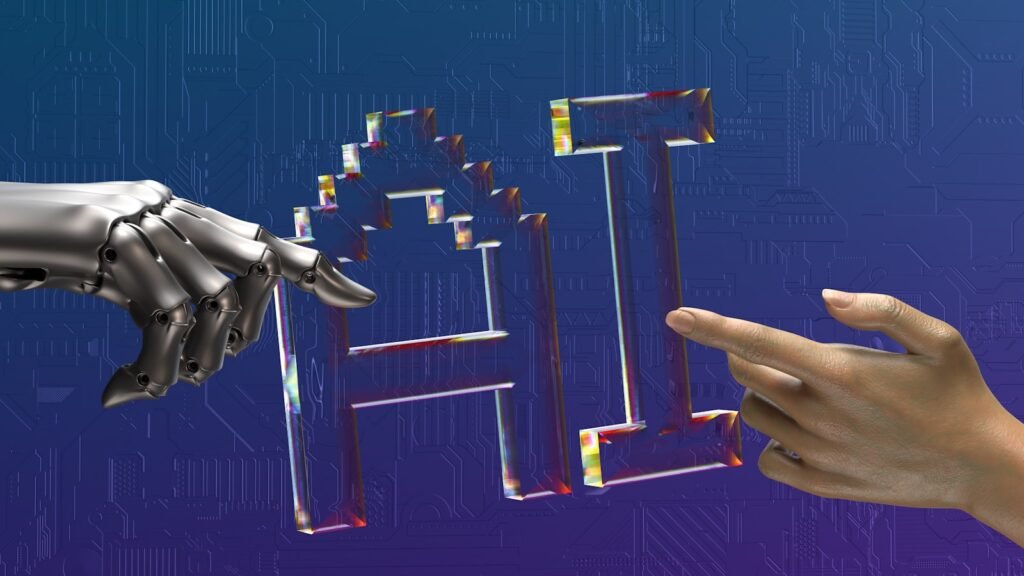
two hands touching each other in front of a blue background

How AI Is Quietly Eroding Human Memory and Critical Thinking

Suhail Ahmed

  Not so long ago, forgetting a fact meant either living without it or working to recall it; now, it means glancing at your phone or asking a chatbot. In classrooms, offices, and even around the dinner table, artificial intelligence is increasingly becoming the first – and sometimes only – source of answers. This shift ...

round clear glass on white paper

Could AI Discover Brand-New Elements Beyond the Periodic Table?

Suhail Ahmed

Every generation inherits a scientific boundary that dares us to push farther, and today that edge glows at the bottom row of the periodic table. Superheavy elements flicker into existence for heartbeats, then vanish, leaving cryptic decay trails like footprints in fresh snow. The mystery is simple to state yet wildly hard to solve: how ...
man wears black frame eyeglasses

The First AI Scientist Just Made a Discovery No Human Could

Suhail Ahmed

In a dim, robotic lab, a new kind of scientist is quietly changing the rules. The prototype doesn’t wear goggles or pull night shifts; it runs on models, code, and manipulators that don’t get bored or blink. Its latest feat isn’t a single eureka moment but a cascade: dozens of brand‑new crystalline materials made in ...

a person's head with a circuit board in front of it

Could AI Create a New Species From Scratch?

Suhail Ahmed

Speculative? Absolutely. But the question is no longer pure science fiction. In labs across the world, algorithms are proposing new proteins, guiding genome edits, and nudging cells to behave in ways nature never tried. The mystery is whether these tools can ever cross the line from redesigning life to inventing it – producing living, reproducing ...

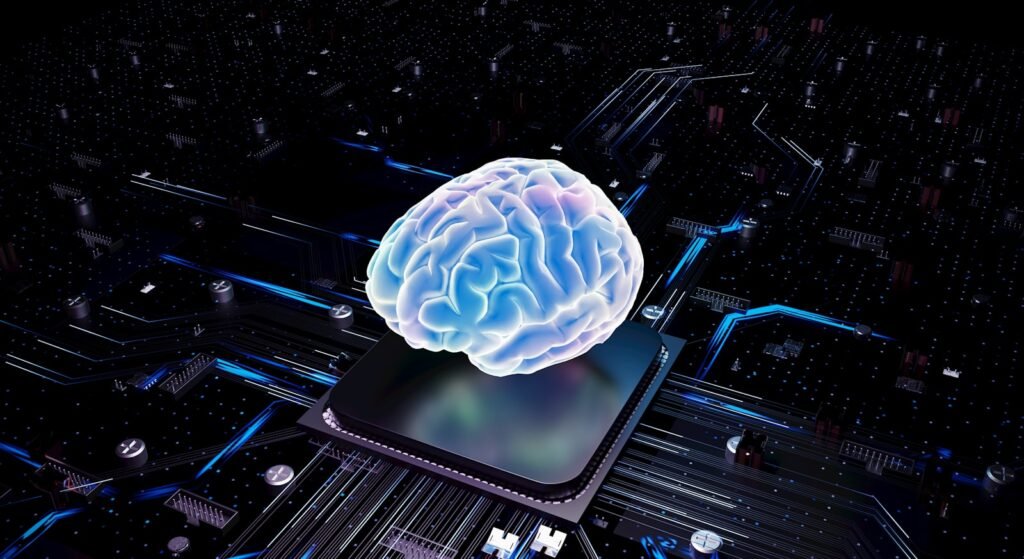
A brain over cpu represents artificial intelligence.

Why Artificial Intelligence Is Learning to Dream

Suhail Ahmed

Some of the most intriguing advances in AI aren’t happening while systems are “awake.” They unfold off the clock, inside models that conjure make‑believe worlds and rehearse what might happen next. This isn’t sci‑fi flourish; it’s a practical response to hard problems like scarce data, expensive robots, and brittle algorithms that forget what they learned ...