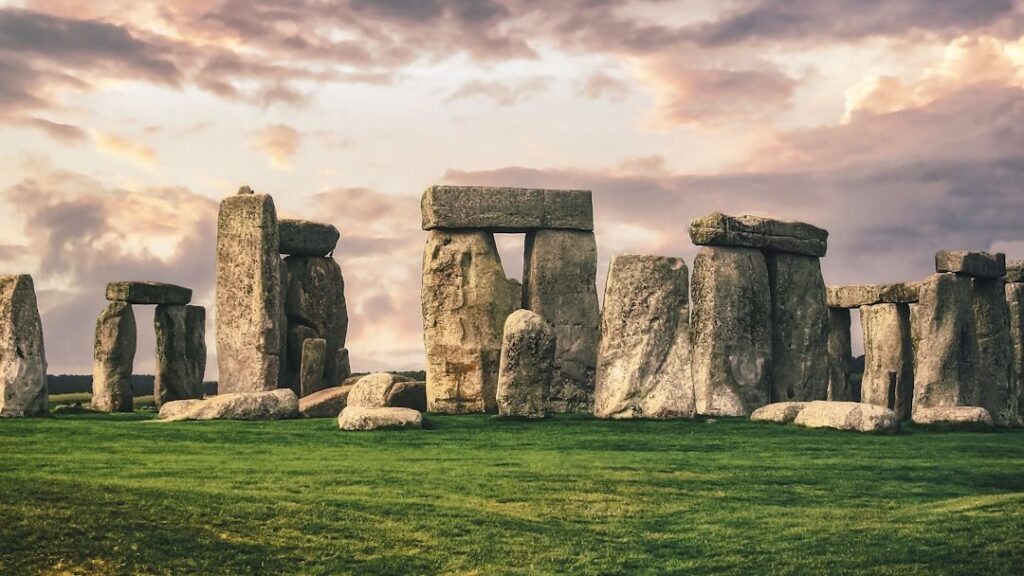

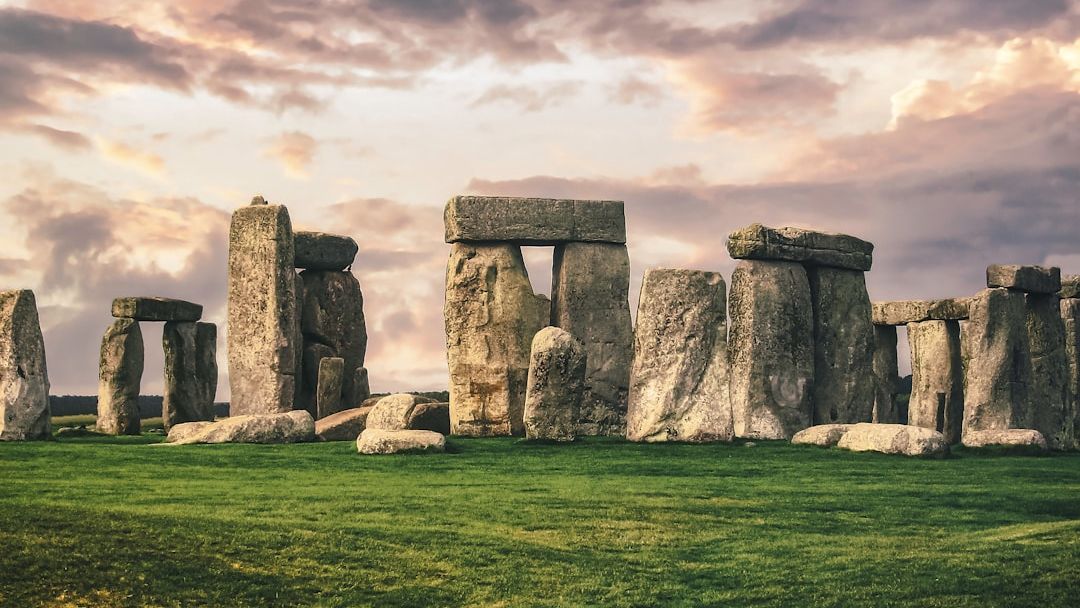
How Did Stonehenge’s Altar Stone Arrive at Salisbury Plain? – Image for illustrative purposes only (Image credits: Unsplash)
Recent research has traced one of Stonehenge’s most distinctive stones back to northeast Scotland, underscoring the scale of coordination required by Neolithic communities more than 4,000 years ago. The findings shift attention from local sourcing to long-distance movement across Britain, revealing connections that once seemed improbable. Such efforts speak to organized labor, route knowledge, and cultural priorities that extended far beyond any single monument.
Tracing the Stone’s Origin
Geological analysis now places the Altar Stone firmly in the northeast of Scotland rather than closer Welsh or southern English quarries previously considered. This identification rests on distinctive mineral signatures that match outcrops hundreds of miles from Salisbury Plain. The distance involved immediately raises questions about how communities managed transport without modern roads or machinery.
Neolithic groups would have needed reliable knowledge of terrain, seasonal conditions, and group logistics to move a stone weighing several tons. The study frames this as evidence of sustained contact between distant regions, not isolated local projects.
Logistical Demands of the Move
Moving the Altar Stone required planning that likely spanned years. Routes would have combined overland sledges or rollers with possible river or coastal segments to reduce friction and effort. Each stage demanded teams of people, temporary camps, and supplies, turning the journey into a multi-community undertaking.
Weather, river levels, and terrain obstacles would have added uncertainty at every turn. Success depended on accumulated experience passed across generations, suggesting that such projects formed part of broader social and ceremonial calendars.
What the Research Leaves Open
While the source region is now clearer, the precise path and methods remain under discussion. No single route has been confirmed on the ground, and scholars continue to weigh the relative roles of land versus water transport. Further fieldwork and modeling are expected to narrow the possibilities.
The study also notes that motive and meaning stay interpretive. The decision to bring a distant stone to Stonehenge may reflect alliance-building, prestige, or shared ritual needs, yet direct evidence for any single explanation is still limited.
Broader View of Neolithic Britain
The Altar Stone’s journey adds to a growing picture of interconnected societies across the British Isles during the late Neolithic. Similar long-distance movements of materials appear at other monuments, pointing to networks that exchanged goods, ideas, and labor. These links challenge older assumptions of largely self-contained regional groups.
Understanding these movements helps modern observers appreciate the organizational capacity of people who left no written records. The effort invested in the Altar Stone stands as one concrete measure of that capacity, even as many details of daily life and decision-making stay out of reach.
Jan loves Wildlife and Animals and is one of the founders of Animals Around The Globe. He holds an MSc in Finance & Economics and is a passionate PADI Open Water Diver. His favorite animals are Mountain Gorillas, Tigers, and Great White Sharks. He lived in South Africa, Germany, the USA, Ireland, Italy, China, and Australia. Before AATG, Jan worked for Google, Axel Springer, BMW and others.