
You are living in a strange scientific moment. For more than a century, physicists have told you that at the deepest level reality is quantum, while neuroscientists have tried to explain your rich inner life with firing neurons and electrical spikes. Now, those two worlds are beginning to overlap in serious, structured ways. Consciousness researchers and quantum physicists are co‑authoring papers, building joint experiments, and arguing over equations that try to capture what it actually feels like to be you. You might expect this to lead straight to wild claims and instant answers about souls, multiverses, and mystical oneness. Instead, what you are seeing is something slower, more careful, and in some ways more exciting: a genuine attempt to turn some of the biggest questions about mind and reality into testable science. The results are early, controversial, and sometimes speculative – but they are real, they are on the arXiv and in peer‑reviewed journals, and they are reshaping how you can think about your own awareness.
You Now Have Quantum Theories That Treat Your Awareness As A Real Physical Process
If you have ever felt that your conscious experience should count for something in physics – that it cannot just be a meaningless side effect – you are not alone. A growing group of researchers is trying to build theories where consciousness is not an afterthought but a genuine ingredient of the physical story. In these models, your awareness is not magic, but it also is not dismissed as an illusion; it is treated as a physical process that should, in principle, show up in equations and experiments. One prominent example is the orchestrated objective reduction framework, which proposes that quantum processes inside your brain’s microtubules contribute directly to conscious moments. Other researchers are building quantum‑friendly versions of information‑based theories of consciousness, exploring how integrated information might look when it is carried by qubits instead of classical bits. You are not being asked to just believe this; the goal is to make predictions that can be checked in the lab, even if the work is right at the edge of what current technology can do. ([pubmed.ncbi.nlm.nih.gov](https://pubmed.ncbi.nlm.nih.gov/33232193/?utm_source=openai))
You See Neuroscientists And Quantum Physicists Co‑Designing Experiments Instead Of Arguing From Afar
For years, the relationship between neuroscience and quantum physics was mostly long‑distance: neuroscientists mapped brain activity, while quantum theorists wrote speculative papers from the sidelines. Now you are watching a different pattern emerge, where cross‑disciplinary teams actually sit down and design experiments together. They ask very concrete questions, like whether you can detect signatures of quantum coherence in neural structures, and how those signatures might line up with changes in consciousness under anesthesia or brain injury. ([frontiersin.org](https://www.frontiersin.org/journals/neuroscience/articles/10.3389/fnins.2024.1430432/full?utm_source=openai)) This shift matters for you because it moves the discussion from philosophy to measurable effects. Instead of arguing endlessly about whether consciousness “could” be quantum, researchers are asking what pattern of results you should see in magnetometry, spectroscopy, or brain‑imaging data if certain quantum‑based models are right. That means that, over time, some of these theories can be strengthened, modified, or ruled out, giving you a clearer sense of which ideas about your own mind are worth taking seriously. ([frontiersin.org](https://www.frontiersin.org/journals/neuroscience/articles/10.3389/fnins.2024.1430432/full?utm_source=openai))
You Get New Hybrid Models That Marry Quantum Ideas With Established Brain Theories
If you have heard of debates between different consciousness theories – like global workspace models versus integrated information approaches – you might assume that adding quantum physics just makes the fight messier. Surprisingly, some of the newest work is trying to do the opposite: build hybrid models that combine quantum dynamics with the best of classical neuroscience. Instead of asking you to choose between a “quantum brain” and “standard” neural networks, these models treat the brain as a layered system where quantum and classical processes interact at different scales. ([pubmed.ncbi.nlm.nih.gov](https://pubmed.ncbi.nlm.nih.gov/39022924/?utm_source=openai)) In practice, that can mean describing how quantum coherence could influence timing, sensitivity, or synchronization in neural circuits that existing theories already care about. You end up with architectures that plug quantum elements into frameworks like global neuronal workspace or integrated information, then spit out concrete, testable predictions. For you, the big takeaway is that the frontier is no longer “everything you know is wrong”; it is more like “some of what you know might be incomplete, and here is how we might extend it without throwing away decades of data.” ([arxiv.org](https://arxiv.org/abs/1806.01421?utm_source=openai))
You Watch Quantum Information Science Reframe What It Means For You To Be A Subject
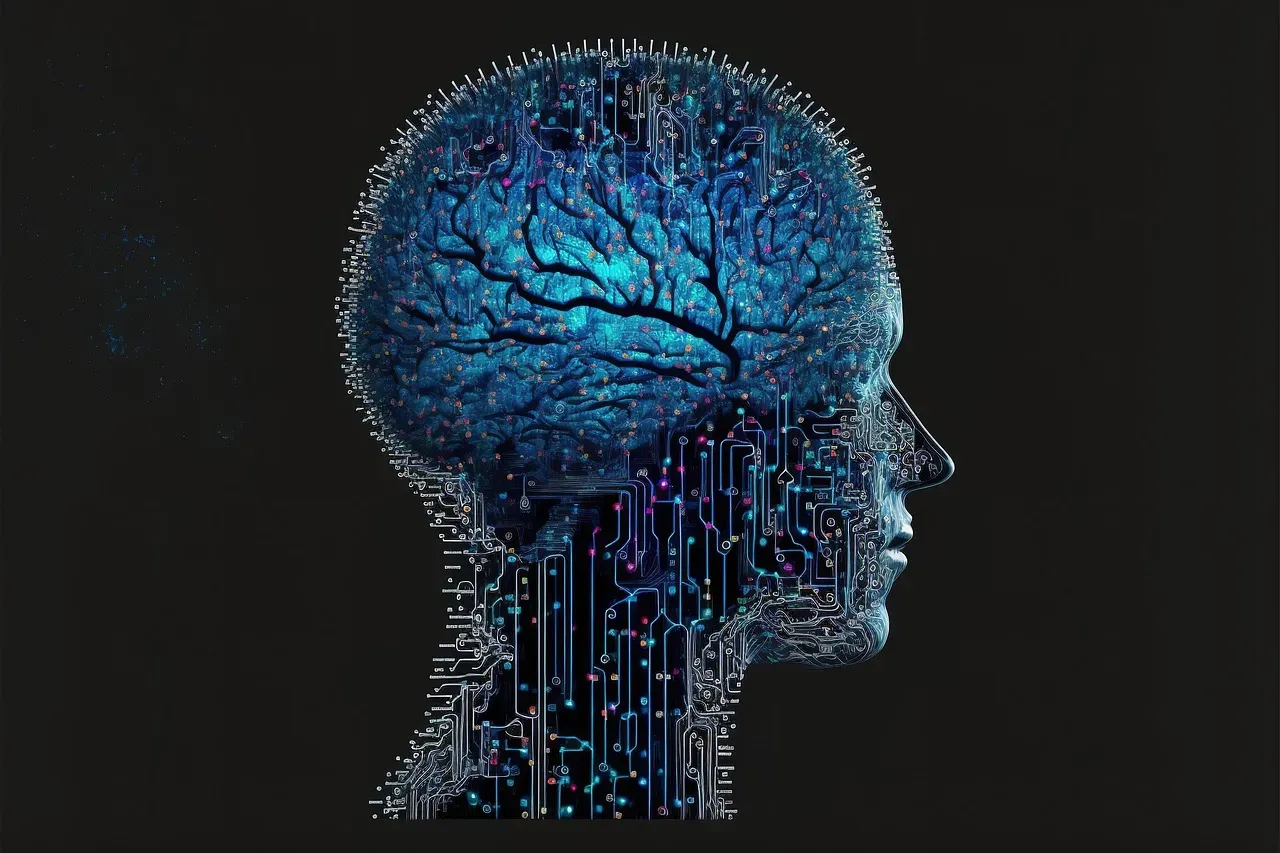
When you hear about quantum physics, you probably think of particles, waves, and uncertainty. The newer twist is quantum information science: treating the universe as a place where information is processed in profoundly non‑classical ways. Consciousness researchers are now using that toolbox to think about your experience not just as “stuff happening in a brain” but as patterns of causally structured information that might have both classical and quantum aspects. ([arxiv.org](https://arxiv.org/abs/2501.03241?utm_source=openai)) That might sound abstract, but it changes simple questions you care about, like what it means for you to be the same person over time, or what it means for a system to “have a point of view.” Measures of integrated information, synergy, and causal structure are being generalized to quantum systems, then compared to what is actually seen in brain networks during wakefulness, dreaming, and anesthesia. In this view, your conscious self is not a ghost in the machine; it is the way information is woven together across levels of your brain and body, possibly including quantum‑level details that standard models ignore. ([pubmed.ncbi.nlm.nih.gov](https://pubmed.ncbi.nlm.nih.gov/39022924/?utm_source=openai))
You See Controversial Ideas Become More Falsifiable And Less Hand‑Wavy
If you are skeptical about quantum consciousness, you have good reasons. Many early proposals were heavy on metaphors and light on clear tests, and some were used to justify pretty wild spiritual claims. The newer collaborations do not magically fix all of that, but they are forcing even the most speculative ideas to face sharper constraints. The more consciousness scientists and quantum physicists work together, the more they spell out exactly which phenomena a theory has to explain and which experiments could, in principle, prove it wrong. ([pubmed.ncbi.nlm.nih.gov](https://pubmed.ncbi.nlm.nih.gov/33232193/?utm_source=openai)) That shift helps you separate science from wishful thinking. When a model claims that quantum coherence in certain brain structures lasts long enough to matter for your experience, experimentalists can estimate realistic coherence times, environmental noise, and measurement limits. If the numbers do not work out, the theory has to adapt or give way. Instead of mystical hand‑waving, you get a slower, more honest process: some ideas will shrink, some will be refined, and a few may survive as genuinely powerful ways to connect your subjective life with hard physics. ([frontiersin.org](https://www.frontiersin.org/journals/neuroscience/articles/10.3389/fnins.2024.1430432/full?utm_source=openai))
You Gain New Ways To Think About Time, Self, And The “Thickness” Of The Present
You know that time can feel stretchy: a minute in pain can feel longer than an hour in flow. Some of the latest collaborations are trying to link that psychological sense of time with the way quantum events unfold in physical spacetime. In these approaches, your conscious “now” is not just a thin instant but a structured process, possibly tied to how quantum states collapse or decohere in neural systems. The idea is not that you control physics with your mind, but that the rhythms of quantum events might shape the way you experience duration and sequence. ([researchgate.net](https://www.researchgate.net/publication/378848347_Unifying_Physical_and_Psychological_Time_through_ORCH-OR_Theory?utm_source=openai)) This matters for your everyday life more than it first appears. If conscious moments are anchored in specific physical processes with characteristic timescales, it might help explain why certain drugs, brain injuries, or meditation practices change how you feel time passing. It might also reshape how you think about continuity of self: not as a static object you carry around, but as a flow emerging from the constant updating of quantum‑influenced neural patterns. You do not need to buy every detail of these models to feel their impact; just knowing that scientists are taking your felt experience of time seriously, and tying it to physics, can shift how you see your own mind. ([researchgate.net](https://www.researchgate.net/publication/378848347_Unifying_Physical_and_Psychological_Time_through_ORCH-OR_Theory?utm_source=openai))
You Watch Philosophy, Mathematics, And Lab Data Start To Talk The Same Language

If you have followed consciousness debates at all, you have probably seen philosophers, neuroscientists, and physicists talking past one another. What is changing now is the rise of shared mathematical frameworks – like category theory and advanced information measures – that let people from different fields express their ideas in compatible ways. When you can translate between neural network dynamics, quantum state structures, and phenomenological descriptions without losing the core idea, the conversation gets much more productive. ([link.springer.com](https://link.springer.com/article/10.1007/s11229-024-04718-5?utm_source=openai)) For you, this shows up as theories that feel less like vague metaphors and more like concrete proposals that link three levels at once: what is going on in the brain, what is happening in the underlying physics, and what it feels like from the inside. The goal is not to flatten your lived experience into an equation, but to respect it enough to give it a precise, testable description. As that mathematical bridge gets stronger, you may find that long‑standing philosophical puzzles – about free will, identity, or the “hard problem” – start to look less like dead ends and more like difficult but approachable research questions. ([link.springer.com](https://link.springer.com/article/10.1007/s11229-024-04718-5?utm_source=openai))
Conclusion: What This Emerging Science Really Gives You
When you pull back from all the jargon, what do these collaborations actually give you right now? They do not yet hand you a single, definitive answer to what consciousness is, and they certainly do not solve every metaphysical puzzle. What they do give you is a more serious, disciplined way to connect your inner life with the deepest theories of matter and information, backed by equations, lab work, and open argument rather than slogans. That alone marks a big shift from where things stood even a decade ago. If you are curious, this is a good time to watch closely, because the field is still plastic enough that new ideas – and new data – can really change the story. You will probably see some dramatic claims fall apart under scrutiny, and you may also see quiet, technical advances unexpectedly reshape how you understand yourself. In the end, the most important product of this research might not be a final theory, but a new habit of taking your conscious experience seriously as part of nature. When you look around your own awareness right now, does it feel different knowing that physics is finally trying to meet you halfway?