
If you have ever wished you could rewind a bad day, you are going to love and hate this idea at the same time: some physicists seriously entertain the possibility that, somewhere in our universe, time might run the other way. Not in a science-fiction, push-a-button-and-go-back kind of sense, but as a deep feature of how the cosmos itself could be built. You are not just dealing with late trains and aging here; you are poking at the very rules that tell you what can happen next.
When you hear a phrase like “time moves backwards,” your first instinct is probably to imagine a movie playing in reverse: broken cups reassembling, smoke slipping back into a match, people growing younger. Reality is a lot subtler and far stranger. What scientists actually mean has less to do with Hollywood visuals and more to do with something called the arrow of time, a hidden direction built into the universe that tells you which way “forward” really is. To understand what it would even mean for that arrow to point the other way, you have to start with why it exists at all.
The Arrow Of Time: Why You Always Fall Forward, Never Back
Think about your day: you remember breakfast, but not tomorrow’s lunch; you can shatter a glass, but you never watch random molecules in the air spontaneously gather into a perfect wine glass on your table. You intuitively know which way time is flowing because there is a clear “before” and “after” in everything you experience. Physicists call this the arrow of time, and it is tied to something you deal with constantly without naming: the gradual slide from order into disorder, known as entropy.
In simple terms, entropy measures how messy or spread out things are. A neatly stacked pile of papers has low entropy; that same pile scattered across the floor has high entropy. The laws of thermodynamics tell you that in a closed system, entropy tends to increase, not decrease. That is why ice melts, hot coffee cools down, and memories get made in one direction only. Your sense that “time only goes forward” is really your brain tracking this one-way rise in entropy, like an internal arrow pointing from tidy beginnings toward chaotic endings.
Why The Laws Of Physics Barely Care About “Forward” Or “Backward”
Here is the first mind-bender: most of the fundamental equations that describe the universe do not actually prefer one time direction over the other. If you take many of the core equations of motion in physics and simply reverse the sign of time, they still make sense mathematically. That means, on paper, the universe could run in reverse and the equations would not complain. You might find this shocking because your everyday life feels violently one-way, but the math itself is oddly symmetric.
There are exceptions tied to certain rare processes in particle physics, but broadly, time symmetry is built into a lot of the deep-level rules. So your coffee cooling down rather than heating up on its own is not because the basic laws forbid the reverse; it is because the reverse is so wildly unlikely in a universe that started in a very special, low-entropy state. Once you realize that, you open the door to an unsettling possibility: if the arrow of time is about initial conditions and entropy rather than the laws themselves, then it might not point the same way everywhere.
The Big Bang And The Cosmic Trick Of A Low-Entropy Beginning
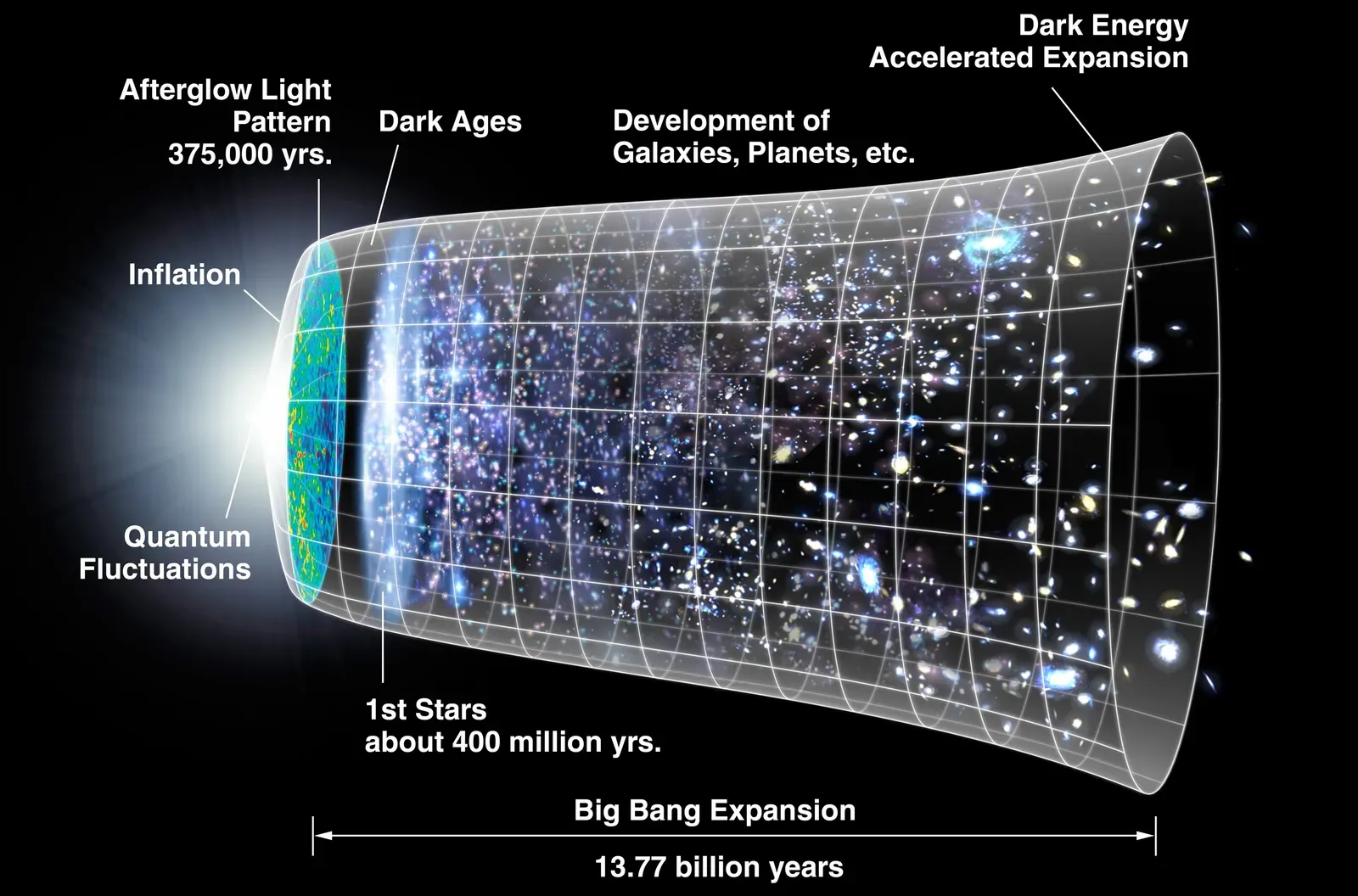
You might take it for granted that the universe began with the Big Bang, but what you probably have not been told clearly is how weird that beginning really was. If entropy tends to increase, then the universe must have started in an extremely low-entropy, highly ordered state. That is a bit like walking into a room full of shuffled decks of cards and finding exactly one deck perfectly ordered from ace to king in every suit. You would immediately suspect something deliberate or very special happened.
Cosmologists wrestle with this puzzle because it is the key to why you have a clear arrow of time at all. The early universe was incredibly hot and dense, yet, in a deep gravitational sense, bizarrely smooth and simple. That special starting point is why, as the universe expands and structures form, entropy can keep rising and give you a consistent direction from past to future. If you now imagine that the universe could have regions with different “starting conditions,” you start to see how somewhere else, the arrow might not line up with yours.
The Wild Idea Of A Mirror Universe Where Time Runs The Other Way
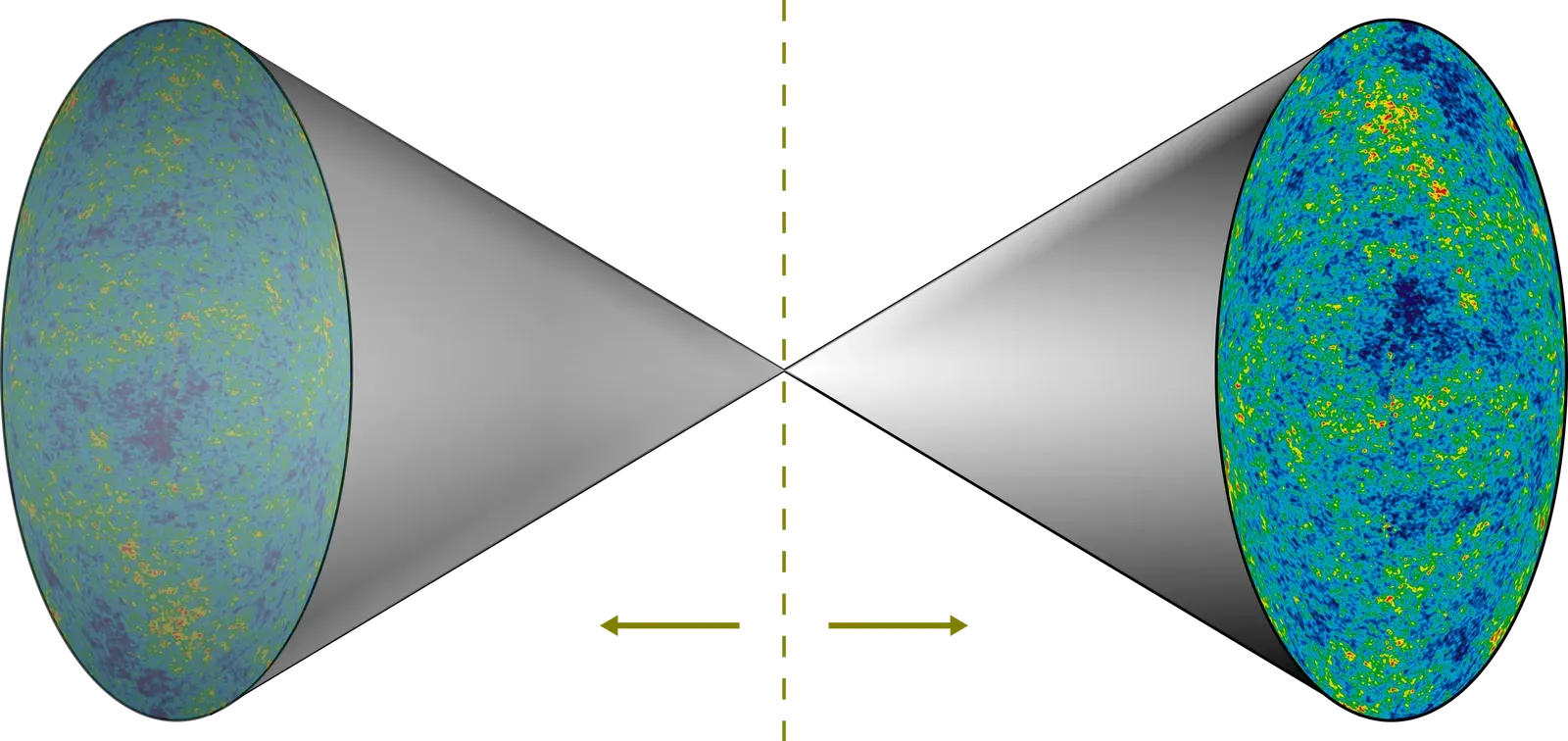
Here is where things get spicy. Some physicists have proposed that what you think of as the universe might be just one half of a larger, more symmetrical reality. In one popular speculation, the Big Bang does not just create your universe expanding forward in time; it also spawns a mirror universe expanding in the opposite time direction. From your point of view, that second universe would look like a place where time runs backwards, even though for the beings inside it, their time would feel perfectly normal, just like yours does to you.
In this kind of picture, you can think of the Big Bang as the middle of a cosmic movie, not the beginning. On one side of that middle, you have your universe with entropy increasing “forward.” On the other side, there is a twin where entropy also increases, but in the opposite time direction compared with your own. Neither side sees itself as running backwards; only an outside observer, imagining the whole thing at once, would say that one half’s time is the reverse of the other’s. If you find that confusing, that is a sign you are actually getting it.
Could There Be A Place In Our Own Universe Where Time Reverses?

So far, you have been imagining mirror universes or cosmic twins, but the headline idea is even bolder: what if there is an actual region in your own universe where time’s arrow points the other way? To even entertain this, you have to ask what sets the arrow locally. If entropy and initial conditions define your direction of time, then, in principle, some patch of the cosmos could be born with different conditions, leading to what looks like backward time from your perspective.
In theoretical discussions, you might hear about scenarios where, in the far future or deep in some remote cosmic pocket, entropy could decrease relative to your frame of reference. To someone living there, though, their “forward” would still align with entropy increasing in their own direction. To you, watching from afar with perfect knowledge, it would look as if their history is unfolding in reverse. The catch is that you do not currently have observational evidence for such a region; it lives strictly in the realm of what the equations might allow, not in what telescopes have confirmed.
Black Holes, White Holes, And The Tempting Illusion Of Reversed Time
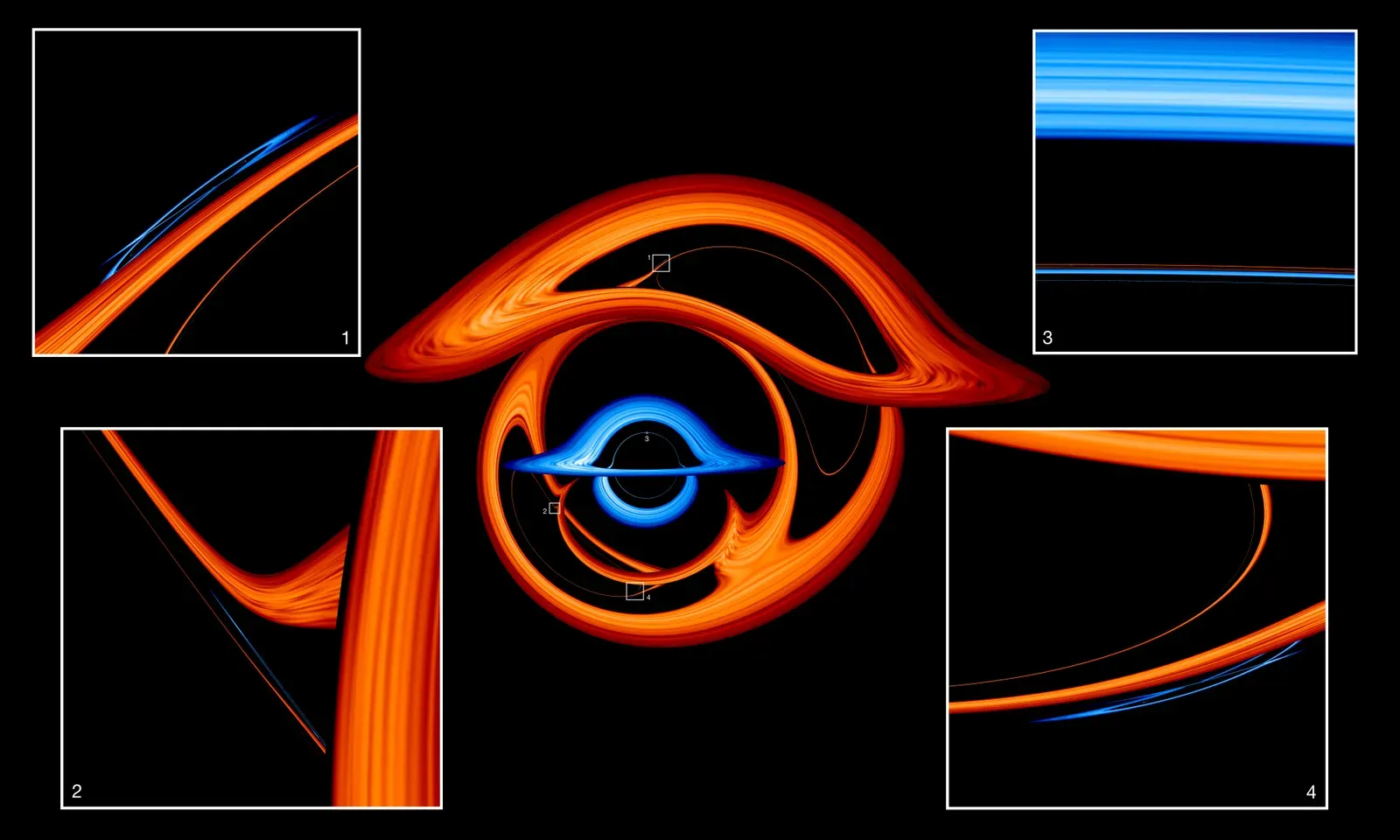
When you think of weird time behavior, black holes probably come to mind, and for good reason. Near a black hole, time for you and time for someone falling in can look radically different. From far away, you see objects slow down and freeze at the edge; for the falling observer, time feels normal as they plunge inward. That extreme stretching of time can give you the feeling that you are flirting with reversal, but it is still a one-way trip toward the singularity, not a true rewinding of events.
There is also the theoretical concept of a white hole, the time-reverse of a black hole. Instead of sucking matter in, a white hole would spew it out and never let anything fall inside. On paper, you can get such solutions by flipping the sign of time in the black hole equations, and that sounds exactly like what you want if you love the idea of time going backwards. The problem is that you have never observed a white hole in the real universe, and most physicists doubt they exist as physical objects. For now, they remain useful mental toys for thinking about time symmetry, not evidence that you can actually visit a region where time definitively runs in reverse.
What Time-Reversal Would Actually Feel Like (And Why You Might Not Notice)
When you hear “time moving backwards,” you probably imagine yourself watching your own life unwind like someone scrubbing a video backwards on a screen. But if you were truly embedded in a reversed-time region, your memories, biology, and physics would all be aligned with that direction. You would still remember what you call the past and anticipate what you call the future, even if an outsider said your whole story is moving the other way. To you, the coffee would still cool, people would still age, and causes would still come before effects.
This is the strange heart of the idea: time direction is not something you can easily feel in isolation because your brain and body are part of the same thermodynamic flow as everything around you. If you traveled from your region to one with a reversed arrow of time – assuming such a thing is even possible – you would not simply watch events run backwards. Far more likely, the journey would be physically impossible or fatal, because your own arrow would be deeply baked into the way your matter and memories exist. Time reversal sounds romantic until you realize you might never notice it from the inside.
How Experiments Play With Time Without Truly Breaking It
In laboratories, physicists have done some neat tricks that sound like reversing time. In certain carefully controlled quantum systems, you can nudge particles so that their states evolve in ways that look like going back to an earlier configuration. In spin-echo experiments, for example, you can scramble a bunch of atomic spins and then use clever pulses to refocus them, as if you had briefly reversed their dynamics. From the outside, it is tempting to call that time reversal.
But here is the sobering part: these experiments do not overturn the overall arrow of time; they rely on it. You, as the experimenter, must supply energy, precision, and information to set up the system and then “undo” what happened. The total entropy, including you and your machines, still climbs. What you are really seeing is local order being temporarily restored at the cost of more disorder elsewhere. These are beautiful demonstrations of how flexible the rules are on small scales, but they do not give you a portal to a region where time globally runs backwards.
What This Means For You, Your Life, And Your Sense Of Reality

Even if scientists never find a place where time truly moves backwards, the very possibility forces you to rethink what time actually is. You tend to treat it as a river flowing in one sacred direction, but physics hints that it might be more like a pattern emerging from deeper rules and special starting conditions. That alone can be unsettling, because your identity is welded to your memories and your instinctive belief that the past is fixed while the future is open.
If somewhere, somehow, another region or mirror universe experiences time with the opposite arrow, then your own sense of before and after is not a universal truth; it is a local feature of your cosmic neighborhood. That does not make your memories less real or your choices less meaningful, but it does make your perspective feel small in a strangely comforting way. You are part of a much bigger story than just one timeline marching from birth to death, and that story might be more like a grand, symmetric tapestry than a straight line.
Conclusion: Living Forward In A Universe That Might Not Agree
You live your whole life inside one particular direction of time, surfing on the rising wave of entropy from a low-entropy past toward an unknown, messier future. Physicists, digging under the surface, have found that the deep equations do not always care which way time flows, and that has opened the door to bold ideas: mirror universes on the other side of the Big Bang, hypothetical regions where the arrow points the other way, and strange objects like white holes that exist perfectly on paper but stubbornly refuse to show up in the sky. Whether any of these speculations map onto real places you could ever point to remains an open and very hard question.
For now, what you can say with confidence is that talk of “time moving backwards” is less about watching your life rewind and more about how the universe might arrange its arrows of cause and effect on the largest scales. You might never visit a region where time runs differently, but just knowing that your familiar flow of moments arises from fragile initial conditions changes how you look at every passing second. If time is this strange and contingent, what will you choose to do with the tiny slice of its arrow you actually get to experience?