

You probably grew up believing your dreams were the last truly private space you had. Now, researchers are quietly proving that even that mental sanctuary can be decoded, at least partly, while you are still asleep. Brain scanners and artificial intelligence are starting to read rough outlines of what you are seeing and feeling in your dreams with a level of accuracy that would’ve sounded like science fiction not long ago. You are not at the stage where a machine can replay your dreams like a movie on a screen, but you are much closer than you might think. Scientists can already match your sleeping brain activity to categories and elements you’re dreaming about, such as whether you see a person, a building, or a scene in nature. As the technology becomes more precise, you’re going to face some fascinating – and slightly unsettling – questions about privacy, memory, and even what it means for you to have a mind of your own.
How Scientists Actually Peek Inside Your Sleeping Mind

If you imagine dream-reading as a magical mind scan, you’re not giving yourself enough credit for how physical your brain really is. When you dream, your neurons fire in patterns that mirror, in their own strange way, what you’re “seeing” in your inner world, and machines can pick up those patterns. By sliding into an MRI or wearing high-density EEG caps in a sleep lab, you give researchers a live stream of electrical and blood-flow signals from your brain while you drift into dreaming. To turn those signals into something meaningful, scientists wake you up during specific sleep phases and ask what you were just dreaming about. They repeat this over and over, then train machine-learning models to associate particular signal patterns with particular kinds of dream content. Over time, the system starts to recognize that one pattern tends to show up when you dream about faces, another when you dream about words, another when you dream about moving through a place, and so on – that’s where those eye-catching accuracy numbers come from.
What “90 Percent Accuracy” Really Means For Your Dreams

When you hear that scientists can predict your dreams with roughly nine out of ten correct guesses, it’s tempting to picture a perfect, high-definition replay. In reality, the prediction is usually about broad categories of content, not every detail of your dream scene. The system might determine that you are most likely dreaming about an indoor environment with a person, rather than a forest with animals, and those kinds of category-level guesses are where that impressive accuracy comes in. So instead of thinking, “They know I’m dreaming about my third-grade classroom and that embarrassing thing I said,” it’s more honest to say, “They know I’m dreaming about a familiar place and a social situation.” For you, that still feels incredibly intimate, because it’s a direct window into your private experience while you are unconscious. The technology is powerful, but it is still interpreting patterns and probabilities, not extracting a perfect truth about your inner life.
The Technologies Doing the Heavy Lifting: fMRI, EEG, and AI
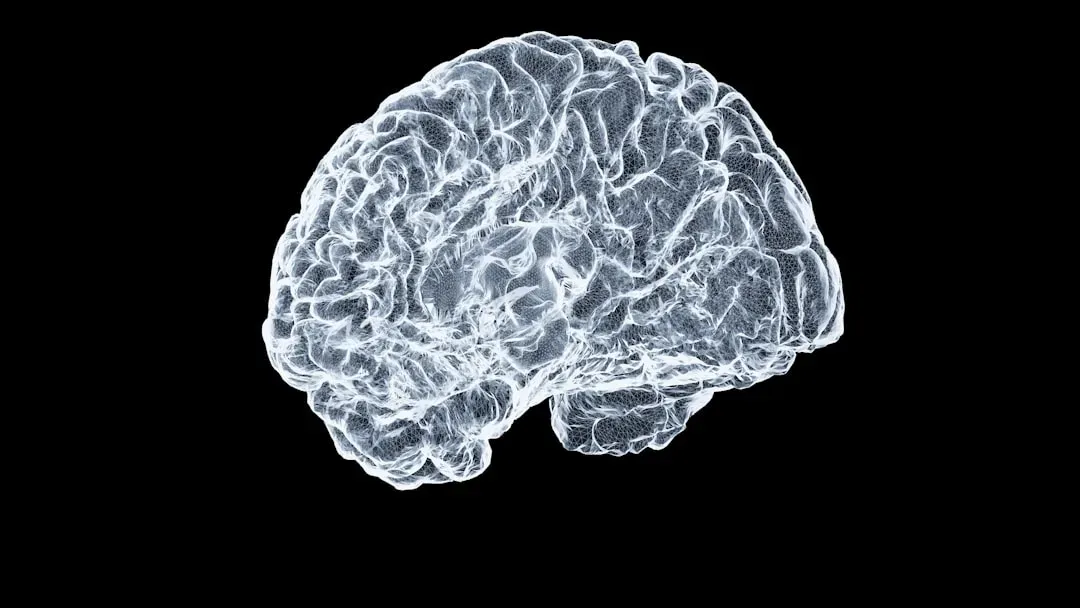
When your dreams are being studied, the main players are usually brain-imaging tools like functional MRI and EEG paired with machine learning. fMRI tracks tiny changes in blood flow as different brain areas work harder or relax, giving you a kind of slow but detailed map of which regions are active. EEG, on the other hand, records your brain’s electrical activity from the scalp, giving you a much faster but somewhat fuzzier picture of what’s happening. Alone, these tools tell you that something is going on; combined with AI, they start telling you what that something might be. Algorithms learn from huge sets of labeled brain data, finding patterns that you can’t spot with the naked eye. Over time, the AI system becomes better at guessing what kind of image or scenario fits the signal patterns, and with enough training, it can recognize aspects of your dream content based purely on what your brain is doing in real time.
Why Your Dream Brain Looks a Lot Like Your Waking Brain
One of the reasons this all works at all is that your brain is surprisingly consistent with itself. The areas that light up when you look at a real face while you’re awake tend to become active when you picture a face in a dream as well. The same holds for places, written words, and even simple objects – your brain reuses many of the same circuits for imagined experiences that it uses for real ones. Because of that overlap, researchers can first train models on your waking brain activity while you look at actual pictures or scenes. Once the model understands how your brain reacts to real images, it can attempt to decode your imagined or dream images using similar patterns. When you fall asleep, you’re not entering some disconnected fantasy universe; you’re remixing and reactivating the very same brain networks that structure your waking life, which is exactly what makes dream prediction possible.
From Vague Categories to Sharper Reconstructions
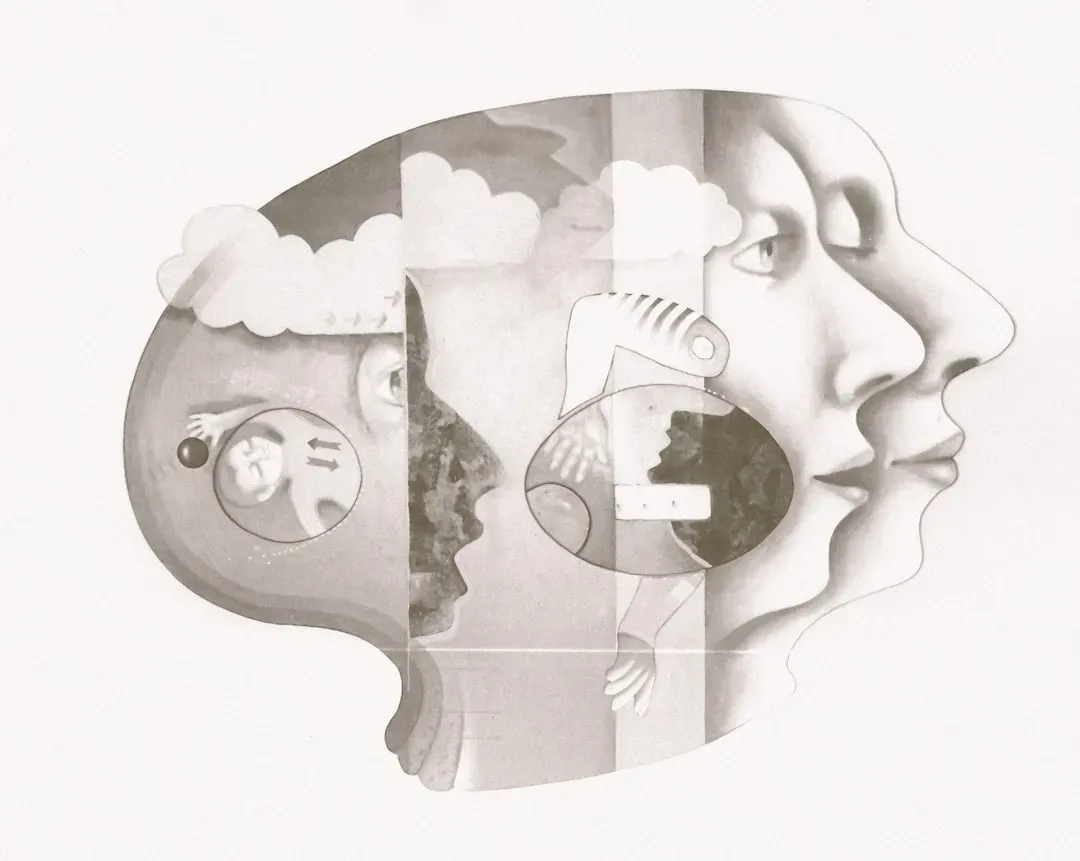
In the early days, dream-decoding experiments could only say things like, “You’re probably dreaming about a scene outdoors” or “There might be a person involved.” Today, as models get more sophisticated and datasets get larger, scientists are starting to reconstruct extremely rough visual outlines that resemble what you might be dreaming. These aren’t photo-real images, but they can sometimes echo shapes, layouts, or general themes that your dream contains. For you, that shift from “category guess” to “rough reconstruction” is a big psychological jump. As prediction improves, your dreams stop feeling like completely private cinema and start looking more like a channel that might someday be streamed, recorded, or analyzed. The technology still struggles with nuance, complex stories, and subtle emotions, but the direction is clear: the fuzziness is shrinking, and your dream life is slowly becoming more legible to machines.
How This Could Help You: From Nightmare Relief to Communication
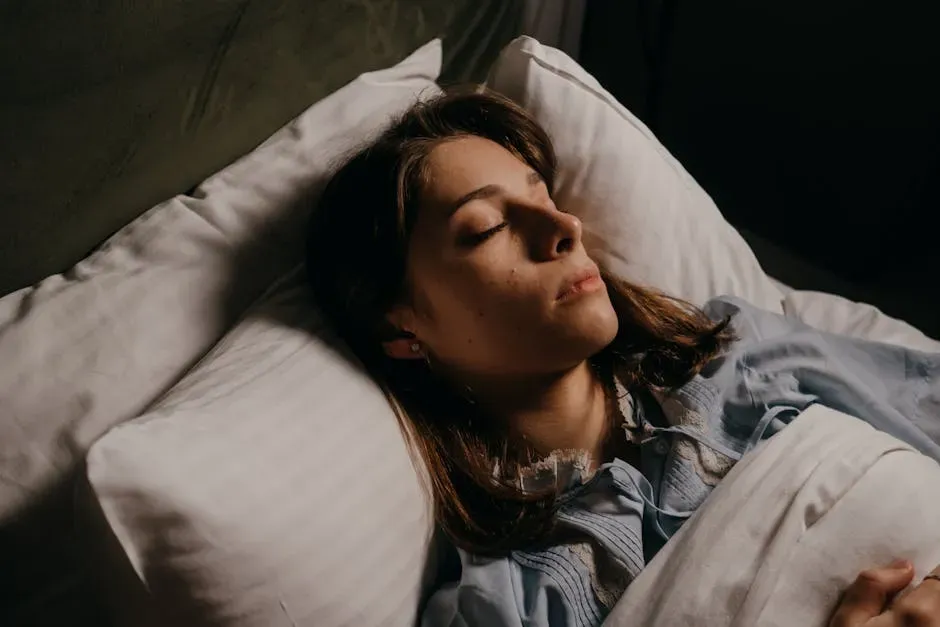
If you live with recurring nightmares or trauma-related dreams, the idea of your dreams being decoded can feel more hopeful than creepy. In theory, if a system can recognize when you’re slipping into a nightmare pattern before you fully plunge into distress, it could help trigger interventions. That might mean adjusting sounds, lights, or even gentle brain stimulation to steer you toward safer, more neutral dream content and give you better-quality sleep. Looking further ahead, you might see dream-decoding tools help people who can’t easily communicate while awake, such as patients with severe paralysis or locked-in syndromes. If their inner imagery during sleep or rest can be interpreted, it might provide one more channel for connection with the outside world. That is still far from a routine clinical tool, but it’s one of the reasons many researchers stay motivated to push through the technical and ethical challenges.
Why This Technology Raises Big Privacy and Ethical Questions

As the accuracy improves, you are not just talking about a fun science story; you are talking about the last boundaries of your inner life. If machines can, even roughly, infer what you are dreaming, you naturally have to ask who owns that data, who controls access to it, and what happens if someone wants to use it against your interests. The thought of a boss, insurer, or government agency trying to peek into your dreams should make you instinctively uneasy. For now, these experiments are tightly controlled, voluntary, and extremely labor-intensive, which keeps the threat low. But it’s wise for you to think a few steps ahead and push for strong protections before the technology becomes cheaper and more portable. You probably already share more about your waking habits than you realize; the idea that your sleeping mind could be next should make you want clear rules, consent standards, and meaningful options to say no.
What Scientists Still Struggle With (And Why Your Dreams Are Safe… For Now)

Despite the dramatic headlines, there’s a long list of things this technology cannot do yet, and that matters for your peace of mind. Your dreams are messy, symbolic, and wildly personal, and current systems mostly latch onto broad visual categories, not subtle storylines or hidden meanings. Emotional nuance, private associations, and deeply personal symbolism – the parts that probably matter most to you – remain largely out of reach. On top of that, training a decoder usually requires hours of data from you specifically, gathered in uncomfortable machines under artificial lab conditions. That makes it hard to build universal models that work perfectly on anyone, anywhere, without custom calibration. So while your dreams are becoming more readable in principle, the gap between that laboratory reality and a world where someone casually “reads your dreams” is still wide and technically demanding.
How You Might See Dream-Reading Evolve in Your Lifetime

If the trend continues, you’re likely to see dream-decoding folded into broader brain–computer interface technologies that are already moving from the lab toward early clinical and commercial use. The same tools that let you move a cursor or type with your thoughts might eventually help you map and explore your dream experiences. Instead of seeing dreams as random nighttime noise, you could treat them like a resource for creativity, mental health insights, or memory consolidation. You might also encounter simpler consumer versions that offer rough “dream profiles” based on your sleep-stage patterns and brain rhythms, automated through wearable devices. Those won’t be as precise as lab-grade scanners, but they will bring at least some aspects of dream decoding into your everyday life. The big question for you is whether you want that level of intimacy with your own data – and how you’ll decide who, if anyone, gets to share in that access.
In the end, the idea that someone can predict with high accuracy what you’re dreaming while you’re still asleep forces you to rethink what privacy really means. Your brain is not a black box; it’s more like a lantern throwing patterns of light that smart machines can increasingly interpret if they’re allowed to watch closely enough. As the technology grows sharper, you’ll have to balance the promise of better sleep, new medical tools, and deeper self-understanding against the very real risk of letting your last private frontier be mapped.
So the real question for you isn’t just whether dream-reading will become possible, but how you want it to be used when it does. When a machine can stand at the edge of your bed and guess what is playing inside your mind, will you feel more understood, or more exposed – and which would you have expected?