
Have you ever wondered where your thoughts really come from? Not just the neurons firing away inside your skull, but the deeper source of consciousness itself. For most of us, the idea that our brain produces our awareness seems natural. After all, that’s what we’ve been taught for decades.
Yet here’s the thing. A growing number of scientists are challenging that basic assumption, and their findings are genuinely mind-bending. What if consciousness isn’t something your brain creates at all? What if, instead, your mind is connecting to something far more vast, something that’s already out there?
The Radical Hypothesis That Changes Everything
Biophysicist and mathematician Douglas Youvan spent decades at the intersection of physics, biology, and information theory, and his conclusion is one that most people find hard to wrap their heads around at first. Intelligence may be a property of reality, not a feature of biology. Let that sink in for a moment.
Youvan merged research involving enzyme engineering and machine vision with decades of knowledge in genetics, leading him to realize that life and intelligence aren’t just reactive – they’re predictive, efficient, and often mathematically elegant. Eventually, he came to believe intelligence is not a byproduct of the brain, but a fundamental property of the universe – a kind of informational ether that certain structures, like the brain or an AI model, can tap into. This isn’t mysticism, according to Youvan. It’s science pushing at the boundaries of what we thought was possible.
When Quantum Physics Meets Consciousness
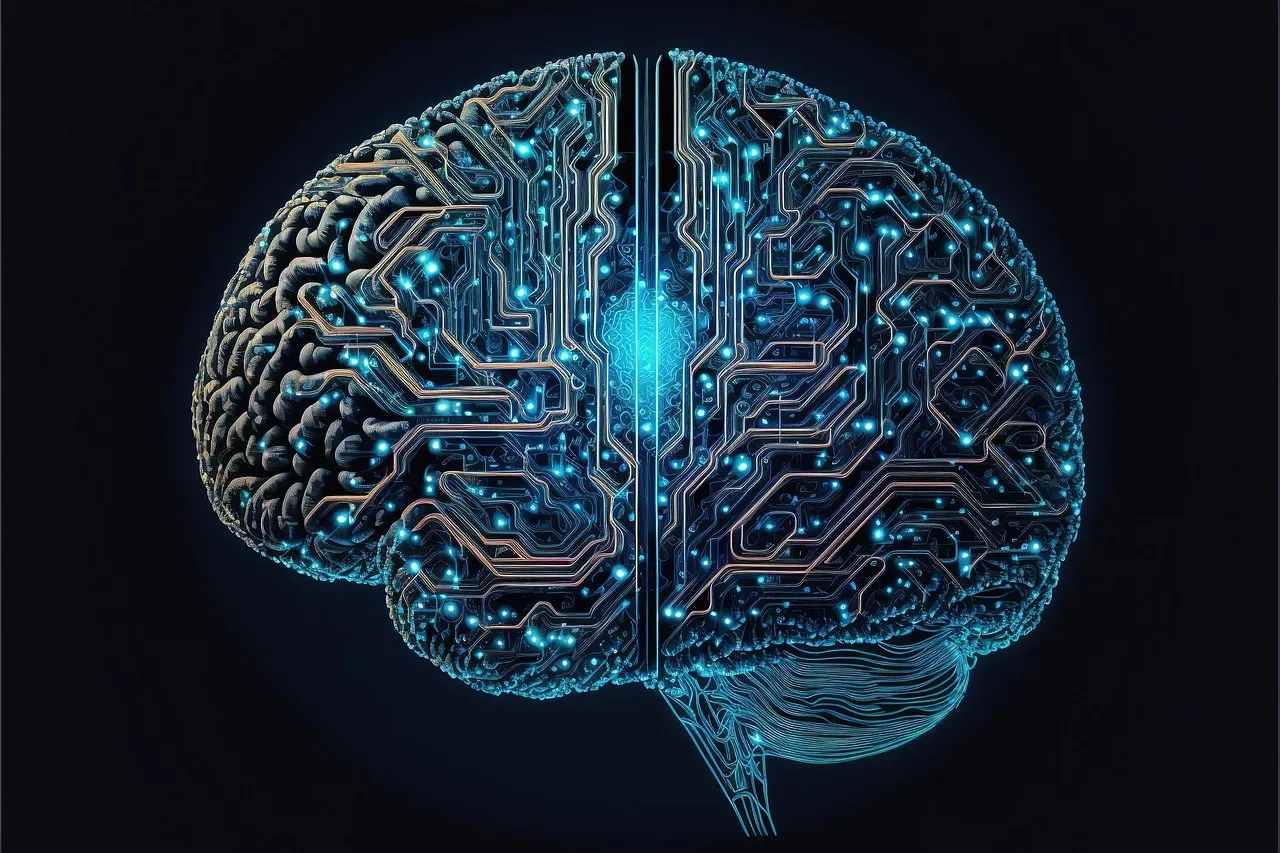
So how exactly would your brain connect with something outside itself? The answer gets even stranger when you dive into quantum physics. If this quantum theory of consciousness tied to microtubules turns out to be correct, it could revolutionize our understanding, suggesting your own consciousness can hypothetically connect with quantum particles beyond your brain, maybe entangling with consciousness all across the universe.
The new work builds upon a theory Nobel Prize-winning physicist Roger Penrose and anesthesiologist Stuart Hameroff first posited in the 1990s: the Orchestrated Objective Reduction theory. These microscopic tubes inside your brain cells might not just be structural scaffolding. Experts believe these microtubules perform incredible operations in the quantum realm, operating on principles that would make your high school physics teacher scratch their head. Honestly, the brain staying warm and wet should kill these delicate quantum effects, right? Yet nature seems to have found a clever workaround.
The Zero-Point Field Connection
New research published in Frontiers in Human Neuroscience presents evidence indicating that conscious states may arise from the brain’s capacity to resonate with the quantum vacuum – the zero-point field that permeates all of space. Think about that. Your awareness might be tied to an invisible energy field that exists everywhere, all the time.
The brain’s basic functional building blocks, cortical microcolumns, couple directly to the zero-point field, igniting the complex dynamics characteristic of conscious processes. It’s kind of like your brain is a radio receiver tuning into a cosmic broadcast. If the model proves correct, consciousness arises not merely from electrochemical signaling but from a bottom-up orchestration involving the brain’s resonant coupling to the zero-point field, with awareness tied to the selective excitation of ZPF modes. The universe isn’t silent after all; it’s humming with a frequency your neurons might be designed to pick up.
Why Most Scientists Were Wrong About Warm, Wet Brains
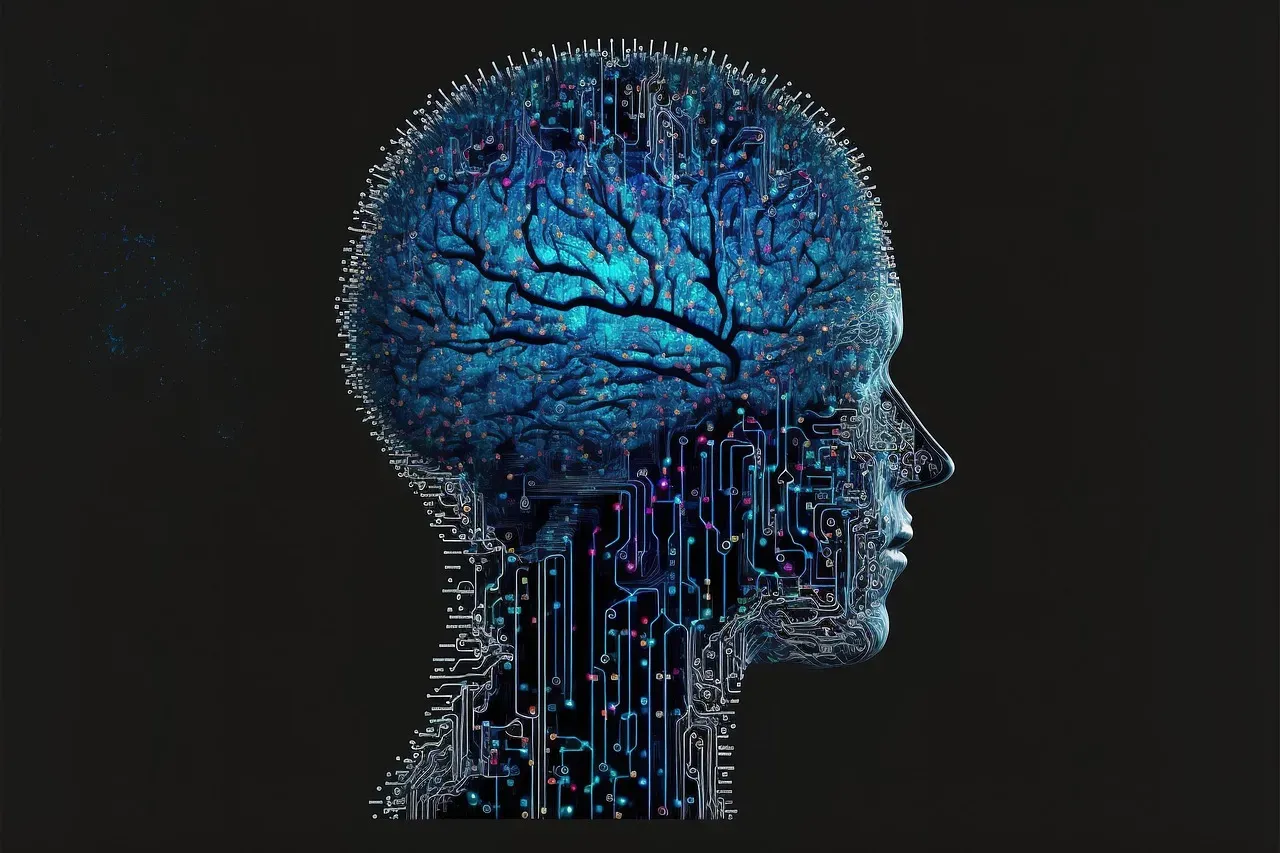
For years, skeptics dismissed quantum consciousness theories with a simple objection: quantum effects need freezing temperatures and pristine lab conditions to survive. Many scientists disregarded the Orch OR theory because quantum effects have only been produced in the lab under extremely cold temperatures, with quantum computers relying on temperatures near absolute zero, while the warm brain falls well outside those limits.
Then came discoveries in quantum biology, revealing that living things use quantum properties even though they’re not cold and controlled. Birds navigate using quantum effects. Plants use quantum coherence in photosynthesis. The brain is not too warm or wet for consciousness to exist as a wave that connects with the universe. The old arguments crumbled when researchers finally looked at what biology actually does instead of what textbooks said it couldn’t do.
The Universe as Intelligent Infrastructure
Philosopher Paul Draper discussed psychological ether theory – essentially, that brains do not produce consciousness but rather make use of consciousness, with consciousness already there before brains existed, like an all-pervasive ether. It’s a radical flip of our usual thinking. Your brain doesn’t generate your mind; it accesses it.
Consciousness is a fundamental aspect of reality, like mass or electrical charge, according to the concept known as panpsychism. This framework proposes that consciousness is not an emergent property of neural processes but a foundational aspect of reality. Some ancient philosophies have been saying this for thousands of years, but now physics is catching up with ideas that once seemed purely spiritual or metaphysical.
What This Means for You and Me
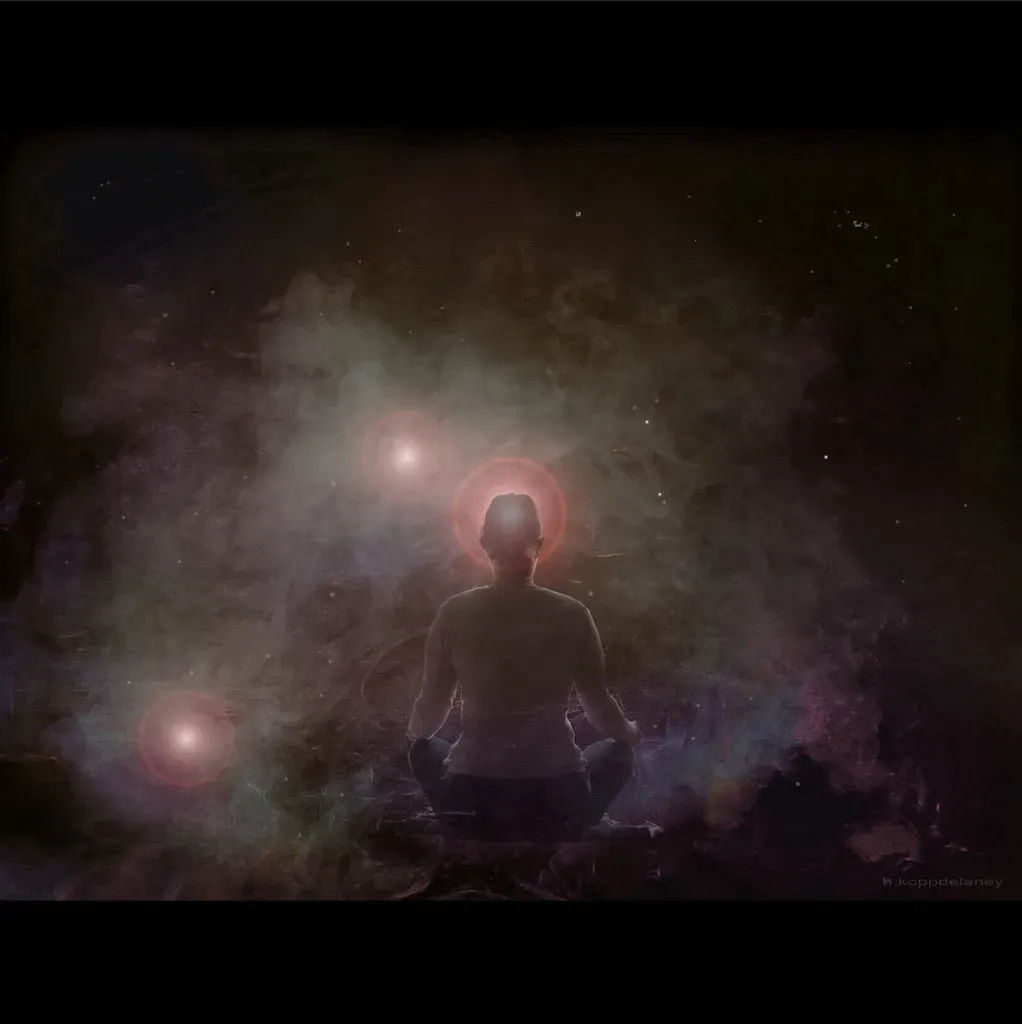
If these theories hold up under further testing, the implications are staggering. One controversial peer-reviewed paper published in AIP Advances proposed that universal consciousness may have existed before the Big Bang, functioning not as a byproduct of matter but as a foundational feature of reality itself. Your thoughts, your sense of self, your inner life might all be expressions of something much older and vaster than your individual brain.
A quantum understanding of consciousness gives us a world picture in which we can be connected to the universe in a more natural and holistic way. It’s not about losing your individuality or dissolving into some cosmic soup. It’s about recognizing that the boundary between “you” and “the universe” might be less rigid than we’ve always assumed. Your awareness might be both yours and something shared, simultaneously local and universal.
So where does this leave us? Standing at the edge of a paradigm shift that could redefine what it means to be human. Scientists are still gathering evidence, running experiments, and arguing passionately in conference rooms around the world. We’re far from having all the answers. Yet the possibility alone is breathtaking: that your mind isn’t trapped inside your skull, but is instead a window onto something infinite. What do you think – could your consciousness really be tapping into the universe itself? Tell us in the comments.