

There’s something a little unsettling about realizing that, at the smallest scales, reality does not behave like the solid, predictable world we feel under our feet. In quantum physics, just looking at something can change what it does. That sounds like magic, or mysticism, or a science-fiction twist. But it is a real, experimentally confirmed feature of how the universe behaves when you zoom down to particles like electrons and photons.
What that really means, though, is still up for debate. Physicists are fiercely split on what’s actually going on behind the scenes. Some say the universe only makes up its mind when we measure it. Others argue everything is always definite, we just do not see all the details. And a bold camp says the universe is constantly splitting into countless parallel realities. Underneath the math and the experiments lies a deeper question: what, if anything, is “really” there when no one is looking?
When Observation Becomes an Action, Not Just a Glance

In everyday life, observing something feels passive. You look at a chair, and the chair does not care. In quantum mechanics, observation is more like poking than looking. Measuring a particle does not just reveal what was already there; it changes the situation. The act of measurement physically interacts with the system and produces a definite outcome that was not fixed beforehand in a classical sense.
This is why physicists tend to say “measurement” instead of “observation.” You are not just watching; your measuring device is colliding with, absorbing, or otherwise disturbing the particle. That disturbance is baked into the theory. There’s no way to get a perfectly clean, God’s-eye look at a quantum object. At small scales, the idea of pure, consequence-free observation simply stops being possible, and that’s where the weirdness begins.
The Double-Slit Experiment: The Iconic Reality-Bender
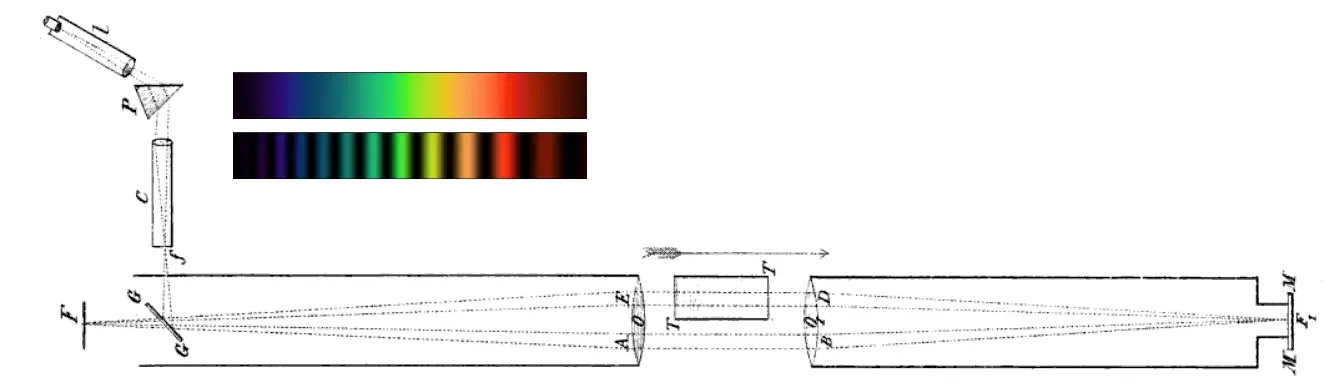
If you want a single experiment that blows up our naive picture of reality, it’s the double-slit experiment. Fire individual particles, like electrons or photons, at a barrier with two tiny openings. If you do not check which slit they go through, they build up on the screen behind in a pattern of bright and dark bands, as if each particle acts like a wave that goes through both slits at once and interferes with itself. Somehow, a single particle behaves like a spread-out wave traveling multiple paths simultaneously.
Now add detectors to see which slit the particle actually uses. As soon as you measure which path it takes, the interference pattern disappears. The results now look like ordinary bullet marks: particles going through one slit or the other, not both. The only thing you changed was the act of gaining which-path information. This shift from interference to no interference, triggered by measurement, crystallizes the central puzzle: does the particle’s behavior depend on whether information about it could, even in principle, be known?
From Heisenberg’s Uncertainty to Wavefunction Collapse
The idea that measurement matters is tightly linked to Heisenberg’s uncertainty principle. It says that certain pairs of properties, like a particle’s position and momentum, cannot both be sharply defined at the same time. The more precisely you pin down one, the fuzzier the other becomes. This is not just about clumsy instruments; it is a built-in feature of the quantum world. The mathematics of quantum mechanics treats particles as described by a wavefunction, a kind of probability cloud of all the outcomes that could happen.
When you perform a measurement, that smooth cloud is said to “collapse” into a single, definite result. Before measurement, the theory only gives you probabilities of what you might see. After measurement, the system is in a specific state that your device registered. The wild part is that this collapse is not part of the smooth, continuous evolution of the wavefunction given by the Schrödinger equation. Instead, it is a special rule that kicks in only when a measurement happens, and that awkward two-step picture is one of the big reasons physicists argue about what is really going on.
Does Consciousness Really Affect Reality, or Just the Equipment?
The phrase “observer effect” has fueled a lot of claims that human consciousness literally creates reality. It is a powerful idea and it grabs attention, but it overshoots what the experiments actually show. Quantum theory only requires that some physical interaction happens: a photon hitting a detector, an electron leaving a track, a device recording a result. Nothing in the standard equations singles out human awareness as a special ingredient that flips possibilities into facts.
That said, there is still a lingering philosophical question about where to draw the line. Some interpretations treat measurement as any entangling interaction with the environment, long before a human sees the data. Others struggle with the idea that, at some stage, a result becomes “definite” for an observer. Personally, I think it is safer and more honest to say that quantum mechanics forces us to rethink the relationship between information and reality, but it doesn’t prove that your mind alone is sculpting the universe like a cosmic 3D printer.
Many Worlds, Hidden Variables, and Other Rival Pictures of Reality

The mathematics of quantum mechanics works astonishingly well, but what it means is highly contested. One famous option is the many-worlds interpretation. Instead of a mysterious collapse, every possible outcome of a quantum event actually happens, each in its own branching universe. You see one result, someone in another branch sees the alternative. In this view, observation does not change the particle; it just reveals which branch you find yourself in. Reality becomes a constantly splitting tree of histories.
Another camp favors hidden-variable theories, which say particles always have definite properties, we just do not know about the extra details that guide their behavior. These models try to restore a more intuitive picture of objects with clear positions and paths. The catch is that experiments testing quantum correlations between distant particles have ruled out a whole class of local hidden-variable explanations. That does not kill all realist pictures, but it does mean any deeper-level theory has to accept some kind of nonlocal link or give up other cherished assumptions about how reality should behave.
Entanglement, Nonlocality, and the Limits of Common Sense

Entanglement is where quantum theory really starts to feel like it is trolling our intuition. Take two particles that interact and then fly apart. Measure one, and you instantly know something about the other, even if it is on the opposite side of the galaxy. This correlation does not let you send messages faster than light, but it does clash with the idea that each particle carried a fixed, hidden answer the whole time in an ordinary way. Experiments again and again have supported the quantum predictions over classic common-sense alternatives.
For the observer effect, entanglement means that measurement is not isolated. When you measure a particle, you are effectively tying its fate to your equipment, your environment, and in a broader sense, to the rest of the world. What used to be a neat, independent system becomes part of a larger, entangled state. So the change you trigger by observing is not just about one lonely particle flipping a switch; it is about how information and correlations spread through the universe in ways our day-to-day experience does not prepare us for.
What This Says About Free Will, Reality, and Our Place in the Universe
When you learn that observation can change outcomes, it is hard not to wonder what that means for your own choices. Are you just riding along on probabilities the universe has already baked in, or does your act of measuring, deciding, and acting genuinely help select one future rather than another? Some physicists argue that quantum randomness leaves room for a kind of openness in how events unfold, while others see it as just unpredictability, not freedom in any meaningful sense. The equations stay quiet on values and purpose; we are the ones who read meaning into the patterns.
To me, the most striking message is not that we magically create reality out of nothing, but that reality is more relational than we thought. Properties like position, momentum, or even “which path” are not just sitting there fully defined; they crystallize in the context of an interaction. That makes the universe feel less like a static machine and more like an ongoing conversation between systems, measurements, and observers. It puts us not at the center of creation, but as participants in a cosmos where information, context, and perspective genuinely matter.
Conclusion: A Universe That Refuses to Be Put in a Box

Quantum science really does tell us that the act of observing a particle can change what it does, but it stops short of handing us a neat, spiritual slogan about thought creating reality. The safest, and honestly most exciting, conclusion is that our classical picture of a solid, observer-independent world is incomplete. The universe at small scales plays by rules where information, interaction, and context are fundamental. We can calculate mind-bendingly accurate predictions, yet we still do not agree on whether the wavefunction is a real physical thing, a bookkeeping tool, or a doorway to endlessly branching worlds.
My own opinion is that the deepest implication is not that quantum mechanics proves any particular philosophical story, but that it permanently humbles our instincts about what “real” even means. The fact that serious, expert physicists can look at the same experiments and defend completely different views of reality is not a sign of weakness; it is a sign that we have reached the edge of what our old mental models can comfortably handle. Maybe the real shock is not that observation changes particles, but that trying to understand this forces us to observe ourselves and our assumptions just as critically. Given all that, which version of reality would you be willing to bet your intuition on?