
You know that punch-in-the-gut feeling when you land in a new city, drop your bags, and suddenly feel like you’ve been dropped on another planet? Your chest feels tight, you can’t focus, and even simple things like buying groceries feel strangely exhausting. It is very easy to blame yourself and think you are just bad at adapting or not as “adventurous” as other people seem to be. But what is actually happening is far more interesting, and a lot kinder, than that self-criticism. Your brain is not failing you; it is doing its best to keep you safe in a world that suddenly makes no automatic sense. Almost everything around you is unfamiliar: the sounds, smells, light, accents, building shapes, even how people queue or cross the street. Instead of flowing through your day on autopilot, your mind is working overtime to interpret all of this in real time. That intense homesickness you feel is not a personal flaw. It is a very human response to sensory overload and to a predictive brain that has temporarily lost its usual shortcuts.
Your Brain Is a Prediction Machine, Not a Camera
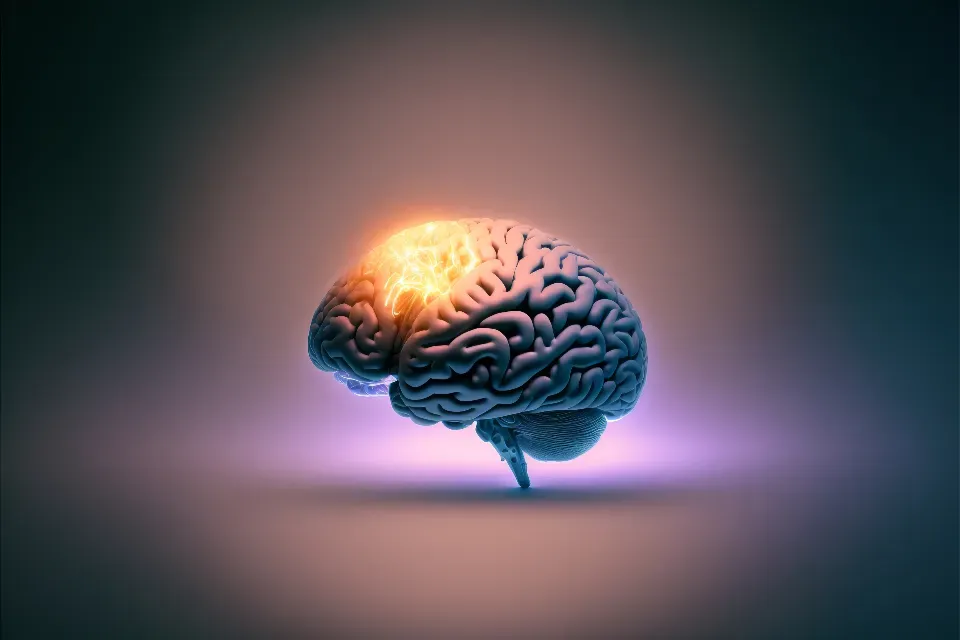
You might think you walk around simply “seeing” the world as it is, but your brain is not a passive camera recording reality. Instead, it constantly predicts what will happen next based on your past experiences, then compares those predictions to what your senses pick up. In your familiar hometown, this system runs smoothly. You usually know what a grocery store will smell like, how busy the street will sound in the morning, and how people typically behave in a café, so your brain can relax and fill in the gaps without much effort. In a new city, that prediction engine suddenly loses its reference library. The traffic sounds different, the store layouts are unfamiliar, the social rules are slightly off, and even the way the air feels may be new. Your brain keeps trying to predict, keeps getting tiny “prediction errors,” and has to correct itself again and again. That is incredibly energy-intensive. What you experience as feeling disoriented, on edge, or deeply homesick is your nervous system wrestling with nonstop prediction failures, not proof that you are weak.
Homesickness as a Safety Alarm, Not a Character Flaw

When you feel homesick, it is tempting to think you are just being overly sensitive or dramatic, but homesickness is more like an emotional smoke alarm. Your brain has learned that familiar environments are usually safer and easier to navigate because they match your expectations. When your surroundings suddenly become unpredictable, your mind interprets this as increased risk, even if the new place is logically safe. That rising urge to go home is your internal system trying to pull you back to a predictable, manageable world. You might notice this in simple ways: craving food from home, obsessively checking messages from friends, or feeling irrationally irritated by small differences like how trash is sorted or how people greet each other. These reactions are not childish; they are attempts to restore a sense of control and continuity. Your mind is saying, “I know how to function there; I do not fully know how to function here yet.” Understanding this shifts the narrative from “I cannot cope” to “my brain is signaling a high-load situation and asking for more familiarity.”
Sensory Overload: Why Every Little Thing Feels Like Too Much

In a familiar place, your brain filters out a huge amount of sensory information without you noticing. You do not consciously process every hum of the refrigerator or every passing car; your mind just tags them as normal and tunes them out. In a new city, that filter loosens because your brain is not yet sure which sounds, sights, and smells are important. Suddenly, the constant honking, new smells from street food, bright signage, and unfamiliar language all demand attention at once. You may feel more tired than usual, even if you are not doing anything physically intense. You might find your tolerance for noise, crowds, or social interaction drops sharply. This is not you becoming antisocial or lazy. It is your system hitting its processing limit. When your brain has to consciously evaluate far more sensory cues than normal, mental fatigue and emotional sensitivity are completely logical side effects.
Why You Miss “Trivial” Things From Home So Intensely

You might be surprised by what you miss most: your old bus stop, the way your kitchen window caught the morning light, the sound of your neighbor’s dog, or a particular corner café where the staff knew your usual order. These details might have seemed boring when you lived there, but they formed a stable background your brain could rely on. They were anchors. When you remove those anchors all at once, you do not just lose a place; you lose a predictable rhythm that made daily life feel effortless. When you long for your old grocery store or your favorite park bench, you are not just missing the physical space. You are missing the version of yourself who moved through that space with ease, without having to think about every tiny action. That longing can feel almost physical because, in a way, your nervous system is grieving the loss of its automatic map of the world. Realizing this can help you treat that ache with more compassion instead of brushing it off as silly nostalgia.
Emotional Whiplash: Anxiety, Sadness, and Sudden Exhaustion

If you swing between excitement and despair within a single day in your new city, you are not unstable; you are human. At one moment you might feel thrilled by a beautiful view or a charming street, and the next you might feel like crying in a supermarket aisle because you cannot find a familiar brand. These emotional flips come from the same overloaded prediction system struggling to keep up while your body tries to maintain some sense of safety. Anxiety often shows up when your brain registers too many unknowns and not enough reliable patterns. Sadness and homesickness can hit hard when you compare how effortless life felt back home to how clumsy and out of place you feel now. Even your body may react with headaches, stomach tension, or trouble sleeping. Instead of labeling yourself as overreacting, it is more accurate to see this as emotional jet lag: your environment changed faster than your internal maps can comfortably update.
How to Gently Rebuild Familiarity in an Unfamiliar City

Your goal is not to force yourself to “toughen up,” but to help your predictive brain build new shortcuts. One powerful way to do this is to create micro-routines in your new environment. You might walk the same route each morning, choose a regular café, sit on the same bench in a nearby park, or shop at the same small store. Repeating these actions gives your brain repeated, predictable patterns to latch onto, which gradually lowers the sensation of chaos. You can also bring familiar elements from your old life into your new space: a favorite mug, a particular scent, playlists you used to listen to at home, or photos placed where you see them daily. These are not empty decorations. They are sensory bridges between your old prediction world and your new one. Over time, as your brain starts recognizing local sounds and sights as normal, you may notice that the sharp edge of homesickness softens into something more bearable and less consuming.
Using Your Senses Intentionally Instead of Being Hijacked by Them
Instead of letting the city constantly bombard you, you can flip the script and use your senses on purpose. You might choose one sense at a time to focus on in a calm way: listening to a specific soundscape like church bells, birds, or distant traffic, or observing one color you see often in the city and noticing where it appears. This kind of mindful attention helps your brain sort signals into “safe and ordinary” versus “new and important.” You can also deliberately seek out calming sensory input to counterbalance the overload. That might mean finding a quiet library, a peaceful green space, a less busy side street, or even just using earplugs on public transport. None of this means you are weak or fragile. It means you are working with your nervous system instead of trying to bulldoze through its limits. When you choose your inputs, you reduce the feeling that the environment is constantly grabbing you by the shoulders and shaking you.
Self-Compassion: Reframing Your Story About Adaptability

It is very easy to compare yourself to people who seem to thrive instantly in a new city and conclude that you are simply not adaptable. But you do not see their internal process, their bad days, or the quiet ways they build new routines. Your reaction is not a sign that you are less capable; it is a sign that you are sensitive to prediction errors and loss of familiarity, which is actually a deeply human trait. If anything, noticing how off-balance you feel means you are paying close attention. You might find it helpful to reframe your story from “I am failing at this move” to “my brain is doing a massive software update.” Updates take time, can slow everything down, and sometimes make the device feel glitchy before the new system stabilizes. When you talk to yourself from that angle, you are more likely to make wise, gentle choices: resting when you are drained, reaching out when you are lonely, and celebrating small moments when something finally feels just a little bit normal.
Conclusion: Your Homesickness Is Proof Your Brain Is Working, Not Broken

If you are sitting in a small room in a new city, wondering why you are this upset when you are supposed to be excited, you are not alone and you are not broken. What feels like a personal failure is really your predictive brain grappling with an overload of unfamiliar sensory cues, trying desperately to build a new map. That aching homesickness is your mind’s way of saying, “This is a lot right now, and I am still learning how to move through it.” As you give yourself time, routines, and permission to feel what you feel, your inner map slowly redraws itself. One day you will realize you can walk to the store without thinking, recognize the background sounds without flinching, and maybe even miss this place if you leave. Until then, your task is not to toughen up but to cooperate with your very human brain. When you think about homesickness this way, does it change how you see your own reaction to starting over in a new city?