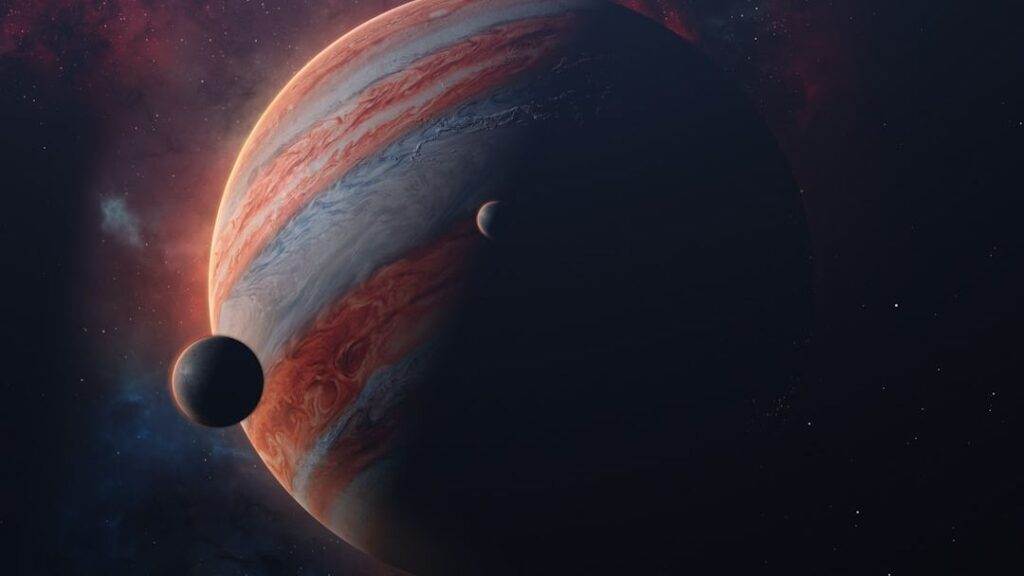

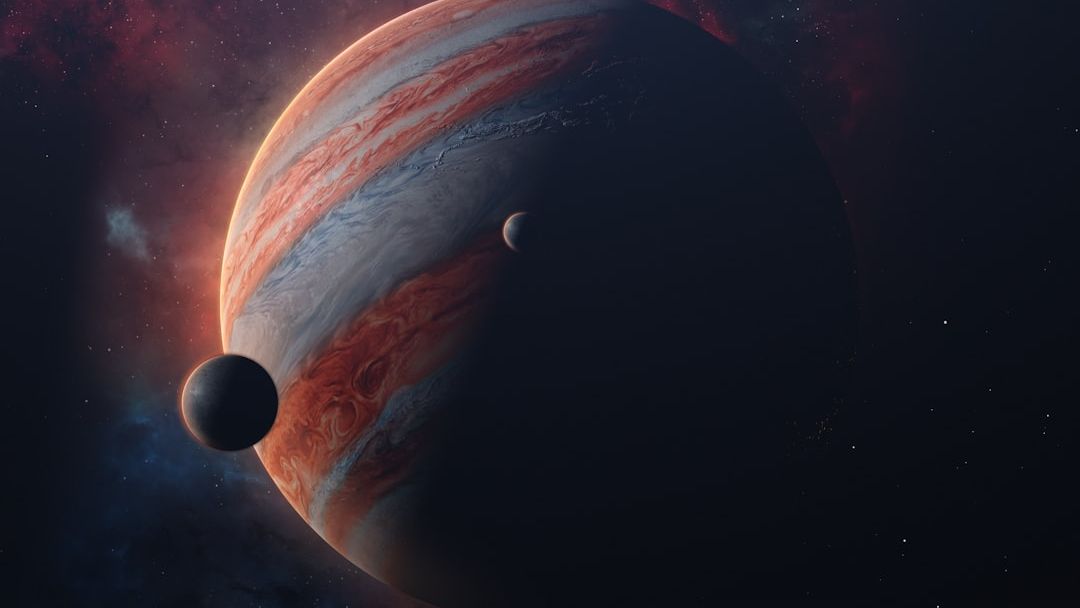
Venus, Jupiter, and Mercury are lining up in the western sky after sunset this week – and a Blue Moon is sliding past Antares – in a run of evening sky events that won’t be matched again for years – Image for illustrative purposes only (Image credits: Unsplash)
As May 2026 nears its end, the evening sky presents a compact series of bright celestial events that overlap across several nights. Venus, Jupiter, and Mercury form a clear line above the western horizon shortly after sunset, while a full moon passes near the bright star Antares. The combination stands out because the objects involved are among the most prominent in the night sky and remain visible without special equipment.
Three Planets Form a Visible Line in the West
The most prominent feature involves Venus, Jupiter, and Mercury aligning in the western sky. Venus appears as the brightest point, often visible within half an hour of sunset. Jupiter sits roughly 10 degrees to its upper left early in the period, while Mercury lies lower and to the right, closer to the horizon about 45 minutes after sunset.
The three planets stretch across roughly 25 degrees of sky at peak visibility, a span wide enough for the arrangement to stand out to the naked eye. Positions shift slightly each evening as Venus moves toward Jupiter. Their closest approach occurs around June 9, when the two brightest planets will lie about 1.6 degrees apart. This particular evening lineup of all three requires specific orbital geometry that does not repeat in the same favorable form for several years.
Blue Moon Passes Close to Antares
The full moon reaches peak illumination on May 31 at 08:45 UTC. Because it is the second full moon in May, it qualifies as a Blue Moon under the calendar definition. The same moon is also the most distant full moon of the year, placing it near its farthest point from Earth and earning the additional label of micromoon.
On the night of May 30-31 the moon passes within one degree of Antares, the brightest star in Scorpius. Antares shines with a distinct reddish hue as a red supergiant and sits at opposition to the sun, remaining visible through much of the night. The contrast between the bright white moon and the red star creates a striking visual pairing that observers can track as the moon moves across the sky.
Events Remain Visible from Most Urban Locations
Light pollution in cities often hides fainter stars, yet the objects in this week’s display are bright enough to overcome typical urban conditions. Venus and Jupiter can be seen from nearly any location with a clear western horizon. Mercury requires a slightly darker or more open view but remains accessible in many populated areas during the current configuration. The full moon itself is visible wherever clouds do not intervene.
No telescope or binoculars are required. Observers need only step outside in the early evening, face west for the planetary line, and later check the southeastern sky for the moon and Antares. The entire sequence unfolds over roughly one week, with the best overlap occurring from late May into the first days of June.
A Brief Window Worth Noting
The overlap of these events offers a convenient chance to notice the sky’s independent activity amid daily routines. The planetary alignment and the moon’s passage near Antares will not recur in the same accessible form for years. For anyone willing to look up at the right times, the display provides a direct reminder that larger cosmic motions continue regardless of terrestrial schedules.
Hi, I’m Andrew, and I come from India. Experienced content specialist with a passion for writing. My forte includes health and wellness, Travel, Animals, and Nature. A nature nomad, I am obsessed with mountains and love high-altitude trekking. I have been on several Himalayan treks in India including the Everest Base Camp in Nepal, a profound experience.