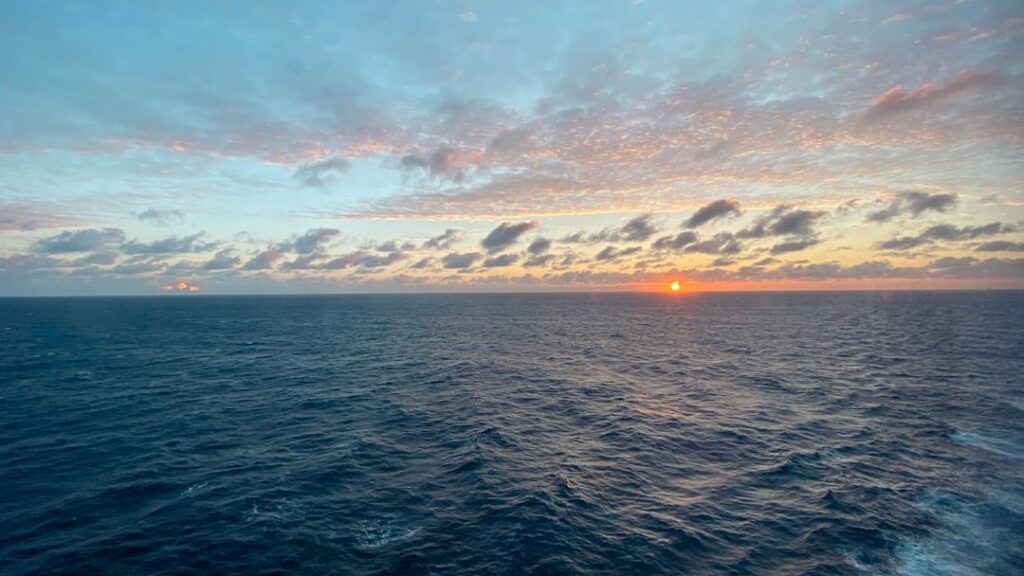
You spend your whole life looking at the ocean from beaches, maps, and airplane windows, and it still hides its strangest secret right under your nose: most of its water is older than your entire civilization. In the deep Pacific, far below the waves you know, scientists can actually track water that last touched the atmosphere roughly about a thousand years ago. You are literally looking at sunlight and storms from the Middle Ages, frozen not in ice, but in slow‑moving, silent water. And inside that ancient layer, life gets seriously weird. You are dealing with animals that look like mushrooms, shrimp that represent entirely new branches of the tree of life, and ecosystems powered not by sunlight, but by chemical reactions and slow rain of dead plankton. If you imagine the surface ocean as a crowded city, the deep Pacific is more like a forgotten, underground kingdom where the rules of biology bend, and sometimes seem to break.
The Thousand‑Year Water You Never See
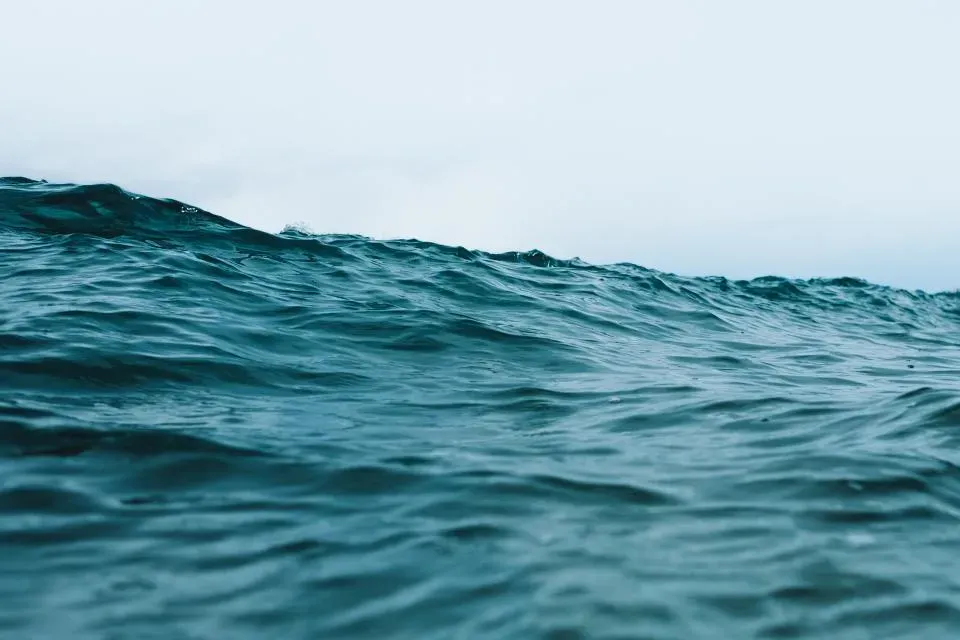
You are used to thinking of the ocean as a big, sloshy bathtub that is always mixing, but the Pacific does not work that way. When scientists measure radiocarbon in deep Pacific water, they find that much of it last contacted the atmosphere roughly seven hundred to about a thousand years ago, sometimes even older in mid‑depth layers. That “age” is not mythology; it comes from tracking the slow decay of radioactive carbon in dissolved carbon dioxide, which acts like a clock for how long the water has been away from the surface. You are essentially watching an invisible time stamp drift through the abyss.
What this means for you is that the deep Pacific is not just “deep”; it is temporally distant. The water under your feet off California or Japan might have sunk in the Southern Ocean centuries before your country existed, then crawled along the sea floor toward the North Pacific at a few centimeters per second. Because there is no real deep‑water formation region in the North Pacific today, that abyssal water mostly just spreads and ages, with only slow mixing and tiny vertical motions to refresh it. You live on a planet where some of the water below you has not tasted the sky since long before anyone wrote with a printing press.
How a Hidden Layer Stays Old for So Long
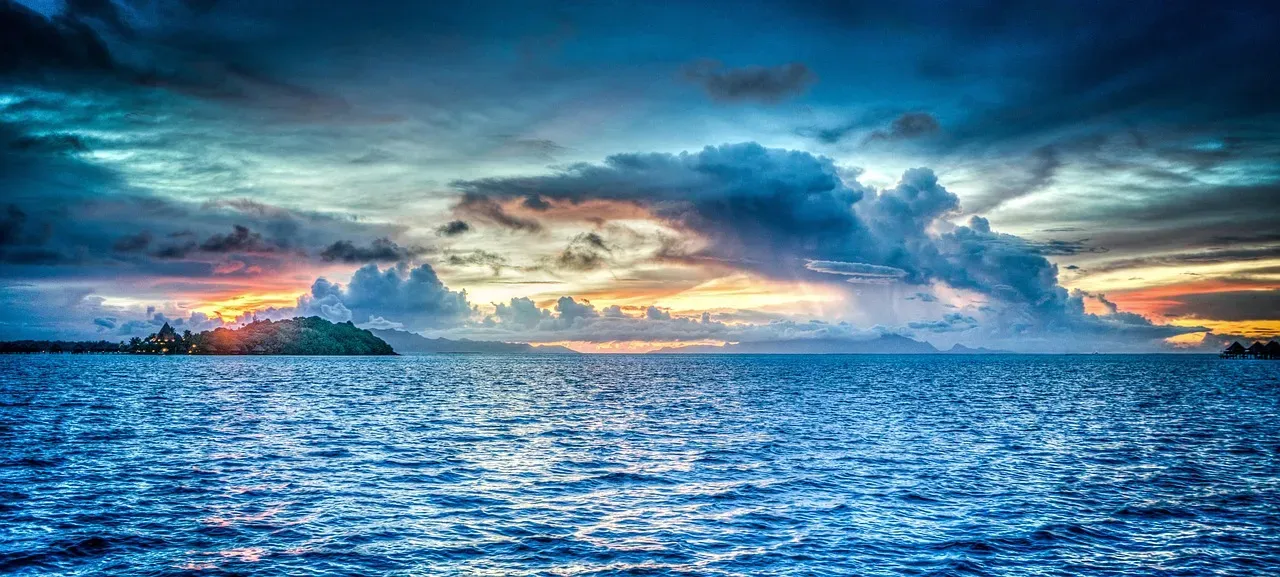
If you could slice the Pacific like a cake, you would see that the ocean is layered more like an onion than a soup. At the top, storms, winds, and waves keep the surface mixed on timescales of days to seasons, then the mixing power drops off sharply as you go deeper. In the abyss, the density structure of seawater, combined with the global overturning circulation, traps water into slow‑moving layers that slide past each other horizontally more than they mix vertically. You are dealing with a circulation pattern measured in centuries, not seasons.
New deep water is mostly formed near Antarctica, where very cold, salty water sinks and spreads northward along the bottom, eventually filling much of the deep Pacific. As it moves, it gradually loses its radiocarbon and oxygen and accumulates nutrients and dissolved carbon from sinking organic matter, but it does not simply shoot back up to the surface like a fountain. Instead, you get gentle diapycnal mixing – weak turbulence and small‑scale stirring – that brings only a fraction of that ancient water back toward the surface each year. You are living above a conveyor belt that takes about a thousand years to complete a single loop.
Why “Not Mixed in a Thousand Years” Is Both True and Tricky
When you hear that a deep water layer has not mixed with the surface in over a thousand years, you might picture a perfectly sealed vault under the ocean, which is not quite right. Oceanographers talk about “ventilation age,” the time since a parcel of water last exchanged gases with the atmosphere, and that age in the deep Pacific can indeed reach about a millennium or more locally. But that age is already an average over many pathways and mixing events, so you are looking at a smeared‑out story rather than a single, untouched blob of water. The water is old in the sense of memory, not in the sense of complete isolation.
So when you stand on a Pacific beach, you are not hovering over a single fossil pocket of medieval water; you are standing above a slowly aging reservoir whose properties reflect centuries of weak mixing and long journeys. A molecule originally at the sea surface might be shuffled downward quickly, or it might linger near the top before sinking; the transit times vary. Still, the key point for you is this: the deep Pacific is the oldest major water mass on Earth today, and vast volumes down there have had no direct contact with the atmosphere since long before your grandparents’ grandparents were born. It is old enough that if the circulation slowed significantly more, parts of it would start running out of oxygen altogether.
The Deep Pacific as Earth’s Dark Archive
You can think of the deep Pacific as your planet’s slowest, darkest archive. Because that thousand‑year water stores dissolved carbon and nutrients accumulated from surface life, it acts as a huge long‑term buffer for the global climate. When plankton die at the surface and sink, they carry organic carbon into this abyssal storehouse, where it may stay locked away for centuries before upwelling and re‑releasing some of that carbon dioxide back into the air. You are, without realizing it, in a long‑running negotiation between your atmosphere and this deep reservoir.
Climate scientists lean heavily on this hidden layer when they talk about how long human‑produced carbon dioxide will affect your future. If you add more carbon to the atmosphere, some of it dissolves into the ocean surface, then slowly trickles into the deep Pacific along those same ancient pathways. Because the transit time is so long, any big change in the overturning circulation can alter how much carbon the deep ocean can store. You are tied to a thousand‑year clock: even if emissions dropped tomorrow, the deep Pacific would be adjusting to what you have already done for generations to come.
Life in the Dark: How Anything Survives There
Now imagine you are a creature living in that thousand‑year water. You never see the sun, the pressure on your body is hundreds of times what you feel at sea level, and the temperature hovers just above freezing. You are not grazing on lush underwater meadows; you are surviving on a slow snow of organic particles drifting down from the surface, plus occasional chemical windfalls from hydrothermal vents or cold seeps. Your muscles are soft, your metabolism is slow, and your body is probably built for energy efficiency, not speed or brute force.
Because these conditions are so stable over very long timescales, deep‑sea species can evolve along strange, highly specialized lines. You see spindly amphipods, translucent worms, bizarre gelatinous animals, and predators with oversized mouths or elastic stomachs to capitalize on rare meals. Many of these creatures live longer than you do, reproduce slowly, and may have populations spread over enormous areas of the abyss. You are looking at life that quietly optimized itself for a world where change is measured over centuries, and where every calorie is a small miracle.
When New Species Do Not Fit the Textbook
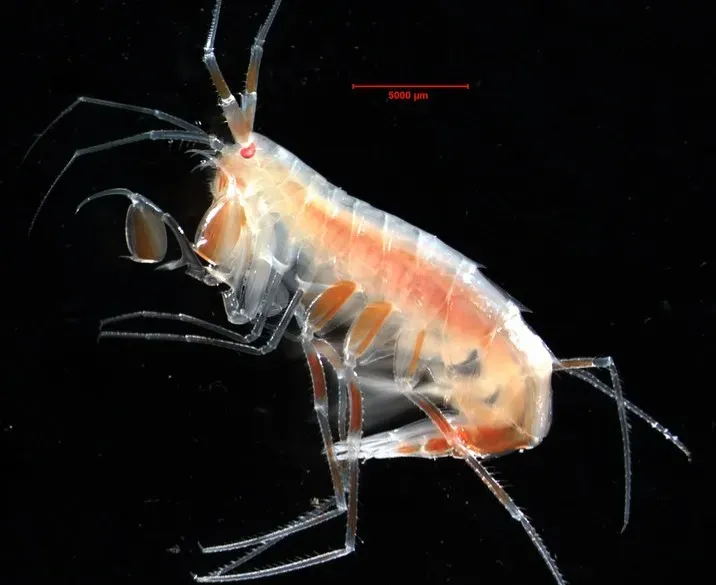
As deep‑sea expeditions push into poorly sampled parts of the Pacific, you start to run into creatures that stretch your idea of what an animal even is. In the last decade, researchers have described gelatinous, mushroom‑like animals from deep water, as well as other odd forms, that did not slip neatly into existing animal groups at first glance. Genetic work and detailed anatomy have eventually placed some of them within known branches, but the initial confusion shows you how close you are to the edge of your taxonomic map. You are walking in a forest where many of the trees are still unlabelled.
More recently, systematic surveys of the abyssal Pacific have uncovered dozens of new amphipod species, including an entire new evolutionary superfamily – an entire new major branch of crustacean life – that had never been recorded before. These animals were not living in some comic‑book “alien” ocean; they were simply overlooked in a zone so remote that nearly everything you pull up is either unknown or poorly described. When you hear that life down there “defies classification,” it often means that your existing categories were built from shallow‑water and terrestrial life, and the deep Pacific is forcing you to redraw the tree of life with new branches and unexpected connections.
Why Deep‑Sea Life Seems So Alien to You
To your eyes, a deep‑sea mushroom animal or a faceless, translucent fish might look like something out of science fiction, but the real story is that your imagination has been trained on land. You are used to animals with eyes that see sunlight, bodies that deal with gravity, and metabolisms tuned to warm temperatures and plentiful oxygen. Strip all that away, stretch evolutionary time, and you get designs that look radically unfamiliar: pancake‑shaped bodies to withstand pressure, frilly appendages to sense vibrations, skin that is more like jelly than armor. You do not recognize these creatures easily because they were never built to meet you.
On top of that, some deep‑sea lineages represent what biologists call “ghost branches” of evolution: lineages that split from known groups long ago, then quietly evolved in the deep where fossils are rare and sampling is sparse. When you finally sample one of these lineages in the Pacific abyss, it can appear so distinct that it challenges your current classification systems. The organisms are not magic; they are simply the outcome of millions of years of evolution in a low‑energy, stable, high‑pressure environment that you barely touch. To you, they feel alien because they represent possibilities your everyday world never needed.
How You Actually Explore a Thousand‑Year Water World
Even if you are fascinated by this, you are probably never going to strap on a submersible and drop five thousand meters into the Pacific. Instead, your window into that ancient layer is built from sensors and samplers mounted on research ships, moorings, floats, and robotic vehicles. Oceanographers lower instruments that profile temperature, salinity, oxygen, nutrients, and radiocarbon, then piece together the structure of the water column across entire basins. It is more like medical imaging than sightseeing – you are reconstructing the anatomy of a vast, dark body from narrow, precise slices.
For biology, remotely operated vehicles and towed cameras glide a few meters above the seafloor, photographing and sometimes collecting organisms that no one has seen alive before. Some expeditions focus on mining‑interest regions like the Clarion‑Clipperton Zone, not because they want metals, but because impending industrial activity forces you to understand what is at stake. Every haul of sediment or set of traps brings up new crustaceans, worms, and soft‑bodied animals that need to be sorted, described, and placed on the tree of life. You are, in a very literal sense, still in the early survey phase of your own planet’s largest habitat.
Why This Ancient Layer Matters to Your Future
If all of this feels like pure curiosity, it helps to remember how directly your life depends on what happens in that thousand‑year water. The deep Pacific stores a vast amount of heat and carbon; as it slowly warms and its circulation shifts with climate change, that stored energy and gas will influence sea level, weather patterns, and the long‑term pace of warming. You are not just heating the air around you; you are nudging a gigantic, delayed climate machine whose response will unfold long after individual political cycles and news headlines have faded.
At the same time, growing interest in deep‑sea mining, particularly in abyssal regions of the Pacific, puts those newly discovered lineages under real pressure before you even finish naming them. If you disturb sediments that have sat largely undisturbed for thousands of years, you could smother or erase communities that took centuries to assemble. Understanding the age and sluggishness of that water layer should make you cautious: anything you break there may not recover on timescales you can easily imagine. You are, whether you like it or not, now a manager of ecosystems that exist in water older than your written history.
Conclusion: Sharing a Planet With a Thousand‑Year Sea
Once you know it is there, you can never look at the Pacific the same way again. Beneath the bright surface where ships and storms scrawl their quick signatures, a slow, ancient layer of water circles the globe in darkness, carrying the chemical memory of air it last touched centuries ago. Inside that layer, animals with bodies and lineages you hardly understand go about their quiet lives, stitched into food webs powered by falling detritus and chemical gradients instead of sunlight. You are walking above a library of both climate and evolution, one that is still only partially cataloged.
In a sense, the deep Pacific shows you the limits of your usual timescale: your news cycles, your careers, even your civilizations are brief flickers compared with the thousand‑year journeys of abyssal water and the slow branching of deep‑sea life. Paying attention to that mismatch can make you more careful about what you dump into the ocean, and more humble about how much there is left to discover. The next time you stand at the shore and stare at the waves, you might ask yourself: if the water beneath you remembers the world of a thousand years ago, what kind of story do you want it to carry forward about you?