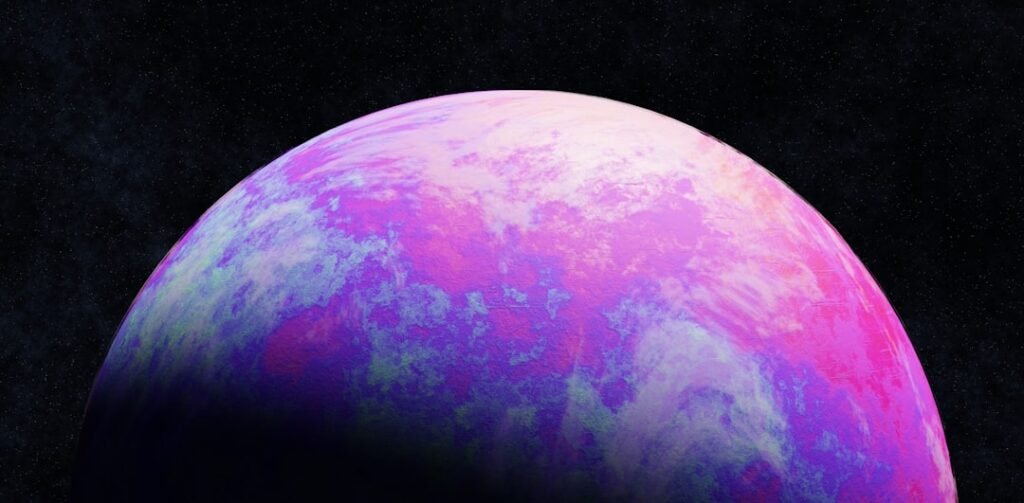
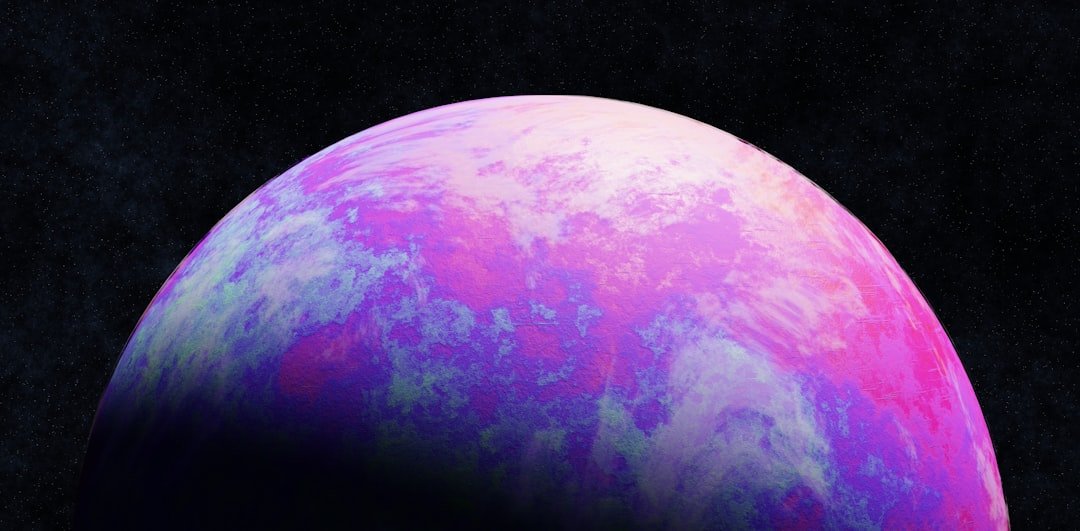
A Giant in an Unlikely Orbit (Image Credits: Unsplash)
Astronomers have uncovered startling details about TOI-5205 b, a Jupiter-sized gas giant orbiting a tiny red dwarf star 282 light-years away. Observations from the James Webb Space Telescope exposed an atmosphere with far fewer heavy elements than expected, even leaner than the host star itself. This discovery upends long-held assumptions about how massive planets form around low-mass stars.[1][2]
A Giant in an Unlikely Orbit
The very existence of TOI-5205 b puzzled scientists from the start. NASA’s Transiting Exoplanet Survey Satellite identified it as a candidate in 2023, and follow-up work confirmed its Jupiter-like size and mass around a star merely four times Jupiter’s radius.[3] During transits, the planet blocks about 6 percent of the star’s light, offering a prime window for study.
Experts dubbed it a “forbidden” planet because current models struggle to explain giant worlds around such small, cool M-dwarf stars. These stars host disks too sparse and short-lived for core accretion, the process that built Jupiter. Yet TOI-5205 b thrives there, orbiting closely in a setup that defies predictions.[4]
- Star mass: roughly 40 percent of the Sun’s, or 375 times Jupiter’s.
- Planet mass: slightly heavier than Jupiter’s, about 0.3 percent of the star’s mass.
- Why forbidden: Low stellar mass limits material for rapid giant growth.
- Record aspect: Largest known planet-to-star size ratio for transiting giants around red dwarfs.
James Webb Telescope Pierces the Veil
Researchers turned to JWST’s NIRSpec/PRISM instrument for transmission spectroscopy across three transits. Starlight filtered through the planet’s atmosphere revealed absorption features amid corrections for the active star’s spots.[1] This effort formed part of the GEMS survey, dubbed “Red Dwarfs and the Seven Giants,” the largest JWST Cycle 2 exoplanet program.
The deep transit depth provided exceptional sensitivity. Data processing accounted for stellar contamination, yielding a clear atmospheric signal. Lead author Caleb I. Cañas of NASA Goddard and team published findings in The Astronomical Journal.[3]
Unveiling a Chemically Anomalous Atmosphere
Spectral analysis detected methane and hydrogen sulfide, marking a carbon-rich, oxygen-poor profile. Heavy elements, or metals in astronomical terms, proved scarce relative to hydrogen. This metallicity marked the lowest recorded for any gas giant atmosphere.[4]
Shubham Kanodia of Carnegie Science noted the discrepancy. “We observed much lower metallicity than our models predicted for the planet’s bulk composition, which is calculated from measurements of a planet’s mass and radius,” he stated. “This suggests that its heavy elements migrated inward during formation and now its interior and atmosphere are not mixing.”[2]
| Object | Metallicity Relative to Hydrogen |
|---|---|
| TOI-5205 b Atmosphere | Lower than host star and Jupiter |
| Host Star (TOI-5205) | Higher than planet’s atmosphere |
| Jupiter | More enriched than TOI-5205 b’s atmosphere |
| Planet Bulk (Interior) | ~100 times richer than atmosphere |
Challenging the Foundations of Planet Formation
Standard theory posits gas giants accrete metals from their disks, ending richer than host stars. TOI-5205 b inverts this, with its atmosphere depleted while the core likely hoards heavies. Formation in a hazy, early disk around the M dwarf may have driven inward migration without later convection.[1]
Anjali Piette of the University of Birmingham highlighted the outlier status. “The planet having a lower metallicity than its own host star makes it stand out among all the giant planets that have been studied to date,” she observed. Future GEMS targets promise more insights into these rarities.[4]
- Core accretion struggles with low-mass disks.
- Disk instability offers alternative but rare for close orbits.
- No interior-atmosphere mixing implies stable layering post-formation.
- GEMS survey targets seven similar worlds for patterns.
- TOI-5205 b’s atmosphere holds the lowest metallicity among gas giants.
- Detections include methane and hydrogen sulfide in a carbon-heavy mix.
- Findings suggest heavy elements sank inward, barring atmospheric access.
TOI-5205 b forces a reevaluation of giant planet origins, especially around red dwarfs that dominate our galaxy. As JWST continues probing GEMS, these forbidden worlds may rewrite cosmic history. What implications do you see for exoplanet hunting? Share your thoughts in the comments.