
Few questions have occupied the human mind as stubbornly as this one. You look up at a clear night sky, count the visible stars, and wonder whether any of those distant suns could harbor something alive. The thought refuses to go away, and modern science has stopped treating it as a philosophical curiosity.
Today, astrobiology is a legitimate, well-funded field pursued by institutions on multiple continents. From studying water on Mars, to probing promising ocean worlds such as Europa or Saturn’s moon Enceladus, to looking for biosignatures in the atmospheres of exoplanets, NASA’s science missions are working together with a goal to find unmistakable signs of life beyond Earth. The solar system, it turns out, may be a far more crowded neighborhood than anyone once imagined.
Why Scientists Take the Search Seriously
There’s a simple reason this question has moved from science fiction shelves into peer-reviewed journals: the universe is staggeringly large, and life on Earth is remarkably adaptable. According to scientists such as Carl Sagan and Stephen Hawking, it would be improbable for life not to exist somewhere else other than Earth. This argument is embodied in the Copernican principle, which states that Earth does not occupy a unique position in the universe.
The explosion of knowledge about planets orbiting other stars, called exoplanets, and the results of decades of research on signatures of life, known as biosignatures, have encouraged NASA to address in a scientifically rigorous way whether humanity is alone. That’s a remarkable institutional shift from even thirty years ago, when the subject was largely considered fringe territory.
Mars: The Closest and Most Studied Suspect
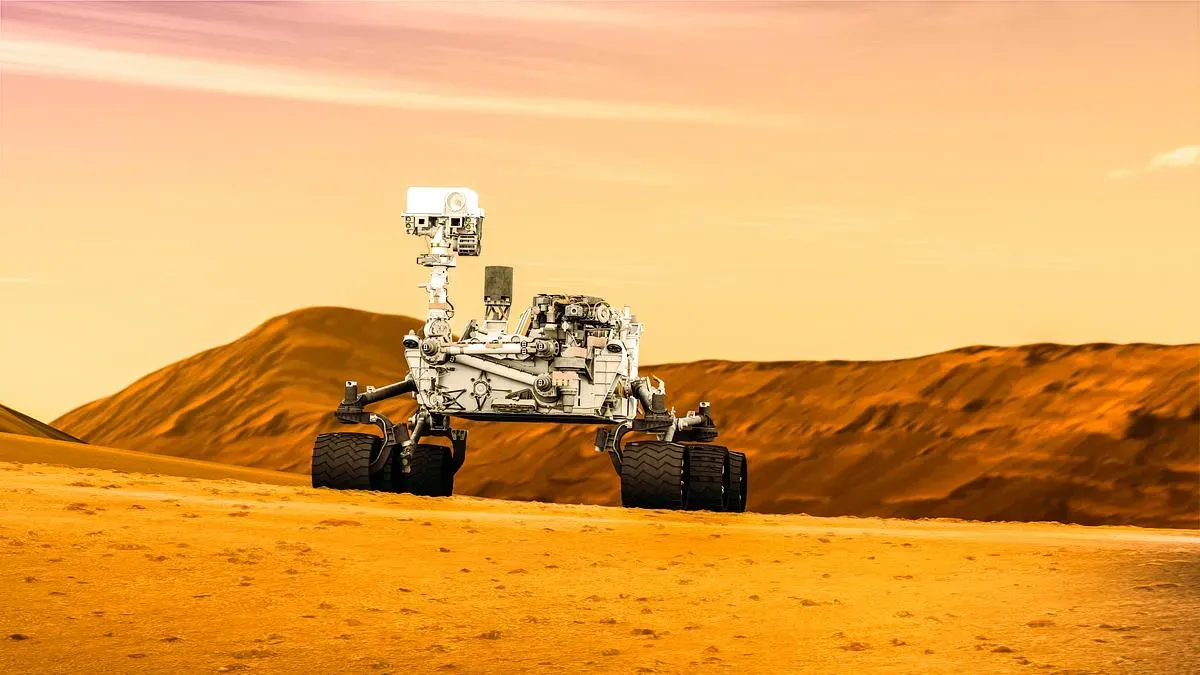
Mars has held our attention for over a century, and recent discoveries suggest the obsession is well-founded. NASA’s Perseverance Mars rover investigated what scientists called its “most puzzling, complex, and potentially important rock yet.” It showed signs of past water, organic material, and clues suggesting chemical reactions by microbial life. After a rigorous, yearlong peer-review process, the journal Nature published the validated results: Perseverance’s “Sapphire Canyon” sample indeed contains potential biosignatures.
The discovery was particularly surprising because it involves some of the youngest sedimentary rocks the mission has investigated. An earlier hypothesis assumed signs of ancient life would be confined to older rock formations. This finding suggests that Mars could have been habitable for a longer period or later in the planet’s history than previously thought. While the research has been peer-reviewed, the findings will need extensive follow-up study to confirm or disprove the potential biosignature.
Europa: An Ocean World Hiding Beneath the Ice
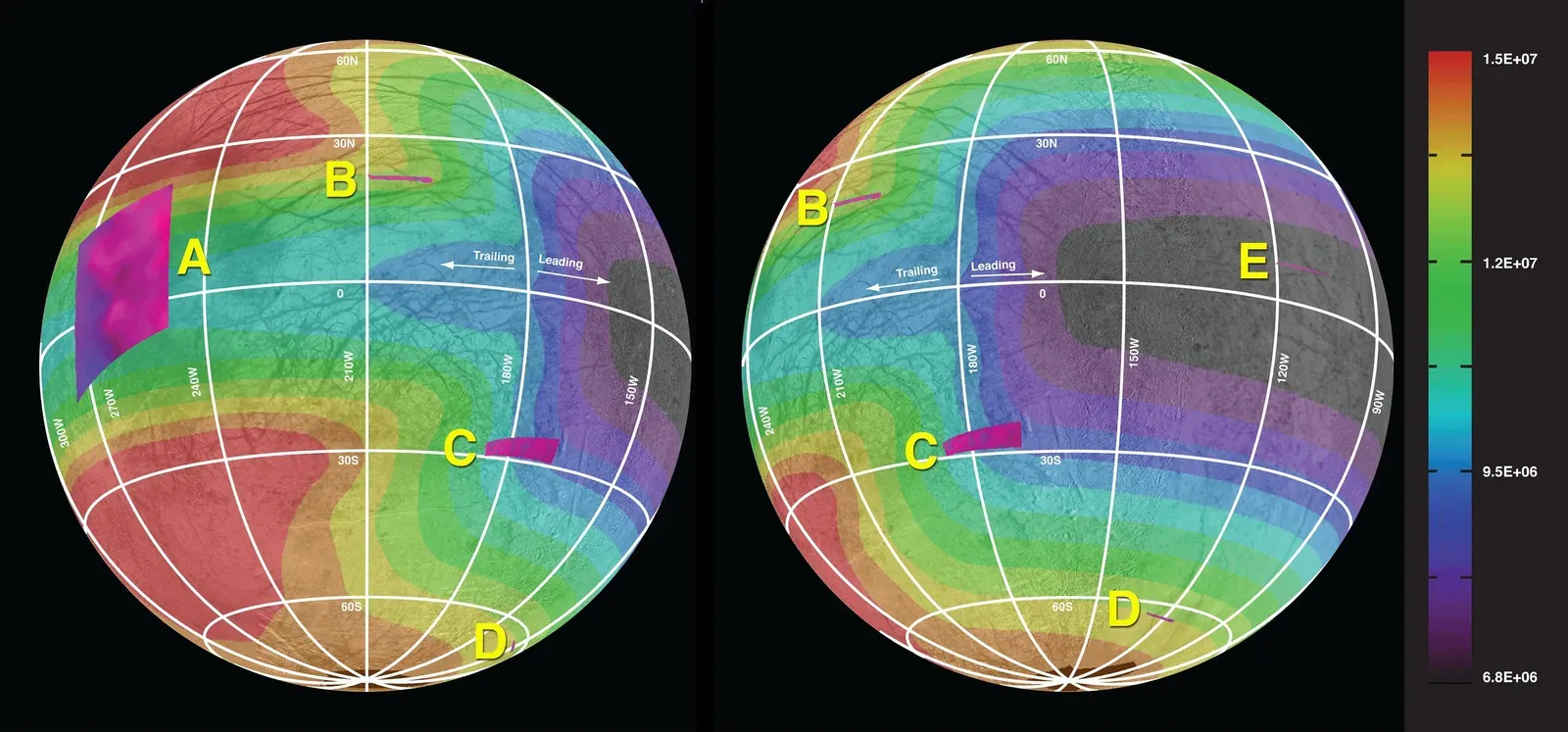
The most important discovery that elevated Europa to the top of the astrobiology list was the confirmation of a vast subsurface ocean of liquid water. Europa is believed to host a global ocean beneath its ice crust, possibly more than 100 kilometers deep. That’s more liquid water than exists on the entire surface of Earth, locked away under a frozen shell.
Europa has evidence of an ocean beneath its ice crust. A NASA experiment suggests that if this ocean supports life, signatures of that life in the form of organic molecules, including amino acids and nucleic acids, could survive just under the surface ice despite the harsh radiation on this world. If robotic landers are sent to this moon to look for life signs, they would not have to dig very deep to find amino acids that have survived being altered or destroyed by radiation.
Enceladus: Saturn’s Moon That Shoots Clues Into Space
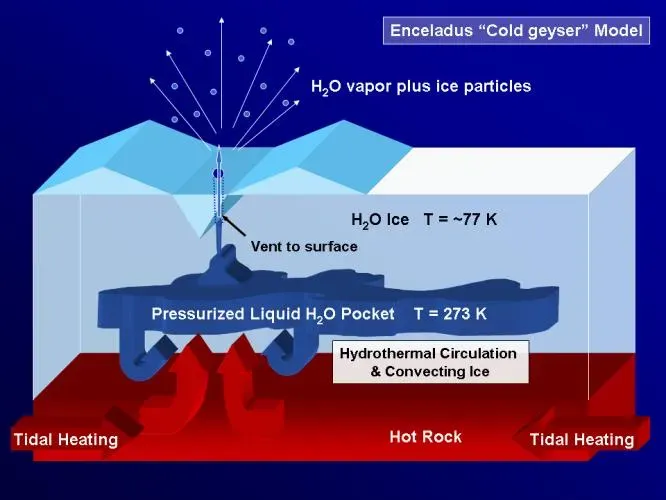
In 2005, NASA’s Cassini spacecraft flew past Enceladus and made a stunning discovery: geysers of water vapor, ice particles, and organic molecules shooting out from cracks near its south pole. These geysers, dubbed the “tiger stripes,” erupted from fractures in the icy crust, venting material from an underground ocean into space. No other world in our solar system has handed scientists a sample quite so directly.
Scientists digging through data collected by the Cassini spacecraft found new complex organic molecules spewing from Saturn’s moon Enceladus. This is a clear sign that complex chemical reactions are taking place within its underground ocean. Some of these reactions could be part of chains that lead to even more complex, potentially biologically relevant molecules. Enceladus ticks all the boxes to be a habitable environment that could support life: the presence of liquid water, a source of energy, a specific set of chemical elements, and complex organic molecules.
The Europa Clipper Mission: A New Pair of Eyes on an Ocean World
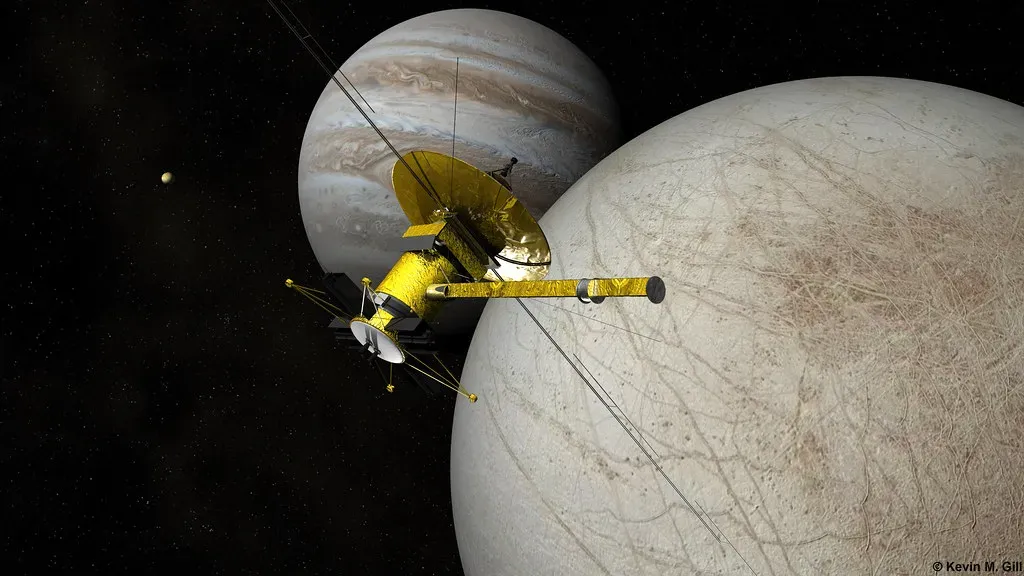
Europa Clipper is not a life-detection mission, though it will investigate whether the icy moon, with its subsurface ocean, has the capability to support life. Understanding Europa’s habitability will help scientists better understand how life developed on Earth and the potential for finding life beyond our planet. The distinction matters. Establishing habitability is the necessary groundwork before any direct life search can begin.
Using a formidable array of instruments for each of the mission’s 49 flybys, scientists will be able to assess how thick the moon’s icy shell is and gain a deeper understanding of the vast ocean beneath. They’ll inventory material on the surface that might have come up from below, search for the fingerprints of organic compounds that form life’s building blocks, and sample any gases ejected from the moon for evidence of habitability. Mission scientists will analyze the results, probing beneath the moon’s frozen shell for signs of a water world capable of supporting life.
Titan: Saturn’s Moon That Resembles Early Earth
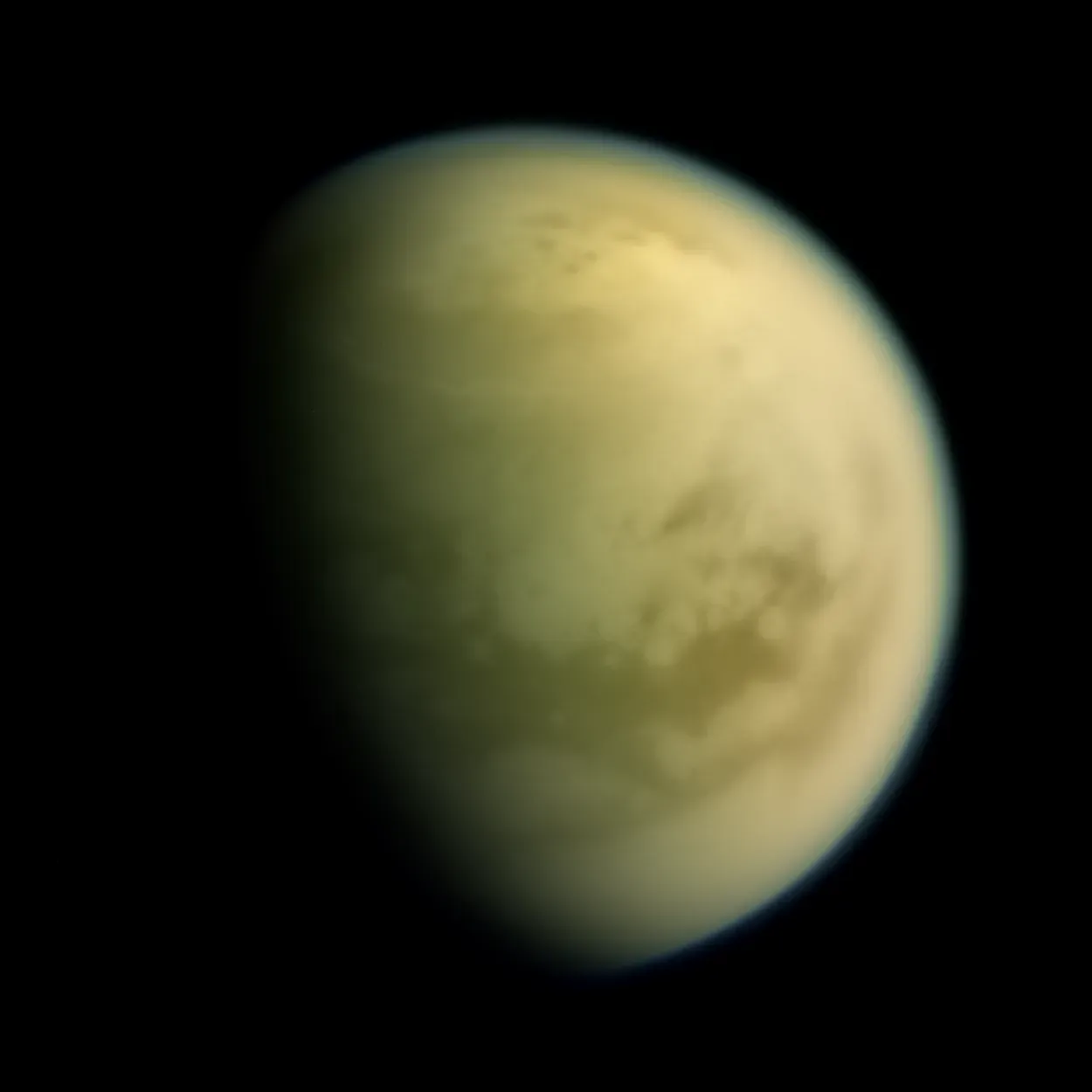
Titan is unique in having an abundant, complex, and diverse carbon-rich chemistry and a surface dominated by water ice, with an interior water ocean, making it a high-priority target for astrobiology and origin of life studies. No other moon in the solar system comes close to offering this combination of chemical richness and structural complexity. It’s a world that feels, in some unsettling way, almost familiar.
Titan has a thick atmosphere and features a variety of hydrocarbons, with rivers and lakes of methane, ethane, and natural gas, as well as precipitation cycles like on Earth. As a result, the Dragonfly mission has been described as an astrobiology mission because it will search for signs of the prebiotic environments like those on Earth that gave rise to life. Dragonfly passed its critical design review in April 2025, and construction of the spacecraft began in March 2026.
What Scientists Are Actually Looking For: Biosignatures Explained
You might wonder what exactly counts as evidence of life when you can’t collect it with your own hands. Researchers have produced a list of gases that scientists should be looking out for on potentially habitable worlds. Gases like these could indicate the presence of life, known as biosignatures, including dimethyl sulfide and phosphine, along with the more obvious ones like oxygen and methane. The challenge is distinguishing life-produced signals from chemistry that happens without any biology at all.
Scientists search for biosignatures within the solar system by studying planetary surfaces and examining meteorites. Some claim to have identified evidence that microbial life has existed on Mars. The search for extraterrestrial biosignatures is limited to what one expects to find. As new metabolic pathways are discovered on Earth, less obvious signs of life may begin to present themselves on other planetary bodies. In short, Earth itself keeps teaching scientists to think bigger about what life can look like.
Conclusion: A Search Worth Taking Seriously
The search for life beyond Earth is no longer a matter of wishful thinking. It is a coordinated scientific effort with real missions, real samples, and real peer-reviewed results. These hidden ocean worlds challenge old assumptions about where life can exist and expand the boundaries of habitability far beyond Earth-like planets. It is entirely possible that the first evidence of extraterrestrial life will come not from a distant exoplanet or the surface of Mars, but from a dark, warm ocean beneath the ice of one of these extraordinary moons.
You are living in the era when this question moves from hypothesis to evidence. No confirmed discovery has been announced yet, and honesty demands that uncertainty be kept front and center. Still, the tools are sharper than they have ever been, the targets are more compelling than anyone expected, and the scientists doing this work are not speculating wildly. They are following the chemistry, one careful data point at a time.