
We like to think science has everything mostly figured out: black holes mapped, DNA decoded, planets catalogued like items in an online store. But just beneath that confident surface, there’s a set of questions so deep that even the brightest researchers keep hitting a wall. These aren’t tiny loose ends; they’re yawning gaps right in the middle of our best theories, the kind that make Nobel laureates admit, a bit nervously, that we still don’t really understand how reality works.
What surprised me the most, digging into these puzzles, is how ordinary life goes on while these giant question marks hover overhead. You can scroll social media and stream a show while, at the same time, nobody on Earth can fully explain what most of the universe is made of, or how consciousness actually arises in your brain as you read this sentence. Let’s walk through seven of the biggest mysteries that stubbornly refuse to give us a neat, satisfying answer.
1. Dark Matter: The Invisible Stuff That Holds Everything Together
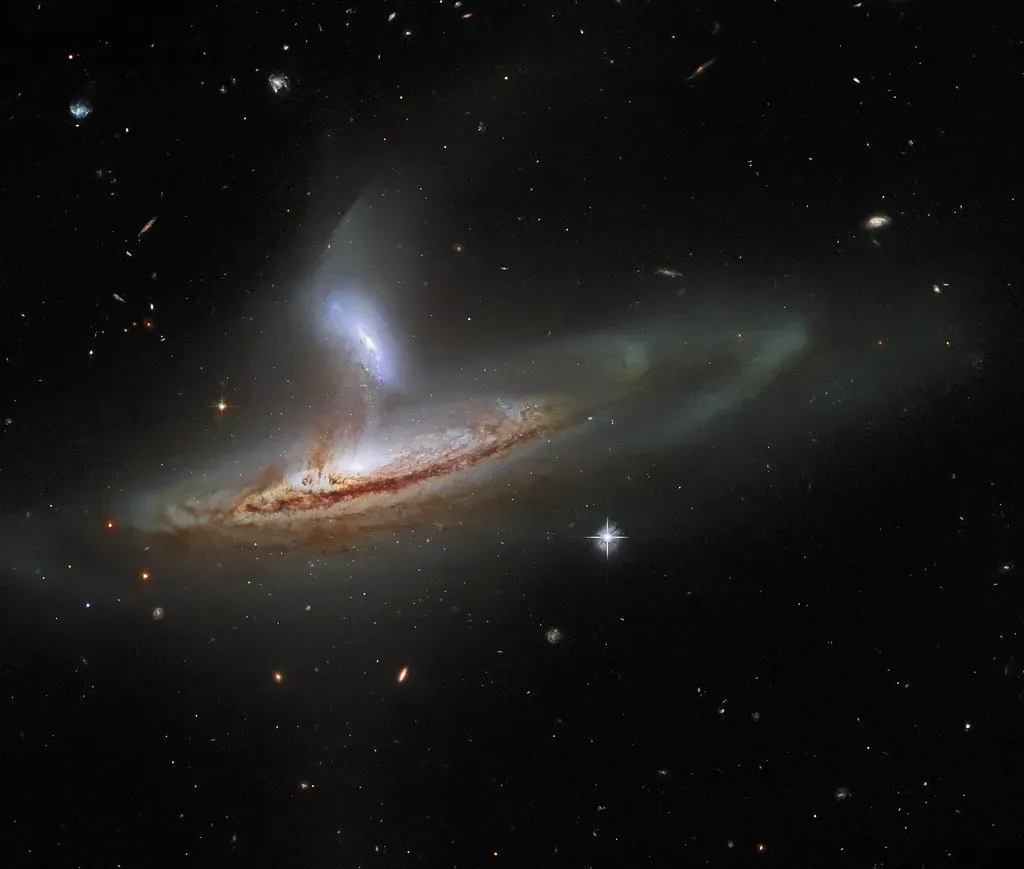
Imagine trying to understand a car’s engine while being allowed to look only at the paint job. That’s how astronomers feel about dark matter. When they measure how stars swirl around galaxies, the math screams that there’s far more mass than we can see, something like several times more than all visible stars, gas, and dust combined. Whatever this “missing mass” is, it does not shine, reflect, or absorb light in a way our telescopes can catch.
The weird part is that dark matter acts like a silent scaffolding for the universe. It shapes how galaxies form, how they cluster together, and even how light bends as it travels through space. Physicists have spent decades trying to catch dark matter particles in underground detectors, smash them into existence in particle colliders, or spot their fingerprints in cosmic radiation. So far: nothing conclusive. It’s like chasing a ghost that leaves gravitational footprints but never shows its face, and the longer the search goes on, the more some scientists wonder whether our theories of gravity themselves need an overhaul.
2. Dark Energy: The Force Pushing the Universe Apart Faster and Faster
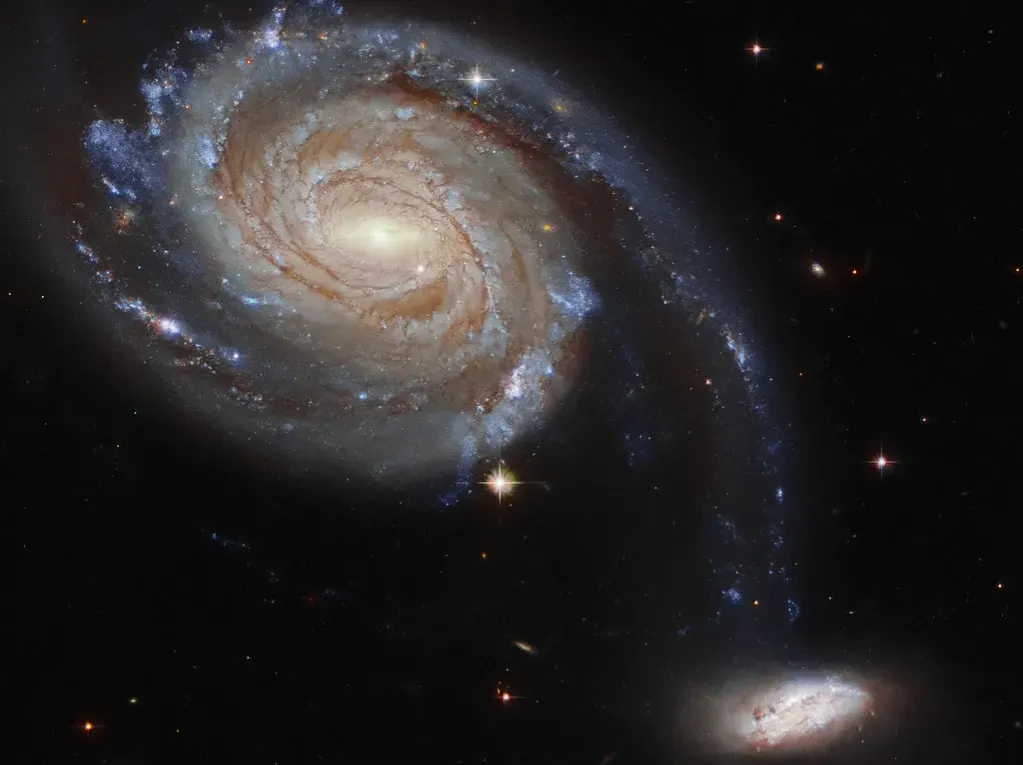
Just when astronomers thought they had cosmic expansion under control, distant supernovae threw a curveball: the universe isn’t just expanding, it’s speeding up. Something is acting like a kind of anti-gravity, stretching space itself more and more over time. They called it dark energy, which is basically a fancy way of saying, “mysterious thing we don’t understand that does something enormous.” Today, dark energy seems to make up the majority of the universe’s total energy budget, dwarfing everything we can see.
The puzzle runs deeper than a naming problem. If dark energy is tied to empty space itself, then quantum physics predicts a value that is wildly different from what we actually observe, off by a ridiculous factor that no one can comfortably explain. Cosmologists build ever-larger surveys to map how galaxies spread out and how the expansion changes over billions of years, hoping to corner this invisible culprit. But right now, dark energy sits there like an unreadable chapter in the middle of the cosmic story, quietly deciding the ultimate fate of everything while refusing to tell us what it is.
3. The Arrow of Time: Why Time Only Flows One Way

You can scramble an egg but never unscramble it. You can watch a glass fall and shatter, but never see the shards leap back up and reassemble. On a human level, this one-way flow of time feels obvious, almost boring. But when physicists look at the fundamental laws that govern particles and forces, those equations mostly work just as well forward or backward. On paper, there’s nothing stopping time from running in reverse; in real life, that never happens.
The usual explanation leans on entropy, the idea that systems naturally move from order to disorder, like a tidy room drifting toward chaos unless you clean it. But that just pushes the question back a step: why did the universe start in such a low-entropy, highly ordered state in the first place? Nobody has a satisfying, widely accepted answer. Some propose exotic ideas involving multiple universes or deep links between gravity and thermodynamics, but for now, we live with this strange tension: the mathematical rules of nature don’t care about “before” and “after,” yet our entire experience of life is built on time marching relentlessly forward.
4. Consciousness: How a Physical Brain Produces a Private Inner World
We can map brain activity, measure electrical spikes, and track chemicals sloshing around neurons in incredible detail. We can see which areas light up when you recognize a face, feel afraid, or recall a childhood memory. But there’s a brutal gap between these measurements and the simple, stubborn fact that you have an inner life. You don’t just process information; you feel things. There is a “you” behind the eyes, experiencing color, pain, music, and meaning. How does gray, jelly-like tissue generate that subjective world?
Some researchers argue that consciousness will eventually fall to the same kind of explanation we use for digestion or photosynthesis: complex, but fundamentally straightforward biology. Others suspect there’s something deeper going on, maybe requiring a new way of thinking about information, computation, or even physics itself. Meanwhile, practical questions pile up: how conscious is a newborn, a dog, or a large language model? What about a patient under anesthesia, or someone with advanced dementia? We can’t even agree on a clear test for consciousness, which makes the mystery feel less like a tidy puzzle and more like standing at the edge of a foggy forest, unsure what’s really inside.
5. The Origin of Life: How Chemistry Turned Into Biology
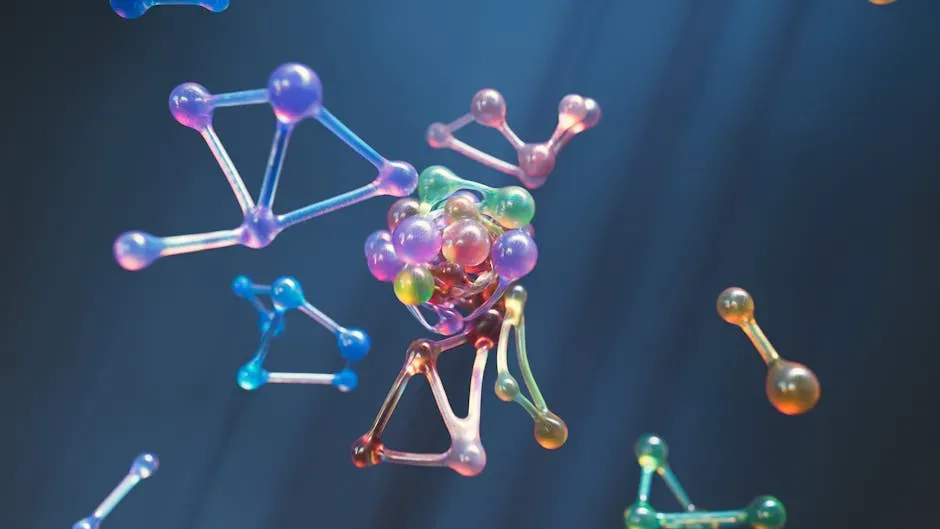
At some point on the early Earth, lifeless molecules turned into the first self-replicating systems, and everything from bacteria to humans eventually followed. That leap – from simple chemistry to the first primitive cell – is one of the biggest unsolved jumps in science. We have realistic ideas about the conditions on early Earth, from volcanic landscapes and deep-sea vents to shallow ponds rich in organic molecules. In the lab, scientists have coaxed certain building blocks of life, like amino acids and nucleotides, to form under plausible conditions.
But stitching those ingredients into a working, evolving system is a different level of challenge. Did life start with simple RNA-like molecules that both stored information and catalyzed reactions? Did metabolism come first, with cycles of chemical reactions setting the stage long before any genetic code? Or did multiple pathways tangle together in some messy, lucky accident? Each model captures a piece of the story but none has nailed a complete, experimentally confirmed path from “mud and minerals” to “something that copies itself and evolves.” Until we can recreate that spark in a controlled way, the origin of life remains a tantalizing blank in our timeline.
6. The Fine-Tuned Universe: Why the Cosmic Settings Seem Just Right
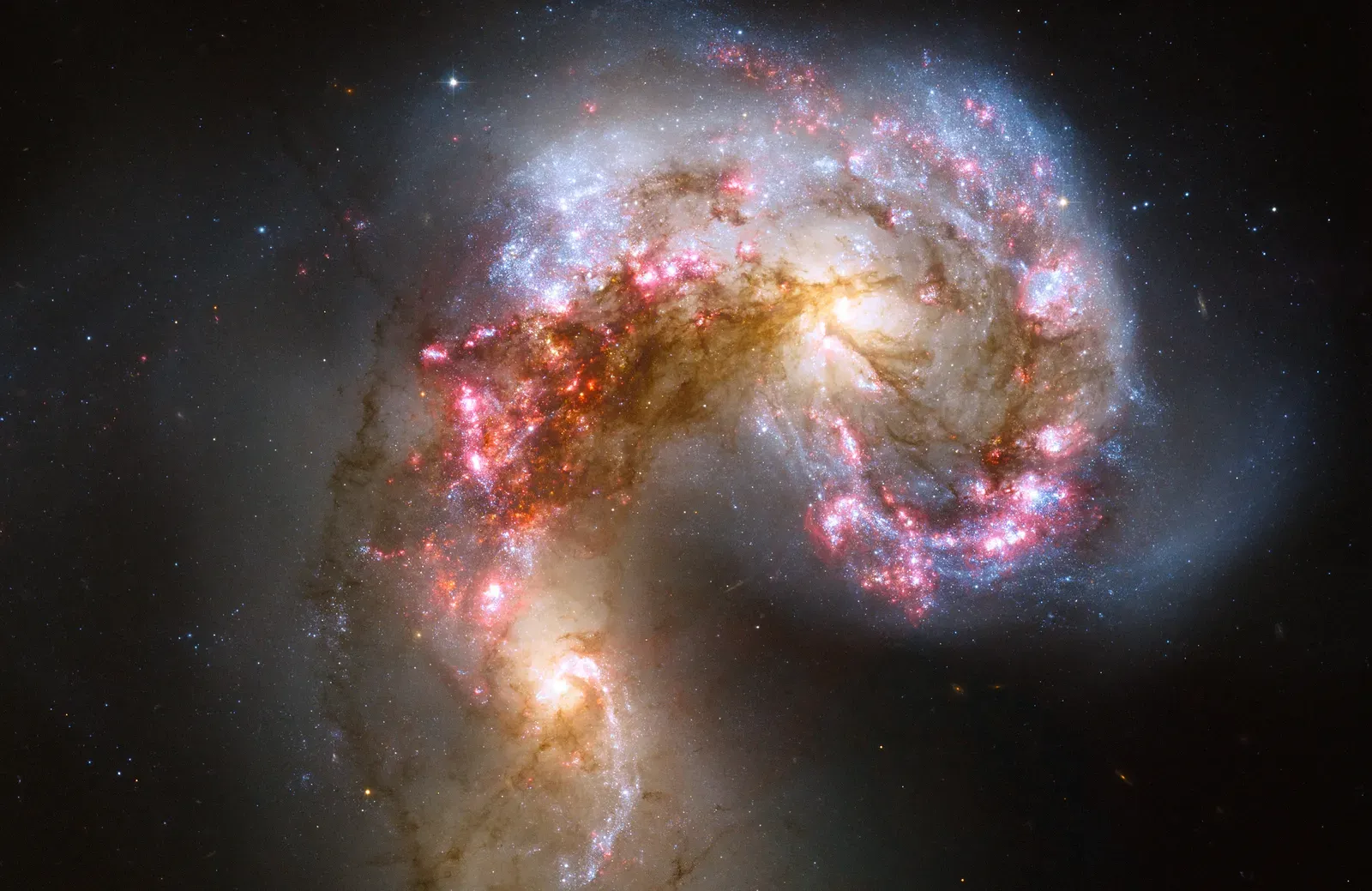
When physicists plug the numbers that describe our universe into their equations – strengths of fundamental forces, masses of basic particles, speed of cosmic expansion – they notice an unsettling pattern. If many of those values were even slightly different, stars might never form, atoms could be unstable, or chemistry as we know it might be impossible. Yet here we are, with stable matter, long-lived stars, complex chemistry, and eventually living beings staring back at the cosmos and asking why it works so nicely for them.
Some argue this isn’t mysterious at all, saying we simply could not be around to ask the question in a universe where the numbers did not permit life, so our perspective is biased by survival. Others propose that there might be a vast “multiverse” of many universes with different settings, and we just happen to live in one that works. Still others look for deeper physical principles that would make these values inevitable, not finely tuned. The uncomfortable truth is that we don’t yet know whether this apparent precision is a profound clue about reality’s foundation or just a cosmic version of winning the lottery without knowing how many tickets were sold.
7. Quantum Gravity: Reconciling the Very Big with the Very Small
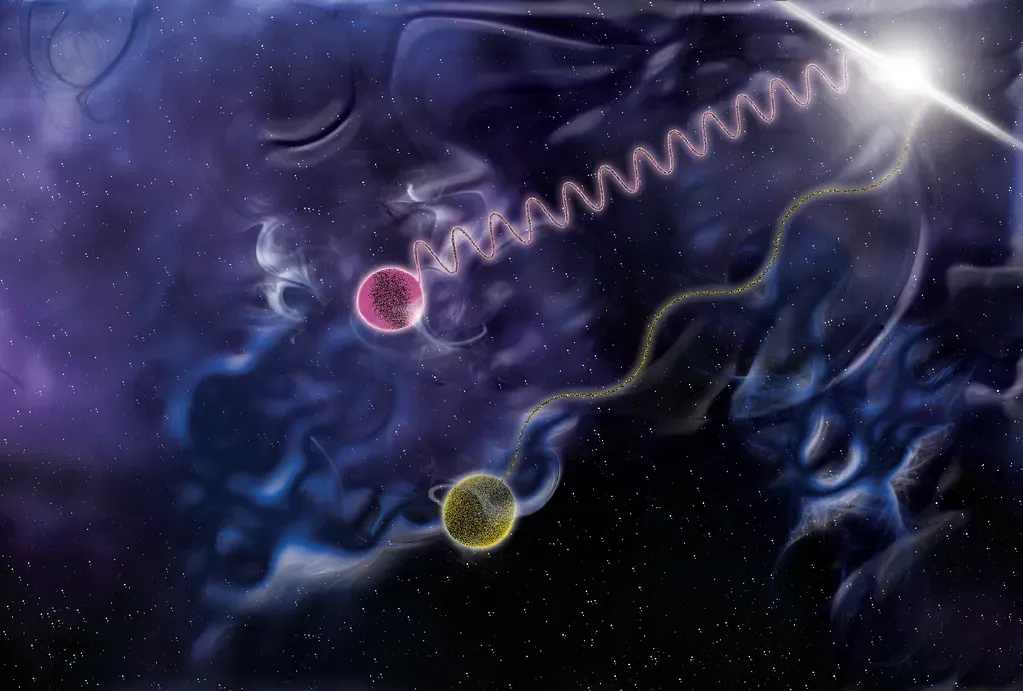
On one side of physics sits general relativity, our best theory of gravity and the structure of space and time. It handles planets, black holes, and the expansion of the universe with stunning accuracy. On the other side sits quantum mechanics, which describes particles, forces, and fields on the tiniest scales, powering technologies from lasers to smartphones. Both theories work brilliantly in their own domains, but when we try to apply them together – inside black holes, near the Big Bang – they clash violently like two perfectly tuned instruments that cannot play in the same band.
Attempts to bridge this gap have led to ambitious frameworks like string theory, loop quantum gravity, and other proposals that sometimes sound more like abstract math art than everyday physics. These ideas predict things like tiny extra dimensions or discrete “atoms” of spacetime, but testing them is brutally hard because the relevant energies or scales are far beyond what our current experiments can reach. The result is a strange stalemate: our two best descriptions of the universe refuse to merge into a single clear picture. Until we crack this, there’s a sense that we’re missing the real operating system under both gravity and quantum weirdness.
Conclusion: Living Comfortably with the Unknown
When you stack these mysteries side by side – dark matter, dark energy, time’s arrow, consciousness, life’s origin, cosmic fine-tuning, and quantum gravity – it’s hard not to feel a mix of awe and humility. For all our satellites, supercomputers, and massive experiments buried under mountains, some of the most basic questions about reality remain wide open. In a way, that’s comforting: the universe hasn’t run out of secrets just because we can now ask our phones to solve math problems or translate a sentence in an instant.
I sometimes think the most honest stance is a kind of curious patience. We keep pushing, building better instruments, arguing over new theories, and, occasionally, throwing out ideas we once considered sacred. The story of science has always been a slow, stubborn march from confusion to slightly less confusion, and there’s no sign that pattern is changing. Maybe the most thrilling part is this: somewhere, a kid who’s in school right now might be the person who finally cracks one of these puzzles. Which of these mysteries would you bet gets solved first – and which one do you secretly hope never fully loses its magic?