
Every once in a while, a question hits you so hard it feels like the floor under your everyday life cracks a little. You might be making coffee, scrolling your phone, and suddenly it appears: what if the universe is not just stuff, but somehow aware of itself? For a second, dishes, deadlines, and text messages seem strangely small compared to that possibility.
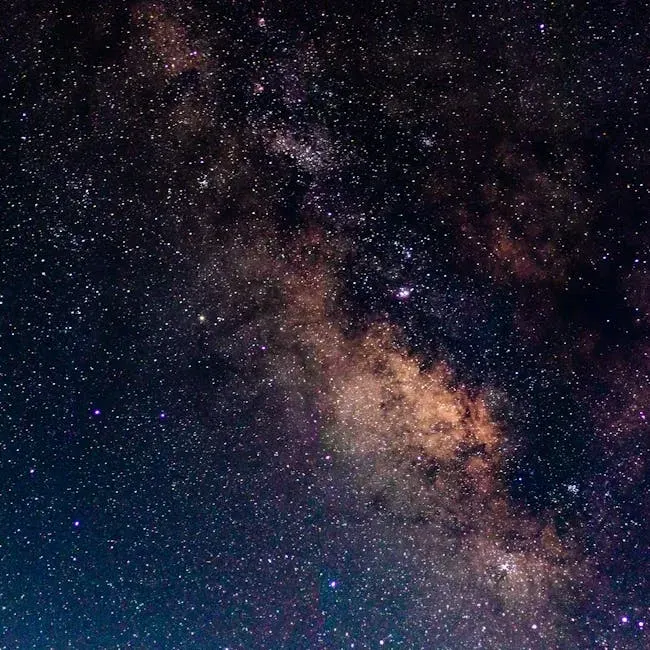
I still remember the first time this question landed for me, really landed. I was standing outside on a cold night, staring up at the sky, and it struck me that the atoms in my brain were made from the same dead-looking matter as those distant stars. Yet here I was, wondering about them. In that moment, it felt almost absurd to think consciousness was just a random side-effect, like static on a radio. But is that all it is?
From Star Dust To Self-Doubt: How Matter Woke Up

Here’s the wild part: according to modern physics and cosmology, everything you have ever known began as a hot, dense soup of energy and elementary particles. No thoughts. No feelings. No one there to say it was beautiful or terrifying. Just matter and energy following simple rules over billions of years, slowly giving rise to stars, planets, chemistry, and eventually to brains that could worry about rent and read philosophy books.
On one level, this story is brutally simple. Take basic particles, let them interact according to physical laws, and complexity snowballs. Molecules become cells, cells become nervous systems, and nervous systems become minds. But somewhere along that chain, something deeply mysterious happens: experience appears. Red looks like something. Pain feels like something. Joy glows in a way that cannot be captured by an equation. That leap from dead matter to lived experience is where many scientists and philosophers quietly admit: we do not fully understand what is going on.
What Consciousness Really Is (And Why It Refuses To Sit Still)
When people say the universe might “know” it exists, they’re really poking at the mystery of consciousness. At its simplest, consciousness is just the fact that it feels like something to be you. There is a “movie” of experience playing in your mind: colors, sounds, emotions, thoughts. If that inner movie was gone, the lights of your world would be out, even if your body kept going through motions.
Here’s the catch: we can map brain activity with incredible detail, yet the connection between brain signals and the felt quality of experience still looks like a missing bridge. Some researchers argue that once a system performs the right kind of information processing, experience arises automatically. Others suspect we are still missing some deep principle, the way people once missed the idea of gravity while watching apples fall. Consciousness refuses to sit neatly in a box, which is why some thinkers have started asking a more radical question: maybe awareness is not just something that pops up at the end of the story. Maybe it is woven into the story from the start.
The Hard Problem: Why Matter Alone Might Not Be Enough
One of the most influential ideas in this debate is often called the “hard problem of consciousness.” The basic complaint is straightforward: you can describe every detail of how neurons fire, how information is processed, how behavior is produced, and still not have answered why all that process should feel like anything from the inside. Why is there a rich, colorful inner world instead of a perfectly functioning but utterly dark machine?
Imagine describing a song only in terms of air vibrations, frequencies, and equations. You might capture the structure, but you would miss the actual feeling of the music. Some philosophers argue that our usual way of talking about matter is like that: it captures the structure but leaves out the experience. If that is true, then saying “the universe is just matter” might be like describing a novel only by the ink on the page, ignoring the meaning in the story. The ink is real, but it does not seem to be the whole picture.
Panpsychism: The Strange Idea That Awareness Goes All The Way Down

This is where one of the most controversial ideas steps in: panpsychism. In plain language, it suggests that some very primitive form of experience might be a basic feature of the physical world, present even in the tiniest building blocks of reality. It does not mean rocks are secretly composing symphonies or gossiping about your life. Instead, it means that the raw ingredient of consciousness – something like the most basic glimmer of “what-it-is-like” – might be as fundamental as mass or charge.
Supporters see this as a way to close the gap between dead matter and rich consciousness. If every bit of matter has a sliver of experiential nature, then building complex minds from matter is less of a miracle and more of an organizing problem. Critics argue this is just shifting the mystery around: saying electrons “experience” anything sounds like poetic nonsense. Yet the fact that serious philosophers and some scientists now engage with this idea shows how unsatisfied many are with the old, purely mechanical view of the universe.
Are Our Brains Just Machines – Or Windows The Universe Looks Through?
The more we learn about the brain, the more mechanical it can seem. Neurons fire, chemicals flow, circuits form habits. You can stimulate a tiny region and trigger a memory, tweak another and lift a depression. From one angle, it feels like we are nothing but exquisitely advanced biological machines, executing patterns written by genes, environment, and chance.
And yet, from another angle, it feels like something very different is going on. Your brain does not just process data; it creates a world that you inhabit. It tells a story in which you are the main character, full of desires, fears, and meaning. Some thinkers like to flip the usual picture: instead of consciousness being an accidental afterthought of the universe, maybe each conscious being is a small window through which the universe becomes aware of itself. It is a poetic image, yes, but it captures a real puzzle: why should a lump of matter care, love, regret, or stand in awe under a night sky?
Meaning, Morality, And A Universe That Might Not Be Empty Inside
Our answer to the question “Is the universe just matter?” quietly shapes our sense of meaning and morality. If you see everything as fundamentally pointless particles in motion, it can be tempting to feel that values are just illusions, useful tricks for survival but not anchored in anything deeper. In that picture, love, beauty, and wonder are like pretty surface ripples on an otherwise cold and indifferent sea.
On the other hand, if you allow that consciousness might be a built-in feature of reality rather than an accidental glitch, the emotional tone of the cosmos changes. Suffering and joy begin to look less like chemical accidents and more like something that matters at a fundamental level. Even if you stay completely secular, you might start to feel that caring for conscious beings is, in a very literal sense, caring for the way the universe experiences itself. That shift does not prove that the universe “knows” it exists, but it does make our choices feel less like noise and more like notes in a shared song.
Living With The Mystery: Humility, Wonder, And Everyday Life

In the end, we are still far from a final answer. The best evidence we have says that matter and physical laws explain a staggering amount, from galaxy formation to the way your phone works. At the same time, consciousness remains stubbornly hard to pin down, and no single theory has won the day. We are living in a moment where neuroscience, physics, and philosophy are all poking at the same locked door from different sides.
So maybe the wisest move, at least for now, is to live in the tension. To act as if our experience is both rooted in matter and somehow more than a mechanical trick. To let the mystery make us humbler, kinder, and a bit more astonished that there is anything here at all, let alone a universe that contains beings able to ask if it knows it exists. When you look up at the night sky next time, you might quietly wonder: is that darkness out there looking back through you – and if it is, what will you do with the tiny slice of awareness you have been given?