If you have ever stared up at the night sky and felt that strange mix of wonder and unease, you are already halfway into the holographic universe debate. The idea that your entire reality might be a kind of cosmic projection sounds like science fiction, yet you keep seeing it pop up in serious physics discussions, documentaries, and late-night conversations. It is unsettling, a little thrilling, and very hard to shake once you start thinking about it.
In this article, you are going to walk through what the holographic principle really says, why some leading physicists take it seriously, and what it might mean for how you understand space, time, and even yourself. You will see where the evidence is strong, where it is speculative, and how far you can go with this idea without falling into wild fantasy. By the end, you will not just have heard the phrase “holographic universe” – you will actually know what you are talking about when you use it.
The Strange Idea Behind a “Holographic” Universe
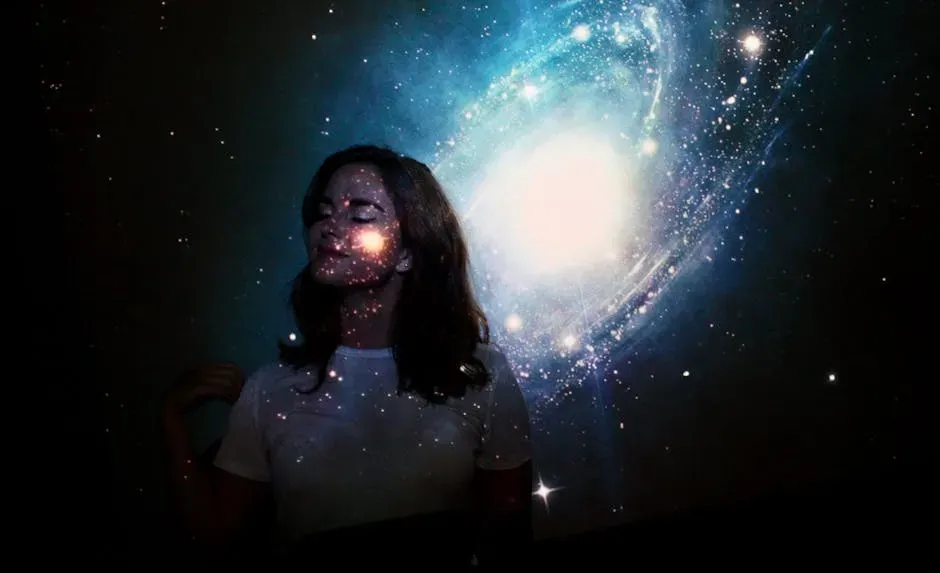
When you hear “hologram,” you probably imagine a sci‑fi movie with glowing 3D images floating in midair, but the physics idea is subtler and much stranger. In the holographic view, you still experience a three‑dimensional world, but all the fundamental information that describes it might live on a distant, lower‑dimensional boundary, a bit like how a flat credit card chip stores what becomes your full account activity. You are not dealing with an illusion in the cheap-trick sense; you are dealing with a different bookkeeping of reality’s information.
The key point you need to grasp is that the holographic principle is about how much information can fit into a region of space, not about making you feel like you live inside a video game. It suggests that the deepest description of your universe may require fewer dimensions than you see, while still producing the familiar 3D world you move through. So when you hear that “the universe is a hologram,” you should translate it as “the universe might be encoded on a boundary in a way that makes your 3D experience emerge from something more abstract.” That is weird, but it is not pure fantasy.
How Black Holes First Broke Your Intuition
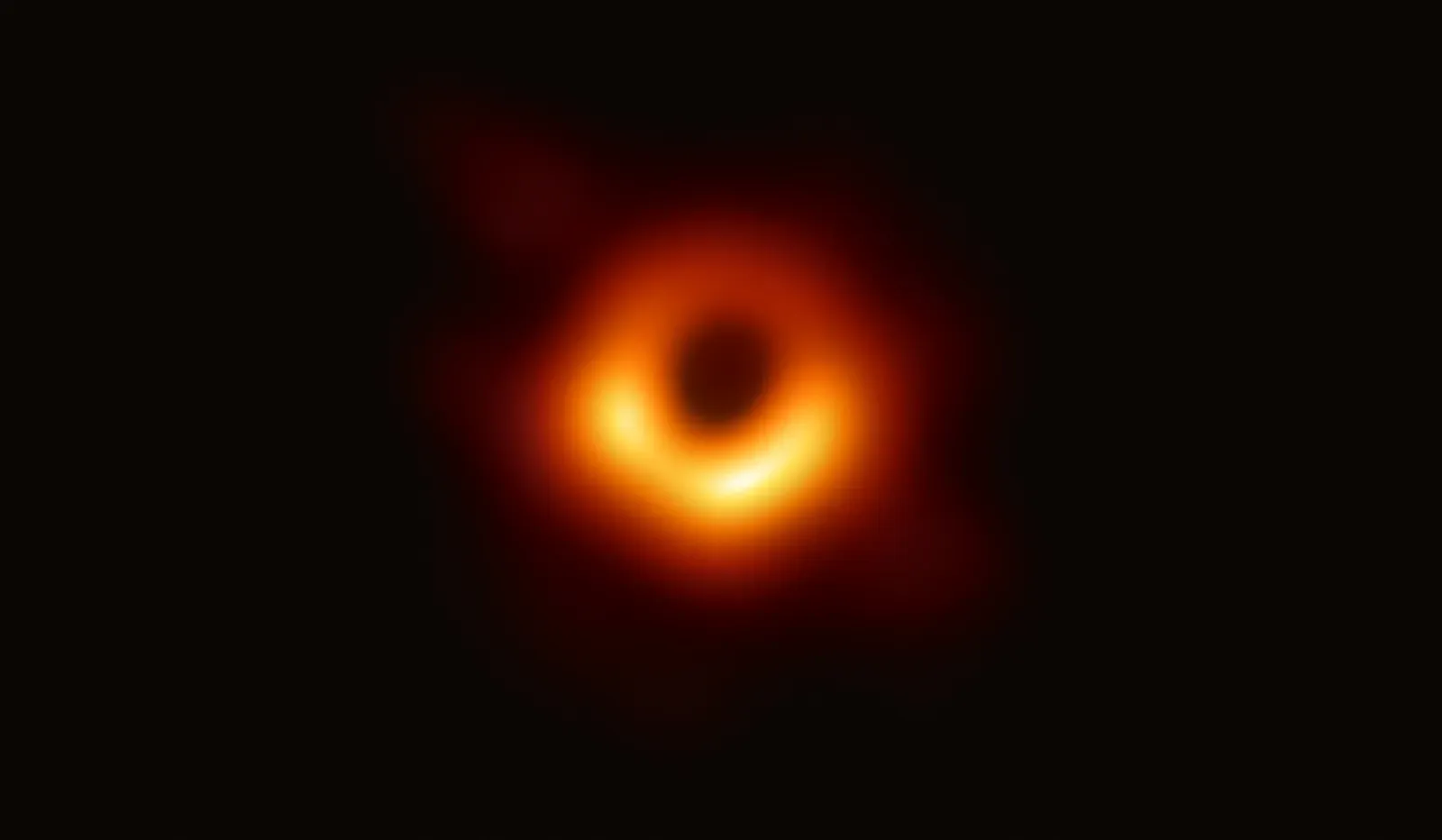
The story really starts with black holes, and this is where your instincts about space and volume run into a wall. You would expect that if you cram more and more matter into a region, the amount of information you can hide inside should scale with the volume, like stuffing more files into a bigger hard drive. Yet physics tells you that a black hole’s entropy – basically, the measure of its information content – grows with the area of its event horizon, the surface, not the interior volume.
That one fact flips your usual picture of reality upside down. It is as if the true “data capacity” of a region of space depends on its boundary skin rather than its inside filling, hinting that you have been counting dimensions in the wrong way. From this black hole puzzle, physicists began to suspect that a region of space might be fully described by information living on its surrounding surface. If you are looking for a birthplace of the holographic idea, this is it: black holes quietly telling you that the universe might be more like a cosmic hard drive etched on surfaces than a solid 3D block.
The Holographic Principle in Modern Physics
From that black hole insight grows what people now call the holographic principle, an idea that has become a serious tool in theoretical physics rather than just a wild metaphor. In simple terms, you can think of it as a rule that says all the physics in some volume can be encoded on a surface around it, with no loss of information. You still walk around inside rooms, galaxies, and everyday spaces, but the ultimate description of all those happenings might be “stored” on a distant boundary of the universe.
In some specific models of spacetime, physicists have actually worked out detailed examples where a theory with gravity in a higher‑dimensional space is perfectly equivalent to a theory without gravity on a lower‑dimensional boundary. You can treat this like a bilingual dictionary for reality, where two very different descriptions translate into each other exactly. For you, that means the holographic principle is not just a philosophical slogan; it is a concrete mathematical framework that lets researchers attack hard problems in gravity, quantum physics, and even exotic materials.
Are You Living in a Projection or Something Deeper?

This is usually where your brain jumps to the big question: if the universe is holographic, does that mean you live in some cheap projection, like a cosmic movie on a cosmic screen? The honest answer is that the holographic picture does not say your experiences are fake or illusory in the everyday sense. When you stub your toe or fall in love, those events are as real as anything; the holographic idea is about where the underlying information resides, not about downgrading your life to a low-budget special effect.
It might help to think of it the way you think about a map and the territory. A detailed map can encode everything you need to navigate a city, but that does not mean the city is unreal; it just means the same information can be stored in a very different form. The holographic picture is more radical than a map, but it has a similar flavor: what you experience as a 3D world could, at the deepest level, be another way of reading information that is stored on a kind of cosmic boundary. You still bleed when you cut yourself; you just might be part of a universe whose bookkeeping is far stranger than you first assumed.
What Evidence Do You Actually Have?
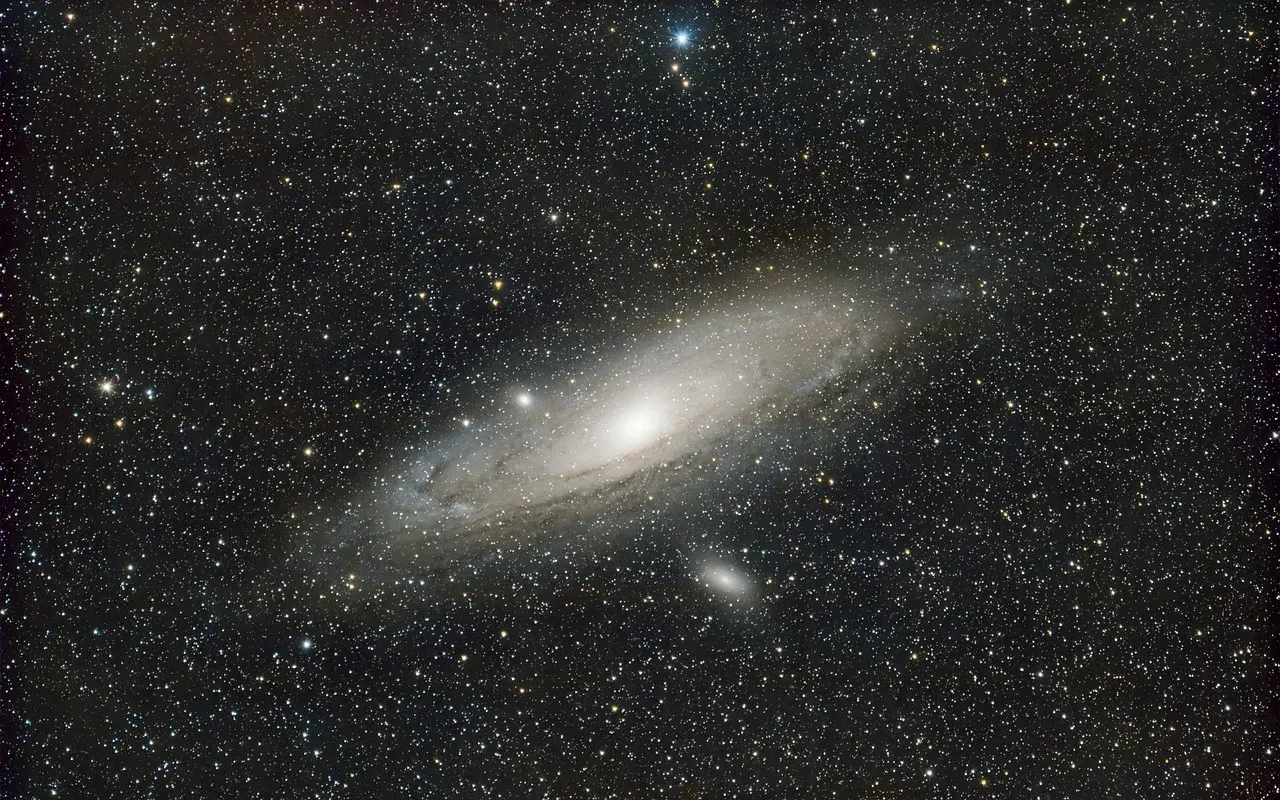
Here is where you need to be very clear: nobody has a smoking‑gun experiment proving that your specific universe is holographic. What exists are powerful hints, successful mathematical models, and deep connections between gravity, quantum theory, and information that point in a holographic direction. You have black hole thermodynamics nudging you toward area‑based information, and you have examples in theoretical models where holographic dualities work astonishingly well at matching predictions.
Physicists have even tried looking for subtle “pixelation” or correlated patterns in cosmic signals, like gravitational waves or the distribution of galaxies, that might reveal an underlying holographic structure, but so far nothing has definitively screamed, “Yes, your universe is a hologram.” For now, you are dealing with a framework that is taken seriously because it solves hard problems and unifies ideas that otherwise clash. In other words, you have compelling theoretical success and suggestive clues, but you do not have the final verdict, and you should be wary of anyone who claims the case is closed.
How This Changes the Way You Think About Reality

Even without definitive proof, the holographic perspective can reshape how you think about reality in surprisingly practical ways. It pushes you to treat information as something just as fundamental as matter or energy, and to see space itself not as a passive stage but as something that might emerge from deeper relationships. You are invited to imagine that distances, shapes, and even the flow of time could be built from patterns of quantum information rather than being the most basic layer.
This way of thinking has already influenced areas beyond gravity, helping researchers understand complex systems like strongly interacting particles and exotic materials by mapping them to holographic descriptions. For you personally, it opens a mental door: if space and time can be emergent, maybe your everyday intuitions are only local approximations, like a simple weather app hiding the wild complexity of the atmosphere. You still live in the same world, but you see it less as a solid block of “stuff” and more as an intricate web of information that your senses translate into something you can navigate.
Holograms, Simulations, and Popular Misconceptions
Because the idea sounds so dramatic, it is easy to mix the holographic universe with the simulation hypothesis and end up confused. In a simulation scenario, you imagine advanced beings running your universe on a giant computer, like characters inside a video game, with someone on the outside pressing the buttons. The holographic principle, as physicists use it, does not require any external programmers; it simply says your universe might have an equivalent description on a lower‑dimensional boundary, following the same physical laws, not the whims of outside entities.
You will also see the concept stretched into wild claims that your thoughts can easily reshape physical reality because everything is “just a hologram.” That takes a subtle, technical idea and turns it into a slogan for wishful thinking. While your mind is powerful and your perceptions do filter your experience, the holographic principle is still about rigorous mathematical relationships, not about shortcuts to bypass biology or physics. If you want to explore this idea responsibly, you have to separate grounded theory from mystical branding that uses the word “hologram” as decoration.
Where the Theory Might Go Next
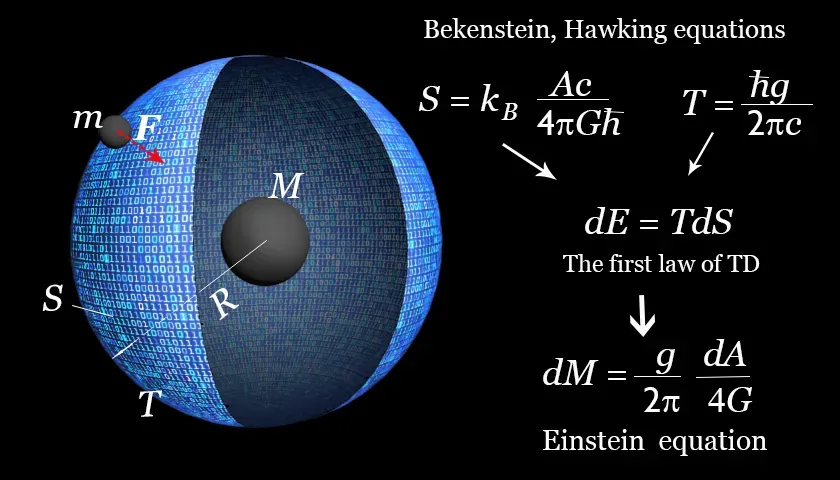
So where does this leave you, standing here in the 2020s, watching the holographic universe idea evolve? On the research front, scientists are actively probing whether holographic dualities can be extended to more realistic versions of your universe, including ones that expand like the cosmos you actually see. They are exploring how quantum entanglement might weave the fabric of spacetime, and whether the structure of information alone can dictate the shape and behavior of the universe you inhabit.
At the same time, new instruments are giving you more precise views of black holes, gravitational waves, and the large‑scale structure of the cosmos, any of which could reveal clues about how space, time, and information are intertwined. You might not wake up tomorrow to a headline announcing that the holographic hypothesis is confirmed, but you are watching a live experiment in how radical ideas either harden into accepted theory or quietly fade away. As you follow that story, you get a front‑row seat to science doing what it does best: testing its wildest intuitions against the stubbornness of reality.
Conclusion: Living with a Mind-Bending Possibility
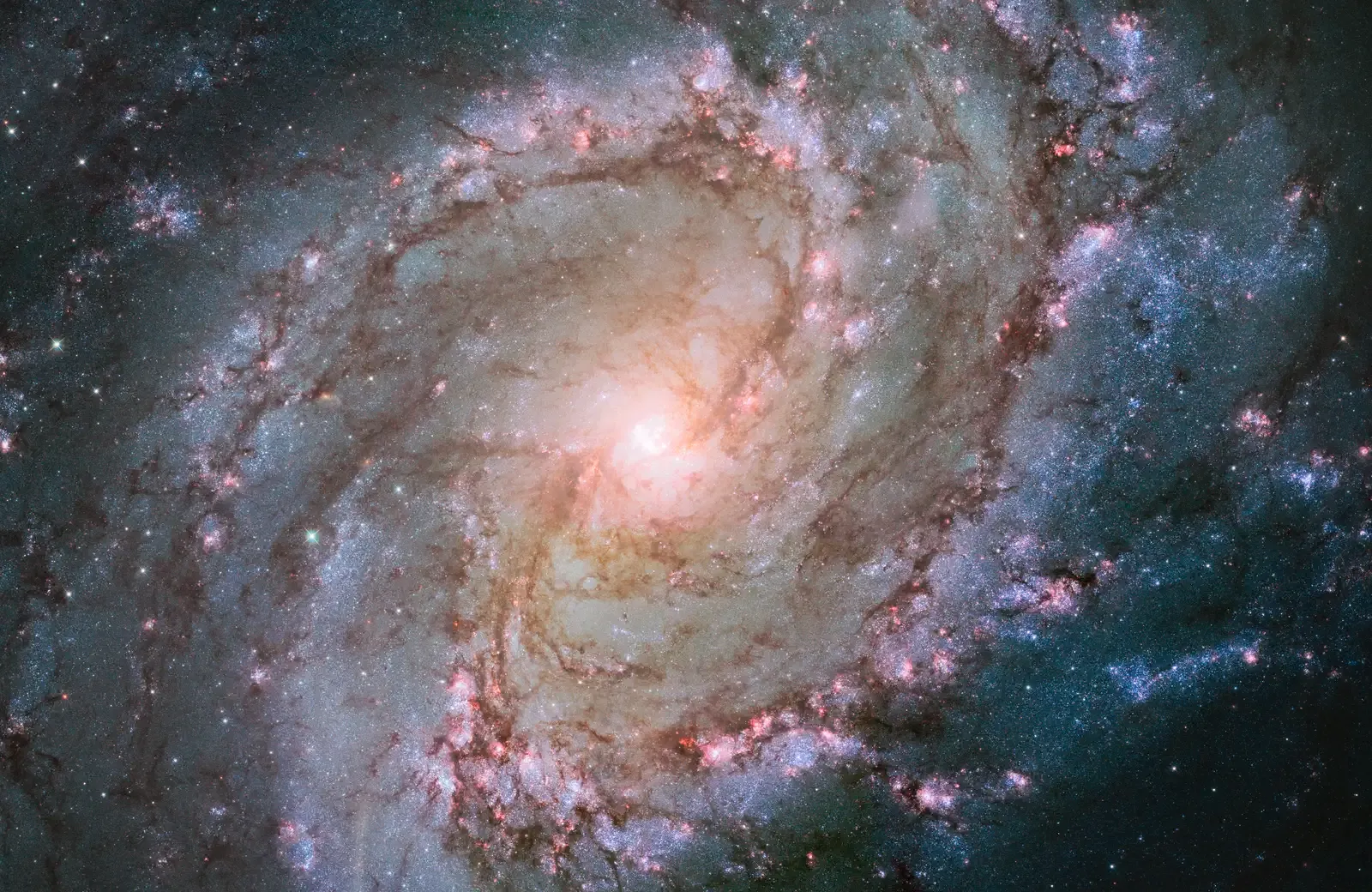
When you step back, the holographic universe idea is less about declaring that you live in a fake world and more about stretching your understanding of what “real” could mean. You are confronted with a possibility where the deepest layer of the cosmos might be an abstract sea of information, from which your familiar space, time, and matter bubble up as emergent patterns. That does not erase your daily life; it just frames it as part of a much stranger and richer structure than your senses alone reveal.
You do not need to decide today whether the universe truly is holographic, and in fact, you cannot, because the evidence is still incomplete and evolving. What you can do is let this idea sharpen your curiosity, make you more comfortable with uncertainty, and remind you that even your most basic assumptions about reality can be challenged by careful thinking and hard data. If the universe turns out to be a kind of cosmic hologram, will you feel cheated, or will you feel even more amazed that something so abstract can give rise to sunsets, music, and your own questions?