

Almost everyone has had that eerie jolt: you think of someone, and seconds later they call; you dream of an event, and something uncannily similar happens days after. It can feel shocking, almost like the universe briefly took off its mask and showed you the script before the scene played out. That unsettling familiarity is what many people call precognition – a sense of knowing something before it happens. It’s an idea that shows up in movies, folklore, and private late-night stories people only share with close friends.
Yet when you step into the world of physics and neuroscience, the mood changes fast. The same experience that feels profound on a personal level suddenly gets pulled apart as coincidence, memory bias, or just the way our brains are wired to find patterns in chaos. In 2026, we’re still caught between those two worlds: the intimate, emotional reality of strange experiences, and the cold, unforgiving standard of scientific proof. The tension between them is exactly where the conversation about precognition lives today.
What Scientists Mean When They Talk About Precognition

Precognition, in scientific terms, is the claim that a person can receive accurate information about future events that cannot be inferred from current knowledge or normal senses. That means no subtle hints, no lucky guesses, no logical predictions – just raw, future-first information. Most mainstream scientists remain deeply skeptical of this idea, because it appears to violate what we know about causality: causes should come before effects, not the other way around. If true precognition exists, it would shake some of the most basic assumptions of physics and psychology.
There have been experiments in parapsychology labs for decades where researchers test whether people can guess future symbols, images, or outcomes better than chance. Occasionally, some studies have claimed tiny statistical anomalies that hint at something interesting. But when other labs try to replicate those results under stricter controls, the effects usually vanish or shrink to the point of being indistinguishable from noise. The scientific community, by and large, demands strong, repeatable evidence – and precognition just hasn’t cleared that bar.
Time: One Direction, Or Something Much Weirder?
One of the reasons precognition is so controversial is that it clashes with our everyday sense of time. We feel time like a river flowing from past to present to future, one direction, never stopping, never looping back. Physics, however, tells a stranger story. Many of the fundamental equations that describe the universe work perfectly well if you flip time around; they do not care if you run the clock forward or backward. That has led some physicists to argue that the flow of time might be more of an emergent illusion than a hard cosmic law.
In the block universe view, which has become popular in modern physics discussions, past, present, and future all exist at once in a four‑dimensional structure. In that picture, we are more like people walking through a vast landscape than passengers riding a one‑way conveyor belt. But even if the future is “out there” already in that sense, it doesn’t automatically mean our brains can access it. The rules of causality, locality, and information transfer still seem to forbid anything that looks like a message arriving from the future into the present.
Einstein, Relativity, And Why The Present Is Not What We Think
Albert Einstein’s theory of special relativity, introduced in 1905, quietly attacked the idea of a universal “now.” According to relativity, how you slice the universe into past, present, and future depends on how fast you’re moving and where you are. Two observers in different states of motion can disagree about whether two events happened at the same time, and both can be right within their own frames of reference. The comforting sense that everyone shares one common present moment does not survive a close scientific look.
This relativity of simultaneity has deep implications for how we talk about the future. If different observers do not agree on which events are in the present versus the future, then the future is not a single, sharp line waiting ahead of us. Instead, it is tangled up with space and motion in ways our intuition struggles to grasp. Still, even with this flexible view of time, relativity does not endorse information from tomorrow casually parachuting into today. The speed of light and the structure of spacetime still enforce a firm limit on what can influence what.
Quantum Weirdness: Entanglement, Retrocausality, And Misconceptions
Quantum mechanics adds another layer of strangeness, especially with phenomena like entanglement, where two particles seem to be linked so that measuring one instantly affects the description of the other, no matter how far apart they are. That kind of spooky correlation has tempted some people to argue that the future could influence the present, or that quantum effects might secretly power precognitive experiences. Terms like retrocausality, where future measurements appear to play a role in how events unfold, only add fuel to that fire.
But the majority view among working physicists is that quantum strangeness does not give us usable time travel for information. Tests of entanglement, including highly precise experiments in the last decade, continue to support the idea that while quantum correlations are real, they cannot be used to send messages faster than light or backwards in time. Many proposed retrocausal interpretations are more about mathematical elegance than about letting your future self whisper lottery numbers into your present ear. The science is weird, yes, but it is not a blank check for paranormal claims.
Why Your Brain Is A Pattern‑Detecting Story Machine
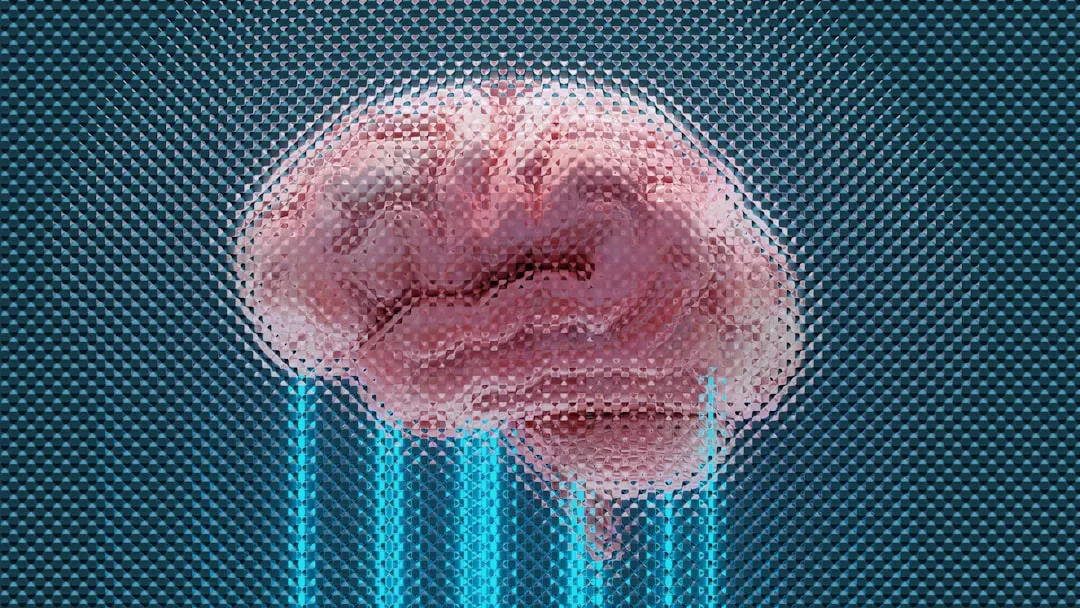
If physics is not currently on the side of real precognition, psychology offers a more grounded way to understand why so many people feel they’ve experienced it. The human brain is a prediction engine: it constantly uses past information to guess what will happen next, usually without you being consciously aware of it. This is how you can catch a ball, finish a friend’s sentence, or hit the brakes before you fully register the hazard ahead. Sometimes, those unconscious predictions are so fast and so accurate that they feel like magic when you finally notice them.
On top of that, our memories are not perfect recordings. We tend to remember the hits and forget the misses. If you dream vague things every night, nearly all of them will never happen, but the one that loosely lines up with a real event sticks out dramatically. You might also unconsciously adjust your memories after the fact, making the dream or thought seem more precise than it actually was. This mix of prediction, pattern detection, and selective memory can easily create what feels like a genuine glimpse of the future, even when no rules have been broken.
Coincidence, Probability, And Why Rare Events Are Inevitable

One of the most underrated forces in this whole discussion is simple probability. When you zoom out to the scale of billions of people having countless thoughts, dreams, and daydreams every day, extraordinarily specific coincidences stop being so extraordinary. Even an event that seems astronomically unlikely for one person becomes almost guaranteed to happen to someone, somewhere, at some point. Our brains, however, are not built to intuit those kinds of large‑number statistics; what is numerically inevitable can still feel personally miraculous.
A classic example is the birthday paradox: in a group of just over twenty people, there is a surprisingly high chance that two share the same birthday. That kind of counterintuitive probability plays out with life events too. You think of a song, it comes on the radio moments later; you imagine an accident and later witness something eerily similar. Instead of seeing these as the statistical dust in the air of life, we’re tempted to see them as messages written just for us. It’s human, but it’s not good evidence for time‑bending perception.
The Few Experiments That Keep The Door Slightly Open
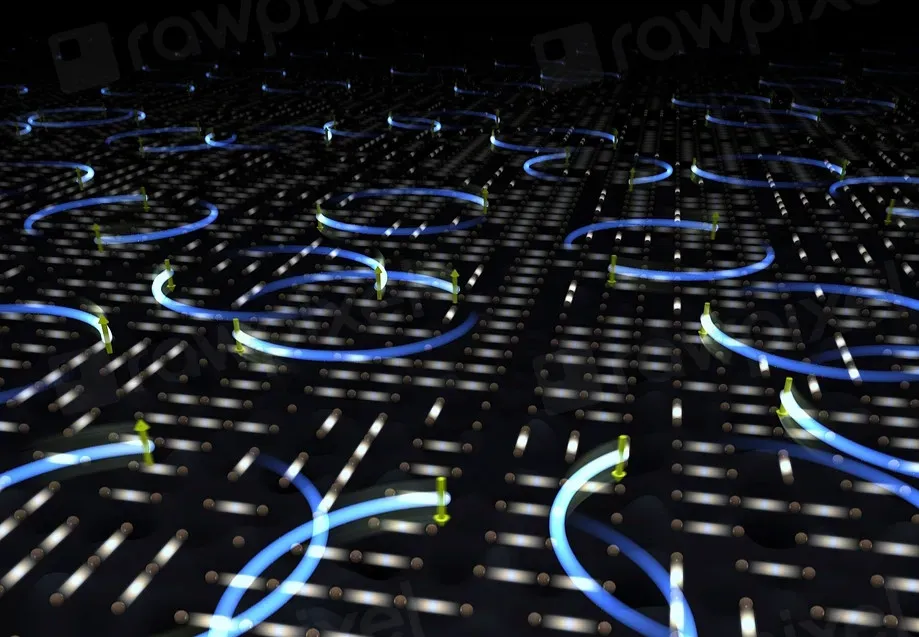
To be fair, not all scientists dismiss precognition outright. A small number of researchers have run controlled experiments where participants are asked to respond to stimuli that have not yet been randomly chosen at the time of their decision or physiological response. In a few controversial studies, researchers have reported tiny but statistically significant effects, such as people being slightly more accurate than chance at guessing a future image, or showing subtle changes in heart rate before an emotionally charged picture appears.
These results, usually published in niche journals, are heavily debated. Critics point out issues like p‑hacking, publication bias, questionable statistical methods, and the difficulty of reliably reproducing the findings across different labs. Supporters argue that science should be open to uncomfortable possibilities and that small anomalies deserve further investigation rather than immediate dismissal. As of 2026, the fairest summary is that the evidence is thin, fragile, and far from the standard needed to overturn established physics, but not entirely nonexistent either.
How Pop Culture Shapes What We Expect From Time

Movies, television, and novels have done a lot to shape how we imagine precognition and time. From characters who see fixed futures they cannot escape to heroes who glimpse branching timelines and try to choose the best path, these stories turn complex physics into emotional drama. They’re powerful because they take abstract questions about determinism and free will and drop them directly into human relationships: if you knew what was coming, would you change it, accept it, or try to run from it? That narrative framing sticks with us more deeply than any equation.
The downside is that entertainment often blurs the line between metaphor and reality. Ideas like quantum consciousness, timelines that respond to our thoughts, or futures that send clear warnings back in time get repeated so often that they start to feel plausible by sheer familiarity. When a real‑life coincidence or intuitive hunch lines up with something we’ve seen on screen, it’s easy to borrow the story and paste it on top of our experience. Our expectations about time and precognition are not built from experiments alone; they’re stitched from science, myth, and Netflix, all mixed together.
So, Can We Sense The Future? A Cautious, Opinionated Take

Standing in 2026, with everything we know from physics, neuroscience, and psychology, the most honest answer is that robust, laboratory‑grade precognition has not been demonstrated. The hard evidence just isn’t there, at least not at the level that would justify rewriting our understanding of time and causality. Personally, I think that matters: if we care about truth more than comfort, we have to resist the urge to upgrade compelling stories into established facts. For now, precognition belongs more to the realm of intriguing experiences, flawed memories, and statistical quirks than to proven abilities.
But I also think it would be arrogant to say we have time completely figured out. History is full of moments when human intuition about reality turned out to be wildly off base, and it’s possible that our current view of time is another such moment waiting to be revised. The responsible position, in my view, is to live with a kind of disciplined humility: trust the best evidence we have, stay open to genuinely extraordinary proof if it ever arrives, and admit that some mysteries might always feel bigger than our explanations. Maybe the real magic is not in seeing the future, but in how fiercely we keep trying to understand it – even when the universe keeps its secrets close. If you had to bet, would you wager on hidden powers of the mind, or on a brain that’s just very good at fooling itself?