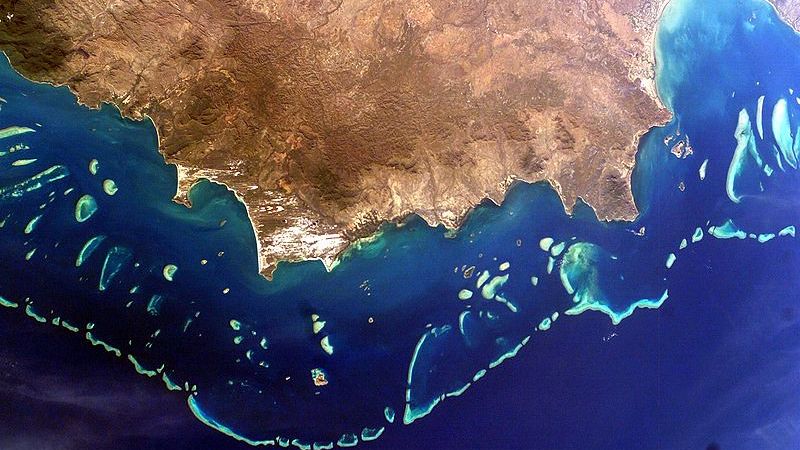
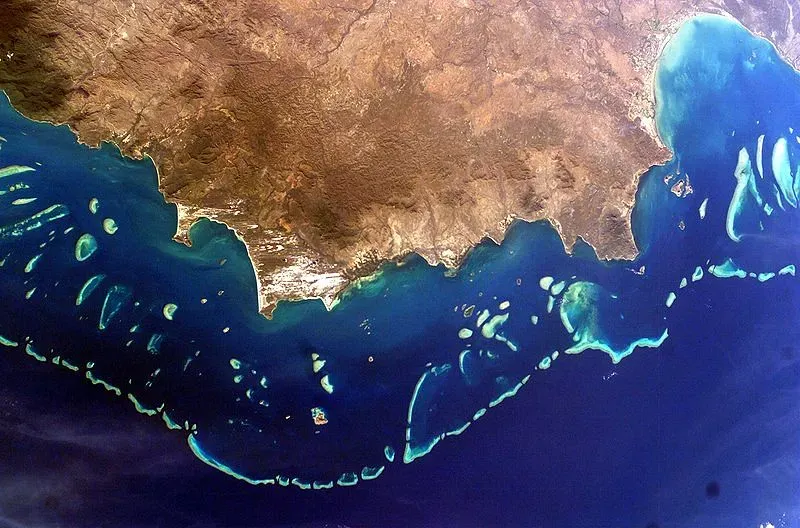
Imagine staring at satellite images of the Great Barrier Reef and realizing the most important part is not what sits on top of the water, glowing turquoise in every tourist brochure, but what is quietly building up underneath. That is essentially the shift happening right now as advanced Earth‑observing satellites start picking up strange, never‑before‑documented patterns growing beneath coral structures. The public headline sounds dramatic, almost like a sci‑fi teaser, but the reality is in some ways even more unsettling: we are finally seeing the reef in three dimensions, and the underbelly is not behaving the way textbooks said it should.
I still remember the first time I flew over a reef in a tiny plane and assumed the bright patches were the “whole thing.” It turns out that view is like judging a city only by its rooftops. Satellites and new seafloor mapping are now revealing what lies underneath those “rooftops,” and the story is getting weirder, more complex, and frankly more urgent. We are not talking about a single monster organism suddenly appearing, but about subtle, layered growths, mats, crusts, and structures that do not match the patterns marine biologists are used to seeing. That is where the mystery really begins.
New Eyes in the Sky: How Satellites Are Peering Beneath the Coral Skin
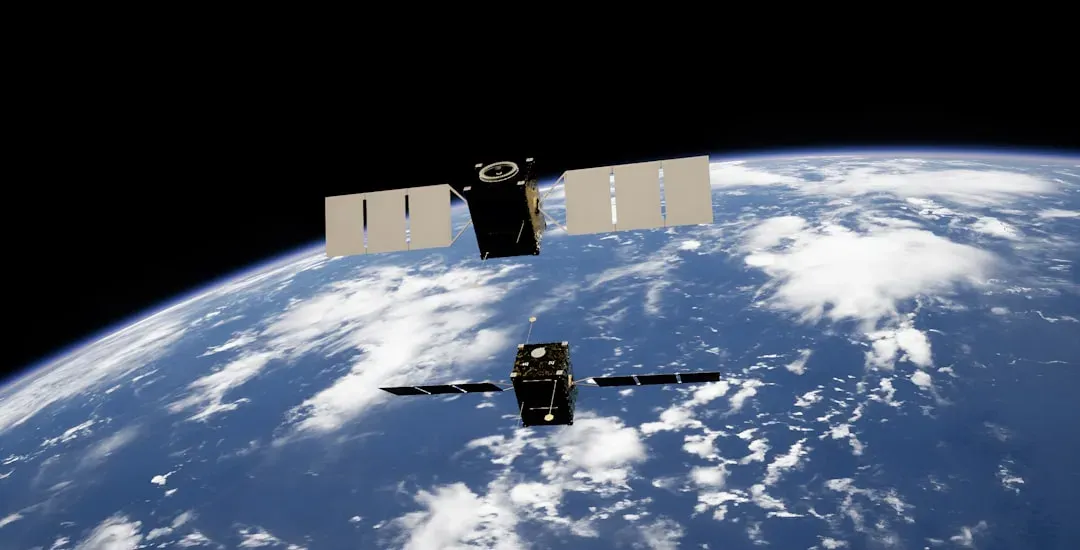
It sounds almost impossible that satellites orbiting hundreds of kilometers above Earth can “see” anything happening underneath a coral reef, but that is exactly what cutting‑edge ocean observation is pushing toward. High‑resolution optical sensors, radar altimeters, and even lidar from aircraft are being combined with detailed seafloor data to reconstruct not just the surface, but the shape and texture of what lies below. Think of it as switching from a flat photograph to a layered 3D scan that can pick up tiny changes in height, reflectance, and color over time. Those subtle shifts, when tracked year after year, are what tipped scientists off that something unusual is growing under some Great Barrier Reef coral structures.
To be clear, satellites are not literally giving us crisp, Instagram‑ready shots of individual organisms clinging to coral skeletons twenty meters down. What they are catching are anomalies: spots where the reef is getting thicker, rougher, or optically different in ways that do not line up with known patterns of coral growth, sand movement, or typical algal blooms. When those satellite anomalies are cross‑checked with underwater surveys, ecologists sometimes find dense, layered communities of life – bacteria, algae, sponges, and other micro‑engineers – that have not been systematically documented before in that exact configuration. The unsettling part is that, without the satellite data, we probably would have never noticed these under‑coral changes at the scale of an entire reef system.
What Could Be Growing Under There? Plausible Suspects Without the Hype
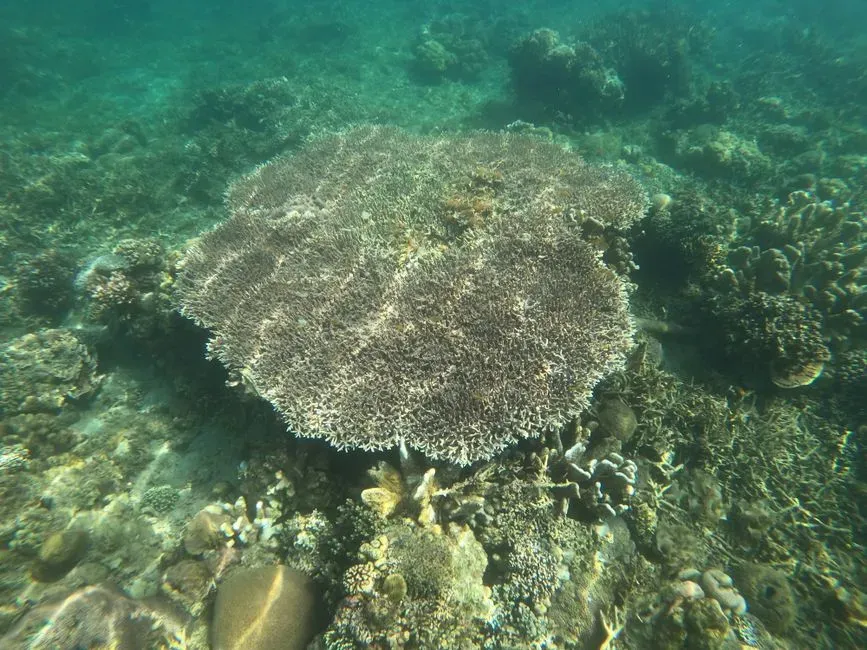
Whenever you hear a phrase like “never documented before,” it is tempting to picture some gigantic unknown species or alien‑like form of life suddenly invading the reef. The more sober, but still fascinating, reality is that the “new” growth is almost certainly made up of things we already know exist – microbial mats, turf algae, crustose coralline algae, sponges, cyanobacteria – assembling themselves in combinations and thicknesses that have not been carefully described under living coral structures at this scale. It is like discovering that the basement of your house has quietly filled with complex layers of moss, mold, and roots that together act like a new, living carpet. Each component is familiar, but the way they build on top of one another is not.
One leading suspicion is that dense microbial and algal films are expanding in shaded crevices and under coral ledges where light is low but nutrients are increasingly abundant due to warming waters, changing currents, and pollution from land. In some parts of the Great Barrier Reef, shifts in water chemistry and temperature have already been linked to unusual blooms of microbes and algae on dead coral. It is not a stretch to imagine similarly unusual communities forming underneath living coral where they are hidden from casual view. That does not mean we have confirmed a brand‑new type of organism; it means we may be looking at a new stage, configuration, or behavior of communities we thought we understood, but clearly did not observe well enough in the past.
Microbial Cities: The Hidden Architecture Beneath Coral Skeletons
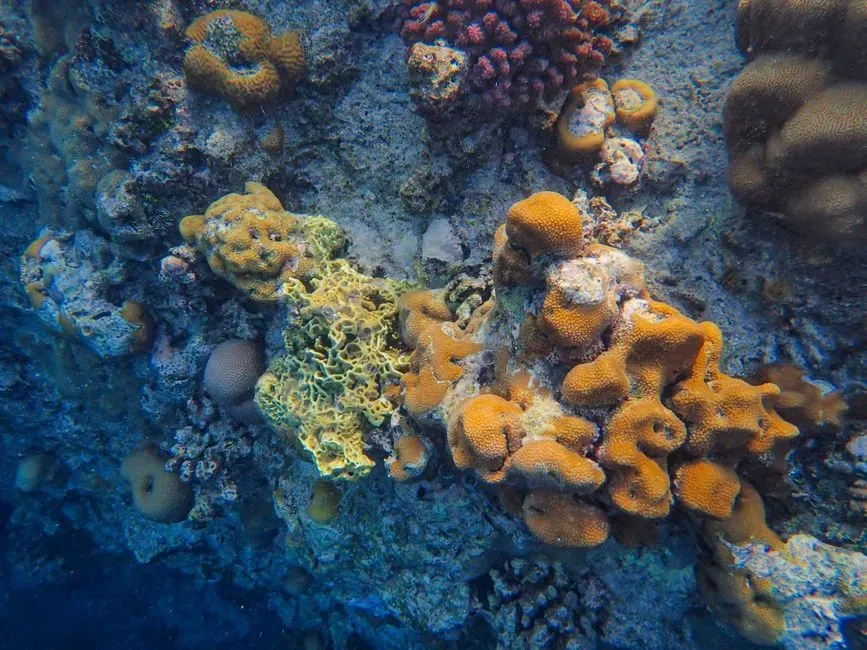
If you zoom in far enough, a coral reef is less like a static rock and more like a crowded city, built from the bottom up by microbes. Underneath the flashy coral polyps and fish, bacteria and algae can form slimy, layered structures called biofilms and mats that behave like living carpets, trapping sediment, building micro‑ridges, and altering the chemical environment around them. When these layers get thick and persistent, they can actually change the shape of the seafloor in tiny ways, adding roughness and building up low, rounded mounds. Satellites do not see the microbes themselves, but they can pick up the cumulative effect of these micro‑cities changing how light is scattered and how the seafloor height shifts over time.
What appears to be “never documented” in some of the Great Barrier Reef data is not the existence of microbial mats per se, but their surprising growth patterns beneath and around living coral frameworks at large spatial scales. In some sectors, early analyses suggest that these hidden microbial cities may be expanding in zones where corals are stressed, shaded, or slowly dying back, effectively colonizing the undersides and internal openings of the reef structure. If that is confirmed, it raises unsettling questions: are these microbial layers acting as emergency repair crews that stabilize the skeleton, or are they opportunistic squatters taking over real estate that used to belong to corals and their symbiotic algae? The answer may not be simple – and it may differ from one reef patch to the next.
Is This a Sign of Recovery or a Red Flag for Reef Collapse?
One of the hardest parts of interpreting this under‑coral growth is figuring out whether it is good news or bad news for the reef as a whole. On the optimistic side, many of these hidden organisms are the unsung engineers of reef ecosystems, binding loose sediments, producing minerals, and creating the foundations that corals later build on. In that sense, seeing more sub‑surface growth could be a sign that the reef is trying to rebuild itself from the bottom up, even as it faces bleaching and storm damage. It would be like finding that, beneath a burned forest, the soil fungi and roots are going wild, quietly laying the groundwork for eventual regrowth.
The darker interpretation is that this growth might be more like mold creeping through the walls of a house whose structure is failing. In some degraded reefs around the world, scientists have observed that when corals die, fleshy algae and microbes move in fast and create thick, persistent mats that can actually prevent young corals from re‑settling. If something similar is happening underneath living coral, just out of sight, the reef could be hollowing out even as the surface looks relatively intact. Right now, the evidence is mixed and highly site‑specific, and anyone who claims it is purely a miracle or purely a disaster is overselling their certainty. The uncomfortable truth is that we simply do not yet know which story is winning on the underside of the Great Barrier Reef.
Why We Never Saw This Before: Blind Spots in Classic Coral Science
It is honestly a bit humbling that in 2026 we are still discovering major blind spots in how we have been studying one of the most famous ecosystems on Earth. For decades, coral research focused on what was easy to see and photograph: the branching corals, the fish, the bright surface communities that look incredible in a dive magazine. Under‑ledge zones, sub‑surface cavities, and shaded reef interiors were harder, more tedious, and less glamorous to document systematically. Divers have of course noticed strange growths and layered communities under coral shelves in individual spots, but building a big‑picture map of those hidden zones across tens of thousands of square kilometers was essentially impossible until we had satellite and advanced sonar data to guide where to look.
Satellites are now forcing coral science to confront those blind spots. When orbital data flags weird structural growth that does not match standard models, it pushes researchers to go back in the water with submersibles, cameras, and sampling tools targeted to those anomalies. This loop – satellites spotting patterns, divers and instruments ground‑truthing them – means we are suddenly paying more attention to the underbelly of reefs than ever before. I find it slightly embarrassing that it took a bunch of sensors in space to make us kneel down and look under the proverbial coral couch, but maybe that is what it always takes: a new perspective that makes the obvious suddenly impossible to ignore.
The Tech Race: How AI and 3D Mapping Are Rewriting the Reef’s Story
One reason this under‑coral mystery is even on our radar is the explosive growth of AI‑driven image analysis and 3D mapping. Instead of humans manually poring over endless satellite frames, machine‑learning algorithms are now combing through terabytes of data, flagging subtle changes in texture, color, and elevation that would have been invisible to the human eye. When those algorithms started highlighting clusters of unusual growth beneath known coral structures, it was a bit like your phone suddenly telling you there is a room in your house you forgot existed. The data were always there, but our brains were not wired to see the pattern until the software pointed it out.
On top of that, the combination of satellite data with ship‑based sonar and drone or aircraft lidar is creating incredibly detailed digital twins of sections of the Great Barrier Reef. Researchers can now virtually “peel back” layers in these models, looking at how the reef’s outer shell relates to the hidden cavities and foundations below. That is where some of the most puzzling growth appears to be concentrating: in transitional zones where the reef’s crust meets its internal scaffolding. The tech is outpacing our ecological understanding, which is both thrilling and slightly terrifying. We have the tools to see more than ever before – but not yet the long‑term time series to say what it all means.
What This Means for the Future: A Reef More Alien Than We Admitted
For me, the strangest takeaway from all this is not that there is “something new” growing under the Great Barrier Reef, but that we ever thought we fully understood such a sprawling, intricate system in the first place. The satellite‑detected under‑coral growth is a humbling reminder that life reorganizes itself in ways our categories and field methods often miss. Whether these hidden communities turn out to be quiet heroes stabilizing the reef’s foundations, or early warning signs of deeper structural collapse, they prove that the reef’s story is being written in places we historically ignored. In that sense, the Great Barrier Reef is more alien and more surprising than the glossy postcards ever suggested.
My opinion, for what it is worth, is that we should treat this discovery as both a warning and an opportunity. It is a warning because any major, unexplained structural change in a stressed ecosystem deserves serious concern, not spin. But it is also an opportunity because the same satellites revealing these secrets can help us monitor restoration efforts, track recovery, and catch subtle shifts long before they explode into full‑blown crises. The reef is telling us, in the only language it has, that there is more going on beneath the surface – literally and metaphorically – than we chose to see. The real question is whether we will use this new vision to finally act like the reef’s future is tied to our own, or just file it away as another curious headline and move on; which way would you bet?