
Ever walked away from someone and thought, “Why am I so exhausted? They didn’t say or do anything that bad…” but you still feel like you need to lie down or take a shower? That weird emotional hangover is not you being dramatic or antisocial. It is often your nervous system quietly screaming that something felt off, even if you cannot put your finger on it. Long before you start rationalizing the interaction, your brain has already run a silent risk assessment and decided whether this person feels safe or not.
At the center of that assessment is a tiny almond-shaped structure deep in the brain: the amygdala. It is constantly scanning people’s faces, voices, and body language for signs of danger faster than you can consciously think. When you feel mysteriously drained or uneasy around certain people, there is a good chance your amygdala picked up subtle cues your logical mind missed. Understanding that process is not just fascinating; it can help you trust yourself more, set better boundaries, and stop gaslighting your own instincts.
The Amygdala: Your Emotional Smoke Detector
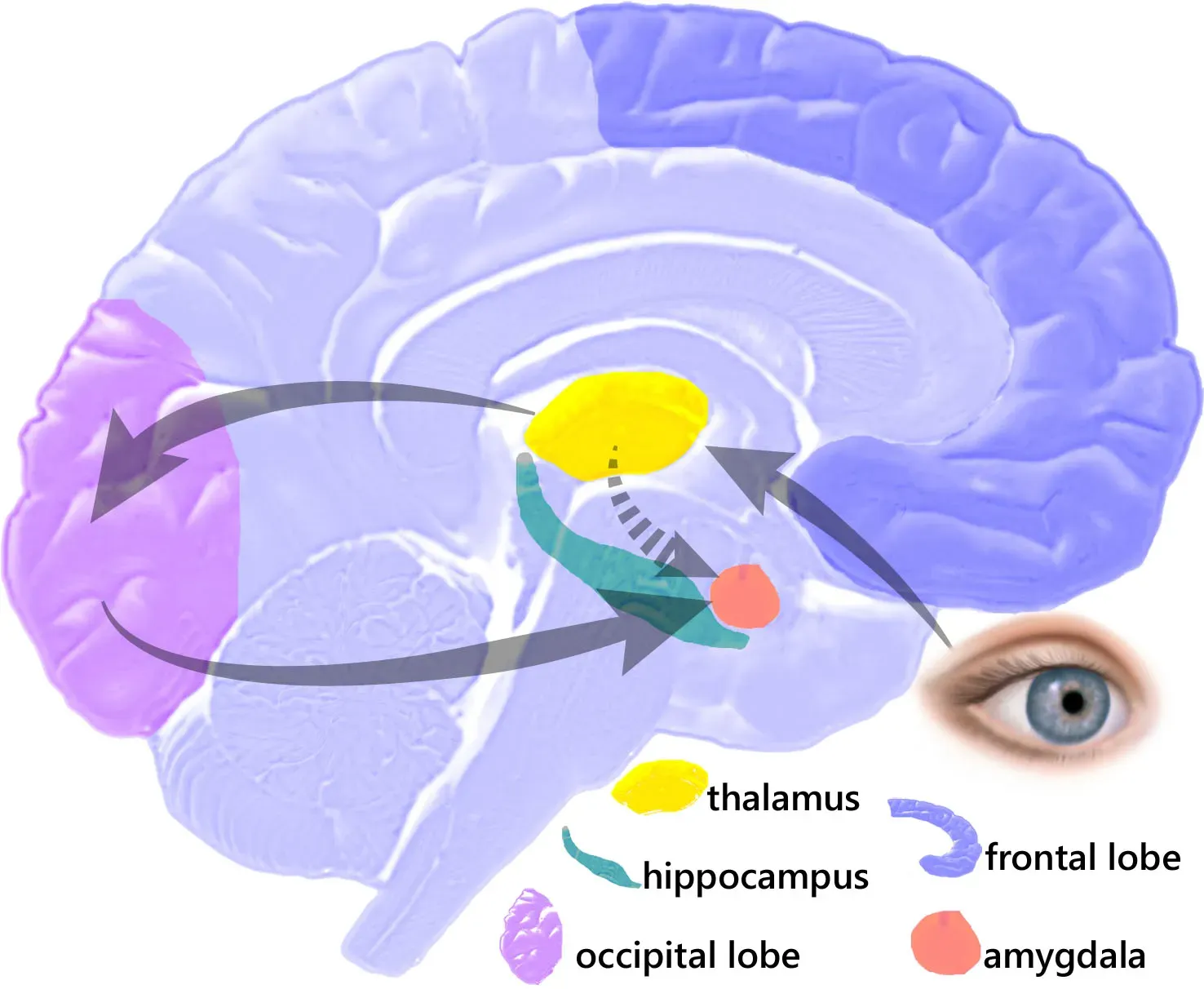
The amygdala is often described as the brain’s alarm system, and that metaphor is more accurate than it sounds. It rapidly evaluates incoming information and tags it as safe, suspicious, or dangerous, especially when it comes to emotional expressions and social cues. This process happens extremely fast and largely outside of conscious awareness, which means your body can react long before your thoughts catch up. That is why your heart might speed up or your stomach might tighten around someone, even while you are telling yourself they seem perfectly nice.
Neuroscientists have shown that the amygdala responds to emotional facial expressions and threats even when people are not consciously aware of what they are seeing, such as very brief or masked images. In everyday life, that translates into your brain picking up micro-expressions, changes in tone, or inconsistencies in a person’s behavior that you could not easily put into words. Think of the amygdala as an emotional smoke detector: it does not need to know the type of fire or where it started to slam the alarm button; it just needs to sense that something is off.
When Your Body Knows Before You Do

One of the strangest things about these interactions is how physical they feel. You might get a headache, feel suddenly tired, or notice tension in your shoulders after spending time with someone who appears harmless on the surface. That is not imaginary; when your amygdala flags a potential threat, it recruits other brain and body systems to prepare you for fight, flight, or freeze. Stress hormones are released, your muscles prime for action, and your attention narrows, even if you are just sitting across from someone at brunch.
Over time, being around people who repeatedly trigger this subtle alarm can leave you feeling completely worn out, even if nothing “bad” ever officially happens. I learned this personally with a coworker years ago who always left me feeling like I had run a marathon after a simple meeting. On paper, they were polite and professional. Yet my body reacted as if I had just navigated a minefield, and it took me a while to realize my nervous system was picking up small digs, shifting rules, and unpredictable reactions that my conscious mind kept excusing away.
Hidden Social Threats Your Brain Is Tracking

When we hear the word “threat,” we tend to think of obvious dangers like yelling, aggression, or clear hostility, but the brain’s threat detection system is much more nuanced. The amygdala is sensitive to social threats too – things like rejection, humiliation, deception, or unpredictable behavior. A person who constantly invalidates you, subtly undermines you, or gives you that feeling of walking on eggshells may not seem like a threat in the classic sense, but to your nervous system, they absolutely are. Your brain treats social safety almost as seriously as physical safety.
That means your amygdala might light up in response to someone who rarely shows consistent warmth, whose words and tone do not match, or who seems charming one moment and cold the next. Even mild but chronic behaviors – like backhanded compliments, subtle blame-shifting, or constant interrupting – can register as micro-threats. Each incident might be too small to argue about, but together they create a pattern your brain cannot ignore. You walk away tired because your system has been quietly managing and monitoring these cues the entire time.
Why You Feel Drained Instead of Clearly “Afraid”

If your amygdala is sounding the alarm, why do you feel drained and foggy rather than obviously scared? The answer lies in how long your nervous system stays activated and how socially acceptable it feels to name what is happening. In many adult social situations, you are not allowed to say, “This person feels dangerous to me” without evidence, so your conscious mind starts negotiating: maybe I am overreacting, maybe they are just stressed, maybe it is me. Meanwhile, your body is still dealing with elevated stress chemistry, trying to keep you on guard without your full cooperation.
That inner tug-of-war between instinct and rationalization is exhausting. Instead of a quick spike of fear followed by resolution, you stay in a low-level state of vigilance, scanning every word and gesture to make sure you are safe. Imagine keeping your foot lightly on the gas and the brake at the same time; you would burn fuel quickly and go almost nowhere. Emotional exhaustion after being around certain people is often the felt result of that internal conflict, where your body keeps whispering no while your brain keeps insisting it should be fine.
The Cost of Overriding Your Instincts

Many of us are trained from a young age to prioritize politeness over intuition. We are told to be nice, give people the benefit of the doubt, and avoid being “too sensitive.” The problem is that this social conditioning can teach you to override the very signals that are designed to keep you safe. When you repeatedly ignore that drained, uneasy feeling after seeing someone, you are essentially telling your nervous system it cannot trust its own data. Over time, this can contribute to chronic stress and even anxiety, because your brain learns that danger cues will be dismissed.
There is also an emotional cost: you may start blaming yourself for how you feel. Instead of thinking, “Something about this dynamic is not right,” you think, “I must be weak, dramatic, or socially awkward.” I did this for far too long in one past friendship that constantly left me confused and exhausted; I kept deciding I was the problem because I could not point to a single dramatic incident. In reality, my amygdala was reacting to chronic unpredictability and subtle manipulation. Learning that my brain had legitimate reasons to feel unsafe was oddly liberating.
How to Listen to Your Amygdala Without Letting It Run the Show

Understanding that your amygdala can detect social threats your conscious mind misses does not mean you should treat every uncomfortable feeling as proof someone is bad. Sometimes your alarm goes off because of old experiences, biases, or misunderstandings. The goal is not to obey every fear signal blindly but to treat it as valuable information worth exploring. Instead of dismissing that drained reaction, you can pause and ask yourself: What exactly felt off? Did I feel judged, talked over, dismissed, or confused? Did their words match their actions?
One practical approach is to notice patterns instead of isolated moments. If you consistently leave interactions with a particular person feeling smaller, tense, or strangely tired, that is data. You might start journaling quick notes: who you saw, how you felt before, and how you felt after. Over time, your conscious mind can catch up to what your amygdala already suspects. This way, you are not letting fear lead your life, but you are no longer gaslighting your own nervous system either. It becomes a partnership: instinct raises the flag, reflection investigates, and then you decide what boundaries or changes are needed.
Practical Ways to Protect Your Energy Around Draining People

Once you recognize that certain people reliably leave you drained, the next step is giving yourself permission to act on that knowledge. This does not always mean cutting them off dramatically; sometimes it is about subtle adjustments. You might limit how often you see them, choose group settings instead of one-on-one, or plan something comforting afterward so your body can reset. Even shifting where you physically sit – closer to an exit, near someone you trust, or simply not directly across from the most intense person – can reduce the load on your nervous system.
It can also help to mentally rehearse boundaries before you see them, so your brain is not scrambling in the moment. For example, you might decide beforehand that you will change the topic if the conversation turns critical, or that you will leave after a set amount of time. Some people find it grounding to do a quick body scan during or after an interaction, noticing tension and consciously relaxing their jaw, shoulders, or stomach. These small actions signal to your amygdala that you are listening and willing to protect yourself, which can gradually make your system feel safer and less depleted.
Reframing “Being Sensitive” as a Superpower

If you often feel drained around certain people, it is tempting to label yourself as overly sensitive and wish you could just shrug things off. But that sensitivity is, in many ways, evidence that your threat detection system is finely tuned. In a world where manipulation, inconsistency, and emotional unavailability can look very polished on the outside, being able to feel when something is off is incredibly valuable. The very trait you might criticize in yourself – the fact that your body reacts strongly – is the same trait that helps you spot unsafe dynamics sooner than most.
Reframing this as a strength does not mean romanticizing constant discomfort; it means respecting your nervous system as a source of legitimate information. You can be both sensitive and discerning, both empathic and boundaried. The more you honor the message behind that drained feeling, the better you get at building a life filled with people who leave you feeling grounded, energized, and at ease. In my own life, the quality of my relationships improved dramatically once I stopped trying to “toughen up” and started treating that post-hangout exhaustion as a quiet but powerful signal.
Conclusion: Trust the Quiet Alarms

Feeling mysteriously drained after being around certain people is not just a vibe or a personality quirk; it is often your amygdala doing its job in the background, flagging subtle threats that your conscious mind cannot easily name. When you override those signals in the name of being nice, rational, or easygoing, you end up paying the price in chronic tension, self-doubt, and emotional fatigue. On the other hand, when you treat that exhaustion as a meaningful clue, you give yourself permission to investigate patterns, set boundaries, and seek out environments where your nervous system can actually rest.
My opinion is simple and a bit unapologetic: if your body consistently feels unsafe around someone, that information matters more than their reputation, their charm, or your fear of overreacting. You do not need a perfectly logical explanation before you reduce contact or protect your energy. Neuroscience may explain the mechanics through the amygdala, but your lived experience is the final authority on what feels right for you. The next time you leave an interaction inexplicably wiped out, will you dismiss it – or will you treat it as your brain’s quiet way of saying, “Something here is not safe enough for me”?