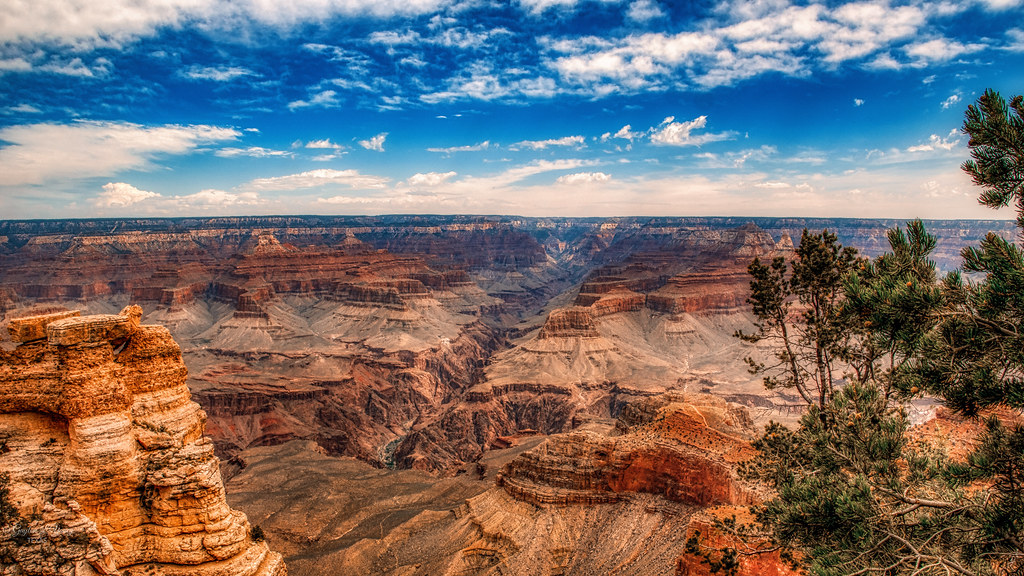
You probably think of the Grand Canyon as a giant open book of Earth’s history, every layer another page you can read with your eyes. But tucked inside those colorful cliffs is something far stranger: a chapter so thoroughly torn out that nearly a quarter of our planet’s history is simply…missing. You can actually stand in front of that gap in time and touch it with your hand.
Geologists call this mystery the Great Unconformity, and the Grand Canyon is one of the best places on Earth where you can see it. You’re looking at rock that formed almost two billion years ago, and right on top of it, rock that formed over a billion years later, with almost nothing in between. How did so much time vanish from the rock record? That’s the massive geological puzzle hiding in plain sight as you gaze across the canyon’s rim.
The “missing billion years” you can stand on
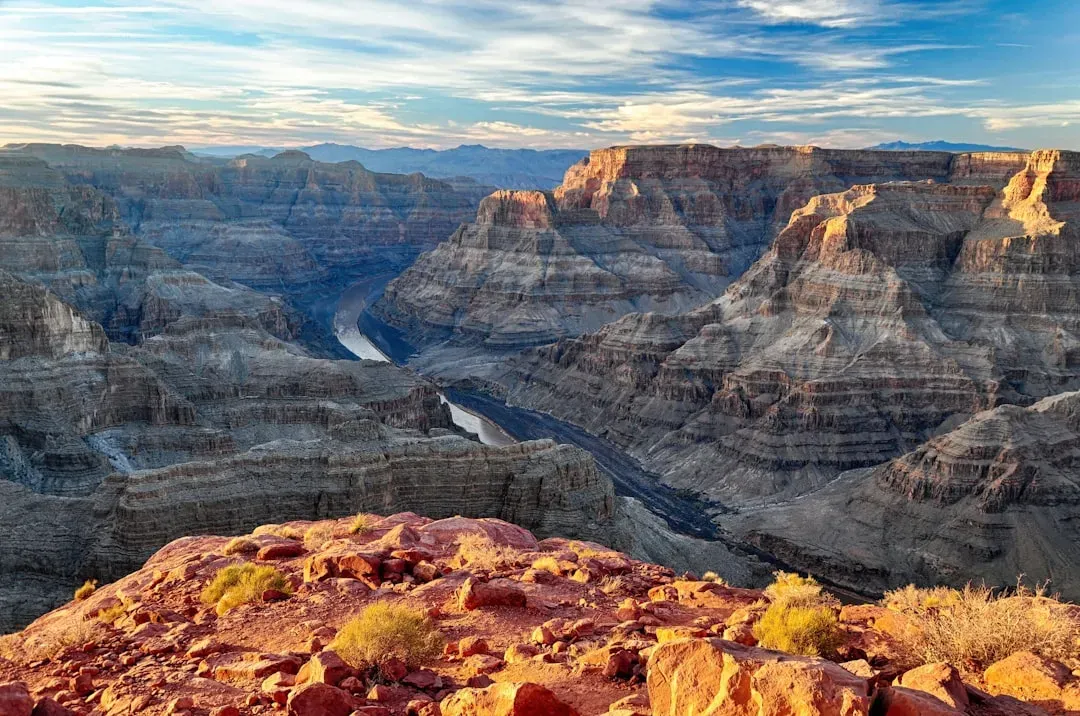
Imagine picking up a history book about Earth, and discovering that the pages covering everything between early single-celled life and the rise of complex animals had been ripped out. That’s essentially what you’re looking at when you stand at spots like Blacktail Canyon or deep in the Inner Gorge and trace your fingers along the boundary where dark ancient rock meets younger, lighter sandstone. In that razor-thin line, roughly about one quarter of Earth’s entire history is simply not recorded in the rocks beneath your feet, even though it must have happened somewhere.
In the Grand Canyon, geologists have measured that boundary as erasing as much as about 1.2 to 1.3 billion years of rock record in some places. Below it, you have the Vishnu Basement Rocks that solidified and were deformed around 1.7 to 1.8 billion years ago; above it, you have Cambrian-age Tapeats Sandstone, laid down in shallow seas roughly about 525 million years ago. You’re jumping from a deep, ancient crustal world straight into a shoreline environment that existed not long before the explosion of complex life, with the entire middle of the movie cut out.
How to actually see the Great Unconformity when you visit
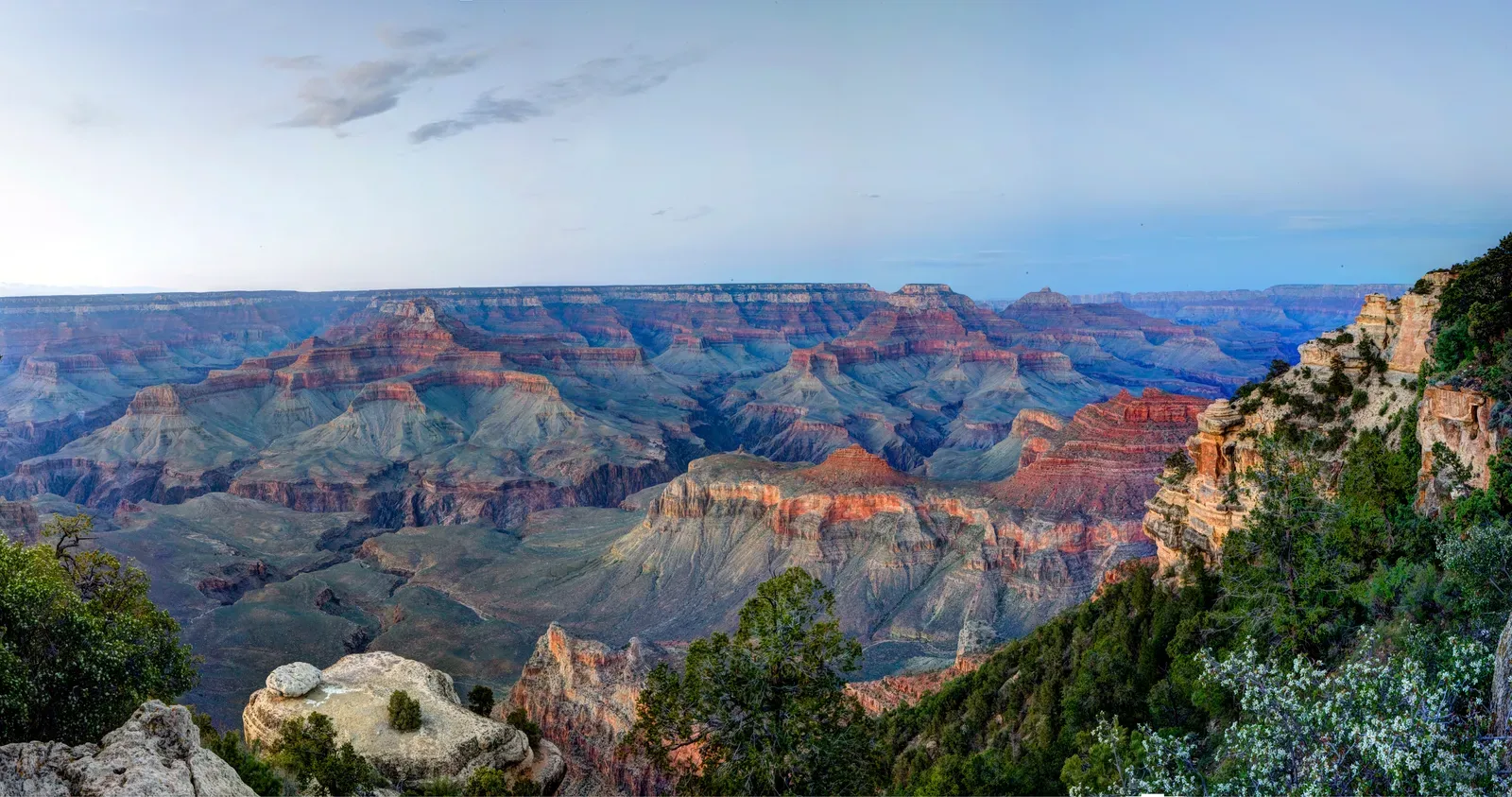
If you’ve ever stared at canyon walls and felt like all the layers blur together, you’re not alone. The trick is to look for a stark contrast: near the river, you’ll see dark, crumpled, shiny-looking rocks with vertical or steeply tilted lines. Those are the ancient Vishnu Basement Rocks, a mix of metamorphic schists and granites that form the hard, narrow Inner Gorge. Sitting on top of them, often sharply and almost flat, are lighter brown to tan cliffs made of Tapeats Sandstone, sometimes full of small pebbles and thin bedding. That abrupt shift from tortured-looking dark rock to more orderly, horizontal sandstone is your visual clue.
You don’t have to be a geologist to spot it. On popular inner-canyon trails or rafting trips, guides often point out exactly where the Great Unconformity cuts across the walls. Once your eyes lock onto that boundary, you can trace it for long stretches, like a thin scar etched around the canyon. The wild part is that you’re not just seeing different rock types; you’re standing at a physical contact that represents up to a billion years of erosion, mountain building, and environmental change that left no local record behind.
What lies below: a shattered record of a lost mountain range
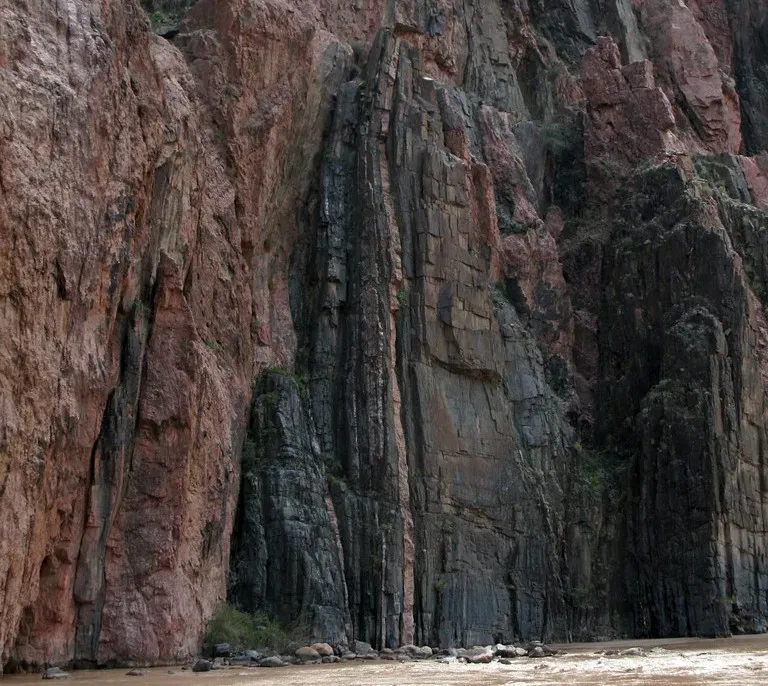
To understand why this puzzle is so dramatic, you need to look below that boundary first. The Vishnu Basement Rocks at the canyon’s base are not gentle, undisturbed layers. They started as sediments and volcanic materials that were buried, squeezed, and baked deep in the crust as ancient island arcs and proto-continents collided with early North America. Over hundreds of millions of years, they were crumpled into folds, sliced by faults, and cut through by granitic magmas. When you stare down at the Inner Gorge, you’re looking into the deeply eroded roots of a vanished mountain belt.
By the time those mountains were worn down close to sea level, their upper layers had already been stripped away, leaving a rugged landscape of hills and valleys carved into the basement rock. That irregular topography is still preserved under the Great Unconformity; where the Tapeats Sandstone drapes over it, geologists can see that the sandstone filled in old low spots and lapped around basement highs. So when you trace your eyes along the boundary, you’re really seeing the ancient, scoured surface of an eroded continent – one that then waited a very long time before the next major chapter of rock began to accumulate on top.
What lies above: an ancient shoreline that flooded a continent
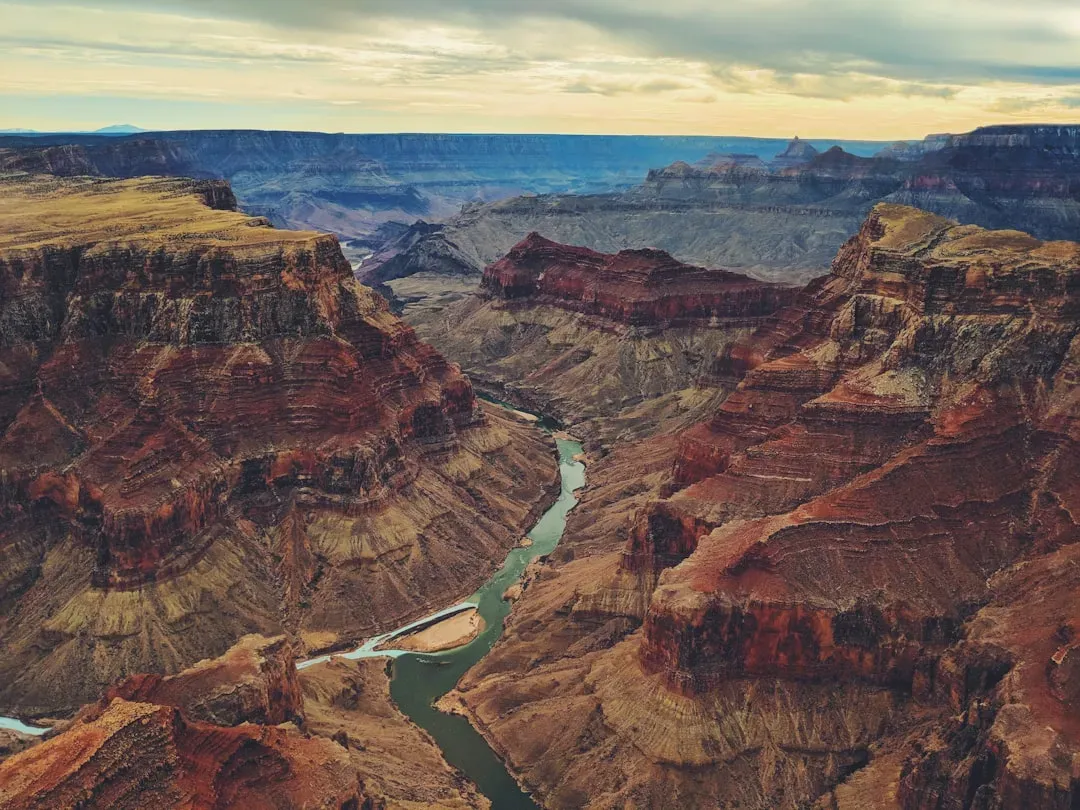
Now look above the unconformity. The Tapeats Sandstone that rests directly on the basement (or on older tilted sediments where they survive) is not random. It is part of a classic sequence known as the Tonto Group, which records an enormous shallow sea that crept inland over the continent during the Cambrian Period. The Tapeats marks the coarse, near-shore deposits: sand and pebbles washed off land and spread along beaches and shallow shorelines as the sea advanced. You can think of it like the sandy bottom of an ancient coastal zone, frozen in time.
Higher up, the layers grade into finer Bright Angel Shale and then into Muav Limestone, reflecting deeper and clearer waters as the sea continued to rise. That vertical shift from coarse sand to fine mud to carbonate rock is your vertical time-lapse of a marine transgression that covered huge parts of what’s now North America. When you hike the canyon trails, you’re essentially walking across and along a 500-million-year-old coastline, preserved in rock that happens to sit right on top of a billion-year gap.
How do you “lose” a billion years of rock?
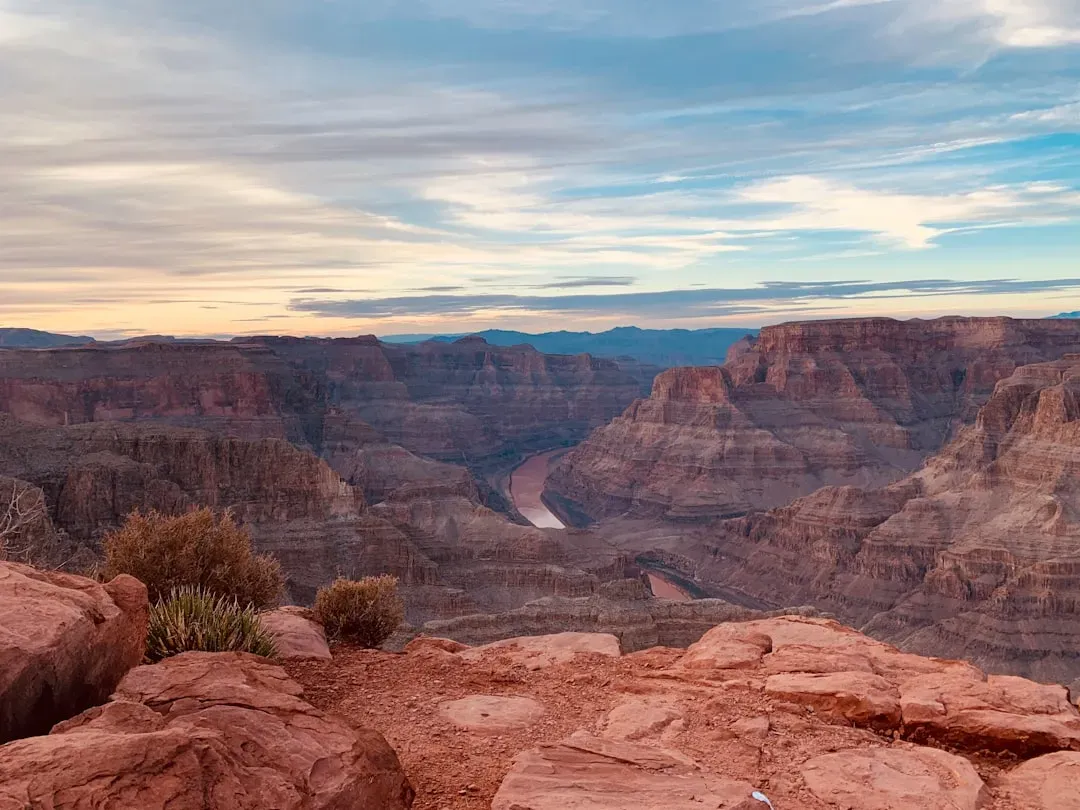
On paper, it sounds impossible: how can that much Earth history simply vanish? But if you think about how landscapes behave today, the puzzle becomes easier to imagine. When rock sits above sea level, it’s exposed to weathering and erosion. Rivers cut, glaciers grind, waves batter shorelines, and hills slowly wear down. In many places, instead of quietly stacking new sediments on top, the planet is busy stripping old layers away. If that continues long enough, entire sequences of rock can be removed before anything new gets deposited.
Most geologists see the Grand Canyon’s Great Unconformity as the product of long episodes of uplift and erosion followed by the slow arrival of Cambrian seas. Over hundreds of millions of years, tectonic forces likely raised different parts of the region, exposing rocks to erosion and removing strata that had formed between the basement and the Cambrian shoreline deposits. At the same time, sediment that was eroded from those missing rocks was carried off and preserved somewhere else. So the time is not missing from Earth’s history overall, but it is missing from that particular spot in the canyon, leaving you with a razor-thin surface standing in for a billion years of vanished rock.
Why geologists are still arguing about the full story
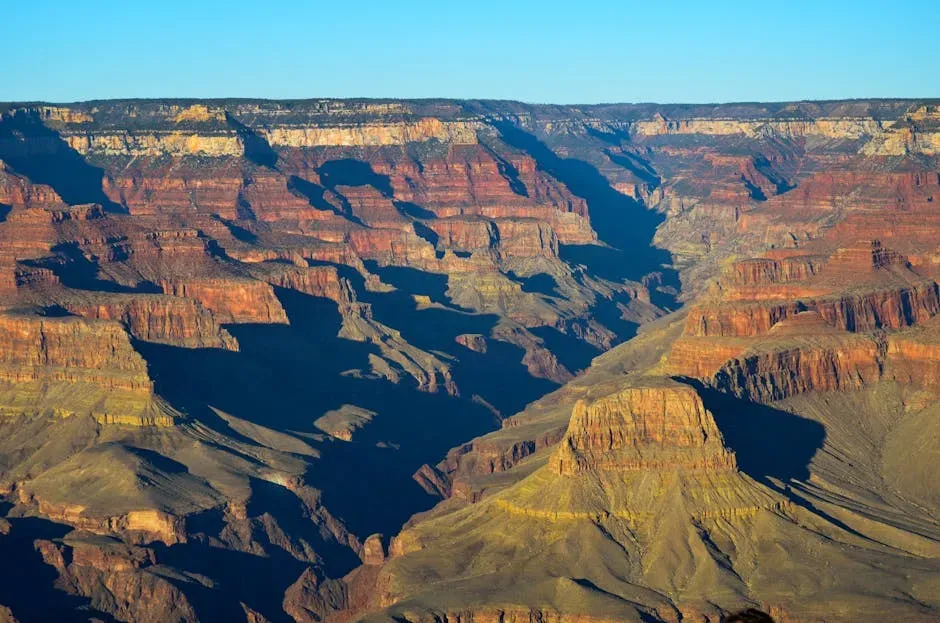
You might expect that by now, with satellites and lab instruments and detailed mapping, scientists would have nailed down exactly what happened during that missing interval. But when you remove the rock record itself, you throw away a lot of your evidence. That’s why the Great Unconformity has sparked decades of debate. Some researchers link the massive erosion that produced it to the breakup of an ancient supercontinent called Rodinia, which would have reshaped landscapes, uplifted crust, and stirred up climate systems.
Others see connections to extreme ice ages that may have wrapped Earth in widespread glaciation during parts of the Proterozoic. In that view, thick ice sheets might have scraped away huge thicknesses of rock, like a planetary-scale bulldozer clearing the surface prior to Cambrian seas flooding in. Still others focus on regional tectonics and shifting basins that could have selectively removed some layers while burying others nearby. You’ll see a lot of careful language in the scientific literature, because while the general outline – uplift, erosion, transgression – is widely accepted, the exact combination, timing, and drivers are still being pieced together from scattered clues.
Connections to the Cambrian explosion: coincidence or deeper link?
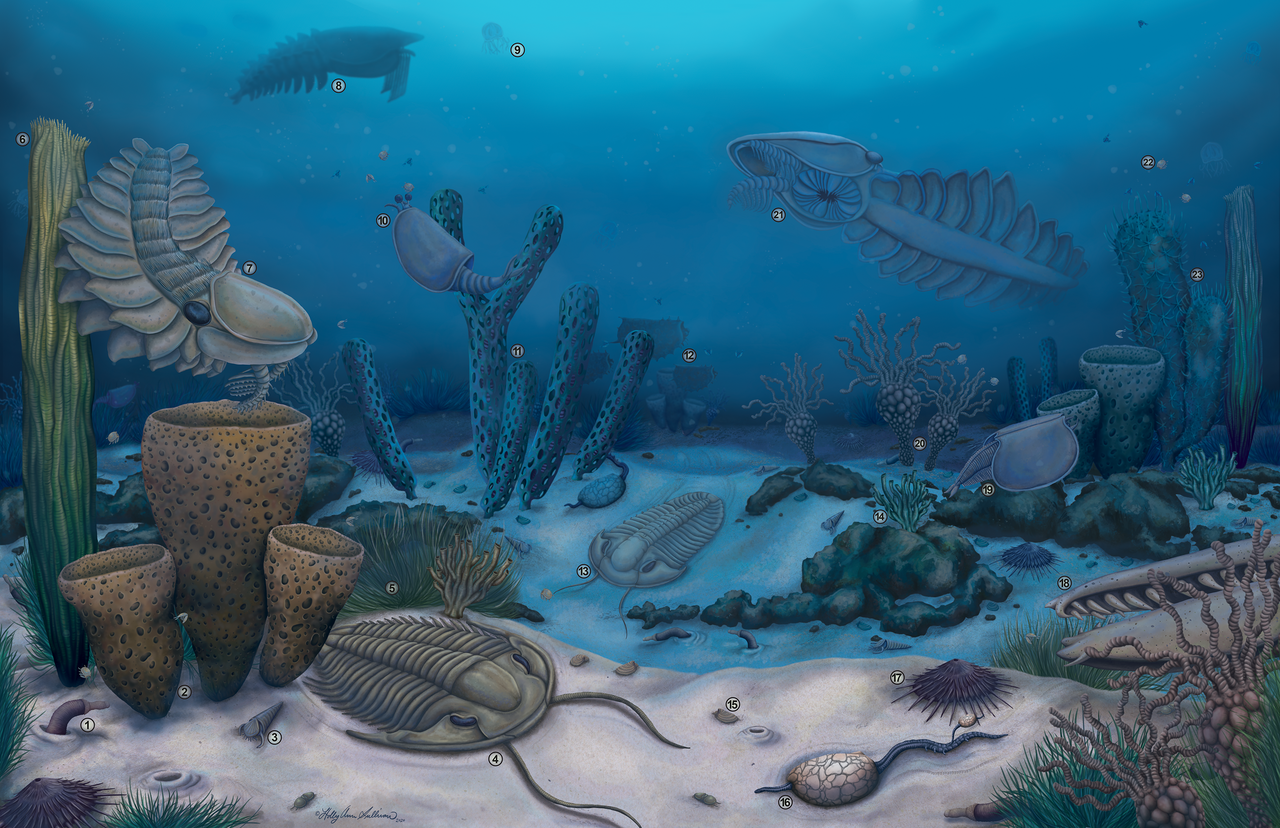
The timing of the Great Unconformity has raised another tantalizing question you might already be thinking about: is it just coincidence that this huge erosional gap ends right before the Cambrian Period, when complex animal life suddenly flourished in the fossil record? The precision of that overlap has tempted some researchers to explore possible connections. One idea suggests that the prolonged weathering and erosion leading up to the unconformity may have flooded the oceans with nutrients and ions, changing seawater chemistry in ways that favored biomineralization and rapid evolutionary innovation.
However, the evidence is still very much a work in progress. Other geologists argue that while both the unconformity and the Cambrian explosion happened within a broadly similar window of time, they may represent parallel outcomes of deeper tectonic and climatic shifts rather than one directly causing the other. From your perspective as a curious visitor, the safe takeaway is this: when you stare at that contact in the Grand Canyon, you’re looking at a physical boundary that coincides with one of the most dramatic transitions in Earth’s biological story, even if scientists are still sorting out how tightly intertwined those two stories really are.
What this geological puzzle tells you about deep time
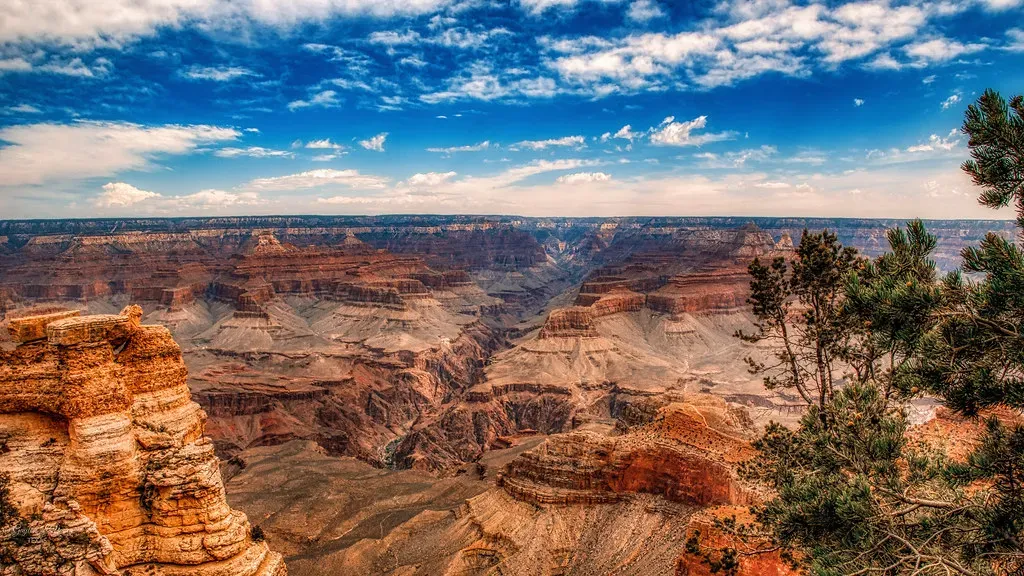
Standing at the rim, it’s tempting to see the canyon as a complete story, a perfect stack of time from bottom to top. The Great Unconformity shatters that illusion and forces you to confront how patchy and selective the rock record really is. Even in a place famous for its “complete” history, more time is missing than preserved when you count up the gaps represented by unconformities at different levels. That realization changes how you think about the certainty of any geologic timeline: it is powerful, but never perfect, and always reconstructed from fragments.
At the same time, this puzzle is a reminder of how much you can still recover with careful science. By comparing rock sequences in different regions, using radiometric dating, and decoding subtle textures in the rocks that do remain, geologists can piece together a surprisingly detailed story despite the missing pages. When you learn to see that thin line of contact in the Grand Canyon not just as a color contrast, but as a billion-year wink in Earth’s memory, it can change the way you feel about time, permanence, and your own tiny moment in the planet’s ongoing experiment.
In the end, the massive geological puzzle inside the Grand Canyon is less about a single dramatic event and more about the quiet, relentless power of deep time to build, erase, and rebuild the world beneath your feet. The next time you lean over the railing or hike down a switchback, you’re not just looking at pretty layers – you’re glimpsing a mystery that even the experts are still trying to solve. Knowing that, what part of Earth’s story do you find yourself most curious about now that you know a billion years can disappear into a line of rock you can touch?