Decoding the Nature of Post-Starburst Galaxies (Image Credits: Flickr)
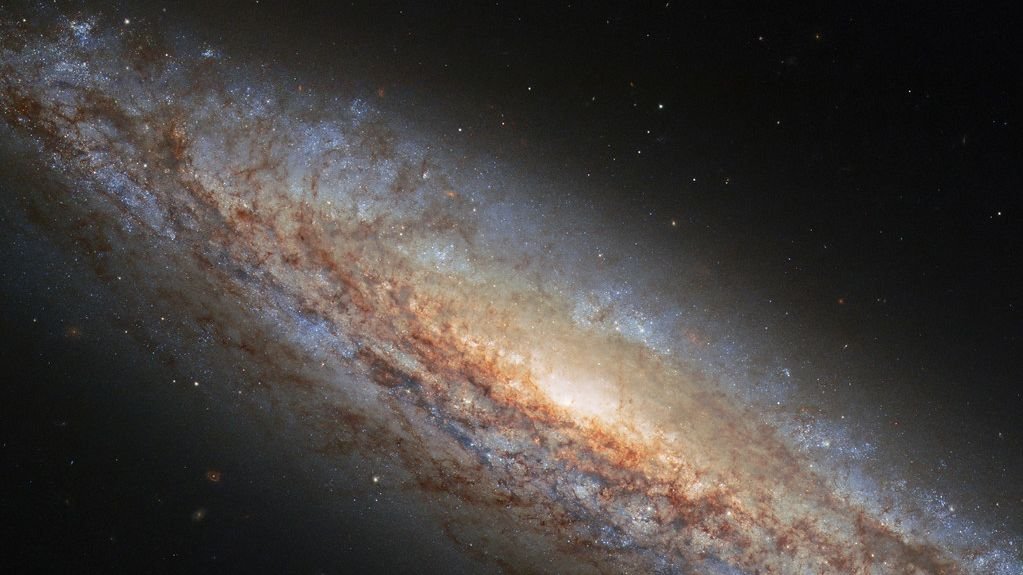
Starburst galaxies churn out stars at extraordinary rates, far exceeding typical spirals like the Milky Way. Yet some abruptly halt this frenzy, entering a post-starburst phase marked by spectral signs of a recent burst and scant ongoing activity. Researchers leading the EMBERS survey have now charted the cold gas in dozens of these objects, finding that most suffer from depleted molecular gas reserves – the essential ingredient for new stars – compared to active counterparts.[1][2]
Decoding the Nature of Post-Starburst Galaxies
Post-starburst galaxies represent a fleeting snapshot in cosmic evolution. These systems display strong absorption lines from young A-type stars, evidence of a burst that ended within the past billion years, alongside weak emission lines indicating minimal current star formation. They comprise less than 1 percent of galaxies at low redshifts, making them challenging targets for detailed study.
Such galaxies bridge the gap between vigorously star-forming disks and passive ellipticals. Traditional models posited that explosive feedback from the starburst itself might eject gas, starving future generations of stars. Observations, however, paint a more nuanced portrait, with gas dynamics varying widely across the population.[1]
Launch of the EMBERS Survey
The Ensemble of Multiphase Baryons Evolving in Rapidly-quenching Systems, or EMBERS, targeted 86 low-redshift post-starburst galaxies drawn from Sloan Digital Sky Survey data. Selection criteria emphasized strong Balmer absorption and suppressed emission, yielding a sample spanning stellar masses from about 3.6 billion to 80 billion solar masses at redshifts between 0.01 and 0.04.
Teams secured atomic hydrogen observations with China’s Five-hundred-metre Aperture Spherical Telescope, or FAST, and molecular gas measurements via carbon monoxide emissions using the IRAM 30-meter dish in Spain. New data covered 52 galaxies for CO, supplemented by archival records to reach 61 total, with 58 boasting both gas phases. This setup mirrored the sensitivities of reference surveys like xCOLD GASS, enabling direct apples-to-apples comparisons with star-forming peers.[1]
EMBERS at a Glance
- 61 post-starburst galaxies surveyed
- 34 carbon monoxide detections
- Molecular gas fractions: 2 to 250 percent of stellar mass
- Stellar masses: log(M*/M⊙) = 9.56 to 10.9
Molecular Gas Shortfalls Dominate Findings
Carbon monoxide signals appeared in 34 of the 61 targets, revealing molecular gas masses from 108.2 to 1010.3 solar masses. Gas fractions relative to stellar mass spanned two and a half orders of magnitude, yet medians sat markedly lower than in mass-matched star-formers – depleted by 0.3 to 0.6 dex on average.
Lower-mass systems showed the starkest deficits, sometimes exceeding one dex, with detection rates below 50 percent below 1010.4 solar masses. Stacking undetected spectra confirmed upper limits around 0.5 percent gas fractions for these. Atomic gas exhibited milder shortfalls, and the molecular-to-atomic ratio aligned closely with active galaxies, ruling out stalled conversion as the sole culprit.[1]
Multiphase views underscored diversity: roughly two-thirds appeared gas-poor across phases relative to controls, while a minority boasted enriched reservoirs. Nearly 40 of the 58 dual-phase galaxies qualified as poor in both, particularly at lower masses. Higher-mass examples trended toward intermediate states, nestled between lush star-formers and barren quenchers.
| Galaxy Type | Typical Molecular Gas Fraction | Depletion vs. Star-Formers |
|---|---|---|
| Star-Forming | High (several percent) | Baseline |
| Post-Starburst | Median ~3% | 0.3–0.6 dex lower |
| Quenched | Low (<1%) | >1 dex lower |
Unresolved Questions in Quenching Mechanisms
Fuel exhaustion emerges as the leading explanation for many shutdowns, with post-starbursts holding transitional reservoirs. Mergers, implicated in over half the sample via morphology, likely accelerate consumption or drive outflows in some. Active galactic nuclei appeared sporadically, not universally.
Challenges persist for gas-retaining examples: turbulence might stabilize clouds against collapse, or compact distributions could evade detection thresholds. Low-mass gas-poor cases hint at terminal quenching via rapid depletion, while richer ones signal potential rejuvenation cycles. Inefficient cosmic refueling remains another contender, especially in denser environments.[1]
This first comprehensive multiphase census lays groundwork for refined models. Future mapping of higher transitions like CO(2-1) promises sharper views of excitation states and star formation inefficiencies. EMBERS illuminates a critical juncture, where galaxies tip from vibrant nurseries to subdued relics.