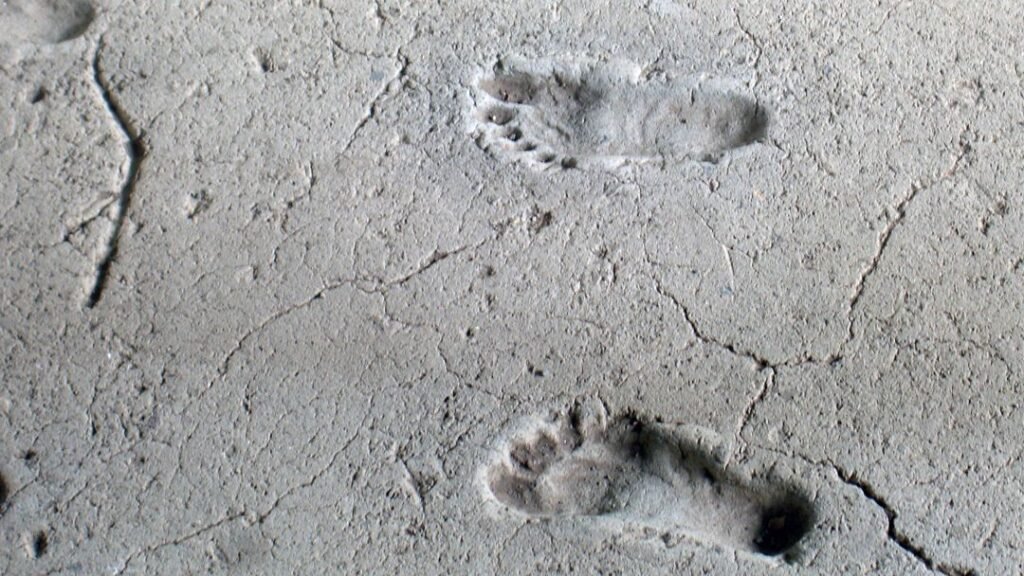

The Find at Alathar Lakebed (Image Credits: Upload.wikimedia.org)
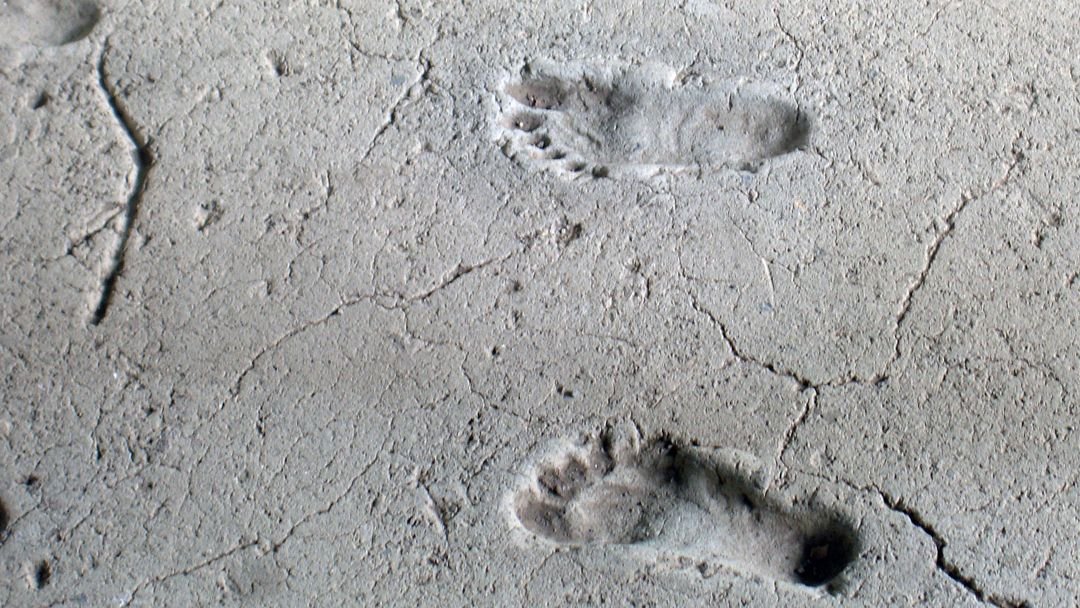
A remote mudflat in Saudi Arabia’s Nefud Desert holds an extraordinary record from deep prehistory. Archaeologists identified seven fossilized Homo sapiens footprints there, dating to 115,000 years ago, nestled among hundreds of animal tracks at the Alathar lakebed. The discovery, revealed after erosion exposed the site in 2017, points to fleeting human presence during a time of environmental strain.
The Find at Alathar Lakebed
Deep within the arid Nefud Desert lies the Alathar lakebed, a site locals call “the trace.” Researchers spotted the footprints amid a chaotic array of prehistoric animal prints preserved in a ancient mudhole. No signs of hunting marred the scene – no tool marks on bones or scattered artifacts suggested prolonged stays.
Humans appeared to have passed through briefly, their steps captured in the mud alongside those of large mammals drawn to the same spot. The lakebed once formed part of a vital corridor, where weather patterns funneled animals and early people toward scarce water sources.
Remarkable Preservation and Precise Dating
The mud at Alathar acted like a time capsule, defying the usual fate of footprints. Modern tests show that impressions in similar flats lose detail within two days and vanish entirely after four. Yet these endured, thanks to unique sediment conditions that hardened without disturbance.
Scientists dated the tracks to roughly 115,000 years old using isotopic analysis and contextual clues, akin to refined carbon dating methods. This places the prints firmly in the last interglacial period, just before an ice age gripped the region.
Reshaping the Story of Human Dispersal
These footprints stand as the oldest confirmed human tracks on the Arabian Peninsula. They align with fossil and archaeological evidence of Homo sapiens expanding into the Levant and Arabia between 130,000 and 80,000 years ago – a window when Neanderthals stayed away from the Levant.
The print sizes match early Homo sapiens better than Neanderthals, bolstering the attribution. As detailed in a study published in Science Advances, researchers noted: “Seven hominin footprints were confidently identified… we argue that H. sapiens was responsible for the tracks at Alathar.” This evidence paints Arabia as a key migration route, dotted with temporary lakes that served as rest stops.
Previous models emphasized coastal paths out of Africa, but Alathar suggests interior highways existed too. Humans traversed these during dry spells within a broader humid phase, exploiting freshwater oases. The absence of settlement traces reinforces the idea of opportunistic travel rather than establishment.
Comparable sites elsewhere highlight the rarity of such preservation. While other ancient footprints exist, Alathar’s combination of age, location, and isolation from hunting debris sets it apart. It underscores how climate shifts – humid phases fostering lakes, followed by desiccation – shaped early movements.
Driven by Thirst in a Drying Landscape
The lakebed drew crowds during its active phase, but visits tapered as aridity set in. Humans arrived solely for potable water, leaving no lasting mark beyond their steps. The study observes: “The lack of archaeological evidence suggests that the Alathar lake was only briefly visited by people… primarily tied to the need for potable water.”
Surrounding animal tracks tell a parallel tale of survival amid scarcity. Large herbivores and predators converged here, creating a prehistoric crossroads.
This glimpse into transient encounters challenges assumptions about early human behavior. It reveals a resilient species navigating harsh transitions, one footprint at a time. As research continues, Alathar may yield more clues to the intricate paths our ancestors trod.