When you look up at the night sky, you’re really only seeing a tiny fraction of what’s actually out there. The stars, planets and glowing gas clouds that catch your eye are just the tip of an enormous cosmic iceberg. Hidden behind all that visible beauty lurk two mysterious players – dark matter and dark energy – that quietly dominate almost everything the universe does.
What makes this so wild is that you live in a cosmos where nearly all of the substance and power is invisible, untouchable and, for now, unexplained. You are made of ordinary atoms, you breathe ordinary air and you walk on an ordinary planet, yet the grand story of the universe is largely being written by something you can’t see, feel, or interact with directly. Once you realize that, the sky stops being just pretty, and starts becoming deeply, almost disturbingly, interesting.
The Shocking Truth: Most of the Universe Is Invisible
Imagine opening your bank app and finding out that the balance you thought was your entire wealth is actually less than one twentieth of what you really have, but the rest is locked in an account you can’t see or access. That’s a bit like what you discover when you learn about dark matter and dark energy. All the stars, galaxies, nebulae, dust and planets you can spot with telescopes make up only a small slice of the universe’s total contents.
When astronomers weigh the universe using gravity, they find that ordinary matter – the stuff made of protons, neutrons and electrons – accounts for only a modest portion of the total. The rest is split between dark matter, which behaves like an invisible kind of mass, and dark energy, which acts more like a strange pressure stretching space itself. You’re used to thinking of reality as what you can see and touch, but cosmology forces you to accept that most of reality is more like a ghostly background framework you only know is there because of how it tugs on everything else.
How You Know Dark Matter Is Really There (Even If You Can’t See It)
You might wonder why anyone believes in dark matter at all if nobody has ever held a dark matter particle in a lab or seen it glowing in a telescope. The key is that you can watch how gravity behaves and then ask what kind of invisible mass must be hiding there to make things move the way they do. When you look at how fast stars orbit in galaxies, you find that they travel much too quickly for the visible matter alone to keep them gravitationally bound.
If galaxies contained only what you can see, their outer stars should fly off into space, like rocks flung from a weak slingshot. Instead, they stay tightly wrapped in their spiral disks, held by an unseen halo of mass that astronomers call dark matter. You also see dark matter’s fingerprints in how clusters of galaxies hold together, in how light bends as it passes through massive regions of space, and in subtle patterns in the afterglow of the Big Bang. Each of these clues nudges you toward the same conclusion: there is more gravitating stuff out there than meets your eye.
What Dark Matter Might Be Made Of (And What It’s Definitely Not)
When you hear the phrase “dark matter,” it’s tempting to picture it as just regular matter that’s turned the lights off, like cold gas, dust or maybe a bunch of black holes sprinkled through space. But you can actually rule out most of those ordinary suspects because they would leave detectable traces, from blocking starlight to emitting faint radiation, and large populations of them would clash with what you see in the early universe’s light. Dark matter seems to be something far stranger than just hidden chunks of normal stuff.
Most researchers think dark matter is built from a new kind of particle that does not interact with light and barely interacts with ordinary matter at all, apart from gravity. You might come across ideas about so‑called weakly interacting massive particles, lighter ultrafaint particles, or even more exotic possibilities like extended dark structures. The tricky part is that your detectors on Earth have to be unimaginably sensitive, patiently waiting for incredibly rare collisions that might never happen. Until you catch one of those particles directly, you’re stuck in a frustrating but fascinating zone where the evidence for dark matter’s existence is strong, but the identity of its building blocks remains an unsolved riddle.
How Dark Matter Builds the Cosmic Web You Live In
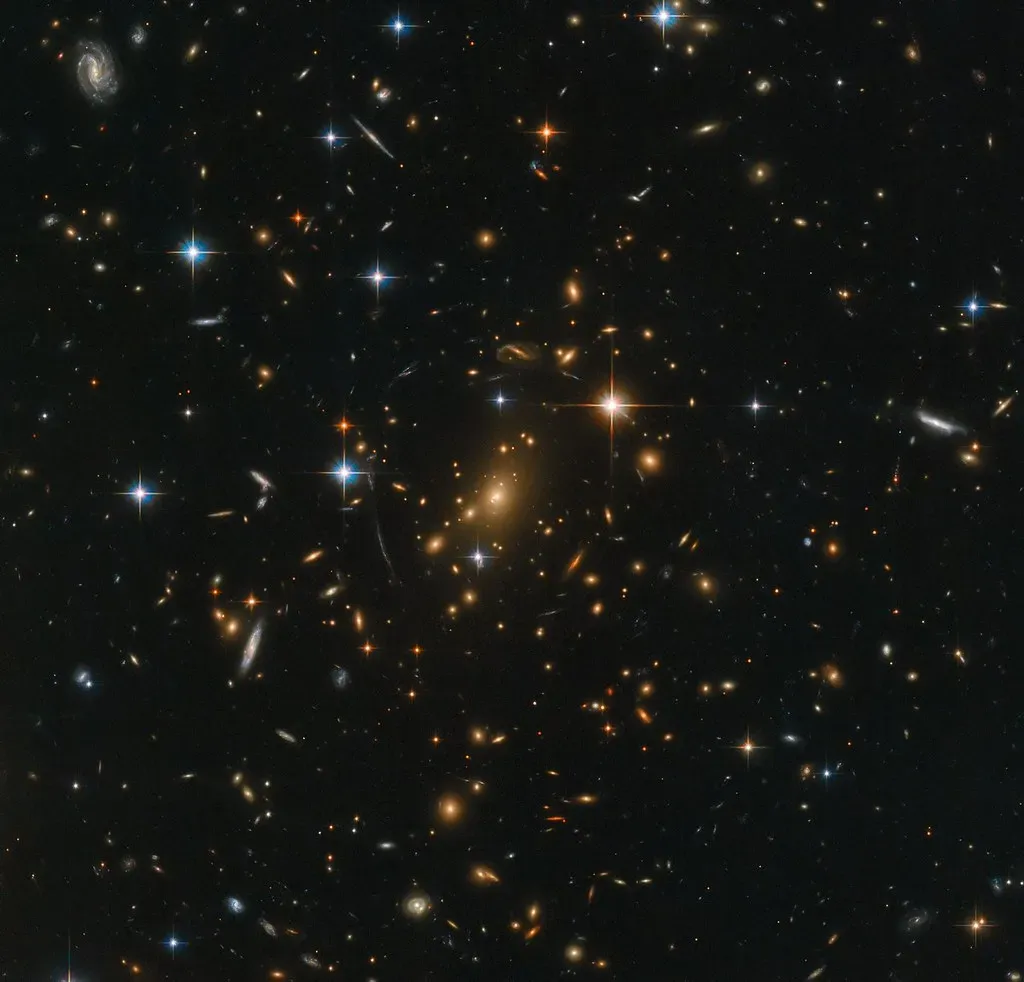
If you could step outside the universe and look back at it in slow motion, you’d see dark matter acting like the skeleton of everything. Tiny lumps of dark matter in the early cosmos slowly pulled in more material through gravity, merging and clumping together over billions of years. Ordinary gas fell into these growing dark matter wells, cooled, and eventually ignited into stars and galaxies. In that sense, dark matter is the invisible scaffolding on which your entire visible universe is hung.
On the largest scales, you can picture the cosmos as a gigantic three‑dimensional web. Galaxies line up along filaments made mostly of dark matter, like dew droplets along invisible threads, with vast empty spaces in between. The galaxy that holds your Sun is just one bead on one strand of that web. When you look at deep maps of the sky, you’re really seeing the bright frosting on a dark cake, tracing an underlying structure that quietly choreographs where matter can gather and where it cannot.
Dark Energy: The Force Making Space Itself Speed Up
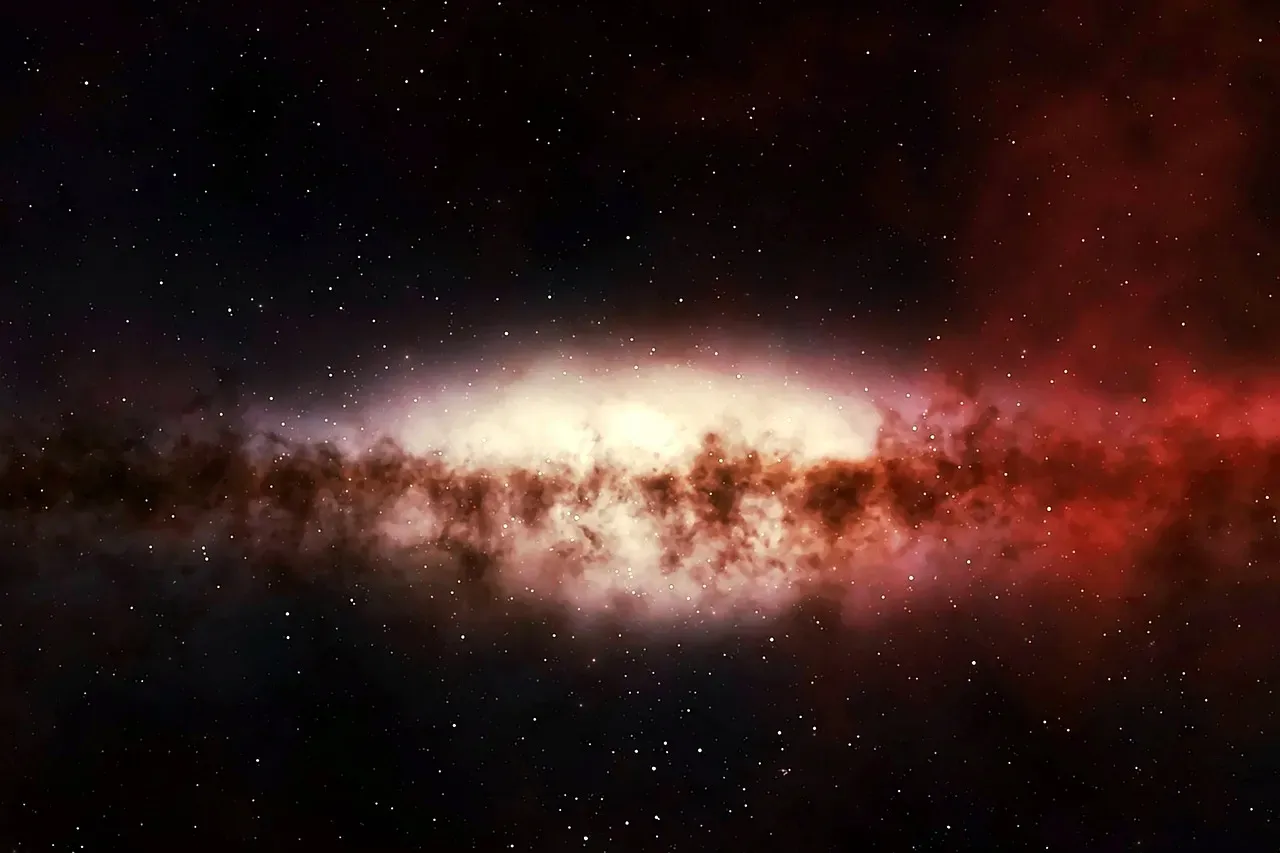
Dark matter might shape where things form, but dark energy decides how fast everything is speeding away from everything else. When astronomers measured how the expansion of the universe changes over time, they expected gravity to be slowing it down, like a ball tossed upward that eventually loses speed. To their surprise, the distant galaxies were not just moving away; the expansion was actually speeding up, as if some hidden push was accelerating the cosmic fabric.
Dark energy is the name you give to this unknown driver of accelerated expansion. Instead of acting like a clump of mass that pulls things together, it behaves more like a property of space itself that pushes things apart. The more the universe expands, the more space there is, and the more this repulsive effect dominates. Even though you can’t feel dark energy in your daily life, on vast cosmic scales it slowly wins over gravity, stretching the distances between galaxy clusters and changing the long‑term fate of the cosmos you inhabit.
What Dark Energy Might Be – And Why It’s So Hard to Pin Down
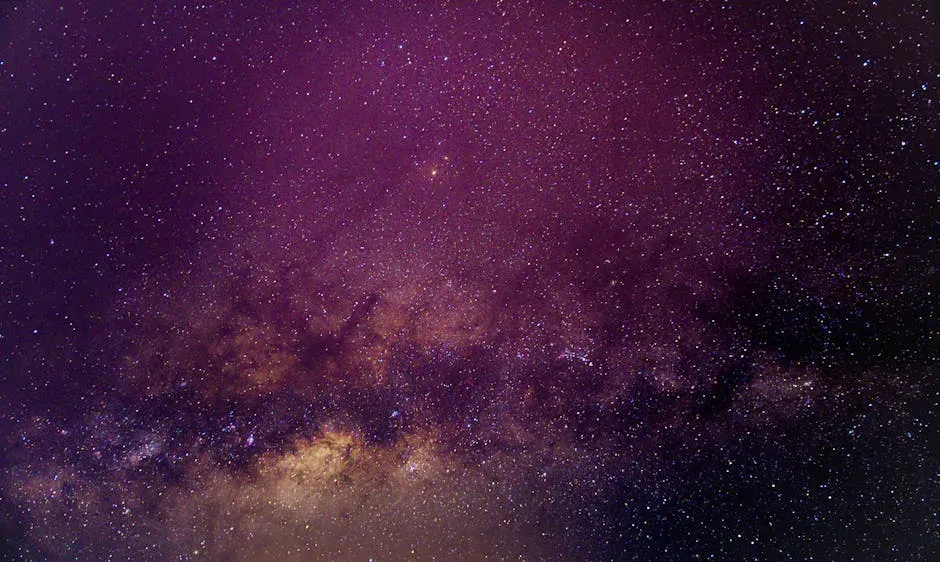
Trying to understand dark energy is a bit like trying to describe the flavor of a dish you can only smell from across the room. You don’t have direct samples; you only see its effect on how the universe grows over time. One simple idea is that dark energy could be the energy of empty space itself, built into the fabric of the universe like a constant background value. That interpretation fits well with many observations but raises deep questions about why the amount of this energy is so small yet not zero.
Another possibility is that dark energy changes over time, behaving like a slow‑rolling field that evolves as the universe ages. You can test these options by carefully charting how galaxies cluster, how distant supernovae brighten and fade, and how ancient light from the early universe has been stretched. Right now, your best measurements tell you that dark energy is real and currently dominates the cosmic energy budget, but they do not yet reveal exactly what it is. You’re standing in that thrilling scientific moment where the data are solid, but the explanation is still wide open.
How These Invisible Forces Shape Your Cosmic Future
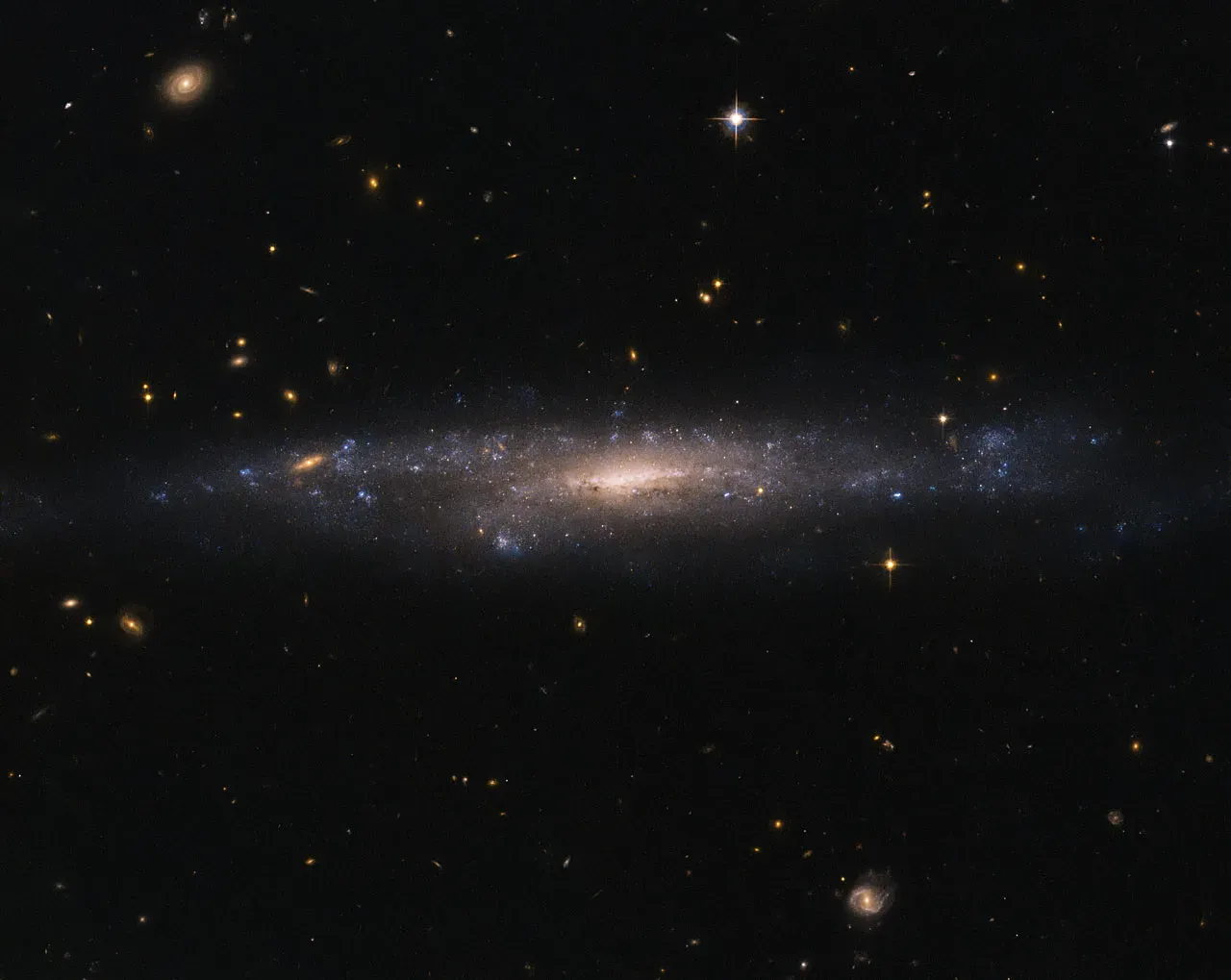
Dark matter and dark energy are not just strange background trivia; they literally steer the destiny of everything, including your distant cosmic future. Dark matter’s gravity helped galaxies like your own form in the first place, giving stars and planets a place to exist. Without it, your night sky might be a much lonelier sight, with far fewer stellar cities separated by even vaster deserts of nothingness.
Looking ahead, dark energy takes center stage. As the universe keeps expanding faster, galaxy clusters drift farther apart, and over very long time scales, distant galaxies will slip beyond your ability to see them at all. Future observers in a far‑off epoch could find themselves in a strangely empty‑looking universe, unaware of the rich cosmic web that once filled their skies. What feels like a stable, unchanging cosmos during your lifetime is actually in the middle act of a much bigger story, with dark energy quietly rewriting the ending.
How You Might One Day Detect Dark Matter Directly
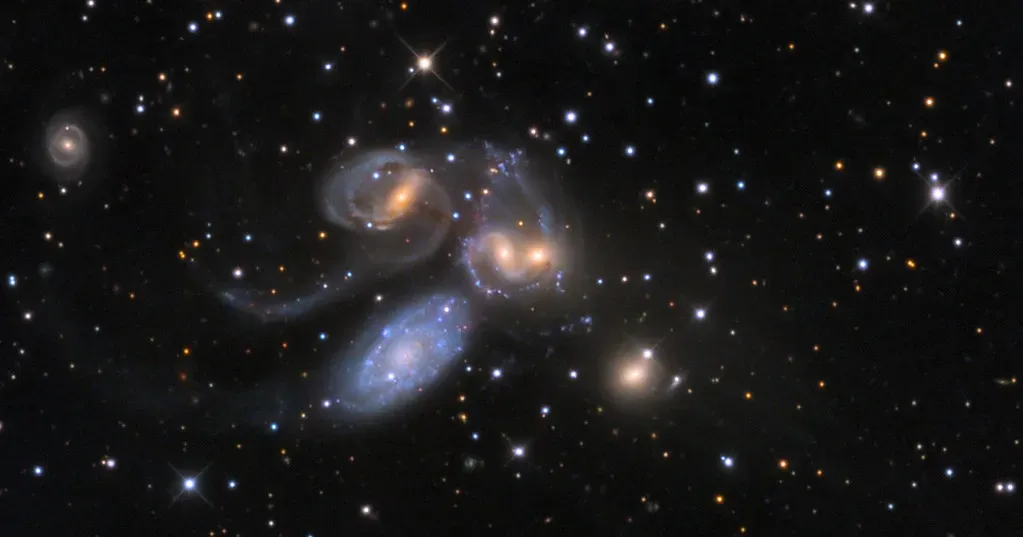
Right now, your knowledge of dark matter mostly comes from its large‑scale gravitational effects, but many experiments are trying to catch it in the act on a much smaller scale. Deep underground, shielded from cosmic rays and everyday radiation, enormous detectors filled with ultra‑pure liquids sit in almost total silence, waiting for the faintest whisper of a dark matter particle bumping into an atomic nucleus. If you ever see a consistent signal that cannot be explained by ordinary sources, you might finally have direct proof of dark matter’s particle nature.
Physicists are also hunting dark matter at particle colliders, where high‑energy collisions might briefly create new types of particles that then slip away unseen, leaving missing energy behind. Others look to the sky for signs that dark matter particles might occasionally annihilate or decay, producing unusual patterns of high‑energy light. Each of these methods is like fishing with a different net in the same mysterious sea. You have no guarantee of success, but the payoff – understanding what most of the universe’s matter actually is – would be one of the biggest catches in the history of science.
Why This Mystery Matters to You Personally
It can be tempting to shrug and think of dark matter and dark energy as abstract puzzles for professional cosmologists, distant from your everyday concerns. But when you step back, you see that these mysteries are really questions about what kind of reality you live in. The fact that such a huge portion of the cosmos is still unexplained tells you that your current picture of nature, as powerful as it is, remains incomplete. You are living in a time when some of the most basic questions about existence are still up for grabs.
There’s also something quietly humbling and inspiring about knowing that you, made of ordinary atoms on a small rocky world, can even ask these questions. With telescopes, detectors and equations, you’re stretching your understanding across billions of light‑years and billions of years in time. When you learn about dark matter and dark energy, you’re not just memorizing cosmic trivia; you’re participating in an ongoing human attempt to figure out what the universe is made of and how it works. That curiosity, more than any single answer, might be the most powerful force you actually experience.
Conclusion: Living in a Universe You Only Partly Understand
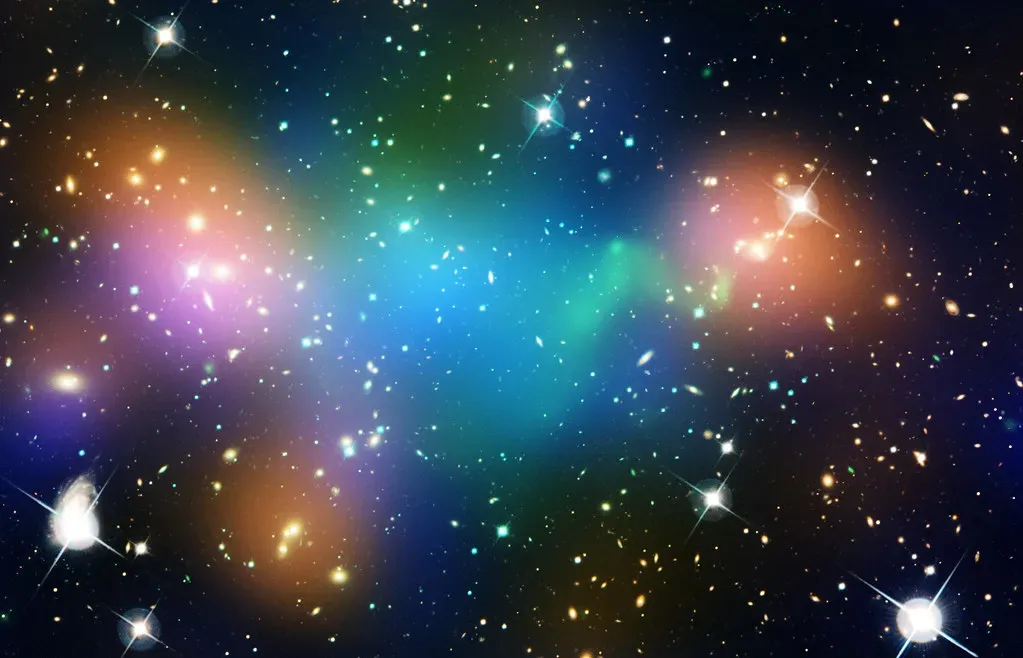
When you put it all together, you find yourself in a universe where the visible parts are just the brightly lit surface of something much deeper and stranger. Dark matter quietly shapes the large‑scale structure, building the frameworks where galaxies can form, while dark energy steadily pushes those structures apart, driving an expansion that accelerates over time. You can map their influence with impressive precision, even as their true nature continues to elude you. It’s a bit like knowing the rules of a game long before you figure out who wrote them or why they were written that way.
If you feel a mix of wonder and unease reading about this, that’s actually a healthy reaction. You’re confronting the fact that, for all your technological progress, you still do not fully understand most of what the universe is fundamentally made of. Instead of being a reason to despair, that ignorance is an invitation – a reminder that there is still room for new ideas, new experiments and new generations of curious minds to push further. The sky above you is not just a finished painting; it’s an unfinished mystery. Now that you know how much is still unknown, what part of that mystery would you most want to help solve?