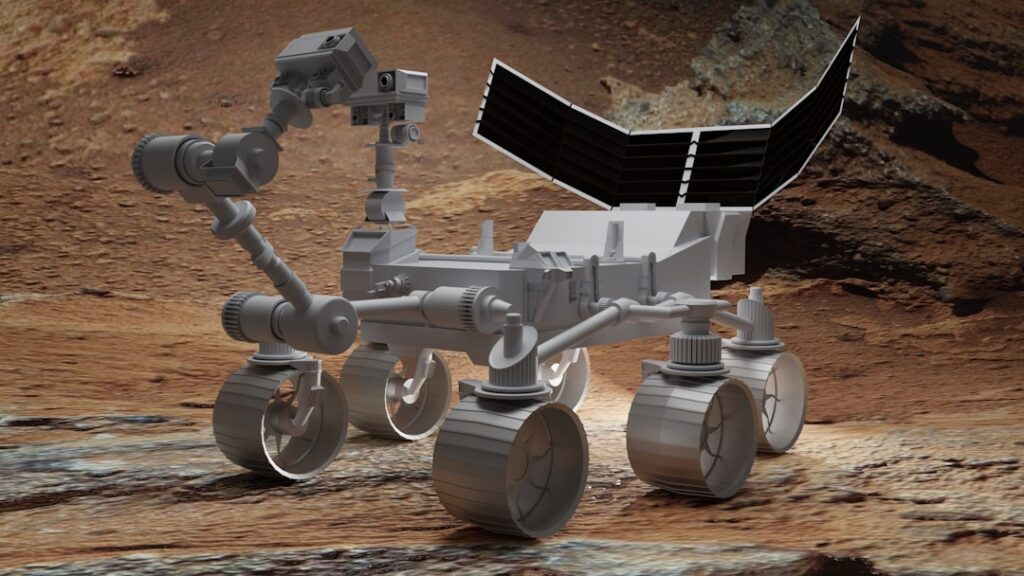

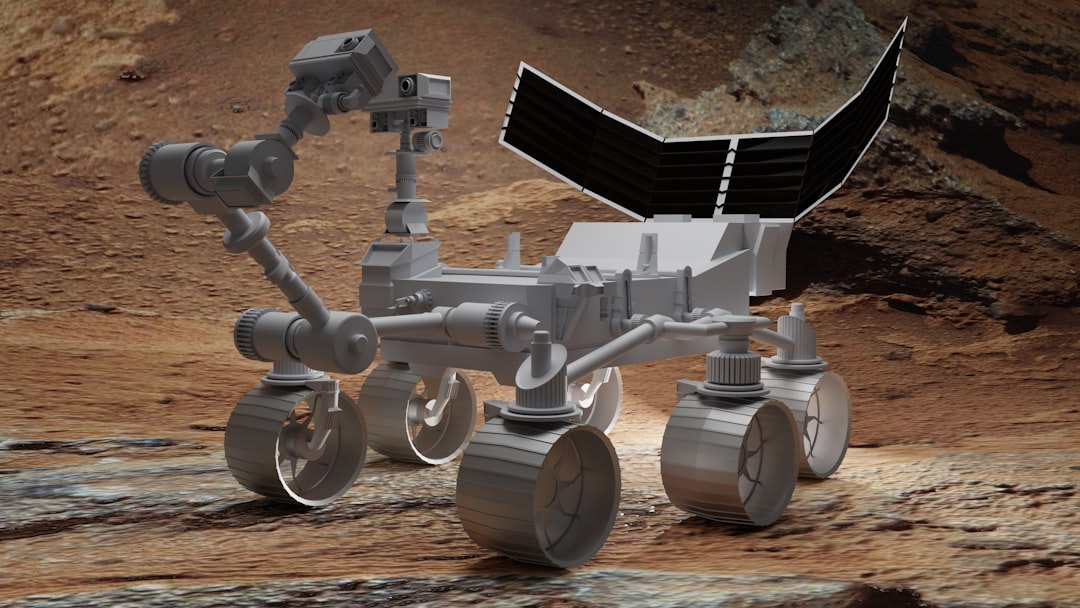
Drilling into Ancient Martian Rock (Image Credits: Unsplash)
NASA’s Curiosity rover identified 21 carbon-bearing molecules in a Martian rock sample, marking the most diverse collection of organics discovered on the red planet. Scientists announced the results on April 21, 2026, after years of analysis that revealed seven previously undetected compounds. These findings emerged from a drill site on Mount Sharp in Gale Crater, an ancient lakebed rich in clay minerals that preserve delicate chemistry. The discovery strengthens arguments that Mars once possessed the chemical building blocks necessary for life, though no direct evidence of biology has surfaced.
Drilling into Ancient Martian Rock
Curiosity extracted the sample from a spot dubbed Mary Anning 3, part of a rock formation named after the 19th-century fossil hunter. The rover bored into this site in 2020, alongside two nearby holes called Mary Anning and Groken. Mount Sharp’s layered sediments record a history of water flows and standing lakes billions of years ago. Clay minerals there proved resilient, safeguarding organics even after prolonged exposure to intense ultraviolet radiation.
Researchers labored over the data for years, cross-referencing rover instruments with Earth-based labs. The effort paid off with a catalog of molecules far broader than prior Martian hauls. Both active rovers, Curiosity and Perseverance, have routinely turned up carbon-rich compounds, but this set stands apart for its variety.
Key Molecules That Captivate Scientists
Among the haul, a nitrogen heterocycle drew special attention – a ring-shaped structure blending carbon and nitrogen atoms. Such forms serve as precursors to DNA and RNA on Earth. Lead author Amy Williams from the University of Florida noted the importance: “That detection is pretty profound because these structures can be chemical precursors to more complex nitrogen-bearing molecules. Nitrogen heterocycles have never been found before on the Martian surface or confirmed in Martian meteorites.”
Benzothiophene, another highlight, combines carbon and sulfur and appears in numerous meteorites. Scientists speculate these could have delivered prebiotic ingredients across the early solar system. Curiosity project scientist Ashwin Vasavada at NASA’s Jet Propulsion Laboratory emphasized the teamwork: “This is Curiosity and our team at their best. It took dozens of scientists and engineers to locate this site, drill the sample, and make these discoveries with our awesome robot.”
The full lineup of 21 molecules underscores Mars’ capacity for complex chemistry, echoing life’s foundational elements on Earth.
Wet Chemistry Unlocks Hidden Compounds
The rover’s Sample Analysis at Mars (SAM) instrument employed a rare technique called wet chemistry for the Mary Anning 3 sample. Technicians dropped powdered rock into cups laced with tetramethylammonium hydroxide (TMAH), a solvent reserved for prime specimens. Reactions fragmented larger organics into detectable fragments, revealing molecules elusive through standard methods.
To validate, the team replicated the process on Earth using the Murchison meteorite, a 4-billion-year-old relic brimming with organics. TMAH treatment there yielded breakdowns mirroring those from Mars, including benzothiophene. This parallel suggests the Martian molecules might stem from even more intricate precursors, degraded over eons.
Layering onto a Growing Body of Evidence
These results dovetail with Curiosity’s prior breakthrough: the longest-chain organics on Mars, such as decane, undecane, and dodecane. Detected last year, they resemble fatty acid remnants and challenge purely abiotic explanations due to their abundance. Non-biological processes alone struggled to account for them, prompting hypotheses of biological origins.
Perseverance added intrigue in Jezero Crater with rocks bearing leopard spots and poppy-seed-like features. Unveiled in 2024, their chemical profiles hint at ancient microbes. Together, the rovers paint a picture of a chemically vibrant Mars, where life might have taken root.
- 21 total carbon-bearing molecules identified.
- 7 new to Mars, including nitrogen heterocycle and benzothiophene.
- Preserved in UV-exposed clays from ancient lakes.
- Complements long-chain hydrocarbons and Perseverance’s microbial clues.
What Lies Ahead for Martian Mysteries
The peer-reviewed study appeared in Nature Communications, affirming the rigor behind the claims. Yet definitive answers on life’s role demand returned samples for exhaustive lab scrutiny. Mars sample return missions represent the next frontier, promising to dissect these organics under controlled conditions.
Until then, the findings sustain Mars’ allure as a potential cradle for extraterrestrial life. They remind researchers that the planet’s harsh surface belies a subsurface history teeming with possibility. Each revelation narrows the gap between chemistry and biology, urging deeper exploration.