
Most people assume a museum label is basically a guarantee. If it’s behind glass with a little brass plaque, it must be real, right? But some of the world’s most trusted institutions have spent decades, even centuries, protecting objects that were never what they claimed to be.
Goldsmiths, garden-shed forgers, and one very patient Dutch painter have all managed to fool the so-called experts, sometimes for generation after generation. The strangest part is that many of these fakes were only caught by accident, not by careful detective work. Here’s what actually happened when the truth finally caught up with them.
#12 – The “Ancient” Crystal Skulls That Were Actually Victorian Curiosities
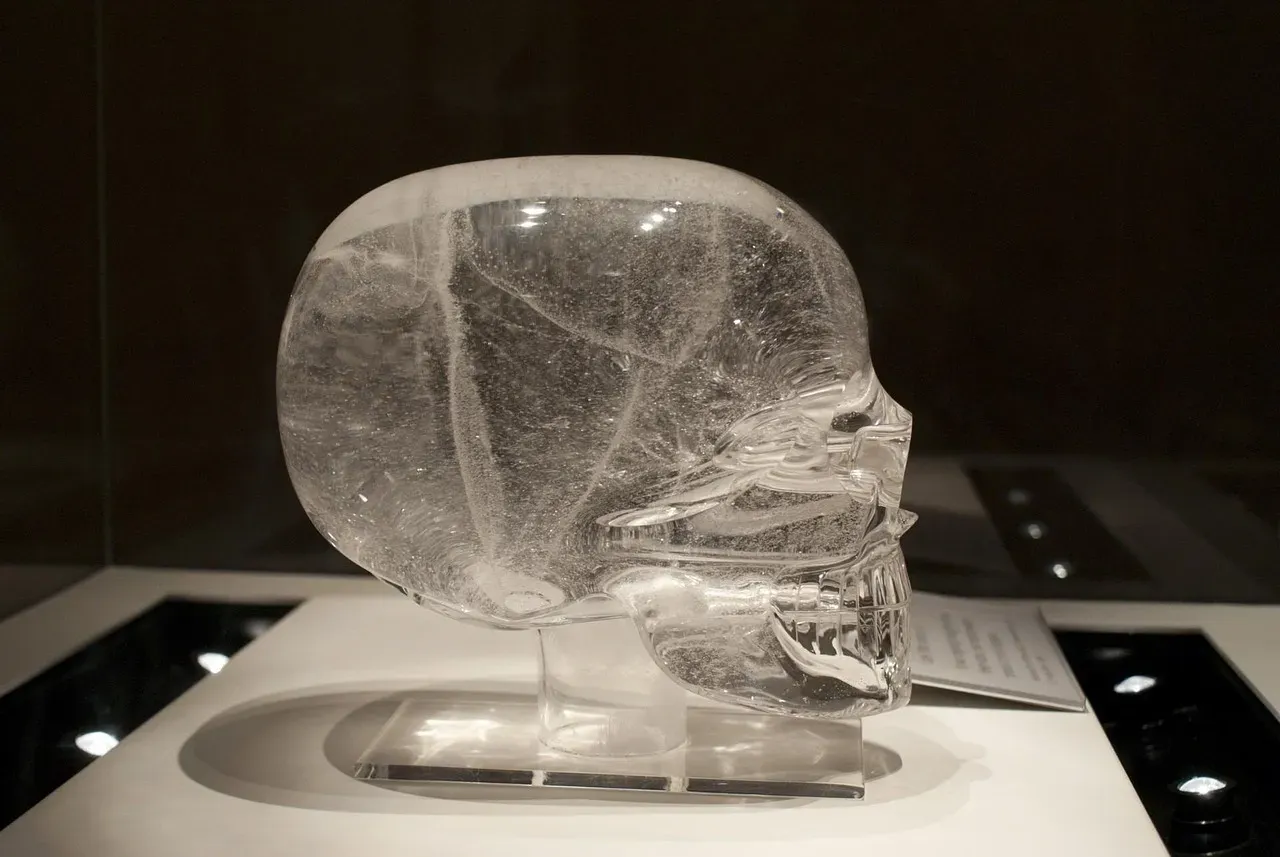
For over a century, crystal skulls displayed as pre-Columbian relics convinced millions of visitors they were staring at genuine Aztec or Maya sacred objects. The British Museum and the Smithsonian both once believed they held real pre-Columbian artifacts, and the intricately carved quartz skulls captured public imagination as evidence of some lost mystical craftsmanship.
The twist came when scientists finally put the skulls under an electron microscope. The tool marks told a completely different story – marks consistent with 19th-century European lapidary equipment, proving the “ancient” relics were actually Victorian-era creations, likely carved in Germany using modern rotary tools. The ancient magic everyone bought into was really just a well-marketed 1800s souvenir trade.
Fast Facts
- Displayed for decades as sacred pre-Columbian relics at the British Museum and Smithsonian
- Carved from solid quartz crystal, a material prized for its “mystical” clarity
- Electron microscope analysis found tool marks matching 19th-century rotary equipment
- Likely produced in Germany to feed the booming Victorian antiquities trade
#11 – The Renaissance Masterpiece That Was Secretly a Modern Restorer’s Trick
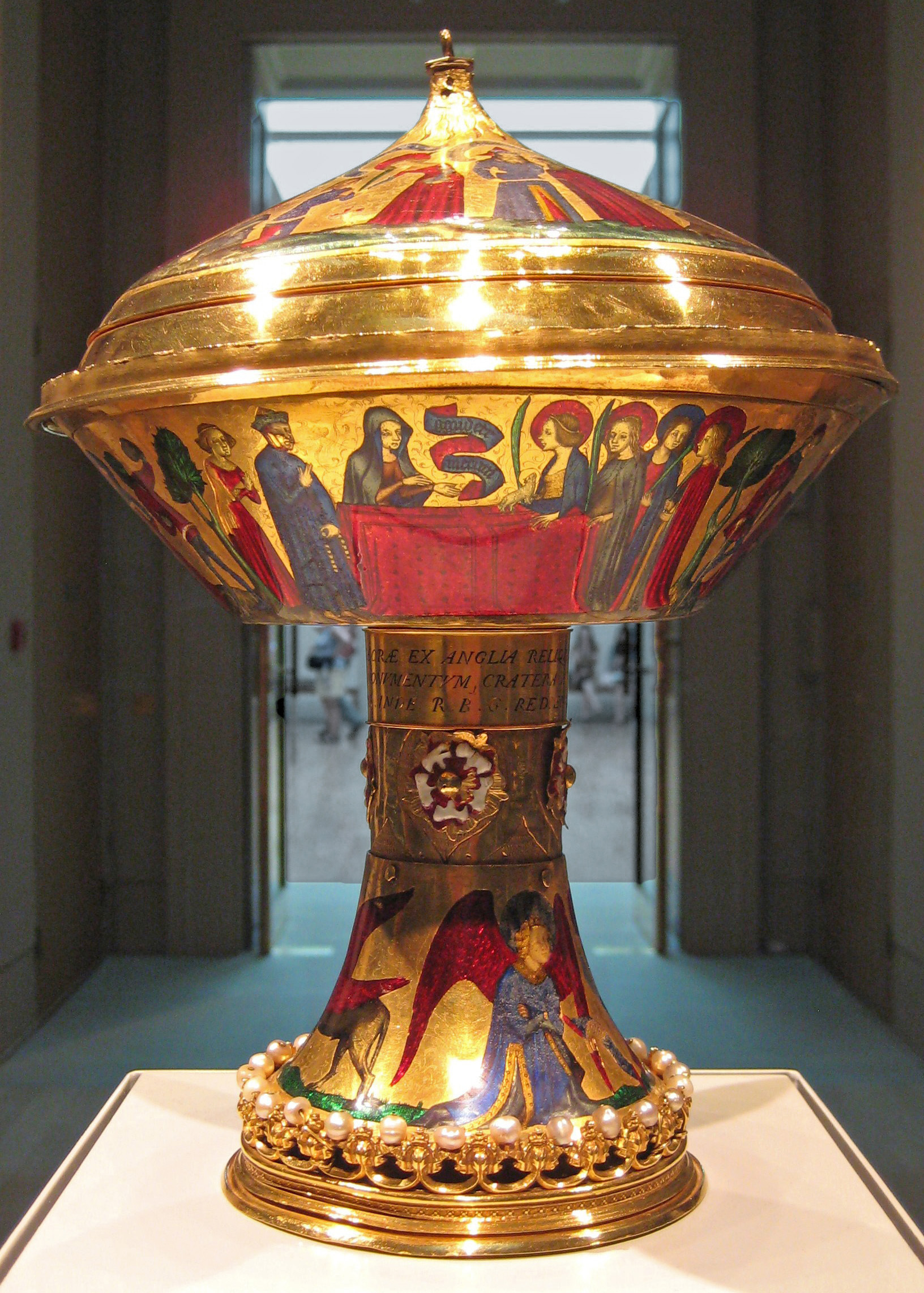
For decades, a gilded silver-and-crystal cup depicting a dragon-topped shell was celebrated as one of the finest surviving works of Benvenuto Cellini, the legendary 16th-century Florentine goldsmith. The so-called Rospigliosi Cup landed in a major American museum’s decorative arts galleries and was treated for years as a showpiece of Italian Renaissance metalwork, admired for its intricate dragon handle and jewel-like enamel.
Scholars eventually connected its style to a specific 19th-century workshop pattern rather than anything from Cellini’s own era. The prevailing theory now points to Reinhold Vasters, a 19th-century German goldsmith and museum restorer notorious for producing “Renaissance” objects so convincing they fooled aristocratic collectors and curators across Europe for generations. Vasters didn’t stop at one piece – he flooded high-end collections with fake medieval and Renaissance jewelry using genuine old techniques, which made detection nearly impossible without modern materials analysis.
#10 – The “Leonardo da Vinci” Bust That Was Made From Candle Wax
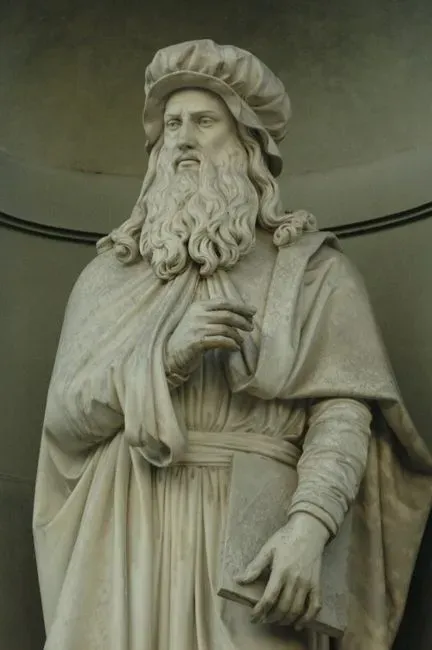
A delicate wax bust of the Roman goddess Flora was purchased by a major Berlin museum in the early 1900s and proudly attributed to Leonardo da Vinci himself, treated as one of the only surviving sculptural works by the Renaissance master. The purchase made headlines across Europe, cementing the museum’s reputation as home to a rare Leonardo original.
The scandal broke when the son of a little-known 19th-century English sculptor claimed his own father had actually made the bust decades earlier. Materials analysis later found the wax contained ingredients that simply weren’t in circulation during Leonardo’s lifetime, reinforcing suspicions that the “masterpiece” was really a 19th-century pastiche dressed up as a 500-year-old original. The museum never fully abandoned its Leonardo attribution publicly, which tells you everything about how hard it is for an institution to admit it got fooled.
#9 – The Mystery Forger Whose Fake Manuscripts Are Still Hiding in Plain Sight
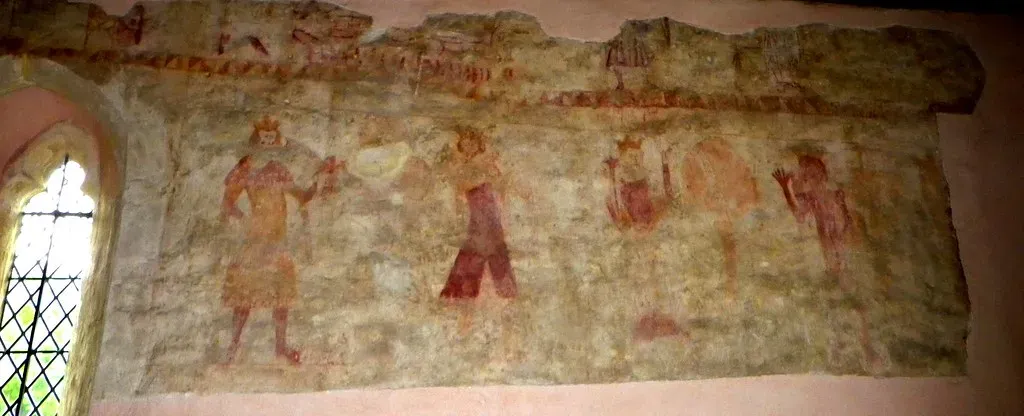
An anonymous forger, active in the early 20th century and nicknamed simply “the Spanish Forger” by the librarian who first spotted the pattern, churned out fake medieval and Renaissance manuscript illuminations that ended up scattered across dozens of respected institutional collections. He specialized in painting fake Gothic-style miniatures onto genuine blank pages cut from real old manuscripts, then selling them as authentic 15th-century religious or courtly artwork.
Because the parchment itself was often genuinely old, even careful paper and ink dating couldn’t immediately expose the deception. It took years of stylistic detective work to catch him. Experts eventually identified dozens, then hundreds, of these fake illuminations spread across major museum print rooms, university archives, and private collections worldwide – many of which are only now being reclassified as forgeries rather than quietly displayed as genuine medieval treasures. The unsettling part is that nobody ever learned his real identity.
#8 – The Viking Map That Rewrote History Books for Decades
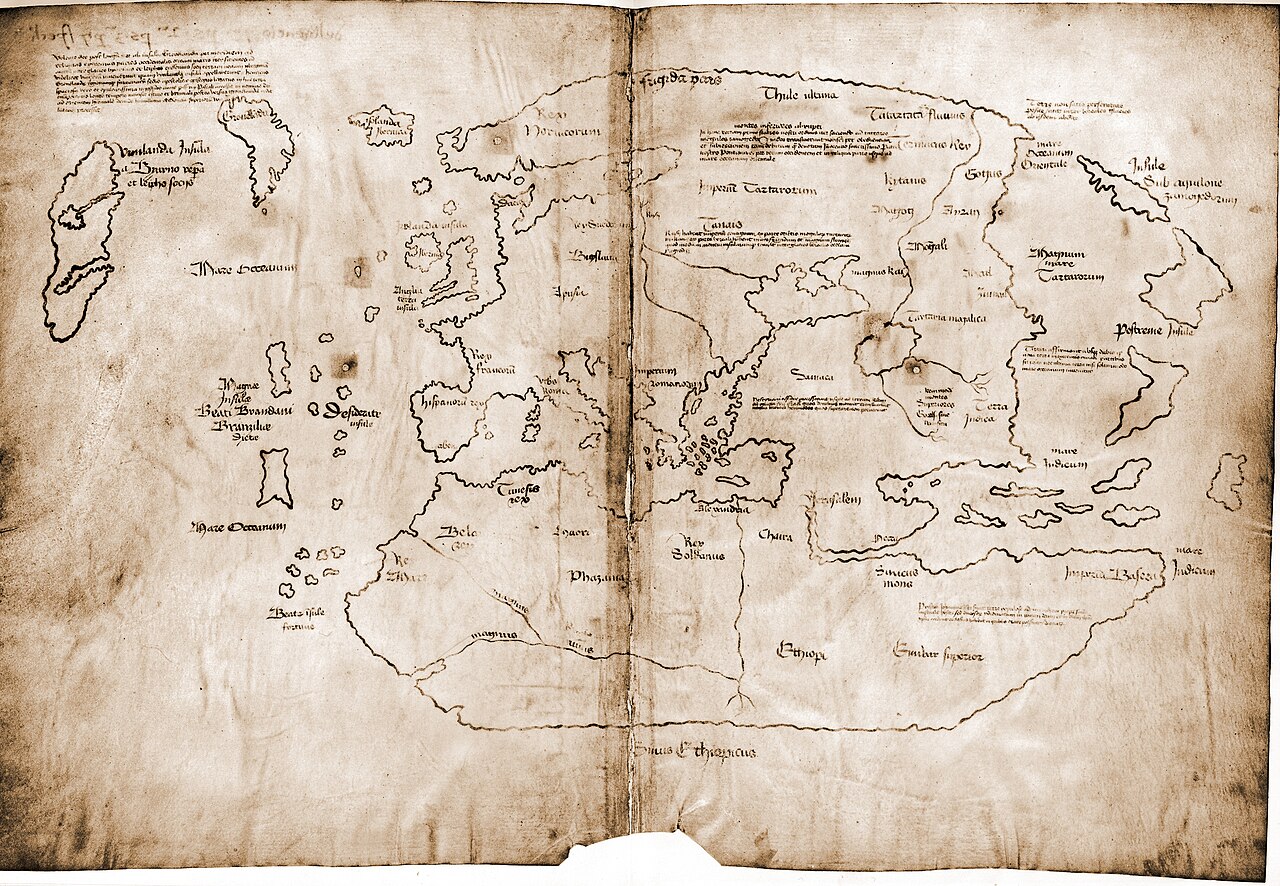
A single sheet of parchment, said to prove Norse explorers mapped North America centuries before Columbus, was hailed by one of America’s most prestigious university libraries as a genuine medieval document. The Vinland Map showed a landmass west of Greenland labeled in Latin, and it ignited real academic excitement about pre-Columbian contact between Europe and the Americas.
The real bombshell came from chemistry, not history. Suspicion had simmered for years among geography historians, but later chemical analyses identified one of the major ink ingredients as a 20th-century artificial pigment. In 2018, after decades of debate, specialists at Yale declared that the latest scientific and historical research had conclusively established it was a modern forgery. The map still sits in the university’s rare book library, now treated as a case study in forgery rather than a Viking-era artifact.
At a Glance
- Held at Yale’s Beinecke Rare Book Library since its acquisition
- Depicts “Vinland” west of Greenland, labeled in Latin script
- Ink was later found to contain a pigment that didn’t exist before the 20th century
- Declared a modern forgery by Yale researchers in 2018 after decades of debate
#7 – The Modern Art Sculptures Fished Out of a Canal as a Joke

In 1984, Italian art students carved three crude stone heads and dumped them in a canal in Livorno, riffing on a local legend that a famous early 20th-century sculptor once tossed his rejected works into that same waterway. When workers dredged the canal and discovered the heads, several respected art historians rushed to declare them genuine lost works by the sculptor, and the pieces went on public exhibition to huge crowds and press coverage.
The students then went on national television with a power drill, demonstrating exactly how they’d carved the “priceless” sculptures in an afternoon. The revelation humiliated the experts who had staked their reputations on authenticating the heads within days, and it remains one of the most cited cautionary tales in art history about how institutional pressure to make a big discovery can override basic skepticism. Nobody wanted to be the expert who said no to a headline-grabbing find.
#6 – The Golden Crown That Fooled the Louvre for Seven Years
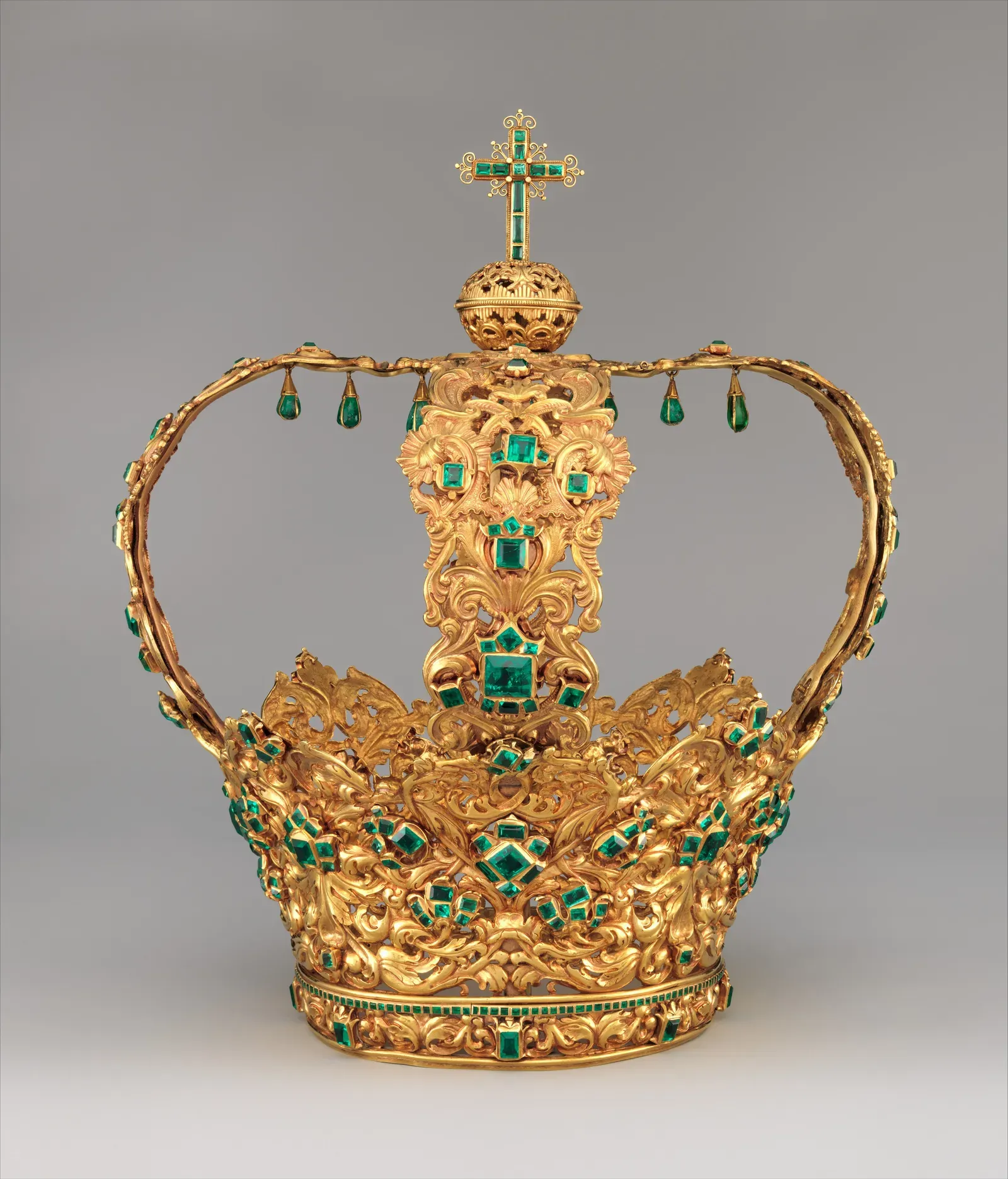
In 1896, the Louvre proudly announced it had acquired a solid gold tiara said to belong to the ancient Scythian king Saitapharnes, paying a jaw-dropping 200,000 gold French francs for what it believed was a priceless 3rd-century-BC treasure. Almost immediately, some archaeologists raised red flags – the prestigious German archaeologist Adolf Furtwängler, who examined it, was perplexed by its lack of patina and its odd mixture of engraving styles.
The truth only surfaced when the actual maker, a goldsmith from Odessa, heard about the controversy and traveled to Paris to confess. When the Louvre refused to believe him, he proved it by exactly reproducing part of the tiara on the spot. Museum officials, deeply embarrassed, had to pull the tiara from display while the press mocked and ridiculed them for years. Ironically, the goldsmith’s career soared afterward, while the Louvre spent years trying to live the story down.
Worth Knowing
- The Louvre paid 200,000 gold French francs for the tiara in 1896
- It was marketed as a 3rd-century-BC crown belonging to a Scythian king
- A German archaeologist flagged the missing patina almost immediately
- The Odessa goldsmith who made it proved his claim by recreating part of it on the spot
#5 – The £440,000 “Ancient Egyptian Princess” Carved in a British Garden Shed
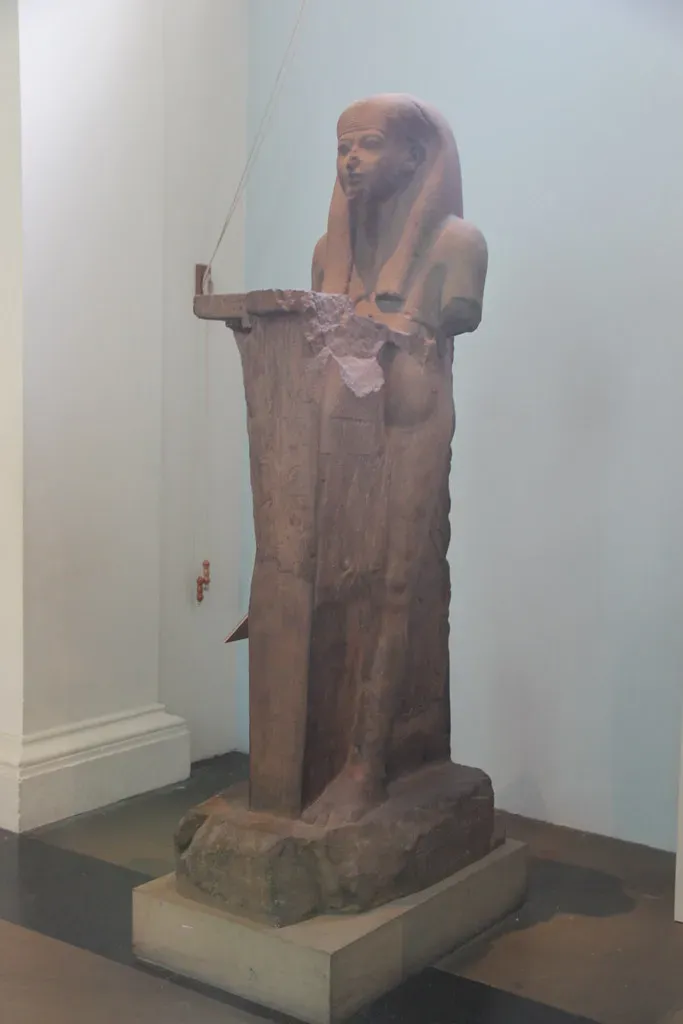
In 2003, a small limestone statue depicting an Egyptian princess from the Amarna period was hailed as a museum “coup,” authenticated by two of the most trusted names in the antiquities world before a British museum paid £440,000 for it. Specialists at auction house Christie’s and the British Museum had dated the figurine, supposedly the granddaughter of King Tutankhamun, back to 1350 BC.
It sat on proud public display for three years before anyone discovered the truth. The statue had actually been forged by British art forger Shaun Greenhalgh and sold by his father to the museum. The fraud only unraveled after separate fake Assyrian reliefs from the same source raised suspicion, exposing an entire cottage industry of convincing fakes made in an ordinary suburban home. It’s on display again today – this time in an exhibition specifically about forgeries.
Why It Stands Out
- Carved by a single family working out of an ordinary garden shed
- Sold to the museum for £440,000 despite sign-off from Christie’s and the British Museum
- Stayed on public display for three years before anyone questioned it
- Unraveled only after unrelated fake Assyrian reliefs from the same forgers were flagged
#4 – The $9 Million Greek Statue That Even Its Own Museum Isn’t Sure About
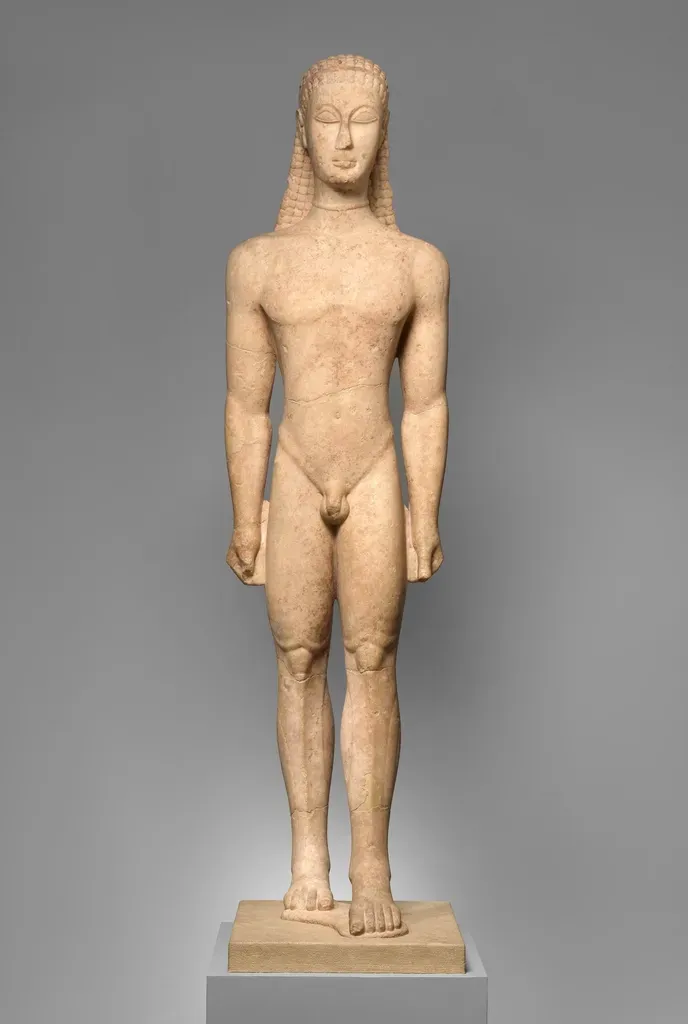
A monumental marble statue of a nude Greek youth, known as a kouros, was purchased by a major American museum for around $9 million in the mid-1980s after extensive scientific testing appeared to confirm its ancient origins. Geological tests initially suggested the surface weathering pattern could only have formed over centuries, and museum scientists believed they had solid proof of the statue’s age.
Then researchers discovered they could replicate that exact “ancient” weathering effect in a laboratory in just a few months. The demonstration of an artificial means of creating that de-dolomitization prompted a wave of art historians to revise their opinions of the work. Investigators also found that the paperwork used to establish the statue’s ownership history had been forged. The museum quietly pulled the sculpture from display in 2018 due to its disputed authenticity – and to this day, nobody has definitively proven it’s fake, which is arguably even more unsettling than a clean confession.
#3 – The Three “Etruscan Warriors” That Fooled America’s Biggest Museum for 30 Years
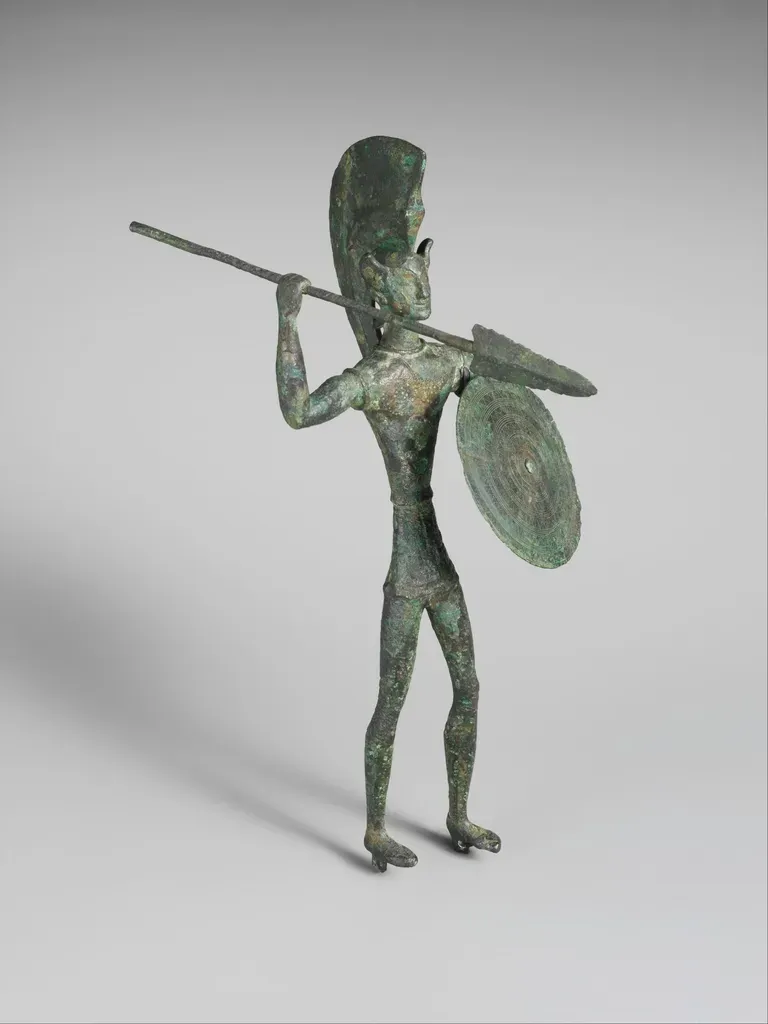
Standing up to eight feet tall, three imposing terracotta warrior statues were unveiled at a major American museum in 1933 as extraordinary ancient Etruscan masterpieces, unlike anything else known from that civilization. Two warriors stood eight and six feet high, and a four-foot head stared out from under its war helmet and curly beard; the curator who acquired them wrote he could find nothing approaching it in importance.
The statues had actually been built in pieces, smashed on purpose while still soft, and reassembled to look like ancient shattered fragments. They were created by Italian brothers and their sons and bought by the museum between 1915 and 1921. In 1960, chemical tests of the glazes revealed manganese, an ingredient the Etruscans never used, and one of the actual forgers was eventually tracked down – he confessed and even produced a missing thumb from one of the warriors’ hands as proof. In 1961, the statues were quietly removed to a basement.
#2 – The “Missing Link” Skeleton That Fooled Science for 40 Years

In 1912, a set of skull fragments discovered in an English gravel pit was unveiled as the long-sought “missing link” between apes and humans. It stood proudly in London’s Natural History Museum for four decades as legitimate scientific evidence of human evolution, cited in textbooks and built into entire theories of early man.
The reality was almost laughably crude once modern dating techniques were applied. In 1953, scientists ran tests that exposed the find as a cleverly assembled fake – a human skull only a few hundred years old paired with the jaw of an orangutan, stained to look ancient. The identity of the actual hoaxer is still debated by historians today, with suspicion spread across several of the original discoverers. It remains the most infamous scientific fraud ever displayed as fact in a museum setting.
#1 – The Fake Vermeers a Forger Sold Directly to the Nazis
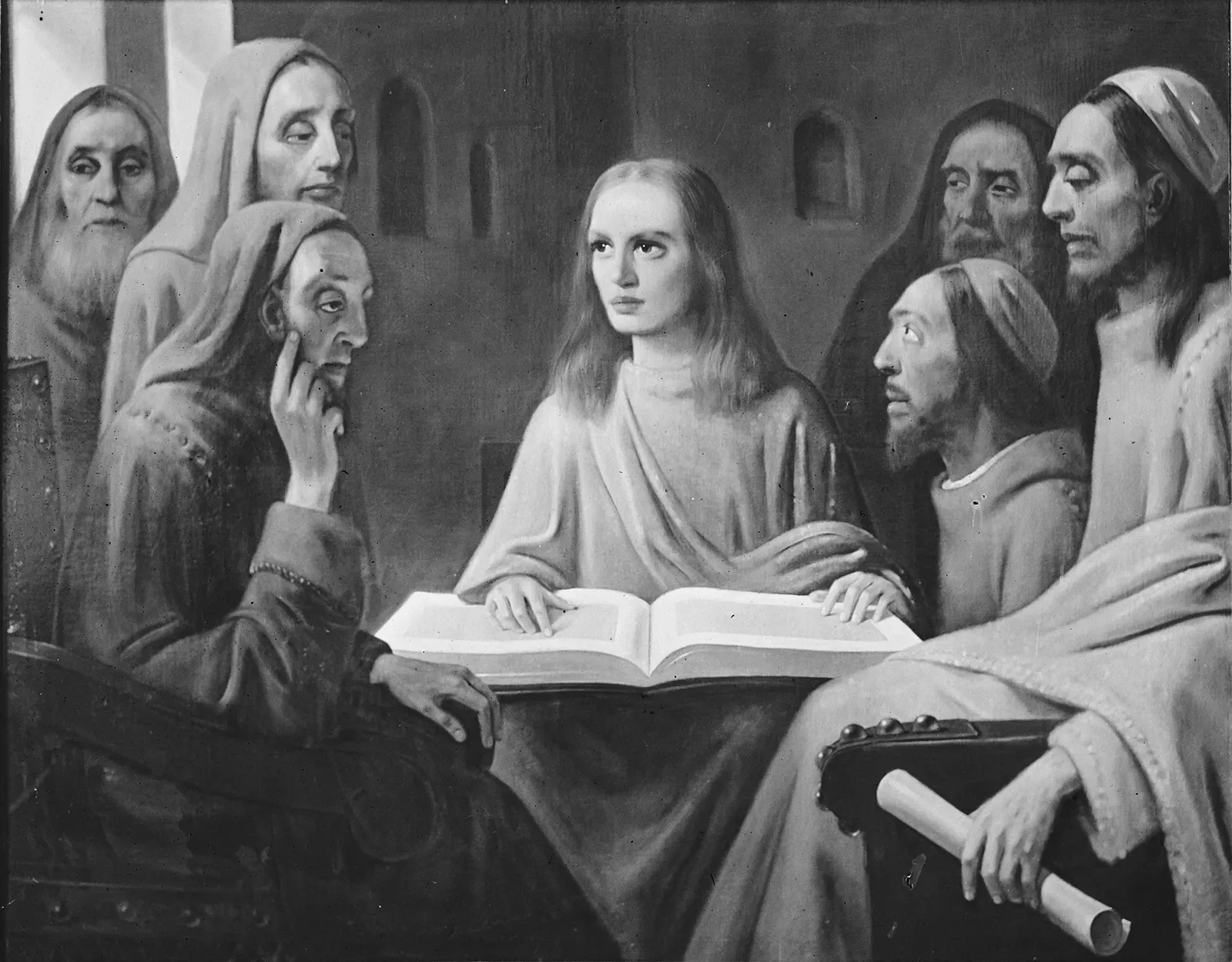
No museum fake carries a stranger backstory than the paintings a struggling Dutch artist sold as lost masterpieces by Johannes Vermeer, one of history’s most revered and rarely-forged painters. Han van Meegeren forged several works he claimed were by Vermeer, including “The Supper at Emmaus,” and experts praised them as major discoveries – one was even sold to a high-ranking Nazi official.
Van Meegeren only confessed after World War II, and not out of guilt – he was facing execution for treason for selling “national treasures” to the enemy. To prove he was the true painter and not a Nazi collaborator, he painted a brand-new “Vermeer” in front of witnesses while sitting in custody. Museum director Dirk Hannema had been so convinced by van Meegeren’s work that one of the fakes, “Christ at Emmaus,” still hangs in his former museum’s collection today – openly labeled a forgery instead of hidden away. It remains the rare forgery case where confessing to fraud was the only way to avoid a firing squad.
The painting in Göring’s hands is not, as you assume, a Vermeer, but a Van Meegeren! I painted the picture!
Han van Meegeren
The Bottom Line

Here’s the uncomfortable truth museums rarely admit out loud: provenance paperwork, expert eyeballs, and even scientific testing have all failed spectacularly, sometimes for decades at a stretch. From a Nazi-fooling painter to a skull hoax that misled scientists for 40 years, the common thread isn’t stupidity – it’s institutional pressure to believe in the next great discovery.
Frankly, any museum that claims its collection is 100% forgery-free is either lying or hasn’t looked closely enough. Which of these fakes shocked you the most, and do you think there are more still hiding on museum walls right now? Drop your theory in the comments.