
Most people assume “ancient manuscript” means exactly what it says on the label – a text as old as the ink claims. Turns out, that assumption has cost museums millions, launched Harvard investigations, and rewritten centuries of accepted history.
From a “Viking map” drawn with 1920s paint to a papyrus that supposedly proved Jesus had a wife, some of the most celebrated documents in human history have been quietly reclassified – not as fakes exactly, but as texts written decades or even centuries after everyone assumed. The tools that caught them? X-ray spectroscopy, carbon dating, and forensic ink analysis nobody had access to when these “discoveries” first made headlines. Here’s what the data – and the scholars who ran it – actually say.
#12 – The “Archaic Mark” That Wasn’t Archaic at All
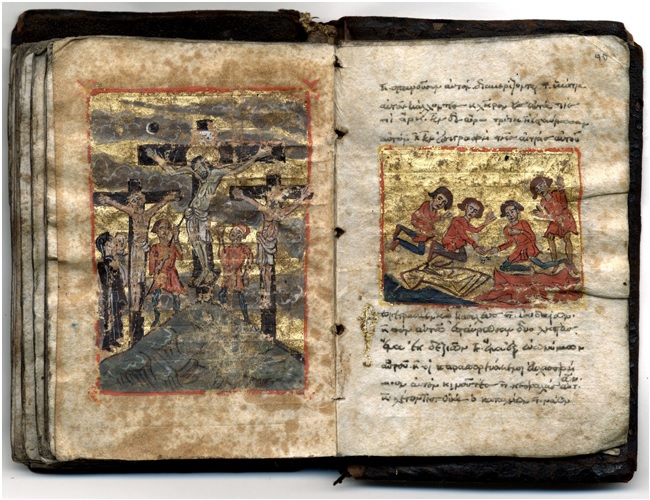
For decades, a Greek Gospel manuscript known to specialists as “Archaic Mark” sat in a research collection, prized for what looked like unusually old, primitive lettering – the kind of script scholars associate with early medieval copying traditions.
Then came closer physical examination. Paper and ink analysis pointed to a production date centuries too late for the script style it was imitating, undermining the idea that it preserved an ancient textual tradition at all. Researchers realized someone had deliberately aped an older hand, producing a document that photographed beautifully but couldn’t survive laboratory scrutiny. It’s a pattern that keeps recurring in manuscript studies: a text looks convincingly old to the naked eye and to paleographers working from photographs, but falls apart the moment materials scientists get involved. The manuscript had fooled cataloguers for years simply because nobody had run the physical tests. But wait until you meet the manuscript that fooled an entire country for over a century.
#11 – The Oera Linda Book’s “Ancient” Frisian History
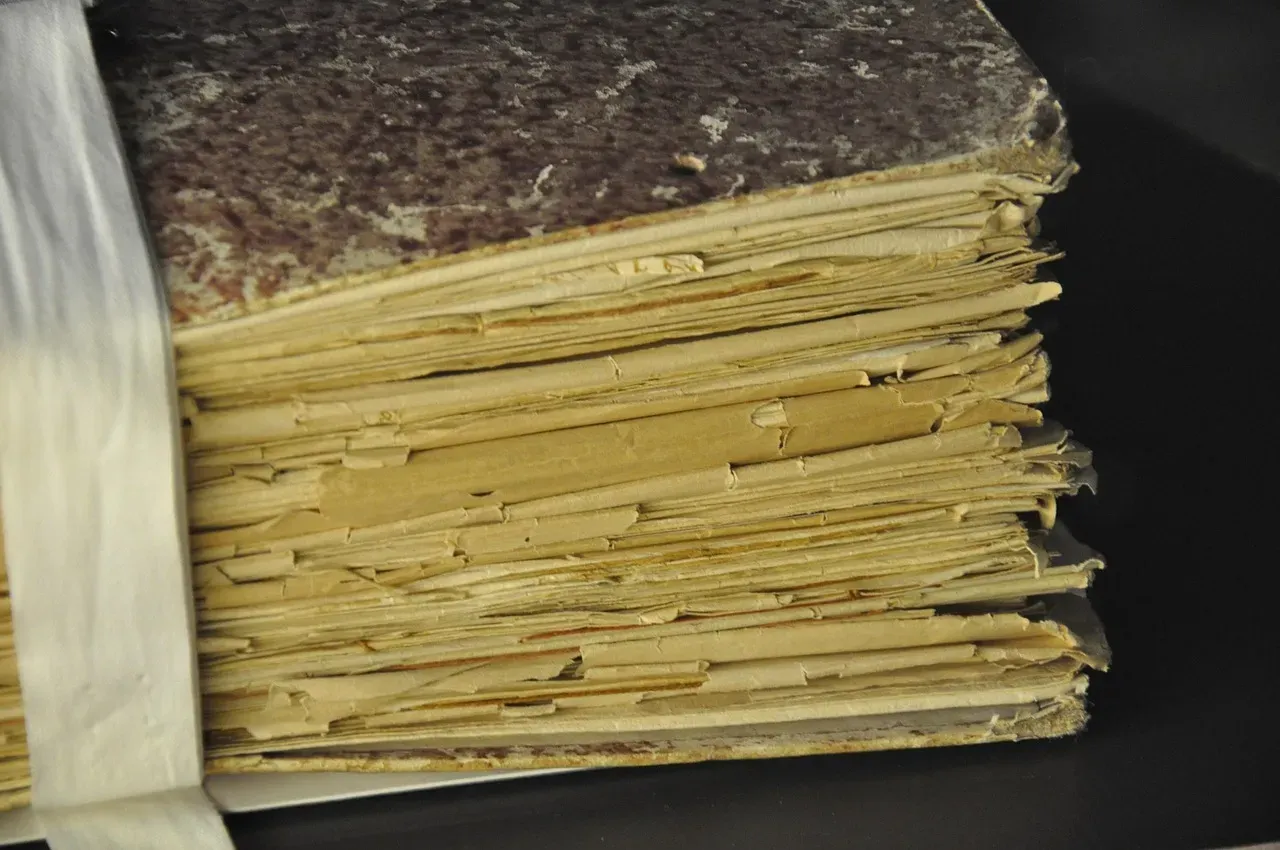
The Oera Linda Book surfaced in the Netherlands in the 1860s, presented as a manuscript chronicle stretching back thousands of years, supposedly preserving a lost Frisian history predating most of European recorded civilization.
Linguists and historians who examined the text’s grammar and vocabulary found glaring problems: the “ancient” Frisian language in the manuscript looked suspiciously like a 19th-century speaker’s reconstruction of what old Frisian might have sounded like, riddled with modern linguistic fingerprints that no genuinely ancient text would carry. Most serious scholars now treat it as a 19th-century literary invention rather than a surviving fragment of deep antiquity. The book still has devoted believers today, decades after mainstream philology moved on – which tells you something about how hard a good origin story is to kill, even after the linguistics collapses. Compared to what’s coming next, though, this one’s almost quaint.
#10 – The Kensington Runestone’s Convenient Timing
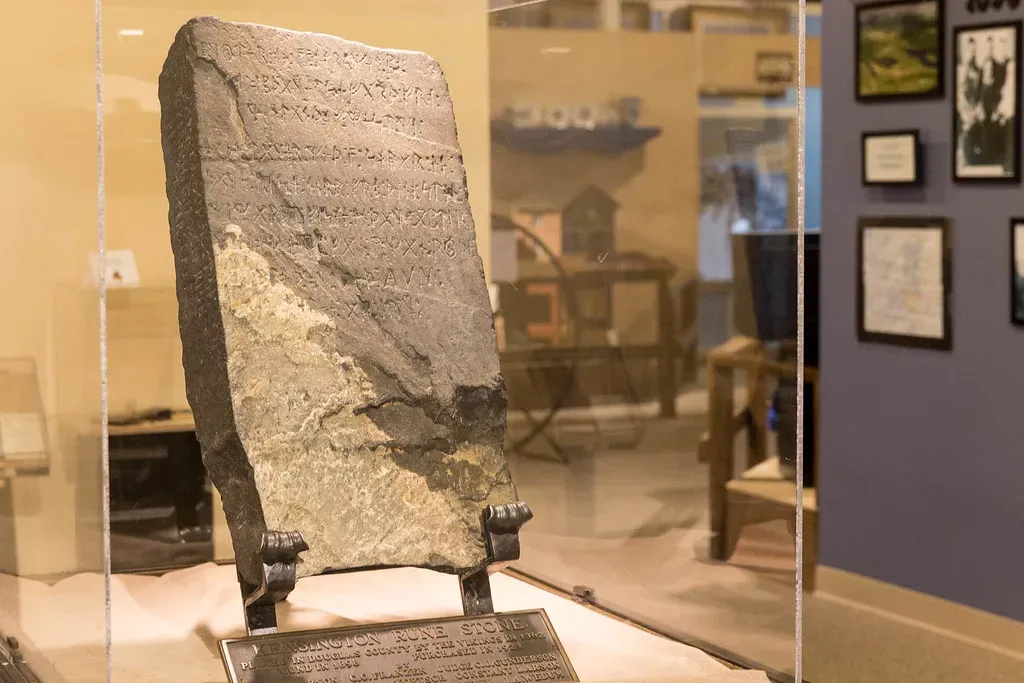
A Minnesota farmer named Olof Öhman claimed in 1898 to have unearthed a stone slab carved with runic writing, supposedly proof that Scandinavian explorers had pushed deep into the American interior centuries before Columbus.
Skeptics questioned the runestone almost immediately, and the doubts never really went away. The carved inscription conveniently backed up the exact narrative that Swedish and Norwegian immigrants were then hoping to tell about their new home, since Öhman’s discovery placed ancient Vikings in the very region where his own community was busy settling down. That coincidence is the whole case against it: the “ancient” inscription happened to validate the story its own discoverer needed to be true. Scholars were skeptical almost from the start, yet the runestone claims persisted for decades anyway.
Fast Facts
- The stone was discovered in 1898 near Kensington, Minnesota, and is currently located in Alexandria, Minnesota.
- The inscription itself is dated to the year 1362 – more than a century before Columbus ever sailed.
- The Runestone Museum in Alexandria, established in 1958, is renowned for housing the artifact.
- The fame of the stone is even a direct reason the NFL’s Minnesota Vikings carry that name.
Still, farmers and fraudsters are amateurs next to what an Ivy League library pulled off.
#9 – The “Galileo Manuscript” That Fooled a University for a Century
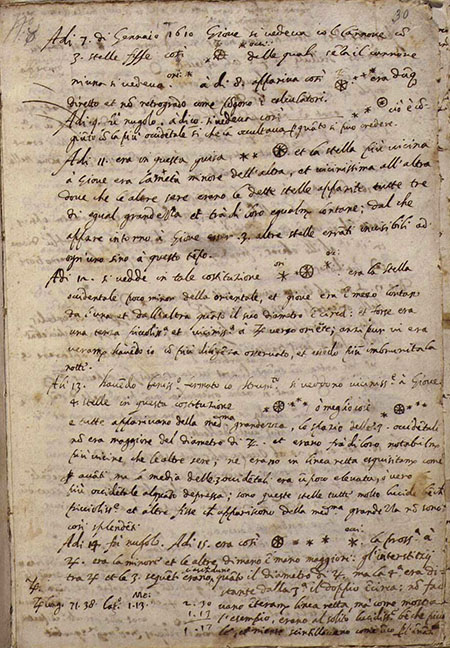
For nearly a hundred years, the University of Michigan proudly displayed a manuscript it believed Galileo Galilei had personally written in 1609 and 1610, documenting his early telescope observations.
Once regarded as a jewel of the university’s library collection, the “Galileo Manuscript” was eventually exposed when modern paper-dating techniques revealed the sheets themselves were manufactured centuries after Galileo died. The culprit turned out to be a known operator in the forgery world, an Italian con man named Tobia Nicotra who had a habit of manufacturing prestige documents for wealthy buyers. A document treated as one of the university’s most prized historical artifacts for generations was actually created by a 20th-century forger. Modern paper-dating did what a century of admiring scholars never managed – they actually checked the physical evidence. And even a century-long university blunder pales next to a forger who invented entire ancient authors.
#8 – Simonides’ “First-Century” Gospel of Matthew
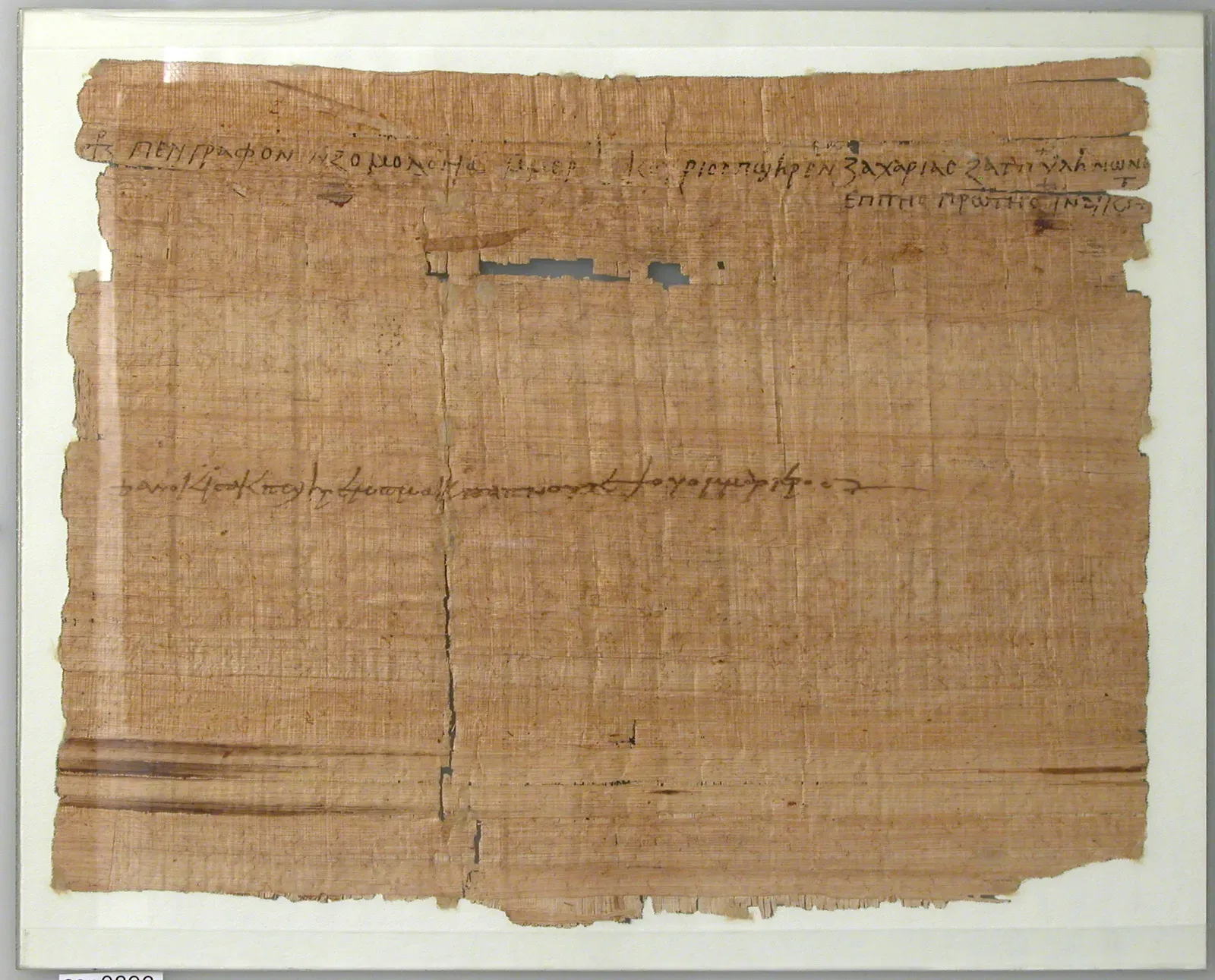
In the 1860s, a Greek document dealer named Constantine Simonides claimed to have unearthed something explosive: a papyrus copy of the Gospel of Matthew supposedly written just fifteen years after the Ascension – a find that would have rewritten early Christian textual history overnight.
Simonides was a serial forger who specialized in ancient and Byzantine Greek manuscripts, sometimes inventing entire authors who never existed, which made his creations all the more tantalizing to scholars eager for a genuine breakthrough. He claimed he’d found the papyrus in the private collection of Joseph Mayer in Liverpool, but the story was too good to be true from the start – a Matthew manuscript from within a generation of Christ’s death would have been the single greatest find in biblical archaeology. The papyrus he presented as first-century turned out to be his own handiwork, produced with period-appropriate materials but modern hands. Yet nothing on this list is stranger than the case where the evidence itself disappeared.
#7 – The Secret Gospel of Mark’s Missing Original
In 1958, scholar Morton Smith announced he’d found a letter attributed to Clement of Alexandria, copied into the back of a printed book at the Mar Saba monastery, quoting a lost “Secret Gospel of Mark” full of provocative material never seen in the canonical text.
The problem: nobody has ever been able to independently examine the original manuscript again – it reportedly vanished from the monastery not long after Smith photographed it, leaving only his photos as evidence. That single fact has kept the authenticity fight alive for over sixty years, with some specialists defending it as genuinely ancient and others convinced Smith manufactured the whole thing as an elaborate academic prank. Without the physical document available for modern ink and paper testing, this case may never get the forensic resolution that cracked other forgeries on this list.
Worth Knowing
- Smith found the letter copied into the flyleaves of a 17th-century printed book while cataloguing the Mar Saba library in 1958.
- He announced the discovery in 1960 but didn’t publish his full study until 1973.
- The document itself has been lost and now survives only in two sets of photographs.
- One prominent scholarly analysis has even dated the handwriting style to roughly 1750 – not antiquity at all.
At least those forgers left proof behind – this next one never even settled the argument.
#6 – The “1888” Diary That Ink Testing Couldn’t Confirm
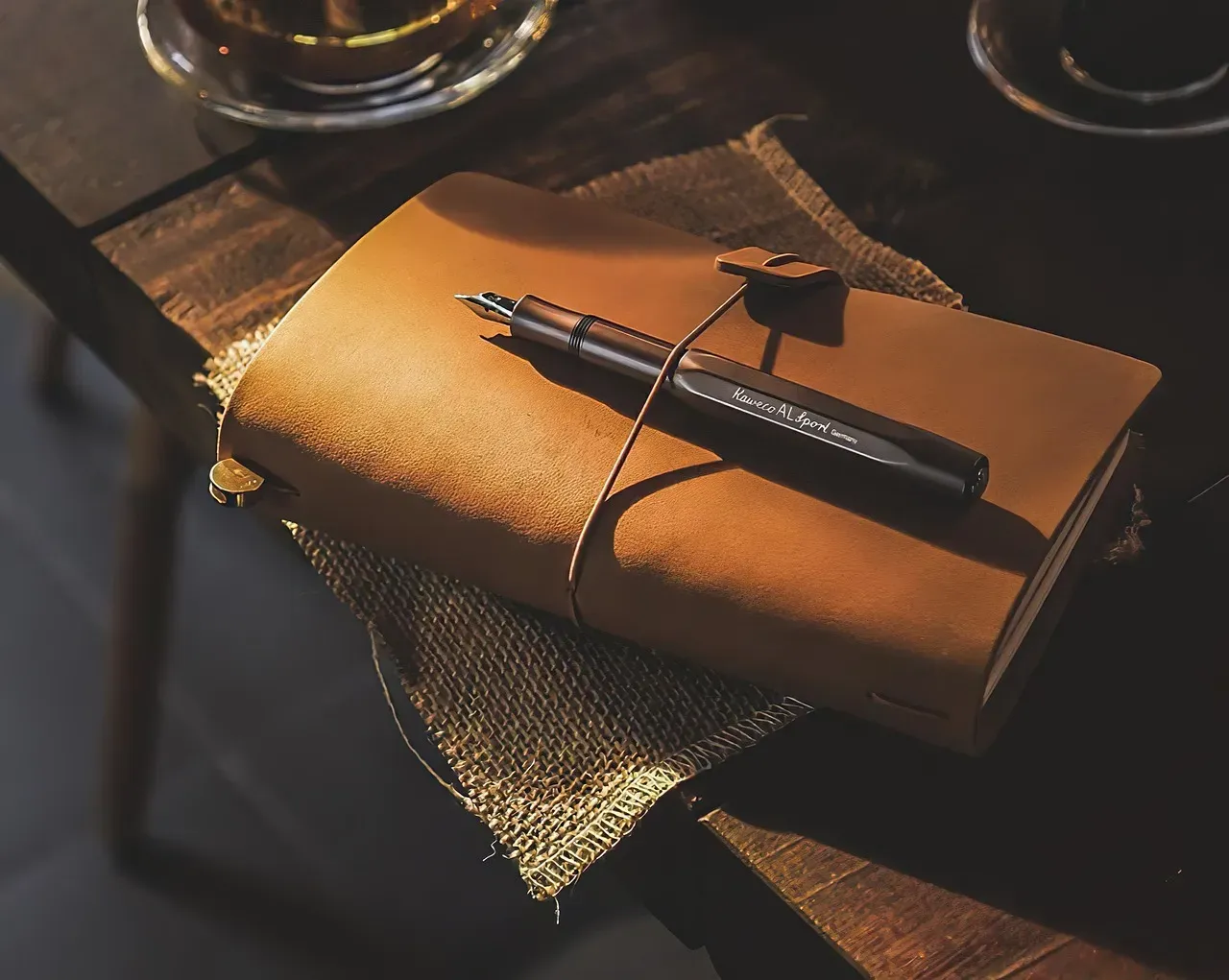
In 1992, a diary surfaced claiming to be the confession of a Victorian cotton merchant identifying himself as the notorious Whitechapel murderer, written in the very year the killings terrorized London.
Forensic document examiners who tested the ink and paper found troubling inconsistencies with a genuine 1888 provenance, and the diary’s chain of ownership before its public unveiling has never been convincingly established. Handwriting analysts, chemists, and historians have argued over it for more than three decades, and the debate has never produced the kind of clean, unanimous verdict that ended arguments over other documents on this list. The lack of a verifiable paper trail before the 1990s is, for most serious researchers, the loudest red flag of all. None of that compares to a forgery that didn’t just fool people – it ran an empire’s legal system.
#5 – The False Decretals That Ran the Medieval Church
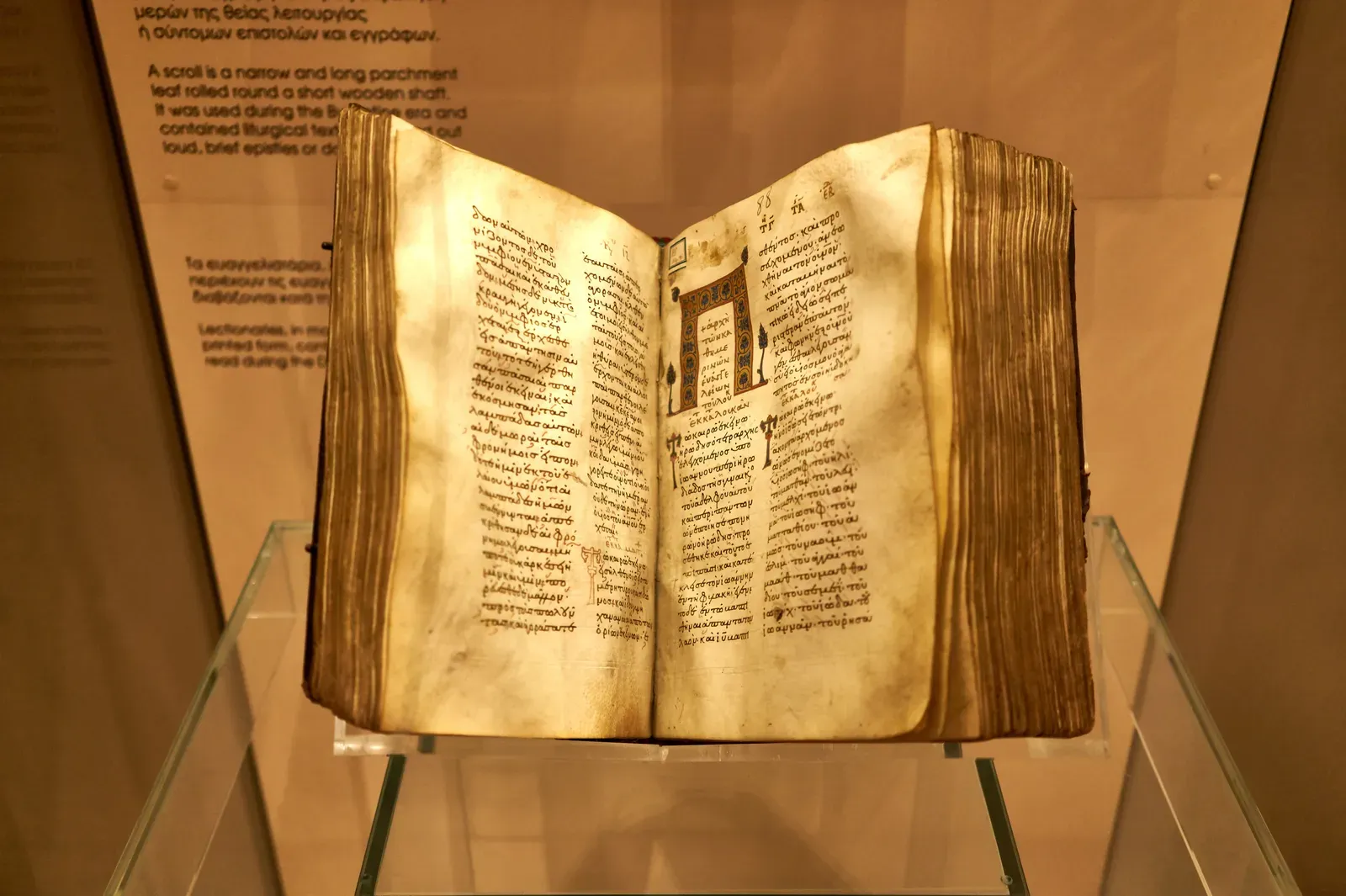
Beginning in the 9th century, a massive collection of supposed letters and rulings from early popes began circulating through Western Europe, presented as centuries-old canon law dating back to the earliest days of the Church.
Scholars eventually identified the forgeries through historical and linguistic inconsistencies, including anachronistic legal concepts and references to later canon law, and many of the letters, supposedly written by different early popes, displayed stylistic similarities indicating a single author or group behind all of them. Despite their fraudulent nature, the False Decretals were widely accepted in medieval Europe, influencing church law for centuries, and over a hundred medieval manuscripts containing this material survive today.
At a Glance
- The collection describes itself as assembled by “Isidorus Mercator” and contains more than 90 forged papal decretals.
- Seventy-five manuscripts of the collection are known to survive, differing widely from one another.
- During the Middle Ages there was little doubt about the letters’ genuineness – that changed only in the fifteenth century, when humanist scholars like Nicholas of Cusa noticed bizarre anachronisms.
A forgery cooked up centuries after the popes it claimed to quote ended up shaping actual church law for generations. But for sheer speed of exposure, nothing beats what happened next.
#4 – The Hitler Diaries That Fooled a Major Magazine
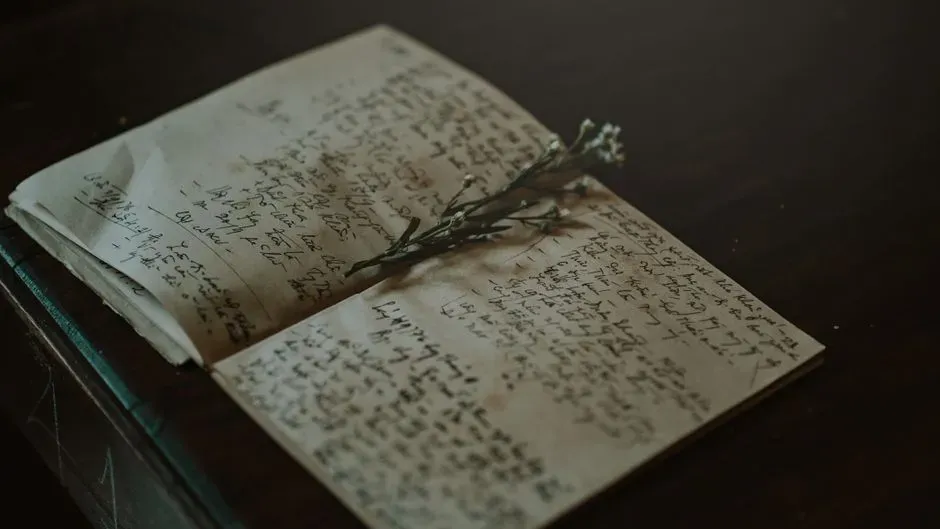
In 1983, a German magazine paid millions for what it believed were dozens of handwritten diaries kept by Adolf Hitler throughout the 1930s and 40s – a discovery so sensational it made front pages worldwide before a single expert had verified them.
Forensic testing on the paper, ink, and binding materials exposed the diaries within weeks as an elaborate fraud, manufactured using post-war synthetic materials that simply didn’t exist during the years the diaries claimed to cover. The forger, a small-time con man, had banked on the magazine’s excitement outrunning its due diligence – and it nearly worked. A find hyped as the historical scoop of the century collapsed the moment chemists actually touched the paper. It remains one of the fastest public unmaskings on this entire list. Still, even that scandal moved slower than the chemistry that unraveled Yale’s prized map.
#3 – The Vinland Map’s 1920s Paint Job
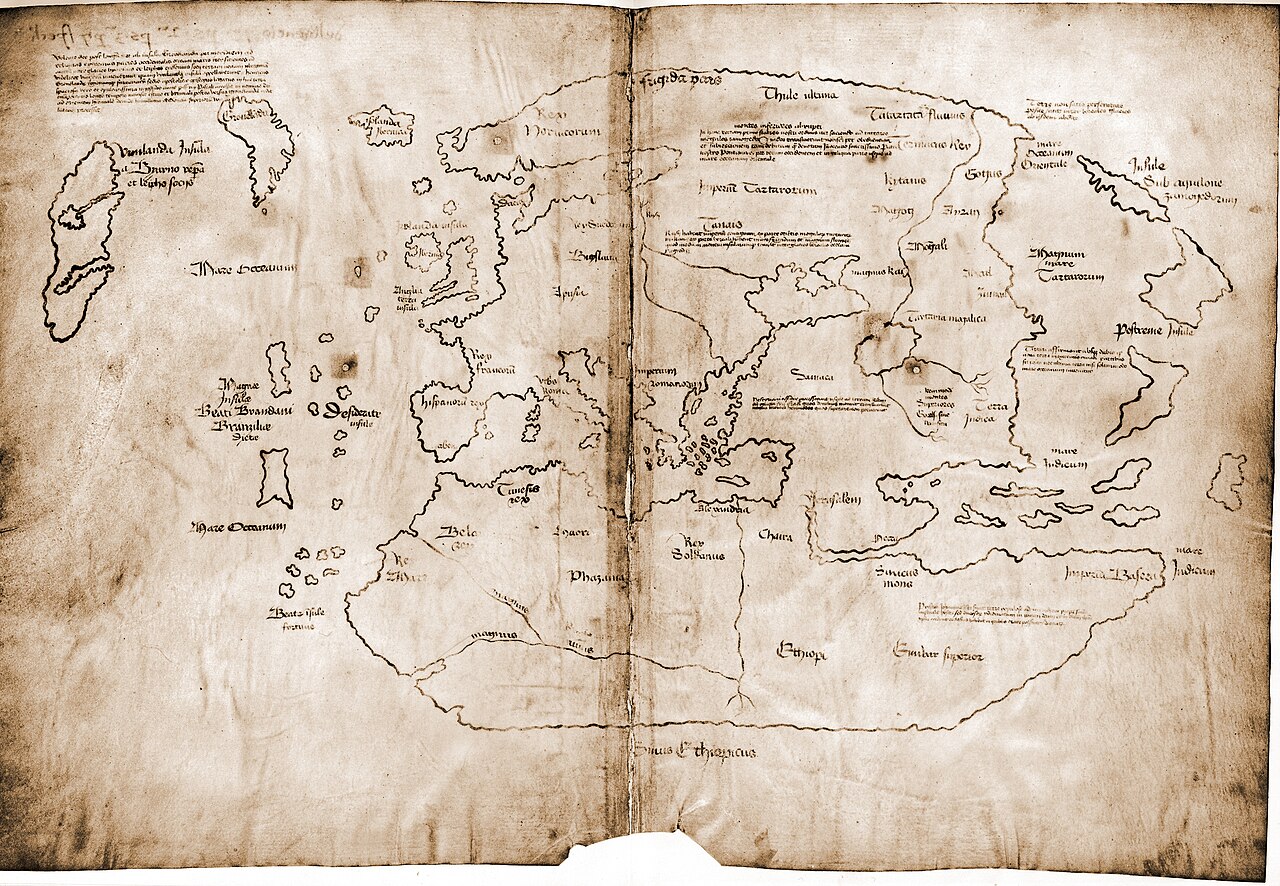
Yale unveiled the Vinland Map in 1965 as potential proof that Norse explorers had charted North America decades before Columbus, dating the parchment and handwriting style to roughly the 1440s.
A new analysis showed that the ink used in the Vinland Map was created no earlier than the 1920s, confirming that the item purportedly showing a medieval view of the Americas is actually a modern-day forgery. While carbon dating puts the map’s parchment at around 600 years old, the ink contains high levels of titanium and smaller amounts of barium – elements found in the earliest commercially produced titanium-white pigments of the 1920s. The forger was clever enough to use genuinely old parchment, just not old enough ink, and a Latin inscription on the back was even overwritten in modern ink to look like authentic 15th-century binding instructions.
Why It Stands Out
- A 1973 study by the McCrone Research Institute first found that its ink contains anatase, a form of titanium dioxide first used commercially in the 1920s.
- A follow-up analysis using X-ray fluorescence spectroscopy showed definitively that the ink contained titanium, which only became popular in the 1920s.
- A Latin inscription on the map’s back was overwritten with modern ink to appear like genuine 15th-century binding instructions.
- Yale’s own curator called the verdict unambiguous, saying “there is no reasonable doubt here”.
Even Yale’s own curator called it flat-out fake once the chemistry came in. Yet even a titanium-tainted map didn’t generate headlines like what came out of Harvard.
#2 – The “Gospel of Jesus’s Wife” Scandal
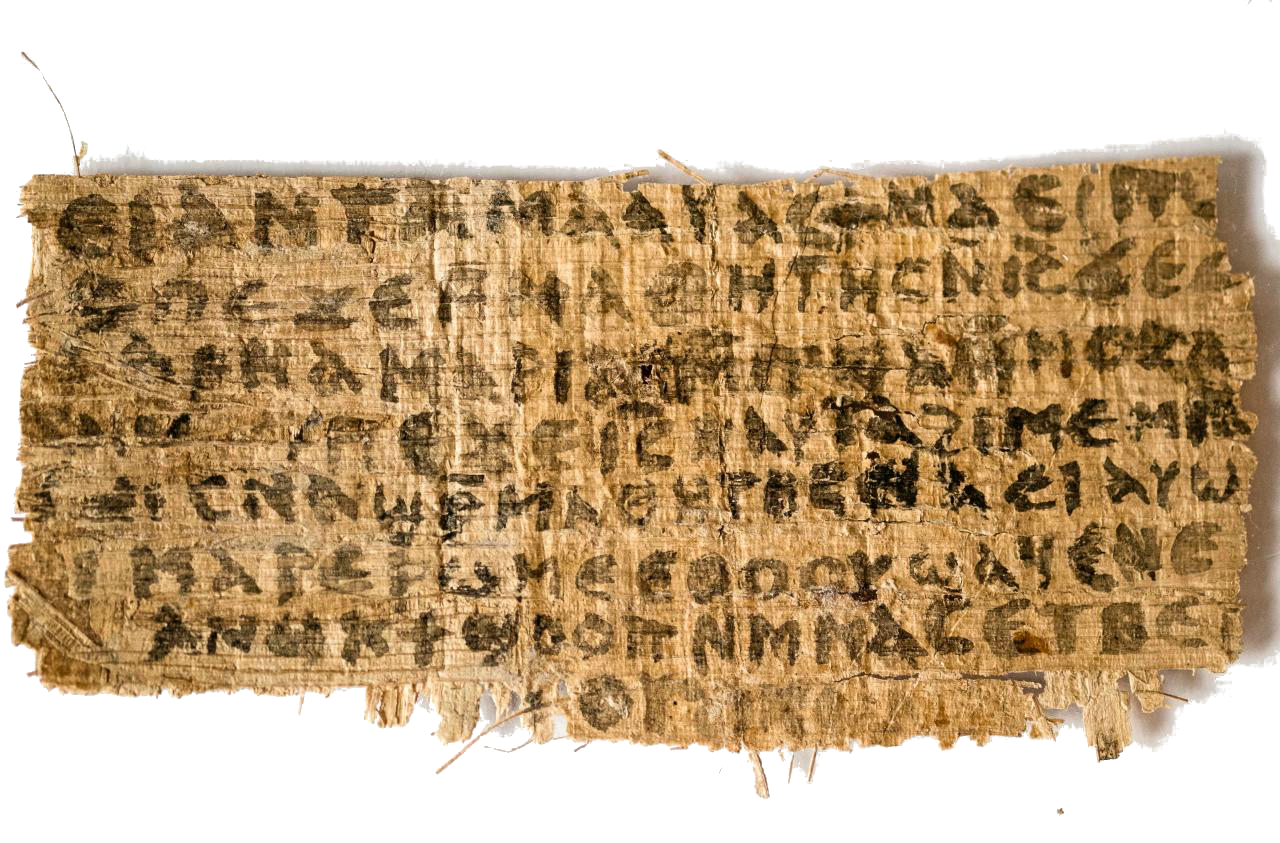
In 2012, Harvard professor Karen King unveiled a papyrus fragment containing the electrifying phrase “Jesus said to them, ‘My wife…'” – a discovery that instantly sparked global headlines about early Christian beliefs on marriage.
The fragment, initially dated to the 4th century, is now regarded as a modern forgery written in Coptic on a genuinely old scrap of medieval papyrus. Following a 2016 investigative report that unraveled its shaky provenance, King herself walked back her earlier confidence.
The evidence presses in the direction of forgery.
Karen King
The papyrus scrap itself was genuinely old – the handwriting on it wasn’t. It’s a reminder that authentic materials can still carry a completely fabricated text. None of it, though, compares to the forgery that quietly ran European politics for 700 years.
#1 – The Donation of Constantine That Ran Europe for 700 Years
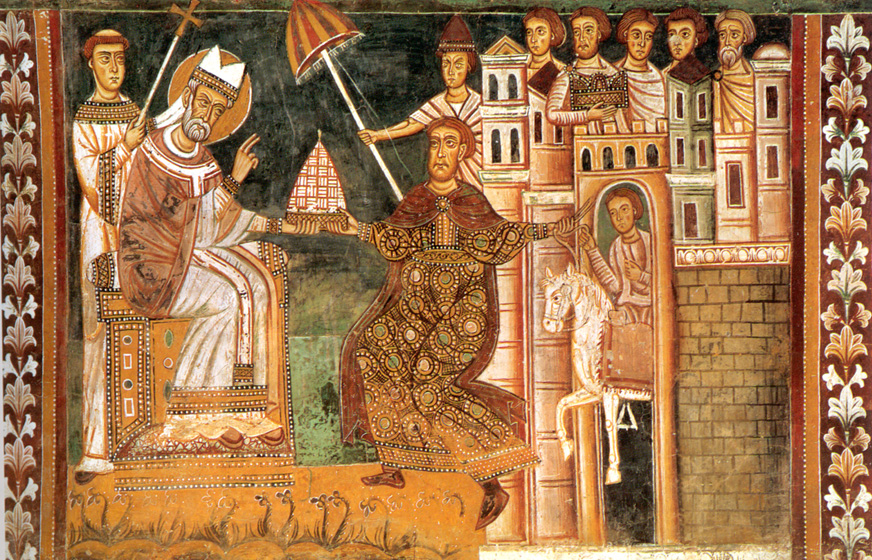
No forgery on this list did more damage to real history than the Donation of Constantine – a document claiming Emperor Constantine himself, in the 4th century, granted the pope sweeping temporal authority over Rome and the Western empire.
It was actually composed roughly four centuries after Constantine’s death, most likely by clergy seeking to bolster papal claims to territorial power during medieval succession disputes. For hundreds of years, popes and kings alike cited it as settled fact, using it to justify land claims and political authority across Europe – until Renaissance scholars, applying early textual criticism, finally exposed the anachronisms buried in its Latin. A single fabricated document didn’t just fool historians – it helped shape the actual balance of power between church and state for nearly seven centuries. No other entry on this list comes close to that kind of real-world consequence.
The Bottom Line
Here’s the uncomfortable truth this list keeps proving: age alone was never good enough evidence. Handwriting, parchment, even a convincing backstory – none of it mattered once chemists, linguists, and forensic document examiners actually got their hands on the materials.
The Donation of Constantine shaped European power struggles for 700 years before anyone checked its Latin closely enough. The Vinland Map fooled Yale for decades because nobody ran an X-ray scan. Karen King’s papyrus made global headlines before basic provenance questions were asked.
Honestly, the scholars who caught these fakes deserve more credit than the “discoverers” who unveiled them. Which of these surprised you most – and do you think there are still “ancient” texts out there we haven’t caught yet? Drop your theory in the comments.