
Every so often, science slips from solid ground into the strange, almost sci‑fi territory where you have to stop and ask: wait, are we actually serious about this? The idea that dark matter might, in some sense, be alive sits squarely in that territory. It sounds wild, uncomfortable, and maybe even a little thrilling, because if it turned out to be true, it would rewrite almost everything we think we know about the universe and our place in it.
For now, no one has hard evidence that dark matter is alive, conscious, or anything close. What we do have are bold new theories, a few suggestive ideas on the edge of mainstream physics, and a growing willingness among scientists to question long‑held assumptions. The frontier between “inert stuff” and “living systems” is becoming fuzzier in serious discussions, not because physics lost its mind, but because the universe keeps refusing to fit into our neat boxes.
What We Actually Know About Dark Matter (Which Isn’t Much)
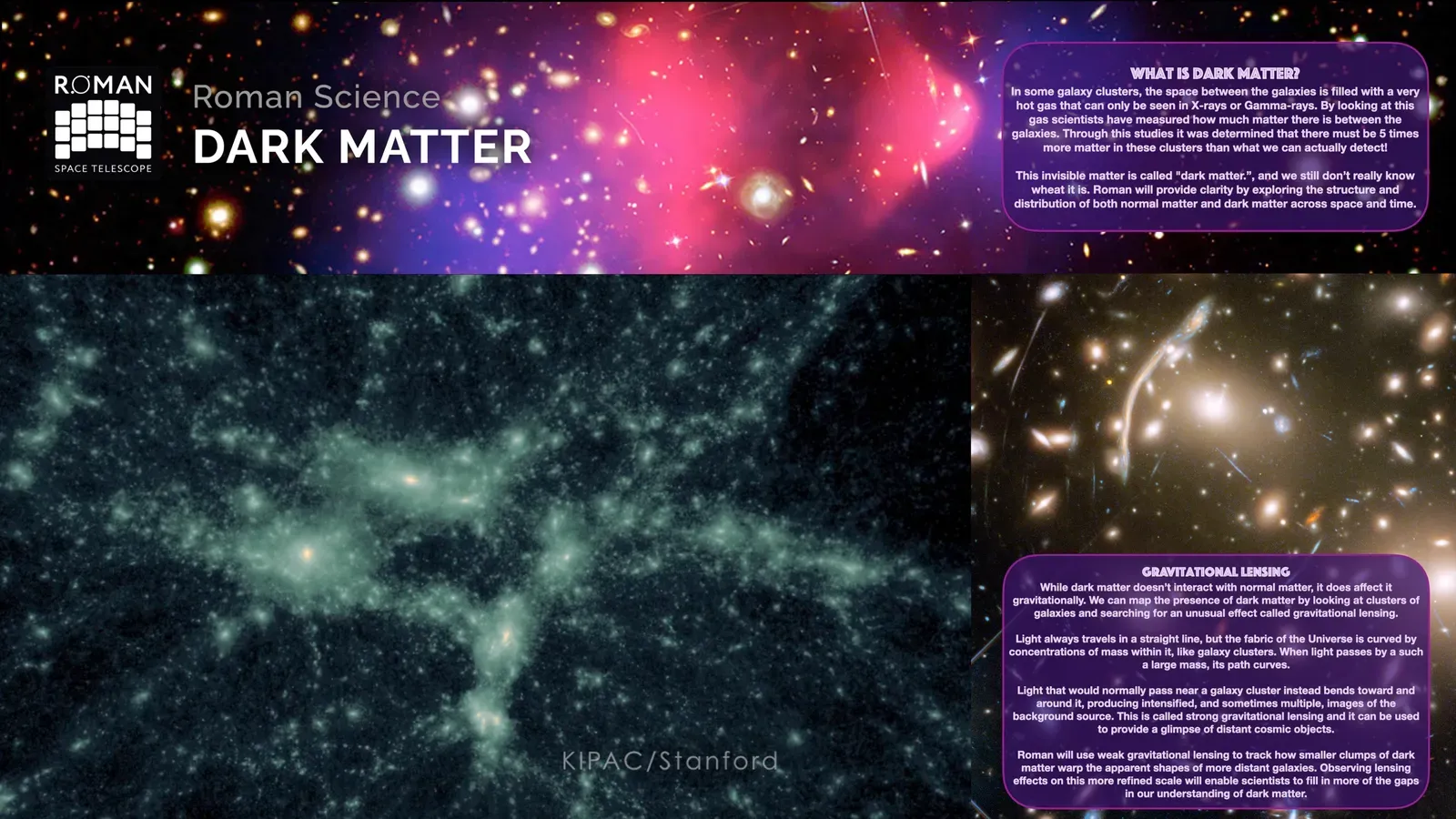
Let’s start with the part that is strangely easy to forget: dark matter is still a mystery, even at the most basic level. We infer that it exists because galaxies spin too fast, galaxy clusters bend light more than visible matter can explain, and the cosmic web of large‑scale structure forms in ways that need extra hidden mass. When astronomers tally up all the “normal” matter made of atoms, they get only a small fraction of what gravity is clearly up to. Something unseen is doing the heavy lifting.
That “something” is what we call dark matter, and it seems to make up roughly about five times more mass than ordinary matter in the universe. It does not shine, reflect, or absorb light in any straightforward way, which is why it is “dark.” It barely interacts with normal matter, at least in any way we have been able to detect in the lab, so it passes through stars, planets, and you without much fuss. Right now, the dominant view is that dark matter is made of some kind of non‑standard particle, but after decades of experiments, we still have not seen a single one directly.
Why Anyone Would Even Ask If Dark Matter Could Be Alive
On the surface, asking if dark matter is alive sounds like asking if gravity has a favorite color. But the question creeps in when you realize two things: first, dark matter is everywhere, and second, life in the broadest sense is about structure, information, and interaction, not specific ingredients like carbon. If the universe hides an enormous, invisible sector of matter, it’s fair to wonder whether that sector might be capable of complexity, organization, or even something like biology on its own terms.
Some theorists have started treating dark matter not just as a single mystery particle, but as a whole “dark sector” that could have its own forces, interactions, and maybe even chemistry that we simply do not see. Once you allow that possibility, the question “could the dark sector support complex, self‑organizing systems?” becomes less ridiculous. It is not that anyone has proof of dark life; it is that the door is no longer firmly locked shut by known physics. Personally, I think asking the question is healthy, as long as we are brutally honest about how far the evidence actually reaches.
The Dark Sector: A Hidden Playground For Exotic Physics
In many modern models, dark matter is not just a lonely particle drifting through space; it may be part of a hidden network of fields and particles that talk mostly to each other, not to us. Physicists sometimes call this the dark sector, and in the more adventurous versions, it includes dark photons (dark analogues of light), dark forces, or families of dark particles with their own hierarchies. To us, this whole sub‑universe would be almost completely invisible, except through its gravitational fingerprint.
Now imagine that this dark sector has the equivalent of what we call “chemistry” – stable bound states, reactions, energy flows, maybe even long chains of structures that can store information. Suddenly, the idea that complex dark structures could emerge stops sounding like fantasy and starts sounding like a natural extension of how complexity shows up in physics. It is still theory stacked on theory, and every new layer adds risk of being wrong, but if nature allowed only one kind of complex matter – ours – in an ocean of otherwise dead stuff, that would be a pretty strange kind of conservatism for a universe that already gave us black holes and quantum mechanics.
Life, But Not As We Know It: Redefining What “Alive” Even Means
Before we can slap the label “alive” on anything dark, we have to wrestle with what the word really means. Classic definitions of life talk about metabolism, reproduction, evolution, and homeostasis, but even on Earth, there are edge cases that blur the line. Viruses are a favorite example: they carry genetic information and evolve, but depend completely on host cells. Then you have ideas from complexity science, where life is seen as a kind of self‑organizing, information‑processing phenomenon rather than a checklist of biochemical ingredients.
If we adopt that broader view, the question shifts from “is dark matter carbon‑based?” (almost certainly not) to “could dark matter support self‑maintaining structures that process information and evolve over time?” That is still a huge leap, and we have zero evidence that it is happening, but it puts dark matter into the same conceptual bucket as any other potential substrate for life. My own bias is that life is what physics does when you let it run long enough under the right conditions. If that is true, then it would almost be surprising if the only place those conditions ever happen is in our thin slice of ordinary matter.
Are There Serious Scientific Proposals For “Dark Life”?
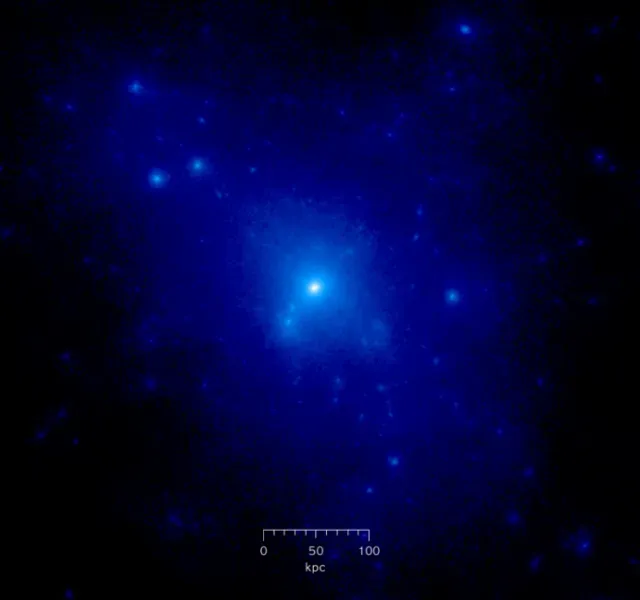
Here is where reality pulls us sharply back down: mainstream physics does not currently have a widely accepted model of literally living dark matter. There are, however, serious proposals that dark matter could be part of a richer hidden sector, and a few speculative ideas about dark atoms, dark molecules, or dark radiation that could, in principle, form complex structures. These concepts show up in research on hidden‑sector physics, self‑interacting dark matter, and models where the dark sector has its own versions of forces analogous to electromagnetism.
Most of this work stays deliberately cautious and does not jump to talk of biology or consciousness. The focus is on whether such models match astrophysical observations and constraints from particle experiments. Still, once you write down a theory with dark atoms and dark forces, you implicitly open the door to questions about dark chemistry and, at the far edge, dark ecosystems. It is fringe, yes, but it is not pure fantasy; it is an extrapolation of ideas already in play. The honest verdict right now is that dark life is a possibility in the logical sense, but one with no direct supporting evidence at all.
How Would We Ever Detect Something Like Living Dark Matter?
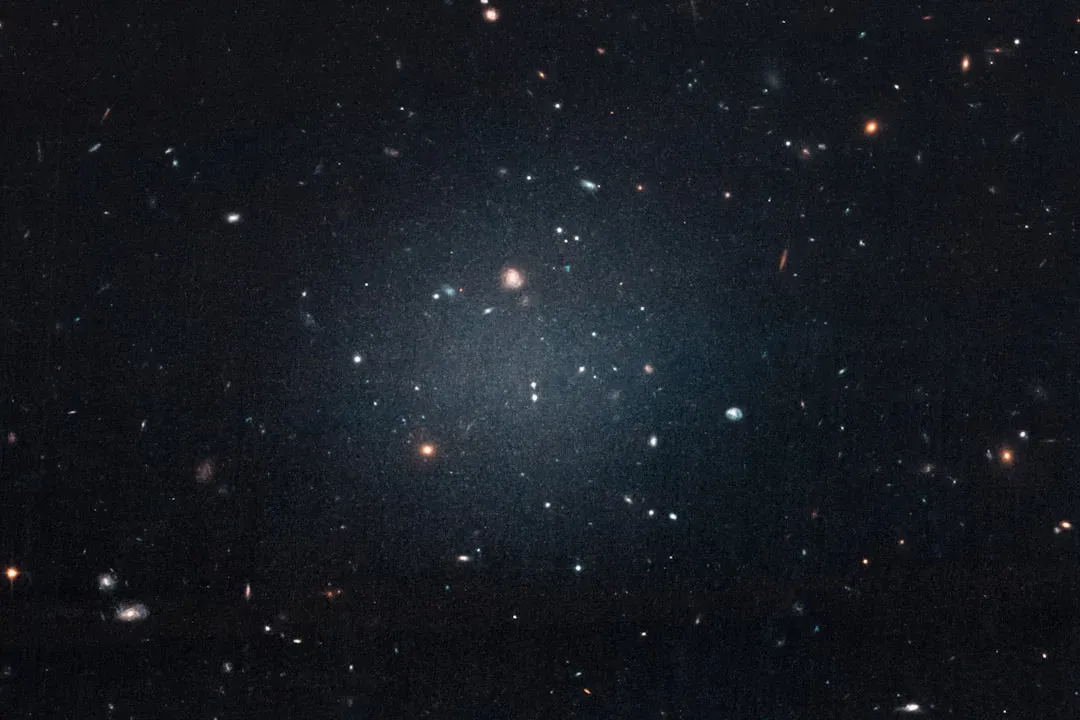
Suppose, for a moment, that some form of dark life really exists. How would we notice? We cannot bounce light off it, we struggle to detect even simple dark matter particles in underground labs, and whatever is out there is spread across vast cosmic distances. One path might be to look for subtle anomalies in how dark matter clumps, flows, or heats its environment, compared to what simple, inert dark matter models predict. If darker regions behaved in ways that looked more like organized, energy‑using systems than passive clouds, that would raise eyebrows.
Another path is more indirect: we keep pushing particle physics experiments, astronomical surveys, and gravitational measurements until we find cracks in the standard dark matter picture. Maybe we discover dark forces or dark radiation that give us hints about a richer structure. Maybe we see unexpected patterns in how dark matter interacts with itself. Even then, jumping from “odd behavior” to “life” would be a huge interpretive leap. As much as I love the idea, I think we owe it to science to treat “dark life” as the last explanation we reach for, not the first.
What It Would Mean For Us If Dark Matter Turned Out To Be Alive
If, in some absurdly ambitious future, we found convincing evidence that dark matter hosts living systems, it would land somewhere between the discovery of extraterrestrial life and a full philosophical reboot. Our entire story as humans has been built on the assumption that the visible universe is the main stage and we are one of the most complex things on it. Learning that the real action has been happening in a hidden sector all along would be a cosmic ego check of the highest order.
It would also force biology, physics, and philosophy to merge in ways they have resisted so far. We would have to ask whether shared laws of complexity and information tie together ordinary and dark life, or whether dark life follows rules we can barely recognize. Personally, I suspect the emotional shock would be larger than the scientific one. Humanity has slowly adjusted to the idea that we are not at the center of the solar system or the galaxy; discovering dark life would push that decentering one step further, and I am not sure we are psychologically ready for it.
Conclusion: A Beautiful, Dangerous Idea We Should Treat With Respect
So, could dark matter be alive? With everything we know right now, the honest answer is that it is wildly speculative but not strictly impossible. The physics community has not found a single piece of direct evidence for dark life, and most researchers sensibly focus on simpler explanations for dark matter. At the same time, the rise of dark sector models and broader views of what life could be make the question more than just late‑night science fiction. It is a provocative way of probing how open‑minded we are willing to be when our best theories are still clearly incomplete.
My opinion is this: treating dark matter as potentially capable of life is a useful thought experiment, as long as we do not confuse curiosity with confirmation. It pushes us to sharpen our definitions of life, to design more ambitious experiments, and to admit that our visible world may not be the universe’s only canvas for complexity. If we are lucky, the truth we eventually uncover will be stranger than either the skeptics or the dreamers expect. In the meantime, the question lingers like a quiet dare from the cosmos: what if the universe is already more alive than we are brave enough to imagine?