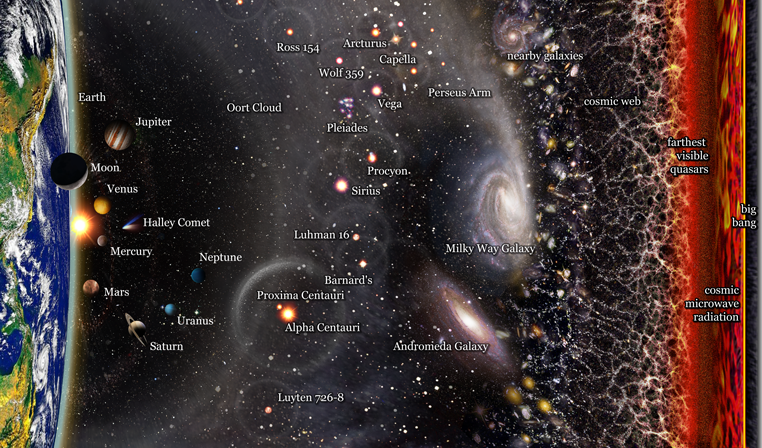

You live inside a bubble you can never step outside of, and that bubble is not a country, not a galaxy, but the observable universe itself. Everything you have ever seen through a telescope, every galaxy photo you have ever admired, every cosmic map you have ever been shown sits inside this bubble defined by one brutally simple fact: light only travels so fast, and the universe has only been around for so long.
Once you really let that sink in, the picture of reality becomes both exhilarating and slightly unnerving. You start to realize there is more universe beyond what you can ever see than there is inside your cosmic horizon. Physics lets you sketch out what lies beyond this edge, like tracing the outline of a house you can never enter, but there is a hard limit to what you can ever verify. You are staring not just at space, but at the boundary of knowability itself.
The Observable Universe: Your Cosmic Bubble of Light
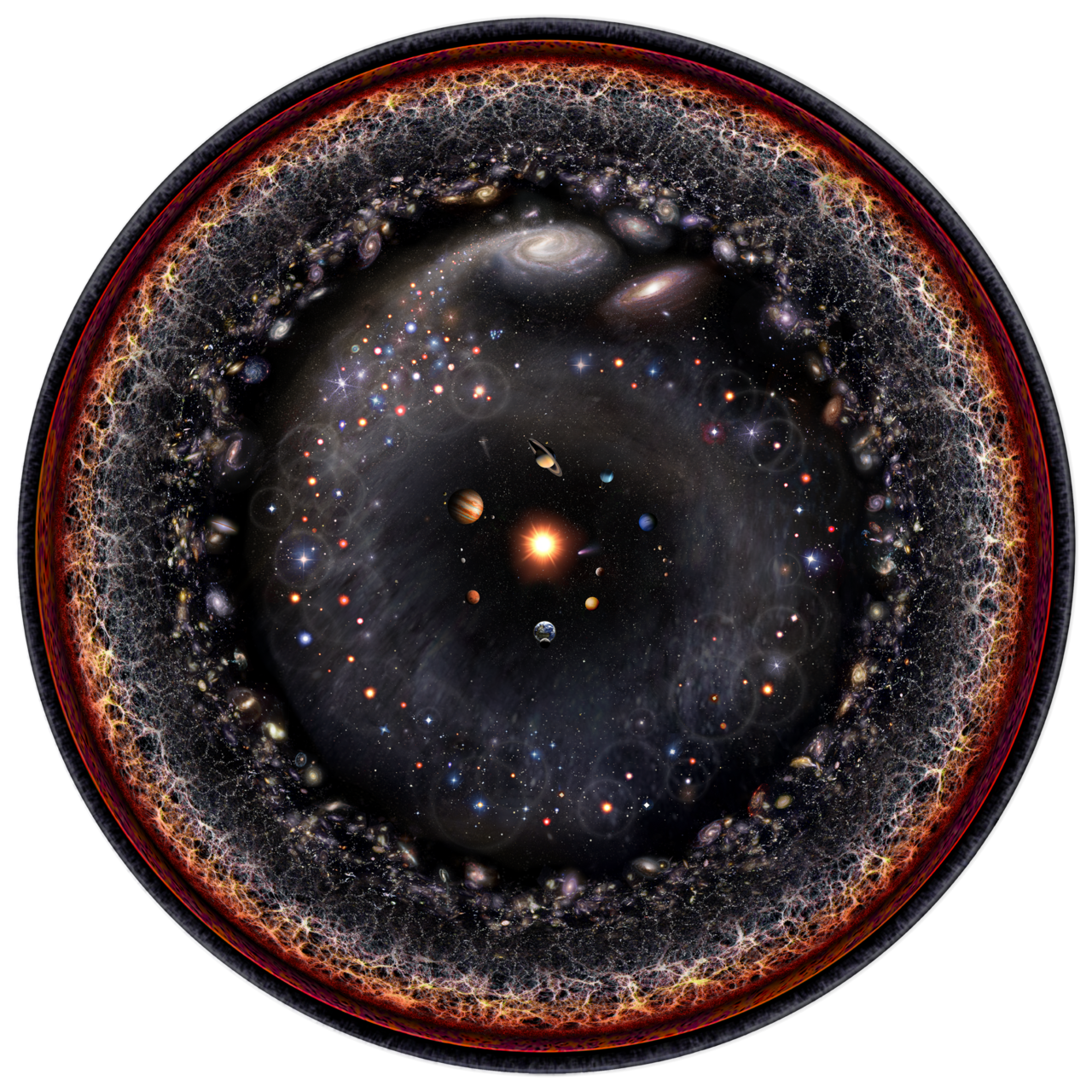
Imagine you are standing in the middle of a dark field with a flashlight that has only been on for a fixed amount of time. The light has only had time to reach a certain distance, forming an expanding bubble around you; everything beyond that remains in darkness, not because it is not there, but because its light has not reached you yet. That is essentially what your observable universe is: the region from which light (or any signal) has had time to arrive since the Big Bang. Its size is set by the age of the universe and the finite speed of light, not by any physical wall in space.
Because the universe has been expanding for billions of years, that bubble is much bigger than you might expect from a simple age-times-speed-of-light calculation. As space has stretched, distant regions have moved away, so the galaxies you see near the edge of the observable universe are now much farther away than the light-travel time alone would suggest. You are effectively looking back in time as well as outward in space, seeing young galaxies, infant stars, and structures that are still forming. Your cosmic horizon is less like a static shell and more like a moving time machine boundary, constantly shifting as new light arrives from slightly farther regions.
Cosmic Horizons: Where Physics Hits a Hard Wall
You might assume that if you just build a bigger telescope, launch it higher, or wait longer, you could eventually see everything in the universe. Horizons in cosmology destroy that comforting intuition. A cosmic horizon is not a fog you can clear or a technological gap you can close; it is a fundamental limit created by the interplay of time, light speed, and the expansion of space itself. Beyond your horizon, light emitted today will quite literally never reach you, no matter how long you wait.
This means that there are regions of the universe that are forever causally disconnected from you: they cannot affect you, and you cannot affect them, even in principle. That is a very different kind of boundary than, say, the edge of a map, where you can still, in theory, travel beyond it. In cosmology, the horizon is more like a line between what can ever be part of your physical story and what remains permanently outside the realm of observation. You can write down equations that extend beyond it, but you can never check if those equations match reality there.
Beyond What You See: Why the Universe Is Almost Certainly Bigger
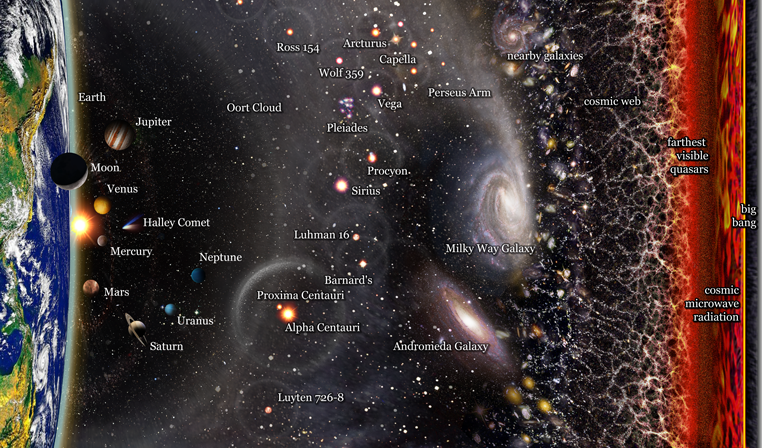
If the observable universe is just your light bubble, the natural question is: does the universe actually end there? The overwhelming answer from cosmology is that it almost certainly does not. Observations show that, on large scales, the universe looks remarkably uniform in every direction you can see, with matter and radiation spread out in a fairly even way, like a smooth soup with small ripples. When you see that much uniformity in every direction, the simplest and most conservative assumption is that the pattern continues beyond your horizon.
On top of that, all current measurements suggest that space is either perfectly flat or extremely close to it on vast scales. A flat geometry naturally lines up with a universe that is either infinite or at least so large that the observable part is just a tiny patch. So you are probably living in a region that, from the universe’s point of view, is like a single tile in an enormous floor or one pixel in a gigantic image. You are sampling only a fraction of what exists, and yet that fraction is all you will ever directly access.
How Physics Calculates What You Will Never See
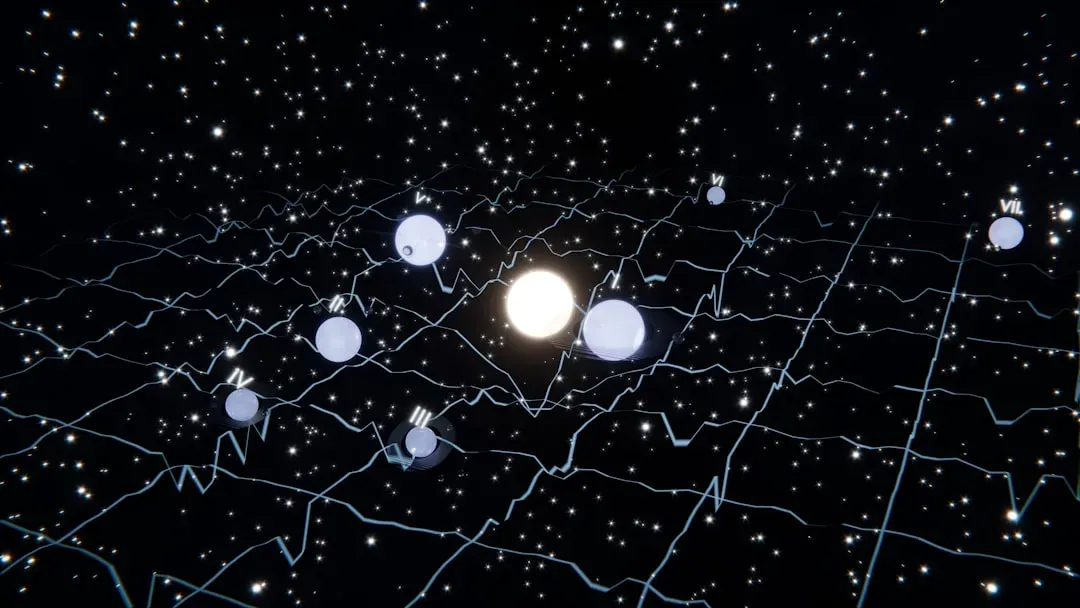
You might wonder how you can say anything about regions you can never observe without it turning into pure speculation. The key move in cosmology is to use the parts you can see as strict constraints on the models you write down, then extend those models beyond your horizon in the most conservative, symmetry-respecting way. You assume that the same laws of physics, the same equations for gravity, the same relationships between matter and radiation that work here also apply there, unless you have powerful evidence otherwise. From there, you let the mathematics evolve the universe in both space and time.
This approach lets you estimate things like the density of matter and dark energy beyond your observable patch, or the typical distribution of galaxies in regions whose light will never reach you. It also allows you to calculate how big the unobservable part might be under different scenarios, and what kinds of patterns or fluctuations would be statistically likely out there. You are not conjuring a fantasy universe; you are taking a model that fits your data extremely well and following where it leads, even when that path leaves the domain of direct observation. The catch is that, beyond the horizon, those predictions slide from testable physics into logically consistent but permanently unverified territory.
The Cosmic Microwave Background: Your Oldest Message in a Bigger Story
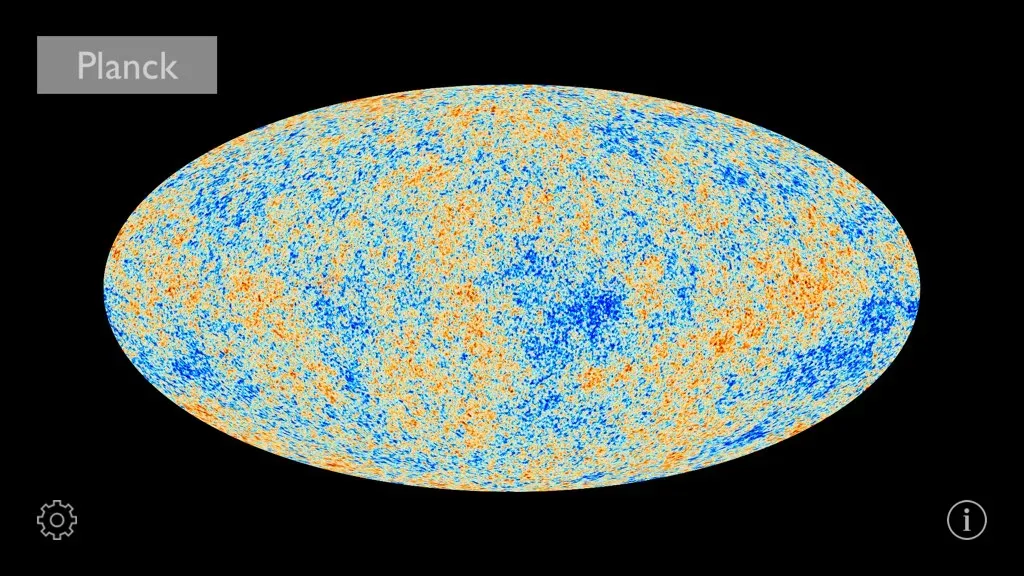
Right now, the oldest light you can see comes from the cosmic microwave background, a faint glow filling the sky that was released when the universe was very young and hot. When you look at detailed maps of that glow, you are staring at a baby picture of the cosmos, showing tiny temperature variations that reveal the seeds of all later structure. Those patterns tell you about how the early universe behaved, what it was made of, and how fast it was expanding. Crucially, they also provide hints about what the universe was like beyond the region that would later become your observable patch.
The small ripples you see in that ancient light look like the kinds of random fluctuations you’d expect to arise in a much larger space, not something fine-tuned just for your visible bubble. You can think of your observable universe as one spherical region that emerged from a broader field of tiny variations. That broader field extends far beyond what you can ever see, meaning the story the microwave background tells is already one of a universe larger than your horizon. The oldest message you can detect is, in a sense, a cropped screenshot of a much bigger cosmic canvas.
Inflation and the Possibility of a Vast, Unreachable Cosmos
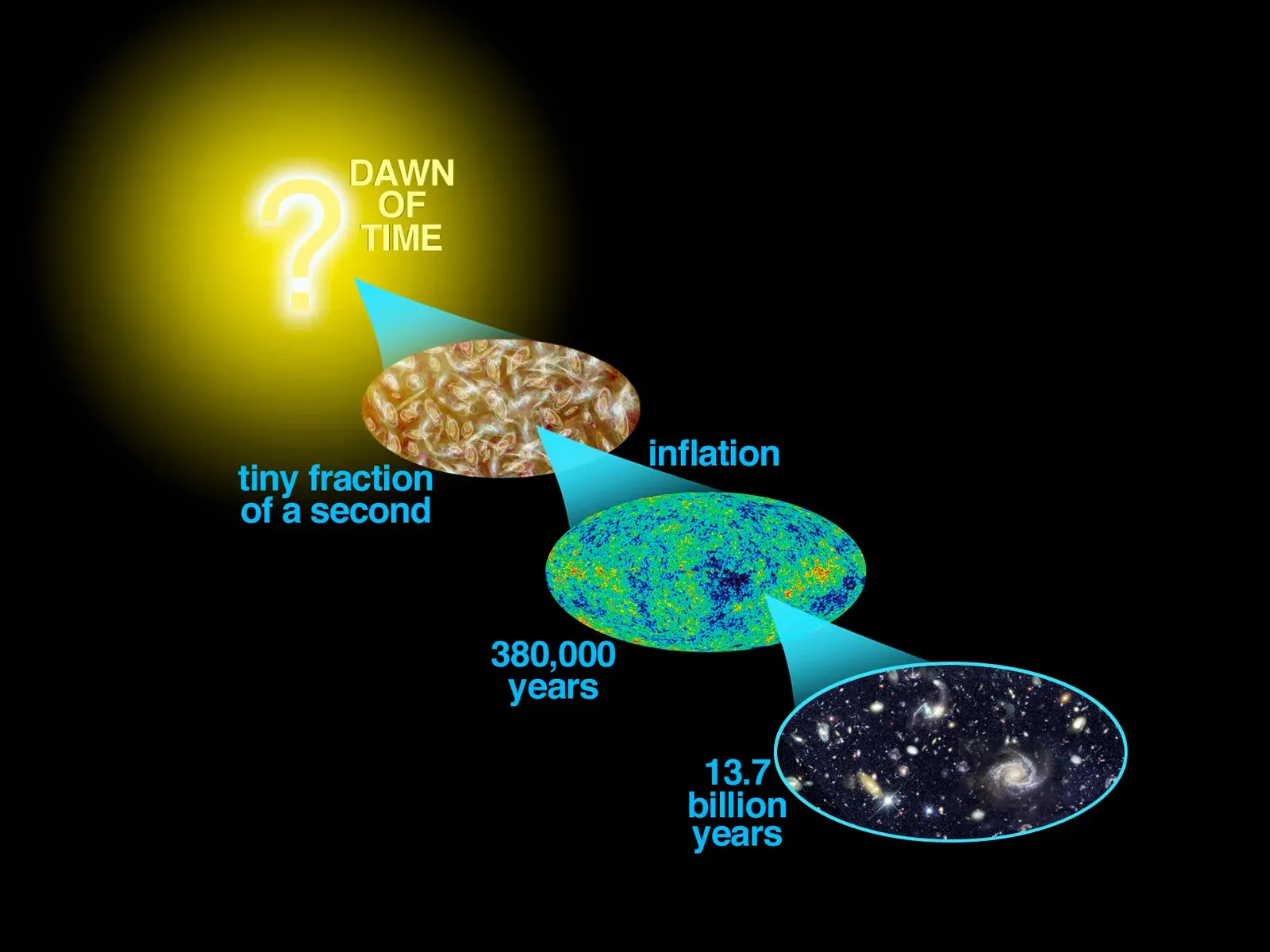
Modern cosmology often includes a dramatic early chapter known as cosmic inflation, where the universe is thought to have expanded at an almost unimaginable rate for a brief moment. If that picture is correct, it has a striking consequence for you: the region you now call the observable universe started as a tiny patch in an even larger space that inflated far beyond your reach. Inflation smooths out the universe on large scales and explains why distant parts look so similar, but it also naturally generates a cosmos far larger than anything you can witness.
Some versions of inflation even suggest that different regions of the universe could have slightly different properties, like variations in the effective physical constants or in the detailed structure of space-time itself. In those scenarios, your observable universe is like one bubble in a frothy sea of many, with no way to ever travel to or communicate with the others. Even if the more exotic versions turn out to be wrong, the core idea remains: an early era of rapid expansion would make the total universe overwhelmingly larger than the part you can see, cementing the gap between what physics can reasonably calculate and what you can ever hope to observe.
Forever Hidden: Why Some Regions Can Never Come Into View
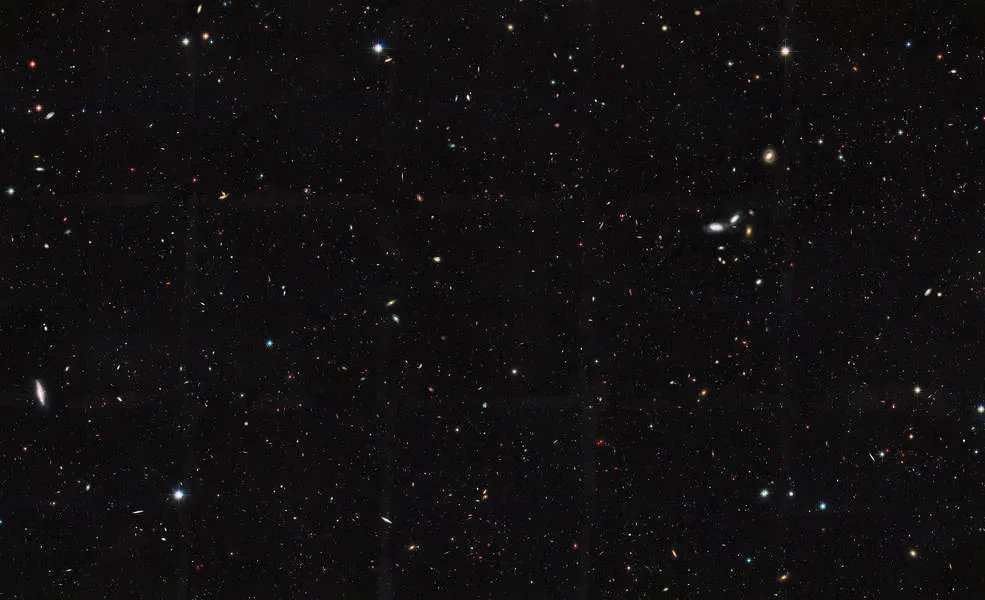
You might hope that if you wait long enough, more and more of the universe will drift into view, like landmasses appearing as you sail across an ocean. The reality is more sobering. Because the expansion of the universe is currently speeding up, driven by what you call dark energy, there are distant regions that are receding from you faster over time. Past a certain distance, even light emitted toward you can never overcome that accelerating expansion. Those regions are not just out of sight right now; they are permanently exiled beyond your reach.
This creates a future in which the observable universe actually shrinks in a practical sense, even as time goes on. Nearby structures will remain visible, but faraway galaxies will gradually fade from view as their light stretches and weakens beyond detectability. The portion of the universe you can study in detail will become a smaller and smaller fraction of what exists. So while your equations may paint a vast picture of space extending endlessly, your observational window is destined to narrow, sharpening the divide between the calculable beyond and the observable now.
Living with a Universe You Can Never Fully Know
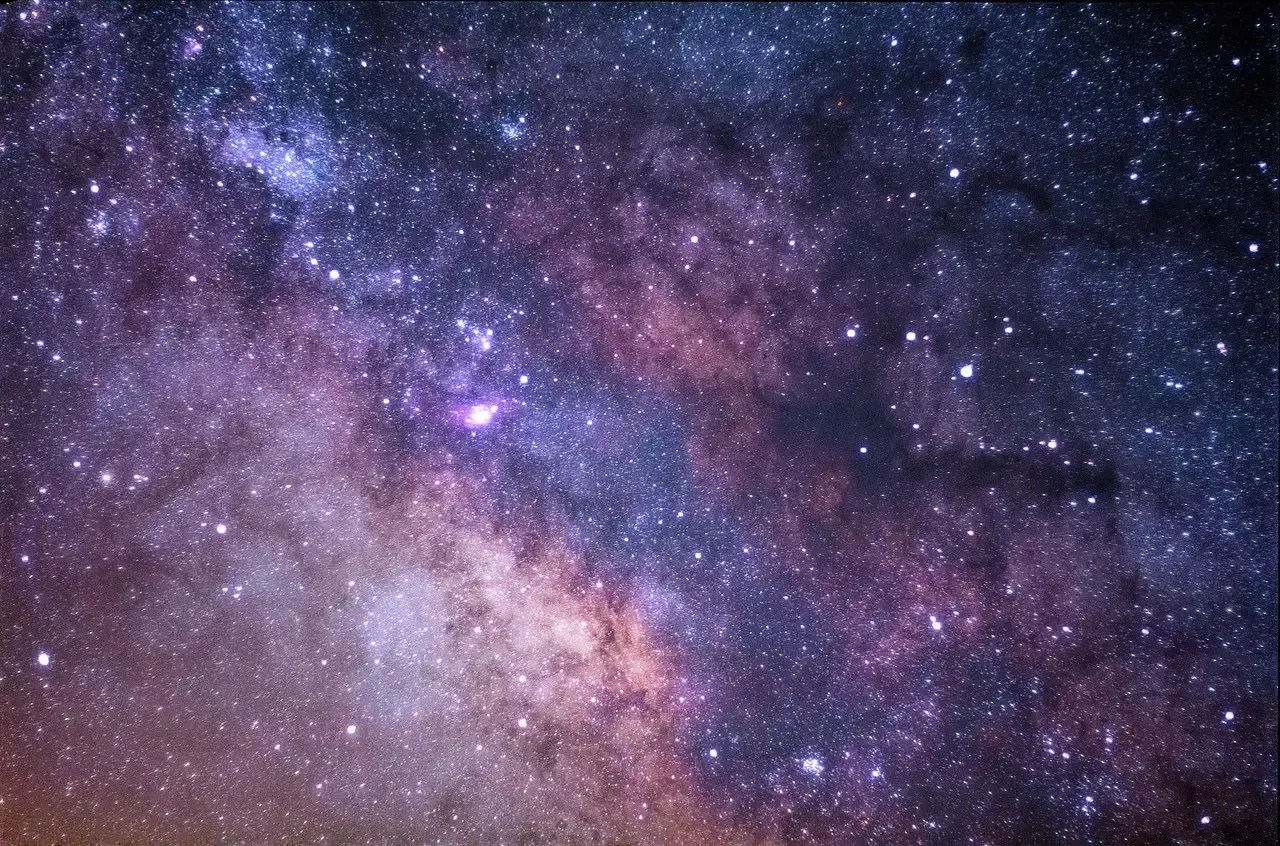
There is something quietly humbling about realizing that you inhabit a universe you can never fully survey. You are used to thinking that with enough time, effort, or technology, limits can be pushed back or broken. Cosmology shows you a different kind of limit, one woven into the fabric of space-time itself. No spaceship will ever hop across the cosmic horizon. No clever trick will bring you light that is forever prevented from reaching you. You are, in a deep sense, confined to a finite stage within a possibly infinite theater.
At the same time, there is a kind of strange beauty in that confinement. Knowing that you will never see it all forces you to squeeze as much meaning as possible out of the slice you can explore. It also pushes you to refine your models until they earn the right to be extended into the unseen, instead of just making up stories. When you accept that some questions about the universe may be permanently out of reach, the ones you can answer suddenly feel more precious. You are not just mapping space; you are tracing the sharp line between what the universe reveals and what it forever keeps to itself.
Conclusion: The Edge of Sight and the Edge of Knowing
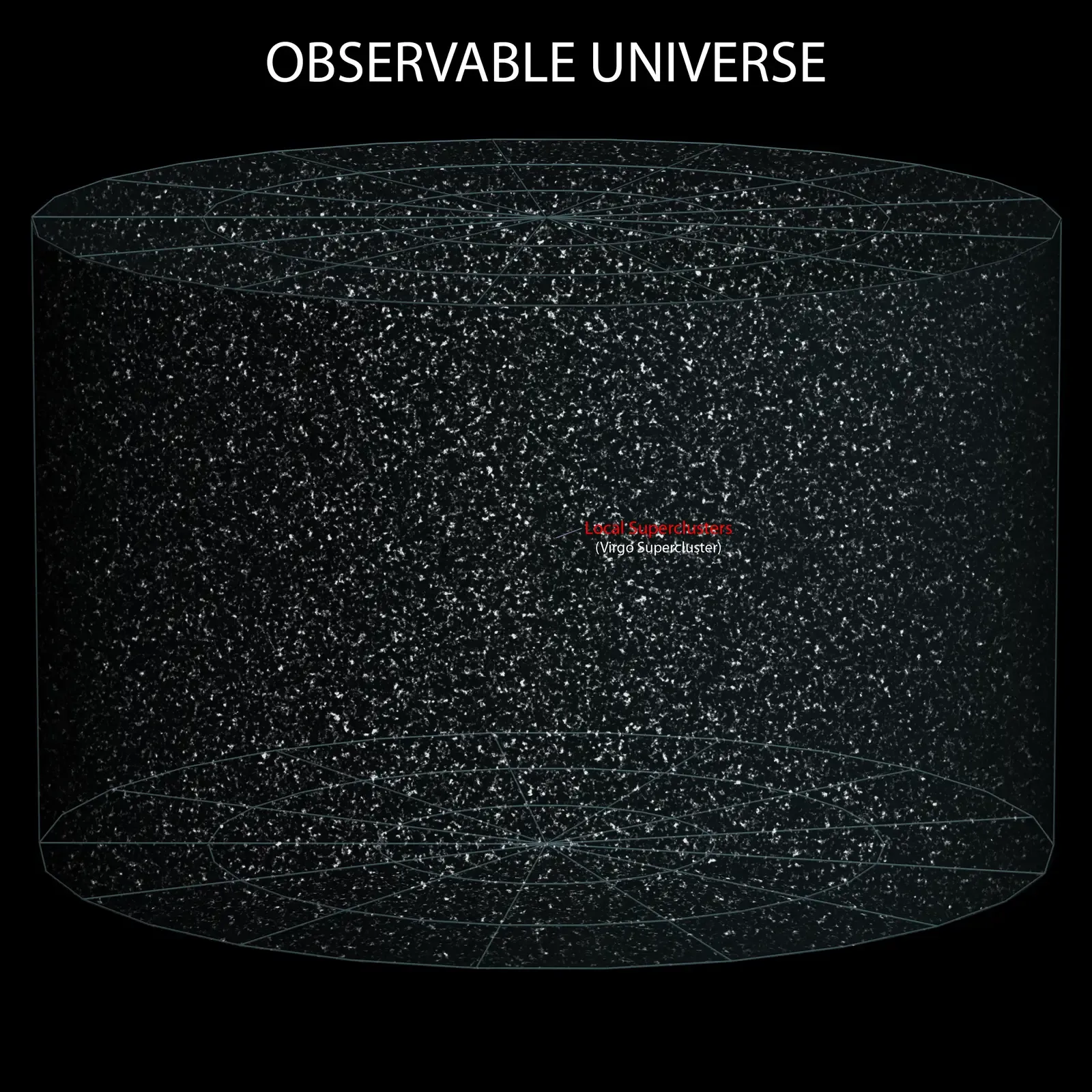
When you put all of this together, a stark picture emerges: the observable universe is not the whole story, just the part whose light has had time to reach you, and the rest is a realm where your best theories can venture but your telescopes never will. The boundary that matters most is not some physical shell out in space, but the horizon where information cuts off and the universe stops being testable. Beyond that, physics does not suddenly fail, but your ability to confirm what those equations say does. You are left with a mix of confident extrapolation and permanent uncertainty.
Yet instead of making the universe feel smaller or more discouraging, that limit can make it feel richer. You are living in a cosmos that is larger than your imagination can comfortably hold, governed by laws you can discover locally and then cautiously project outward. The observable universe is your window, but not the whole building; beyond the glass, the structure continues whether you see it or not. In the end, you stand at the edge of sight, staring into a darkness your mind can partially describe but never illuminate, and you have to decide: does that unseeable expanse make you feel lost in the cosmos, or at home in something vastly bigger than you ever expected?